 PawStyle Daily
Puppy Training Tips
Puppy Socialization Checklist: The First Months
Socialization is not a stack of puppy photos and it is not a race to fill a schedule. It is a list of small, boring, well-timed exposures that decide what a grown dog finds ordinary. This one is written for an apartment household with a young puppy: the rooms first, the street next, the class question answered honestly, and the parts of the internet's advice worth ignoring.
By PawStyle Daily · Updated 18 November 2026
Good to know: one new thing at a time, kept short · the puppy sets the pace · never force a greeting · for informational purposes, consult your vet.
The window, and why it matters more than the list
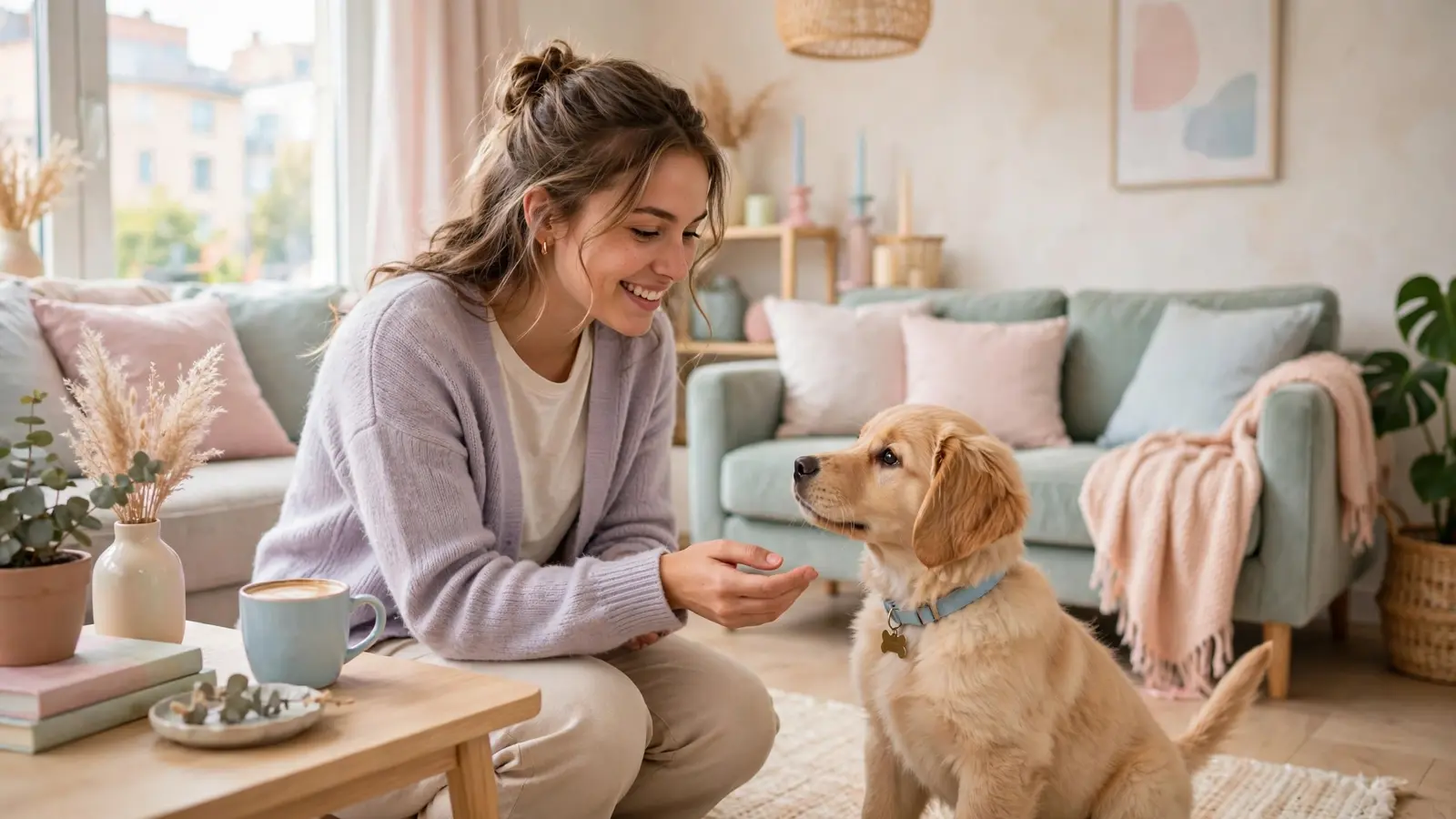
A puppy goes through a socialization period in its first three months that permanently shapes its adult personality and how it reacts to its environment.
Read that as an opportunity, not a deadline. Inside that stretch, new things land differently: a puppy is far more likely to shrug off a vacuum cleaner while the window is open than to shrug it off once it has closed. After it, everything still works, just slower and with more patience attached.
The window is also why the pace matters so much. One good encounter with a stranger who crouched down and let the puppy come close is worth ten rushed ones. A bad one takes longer to undo than the good one took to build, and a puppy that decides the world is a lot to take on will keep telling you so for years.
The other reason to start now
There is a second argument, and it is the one that surprises people. The American Veterinary Society of Animal Behavior states that behavioral issues, not infectious diseases, are the number one cause of death for dogs under 3 years of age.
That is not a reason to skip the vaccine conversation; the two sit in the same vet's office and the vet is the one who weighs them for your street, your building and your household. It is a reason to treat the socialization list as health work rather than a hobby. A dog that cannot be left alone, that panics at the door bell, that snaps at children, is a dog whose household eventually runs out of options.
Write down what the puppy met and how it reacted. Two lines a day is enough, and in a month the note beats the memory: you will see which categories need more reps and which one went badly once and has been quietly avoided since.
Four rules that decide whether it works
- Keep it short. A minute of a new surface beats ten minutes of the puppy enduring one. End while the puppy is still curious.
- Keep it upbeat. Treats, a loose voice, and the option to walk away. If the puppy will not take food, you are too close to the thing; step back and try again from further off.
- The puppy chooses the distance. Never pick a puppy up and place it near something it is staring at. A puppy that walks forward decides; a puppy in your arms has no choice and remembers who made it.
- Never force a greeting. Not with people, not with dogs, not with your own friend who came over to meet the puppy. Ask the visitor to sit and ignore the puppy; the puppy will arrive when it is ready.
Everything below is a suggestion under those four rules. A list item that breaks them is not worth crossing off.
The house, room by room
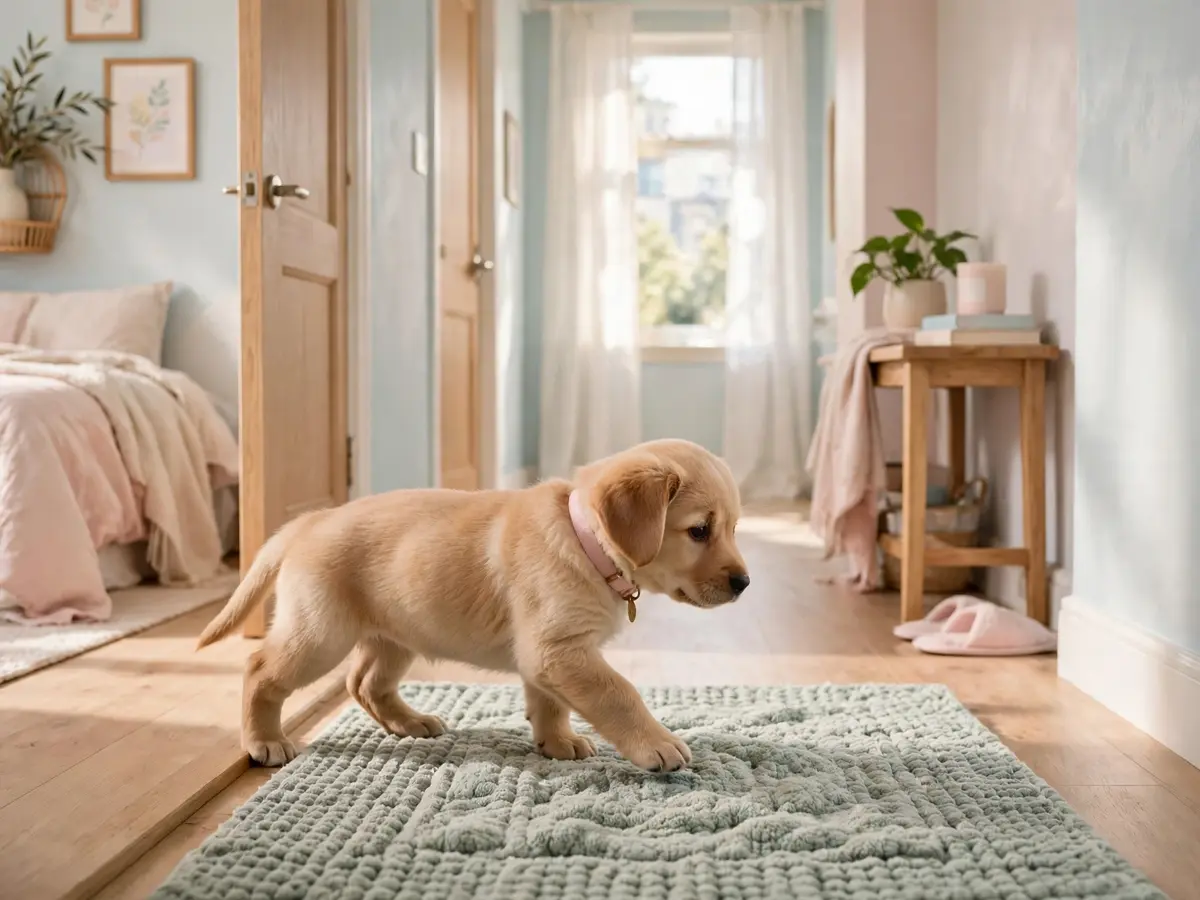
Start where the puppy already sleeps, because the first month of exposures can happen entirely inside a flat with no weather, no traffic and no opinions. This is also the part owners skip while waiting for something exciting to do, and it is the part the puppy uses every day of its life.
- Surfaces: bare floor, rug, bath mat, a towel under the table, tile in the bathroom, a doormat, a wobbly folding chair, cardboard on the floor, grass through a doorway.
- Sounds: the vacuum from across the room and then closer over days, the hair dryer, the dishwasher humming, a doorbell, a kettle, a television at news volume, someone hammering a nail, a bin lid dropping.
- Objects that move: an umbrella opening indoors, a shopping bag rustling, a hoover head approaching a paw, a rolling suitcase, a stroller in the hallway.
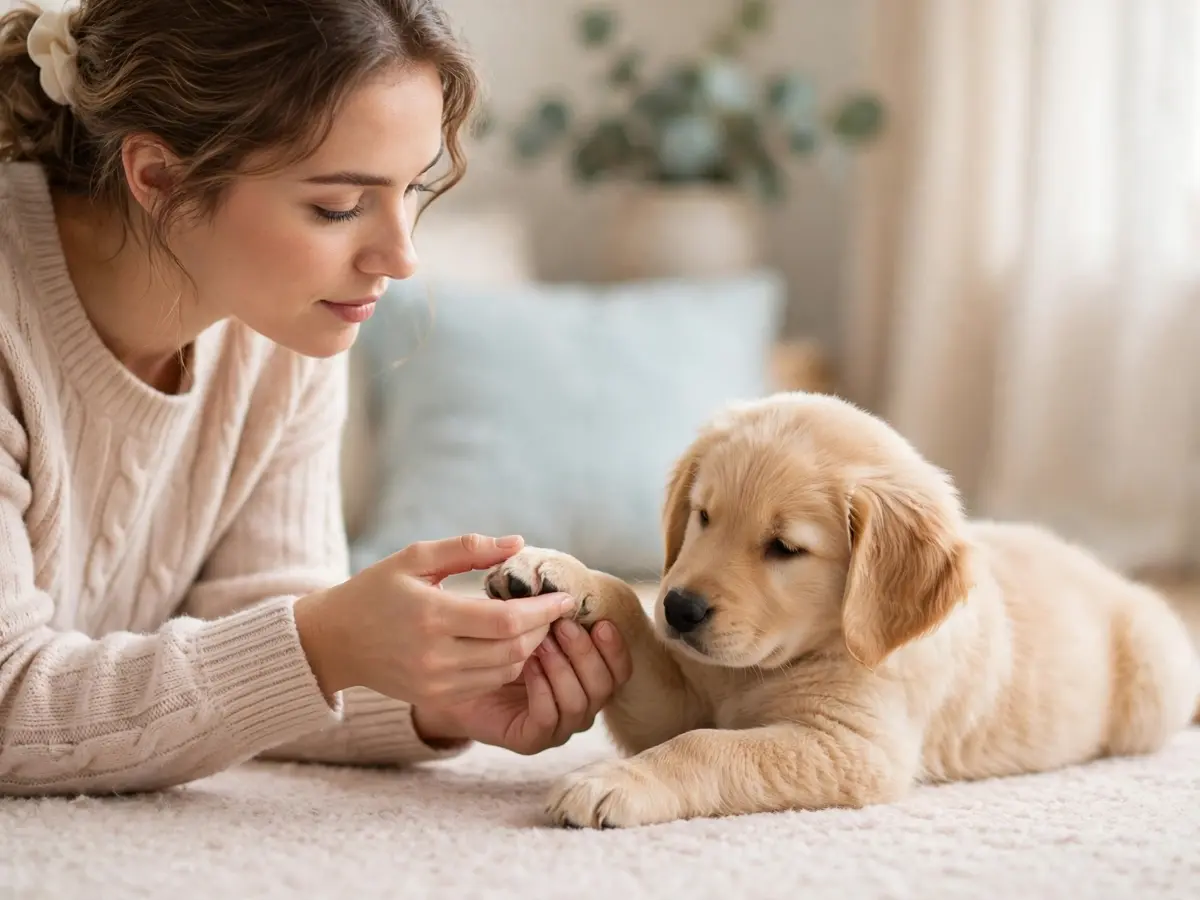
- Handling, the most skipped item: paws lifted one at a time and held, ears flipped up, tail stroked, mouth lips lifted, collar grabbed, picked up and set down again, laid on its side for a few seconds, a vet-style look at the eyes while the puppy eats peanut butter off your finger.
- Alone time: the puppy awake and settled in one room while you are in the next, then out of sight for a short stretch, repeated calmly rather than as an experiment.
The world outside the door
Once the house list is boring, take the puppy out in the shape it can handle: carried or on a mat on a bench, watching the street go past rather than meeting it. A lap and a view is a legitimate socialization outing, and it is the one that keeps the list running while the vaccine question is still open.
- People, varied on purpose: a tall man in a hat, a woman with a loud laugh, a child who will not sit still, a person on crutches, a wheelchair, a delivery rider, someone in a uniform, a beard, a hood, sunglasses at night.
- Places: a lift, a stairwell, the laundromat, a pet shop doorway, a car engine off in a quiet yard, a park edge, a pavement café with chairs and legs under the table.
- Ground underfoot: gravel, a metal grate, a storm drain cover, sand, wet pavement, a wooden boardwalk, leaves, a hill that tilts.
- Things that pass by: bicycles, scooters, a bus exhaling at the stop, a jogger, another dog on the far side of the road, a pigeon that flaps suddenly.
The class question, answered
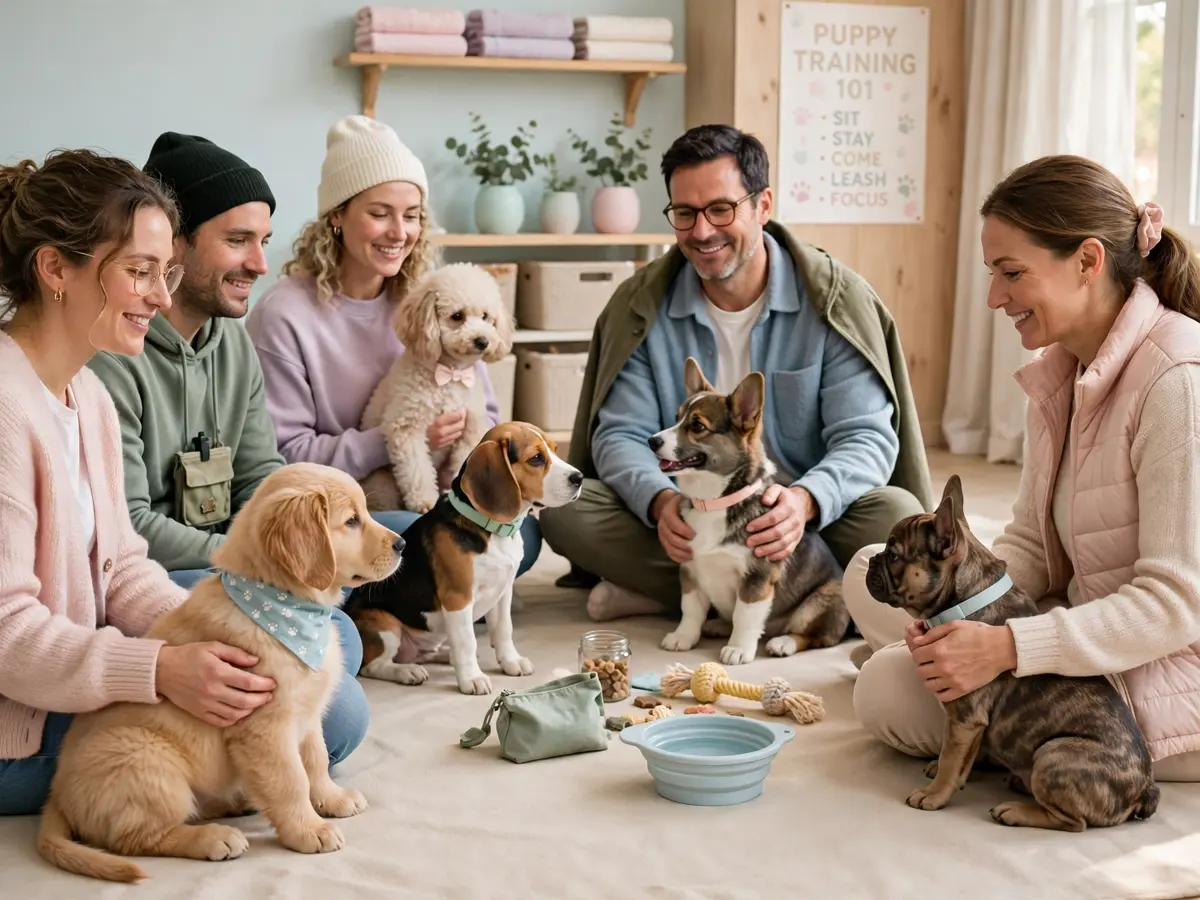
Puppy classes can start once the puppy has begun its vaccination series.
That is the line that ends the argument about whether to wait until the last injection, and it comes with a question for your vet rather than a rule from this page: which class, which venue, which cleanliness, and which age group. A good class screens the dogs, keeps the exercises short, lets a puppy opt out, and will not hand your puppy to a group of four that has cornered it.
A class buys the one thing a household cannot easily buy alone: controlled contact with other dogs that are also being taught to be polite. Pair it with the handling practice here and the vet visit later gets dramatically easier. For the manners the class assumes you are running at home, the commands and rewards page is the companion, and the biting and mouthing guide covers the sharpest part of puppyhood.
The first months, one line at a time
| Bucket | Start with | Add later | Skip |
|---|---|---|---|
| Surfaces | Rugs, mats, tile in the flat | Gravel, grates, wet pavement, a tilt | Nothing; this bucket is all useful |
| Sounds | Household appliances at a distance | Doorbells, traffic, a bus, a falling lid | Playing recordings at full volume beside a hiding puppy |
| People | One calm visitor who ignores the puppy | Children, hats, wheelchairs, uniforms | Forcing a puppy into a stranger's hands |
| Handling | Paws and ears while the puppy eats | Mouth, tail, lying on the side, collar grabs | Every handling session at once, on the same day |
| Alone time | Another room, awake and content | Out of sight, out of the flat, longer stretches | Leaving a puppy in a crate in distress to tough it out |
| Dogs | One adult dog with a calm, known temperament | A screened class, then quiet street encounters | Dog parks, and any pack that corners the puppy |
Two or three small exposures a day, kept short and upbeat. The list is a season of habits, not a checklist to clear before a deadline.
What to skip, and what to stop mid-way through
Overwhelm is the biggest waste on this list, and it looks like productivity. Six new places in a weekend reads well on a photo, and a puppy that spent it shut down, hiding, or barking at everything learned one thing from all six: there is too much of it. Fewer, better, and repeated wins.
- Dog parks during the socialization months. One rough encounter does more damage than a hundred good ones repair.
- Greetings where the puppy cannot leave. Face-to-face with a stranger who leans in, or a big dog that walks straight over.
- Free-following a puppy that is worried. Carry it out of the situation instead, and go back to a bigger distance next time.
- Socializing while the puppy is unwell, hungry, or exhausted. A sick puppy remembers everything at double strength.
- The internet's older advice about waiting until the whole vaccine series is finished before any contact at all. Bring that to your vet alongside the class question above.
And when the puppy freezes on something specific — a man in a hat, a lift, a black dog — do not march it forward. Take the win at the distance where the puppy could still breathe, and try the item again in a week from further back.
Socialization checklist questions
How many new things a day is too many?
A puppy that freezes, hides behind your legs, or stops eating its treats has had enough, whatever the count was. Most households land on two or three small new things a day, and the evening belongs to a nap rather than another adventure. The checklist is a season, not a to-do list to clear by Sunday.
Do I have to finish the checklist before the second vaccine?
No, and the two do not compete. Puppy classes can start once the puppy has begun its vaccination series, so the class and the home list run side by side. Ask your vet which public places they would risk this week and which they would not.
What if the puppy is scared of something on the list?
Do not push it through. Sit at the distance where the puppy can still look at you, feed the good stuff, and let the puppy close the gap in its own time. Some items get revisited in a month, and some get crossed off as not-for-this-dog. Neither is a failure.
Does meeting lots of dogs matter more than meeting people?
Neither matters on its own; variety does. A puppy that has met six calm people in three settings is doing better than one that has met twenty dogs in a single yard. Children, hats, umbrellas, wheelchairs, beards and loud voices all count as different people.
Can I socialize a puppy that has already been bitten?
Yes, and it needs more care rather than less. Choose the dogs yourself instead of accepting introductions, keep the distance wide, and let the puppy watch from somewhere it feels safe. If the fear spreads to whole categories, that is a conversation for your vet.
Is alone time really part of socialization?
It is the item most people forget, and the one that pays out later. A puppy that has practised being calm on its own in the first months grows into a dog that can stay in a room while you cook. Start with the puppy awake and content, and stretch the minutes across weeks.
Save these on Pinterest
Pin the two buckets you always forget — handling and alone time — and keep the class answer beside them. The Puppy Training collection holds the crate first-week plan, the potty schedule and the new puppy feeding page, which together cover the rest of the first months.
Short, upbeat, and never a forced greeting. For informational purposes, consult your vet.
Some breeds climb this list in order rather than all at once; the the socialization ladder for a watchful breed page lays out the rungs.
Most of the before reactivity ever starts work happens on the checklist page, months earlier.