 PawStyle Daily
Puppy Training Tips
Puppy Biting: 7 Calm Training Steps
Every land-shark phase ends, and the calm route ends it soonest. Seven steps below, in order: read the bite before it lands, trade hands for toys, teach the soft mouth, end the games that reward teeth, tire the puppy out on schedule, feed the plan, and hold it steady while the teeth do their worst. No yelling, no muzzle-holding, no drama. For informational purposes, consult your vet.
By PawStyle Daily · Updated 16 November 2026
Good to know: the ouch-and-pause loop · one swap per bite · tiny treats, counted honestly · teeth end games, never start them.
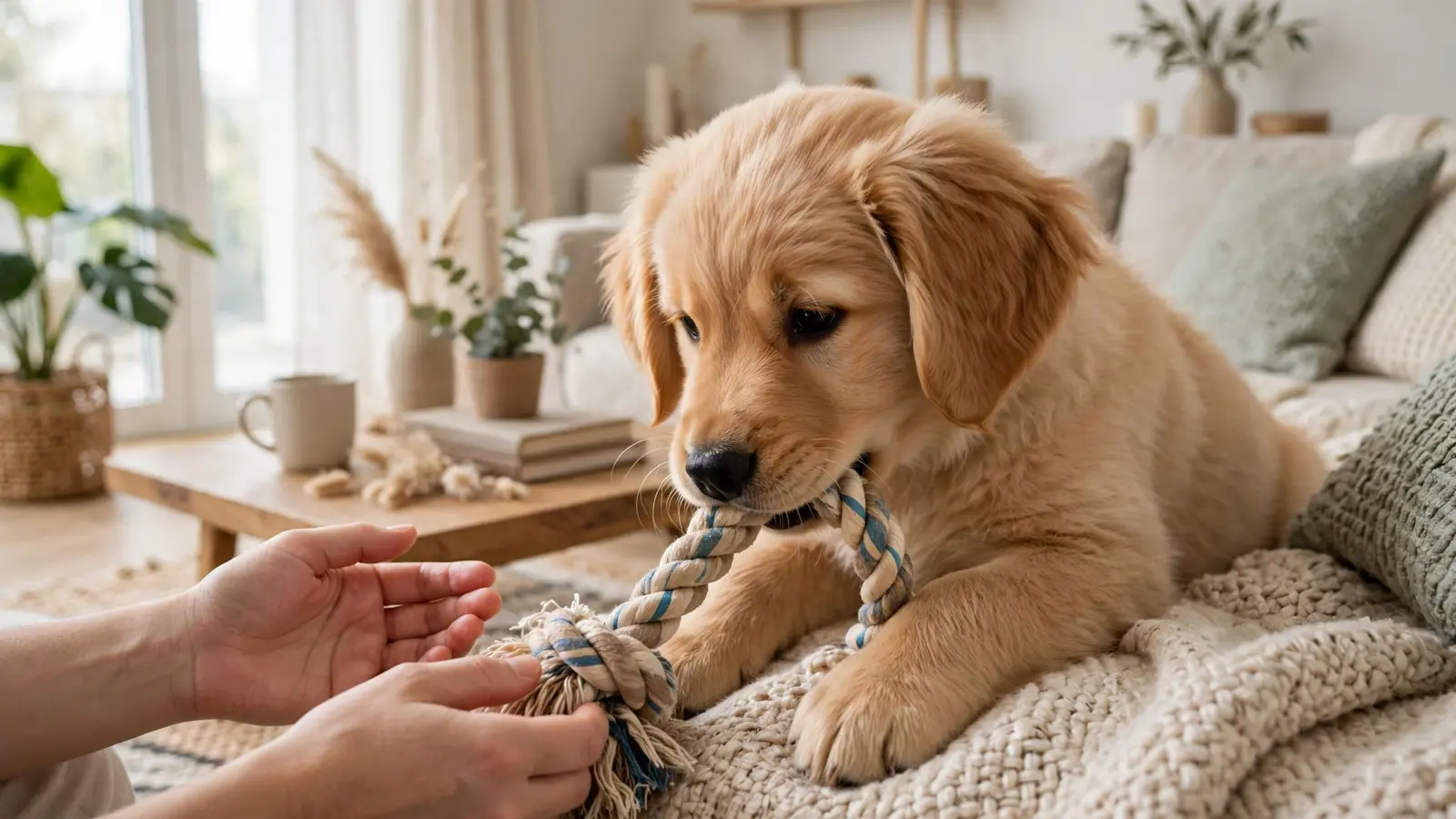
Step 1: read the bite before it lands
Puppy biting arrives on a schedule you can learn. The zoomies before bed, the ankle ambush at 4pm, the finger chomp mid-game: each household has its own clock, and the clock is the plan waiting to be written. Spend two days writing down when the teeth come out and what happened in the ten minutes before, and the pattern names itself.
- The tired bite: puppy has been up past its nap and is wired.
- The excited bite: the game got loud and the mouth joined in.
- The bored bite: nothing is happening, so your shoe becomes the happening.
- The teething bite: gums are sore and everything gets chewed to feel better.
- The hello bite: hands arrive, and the mouth greets them.
Different bites get different steps below, which is why the log comes first. A tired bite is a nap problem, a bored bite is a toy problem, and no swap on earth fixes a puppy that needed sleep an hour ago.
Step 2: the swap, every single time
The swap is the whole technique in one move: teeth touch skin, a toy appears in their place, and the fun continues onto the toy. Your hands stop being the interesting texture, and the rope toy starts being the texture that works. One swap per bite, every bite, without commentary.
- Keep three swap toys in every room the puppy reaches, stashed at arm height.
- The moment teeth land, freeze your hand still rather than pulling.
- Slide the toy across the puppy's line of sight and let the mouth transfer.
- Praise the chew on the toy in a light voice, and keep the game going.
- Repeat until the puppy starts heading for the toy instead of the wrist.
The freeze matters more than the toy. A hand that jerks away is a hand that plays chase, and chase is the best game a puppy knows. Stillness makes skin boring, and boring is the goal.
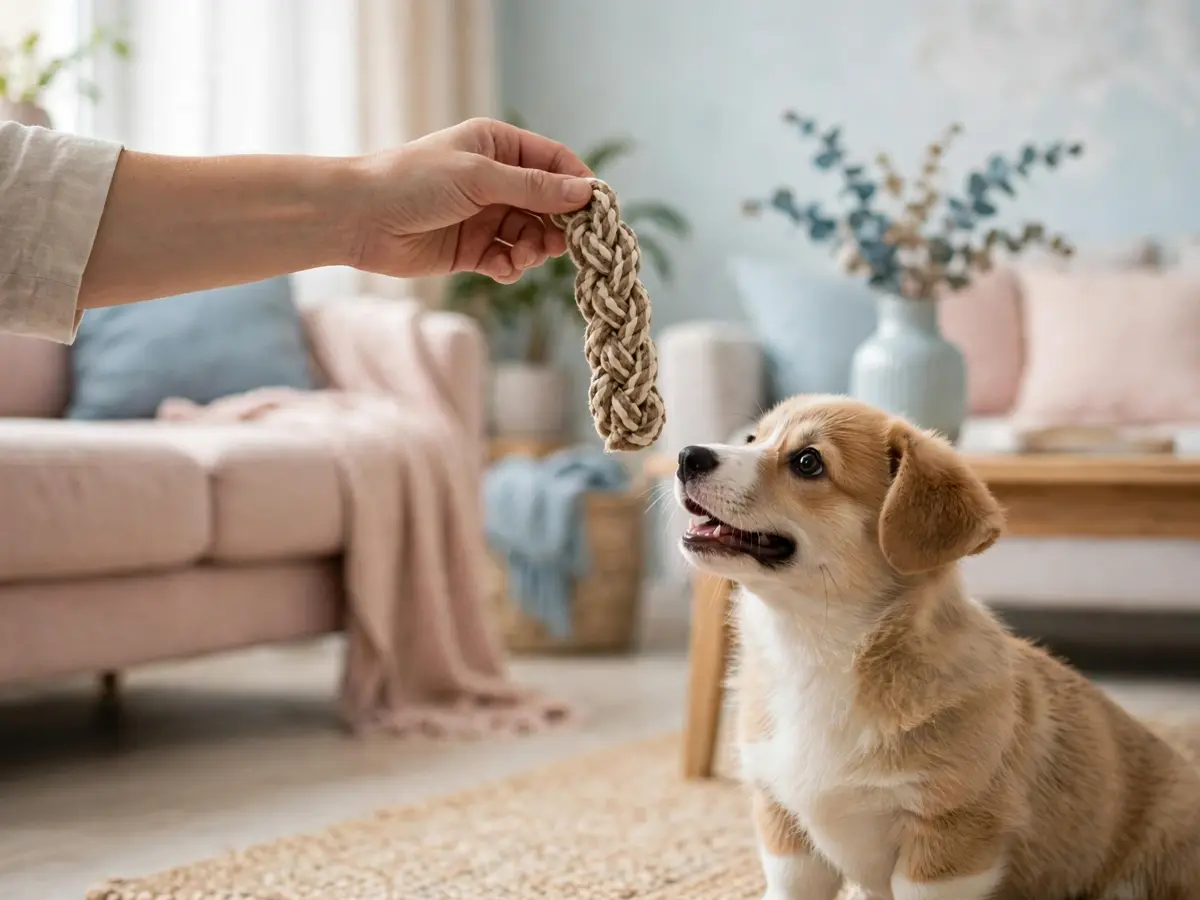
Step 3: teach the soft mouth
A puppy that never uses its mouth on you cannot learn how much pressure is too much, because it never gets the feedback. The softer curriculum: let the mouth land lightly, mark the light contact with play, and end the fun the instant the pressure climbs. The puppy writes the scale itself, one ouch at a time.
The ouch is a performance, and a short one: a high, dramatic sound, then stand up, hands crossed, face boring, and count three slow seconds before the game resumes. Hard contact ends the world; soft contact keeps it running. Puppies are excellent economists, and they spend their teeth where the returns are.
Two rules keep the lesson honest. First, the ouch only answers real pressure, not every graze, or the puppy learns the word is noise. Second, the pause stays short, because a puppy that has forgotten the game by the time it resumes has learned nothing at all.
Step 4: end the game the teeth started
Roughhousing with a mouthy puppy is a beautiful memory waiting for a calmer month. Wrestling hands, glove games, chasing fingers: every one of them teaches that skin is the best toy in the house, and the lesson does not un-teach itself. The games stop, and the toys take over the play.
- Play happens at toy level: tug, fetch, chase-the-flirt-pole, nose games.
- Hands deliver food, collars and calm strokes, never opposition.
- When play gets bitey, play ends: stand still, look at the ceiling, wait.
- Resume with a toy in the first minute so play and teeth never reunite.
- Everyone in the house runs the same rule, or the puppy plays the rules against each other.
Kids need the script most of all, because a puppy and a child are the same energy in two sizes. Teach the child to be a tree: arms folded, eyes up, boring as bark, and the puppy learns within a week that children are no fun to bite. The basic puppy commands guide carries the marker words that make this whole conversation shorter.
Step 5: a tired puppy is a gentle puppy
Most biting schedules are sleep schedules in disguise. A puppy that has been awake for two hours is running on fumes and biting everything because the world has become overwhelming and teeth are the only response left. The crate or the pen is not a punishment for the biting; it is the answer to the tiredness underneath it.
The bitey hour and what usually sits under it
| When the teeth arrive | What the puppy actually needs | The move |
|---|---|---|
| Early evening, every evening | A nap, hours ago | Pen or crate with a chew, lights calm, no apology |
| Mid-play, escalating | The game was too wild for too long | Two-minute pause, then resume at toy level only |
| Right after the walk | Settle time with something to mouth | Frozen towel or stuffed chew in the quiet corner |
| While you cook | A job and a boundary | Pen with a snuffle mat in view of you, not out of it |
| At the door when people arrive | Greeting structure instead of chaos | Lead clip on, sit at the threshold, toy in the visitor's hand |
A puppy that bites at the same hour every day is a puppy asking for the same fix every day. Write the fix on the card.
The frozen towel is the teething branch of this step: a damp towel knotted and frozen gives sore gums something cold and textured to work on, and it is the one chew that asks nothing of you while it is being used. Rotate it with the rubber chew and the rope, and keep all three in the freezer rotation.
Step 6: feed the plan, count the pieces
Biting training runs on small food rewards, and small is a budget, not a vibe. Treats should stay at no more than five percent of a dog's daily calories, so keep the pieces small, and the pieces count against the day the same way the kibble does. When treats are for training, keep each one as small as possible and count it against the day's food, and a redirect-heavy afternoon stays inside the budget without any arithmetic anxiety.
- Pea-sized or smaller, soft enough to swallow without a pause.
- Count the pieces into a pouch before the session, and count them after.
- A piece of the puppy's own food works for easy wins indoors.
- The pouch lives where the biting happens, not in a drawer across the house.
- The marker word costs nothing: use it more than the food, not less.
The training treat rewards page covers treat picks and the daily math in full, and the potty training schedule page holds the meal-and-nap rhythm this plan runs on.
Step 7: hold the plan while the teeth do their worst
The land-shark phase has a last stretch that feels like a betrayal: two good weeks, then a bitey weekend that undoes your faith in everything. It is usually a growth spurt, a new tooth, or a schedule that slipped, and the answer is the plan you already have, not a new one. Read the log, find what slipped, put it back.
Hold the rules the same way every day, hold everyone in the house to them, and hold the vet close for anything that is not ordinary bitey behavior. Weeks pass, the adult teeth arrive, and one afternoon you notice the hands are just hands again. For informational purposes, consult your vet.

Common problems and the move that answers them
Five snags cover most of the first month. Every answer below is the same plan wearing a different hat.
What goes wrong and what to do
| Problem | Why it happens | The move |
|---|---|---|
| The swap makes biting worse | The toy appears with a party, so biting summons the party | Swap quietly, praise the chew quietly, and let the toy's own texture be the reward |
| The ouch gets ignored | The sound was flat, or the pause was too long to connect | Sharper ouch, shorter pause, three seconds, then resume the game on the toy |
| One person's rules lose | The puppy bites the softest member of the household | Everyone runs the identical script; the tree pose for kids, the still hand for adults |
| Biting only during cooking or desk work | Boredom plus your unavailability, a potent mix | Pen with a snuffle mat or frozen towel, placed where you are visible |
| Sudden snapping after weeks of calm | Not ordinary bitey behavior, and the log will not explain it | Call your vet before adjusting the plan; a sudden change deserves a professional look |
If anything arrives with bleeding gums, refused food or a different smell from the mouth, that is a vet call, not a training call.
Questions we get about puppy biting
Why does my puppy bite so much?
Puppies explore the world with their mouths, the same way toddlers reach with their hands, and a puppy that bites is usually a puppy that is awake, excited, tired or teething, rarely a puppy with a temperament problem. The mouth is the tool they have. The work is teaching it a softer setting, not wishing the tool away. For informational purposes, consult your vet.
Should I yell or hold the muzzle when my puppy bites?
No. A puppy that gets yelled at learns that hands are loud and unpredictable, and a held muzzle reads as a game or a scolding depending on the puppy, neither of them the lesson. The calmer your hands are, the sooner they stop being interesting to bite. Step out of reach instead, and let the fun stop rather than escalate.
How do I use treats without overfeeding?
Keep them tiny and keep count. Treats should stay at no more than five percent of a dog's daily calories, so keep the pieces small. When treats are for training, keep each one as small as possible and count it against the day's food, and a session of ten redirects costs about ten pea-sized pieces, which is the whole math.
Bite inhibition sounds technical. Do I need it?
It only means the puppy learns to keep its mouth soft on skin before it learns to keep its mouth off skin, and it is taught by the feedback a bite gets, not by any equipment. A dramatic ouch and an ended game is the lesson: hard contact ends the fun, soft contact keeps it going. Every puppy can learn the difference.
What if the biting gets worse before it gets better?
A short spike after the rules start is common, because a puppy that was getting attention for biting tries the old trick harder before believing it stopped working. Hold the plan steady for a week, log the rough sessions like any other data, and if the intensity is climbing rather than spiking, that is the point to call your vet.
When do I need the vet rather than a plan?
Call when the biting comes with something you cannot see or explain: bleeding gums, refusing food, a mouth that smells different, snapping that appears suddenly after weeks of calm, or any bite that breaks skin on a person. For biting that is ordinary land-shark behavior, the plan holds; for anything else, For informational purposes, consult your vet first, always.
The fridge card
Seven lines, copied onto a card and taped where everyone can read it, so the whole house runs one plan instead of four:
- Teeth on skin: hand freezes, toy appears, game continues on the toy
- Hard contact: one sharp ouch, three boring seconds, resume at toy level
- Play happens with toys; hands deliver food and calm strokes
- Same bitey hour every day: the nap, not the lecture
- Frozen towel for sore gums, rotated with the rope and the rubber chew
- Treats pea-sized, counted in the pouch and counted against the day
- Anything sudden, sore or smelly: the vet, before the plan
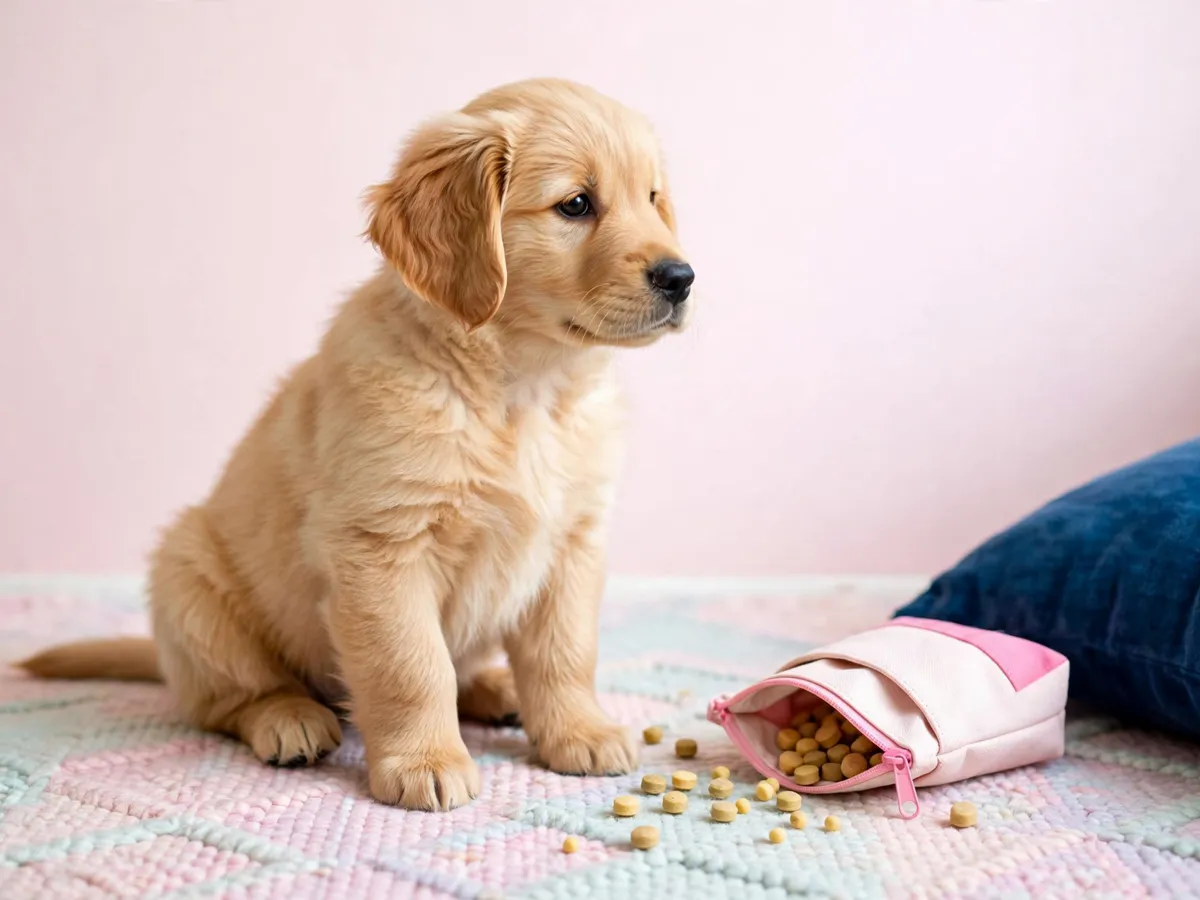
What we use
What we use for bitey weeks
Rope toys, a soft treat pouch and rubber chews for the freezer rotation, picks in one list.
See what we use →As an Amazon Associate we earn from qualifying purchases.
Save the fridge card on Pinterest
Pin it for the week the teeth return. The Puppy Training collection holds the commands guide and the potty schedule, and this page sits between them.
Every swap of a hand for a chew on this page is one small example of the reward-based training from the first week method, which has a page of its own.