 PawStyle Daily
Puppy Training Tips
Dog Training for Reactive Dogs: Distance, Calm, and a Pro
A dog that barks and lunges at the end of the leash is not giving you a hard time on purpose. The bark is the dog telling you a trigger is closer than the dog can handle. This page is about the distance between the dog and the trigger, the steady state the dog needs before any training starts, the three steps that close that distance a little at a time, and the signs a professional trainer comes in. None of this is about punishment.
By PawStyle Daily · Updated 22 November 2026
Good to know: reactivity is a distance problem · read the body language before the leash goes tight · the threshold line is the training distance · when the bark starts, move back · for informational purposes, consult your vet.
Reactivity Is a Feeling, Not a Fight
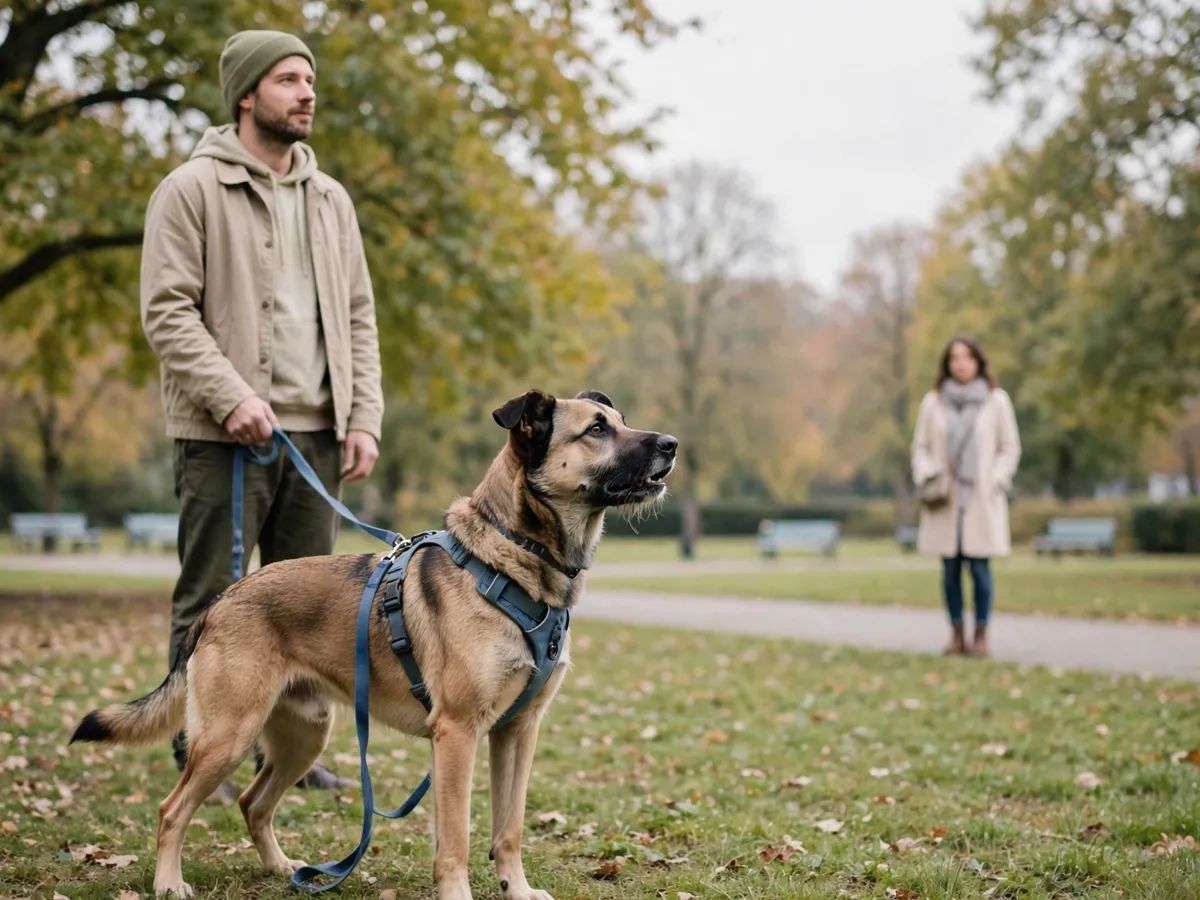
The dog that barks at the end of the leash is not the dog that wants to fight. The bark is the feeling the dog has when a trigger gets closer than the dog can manage. The trigger can be another dog, a person on a bike, a stroller, or a jogger. The feeling shows up on the surface because the dog cannot put it into words, and the leash keeps the dog from moving away. The first shift a handler can make is to read the bark as information rather than as a verdict on the dog.
That shift matters because the response changes with it. A handler who reads the bark as a fight threat tightens the leash, raises the voice, and pulls the dog away. A handler who reads the bark as a distance message moves back, keeps the leash loose, and lets the dog find the steady line again. The same dog, the same trigger, two different responses, and only one of them teaches the dog that the distance is something the handler manages.
What Reactivity Is and What It Is Not
Reactivity is the bark, the lunge, and the pull toward a trigger the dog cannot reach. The leash is what makes it look the way it does: the dog wants to close or to widen the distance, the leash holds the dog in place, and the motion comes out as noise and pulling. Aggression is the intent to close the distance and do harm, and a dog with that intent does not bark from frustration at the end of a line. The reactive dog barks because the distance is wrong, not because the dog wants a fight.
The distinction shows up in the body language. A reactive dog barks with a stiff body but a face that is still oriented toward the handler when the treat appears. The dog that is beyond reactivity does not look at the handler at all. A reactive dog can take food at the right distance and cannot take food at the wrong one. The treat refusal is the clearest signal: if the dog eats at a distance and stops eating closer in, the gap between those two points is the threshold, and the training lives in that gap.
The socialization side of a young dog has its own page. The puppy socialization checklist covers the early exposure that shapes how a dog reads new things before reactivity ever appears, and it is the page to read first if the dog is still in the early months.
The Distance Setup and the Threshold
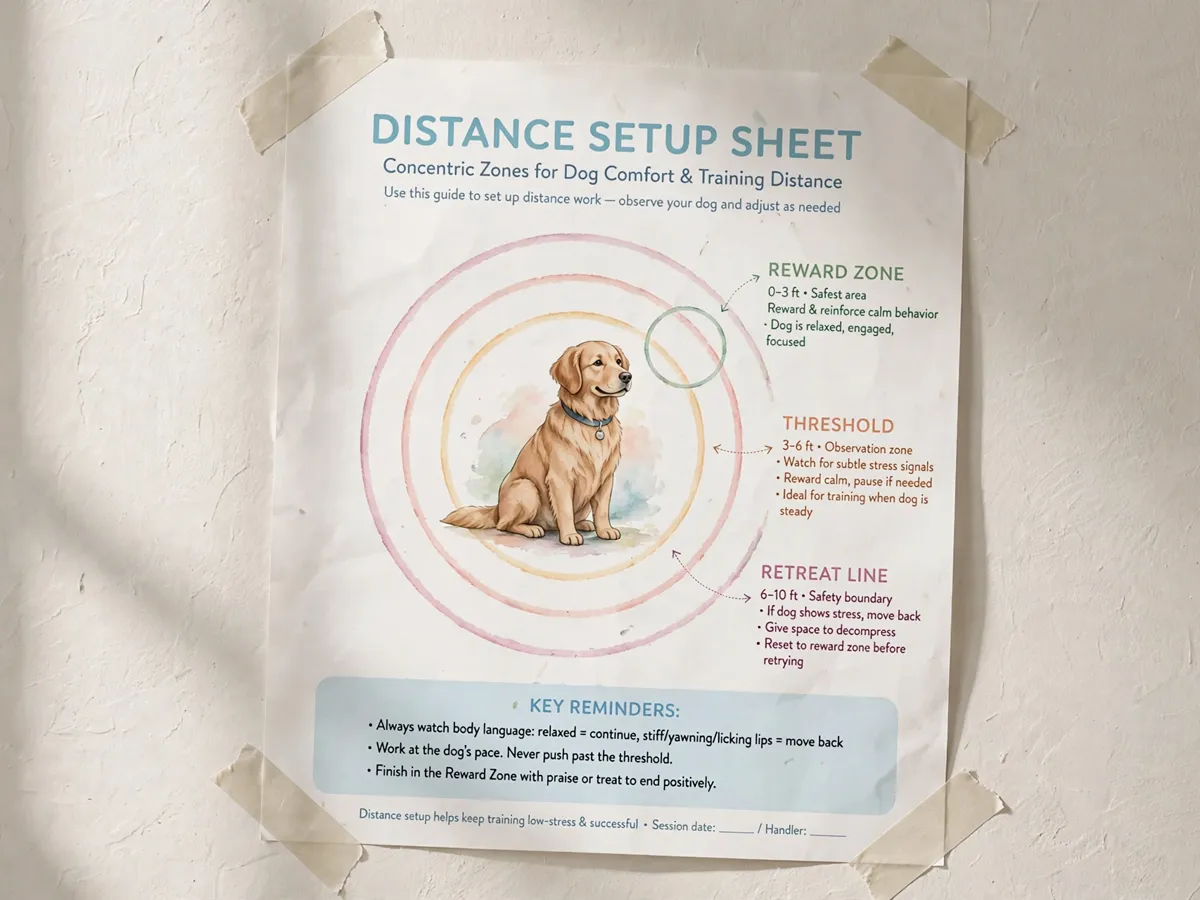
The threshold is the distance where the dog sees the trigger and stays settled. Past that line, the dog can take a treat, hear a marker word, and keep the body loose. Inside that line, the treat disappears, the marker word goes unheard, and the bark starts. The training does not start at the trigger. It starts at the line where the dog is still the dog the handler knows, and the whole job is to hold that line and close it a small amount at a time.
The setup is a walk to a place where the trigger appears at a distance the handler can read. A park bench, a quiet street corner, or a parking lot at the far edge can all work. The dog stands or sits at the threshold, the trigger moves across the field of view, and the handler watches the body language. If the dog eats and stays loose, the distance is right. If the dog stops eating, the handler moves back before the bark starts. The retreat is the most important part of the setup, because moving back at the right moment is what keeps the dog under the line.
The marker word and the treat position belong on the leash side too, and the loose leash walking guide covers the leash handling and the reward position that keep the line from going tight in the first place.
The Calm State Before the Training Starts
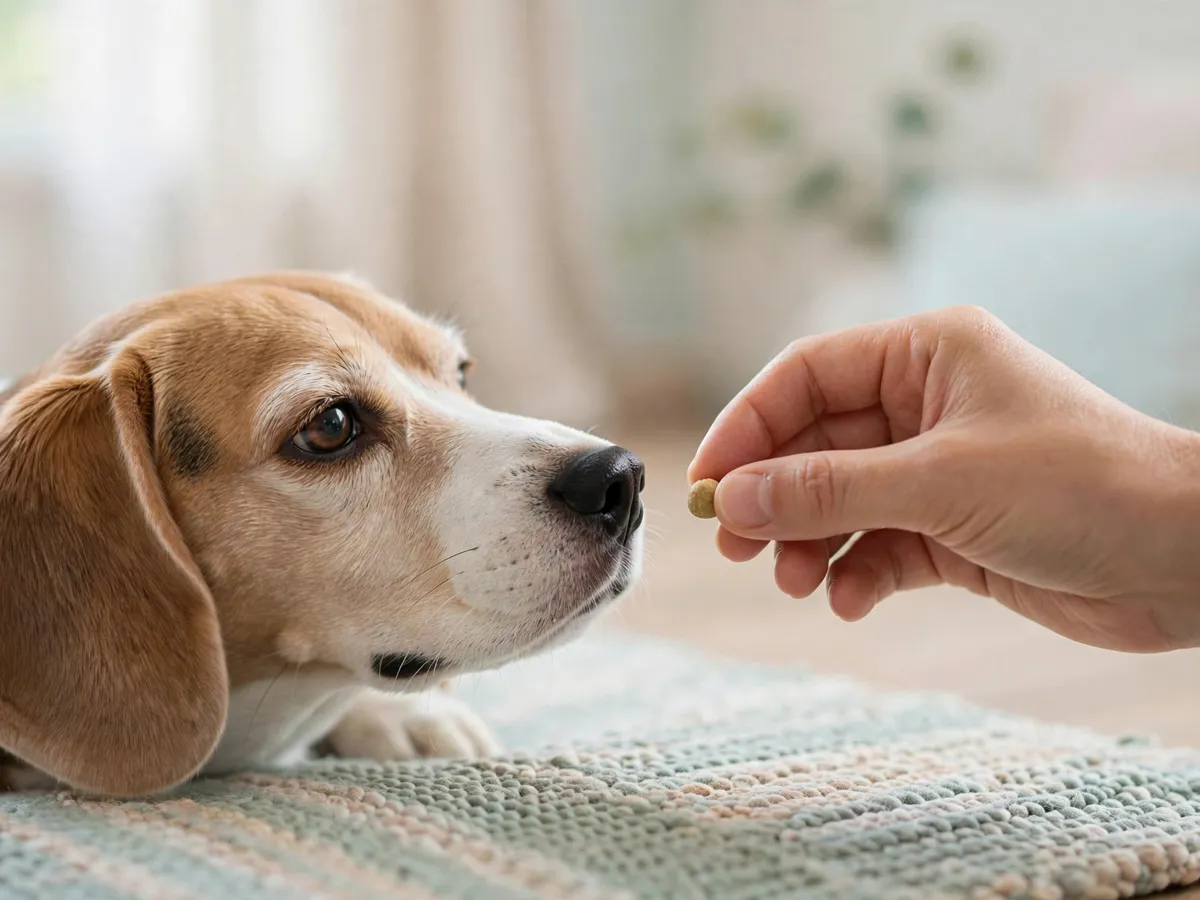
Training cannot start on a dog that is already over the line. The settled state is the body language the dog shows when the threshold is right: ears forward but not pinned, mouth closed but not clamped, weight on all four feet, and the ability to take a treat gently from the hand. A dog that snatches the treat is not as settled as it looks, and a dog that refuses the treat is already past the line. The handler reads those signs before any cue is given, because a cue given to a dog over the threshold is a cue the dog cannot hear.
The handler state is the other half. A handler who tightens the leash, holds the breath, or shortens the grip on the lead sends the dog the message that something is coming. The handler who keeps the hands soft, the breathing steady, and the leash in the same slack shape it had a block ago gives the dog the message that the trigger is not an event. The dog reads the handler before the handler reads the dog.
The treat the handler feeds at the threshold is the same pea sized piece the training treats page describes, and the training treat rewards page covers the smell, the texture, and the cut that make a treat worth taking at a distance where the dog is still thinking.
Three Steps from Far to Closer
The first step is the threshold hold. The dog sits at the distance where it sees the trigger and stays settled, and the handler feeds pea sized treats while the trigger moves across the field of view. The dog does not approach, the handler does not close the gap, and the session is the dog learning that the trigger at this distance is a reason to eat, not a reason to bark. The step is done when the dog takes the treats at a steady pace and the body stays loose for the duration the trigger is visible.
The second step is the small close. The handler moves one pace closer to the trigger and reads the dog again. If the dog eats and stays loose, the new distance is the new threshold, and the session continues from there. If the dog stops eating or the body stiffens, the handler moves back to the last good line and stays there. The close is one pace, not a block, and the patience is the point: a dog that closes one pace at a time is a dog that keeps the steady state as the distance changes.
The third step is the retreat and return. The handler moves the dog away from the trigger, lets the dog shake off and reset, and then returns to the threshold line for a second pass. The retreat is the reset, and the return is the proof that the dog can find the steady state again after the trigger has been in view. A dog that holds the line on the return pass is a dog that is learning the distance as a skill. The basic obedience at home page covers the sit, the stay, and the settle on a mat that the threshold hold and the retreat rely on.
When a Professional Trainer Comes In
The threshold method above is a handler skill that works for many reactive dogs. A professional trainer comes in when the shape is not enough. The signs are clear: the reactivity gets worse across a week of steady practice, the dog redirects the bark onto the handler when the trigger gets close, or the lunging starts at a distance the handler cannot hold on a normal walk. Any one of those is the signal that the case has moved past a distance problem a handler can manage alone.
The trainer to look for is one who works with the threshold method and who reads the body language on the day, in the place, with the dog in front of them. A trainer who guesses from a book or who starts with a collar or a correction is not the threshold method, and a reactivity case can escalate when the wrong approach is layered on a dog that is already over the line.
The trainer does not replace the handler work. The distance setup and the three steps above are the same shape the trainer uses, and the handler keeps running them between sessions. The trainer is the person who reads the dog on the day, adjusts the threshold, and tells the handler when the dog is ready to close the line and when the dog needs more time at the current distance.
Reactive dog training questions
What is the difference between reactivity and aggression in a dog?
Reactivity is a feeling the dog shows on a loose leash: the bark, the lunge, the pull toward a trigger the dog cannot reach. Aggression is the intent to close the distance and do harm. A reactive dog barks at the dog across the street because the distance is too close, not because it wants to fight. Read the body language before the leash goes tight.
How far away should the trigger be when I start training?
Start at the distance where the dog sees the trigger and stays settled, the threshold line. At that distance the dog can take a treat and hear a marker word. If the dog refuses the treat or the bark starts, the distance is too close. Move back until the dog relaxes, then train from there, and close the distance only when the dog stays steady at the current line.
When should I call a professional trainer for a reactive dog?
Call a professional when the reactivity gets worse over a week, when the dog redirects the bark onto the handler, or when the lunging starts at a distance the handler cannot manage on a walk. A reactivity case can escalate, and a trainer who works with the threshold method is the person who reads the body language on the day, not the one who guesses from a book.
Save the Distance Setup Sheet
Pin the threshold method for the next walk that goes tight. The Puppy Training collection holds the socialization checklist, the loose leash guide, and the obedience page that the distance setup is built on.
Read the body language before the leash goes tight, hold the threshold line, close one pace at a time, and call a professional when the case moves past a distance you can manage. For informational purposes, consult your vet.
The distance setup ends with a professional decision, and service dog public access manners starts from the public side of the leash.