 PawStyle Daily
Puppy Training Tips
German Shepherd Puppy Training: Guarding Breed, Not Herding
A German shepherd puppy is not a border collie with bigger shoulders. The collie gathers; the shepherd watches, decides, and holds the line. Train the first breed like the second and you get a dog that invents work. Train the second like the first and you get a dog that invents threats. This page owns the guardian half of the craft: how a shepherd mouth takes pressure, how the breed spikes into arousal and comes back down, and what a socialization ladder looks like when the puppy is watching the door by default. The plain commands, the crate, the lead and the walk each live on their own pages, linked on the way past.
By PawStyle Daily · Updated 22 November 2026
Good to know: a guardian watches by default | mouth is pressure, not teeth | arousal goes up fast and comes down slow | the ladder is graded, not thrown at the pup | tug has rules.
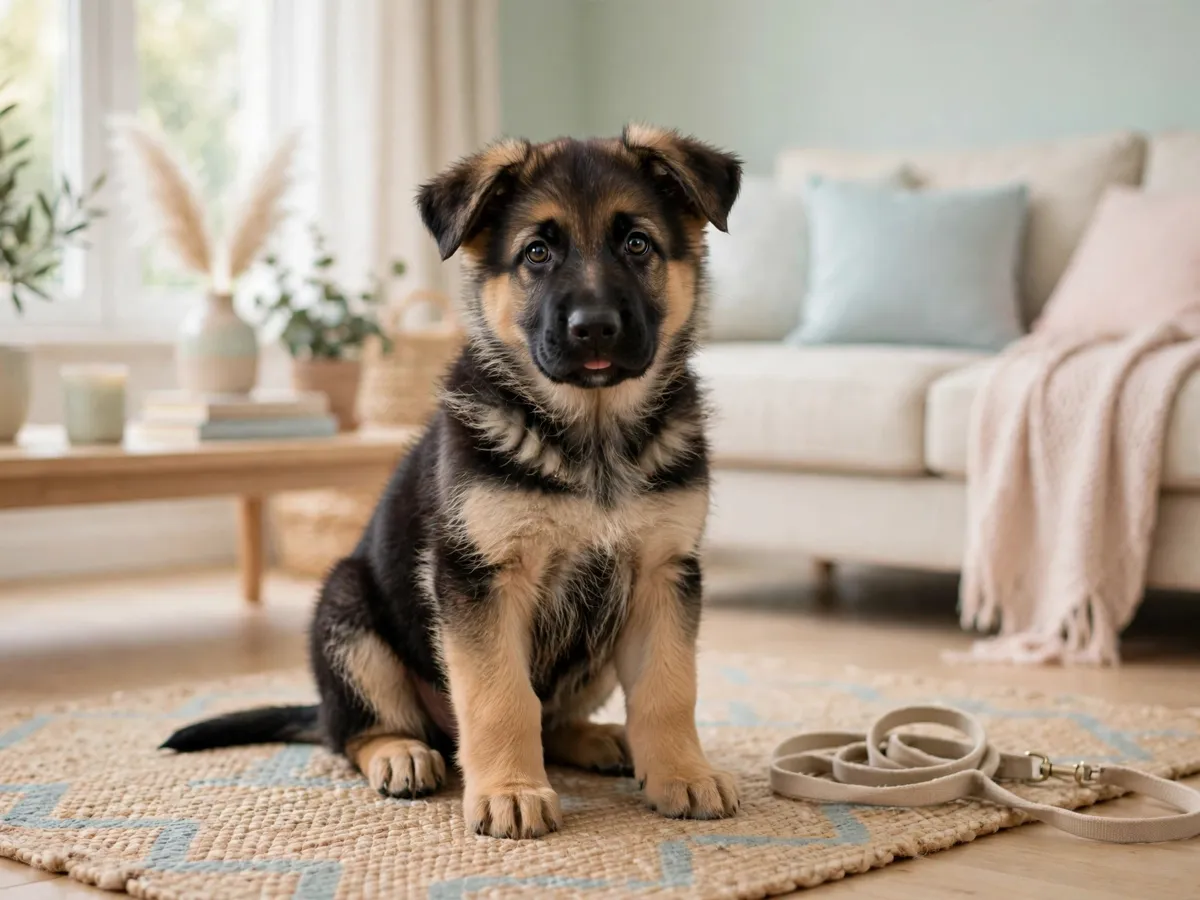
Why a German Shepherd Is Not a Border Collie
Both breeds are clever, both are mouthy, and both end up on the same shortlists, so the mistake is common. The collie was built to close a gap: it moves toward the thing it is working, collecting and gathering, and its joy is motion. The shepherd was built to hold one: it works at a boundary, reads what approaches, and its joy is the decision itself. That single difference rewrites the whole day. The collie household invents jobs. The shepherd household decides what the dog is allowed to watch, and then teaches it what to do while it watches.
The practical test is what the puppy does with a stranger. A collie pup circles a visitor, looking for the flock to gather. A shepherd pup plants itself between the visitor and the household, and then looks up for a verdict. The first puppy needs a job before it invents one; the second needs a clear answer to the question it is already asking: is this one ours, or is this one news? A household that answers every time raises a dog that trusts the answer. A household that shrugs raises a dog that starts answering for itself, which is how a clever guardian turns into a loud one.
Guarding Instinct Versus Herding Instinct
Guarding, in a shepherd puppy, is not aggression and it is not a fault. It is attention aimed outward: the pup notices the door before the bell, the footsteps before the gate, the delivery van before it stops. Left unmanaged, that attention recruits the bark, the bark recruits an audience, and the audience is you, and your response is the payoff. The instinct is not the problem. The problem is an instinct with no job description attached.
The job description has two lines. The first is what the dog does when it sees something new: it comes to you, or it goes to a mat, instead of barking. The second is what you do when it comes: you look first, you answer, and the dog is released back to whatever it was doing. A shepherd that has those two lines drilled is a dog that alerts once and then hands the matter over. A shepherd without them becomes the household's unpaid doorman, announcing everything that moves.
Herding work, by contrast, would ask this puppy to move toward and around the stimulus, which is the opposite instruction. Plenty of shepherds learn it and enjoy it; the point is that a young guardian's first job should be holding position in the presence of newness, not chasing it, and every minute spent teaching approach is a minute not spent teaching the hold.
Mouth Control: Pressure, Not Teeth
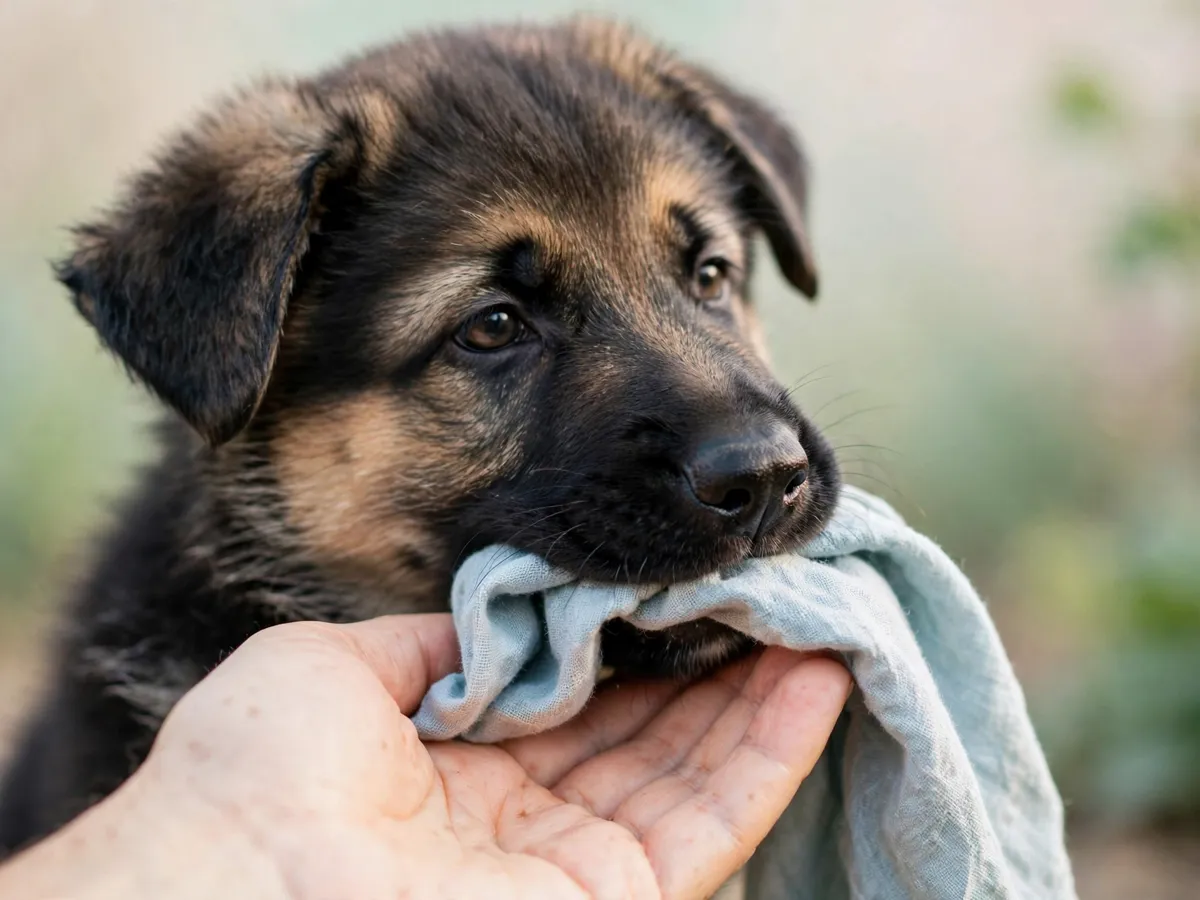
A shepherd puppy does not mainly bite. It takes hold, and it takes hold of everything a household offers: sleeves, wrists, the corner of a knee, the leash. The question that decides the next year is not whether the teeth land, but how hard the jaw closes when they do. That is pressure, and it is what a guardian breed can be taught to grade, long before it is taught to stop.
The grading exercise is a soft cloth and a still hand. Offer the cloth flat on an open palm, let the pup take it, and pay for a take that closes slowly. The moment the jaw clamps, the cloth dies: it stops moving, it stops tugging, it becomes boring. The lesson the pup reads off a dead cloth is that hard mouths end games and soft mouths continue them, and that lesson transfers to every wrist the dog will ever wrap. What ruins it is the hand that jerks back, because a jerking hand is a game, and a pup that wins that game practices winning it on skin.
Handle the head on purpose, too. A breed that will eventually be collared, harnessed and examined all over needs a puppy that accepts fingers on its muzzle, its ears and its jaw without turning the contact into a match. If the bath or the grooming table is the plan, the handling craft is on the bath training for a dog that dislikes being handled page, and it starts with the same flat hand.
Arousal: How the Breed Spikes and Settles
Arousal is the engine speed of the dog, and a shepherd shifts gears faster than almost any pet breed. A doorbell, a thrown ball, a jogger past the fence: the pup goes from asleep to fully lit in a breath. That speed is a feature in the breed's original work and a management problem in a living room, because the spike is easy to trigger and slow to leave. A shepherd that has been revved and then left to idle does not idle; it paces, it barks at nothing, it invents a job.
So the craft is half about how you play. Tug and chase are the two games that push arousal to the ceiling, and both need rules rather than a ban. Tug gets a start signal, a release word, and a hand that is still between reps, so the game has gaps the dog learns to wait inside. Chase, with a guardian, is best attached to an object and never to a running child, because the breed remembers what it was allowed to pursue.
The other half is the way down. End every game before the peak, and finish with a still minute: the pup on a mat, a slow hand on its chest, nothing happening. A shepherd that ends high and stays high is the dog that cannot sleep at night. A shepherd that has been taught the landing many times is the dog that drops onto the same mat by itself. If the noise of the world is the trigger you cannot control, the counter work is on the noise work for bangs and fireworks page, and it runs the same quiet-finish principle.
Gear matters at the moment of the spike, not after it. A pup that explodes at the sight of a harness practices the explosion each time the harness appears, so getting the harness fit right before the gear comes out means the equipment is boring before the dog is wearing it.
A Socialization Ladder for a Watchful Breed
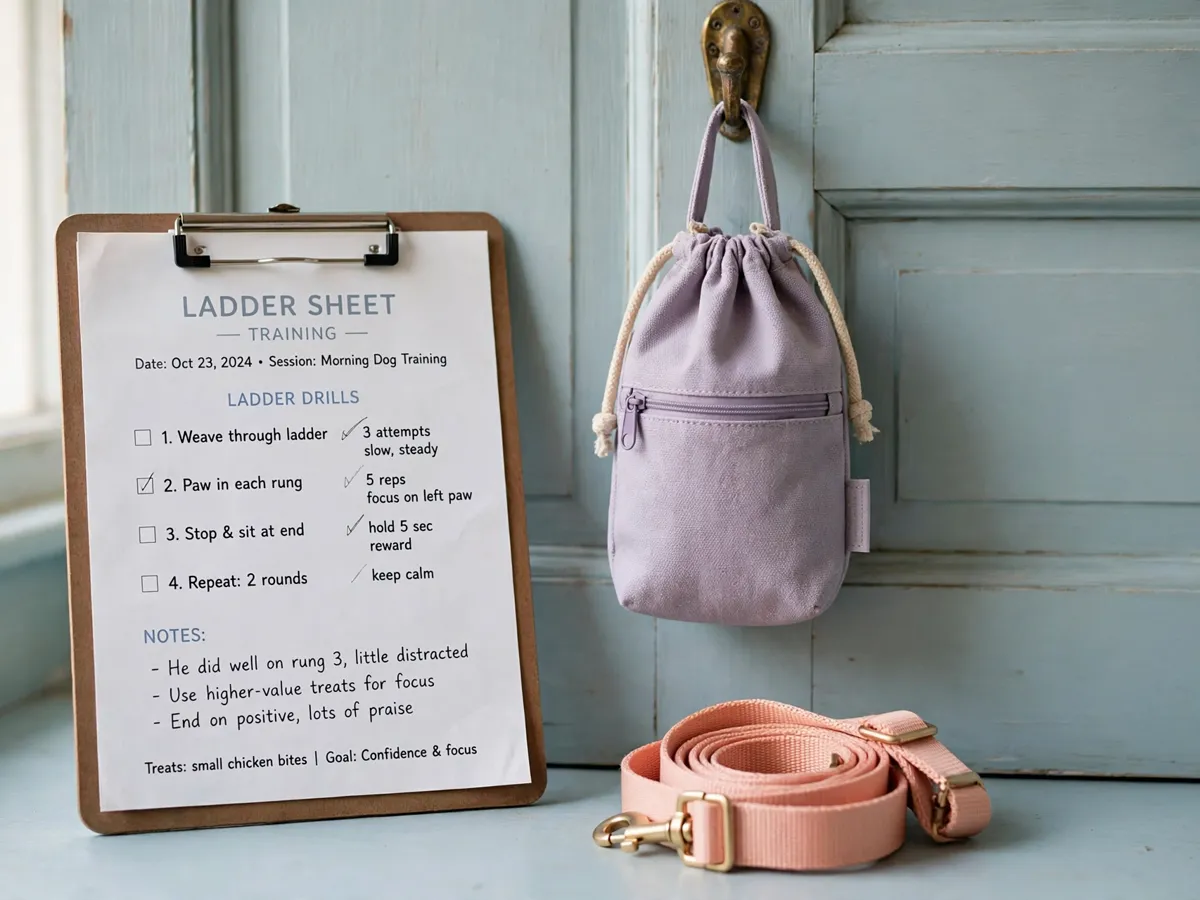
Ordinary socialization advice says expose the puppy to everything. For a guardian breed that instruction is half finished, because exposure without grading teaches a watchful dog that everything is worth watching. The ladder is the missing half: each new thing goes on a rung, and the pup meets the rung below it before the rung above. Distance is the first variable, duration the second, and novelty the last. A stranger at the far end of the street, standing still, is a low rung. The same stranger walking toward the house is several rungs up, and a stranger reaching over the pup's head is the top of the ladder, and it is not a puppy exercise at all.
Each rung has one shape: the pup notices, the household answers, the pup disengages, and the reward lands. What you are paying for is the disengagement, the moment the pup looks away from the new thing and back to you, because that is the behavior an adult guardian runs on. A rung is passed when the pup can see the thing and hold a sit without staring; then the distance shrinks and the ladder rebuilds itself at the new distance.
Watch the pup, not the clock. A shepherd that stiffens, stares and stops taking food has hit its ceiling for the day, and pushing past it teaches the opposite of the lesson: that new things escalate. Two quiet rungs beat ten crowded ones, and a winter puppy can climb the whole ladder indoors, on the plan in indoor socialization for a winter puppy.
Building the Weeks in the Right Order
Order matters with this breed more than volume does, because each block sets up the next. The first weeks are spent entirely on the mouth and the flat hand, because a shepherd puppy that has learned soft pressure is a puppy that can be handled, examined and later trained in close quarters. The next block is the settle, the still minute after play, because arousal control needs somewhere to land. Only then does the ladder begin in earnest, because a pup that cannot come down from a game cannot come down from a stranger either.
Print the plan and tape it to the fridge, because a guardian puppy is a long project and the household that writes its weeks down is the household that notices the dog changing. Keep the blocks in order even when the pup is ahead; a shepherd that is ahead is a shepherd with time to drill, and drilling is exactly what this breed does with whatever it is handed.
German shepherd puppy questions
Should I stop my German shepherd puppy from barking at the window?
Manage it before you train it. A puppy watching the hallway is a puppy rehearsing the alert, and every rehearsal is practice. Draw the blind, move the bed off the glass, and ask for a mat before the barking starts rather than after it. The bark is not the problem; the repetition is.
Is tug of war bad for a guarding breed?
Tug with rules is teaching; tug without them is a fight. A start signal, a release word, and a hand that stays still between reps turn the game into mouth practice. What to drop is the free for all: wrestling on the floor, hands chasing the mouth, and a child yanking the rope sideways.
What should I not do with a guardian breed puppy?
Three things. Do not let hands chase the mouth, even as a game, because a German shepherd reads pressure off your skin. Do not play tug as a free for all with a child pulling the rope sideways. Do not park the puppy in a doorway and call it training. This breed drills whatever it is handed, so hand it the right thing.
Save the guardian puppy plan
Pin this before the puppy lands, and keep the ladder sheet where the leash hangs. The Puppy Training collection holds the plain commands, the crate, the lead and the noise work linked on the way past.