 PawStyle Daily
Puppy Training Tips
Basic Dog Obedience at Home — the Five Commands That Matter
Five commands cover a dog's whole day: sit, stay, come, leave it, and settle on a mat. Every one is taught in a hallway or a kitchen with a pouch of pea-size treats — no class required, no special equipment, and no session longer than the kettle takes to boil. And training matters beyond good manners, which this page comes back to at the end.
By PawStyle Daily · Updated 18 November 2026
Good to know: five commands, one line each · short sessions, many a day · pea-size treats from the daily ration.
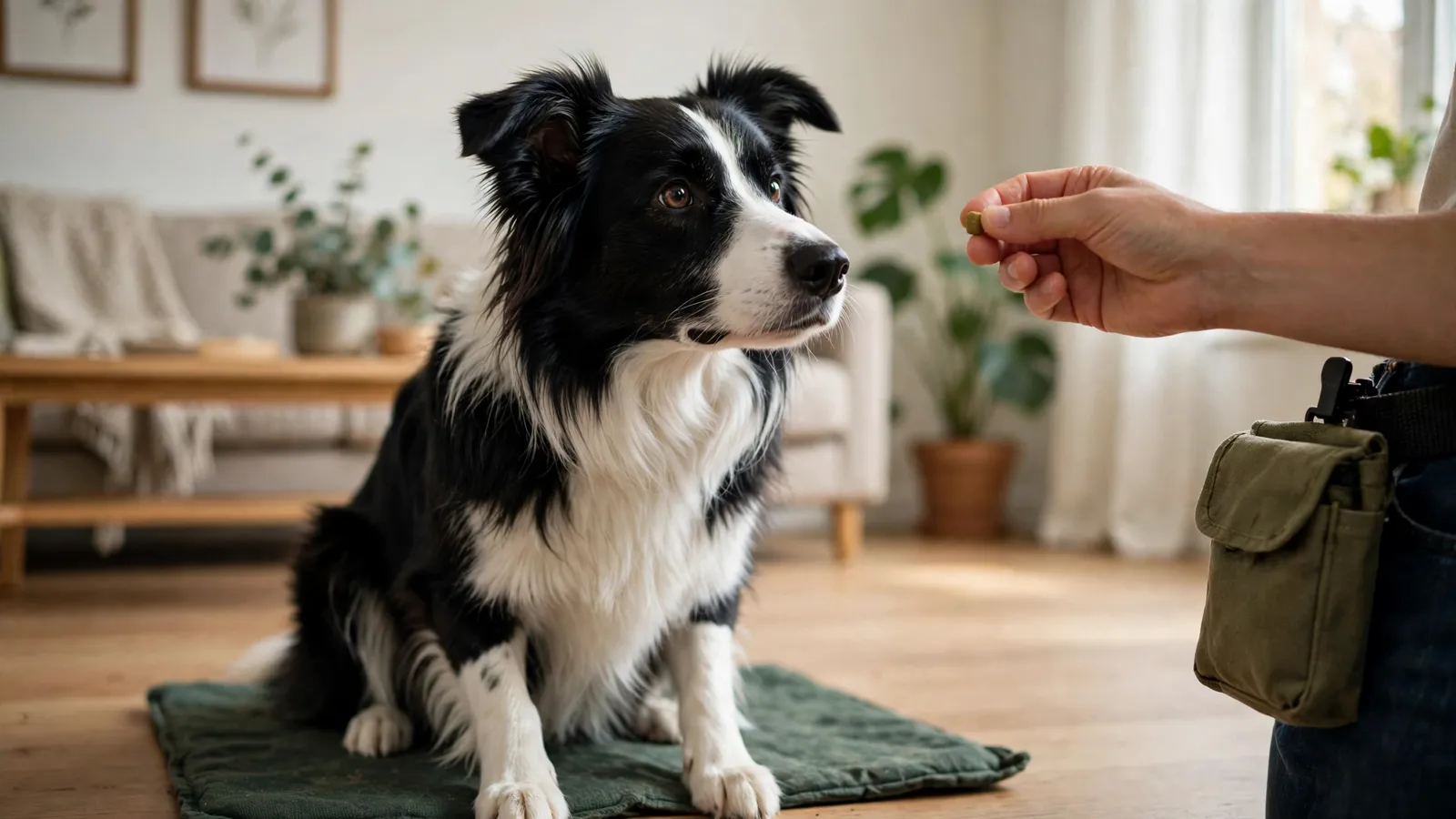
The five, on one line each
- Sit — bottom down as the treat draws back over the nose; the reset button for the whole day.
- Stay — a pause before every door and gate, built on the returns you pay.
- Come — hallway first, paid every single time, never used for baths.
- Leave it — closed fist, then open palm, then the dropped sock on real floors.
- Settle on a mat — the kitchen mat that holds while dinner actually cooks.
The rest of the page builds each one in the order that makes the next one easier.
Sit: the lure and the pause
Hold a small treat at the nose and draw a slow line back over the head — the bottom drops to follow it. The instant it lands, mark and pay. Say the word only once the motion is smooth, never while luring, and never repeat the cue twice: one cue, one rep, one piece from the pouch. Between reps, give full seconds of nothing — a dog waiting between treats is a dog thinking, which is the point.
Sit is also the reset button for everything else. Doorbell, leash, dinner — a dog that sits on cue has a gear the household can reach any time it needs one.
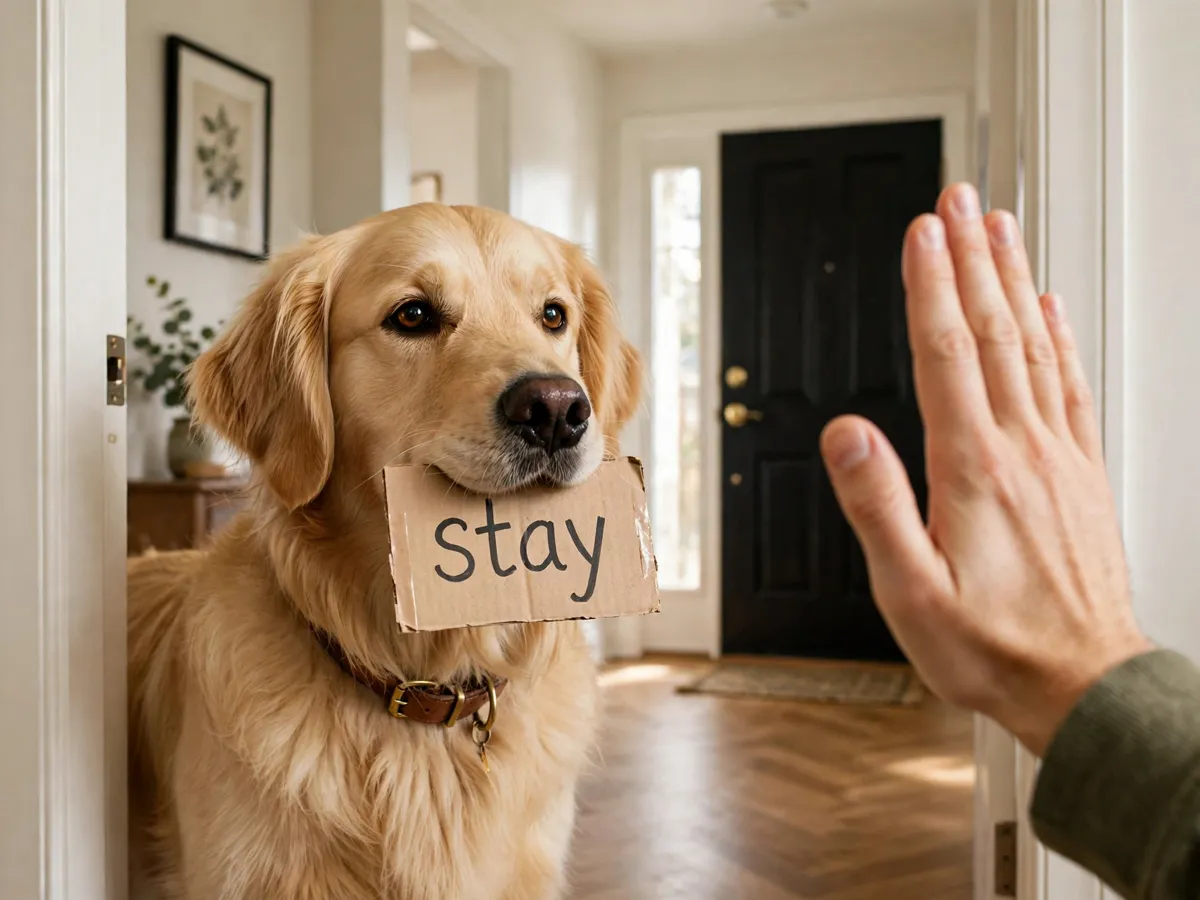
Stay: the pause before every door
Stay is not a long down — it is a habit built at the doors you already walk through. Hand up, one step back, return while the dog is still holding, pay. Build the seconds at the front door, the fridge, the gate, wherever the day already stops. The magic moment is the return: go back before the dog breaks, so that holding wins every time. Skip that, and stay becomes a bet the dog learns to lose.
Come: hallway first, yard later
Come is the most valuable command and the most often ruined, and the ruin usually happens outdoors on day one. Build it indoors instead: ten feet of hallway, dog on one end, you calling once and paying heavily at the other end. Run it through doorways, between rooms, around corners — the distance grows only when the arrival is always worth it.
Two rules keep it safe. Pay every single arrival — come is never a cue you skip the tip on. And never call a dog to something it hates; the bath goes to the dog, not the other way around.
Leave it: fist, palm, floor
Put a treat in your closed fist and let the dog invest — sniff, paw, try its luck. The moment it backs off even an inch, mark and pay from your other hand, so the prize on offer is never the prize it gets for leaving. Then open the palm: flat, still, one second. Slowly stretch the open-palm time, and finally drop the whole game onto the floor where it matters — the dropped pill, the chicken bone at the park, the sock.
The payoff is enormous and invisible: a dog that backs off the floor before you have even seen what it found.
Settle on a mat: the kitchen anchor
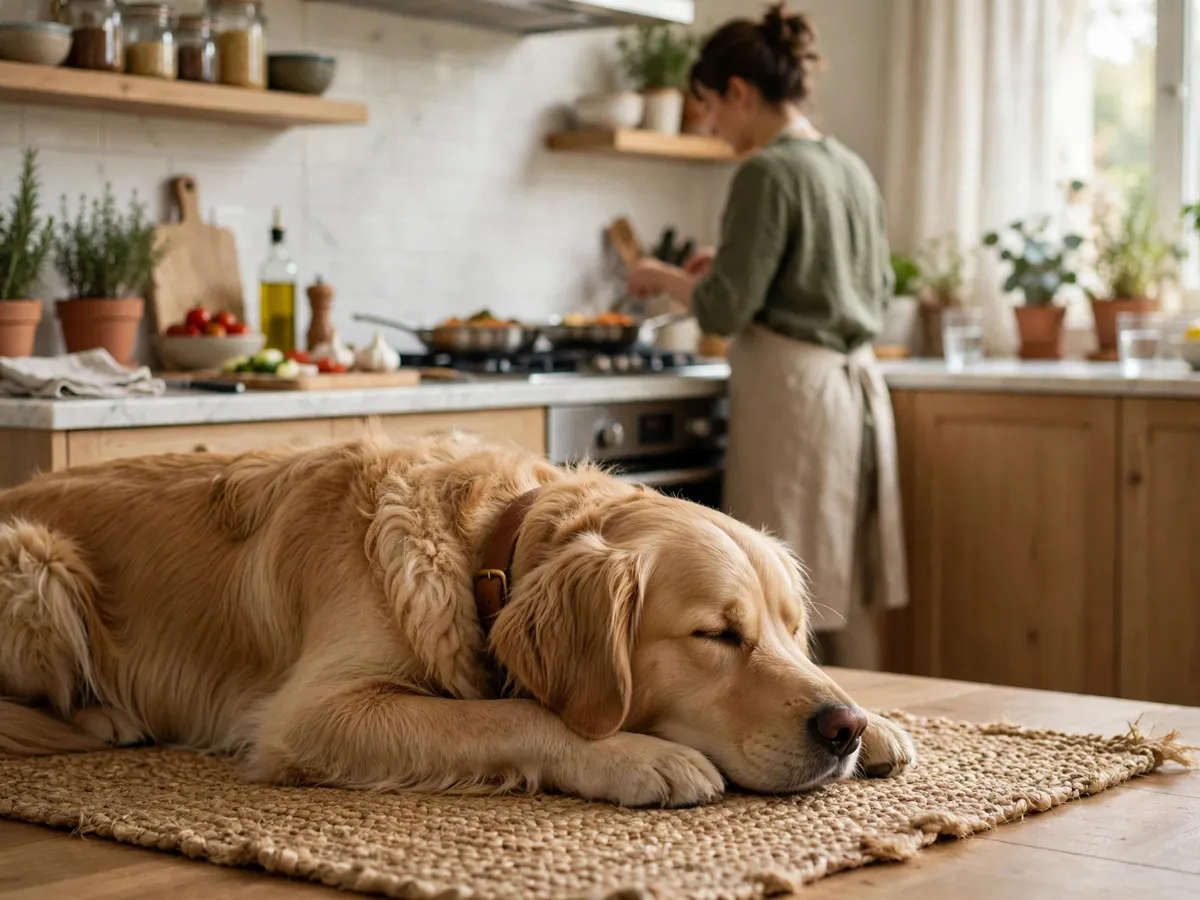
A flat mat by the counter is the whole equipment list. Mat down, dog on it, one calm minute while you stand in the kitchen, then release. Add seconds across days, not hours — a mat that holds through a kettle boiling holds through a dinner party in a month's time. The mat goes where the noise goes: kitchen while you cook, hallway when deliveries come, hotel room on holiday.
Sessions that fit a real day
Five commands do not need an hour; they need moments. One minute of sit while the kettle boils, one hallway of come while you pass through, one pause before the fridge. Spread across the day, the minutes add up to more than a class hour ever would — and the dog never has to work past the point of wanting to.
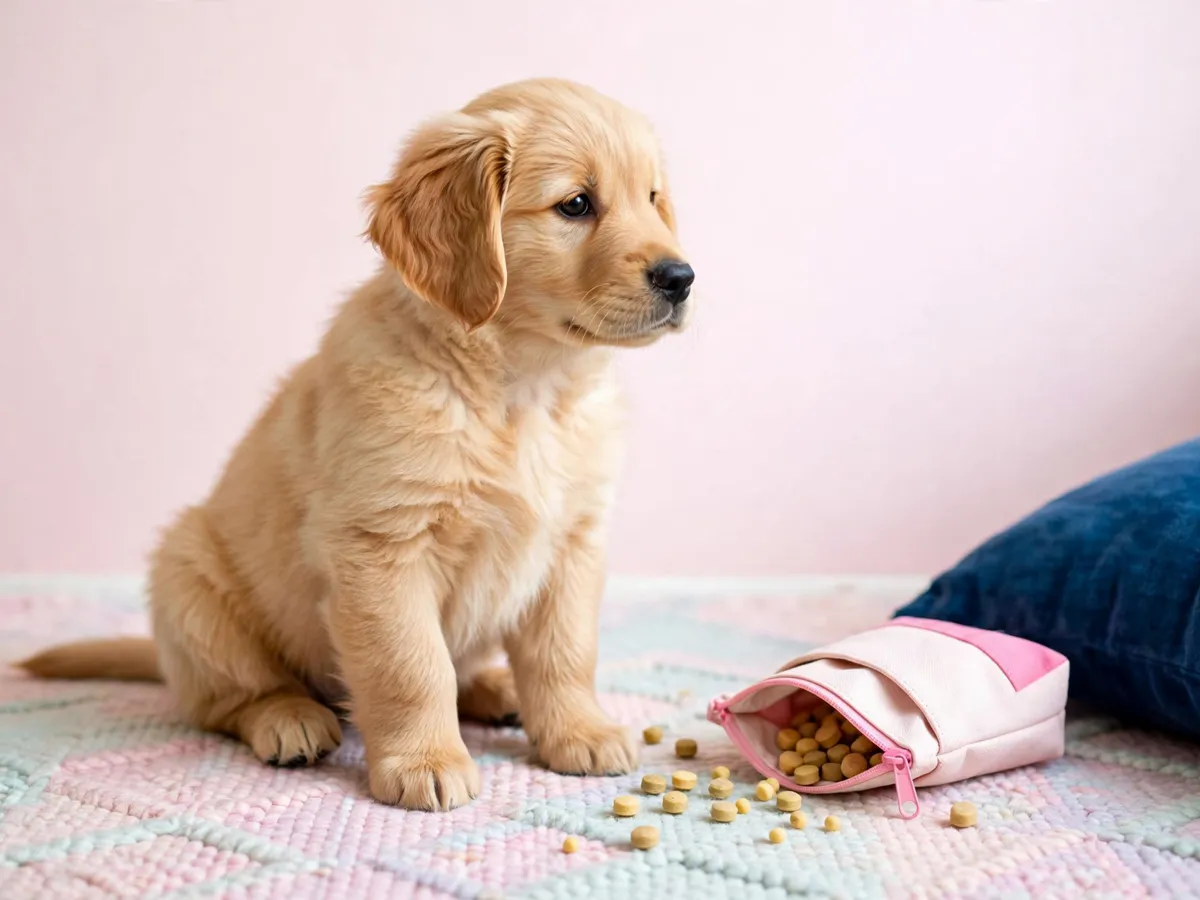
When treats are for training, keep each one as small as possible and count it against the day's food. Pea-size is the pace — small enough to repeat ten times without thinking about it, honest enough that the reward budget never runs the bowl. A pouch by the door means a rep never has to wait for a treat to be found.
Pulling on the walk? the front-clip fix
Obedience lives indoors, but the walk tests it. If the five commands are solid and the leash is still a tug-of-war, the gear may be working against you — a front-clip harness turns the pull back toward you instead of letting the dog lean into it. The front-clip versus back-clip guide walks the difference; this page stays on the commands themselves.
When progress stalls
Check the treat first, then the room, then the dog. A reward gone stale makes reps expensive; a room with too much noise makes a hallway lesson a street lesson; and a dog that is off its food or its usual self is not being stubborn — it is telling you something, and that question belongs to your vet. Nothing about stalled progress calls for longer sessions or a louder voice; it calls for smaller steps and a cleaner room.
One more reason the five matter. The American Veterinary Society of Animal Behavior states that behavioral issues, not infectious diseases, are the number one cause of death for dogs under 3 years of age. Sit, stay, come, leave it and settle are not tricks for company. They are the skills a household leans on every day, in the kitchen, at the door, and on the sidewalk.
Obedience training questions
How long should a training session be?
Shorter than you think — a minute or two per command, a few moments a day, beats one long block. End on a rep the dog won, and the next session starts with a dog that wants to play.
What treats should I use for training?
When treats are for training, keep each one as small as possible and count it against the day's food. Soft pieces beat crunchy ones for pace, and the bowl's daily ration is the honest source of the reward budget.
My dog ignores come in the yard. What now?
Go back inside. Come is built indoors and in hallways first, where there are fewer smells and no squirrels, and it is paid generously every single time. A cue that fails outdoors is not broken — it is just unfinished.
Is sit enough, or do I need classes?
Sit, stay, come, leave it and settle cover the daily life of most households, and all five are taught on this page. Classes add practice around other dogs and a trainer's eyes on your timing — worth going if the pieces above feel shaky, and no shame in either order.
When progress stalls, what do I check first?
The treat, then the room, then the dog. Reward too small or too stale, too much noise in the room, or a dog that is off its food or its usual self — that last one is a question for your vet, not for a longer session.
What we use
What we use for home obedience sessions
Treat pouches, pea-size molds, a flat training mat and a doorway tether — the five-command kit in one list.
See what we use →As an Amazon Associate we earn from qualifying purchases.
Save these on Pinterest
Pin the five-command list for the fridge. The Puppy Training collection holds the commands and rewards page for puppies, the biting and mouthing guide, and the daily walk length by breed for the walk that tests all five.
Five commands, short sessions, pea-size treats. This page is for informational purposes — consult your vet when the dog is simply not itself.
When the cues are solid, the a backyard agility course from scrap page turns them into a weekend game with broom handles and bottles.
The five commands here work because of the reasoning on the why reward-first cues stick page, not the other way around.
The five cues live on the kitchen floor first, and the the same cues in a training hall page is where they meet a trainer and a room.