 PawStyle Daily
Puppy Training Tips
Daily Walks by Breed: Lengths That Actually Fit
The honest walk budget: a toy breed and a giant breed do not want the same loop, a puppy does not want one long walk at all, and a sniff-heavy stroll counts as a real walk. Pick the row that matches your dog, and let the dog set the pace.
By PawStyle Daily · Updated 18 November 2026
Good to know: walks are a rhythm, not a schedule to hit · every outing ends while the dog still wants more · for informational purposes, consult your vet.
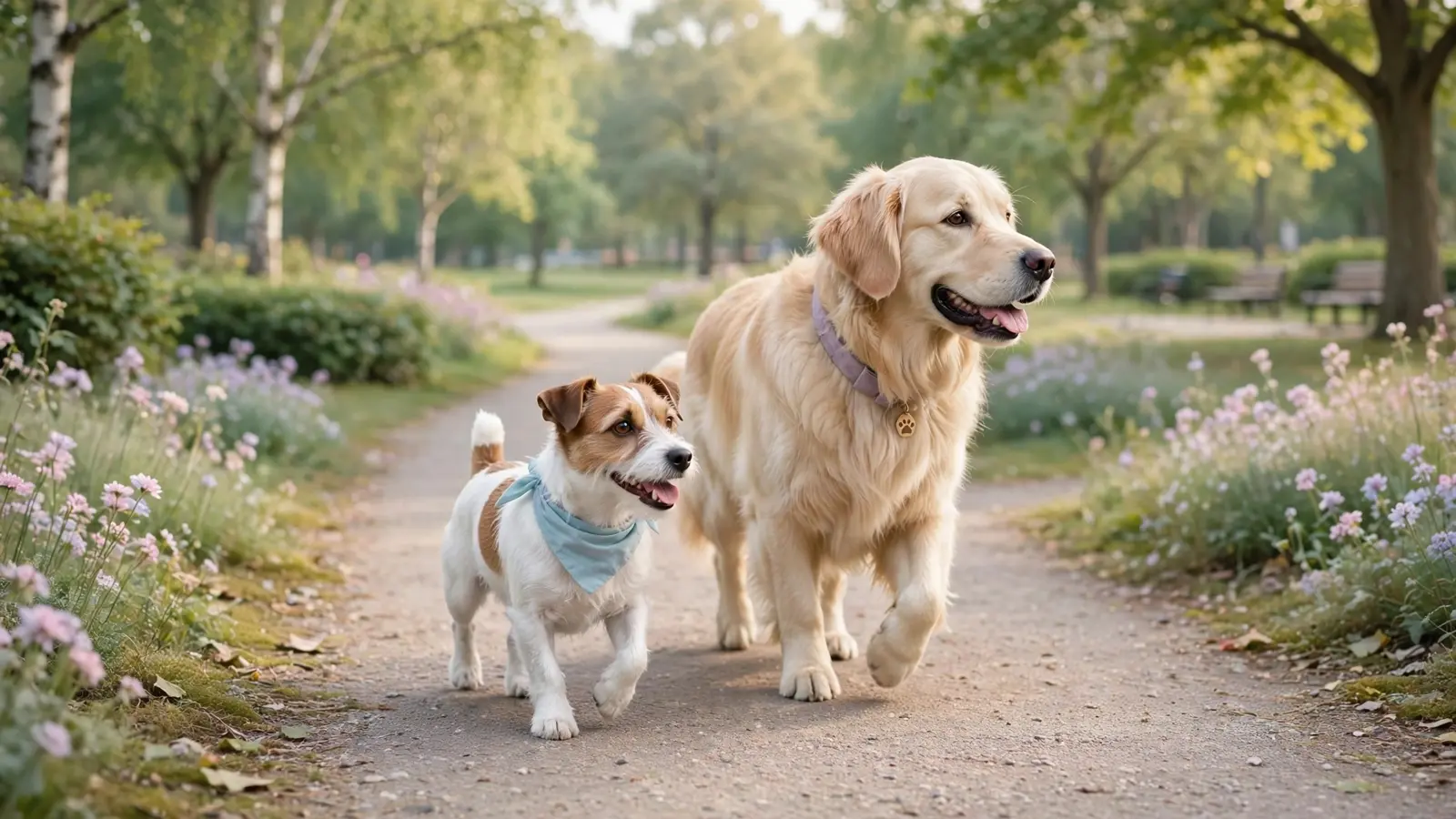
The walk budget by breed group
The table below is a starting point, not a quota. Two outings a day is the common rhythm for adults, a puppy splits its time into several very short outings, and the sniff-heavy stroll is a walk in its own right — not a failed march.
Walk rhythm by breed group
| Breed group | Walk rhythm | Notes |
|---|---|---|
| Toy breeds | Two or three short outings, each a few blocks at most | Tiny legs, tiny bladders — a short loop repeated beats one long march, and cold weather shortens it further |
| Small breeds | Two walks a day, one longer weekend loop | The weekend loop is the sniff-heavy one, on a long lead where the park allows it |
| Medium dogs | Two walks a day plus play | The everyday rhythm: a morning loop, an evening loop, and a ball game in between |
| Large breeds | Two solid outings a day | Two real walks, and a third short one on the high-energy days |
| Giant breeds | Two calm walks a day | Steady paces and no forced running while the breed is still filling out |
| Puppies | Several very short outings | Five minutes around the block, ending while the puppy still wants more — the walk is the puppy's, not yours |
| Flat-faced breeds | Short, slow, and in the cool hours | Heat and humidity are the limit, not willingness — watch the breathing, not the clock |
| Long-backed breeds | Steady flat walks, no jumping | A harness, flat routes, and stairs and furniture jumps skipped, not managed |
| Seniors | Shorter, more frequent loops | The same total time split into smaller outings, at the pace the dog sets |
For informational purposes, consult your vet. A dog that seems stiff, slow or unwilling is asking for a shorter day, not a longer walk.
Puppies: many short outings, at the puppy's pace
The old rule of thumb — one short outing per month of age, and rarely more than two of those a day — is really a shape, not a stopwatch: short, calm, and ended early. A puppy walk is a sniffing field trip, not a cardio session. Let the puppy set the pace, take every sniff stop it asks for, and turn for home while it is still keen, because the walk that ends too soon is the one the puppy begs to repeat tomorrow.
A puppy that grows too fast has a higher risk of bone and joint problems, so large and giant breeds need slow, steady growth. That is why the giant-breed puppy gets a stroll to the corner and back while its same-age toy-breed friend is already doing two loops of the block — the growing bones set the budget, not the energy. Small and medium breeds reach adult size around 10 to 12 months, while large and giant breeds keep growing until 18 to 24 months. The gap between the two puppyhoods is real, and worth planning around.
For the food side of that growth, see our puppy growth chart and weights, and for turning walk time into training time, the first commands with treat rewards all practice beautifully on a quiet sidewalk loop.
Flat-faced and long-backed breeds
Two body shapes change the walk plan, and neither one means less walking — they mean differently shaped walking.
Flat-faced breeds — French bulldogs, pugs, Boston terriers — pay a higher cost for heat, humidity and pace. Their outings are short and slow in warm weather, in the coolest hours of the day, with water carried, and they are the first breed group moved indoors on a hot afternoon. A dog that is breathing loudly, wearing a wide tongue, or planting its feet is done for the day.
Long-backed breeds are the dachshunds and their cousins. The AKC lists two Dachshund sizes, standard at 16 to 32 pounds and miniature at 11 pounds and under. The AKC describes the Dachshund as having a long, low silhouette. That silhouette walks beautifully on flat ground — steady neighborhood loops are the bread and butter — while repeated stairs, high furniture jumps and rough play are the things to skip. Keep the body lean and let the walks stay flat.
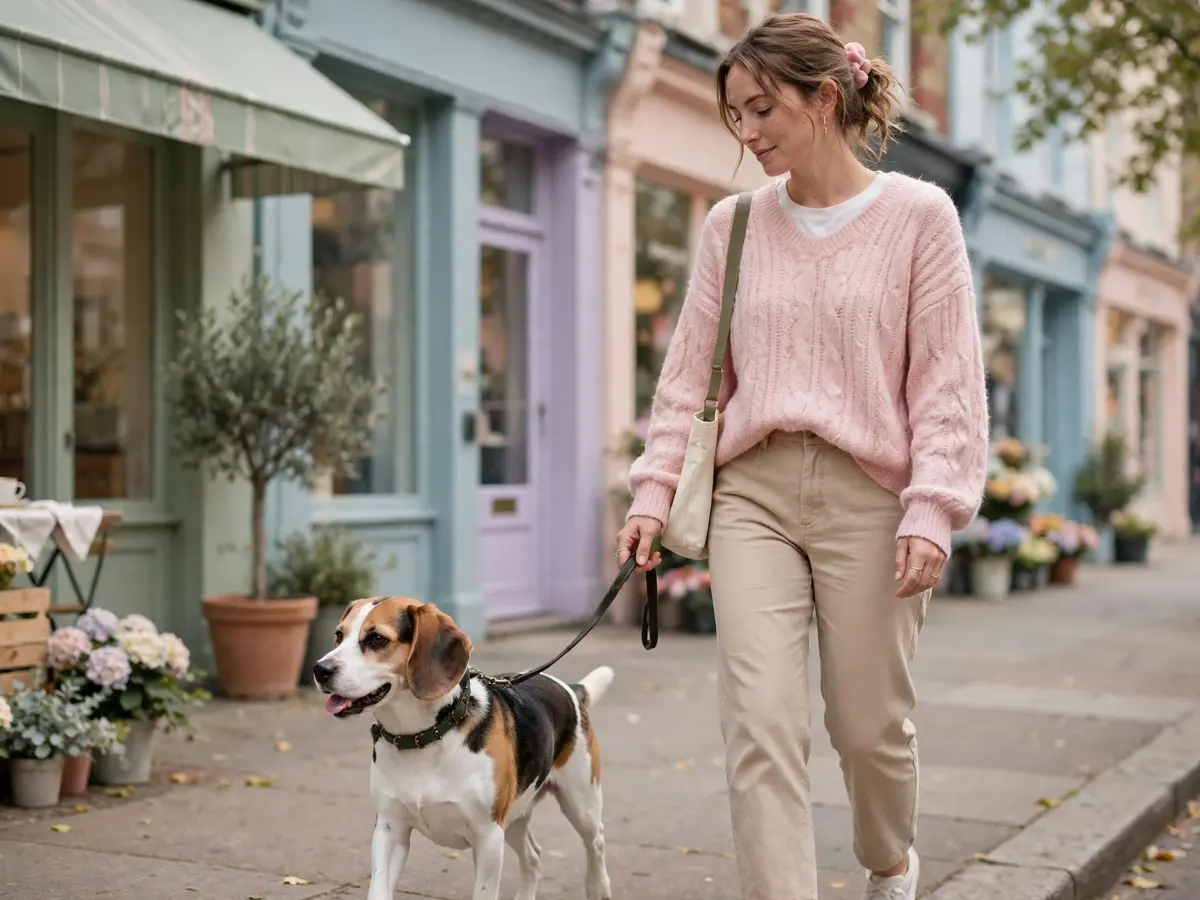
For the gear side, the harness sizing and fit guide covers the two-finger check every one of these dogs needs before the first walk.
The snuffle stroll vs the brisk walk
Two walks of the same clock length are not the same walk. The brisk loop is the cardio walk: a steady pace, few stops, the distance covered. The snuffle stroll is the nose walk: a long lead where allowed, every hedge read like the morning paper, a hedge-row sniff that takes ten minutes of a twenty-minute outing. A dog that settles at home after a walk was probably on a snuffle stroll, and a dog that comes home bouncing was on a march.
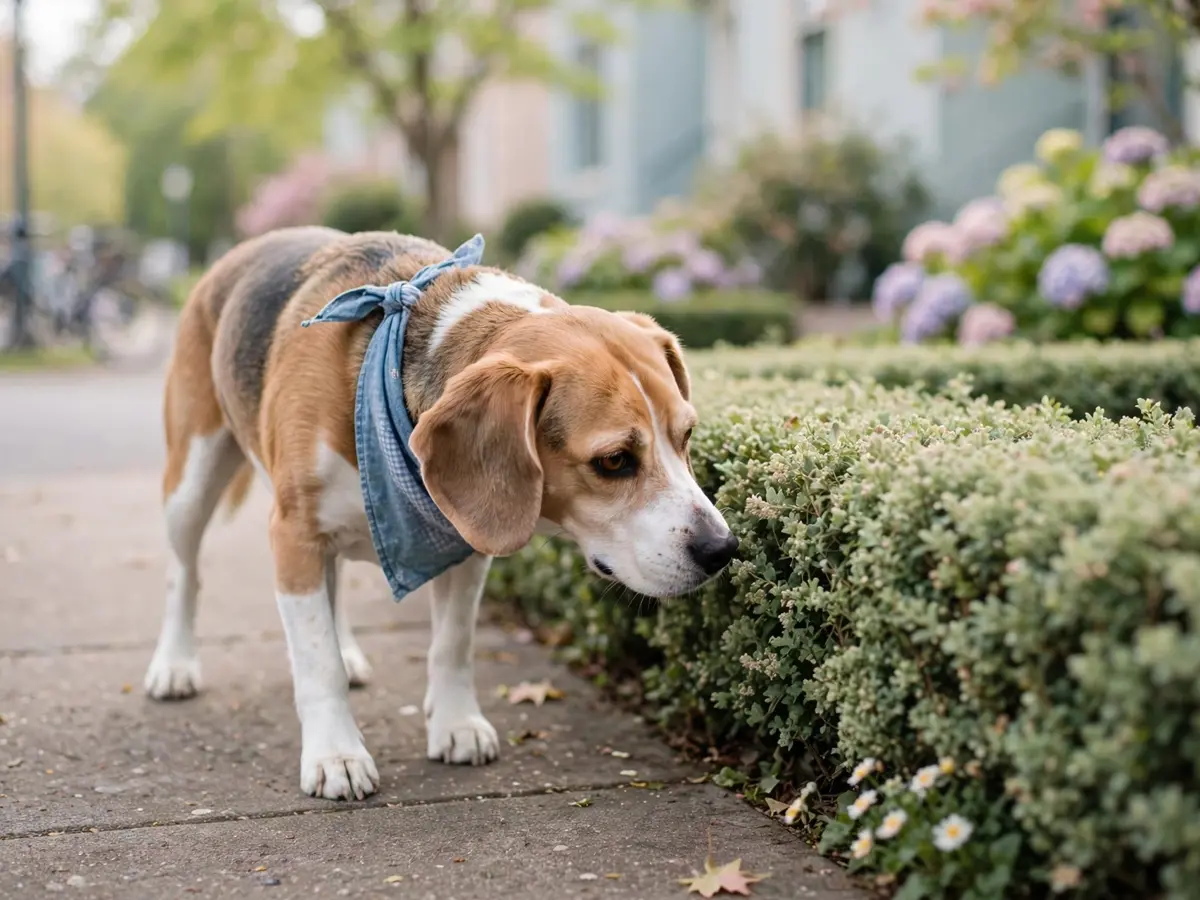
Most dogs want both in a week: the brisk loop for the body, the snuffle stroll for the head. The common split is the brisk loop in the morning before work and the sniff-heavy stroll in the evening, when nobody is watching the clock.
Weather sense: heat, cold and dark
Weather edits every budget on this page. In heat, walk early or late, test the pavement with the back of your hand, and shorten every flat-faced and thick-coated outing first. In cold, most dogs take a brisk dry loop happily, while thin-coated breeds wear a coat, paws get rinsed of street salt at the door, and a lifted paw or a shiver ends the walk.
The dark months change the shape again: reflective gear, a light on the lead, and routes you both know. Our winter walks and dark-evening safety guide covers that kit in full.
Treats on the walk, counted from the day's budget
The walk is the best training floor you have, because the distractions are real. Loose-leash practice pays one piece at the moment the lead goes slack, the name game pays one piece for each check-in, and the curb is its own lesson: sit at every crossing, cross on your word, one piece on the far side.
When treats are for training, keep each one as small as possible and count it against the day's food. Treats should stay at no more than five percent of a dog's daily calories, so keep the pieces small. A pocket of pea-sized pieces covers a whole training walk, and the pieces come out of the same bowl the dinner kibble comes from, not on top of it.
Walk length questions, answered
How long should a walk be for a puppy?
Short, and led by the puppy. A loop around the block that ends while the puppy still wants more beats one long march. Let the puppy set the pace, take the sniff stops it asks for, and carry the puppy home if the last stretch turns into sitting on the sidewalk.
How many walks does an adult dog need a day?
Most adult dogs do well on two outings a day, and a sniff-heavy stroll counts as a walk. A high-energy breed usually wants a third short loop or a game at home on top, and a rest day is allowed: a dog that seems stiff or slow gets a shorter day, not a longer one.
Is sniffing on a walk a waste of walk time?
No, and it is worth planning for. A slow sniff-heavy stroll on a long lead and a brisk loop tire a dog in different ways, and many dogs settle better at home after a walk that was mostly nose work. Mix the two across a week rather than making every outing a march.
What is different about walking a flat-faced breed?
Flat-faced breeds work harder in heat and humidity, so keep their outings short and slow in warm weather, carry water, and pick the coolest hours of the day. Loud breathing, a wide tongue, or a dog that plants its feet — any of those ends the walk on the spot.
What is different about walking a long-backed breed?
Long-backed breeds like dachshunds suit steady flat walks, not jumping from heights or stairs repeated all day. Keep them lean, use a harness rather than a collar, and treat stairs and furniture jumps as the thing to skip, not the walk itself.
Can treats be used on a walk for training?
Yes, and the walk is the easiest place to practice loose-leash walking. When treats are for training, keep each one as small as possible and count it against the day's food — a pocket of pea-sized pieces covers a whole walk.
How cold is too cold for a walk?
A brisk dry walk is fine for most dogs in a winter coat, but a shivering dog, a lifted paw, or a thin-coated breed in freezing wind is telling you the loop is over. Shorten the route, add a coat for the thin-coated breeds, and rinse salty paws at the door. Our winter walking guide covers the dark-evening side of this.
How hot is too hot for a walk?
Use the back of your hand on the pavement: if you cannot hold it there for a few seconds, the walk moves to grass, to the coolest hours, or to tomorrow. Flat-faced breeds, thick-coated breeds and overweight dogs feel heat first, so their summer walks are short, slow and shady.
Save these on Pinterest
Pin the breed-group table for the next walk plan, then read the first commands with treat rewards and the puppy growth chart for the feeding side of growing up. Everything for the first year lives in the Puppy Training collection.
Walk lengths here are general guidance by breed group, not a plan for one dog. For informational purposes, consult your vet.
For the days the walk gets cut short, the backyard agility for rainy days page builds the exercise into the yard instead.