 PawStyle Daily
Puppy Training Tips
Backyard Dog Agility Course: Six Obstacles from Household Things
A dog does not need a club field to learn agility. It needs a broom handle, two stacks of bricks, a cardboard box, a row of bottles, a towel, and a person willing to spend one afternoon building. This page builds the whole course out of the garage and the recycling bin: six obstacles, a ring to lay them in, a bar height read off the dog itself rather than off a chart, and the order the obstacles should be taught in. The lead handling and the reward baking live on their own pages, linked below.
By PawStyle Daily · Updated 22 November 2026
Good to know: build day and train day are different days | read the bar height off the dog | lay the ring before the obstacles | teach one obstacle at a time | weight the bottles down.
Agility in a Backyard, Not a Club Field
Club agility is a sport with regulations, ring crews and registration numbers. Backyard agility is a set of props and a relationship, and the two share only the obstacle names. That is good news for a household, because the expensive part of the club version is the field and the equipment, and the learning part, the part where a dog works out what its body can do, happens anywhere the props are honest. A broom handle that falls when bumped teaches the same jump lesson a club jump does.
The honest prop is the whole philosophy. Everything on this course gives way when the dog gets it wrong: the bar falls off the bricks, the bottles tip, the box flattens rather than catching a shoulder. A course that punishes a mistake with an injury is a course the dog learns to avoid, and a dog that avoids the equipment does not train on it. Build light, build low, and let the geometry do the teaching.
One afternoon builds it and a second afternoon lays it out. The build day is the fun part and the tempting part, and the mistake almost everyone makes is training on the build day, with a dog that has been watching from the window and is already over the top. Build everything first, put it away, and let the course arrive one obstacle at a time on the days that follow.
Read the Elbow Height Off the Dog
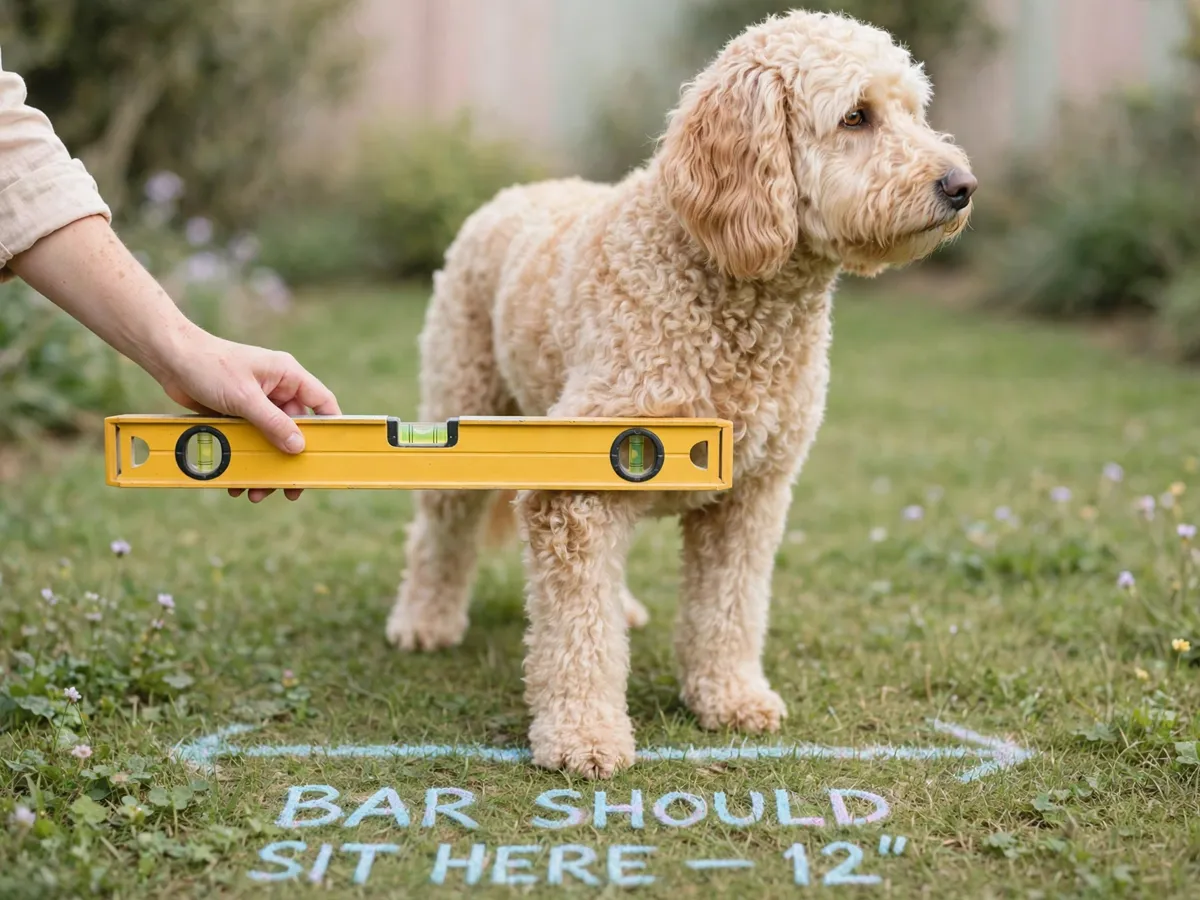
Every jump height on this page comes off the dog in front of you, not off a table. Stand the dog square on flat ground, lay a flat hand level with the point of its elbow, and that is the working line. The first bar sits below it, low enough that the dog steps over rather than ducking under, and it rises only when the jumping shape is boring to watch. This matters more than it sounds: a bar set from a chart is a bar set for a different dog, with different legs and a different confidence, in a different yard.
Use the same hand measure for every obstacle that has one. The box tunnel gets its opening cut to the dog's shoulders, the bottle weave gets its spacing set to the dog's length, and the pause table, if you build one, gets its top set to the dog's knee. One dog, one measure, and the course fits the dog rather than the dog fitting the course. A young dog or a heavy dog gets the same reading taken again after a season, because the dog changes and the course has to follow.
Six Obstacles From Things You Already Own
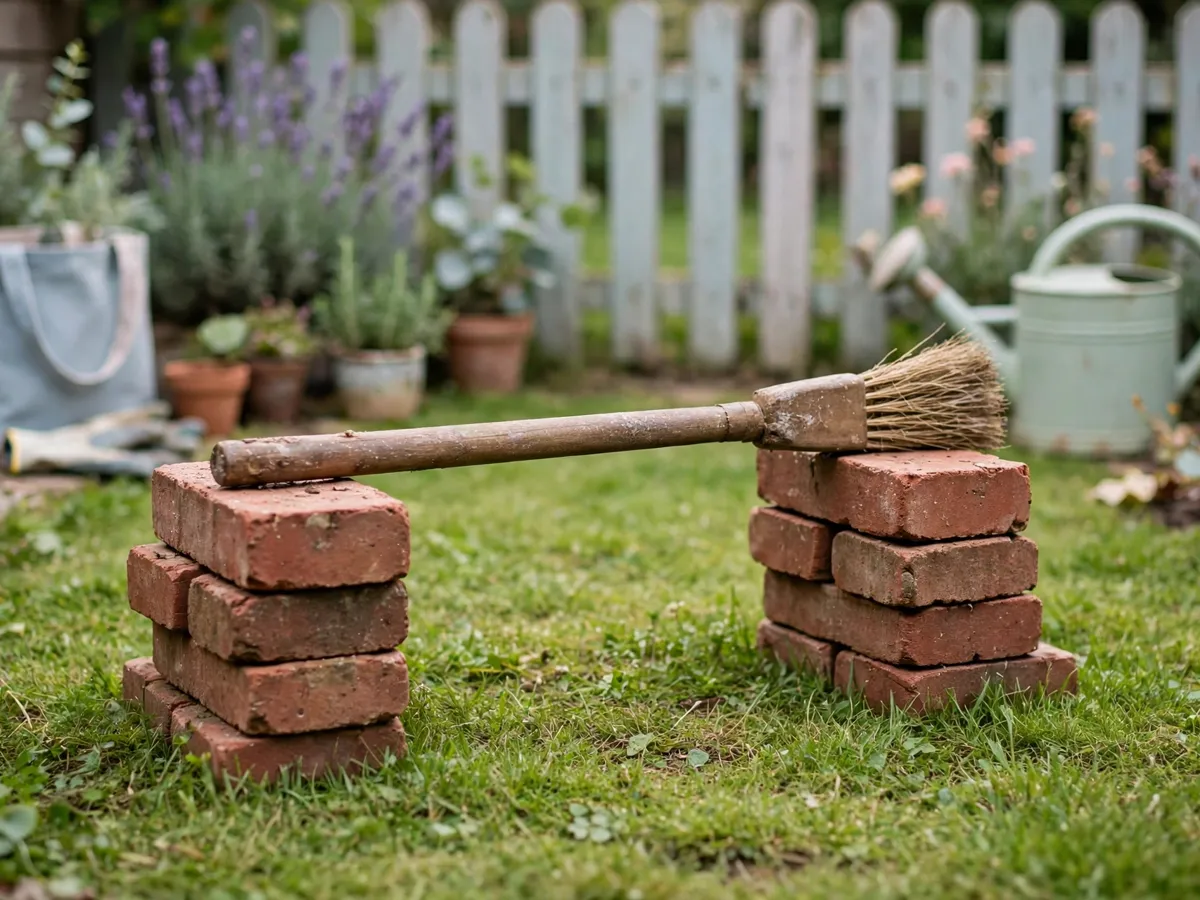
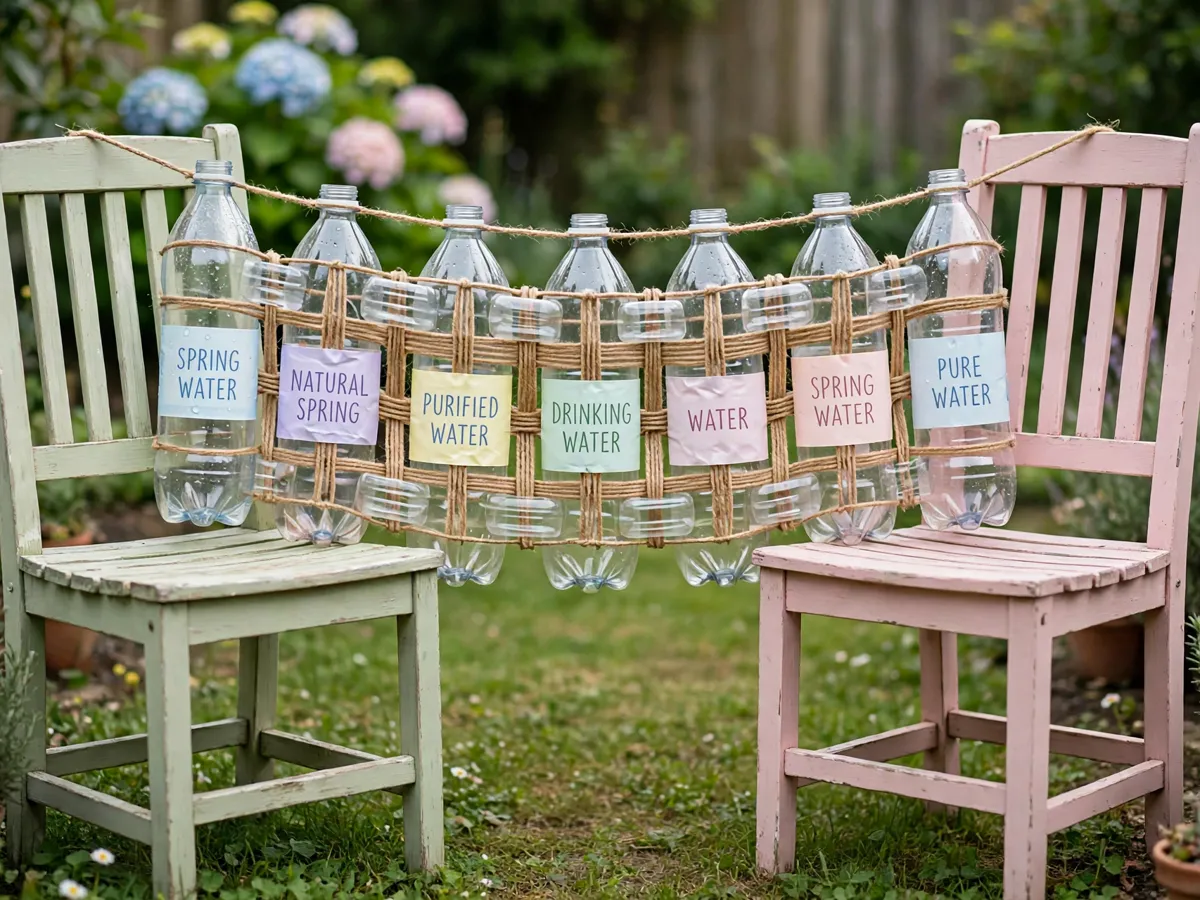
The jump is the broom handle and the two brick stacks, laid so the bar rests on the high points and falls off with any real contact. The tunnel is a cardboard box with both ends open and the flaps cut away, wide enough at the shoulders that the dog never has to squeeze. The weave is the row of bottles strung on a line between two chairs, and the rule is to weight the bottles down so they stand, not so they stop a dog; they are meant to be bumped and forgiven.
The chute is a towel pegged to a low line, hanging so the dog can push through the hanging fabric with a shoulder. The pause table is an old coffee table or a shipping crate top, set low, with a non-slip surface taped down. The broad jump is a row of rolled towels laid flat on the grass, side by side, each one a small step the dog takes in stride. Nothing here is bought. Everything here breaks down and goes back into the garage in the same afternoon.
Build honesty into each piece. A bar that sits in a groove does not fall, so do not cut grooves in the bricks; rest the bar loose. A box with one end closed is a trap, not a tunnel, so cut both ends. Bottles that are tied tight at the neck act like posts, so tie them loose enough to tip. The props should be saying the same thing to the dog: bump me and nothing bad happens, get it right and we keep going.
Layout: Turns, Run-Offs and Room to Stop
Lay the six obstacles in a rough ring, not a line. A line has one speed and one exit, and a dog that runs a line learns to blast from the first obstacle to the last with no conversation in between. A ring has turns, and a turn is where the handler lives: the moment the dog has to look up and find out where to go next. Put the two easiest obstacles, the jump and the tunnel, opposite each other so the ring reads as a loop from the very first day.
Leave a run-off on the far side of every obstacle: clear grass past the landing, so a dog that goes long lands on lawn and not on the next prop. Leave more room than looks reasonable behind the tunnel, because a dog exits a tunnel at whatever speed it entered, and the exit is where most home courses send a dog into a fence. If the ring has to share the yard with a clothesline, a play set or a garden bed, treat those as walls and turn the ring away from them rather than running past.
The Teaching Order, One Obstacle at a Time
Teach the obstacles in the order the dog's confidence grows, not the order they sit in the ring. The tunnel comes first, because a dog that will push through a dark box has already decided the course is worth trusting. The jump comes second, low and flat, walked over rather than jumped. The broad jump, the towel row, comes third, because it is the jump with the shape changed and nothing else new.
The pause table comes fourth, and it is the one obstacle that is pure patience: the dog steps up, sits, and waits while the household walks a circle around the ring. The weave comes fifth and last, because it is the only obstacle that asks for footwork, and footwork on a young dog is a slow, boring, well-rewarded business. Each obstacle earns its place in the ring when the dog runs it loose and happy twice without a lure, and not before.
One obstacle per session, and short sessions, with the reward paid at the obstacle rather than back at the house. The bake for the pocket sized rewards that make this work lives on the the bake for pocket sized rewards page. When a session ends, end it on the obstacle the dog loves most, so the course keeps its reputation.
Homemade Versus Bought, Part by Part
Weigh the homemade versus the bought version part by part, on material and on what the material does to a mistake, not on price. A bought jump has a groove and a heavy base, and it stays standing when a dog clips it, which is exactly the wrong lesson at home. The broom handle on loose bricks is free of that: it falls, the dog learns, and nothing is bent. A bought tunnel holds its shape against wind, rain and a shoulder, and that robustness is worth paying for if the course lives outdoors through a season; a cardboard tunnel is honest for a season of dry weekends and then it is recycling.
The bought versions that earn their keep are the ones the household cannot make stiff enough: a proper weave set that stands without being sandbagged, and a pause table with a real non-slip top. The cardboard craft, if you want the full build playbook with photos, is the same one behind the cardboard builds that keep their shape under a dog, and it transfers box for box.
Whatever the material, the dog has to run the course on a lead first, and the lead has to be one the handler understands before anyone is moving fast. how a slip lead works before anyone runs on one before the first session, not during it.
Backyard agility questions
How high should the first jump bar be?
Low enough that the dog steps over it rather than ducking under it. Read the height off the dog's own elbow, start the bar below that, and only raise it once the shape is boring. A bar set from a chart on a wall is a bar set for a different dog than the one in your yard.
Does my dog need obedience before agility?
It needs a recall it will run, a marker it understands, and a bowl it eats from calmly. Beyond that, the obstacles teach themselves in the order above. A dog that sits for everything is not required, and a dog that has never seen a tunnel learns the tunnel in one short session.
Is a backyard course enough, or should I join a club?
A backyard course is practice; a club is proof. Reps at home build the mechanics cheaply and on your own timetable, and a club class is where the same dog runs a real ring with real heights. Do one before the other only if the yard is muddy, too small, or shared with a dog that will not wait.
Save the six obstacle plan
Pin this before the build day, and keep the ring sketch where the toolbox lives. The Puppy Training collection holds the lead work, the recall and the reward baking that this page links to on its way past.