 PawStyle Daily
Puppy Training
Positive Reinforcement Dog Training: The Method, Step by Step
Positive reinforcement dog training is the method that rewards the behavior the handler wants and withholds the reward from the behavior the handler does not want. The method works on a puppy the day it comes home, and it works on an older dog that learned different rules first, because the dog learns what earns the food and the dog does what earns the food. This page walks through the method itself: the marker word, the reward timing, a first week plan, and what the method is not. No force, no alpha, no collar that does the work.
By PawStyle Daily · Updated 22 November 2026
Reward the behavior, withhold the reward from the rest · the marker word bridges the gap · the timing window is brief · for informational purposes, consult your vet.
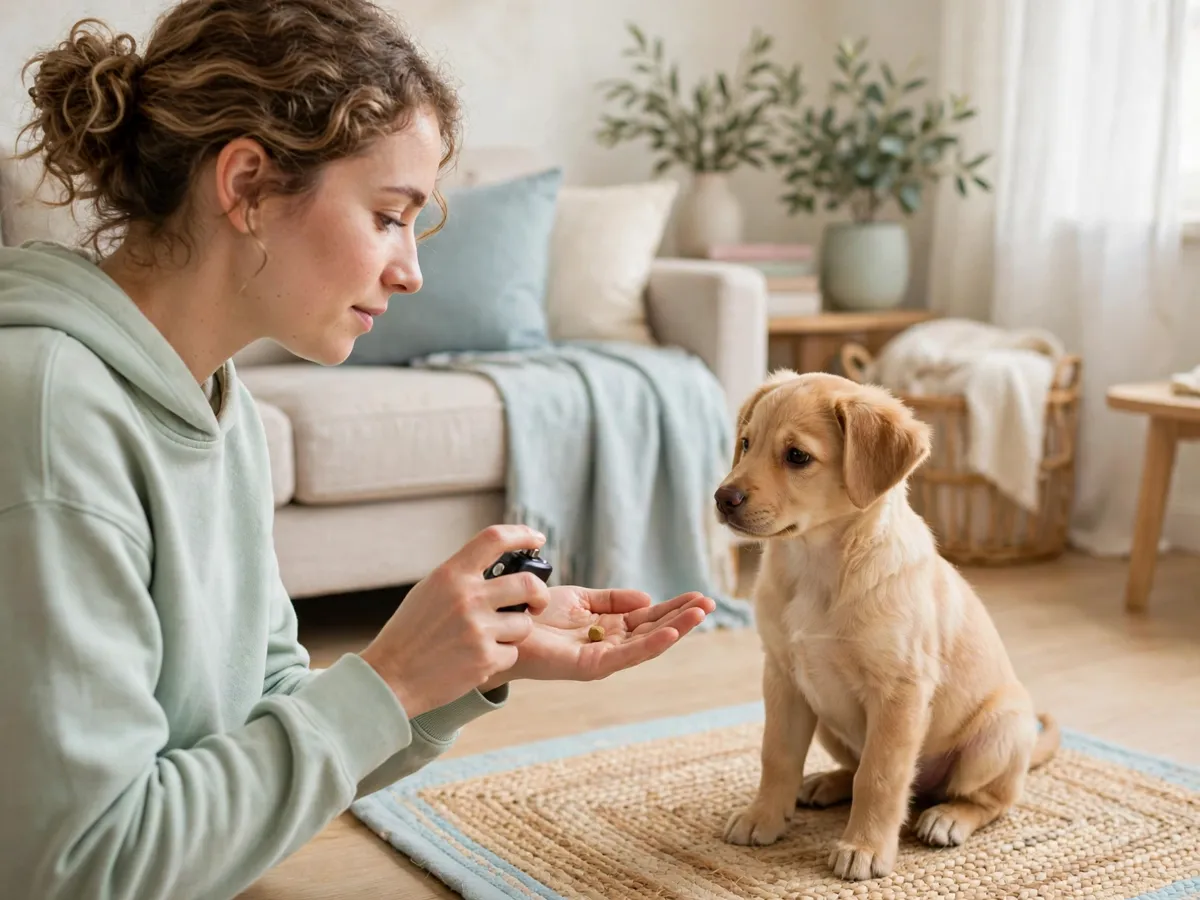
The Method That Rewards the Behavior You Want
Positive reinforcement is the method that adds something the dog wants the instant the dog does the behavior the handler asked for, and the method withholds that thing the instant the dog does anything else. The something the dog wants is food in the first weeks, because food is the clearest signal a puppy reads. The food becomes a toy, praise, or a release to play as the dog learns, but the first weeks are food, because the food tells the dog exactly what earned it.
The method works because the dog is built to repeat what earns. A dog that sits and gets food sits again, because the sit and the food landed in the same moment and the dog connected them. A dog that jumps and gets nothing stops jumping, because the jump and the food never landed in the same moment. The handler does the work of timing the food to the behavior, and that timing is the skill the method asks for.
This page owns the method, the marker word, the timing, the first week plan, and what the method is not. The specific commands have their own page: the basic commands and treat rewards page lists the cues and the steps for each one.
How Positive Reinforcement Works on a Dog
The method works on a loop, and the loop is the same for every behavior the handler teaches. The handler asks for the behavior or the dog offers it. The dog does the behavior. The handler marks the behavior with a word or a click. The handler delivers the food. The dog connects the behavior to the food through the marker, and the dog offers the behavior again.
The loop runs on repetition, and the repetition is the part that builds the behavior. A sit marked and fed once is a sit the dog tries again. A sit marked and fed across a week of short sessions is a sit the dog offers on its own, because the sit and the food are the same event in the dog mind. The handler does not push the dog into the sit; the handler sets up the loop, marks the sit when it happens, and feeds the food the moment the marker sounds.
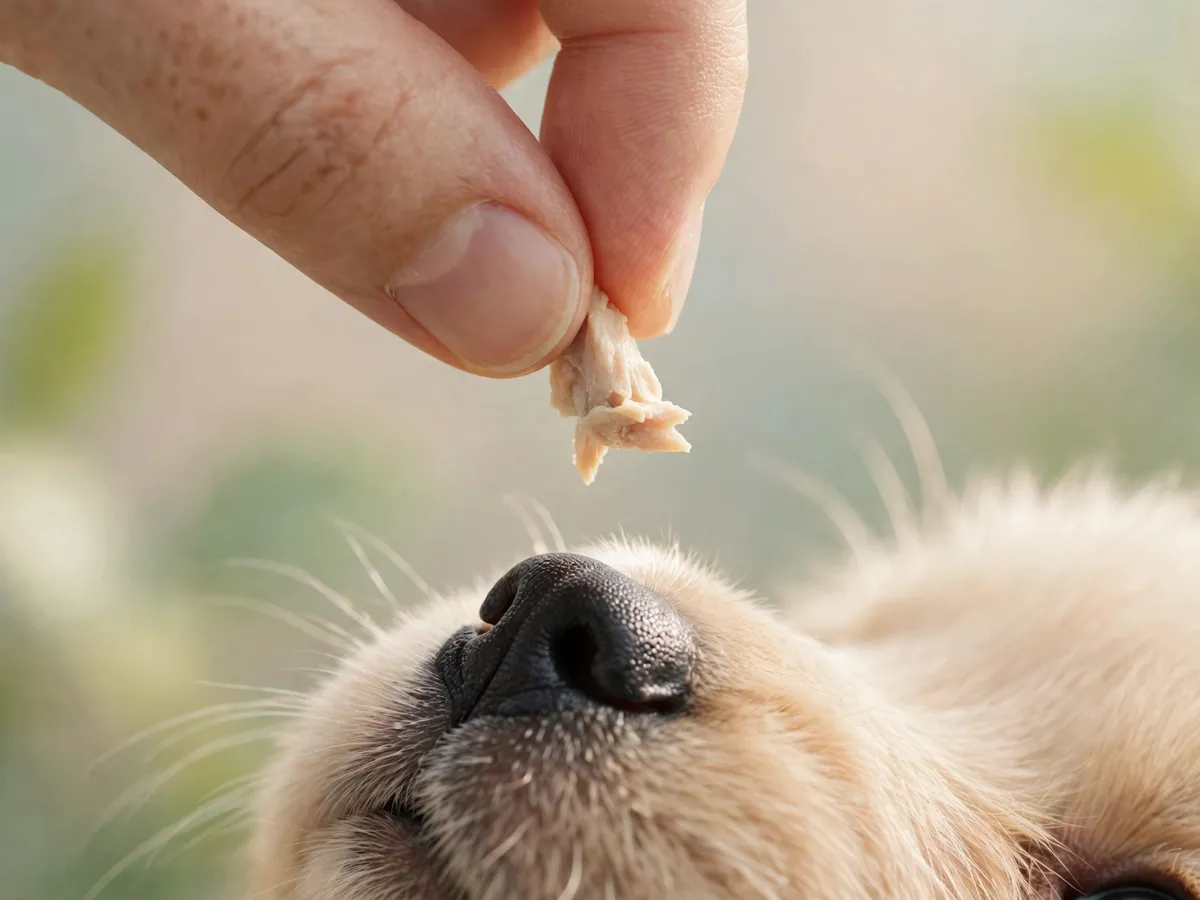
The food matters, because the food is the thing the dog wants. Dry kibble works for a hungry puppy before a meal; a piece of boiled chicken works for a puppy that just ate. The value of the food matches the difficulty of the behavior, because a hard behavior asks for a high value food and an easy behavior asks for a kibble. The food is pea sized, because the dog eats it fast and the loop runs again.
The Marker Word and the Clicker
The marker word is the sound that tells the dog the behavior is done and the food is coming. The word is the bridge between the behavior and the food, because the food cannot arrive the instant the dog sits, and the dog needs to know the sit is what earned the food. The marker word sounds the instant the butt hits the floor, and the food arrives a beat later. The dog connects the sit to the word and the word to the food, and the sit is the behavior the dog offers again.
The marker word is one short word, and the word is the same every time. "Yes" or "good" are common, because they are short and they sound the same in the handler mouth every time. The word is not the cue, because the cue is the word that asks for the behavior and the marker is the word that tells the dog the behavior is done. The cue is "sit"; the marker is "yes." The dog learns the difference because the marker always leads to food and the cue leads to the behavior that earns the marker.
A clicker is a marker that is not a word. The clicker is a small device that makes a consistent sound, and the sound marks the behavior the same way a word does. The clicker and the marker word do the same job, and the handler picks one. The clicker is consistent in a way a word is not, because the clicker sounds the same every time and the word changes with the handler tone. The word is always on the handler, because the word is the handler voice.
Reward Timing: The One to Two Second Window
The reward lands in the window between the behavior and the next thing the dog does, and that window is brief. The dog connects the food to whatever it is doing in the moment the food arrives, and the dog is doing the sit for only a moment before it is doing something else. A reward that arrives in the window lands on the sit, and a reward that arrives late lands on the next behavior, whatever that is. The dog learns what the food landed on, not what the handler meant the food to land on.
The marker word buys the handler time, because the marker word tells the dog the food is coming the instant the behavior happens, and the food can arrive a beat later. The dog connects the sit to the marker and the marker to the food, so the food does not have to arrive the instant the butt hits the floor, as long as the marker does. The marker word is the timing tool, and the food follows the marker.
The late reward is the common mistake, because the handler reaches for the food, the dog stands up to watch the hand, and the food lands on the stand instead of the sit. The dog learns the stand earns the food, and the sit fades. The fix is the food in the hand and ready, the marker word the instant the sit happens, and the delivery the moment the marker sounds. The food is ready before the behavior starts, so the gap between the marker and the food is shorter than the gap between the sit and the stand.
A First Week Plan for One Puppy
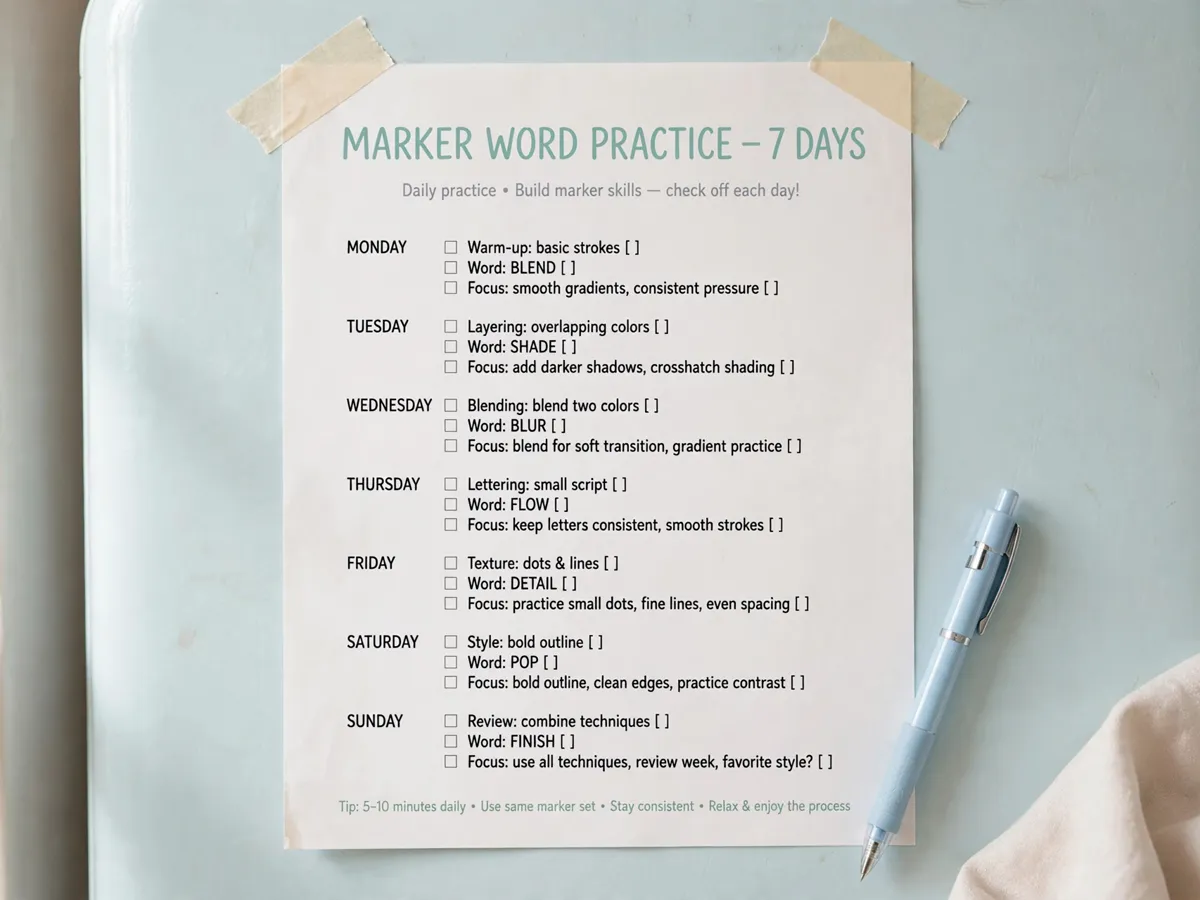
The first week is the marker word and the sit, and the week is short sessions, because a puppy learns in bursts and then needs a break. A session is a few minutes, the puppy sits a few times, the handler marks and feeds each sit, and the session ends before the puppy loses interest. The sessions run through the day, between meals and before naps, because the puppy is hungry between meals and the kibble earns the sit.
The first days are the marker word and the food, without a cue. The handler waits for the puppy to sit, marks the sit the instant the butt hits the floor, and feeds the food. The puppy sits because puppies sit, and the food lands on the sit, and the puppy sits again to earn the food. The cue word "sit" joins the loop when the puppy is offering the sit on its own, because the cue names the behavior the puppy is already doing.
The week ends with the puppy sitting on the cue, and the cue sheet tracks the days. The puppy training schedule by age page carries the broader schedule across the puppy months, and the puppy biting training tips page carries the biting fix. The week here is the first week, and the cue sheet is the thing the handler prints and checks off.
What the Method Is Not
The method is not permissive. Positive reinforcement rewards the behavior the handler wants and withholds the reward from the behavior the handler does not want, and the withholding is the part that fades the unwanted behavior. A dog that jumps and gets no food, no attention, and no release to play learns that the jump earns nothing, and the jump fades. The method is selective, not lenient, and the selection is the part that does the teaching.
The method is not alpha theory. Alpha theory holds that the handler earns the dog respect by dominating the dog, and the method holds that the dog learns what earns the food. The two are different, because the dog does not learn respect; the dog learns behavior. A dog trained with force learns to avoid the force, and a dog trained with food learns to offer the behavior that earns the food.
The method is not a collar, and it is not a product. No brand name, no collar name, and no device does the work of the marker word and the food. The training treat rewards page covers the treat picks for specific breeds, so this page leaves the product there. The method is the loop, the marker, the food, and the timing, and the tools are a voice and a hand.
Positive reinforcement dog training questions
What is a marker word and why does it matter in training?
A marker word is the sound that tells the dog the behavior is done and the reward is coming. The word bridges the gap between the sit and the treat, so the dog knows the exact moment it earned the food. Pick one short word, say it the instant the butt hits the floor, and follow it with the treat every time, so the word and the reward never split.
How fast should I deliver the reward after the marker word?
The reward lands right after the marker, because the dog connects the behavior to the food in that brief window. A reward that arrives late lands on whatever the dog is doing then, not on the sit. Keep the treat in your hand and ready, so the gap between the marker and the delivery is shorter than the gap between the sit and the next behavior.
Is positive reinforcement the same as letting the dog do whatever it wants?
No. Positive reinforcement rewards the behavior you want and withholds the reward from the behavior you do not want. The dog learns that the sit earns the treat and the jump earns nothing, so the sit grows and the jump fades. The method is not permissive, it is selective, and the selection is the part that does the teaching.
Save the Cue Sheet
Pin this guide for the first week with a new puppy, and print the cue sheet to track the marker word and the sit across the days. The Puppy Training collection holds the commands page, the age schedule, and the biting tips. For informational purposes, consult your vet.
The cue sheet earns its checkmarks at home first, and the what a group class adds page covers the room full of puppies those cues eventually meet.