 PawStyle Daily
Best Pet Supplies & Gift Guide
Front-Clip vs Back-Clip Harness: Which to Choose
The difference between the two harnesses in your cart is one ring and where it sits. A chest ring turns a surge into a soft curve; a ring between the shoulder blades lets the dog set the line. This page explains what each one does on a real walk, when to pick which, and the two numbers that decide the size long before the color does.
By PawStyle Daily · Updated 17 November 2026
Good to know: one ring, one job · measure the dog, not the old harness · two fingers under every strap · for informational purposes, consult your vet.
What each clip actually does
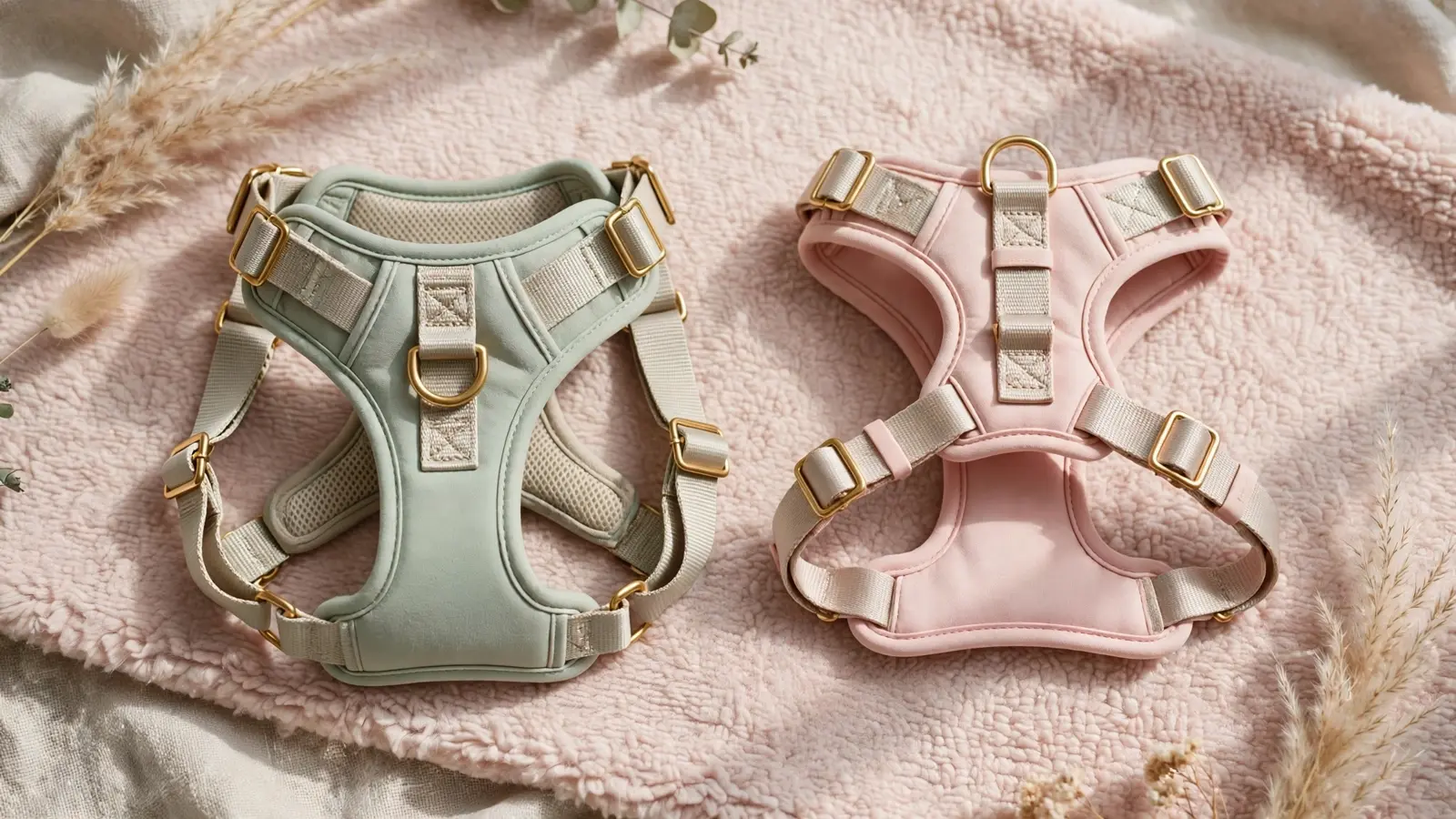
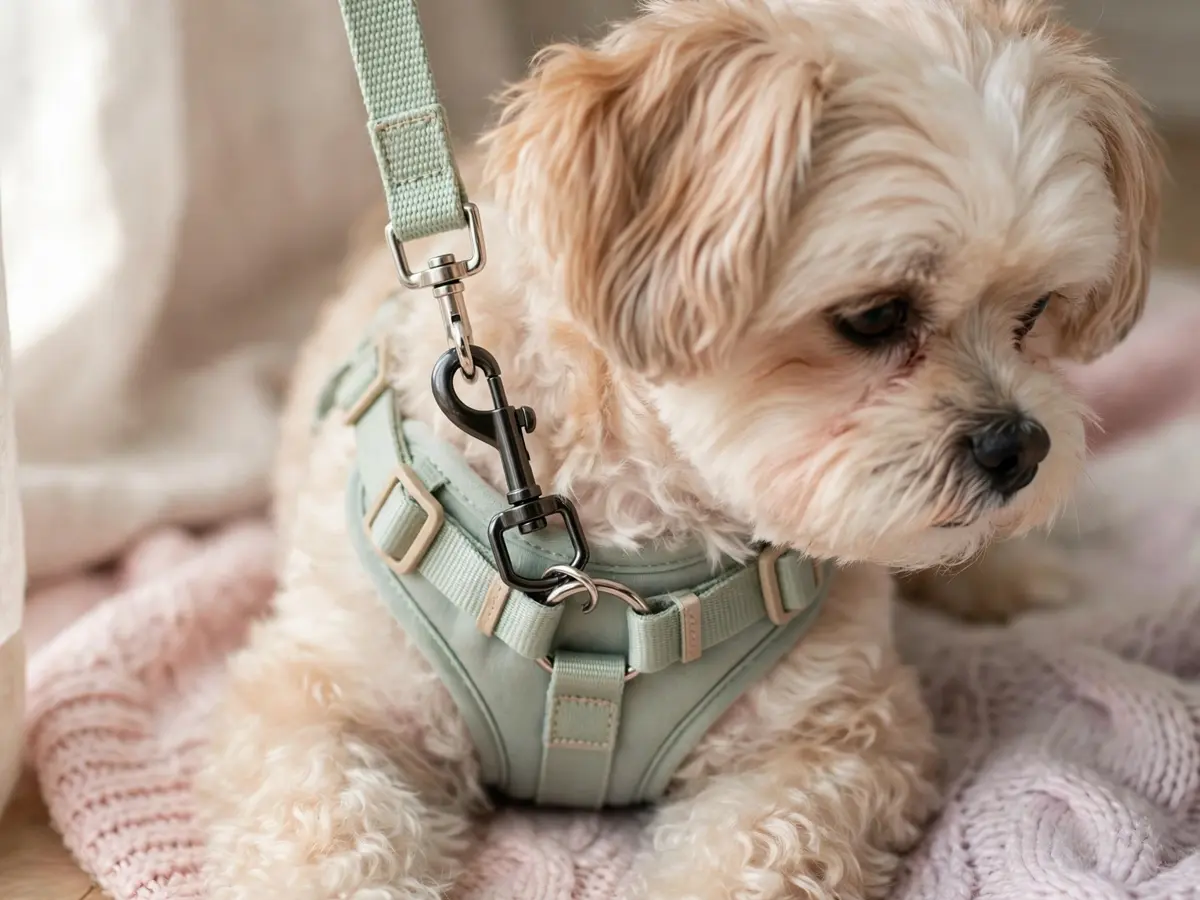
On a front-clip harness the leash attaches near the chest and helps redirect a dog that pulls, while a back-clip harness attaches between the shoulder blades.
That one sentence explains most of the walking you will do. A leash on the chest is anchored forward of the dog's center of gravity, so when the dog surges, the line swings the body to the side and the walk bends instead of locking. A leash on the back is anchored over the strongest part of the frame, so a pull simply continues forward — comfortable for a dog that already walks with a slack line, less useful for one that leans into it.
Neither ring is an instruction to the dog, and neither one replaces a few weeks of loose-leash practice. Think of the front ring as steering assistance, not a brake: it makes a redirect possible with a hand rather than a haul.
When a front clip earns its place
Start with the front ring when a walk is more tow than stroll. The classic case is the dog that hits the end of the leash at every lamp post, and the owner who arrives home with a tired arm. The chest ring turns that constant forward pressure into a sideways nudge, so the dog learns that pulling bends the route.
- Busy pavements, school gates and coffee-shop queues, where you want the dog beside you rather than ahead.
- Training walks with treats, because a redirect is easy to reward and the dog can feel where the praise lands.
- A dog that is strong for its handler: a chest ring gives you more control with less force in your shoulder.
- First walks in a new place, where everything smells worth investigating and every smell is forward.
Two honest caveats. A front clip can rub the chest strap on a very short-legged dog whose chest sits low, so check for wear marks after the first few walks. And some dogs figure out that a sideways turn is a game; short training sessions with a treat at the end keep it from becoming one.
When a back clip is the everyday pick
The back ring is where most dogs live once the pulling is sorted. It keeps the chest clear, which matters for a narrow-chested breed, and it lets the leash fall away from the front legs on a long, sniffy walk. If your dog already walks on a slack line, the back ring adds nothing to fix.
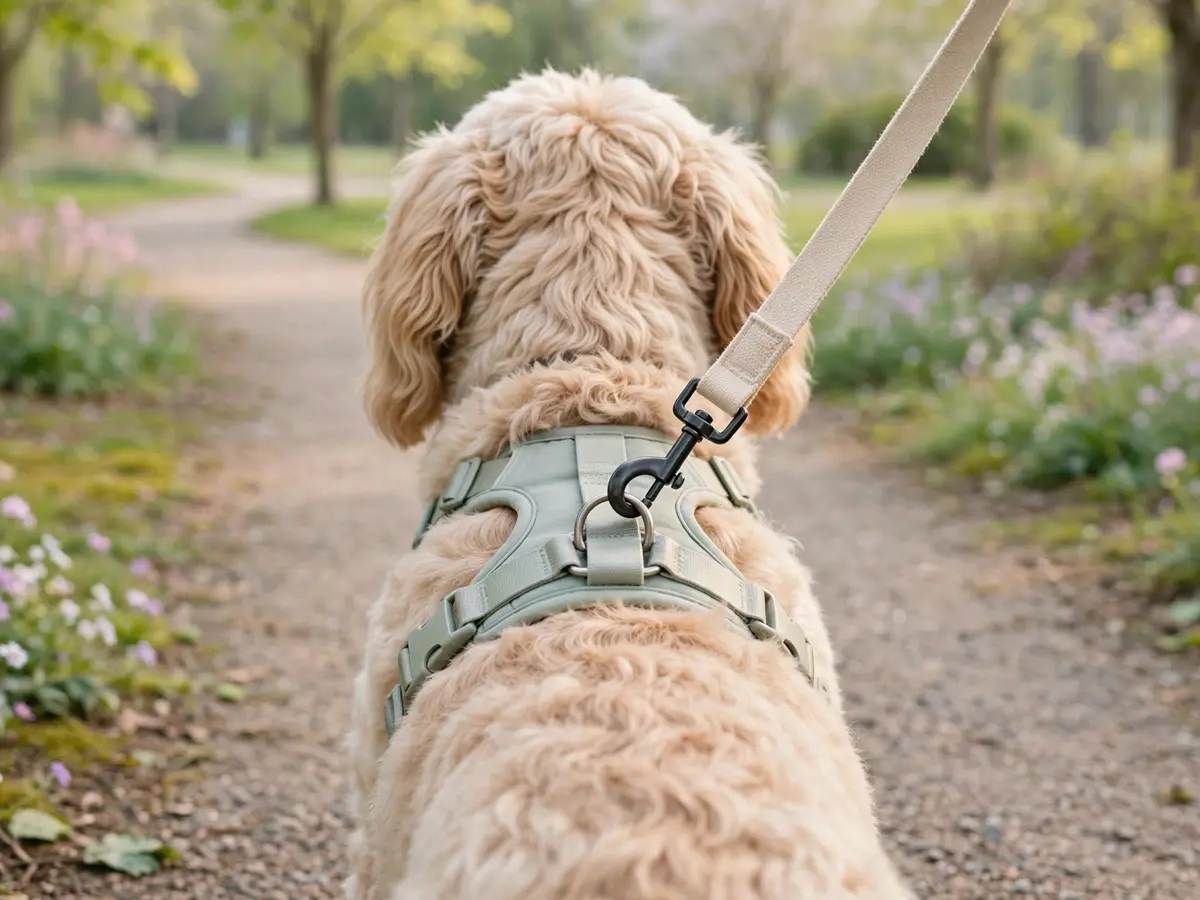
- Sniffy walks and long lines, where steering gets in the way of the point of the outing.
- Hiking harnesses with a handle over the shoulders, which gives you a lift point for a scramble or a stile.
- Older dogs that dislike anything across the chest when they lower their head to sniff.
- A dog in a training class that is learning heel work, where the handler wants a neutral line rather than a steering aid.
The one to watch is the dog that pulls anyway. On a back ring, a pull continues forward into the chest strap, and a harness that looked comfortable standing still can read differently at the end of a taut leash. If that is your dog, keep the front ring for the road and the back ring for the park.
One harness, two rings
A dual-clip harness carries both rings and lets the walk decide. Front ring for the first ten minutes and the crossing, back ring once the dog settles. That is also the cheapest way to learn which one your dog actually needs, because you stop guessing and start watching.
Choose the single-clip version when you already know the job. A town dog that pulls gets the front clip and nothing else; a trail dog that walks politely gets the back clip. Buying the other harness later costs less than buying the wrong one twice, which is what happens when the decision is made on color.
The two numbers that decide the size
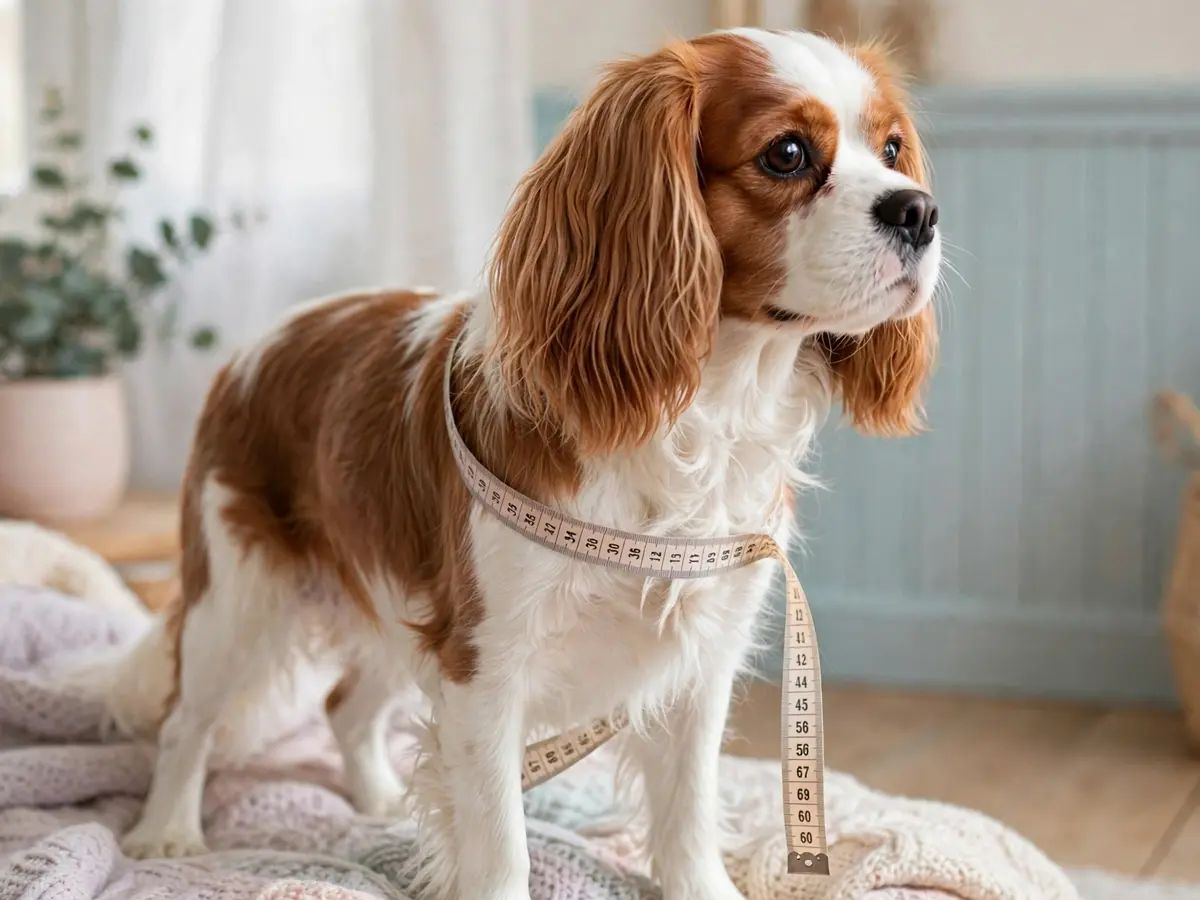
Harness sizing uses two measurements: the circumference at the base of the neck where it meets the shoulders, and the widest part of the chest, typically behind the front legs. Write both down with the date before you open a single listing.
- Stand the dog on all fours and let it settle, with a helper holding a treat at nose height if the dog is wriggly.
- Run a soft tape around the base of the neck, level all the way, and read it where the tape meets itself.
- Move the tape back to the widest part of the chest, just behind the front legs, and take the second reading.
- Repeat both once. If the two passes disagree, keep the larger chest reading and note the smaller one beside it.
Then read the brand's own numbers. One brand's fitting rule: measure the chest girth at the widest point of the ribcage, add 5% for comfort, then read that adjusted number against that brand's size chart. The stepped approach exists because a harness sits over the ribcage, and ribcages come in shapes that weight ranges never capture.
Two dogs can be the same height or weight and still need different harness sizes, because a harness fits the ribcage. If your dog is a long-bodied breed, our harness notes for dachshunds cover the shape question in detail, and the full harness sizing and fit guide walks the tape measure end of it.
The two-finger check
A harness should fit snugly but not uncomfortably: you should have to squeeze two fingers underneath a strap. Squeeze, not slide — if the fingers drop in with no resistance, the strap is loose enough to twist; if you cannot get them under at all, it is pressing.
Check three places: the neck opening, the chest strap behind the front legs, and the belly strap. The neck usually needs the most room, because a dog lowers its head a hundred times a walk. Then watch the dog sit, stand and shake — the harness should come back to the same place it started, with no strap riding up into the throat or sliding toward the elbow.
Between sizes? Take the larger one
Order the next size up when the tape falls between two boxes, and use the adjusters to bring it in. A larger harness can be tightened at the neck and chest; a smaller one at the edge of its range has no slack left to give, and the straps end up bearing on the dog rather than sitting on it. The exception is a dog that backs out of harnesses — for that dog, a size that already fits the chest with the neck tightened is the safer order.
Puppies need this paragraph most. A harness that fits at twelve weeks will not fit at twenty, so buy the size that fits now, keep the tape on the hook by the door, and re-measure every few weeks rather than waiting for the straps to look tight.
The first walk in a new harness
Put it on at home, with a treat, and let the dog wear it for a few minutes indoors before the leash goes on. Then a short loop on a familiar street, with the ring you plan to use most. After the walk, check the coat under every strap: a faint line that fades is normal, a red mark or a bald patch means the fit needs adjusting before the next outing.
Keep the first three walks short. A dog in a new harness walks a little differently, and a chest ring changes the way a pull feels for both of you — a few calm loops teach the new geometry without turning a busy street into the lesson.
Front clip or back clip, side by side
| Question | Front clip | Back clip |
|---|---|---|
| Leash position | A ring at the chest | A ring between the shoulder blades |
| Best at | Redirecting a dog that pulls | Following a dog that already walks politely |
| Busy pavement | The training pick | Fine once the leash stays slack |
| Sniffy trail | Steering gets in the way | The pick for a long line and a loose leash |
| Watch for | A chest strap that rubs on a low chest | A pull that loads the chest strap |
| Dual-clip harness | Use the chest ring for the crossing | Switch to the back ring once settled |
Neither ring replaces loose-leash practice. Pick the ring that matches the walk in front of you, and change it when the walk changes.
Harness clip questions
Is a front-clip harness only for dogs that pull?
It is best at that job, and it works for any dog on a busy pavement. On a calm sniffy walk the same harness with the leash on the back ring behaves like an ordinary one, which is why dual-clip designs earn their price.
Can I clip the leash to both rings at once?
Some dual-clip harnesses are built for a double-ended lead, and the maker's instructions decide whether yours is. Without that instruction, pick one ring per walk so the strap tension stays predictable.
How tight should the straps sit?
A harness should fit snugly but not uncomfortably: you should have to squeeze two fingers underneath a strap. Test the neck strap and the chest strap separately, because one can be right while the other is half an inch off.
The size chart puts my dog between two sizes. Now what?
Order the next size up and use the adjusters to take in the slack. A slightly generous harness can be tightened; a snug one at the limit has nowhere to go, and most returns trace back to a measurement read off a weight range instead of a tape.
Do I measure with the harness on or off?
Always on the dog, never the old harness. A padded or stretched harness reads bigger than the body it sat on, and a puppy changes shape between orders anyway — re-measure every few weeks while it grows.
My dog backs out of the harness. Is that a size problem?
Often it is, and it is worth fixing before the next walk. A chest strap that sits too low or a neck opening that is too wide gives a dog room to reverse out; if a correctly fitted harness still slips, ask a trainer to watch the fitting.
Save these on Pinterest
Pin the front-versus-back comparison for the next harness order, and pair it with the sizing and fit guide so the two numbers and the two rings live on one board. The pet supplies and gift guide collection holds the rest of the walking gear.
For informational purposes, consult your vet.