 PawStyle Daily
Puppy Training Tips
Puppy Training Classes: What a Good Class Teaches
Every listing promises the same three words: puppy training classes. What sits behind those words varies more than the price does, and the difference between a course and a room with puppies in it is the difference between a season well spent and a season of standing at a wall. This page is the chooser: when a puppy is ready to start, what a good curriculum actually teaches, how a group class and private lessons divide the work, what the cost bands look like, and the red flags that end a search on the spot.
By PawStyle Daily · Updated 22 November 2026
Good to know: readiness is a vet line plus a curriculum | a class teaches the owner too | group first, privates for the gaps | the room tells you most of it in one visit.
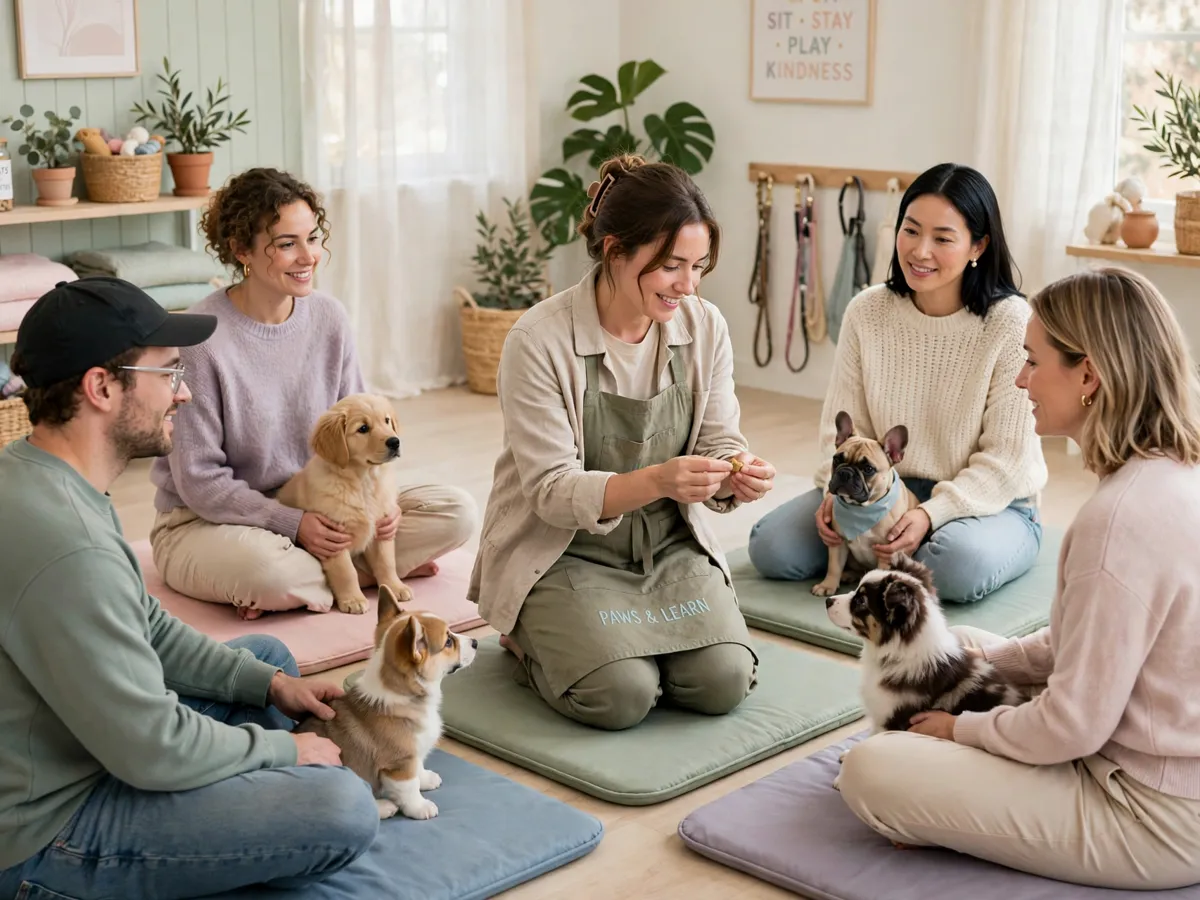
The Class Is a Room With Distractions in It
The reason a class exists at all is the room itself. At home, a puppy practices skills in a place with no competition for its attention; the kitchen floor is quiet, the cues are yours alone, and every rep runs in the easiest conditions a puppy will ever get. A class is the opposite by design: other puppies, other people, new smells, a floor that is not yours, and the same skills asked for in the middle of it. That is the whole value of the format, and it is also why readiness matters before booking.
Thinking of the room as the curriculum is the fastest way to read a listing. Every section below tests one part of it: the timing that puts a puppy in the room at the right age, the skills a teacher should name week by week, the choice between the group and the private hour, the money, and the signals that say this room is not the one. Walk in with those five and a visit becomes a checklist instead of a vibe.
When a Puppy Is Ready to Start
Two gates stand between a puppy and its first class, and both are checked before the booking, not after. The first is the vet line: the first vaccine rounds are done and the vet has cleared a room with other dogs in it. The second is the puppy itself: it can eat a treat and respond to its name in a mildly busy place, which is the smallest unit of the skill a class builds on. A puppy that cannot yet eat in a strange place is not behind; it just needs a quieter start, which the section on formats covers.
The exact shot schedule is its own topic, so this page links out instead of restating it: the puppy class vaccine timing page holds the per-shot detail and the reason the window will not wait. What belongs here is the shape of the answer: a good trainer asks for the vet line before the first session, and a trainer who waves the question through has told you something about the room already.
What a Good Puppy Class Teaches
The honest summary is that a good class teaches the owner at least as much as the puppy. The puppy learns skills; the owner learns the timing, the reward mechanics and the management that carry those skills into the rest of the week. A curriculum worth the fee names its skills out loud, week by week, so a buyer can compare it against another listing before paying anything.
- The marker and the timing. The word or click that marks the instant a puppy got it right, and the practice of landing it on time, which is the skill behind every other skill on the list.
- Name response. The head turn that says the puppy heard you, built first in the easy room so it exists in the hard one.
- Settle on a mat. The down-stay a puppy can hold while the world moves, which is what makes a vet lobby, a cafe patio and the class itself workable.
- Loose leash starts. The first steps of walking beside a person, taught short and easy, not polished.
- Supervised play with interruptions. Play that stops and restarts, so arousal comes down on cue and the puppy learns the room has rules.
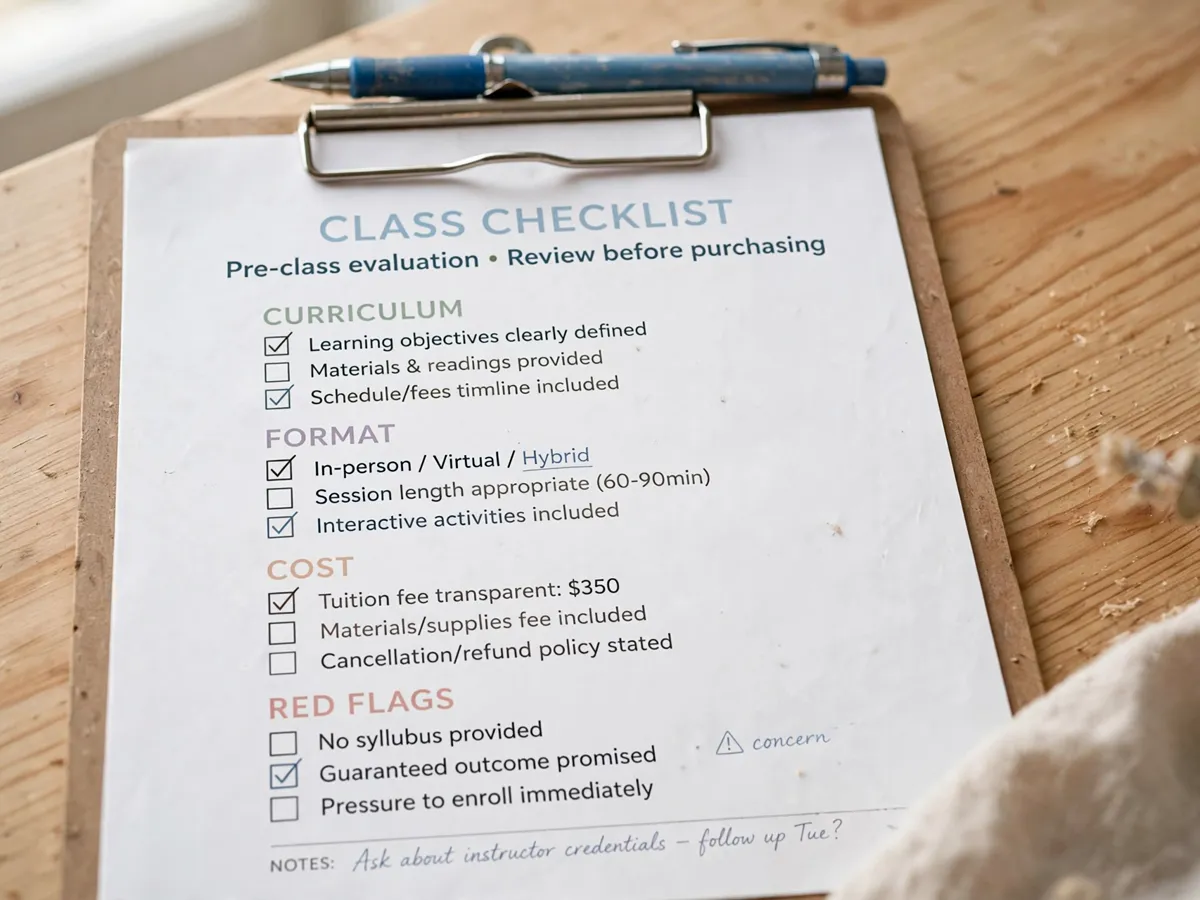
A class that only runs puppy play while owners stand at the wall is playgroup, and it has its place, but it is not teaching the list above. Ask what a typical session looks like and listen for the skills being named; a trainer who can answer in specific weeks is running a curriculum, and one who answers with "they figure it out" is running a room. Between sessions, the trainer explains what to practice at home; the mechanics behind those homework reps sit on the positive reinforcement training page, and this page stays on the class itself.
Group Class or Private Lessons
The two formats are not rivals; they do different jobs. The group is the only format that supplies what a class exists for: a room with distractions in it, which is the environment the skills eventually have to hold up in. The private hour supplies the opposite, a quiet room and a trainer’s full attention, and that is exactly what some puppies and some schedules need first.
Choose the group when the puppy can eat and listen around others, the household can hold a fixed weekly slot, and the goal is the standard first-year list. Choose privates when a puppy is over threshold in a group, when a shift schedule cannot hold the slot, or when the problem at hand is one the class does not cover. A shy puppy is not disqualified from the group: a good trainer gives the watcher a job and brings it in when it chooses, and a quiet corner with a mat is a legitimate way to attend.
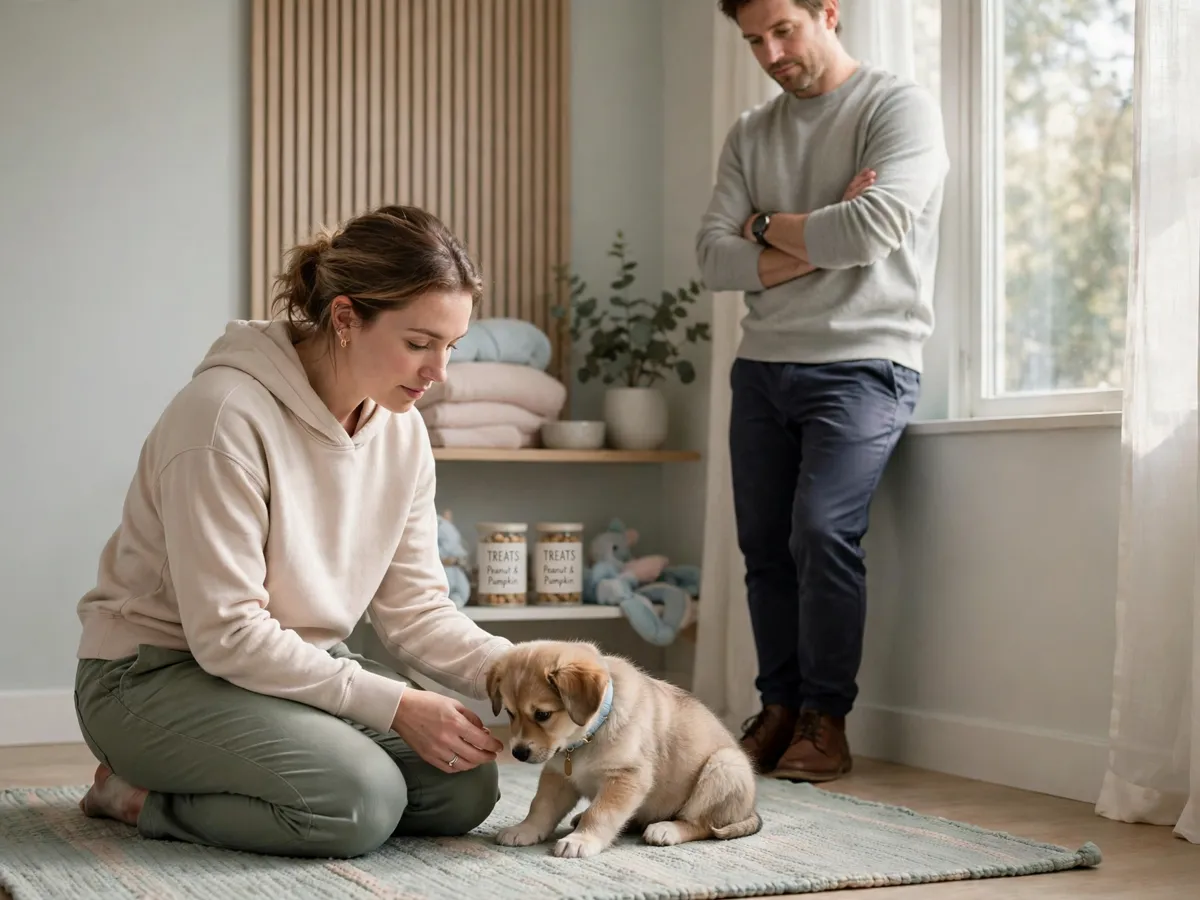
The mix most households land on is the group as the spine and privates for the gaps: one weekly room that builds the distraction muscle, plus an occasional private hour for a specific gap. The group does the steady work, and the private buys precision where the room cannot stop for one dog.
What Puppy Classes Cost to Budget
Cost runs in bands, and the honest way to compare listings is by what the band buys rather than by the number alone. At the low end sit community runs: a shelter hall, a community center, a trainer building hours in the trade, with the standard curriculum and a roomful of peers. The middle band is the experienced trainer with a small room, a named curriculum, and the session structure this page describes. The top band buys specialization: a behavior-focused professional, a smaller room, or a program built around a specific need.
Two budget rules hold across every band. First, price the whole course, not the session: a four-week run and a six-week run at the same per-session figure are different purchases, and the curriculum, not the count, decides which is worth it. Second, ask what happens to a missed week; a program with a make-up path respects the reality of a household with a puppy in it. Band in words, whole course in mind, and the price stops being a mystery number.
Red Flags That End the Search
A visit or a phone call surfaces most of what a buyer needs, and a few answers end the search on the spot. None of these are about price or prestige; they are about what the room teaches and how it treats the puppies in it. A trainer who does none of these is worth the drive; a trainer who does any one of them has answered the question differently than a form ever could.
- No vaccine requirement, or a shrug where the vet line should be.
- Corrections as the method: leash pops, pinning, shake cans, or a promise built on dominance language.
- A crowded loud room where every puppy is made to participate, and the shy one gets carried to the middle.
- No curriculum: "socialization happens naturally" with no skills named in any week.
- No questions back. A trainer who never asks about the puppy, the household or the goals is selling a room, not a course.
One more check costs nothing: watch a session before paying if the trainer allows it, and most good trainers insist on it. The room, the noise level, the size of the circle and where the nervous puppies sit answer more in one visit than any listing page can. The week-by-week crate homework that pairs with a first course lives on the crate training plan for the first week, and the exposures a household runs between class days sit on the first months socialization checklist.
Puppy class questions
At what age should a puppy start training classes?
A puppy typically starts a group class once the first vaccine rounds are done and the vet clears the visit, which lands in the early weeks of the socialization window. The vaccine timing page holds the exact schedule per shot, and a good class asks for the vet line before the first session. A puppy that waits for every shot misses the weeks the class is built around.
What should a good puppy class actually teach?
A good class teaches the owner as much as the puppy: the marker word and reward timing, name response, settle on a mat, loose leash starts, and supervised puppy play with interruptions. The curriculum names the skills week by week, and the trainer explains what to do between sessions. A class that only runs puppy play while owners stand at the wall is playgroup, not training.
How do I choose between a group class and private lessons for my puppy?
Group classes build the distraction muscle: other puppies, other people, a room that is not the kitchen. Private lessons fit a puppy that is over threshold in a group, a schedule that cannot hold a fixed weekly slot, or a problem the class does not cover. Start with the group if the puppy can eat and listen around others, and add privates for the gaps, not instead of the room.
Save the Class Checklist
Save this page for the search itself, and take the checklist into the room: the two gates for readiness, the five skills a curriculum names, the group-versus-private split, the bands in words, and the five answers that end a visit. The room tells you most of it in a single visit; the checklist makes sure you ask the rest. Pin it for the week the listings get shortlisted. For informational purposes, consult your vet.
A class room teaches manners among distractions; what a service dog learns is the working dog version of that lesson.