 PawStyle Daily
Cat-Friendly Apartment Decor
Multi-Cat Resource Stations in a Small Home
Two cats in a small flat share a territory no cat would choose to share, and the fix is not more floor space — it is more choices. A resource station is one cat-sized spot with one job: a feeding spot, a water spot, a litter spot, a resting spot. When each cat can reach a station without passing the other, most of the tension a small home creates simply has nowhere to sit. This page lays the stations out room by room, with the sight lines and escape routes that make them work.
By PawStyle Daily · Updated 17 November 2026
Good to know: one station per cat per resource · food away from water and litter · every station needs a second exit · for informational purposes, consult your vet.
Why stations beat a single corner
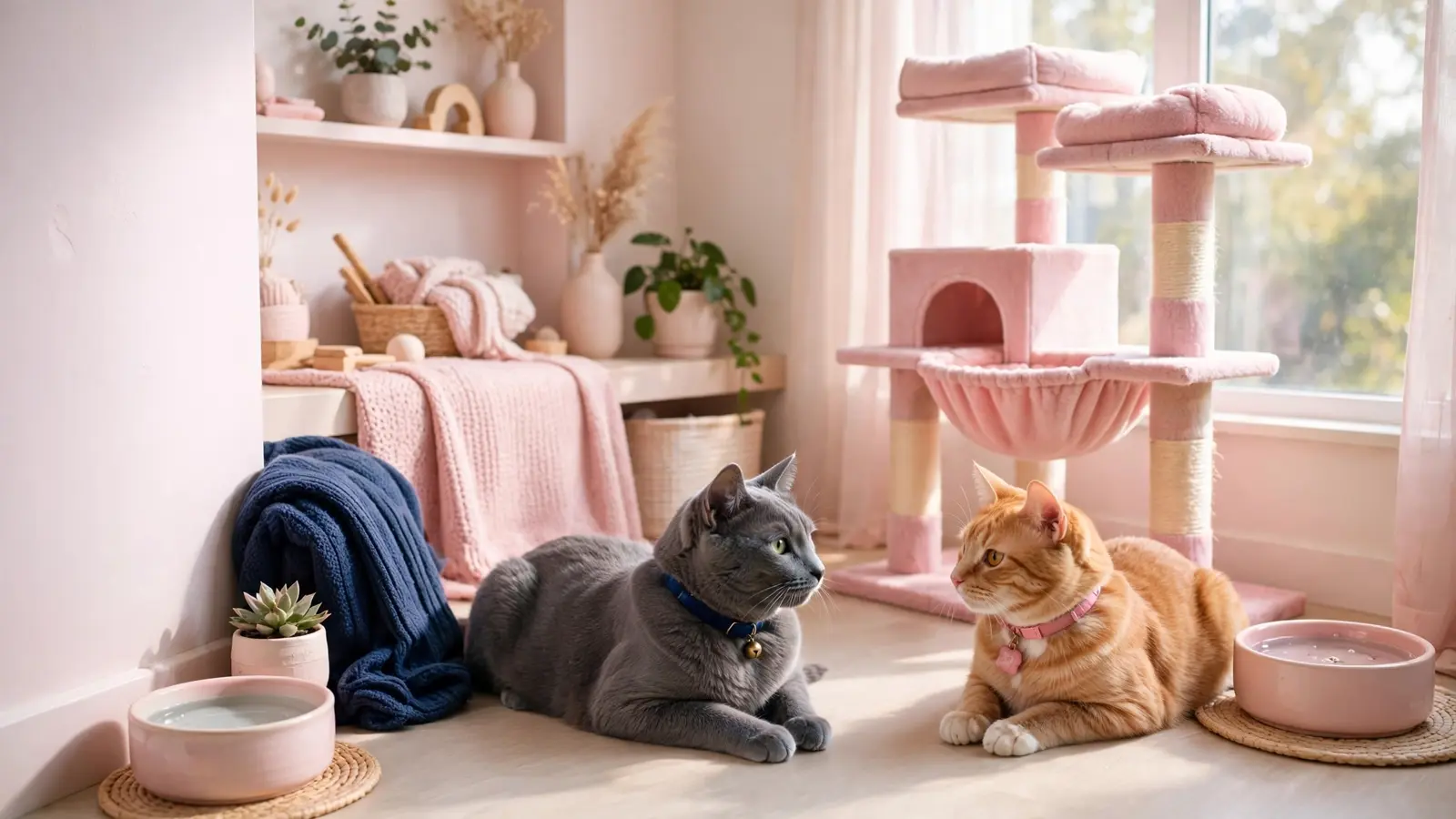
One corner with one bowl, one water dish and one box forces every interaction through a single doorway. The confident cat learns that in a minute, and the quieter cat starts timing meals and litter visits around it. Stations spread the same resources across the rooms you already have, so a cat that wants to eat does not need permission from a cat that wants to sit.
Give each resource its own spot and let the cat choose: a minimum of two resting areas, two feeding areas and two toileting areas.
That count comes from feline environmental needs guidance as an example of choice, not a rule to copy blindly. With cats, more is nearly always better than fewer: a third resting spot in a hallway nook costs a folded blanket and gives the shy cat a place that was never contested.
The rule of thumb · One station per cat per resource, plus one spare where the floor plan allows.
Spread the stations room by room
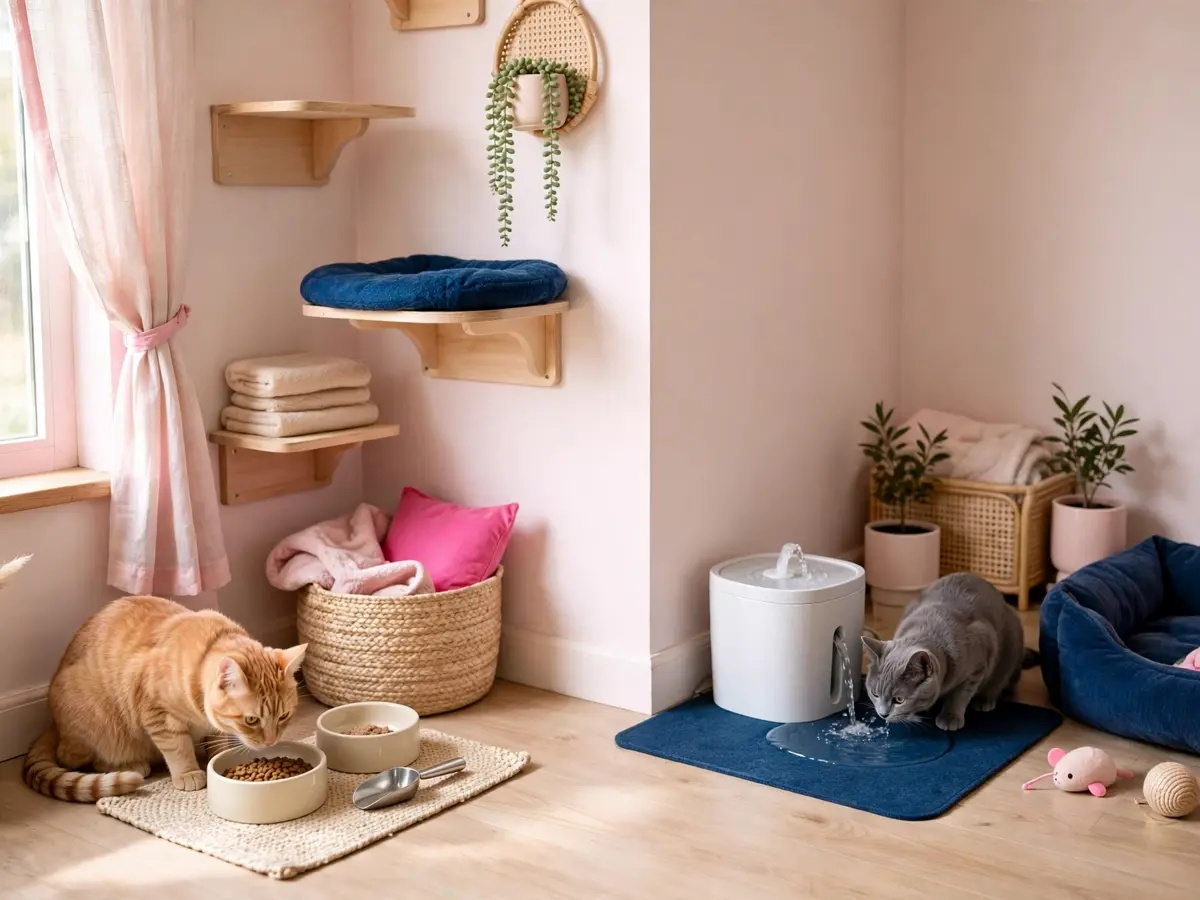
Walk the flat with the stations in mind before you move a single bowl. In a one-bedroom, the living room takes a feeding spot and a water spot, the bedroom takes a resting spot and a second feeding spot, the bathroom takes a litter spot, and the hallway or the far side of the living room takes the second litter spot.
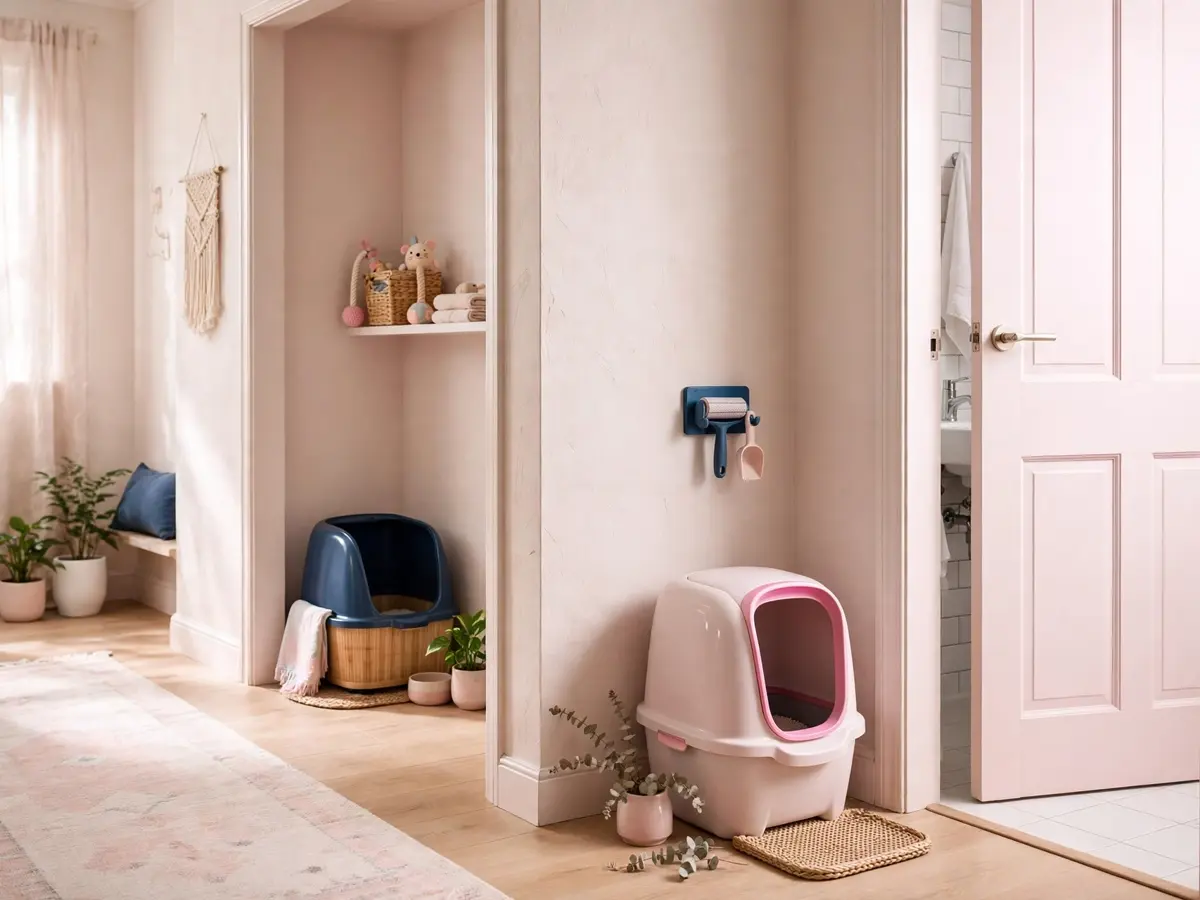
Keep the litter box away from the food and water bowls, and give each resource its own spot so the cat has a choice.
That separation is the one placement rule that never bends. A box beside a bowl is a station neither cat uses with ease, and the bowl is usually the first thing to suffer. In a studio the same rule reads as opposite walls and a clear walk between them, not a bigger apartment.
Sight lines and escape routes
A station works when the cat using it can see the room and leave in more than one direction. Backing a bowl into a dead-end corner turns it into a trap the first time the other cat walks by: the eating cat has to choose between finishing the meal and keeping watch.
The check is a ten-second squat. Put your head where the cat's head would be and look at the room. If the only exit is behind you, move the station a metre along the wall until the doorway comes into view. The same check applies to a litter box in a hallway alcove: a cat in the box should see the length of the hall, not just the wall opposite.
Give resting spots the same treatment in reverse. A bed under the coffee table gives the shy cat somewhere to land, and a perch by the window gives the confident one the high ground it wants, which leaves the floor stations calmer for both.
Sight line check · Can the cat see the door · Can it leave two ways
Stations per room, at a glance
This chart is a one-bedroom starting point for two cats. Shift spots to the rooms your cats actually use — the goal is choice, not a floor plan that photographs well.
Resource stations for two cats in a one-bedroom
| Room | Stations | Placement note |
|---|---|---|
| Living room | Feeding spot one · water one · resting spot one | Bowl away from the wall, facing the room |
| Bedroom | Feeding spot two · resting spot two | Under a side table with two open sides |
| Bathroom | Litter spot one | Away from the door swing, scoop stored nearby |
| Hallway or living room edge | Litter spot two | Out of the traffic line, with a clear run |
| Window | Perch or resting spot three | High ground for the confident cat |
One station per cat per resource, and a spare resting spot wherever the floor plan allows.
For the box side of the chart, our litter box setup guide covers box size, litter choice and the cleaning round, and the hidden litter box ideas show how a second box fits into furniture without losing access.
The cleaning round with more boxes
More stations sound like more work, and the cleaning round is where that fear lives. It does not have to. Remove waste from the litter box at least once a day, and wash the box every one to four weeks. Two boxes on one route take a minute longer than one, and two clean boxes are the cheapest peace-keeping a multi-cat home can buy.
Put the stations on the path you already walk. A box beside the bathroom door and a bowl by the kitchen counter get checked on the way past; a box behind the sofa asks for a dedicated trip and quietly stops happening. Water bowls go in the dishwasher round or get a quick rinse and refill while the kettle boils.
When one cat guards a bowl
Guarding is a station problem before it is a behaviour problem. The cat that sits between the other cat and the food is using a sight line, so the first fix is geometry: move the guarded station out of the line of sight, or feed the two cats in rooms that do not share a doorway.
- Move the second feeding station to another room, door open.
- Put a screen or a plant between the two bowls if the wall stays.
- Raise one station to a stable counter or shelf for a younger cat.
- Set the bowls down at the same moment, apart, so there is no queue.
- Watch the quiet cat finish a full meal before you change anything else.
A cat that eats less for more than a couple of days needs a veterinarian, the same as any other appetite change. For informational purposes, consult your vet, and let a professional look at anything that outlasts the placement fixes above.
Borrow vertical space when the floor runs out
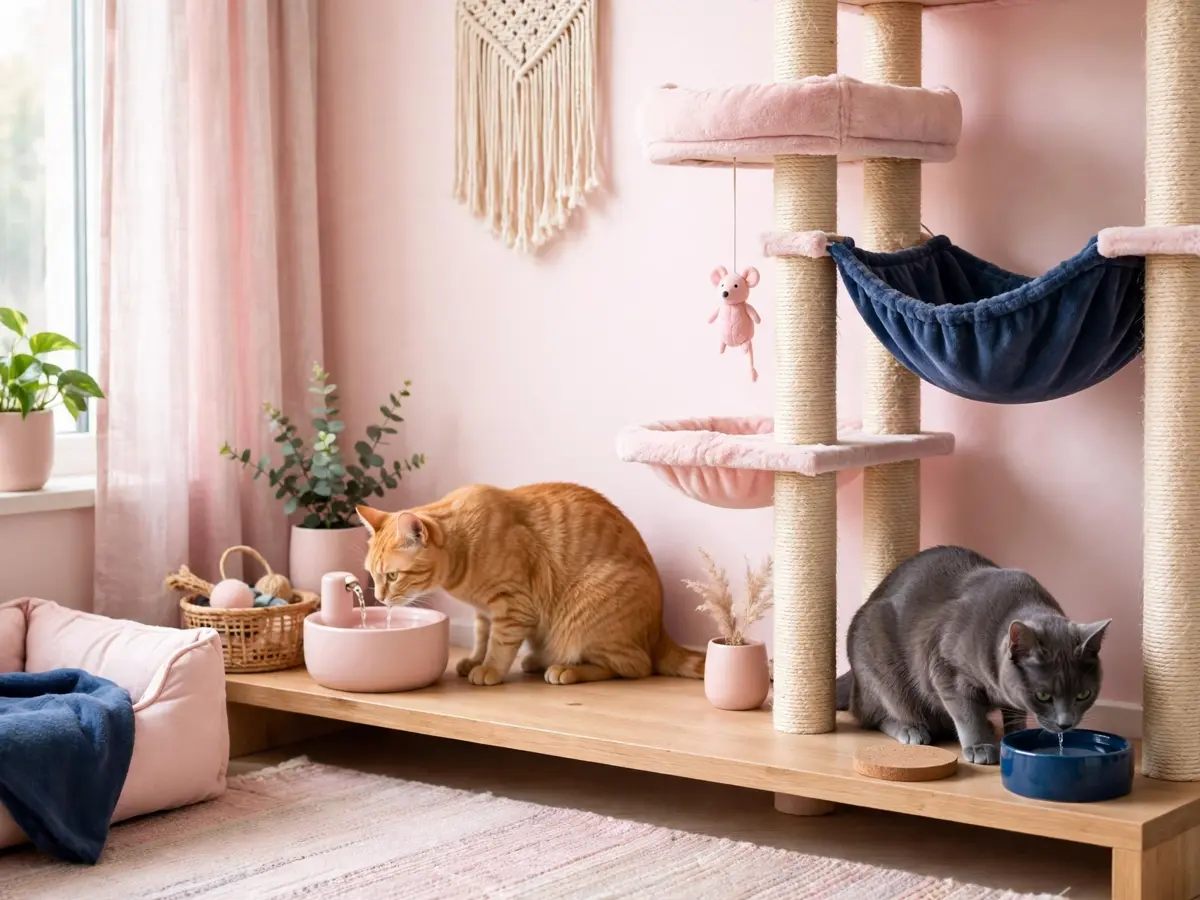
A small flat has more usable stations than its floor area suggests. A shelf over the radiator cover is a resting spot, a window perch is a second one, and a tall cat tree with two levels is two resting spots in one footprint. Stagger the heights so the cats pass each other at different altitudes instead of in the same doorway.
The climb needs to be safe for both cats: stable bases, a step within reach of each jump, and a padded top that does not slide. If you are building the levels yourself, the DIY wood shelf plans cover load and mounting, and the no-drill window perch guide adds a rented-safe option.
Multi-cat setup questions
How many stations do two cats really need?
Give each resource its own spot and let the cat choose: a minimum of two resting areas, two feeding areas and two toileting areas. Treat that as a floor and keep adding spots until every cat has one it can reach without passing another cat.
Do the stations have to be in different rooms?
In a studio, opposite ends of one room count as separate spots as long as the path between them stays clear. What matters is that a cat at a station can see the room and leave in more than one direction.
Should food and water bowls sit together?
Keep the litter box away from the food and water bowls, and give each resource its own spot so the cat has a choice. Many cats also prefer water a short walk from the food, so two water stations pays for itself in a small flat.
One cat waits by the bowls and the other eats less. What now?
Feed the two cats out of sight of each other: one in the hallway, one in the bathroom, doors open or closed. If the pattern continues, bring it up with your vet — appetite changes in a multi-cat home are worth a professional look.
How do I keep two litter boxes clean without doubling the work?
Scoop on the same daily round you already have. Remove waste from the litter box at least once a day, and wash the box every one to four weeks. Two boxes take the same walk as one when they sit on the same cleaning route.
Save these on Pinterest
Pin the station chart for the next flat or the next foster, and pair it with the small apartment cat corner ideas, the cat-proofing checklist and the rest of the cat-friendly apartment decor collection. For informational purposes, consult your vet.
One station per cat per resource, spread across rooms, each with a second way out.
The station math spreads every resource across rooms, and the counting boxes per cat page does that counting for the box line alone.