 PawStyle Daily
Cat-Friendly Home
How Many Litter Boxes Per Cat? The Rule and the Bends
How many litter boxes per cat is the question with a formula answer, which is rare in a cat conversation. The formula is short, the counting is fast, and the interesting part is everything around it: why the rule counts the way it counts, how an apartment absorbs the number, when a bonded pair bends it, and what a cat does instead of filling out a complaint form. This page owns the count and the map that carries it.
By PawStyle Daily · Updated 23 November 2026
Good to know: the formula counts cats, then adds one | different rooms beat one row | a bonded pair bends the rule, tension restores it | the box map never sits beside the bowls.
The Question With a Formula Answer
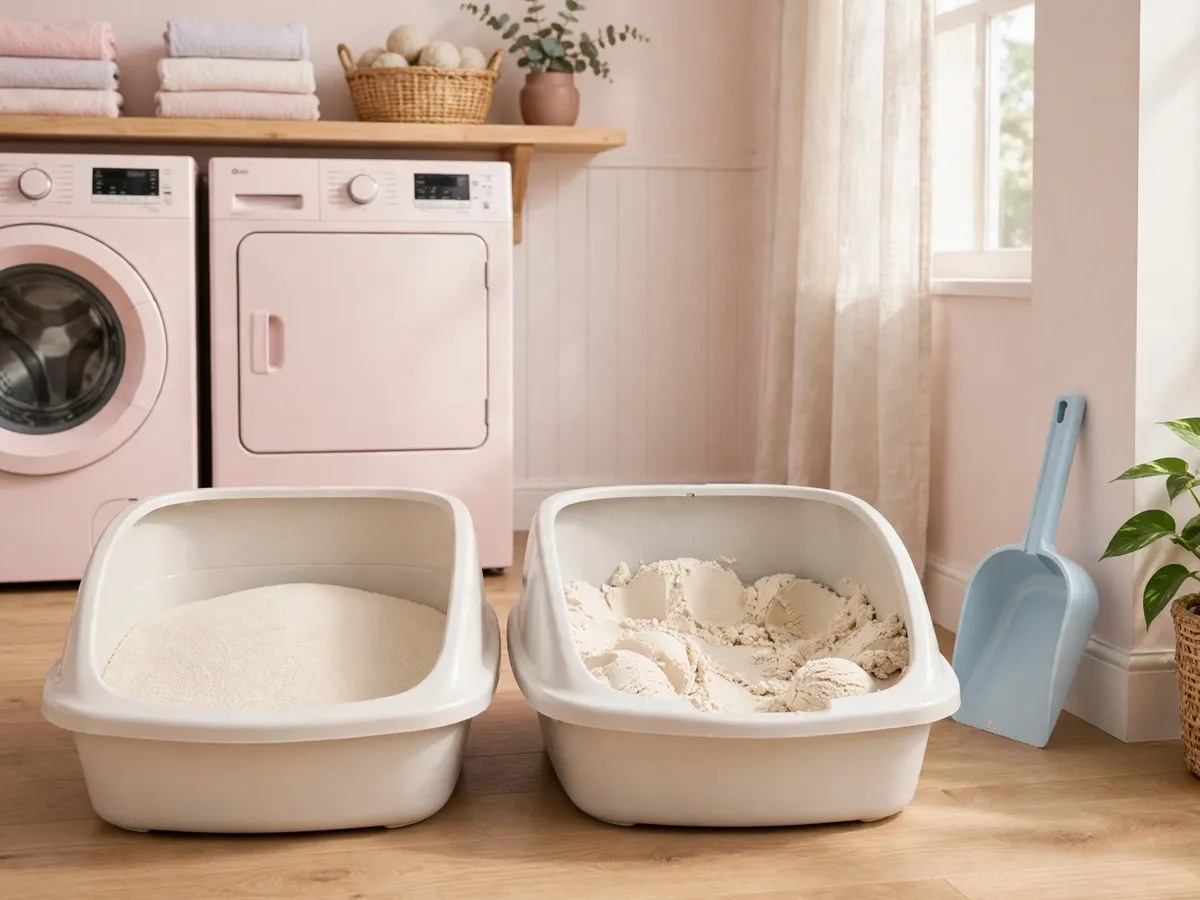
Most cat questions end in a shrug and a depends. This one ends in arithmetic. One box per cat, plus one spare, and the number lands for almost every household on the first try. The formula survives because it answers the two arguments a single box always loses: a cat that has to share a bathroom with another cat is a cat that has to time its day around somebody else, and a box that is occupied or unwelcome is, from the cat side, a missing box.
The spare is the part people argue about, and the spare is the part that earns its floor space. The extra box is not a decoration: it is the box that exists when another one is busy, dirty, blocked by a closed door or claimed by a stare. A household that runs the exact count of cats is a household where a single dirty afternoon removes a bathroom from the map. The plus one is the margin the whole formula lives on.
The count is only half the answer. Two boxes in the same corner are, to a cat, one bathroom with a wide entrance, and the formula counts locations as much as it counts plastic. The sections below run the count, then place it, then read the cat for the cases where the arithmetic needs a second look.
The Rule: One Box Per Cat, Plus One
Say it out loud once and it sticks: one per cat, plus one. A single cat runs two boxes. Two cats run three. Three cats run four. The math never gets complicated, which is the point, a rule a household can hold in its head at the shelter, at the store and at two in the morning when the newest cat has just arrived.
Why a cat needs more than one bathroom of its own sits in how a cat uses territory. A cat that shares a home with other cats shares it in patches, not as one open field, and a resource in a patch another cat favors can become a resource the first cat quietly stops using. The box nobody sees being used is not a tidy box, it is a box that lost a cat, and the puddle in the hallway is often where that cat went instead. The formula gives every cat a box in a patch it can call its own, and the spare covers the patch that is between claims.
The rule is a starting count, not a mandate. The number the formula hands you is the number you install on day one and then watch, and the cat sections below are the watching. A home that starts at the formula and adjusts from what the cats actually do is a home that ends up with the right count for the cats it has, not the cats a chart assumed.
Counting the Boxes for an Apartment
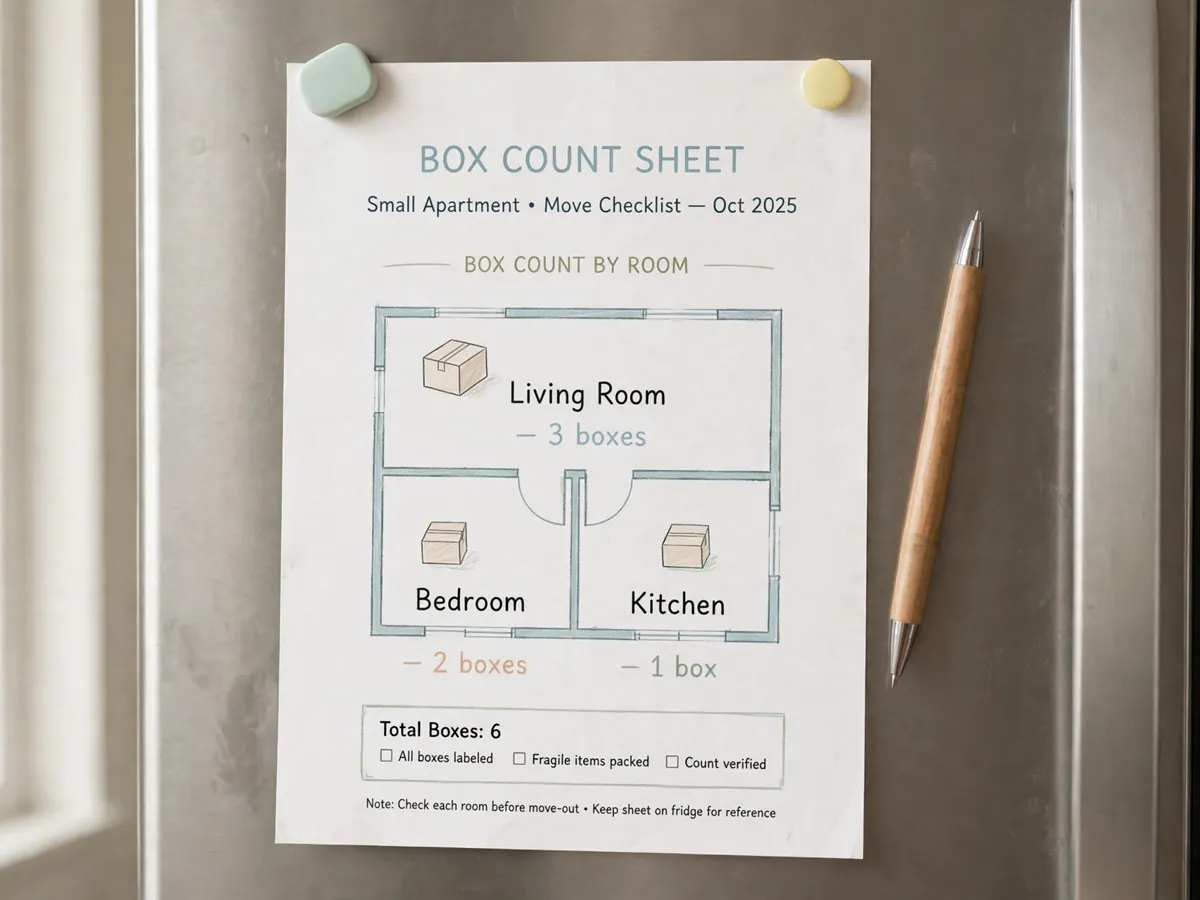
An apartment does not change the count, it changes the placement. Run the formula for the cats, then walk the floor plan with the number in hand and give the boxes different rooms rather than one row against a wall. A one bedroom with two cats lands the formula in a bathroom, a hallway closet and a quiet corner of the living space, and that spread is what the count means: three locations, not three boxes side by side.
The room count runs out before the box count does in the smallest homes, and the answer is distance inside the room rather than a second room that does not exist. Corners over doorways, because a cat in a box in a doorway is a cat in a traffic lane. The two far ends of a long room count as two patches. What never works is the row: three boxes in a line against one wall read as one territory with a wide entrance, and the formula quietly drops back to one.
Draw the map before buying the boxes. A pencil outline of the apartment with an X for each box finds the homes where the formula fights the floor plan while everything is still on paper, and the Xs that cluster are the spots to spread.
When the Rule Bends: Pairs, Seniors, One Room
The bonded pair is the bend people ask for first. Two cats that sleep in a heap and share everything can sometimes share a bathroom count too, and the formula gives back one box. The conditions are strict even when the cats are sweet: every box stays clean, no stare ever guards one, and each cat still takes a turn alone when it wants to. The bend is earned by behavior and it is revoked the same way, a pair with any box tension goes back to the full count the same week the tension appears.
The senior bend only goes up. An older cat adds a box rather than dropping one, usually one on every floor the cat still walks, so the stairs stop being part of the trip and the bathroom on the far side of the house stops being a journey. The senior count is the formula plus the floors.
One room bends the rule in the direction of patience rather than boxes. A studio with two cats still runs the formula, and the placement work moves inside the room: two far corners, a screened split, a box the laundry area hides and a box the sleeping side owns. The rule bends around the home the cats actually live in. It never bends around a cat that is asking for something the map does not have.
Where the Boxes Go, and Where They Never Go
The good spots share one property: quiet, reachable and easy to leave. A cat in a box is a cat with its back to the room, so the spot has to let the cat hear the household coming and leave in more than one direction. Corners away from doorways, laundry rooms that stay unlocked, the quiet end of a hallway, a bathroom nobody closes. A spot that traps a cat between the box and a surprise is a spot the cat starts avoiding.
The never list is shorter and firmer. Not beside the food and water, and not across from them at nose distance either: the bowls and the boxes sit on opposite sides of the map, and each one gets its own spot rather than sharing a station. Not in a cabinet a door can close on, and not next to a washer that jumps mid-cycle. Not on the route of the dog, and not in the room the vacuum lives to attack. Every never is the same sentence wearing different clothes: a cat that cannot relax at the box finds somewhere else to go.
The boxes and the bowls are only one resource map, and the perches, the scratchers and the beds follow the same grammar. The multi cat resource stations page lays the whole station map out for a small home. When a box has to disappear into furniture instead, the litter box enclosure page covers what an enclosure needs to stay a box a cat still chooses.
The Signs a Cat Wants Another Box
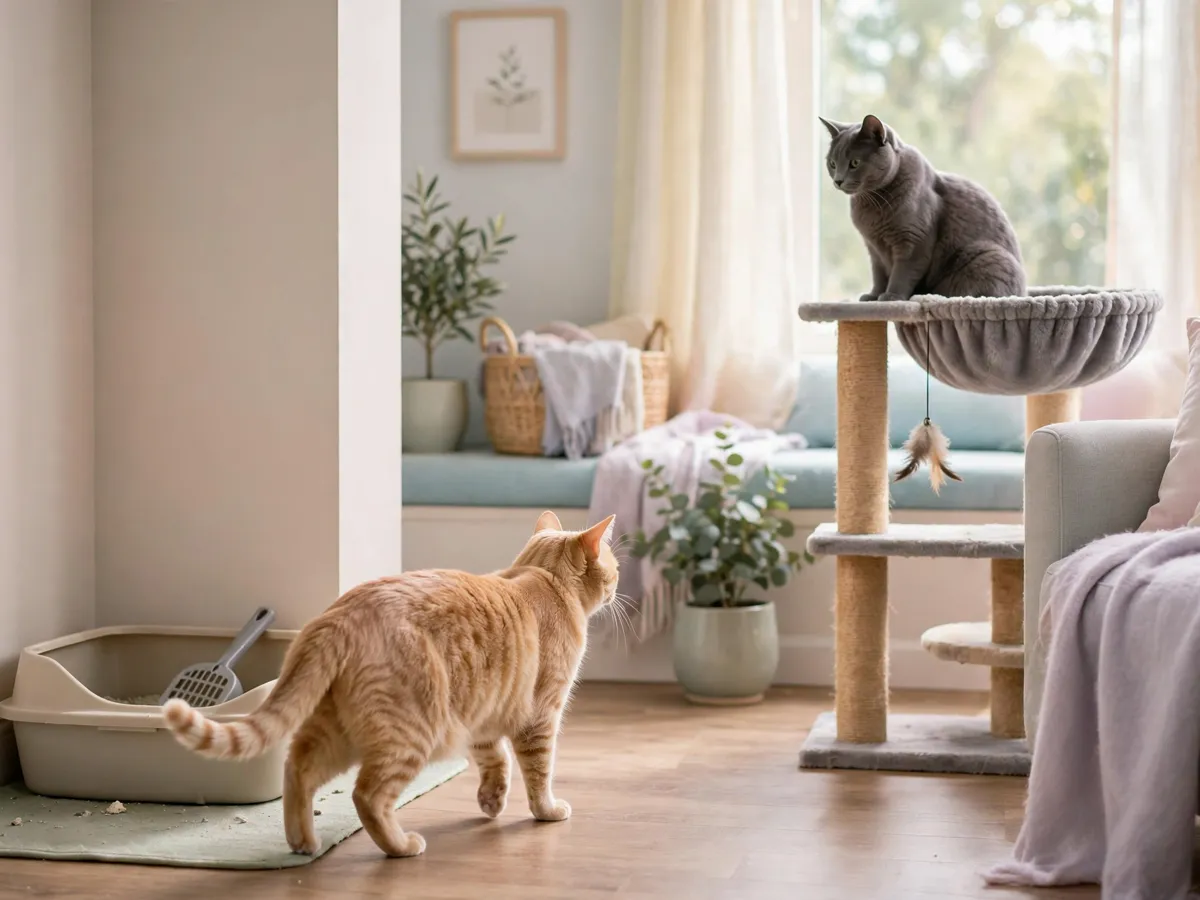
Cats file complaints in behavior, and most of the complaints about the box count arrive in a body language the household can learn in an afternoon. A cat that walks to a box, pauses, and leaves without using it has told you something about that box, that spot, or the cat that was watching it leave. A cat that starts waiting for a specific box while another sits clean and open is voting, and the vote is about location. A cat that checks the hallway both ways before stepping in is a cat that does not feel alone at the bathroom, and the map, not the cat, is the thing that changes.
The strongest signs arrive outside the box. Pee beside a box is a message with the address attached: the cat wanted this spot, not this box, or this box was blocked, unwelcome, or occupied. Pee on a bed or a soft pile upstairs is a louder version of the same sentence, and the first move is always the count and the map, one more box in the room the cat chose, before anything else gets blamed. The box count is the cheapest thing to fix and the first thing worth ruling out.
A change in box habits that arrives with other changes, more trips, straining, crying at the box, going more often in small amounts, is not a map question, and it goes to the vet the same week it appears. The clean and scoop side of the same watch belongs on the litter box setup and cleaning basics page, because a box problem that is really a cleaning problem wastes a trip to the store.
Litter box count questions
Where do litter boxes go relative to the food and water bowls?
Keep the litter box away from the food and water bowls, and give each resource its own spot so the cat has a choice. Cats read a home by resource placement, and a box beside the bowl forces one activity onto the spot another needs. Put the box and the bowls on opposite sides of the map, and give each cat more than one route between them.
Does the one per cat plus one rule bend for a bonded pair?
It bends, it does not break. A tightly bonded pair that shares a box without a stare, a guard or an ambush can run one box fewer than the formula, as long as every box stays clean and the pair still splits when one wants the box alone. A pair with any box tension goes back to the full count. Watch the box, not the cuddles, for the verdict.
How many litter boxes fit in a small apartment with multiple cats?
Count the formula first, then fit the boxes to the rooms the home has: one per cat plus one means three boxes for two cats, and a small apartment places them in different rooms rather than one row. One room forces distance inside the room instead, corners over doorways, never a row of boxes, which reads as one territory to a cat. The stations page holds the small-home layout.
Save the Box Count Sheet
Pin the count for the next cat conversation, the next move, the next floor plan. The formula fits in one line and the map fits on one sheet, and the cats keep voting on both for as long as they live with you.
For informational purposes, consult your vet.