 PawStyle Daily
Cat-Friendly Apartment Decor
Litter Box 101: Setup + Clean Routine
A litter station can fit into a small apartment without becoming the room’s whole personality. Start with the box your cat can use, place it where you can reach it, and make the scoop routine easy to repeat. This guide walks through the setup, a simple daily reset and a printable weekly check-in. For informational purposes, consult your vet.
By PawStyle Daily · Updated 16 November 2026
Good to know: open box where possible · unscented clumping litter · scoop and bags stored together.
Start with the box, not the basket
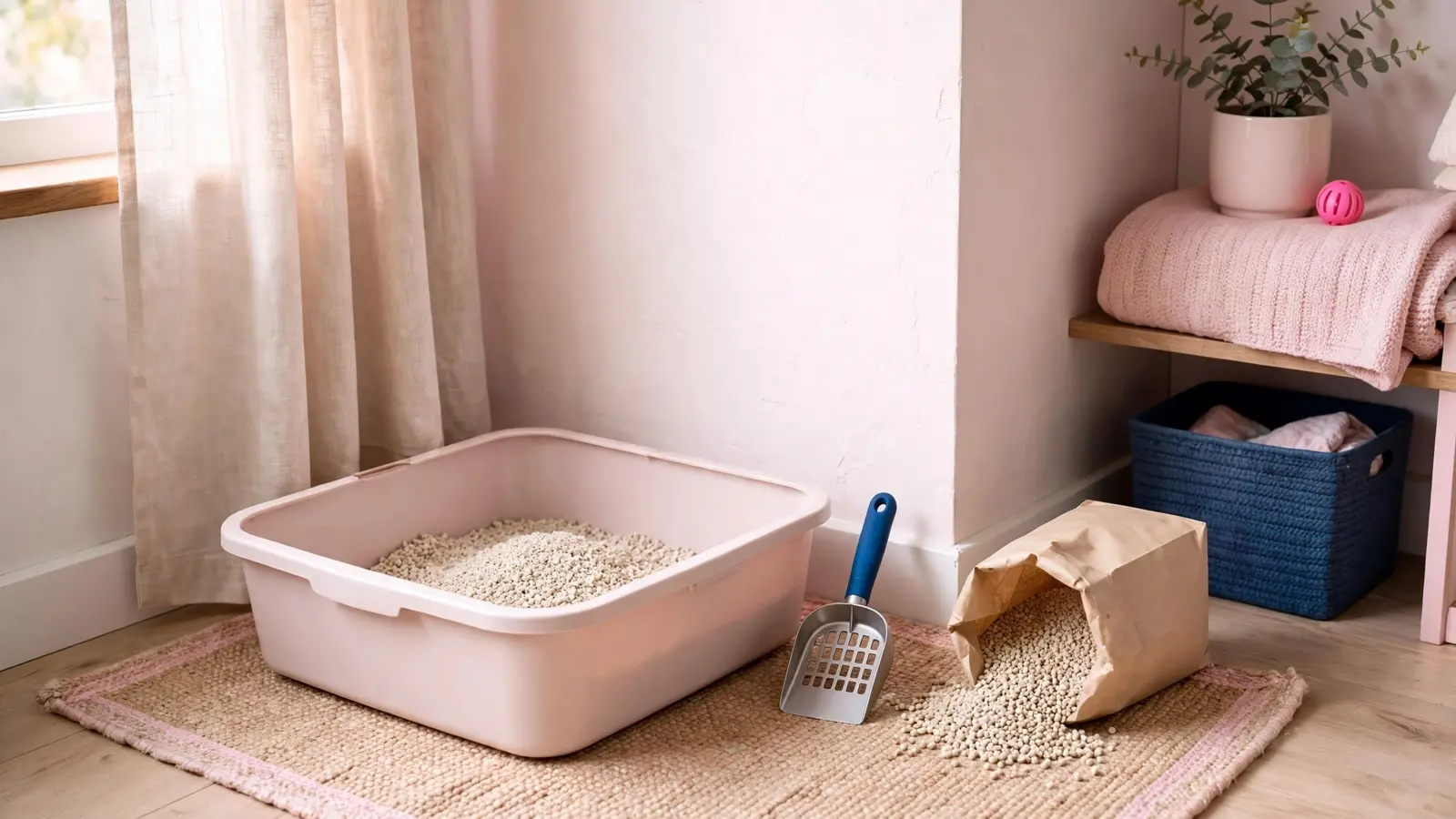
Before adding a cabinet, mat, or matching storage jars, make sure the box itself gives your cat room to turn and dig. A rectangular box one and a half times the length of the cat from nose to base of tail is the recommendation, and bigger is better. That is the useful anchor when a small-space shopping list starts making the smallest pan look tempting.
An open box is recommended where possible, because it is easier to monitor and scoop and it does not trap odors. In an apartment, that visibility also makes the daily check straightforward: you can see the box, reach the scoop, and notice when something about the setup has changed. A covered box that your cat already uses can remain part of the plan; keep the opening usable and avoid treating the cover as a substitute for routine care.
For a cabinet or bench around the box, keep access in mind before styling the corner. The door needs to open without shifting the box, and the scoop needs a home you can reach without moving decor. Our hidden litter box ideas for small apartments cover the furniture side of the setup, including the practical checks for a hide.
Setup note · Choose the pan first · Add furniture around the way you already clean
Pick a simple litter setup
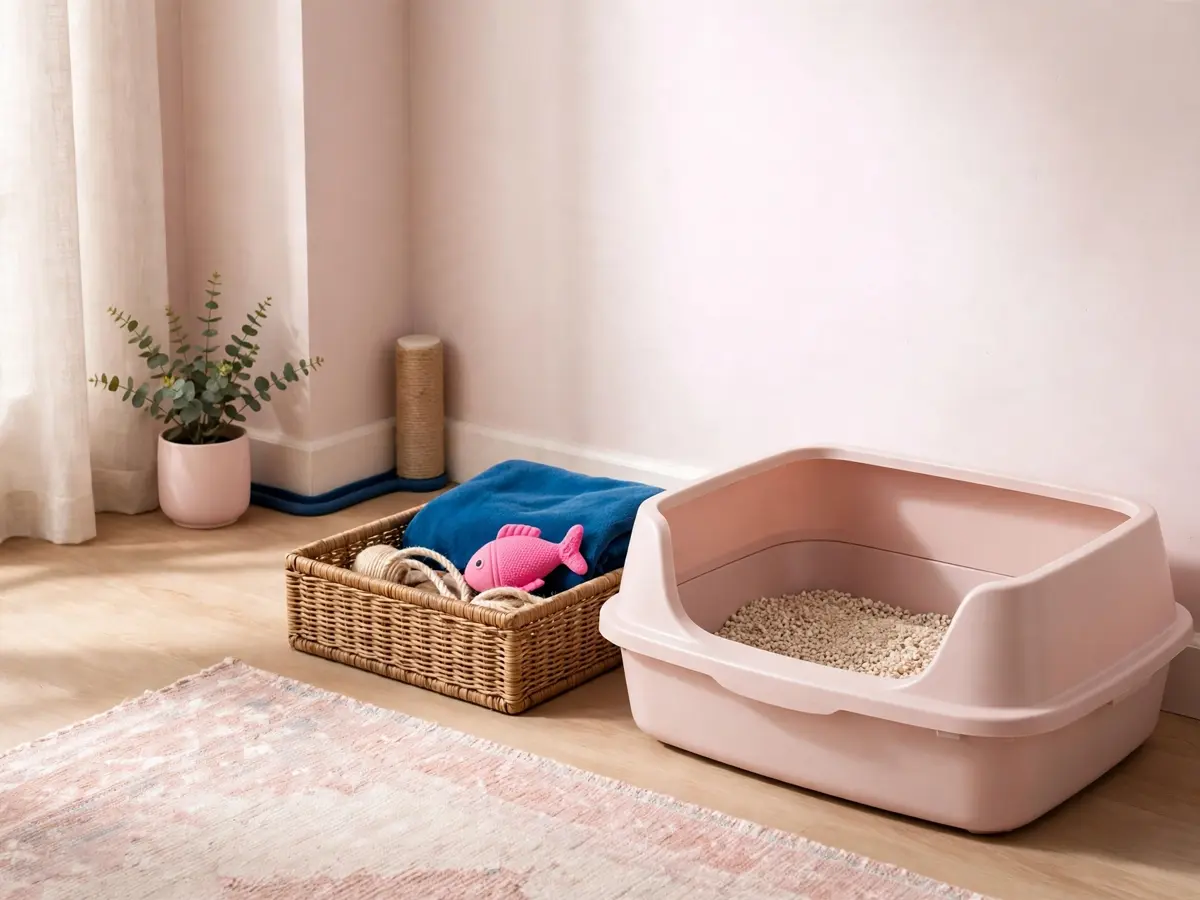
The litter should be a fine, sand-like, non-scented, clumping material, and liners, slotted grills and deodorizing powders are best avoided. Keep that sentence in mind when the pet aisle offers a new layer for one basic tray. A familiar, plain setup is easier to describe to a sitter and easier to maintain than a collection of scents and layers.
Cats often find aromatic litter and litter deodorizers offensive, and no product removes the need to clean the box. That leaves the routine as the center of the setup, even when the litter is fresh or the box sits inside a pretty cabinet. If you are choosing between a scent booster and a scoop kept in reach, choose the tool that makes the task easier to repeat.
Litter shelf · One straightforward material · No fragrance layer
Give the box its own spot
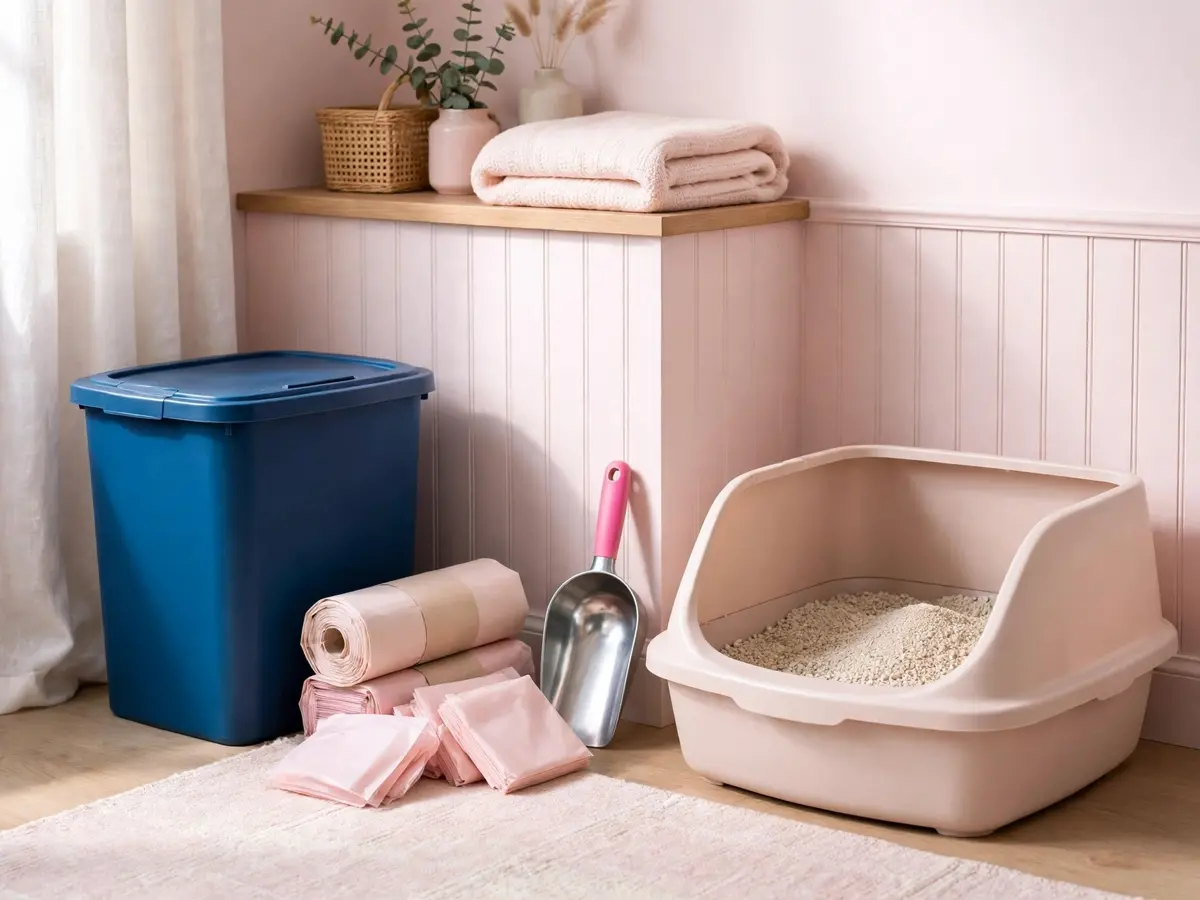
Keep the litter box away from the food and water bowls, and give each resource its own spot so the cat has a choice. In a studio, that may mean using separate sides of one room rather than trying to make one tiny corner do every job. Keep the route to the box clear of laundry, shopping bags, and the things you mean to put away later.
Give each resource its own spot and let the cat choose: a minimum of two resting areas, two feeding areas and two toileting areas. The guideline uses these options to describe choice; it is not a one-size floor plan for every apartment. If you are working with one cat in a compact rental, use the idea to think through separate locations and access rather than copying a diagram without looking at the room.
Pick a place you can reach at the time you usually scoop. A box that is hidden behind a hamper or blocked by a door asks you to move something before you begin. Keep a small clear working area around it so you can lift the scoop, tie a bag, and leave the floor ready for the next visit. The best arrangement is the one that fits the actual path through your home.
If you are planning the rest of the room at the same time, the cat-proofing checklist for a small apartment covers the room-by-room walk-through. For the cozy decor around the litter station, see our small apartment cat corner guide.
A small-space litter station check
| Part of the setup | Quick check | What stays accessible |
|---|---|---|
| Box | Room for the cat to turn and dig | Open top or usable entry |
| Location | Separate from food and water | Clear approach |
| Scoop | Stored with bags | Reachable before cleaning |
| Litter | Fine, sand-like, non-scented and clumping | Refill container |
| Surroundings | Floor and door path are clear | A place to tie off the waste bag |
Keep the box accessible to the cat and to the person who cleans it.
The daily scoop routine
Remove waste from the litter box at least once a day, and wash the box every one to four weeks. The cleanest routine is one you can do without hunting for supplies: keep the scoop, bags and a small waste bin in one place. Pick a moment that already belongs to your day, such as after coffee or before you turn in, and use the same order each time.
- Bring the scoop and an open waste bag to the box.
- Remove waste and put it directly into the bag.
- Look over the litter surface, then leave the box ready to use.
- Tie the bag and take it to the household waste bin.
- Return the scoop to its storage spot before you leave the corner.
Wash the box with soap and hot water only, and avoid strong chemicals or any ammonia-based product. Set aside a place for the empty box to dry while you clean around it. Keep the supplies for this job together so wash day does not turn into a search through bathroom cabinets. Cats often find aromatic litter and litter deodorizers offensive, and no product removes the need to clean the box.
A short reset can stay short. Bring the box to a surface you can reach, wash it, and put the scoop and bags back in their regular place. Avoid making the day depend on reorganizing an entire closet or buying a special container. The setup is already doing its job when you can see what you need and return it without thinking.
A wash day does not have to become a deep-cleaning project for the whole apartment. Focus on the box, the scoop, and the patch of floor around the station. Wash the box with soap and hot water only, and avoid strong chemicals or any ammonia-based product. Let the box dry before returning the litter, and put the scoop back where you can find it. That small reset leaves the station in the same place it started.
A weekly reset you can print
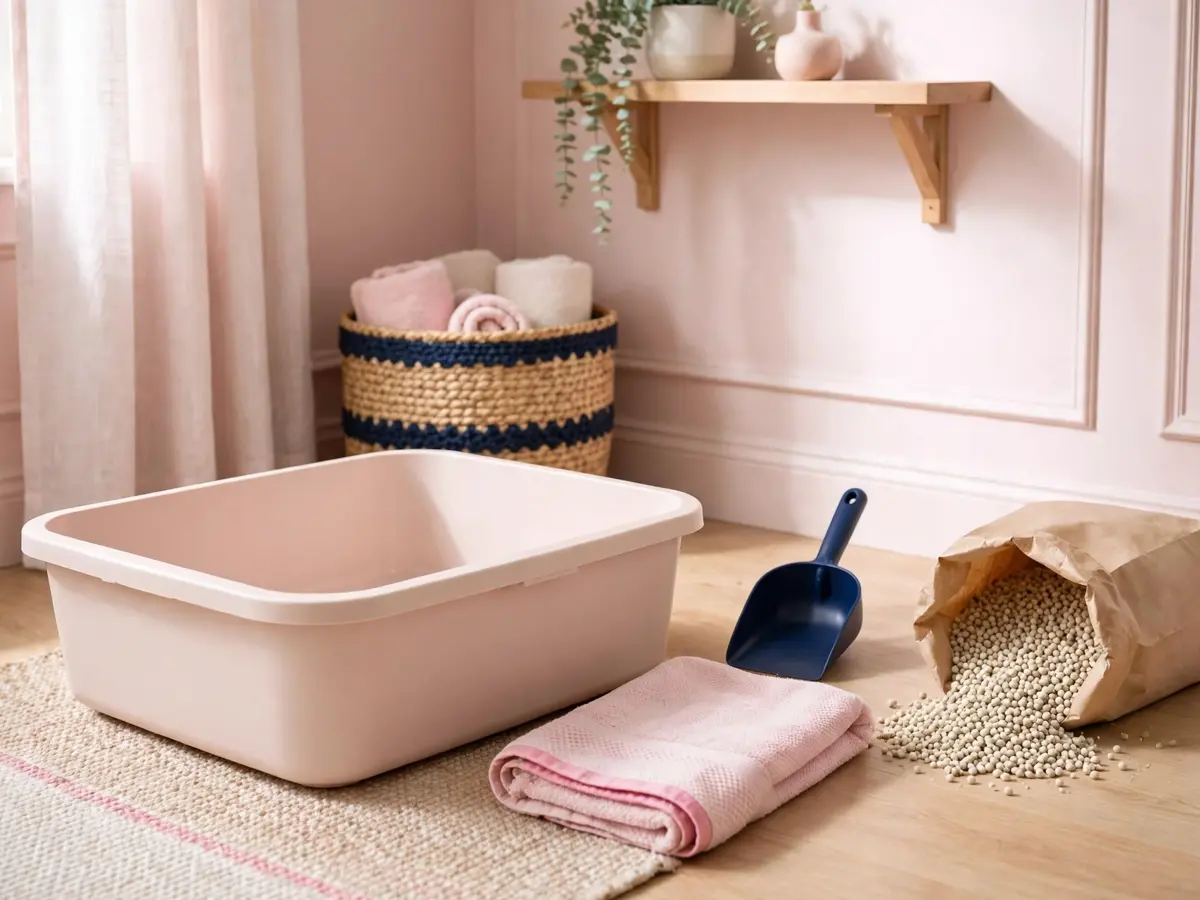
Use this as a reminder card, not a new set of cleaning rules. The daily scoop remains the anchor; this table gives the surrounding little jobs a home so they do not vanish between errands. If your chosen wash day lands on another day, move the note with it. The point is to keep the station in your line of sight and supplies within reach.
Printable litter station weekly reset
| Day | Routine note | Done |
|---|---|---|
| Monday | Scoop, tie the bag and return the scoop | □ |
| Tuesday | Scoop and check that bags are stocked | □ |
| Wednesday | Scoop and clear the walking path | □ |
| Thursday | Scoop and check the litter container | □ |
| Friday | Scoop and wipe the outside rim if needed | □ |
| Saturday | Scoop and put wash supplies together | □ |
| Sunday | Scoop and do the box wash when it is due | □ |
Remove waste from the litter box at least once a day, and wash the box every one to four weeks.
When the setup feels off
Make one change at a time so you know what you changed. Start with the simplest checks: can the cat reach the box, can you reach the scoop, are the bowls somewhere else, and is the litter still the material you intended to use? A room can look organized while its daily path is awkward. Stand where your cat approaches and look for the bag, basket or door that now sits in the way.
If the box is covered, check that the opening remains easy to use and that you can get to the pan without dismantling the furniture. If the station is hidden, make sure the cover is a cover rather than a barrier to cleaning. An open box is recommended where possible, because it is easier to monitor and scoop and it does not trap odors. Keep the litter box away from the food and water bowls, and give each resource its own spot so the cat has a choice.
For odor questions, return to the plain routine before adding a powder or fragrance. Remove waste from the litter box at least once a day, and wash the box every one to four weeks. Wash the box with soap and hot water only, and avoid strong chemicals or any ammonia-based product. Cats often find aromatic litter and litter deodorizers offensive, and no product removes the need to clean the box.
When the question belongs with your vet
A cat that stops using its box needs a veterinarian, because house-soiling has its own veterinary guidelines. If you are noticing a change in box use, write down what you observed and contact your cat’s veterinarian. Keep the explanation simple and let the professional guide the next step. For informational purposes, consult your vet.
The furniture and litter questions in this article are setup ideas. They are not a substitute for an individual veterinary conversation when your cat’s routine changes. Keep the box easy to access while you ask for guidance, and avoid treating a scent, a cabinet or a new product as a complete answer.
Questions we get about litter box setup
How often should I scoop a litter box?
Remove waste from the litter box at least once a day, and wash the box every one to four weeks. Keep a scoop and waste bags together so the task has a clear start and finish.
Is an open litter box better than a covered one?
An open box is recommended where possible, because it is easier to monitor and scoop and it does not trap odors. A covered box your cat already uses can stay in place while you keep the entry clear and the scoop routine steady.
What litter should I start with?
The litter should be a fine, sand-like, non-scented, clumping material, and liners, slotted grills and deodorizing powders are best avoided. If your cat already has a litter it uses, make changes thoughtfully and watch what it chooses.
Where should the box go in a small apartment?
Keep the litter box away from the food and water bowls, and give each resource its own spot so the cat has a choice. Pick a location you can reach for cleaning and that your cat can approach without squeezing past stored items.
What if my cat stops using the box?
A cat that stops using its box needs a veterinarian, because house-soiling has its own veterinary guidelines. For informational purposes, consult your vet rather than treating a location or litter change as the whole answer.
What we use
Simple supplies for a cat-friendly corner
A scoop, litter storage and small-space home pieces gathered in one list for planning your setup.
See the setup list →As an Amazon Associate we earn from qualifying purchases.
Save this routine
Save the weekly reset for your next supply run. The Cat Home collection has more small-apartment setup ideas.
Sources
The box, litter and placement guidance comes from feline veterinary guidelines:
When a clean, well-set box still misses, the poop outside the box triage checklist is the next move.
Once the setup and the schedule are set, the when the box should be a cabinet page takes the setup one step further into the furniture itself.
Placement and the cleaning round sit beside one more question, and the the box count rule of thumb page answers it head on.