 PawStyle Daily
Cat-Friendly Apartment Decor
Cat Pooping Outside the Litter Box: A Triage Checklist
A stool on the floor is a different message from a puddle on the floor, and it needs a different reading. This page is about poop only: the signs that mean the clinic comes first, the causes worth walking through at home, the box and fill variables a household can actually change, and the week of notes that turns a one-off mystery into a pattern someone can act on. It does not name conditions and it does not offer a home fix for a cat that has stopped using the box. That is a veterinary question, and the checklist below starts there on purpose.
By PawStyle Daily · Updated 22 November 2026
Good to know: urgent signs come before the home checklist | stool placement, not the cat | a week of written notes | a printable sheet for the fridge door.
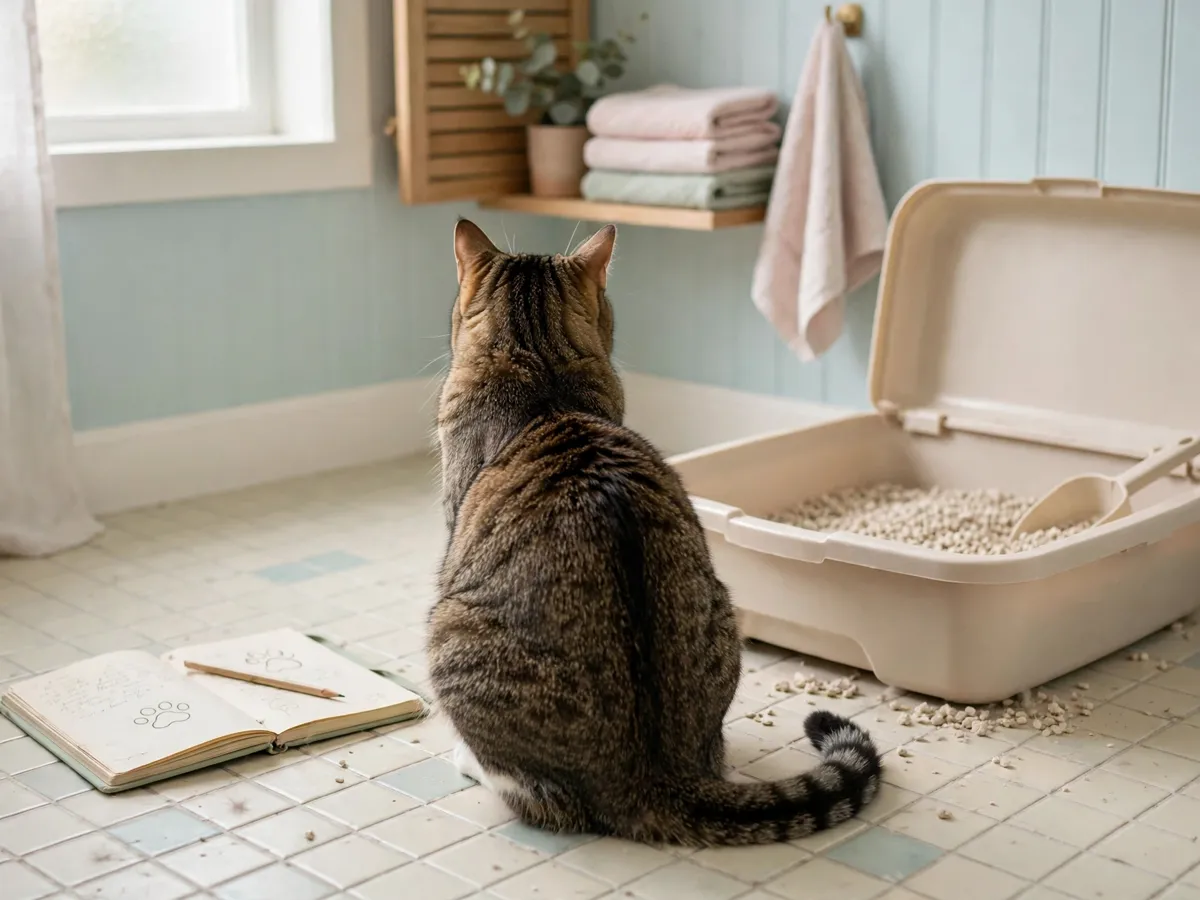
The Difference Between Pee and Poop Outside the Box
House-soiling conversations usually start with urine, because a puddle is easy to find and hard to miss. Stool is a quieter problem and a different one. A cat that avoids the box for urine and a cat that avoids it for stool are not necessarily telling you the same thing, and the two have different pages, different checklists and different urgency. This page stays on the stool side of the floor; urine has its own guide on this site.
Mixing the two problems into one article is how households end up changing the fill when the message was about the stairs. The other reason to keep them apart is urgency. Some urine situations are a same-day phone call, and so are some stool situations, but the signs that decide it are not the same list. The next section is the stool list, and it sits before every home change on this page.
The Signs That Send You to the Vet First
Read this list before you touch the litter. Any one of these signs moves the whole page behind a phone call to the clinic, and the home checklist below waits until the veterinary side has been answered.
- Straining in the box for a long time without producing, or visiting the box over and over through the day.
- Crying, yowling or flinching during the trip to the box.
- A belly that feels firm to the touch, or a cat that will not let you near it.
- Refusing meals, or a cat who turns away from food offered at the usual spot.
- Blood visible in the stool or on the floor where the stool landed.
- Hiding and refusing to move, or a cat who sleeps in a place they would not normally choose.
- Vomiting alongside the missed box, or a change in water drinking you can see in the bowl.
None of these signs is a verdict, and none of them is a reason to rearrange the room first. They are the list that decides whether the next hour is spent at home or on the phone. Write down what you saw, when you saw it, and where the stool landed. The clinic will ask, and a note in front of you beats a memory across a counter.
The Causes Worth Checking, Easiest First
Once the urgent list has been answered, the home side of the question is a checklist, and it is ordered from the change that costs nothing to the change that costs a Saturday. Work down it and stop at the first thing that matches your household.
- The scoop habit. Waste left in the box is the most common reason a cat walks away from it. The cleaning side of this lives on its own page, and how often the box gets scooped is the shortest read on the list.
- The fill under paw. A cat that steps onto something it dislikes will often hold the stool rather than sit in it. The cat litter types compared page walks the textures side by side.
- The box itself. Height of the wall, the open or covered shape, and whether the rim presses on a crouching cat. For a kitten, the basic box setup for a young cat sets all three from day one.
- The spot. A box in a loud corner, behind a door that slams, or on a floor a cat has to cross to reach. Location moves are free and they are the ones households forget.
- Anything new in the house. A second cat, a new person, a moved sofa, a different vacuum schedule. Cats register a changed room before they register a changed box.
- The posture question. A cat that lays in the box rather than squats in it is telling you something about how the box feels, and why a cat lays in the box covers that shape on its own page.
Notice what this list does not do. It does not name a condition, and it does not offer a remedy for a cat who has stopped using the box altogether. Those two belong to the clinic, and the faqs below say so plainly. The home checklist is for the cat who still uses the box and misses it sometimes.
The Box, the Fill, and the Spot You Can Change
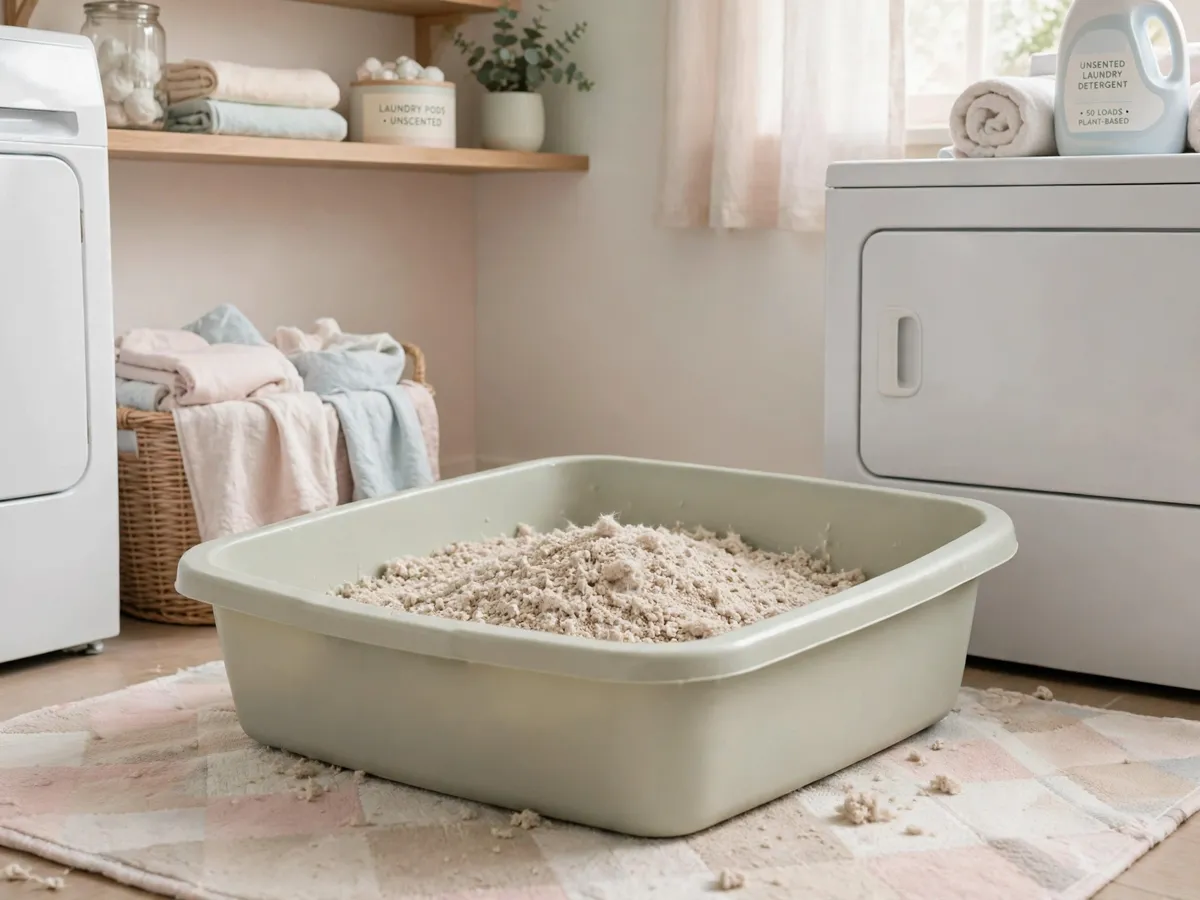
Three variables are worth holding still long enough to test, and the order matters. Change one, keep the other two frozen, and give the cat the same arrangement for a stretch before you judge it. A household that swaps the fill, moves the box and changes the scoop in one afternoon learns nothing except that the cat was unhappy on a Tuesday.
The fill is the variable cats vote on with their paws. A fine, sand-like, unscented clumping material is the arrangement most cats accept, and a scented fill or a deodorizing powder is the one most households reach for by mistake. A perfume added to a box is aimed at the human nose, not the cat's, and nothing you sprinkle in it takes the scoop off the calendar. That is why the freshness variable sits above the texture variable in the checklist.
The box shape comes next. An open box lets a cat see the room while squatting, and it lets the household see what came out. A covered box traps smell inside the box and forces a cat to back into a wall. For a cat who misses, the open box is the version worth testing, and it is also the cheaper one.
The spot is the last variable and the most underestimated. A box in a quiet corner with a washable mat under the exit, away from the food and water bowls, gives a cat a trip that ends somewhere they can watch from. Moving a box that a cat already accepts is a change with no upside, so freeze the location while you test the fill and the shape.
A Week of Notes Beats a Memory
The single most useful thing a household can do between the first miss and the clinic visit is write it down. Keep a log for the first week, and keep it small: the date, where the stool landed, what the box looked like beforehand, and anything that was different that day. Four lines a day is enough, and a note app on the phone beats a notebook that lives in a drawer.
A week of notes turns a mystery into a pattern. Three misses in the same spot point at the spot. Misses that cluster after the vacuum points at noise. A stool on the bathmat every morning and none in the evening points at the box being full by dusk. The pattern is the answer, and the pattern only shows up on paper.
The log also keeps the cat out of the blame. A household that acts on a memory tends to blame the cat, and a cat cannot answer for a floor. A household that acts on a written week tends to blame the arrangement, and the arrangement is the thing a person can change.
Printable Triage Sheet for the Fridge Door
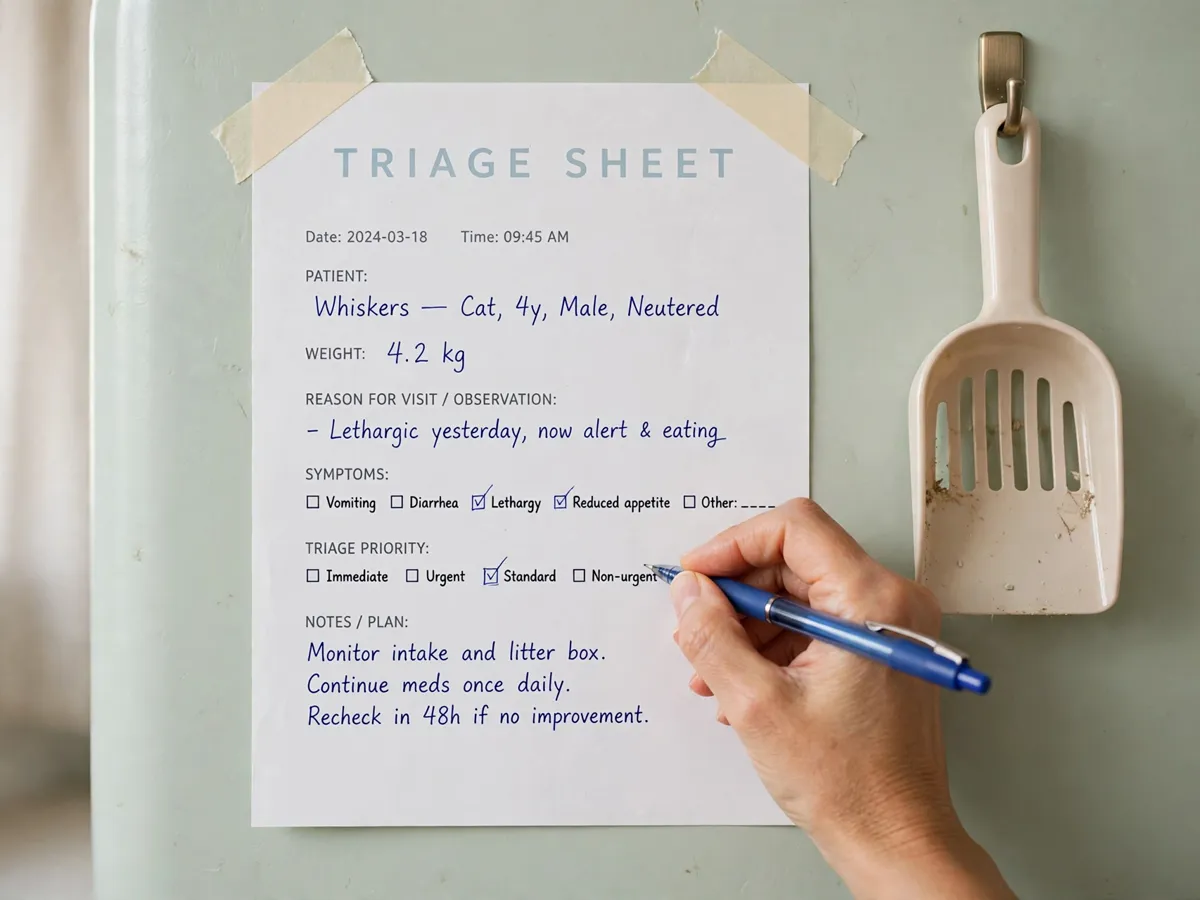
The sheet is the log and the checklist on one page, taped where the household already stands. Print it, fold it on the dashed line, and clip it to the fridge door with a binder clip so anyone in the house can add a line. Four blocks, in this order.
- The urgent list across the top, in the largest type on the page, so it is the first thing a person reads on the worst day.
- The six home checks down the left column, in the order above, with a tick box beside each one.
- The week of notes down the right column: one row per day, four lines per row, and a space for where the stool landed.
- The clinic block along the bottom: the phone number, the date of the last visit, and the words the cat was using when the pattern started.
The sheet is a housekeeping tool, not a medical record. When the clinic visit happens, bring the sheet with the week written on it. A printed page handed across a counter is worth more than a description given from memory, and it costs a sheet of paper.
Cat Poop Outside the Box Questions
When is poop outside the box an emergency?
Straining in the box for a long time, crying during the trip, a hard belly, refusing meals, or a cat that hides and will not move are signs to act on the same day, not after a week of watching. Blood in the stool is another. None of these wait for a room change; they wait for a phone call to the clinic and a written note.
Should I scold the cat for missing the box?
No. Scolding teaches a cat to watch you, not to use the litter, and it leaves the actual cause sitting on the floor. The useful move is a written list of what changed at home: the fill, the box, the room, the scoop habit, and anyone new in the house. Take that list to the clinic instead of guessing at it alone.
My cat stopped using the box for poop. What now?
Start on the veterinary side of the question. A cat that stops using its box needs a veterinarian, because house-soiling has its own veterinary guidelines. While the visit is being booked, keep the fill unscented, the scoop going daily, and the location untouched, then note where every stool landed for the rest of the week.
Save the Poop Triage Page
Pin it now so the sheet is on the fridge door before the next miss, not after it. For informational purposes, consult your vet. The Cat-Friendly Home collection holds the cleaning schedule, the litter comparison and the setup basics in one place.
The triage sheet here covers the poop branch; why a cat goes outside the box covers the pee branch from the top down.