 PawStyle Daily
Cat-Friendly Home
Cat Litter Box Enclosure: Box Sizing, Ventilation, Entry Type
A cat litter box enclosure is a piece of furniture that holds the box, and the furniture either fits the cat or the cat walks past it. The enclosure market sells cabinets by look and by size, and a cabinet that looks right in the room fails the moment the cat hits the lid on the dig or the smell builds in a box with no vent. This page walks through the four parts that decide whether an enclosure works: the box clearance inside the cabinet, the airflow gap at the back, the entry the cat walks through, and the cabinet builds that fit an apartment. The enclosure is the furniture; the litter box is a separate page.
By PawStyle Daily · Updated 22 November 2026
The enclosure is furniture, not the box · clearance off the cat, not the catalogue · the airflow gap is the part that moves the air · for informational purposes, consult your vet.
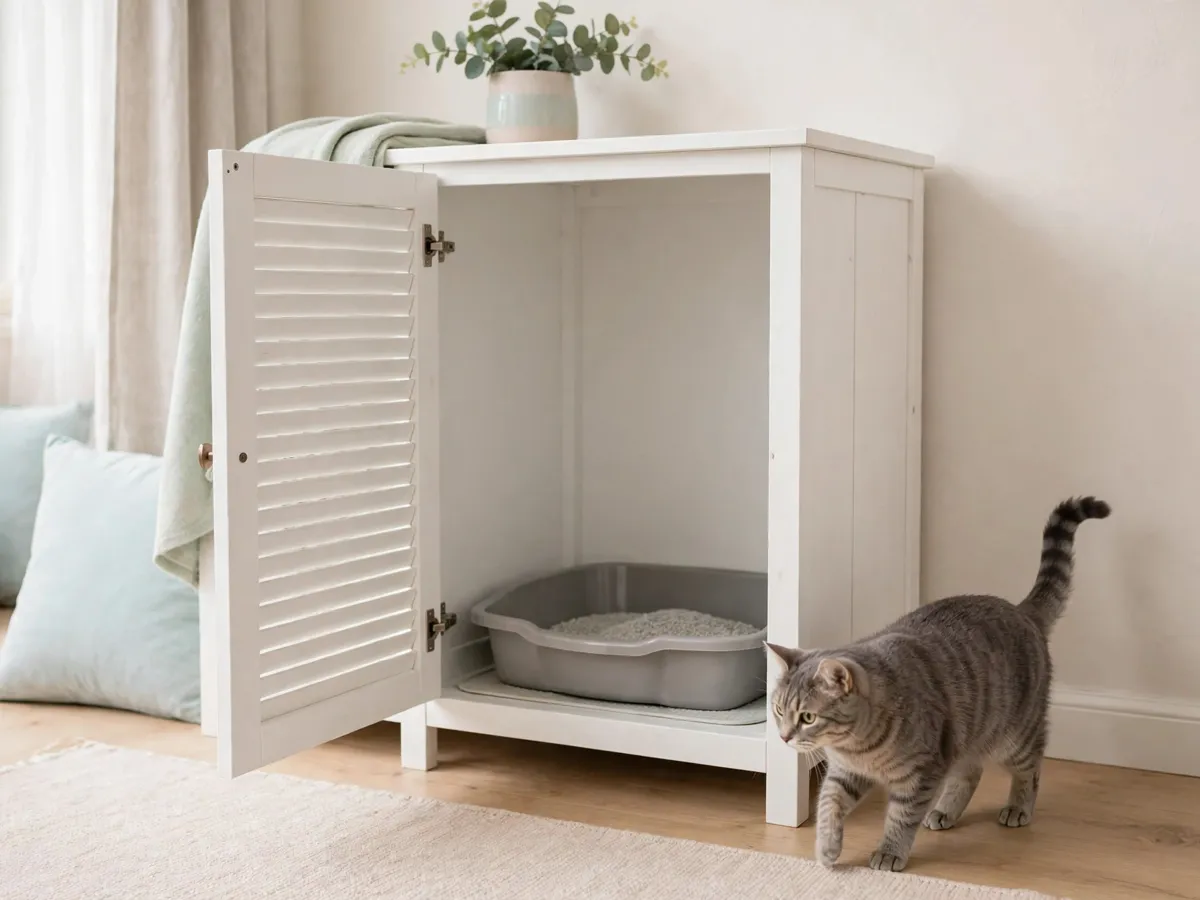
The Enclosure Is Furniture, Not the Litter Box
The enclosure is the cabinet, the bench, or the side table that holds the litter box, and the litter box is the pan inside. The distinction matters because the enclosure gets bought for the room and the box gets bought for the cat, and the two decisions pull in different directions. A cabinet that fits the room and crowds the cat is a cabinet the cat stops using, and a box that fits the cat and crowds the cabinet is a box the cabinet cannot close on. The enclosure page owns the cabinet; the box page owns the pan.
The enclosure does four things the box does not. It hides the box from the room, it holds the litter the cat kicks out, it carries the vent that moves the air, and it sets the entry the cat walks through. The box does the dig and the cover; the enclosure does the room. The four parts below walk through each, and the order is the order the cat cares about: the cat walks in, the cat digs without hitting the lid, the cat leaves, and the air moves while the cat is gone. The enclosure that gets all four right is the enclosure the cat uses and the room keeps.
This page owns the enclosure as a furniture piece. The hidden litter box guide owns the aesthetic of hiding the box in a small apartment, and that page covers the look and the placement. Read this page for the cabinet parts, then read the hidden box page for the room integration.
Box Clearance and the Pan That Fits Inside
The clearance is the space between the rim of the pan and the underside of the cabinet lid, and the clearance is the part that decides whether the cat digs or hits the ceiling. A cat in a litter box digs, and a digging cat lifts its back and arches its spine. The lid needs to sit above that arch, or the cat hits the lid on the dig, flinches, and walks out. A cat that hits the ceiling once may try again; a cat that hits it twice finds the rug.
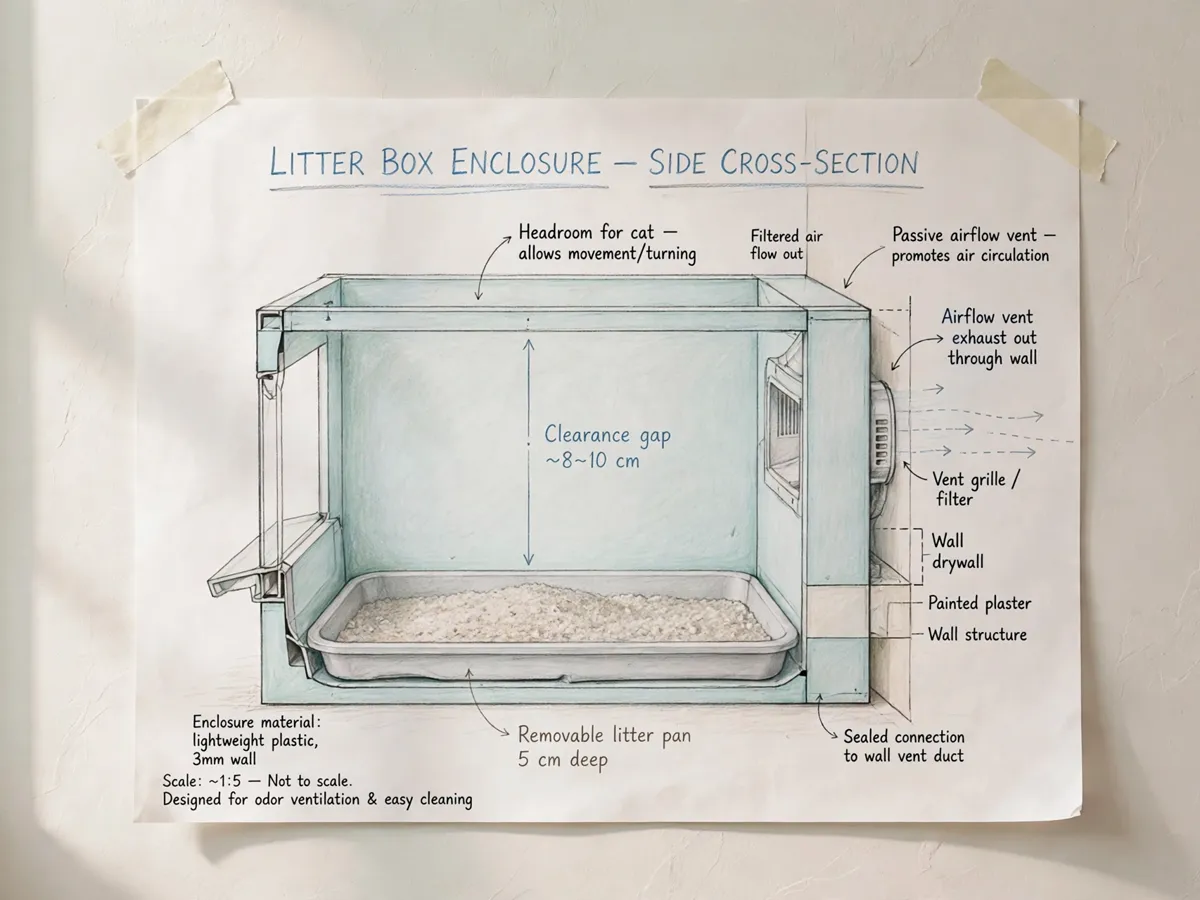
Read the clearance off the cat, not off the catalogue. The catalogue lists the interior height of the cabinet, and the cat lists the clearance as the space above its back when it stands in the pan and digs. Measure the cat standing in the pan it already uses, then read the enclosure interior height off the spec, and leave a hand width above the standing cat for the dig. A hand width is the clearance the cat needs to arch and dig without the lid in the way, and it is the clearance that keeps the cat in the box.
The pan itself is a separate decision, and the pan has its own page. The litter box setup basics page covers the pan size, the fill depth, and the cleaning schedule, so this page leaves the box there. The check here is the cabinet interior and the clearance above the pan the household already owns. A cabinet that fits a pan the cat uses is a cabinet the cat uses.
The Airflow Gap and the Smell
The airflow gap is the vent at the back of the cabinet, and the gap is the part that moves the air through the enclosure. A cabinet with no vent is a box with a lid, and the air inside a box with a lid sits still. Still air holds the smell the pan produces, and the smell builds until the cat avoids the enclosure and the room gets the smell anyway when the door opens. The vent at the back is the part that lets the air move, and the air moving is the part that keeps the enclosure from turning into a sealed box.
The gap does not do the cleaning. The box still needs the scoop and the scrub on the schedule the pan asks for, and the enclosure does not change that schedule. What the gap does is let the air between cleanings move through the cabinet and out, so the smell the pan produces does not build inside the enclosure. A cabinet with a vent and a clean box is a cabinet the cat enters; a cabinet with no vent and a clean box is a cabinet the cat enters once. The vent is the part the cat cannot see and the room can.
The smell control itself has its own page, and the methods live there. The litter box odor control guide covers the fill choice, the scoop cadence, and the room ventilation, so this page leaves the smell methods there. The check here is the vent on the enclosure, because the vent is the part the cabinet owns and the smell guide does not.
Entry Type and the Cat That Uses It
The entry is the hole or the flap the cat walks through to reach the box, and the entry is the part that decides whether the cat enters or squeezes. A round hole on the front fits a cat that likes a den: the cat ducks through, the hole frames the entry, and the cat feels enclosed on the way in. A flap fits a cat that pushes through: the cat leans on the flap, the flap gives, and the cat walks in without ducking. The entry the household picks has to match the cat the household owns, because the entry is the part the cat meets first.
An older cat or a stiff cat changes the entry choice. A cat with sore hips cannot climb into a hole that sits high on the front, and a cat with stiff shoulders cannot push a heavy flap. A lower entry, a flap that swings both ways, or an open front with no door at all fits the cat that cannot manage the round hole. The entry the cat used at age four is not the entry the cat needs at age twelve, and the enclosure that held the young cat may need a new entry for the older cat.
The dog in the household is a separate entry decision, and it has its own page. The dog proof litter box layouts page covers the barrier, the height, and the angle that keeps a dog out of the box, so this page leaves the dog there. The check here is the entry the cat walks through, because the cat is the one who uses the enclosure every time.
Cabinet Builds for an Apartment
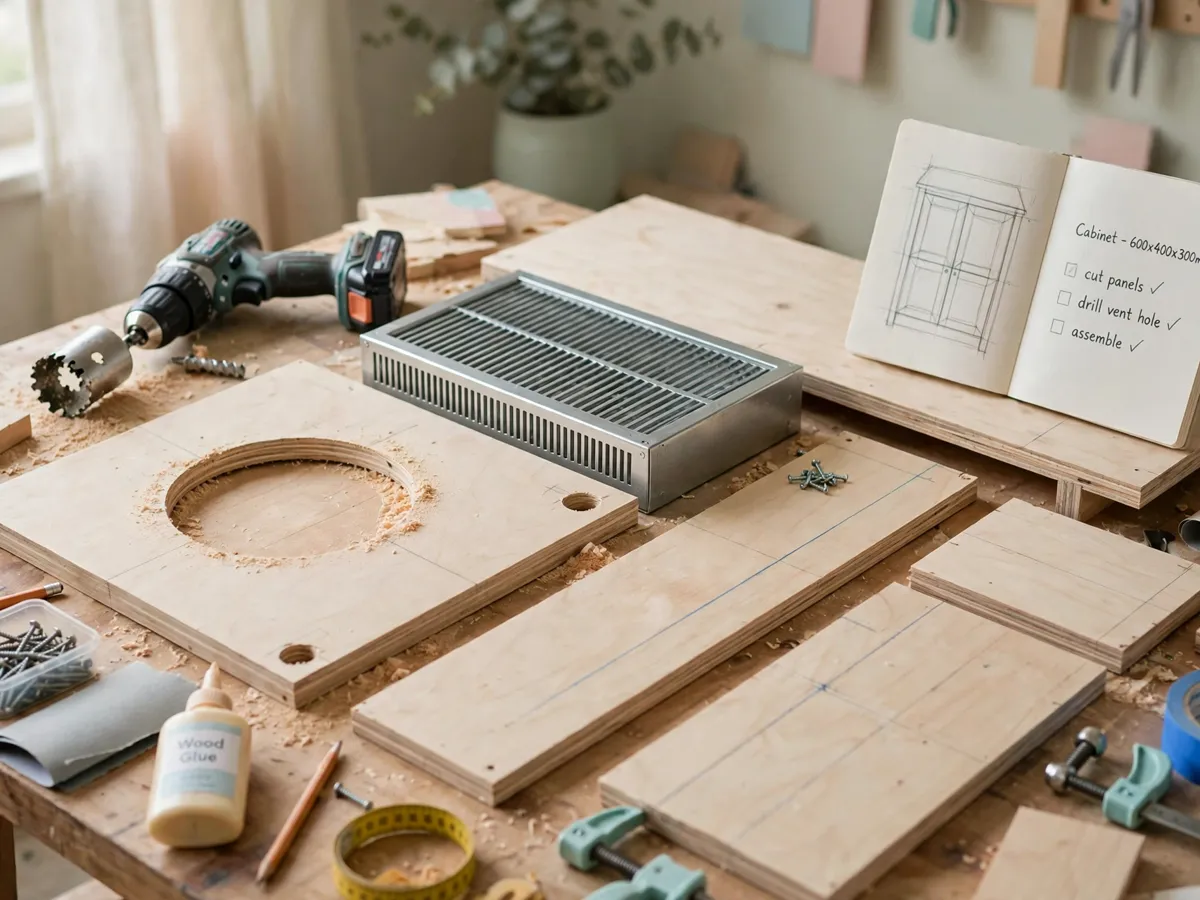
A cabinet build is the enclosure made from scratch, and the build is the part that fits the apartment the household lives in. A store bought enclosure comes in the sizes the store carries, and the apartment corner the household has is rarely one of them. A cabinet built from panels cut to the corner fits the corner, fits the pan, and fits the cat, because the builder sets every dimension off the room, the pan, and the cat rather than off the catalogue. The build is the enclosure the apartment owns rather than the enclosure the apartment accepts.
The build starts with the pan and the cat, then the corner. Cut the panels to hold the pan with the clearance the cat needs above the rim, then cut the entry to the cat the household owns, then cut the vent at the back for the air. The lid stays shut with a latch the cat cannot open, and the door swings wide for the scoop. A cabinet built in that order holds the pan, holds the cat, and holds the air, because the parts come together off the dimensions the room gives rather than the dimensions the store guesses.
The build is wood, and the wood has its own considerations. A painted cabinet sealed at the joints sheds the litter the cat kicks, and a cabinet left raw absorbs the smell the pan produces. Seal the inside, leave the outside to the room, and the cabinet stays the furniture piece the household wants and the litter box stays the pan the cat wants. The build is the enclosure the household owns, and the four parts above are the build.
Cat litter box enclosure questions
How much clearance does a litter pan need inside an enclosure?
The pan needs enough clearance above the rim for the cat to step in, turn, and dig without the lid pressing on the back. A cat that hits the ceiling stops using the enclosure. Measure the cat standing in the pan, then read the enclosure interior height off the spec, and leave a hand width above the standing cat for the dig.
Does an enclosure stop the litter box smell in a small apartment?
An enclosure hides the box and holds the litter inside, but it does not remove the need to clean the box. A cabinet with no airflow gap traps the smell and the cat avoids it, so the vent at the back is the part that lets the air move. Clean the box on the schedule the pan asks for, and the enclosure stays the furniture piece, not the smell solution.
What entry type works for a cat in an enclosure cabinet?
The entry works when the cat walks through without squeezing. A round hole on the front fits a cat that likes a den, and a flap fits a cat that pushes through. An older or stiff cat needs a lower entry, not a hole it climbs into. Watch the cat walk in once, and if it hesitates, the entry is the part to change.
Save the Enclosure Checklist
Pin this guide for the next enclosure shopping trip or cabinet build, and run the four checks on the furniture before the cat does. The Cat-Friendly Home collection holds the hidden box guide, the dog proof layouts, the setup basics, and the odor control methods. For informational purposes, consult your vet.