 PawStyle Daily
Puppy Training Tips
Puppy Growth Chart: Track It Weekly
A puppy changes shape every week, and the change is the information. A weekly weight, written down on the same card, turns guesswork into a curve you can actually read — and a curve is what your vet wants when a food question comes up. This page is the low-tech version: how to weigh at home, what to write down, the body-condition check that goes beside the number, and the moments the chart earns a vet visit.
By PawStyle Daily · Updated 17 November 2026
Good to know: same day, same scale, same card · body check beside the number · for informational purposes, consult your vet.
Why write the number down
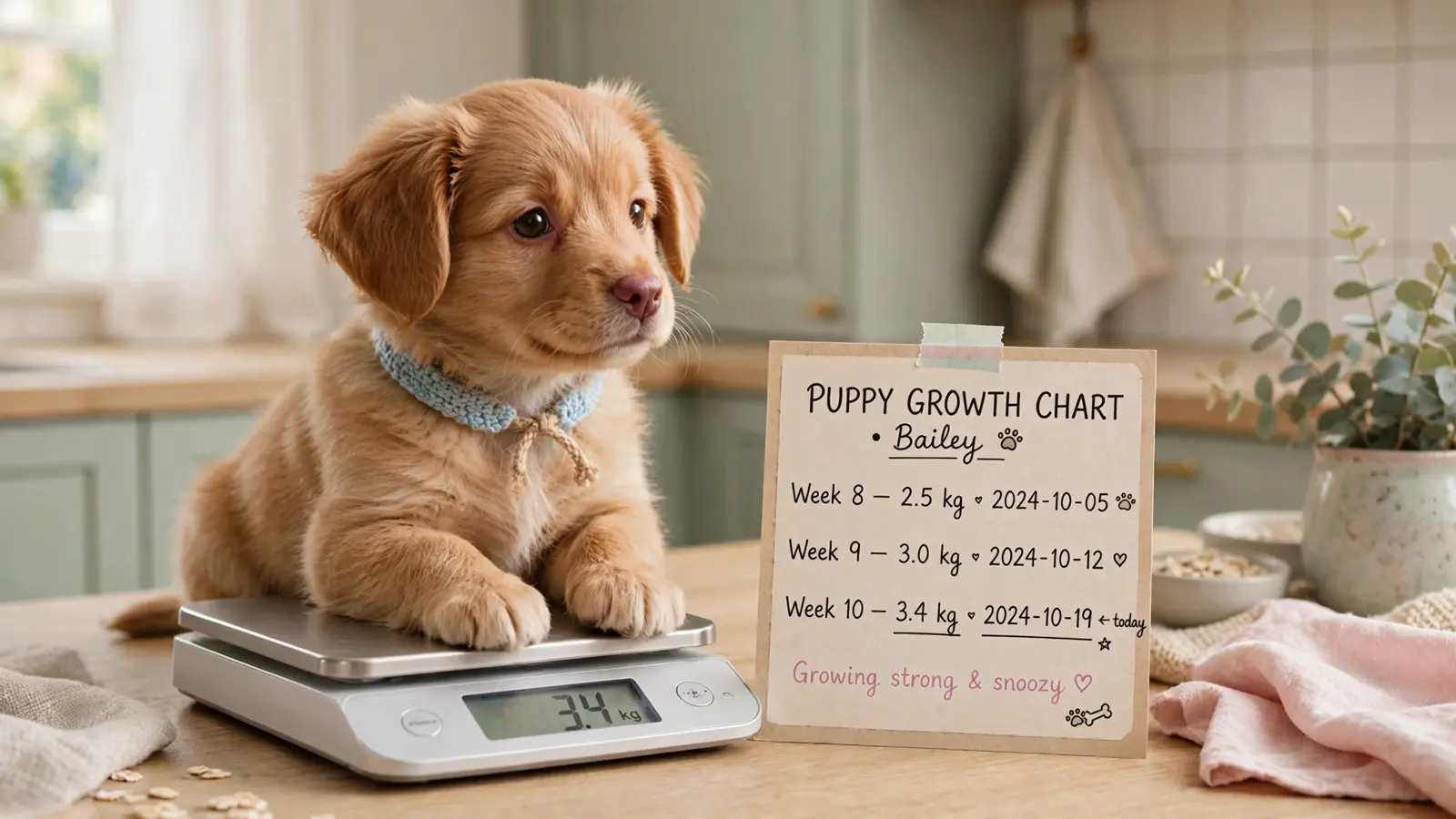
A weight in your head is a feeling; a weight on a card is a trend. Weigh the puppy weekly and write the numbers down. Four weeks of numbers show whether the food is landing right, whether a growth spurt is a spurt or a slide, and whether the puppy is on track for the adult size the breed suggests.
The card also makes the vet conversation concrete. “She was 8.4 pounds on the 3rd and 8.6 on the 17th” gives a vet something to work with; “she seems small” does not.
How to weigh at home
- Small puppy: a kitchen scale on the counter, a towel on the plate for grip, all four paws on and still for two seconds.
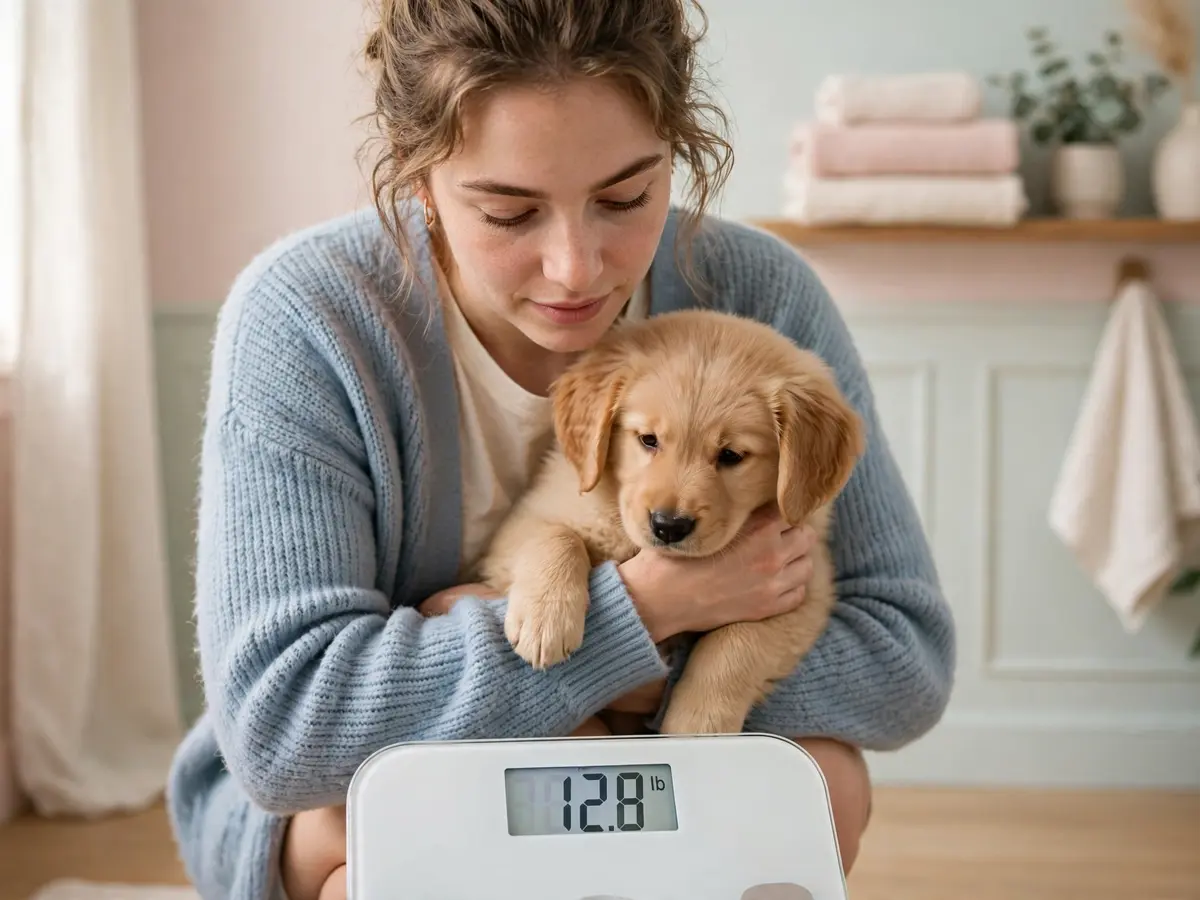
- Medium puppy: a bathroom scale and the hold-and-subtract method — your weight alone, then your weight with the puppy, then the difference.
- Big puppy: the same hold-and-subtract trick, or a postal scale if you have one with a wide platform.
- Consistency: same day of the week, same time of day, before dinner rather than after. A full meal can add visible ounces to a small breed.
The tracking card
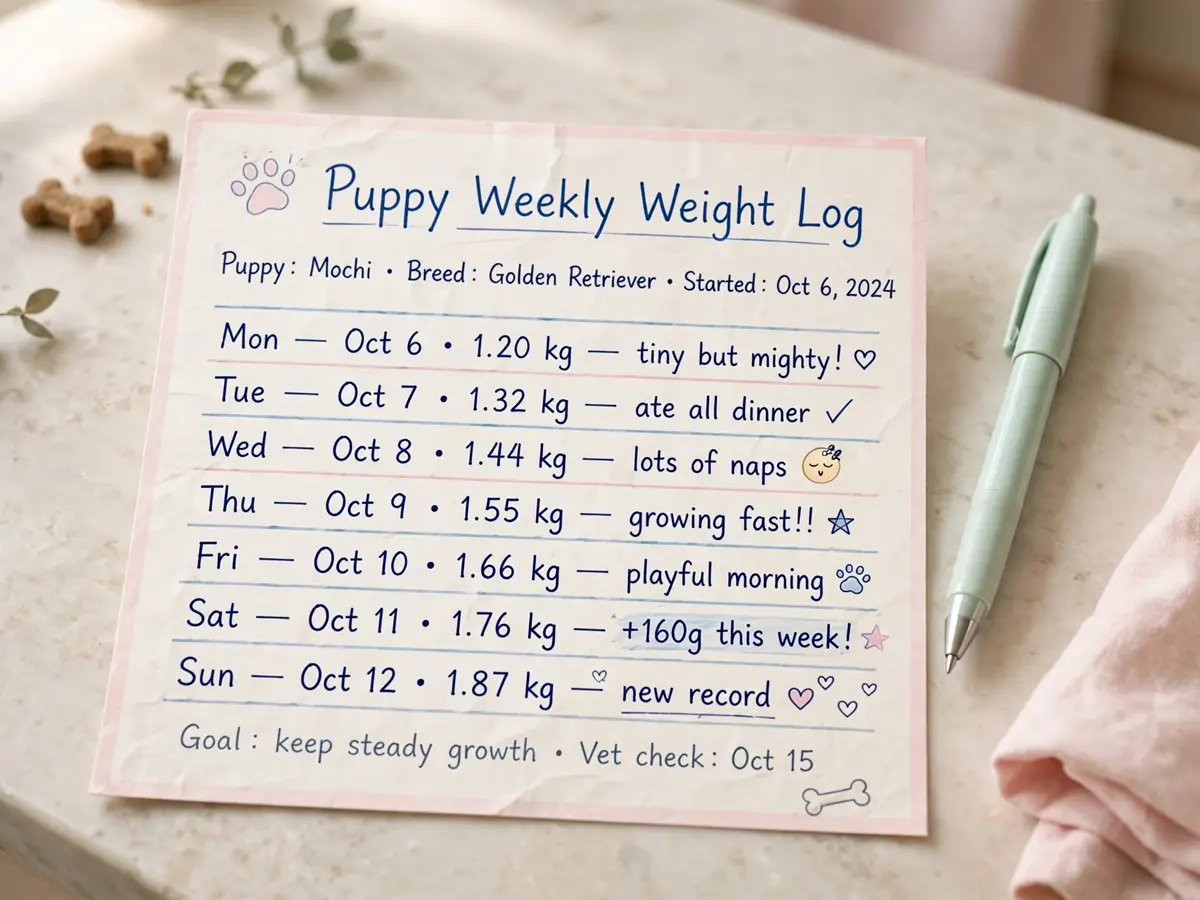
One index card on the fridge, five columns, one line a week. Nothing digital needed, and the fridge door is the one surface every household looks at daily.
Weekly puppy weight card
| Column | What to write | Example |
|---|---|---|
| Date | Same weekday every week | Nov 17 |
| Weight | The number, with ounces or grams if the scale shows them | the week's number |
| Change | This week minus last week | this week's step |
| Body check | Ribs, waist, energy — one word each | Ribs easy, waist in, bouncy |
| Notes | Food changes, shots, a weird appetite day | Switched to new bag Nov 15 |
Keep the card for the whole first year. It becomes the puppy's health record for the vet, the food brand question and the boarding form.
The body check beside the number
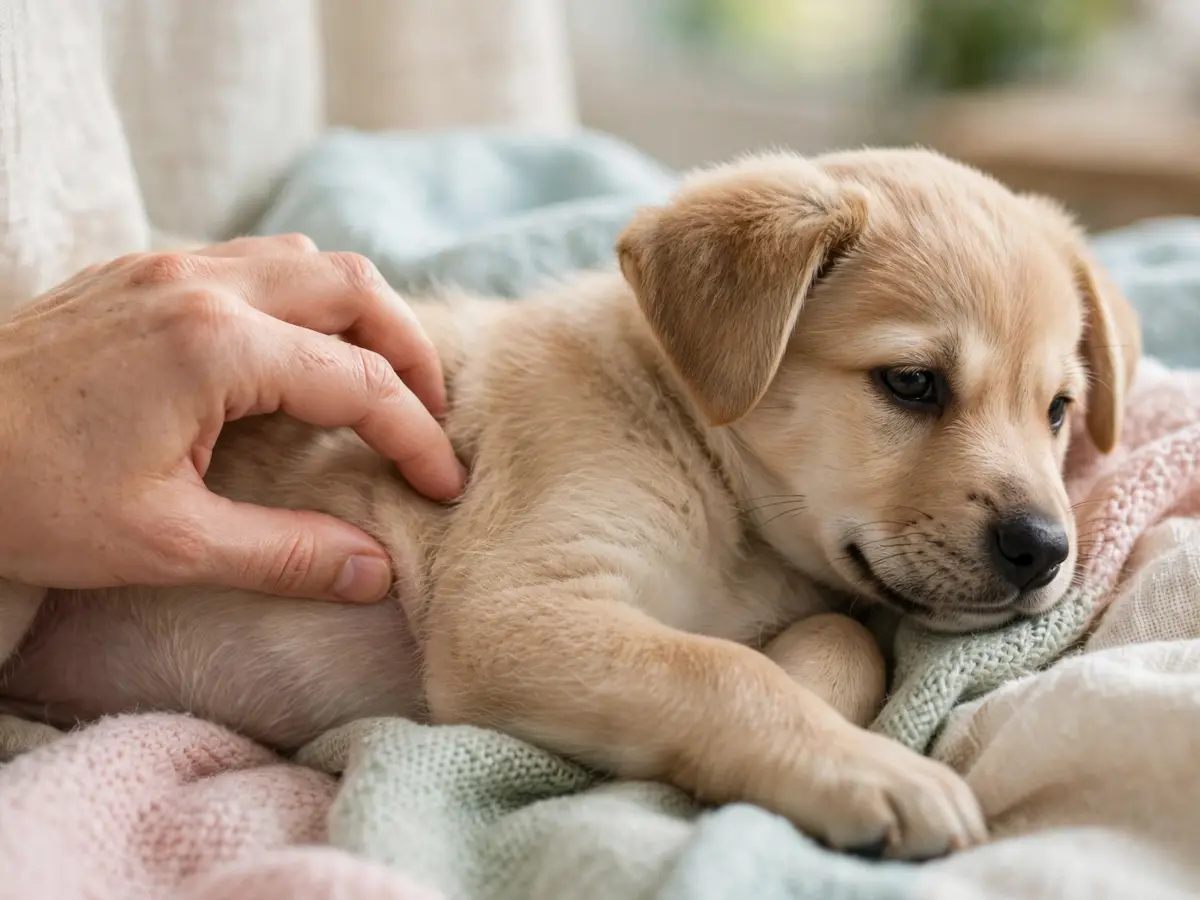
The scale tells you the weight; your hands tell you whether the weight is right. At an ideal weight, a puppy has a waistline that curves in behind the rib cage, a tucked tummy, and ribs you can feel but not see. Run the check on the same day as the weigh-in, and write one word per check on the card.
- Ribs: easy to feel under a light hand, not visible across the room.
- Waist: a curve behind the rib cage when you look from above.
- Tummy: tucks up toward the back legs rather than hanging level.
- Energy: the same bouncy puppy from last week, not a couch potato and not a whirlwind.
Steady growth beats fast growth
A puppy that grows too fast has a higher risk of bone and joint problems, so large and giant breeds need slow, steady growth. This is the single most useful thing the chart teaches: a line that climbs in calm steps is the goal, and a line that jumps two steps in one week is a reason to check the food amount against the bag and call the vet — not a reason to celebrate a big puppy.
The growth window differs by size, and that shapes what the chart should look like. Small and medium breeds reach adult size around 10 to 12 months, while large and giant breeds keep growing until 18 to 24 months. A short curve and a long curve are both normal — what matters is the shape of the climb.
When the chart says it's time to switch food
Keep your puppy on puppy food until they have reached about 80% of their adult size. Your chart is how you know where that 80% mark sits: project the adult weight range for the breed, follow the curve, and make the switch a conversation with your vet rather than a guess from the bag. Our puppy to adult food switch page covers the switch week by week.
The same card settles the portion question. The puppy feeding page turns the bag's chart into a day's bowl, and the weekly weight tells you whether that amount is landing right.
When the chart earns a vet call
- A week with no gain at all in a puppy still in a growth phase.
- A sudden drop, or a gain far beyond the recent weekly pace.
- A body check that reads differently two weeks running.
- Any appetite change that lasts more than a day or two.
Training and food questions often travel together: the basic commands and treat rewards page places the training treats inside the day's food budget, so the chart stays honest.
Puppy growth chart questions
How often should I weigh my puppy?
Weigh the puppy weekly and write the numbers down. Weekly is the sweet spot: often enough to see a trend, rarely enough that scale noise and a full breakfast do not show up as drama. Same day, same time, same scale.
What scale do I need at home?
A kitchen scale for a small breed that fits on the plate, and a bathroom scale plus a hold-and-subtract method for a puppy too big to perch. Step on alone, then step on holding the puppy; the difference is the weight. A postal scale works too if you have one.
What does healthy puppy growth look like on a chart?
A steady climb with small week-to-week steps, not a line that jumps. A puppy that grows too fast has a higher risk of bone and joint problems, so large and giant breeds need slow, steady growth. The chart is there to spot the jump early, not to race the neighbor's puppy.
How long do puppies keep growing?
Small and medium breeds reach adult size around 10 to 12 months, while large and giant breeds keep growing until 18 to 24 months. Your chart's shape changes with that timeline: a small breed flattens early, and a large breed keeps climbing long after the cute phase ends.
When do I switch from puppy food?
Keep your puppy on puppy food until they have reached about 80% of their adult size. The chart is how you know where that mark sits: project the adult weight from the breed range and the growth curve, then talk to your vet before the switch rather than after.
Print the card, start this week
The card is five columns on one index card — no download needed. Pin this page for the weighing week that starts today, and pair it with the puppy training collection for the crate, potty and biting guides the first year also asks for.
Weigh the puppy weekly and write the numbers down. At an ideal weight, a puppy has a waistline that curves in behind the rib cage, a tucked tummy, and ribs you can feel but not see. For informational purposes, consult your vet.
A Great Dane curve and a chihuahua curve are not the same hill, and the the big-puppy half of the chart page covers the puppies at the top of theirs.