 PawStyle Daily
Best Pet Supplies & Gift Guide
Dog Winter Walks: Dark & Ice Safety
The walk got shorter and darker, not optional. Between now and March the same loop happens in the dark, on frost, and through salt that stings paws. The fix is a small system: gear that glows, a leash you can hold on ice, a paw check that takes thirty seconds, and an entry station that ends every walk dry and warm. Here is the whole routine, in walking order.
By PawStyle Daily · Updated 17 November 2026
Good to know: reflective set + ID on every dark walk · paw check after salt · for informational purposes, consult your vet.
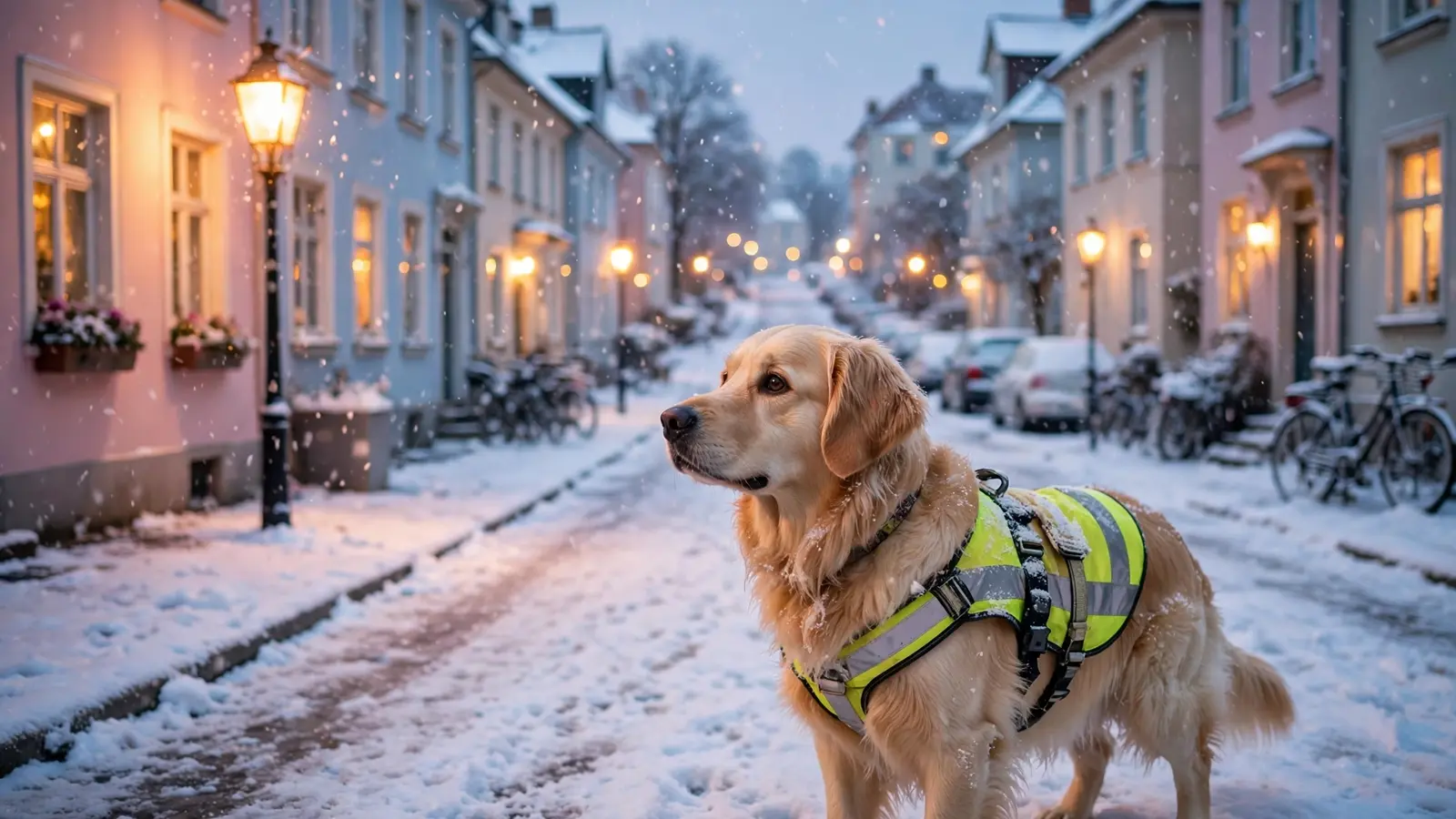
Before the door: the dark-walk kit
If the pet goes out after dark, a reflective collar, a secure leash and proper ID make the walk safer. That sentence is the whole kit list in one line — and it is worth checking the ID part now, in November, while there is time to update a tag with a current number before the season of slipped collars and open gates.
- Reflective collar: the kind that lights up white in headlights. Check it still glows — fabric reflective trim wears out in a wash cycle or two.
- Secure leash: a solid four-to-six foot lead with a real metal clasp, not a worn retractable. On ice you want the dog at your side and the leash short enough to catch a slip.
- Proper ID: tag with a current phone number plus a microchip registered to the same number.
- Add-ons that earn their spot: a clip-on light for the collar on unlit blocks, and booties for the dog that accepts them — see the sizing note in the harness fit guide for the same measure-then-buy habit.
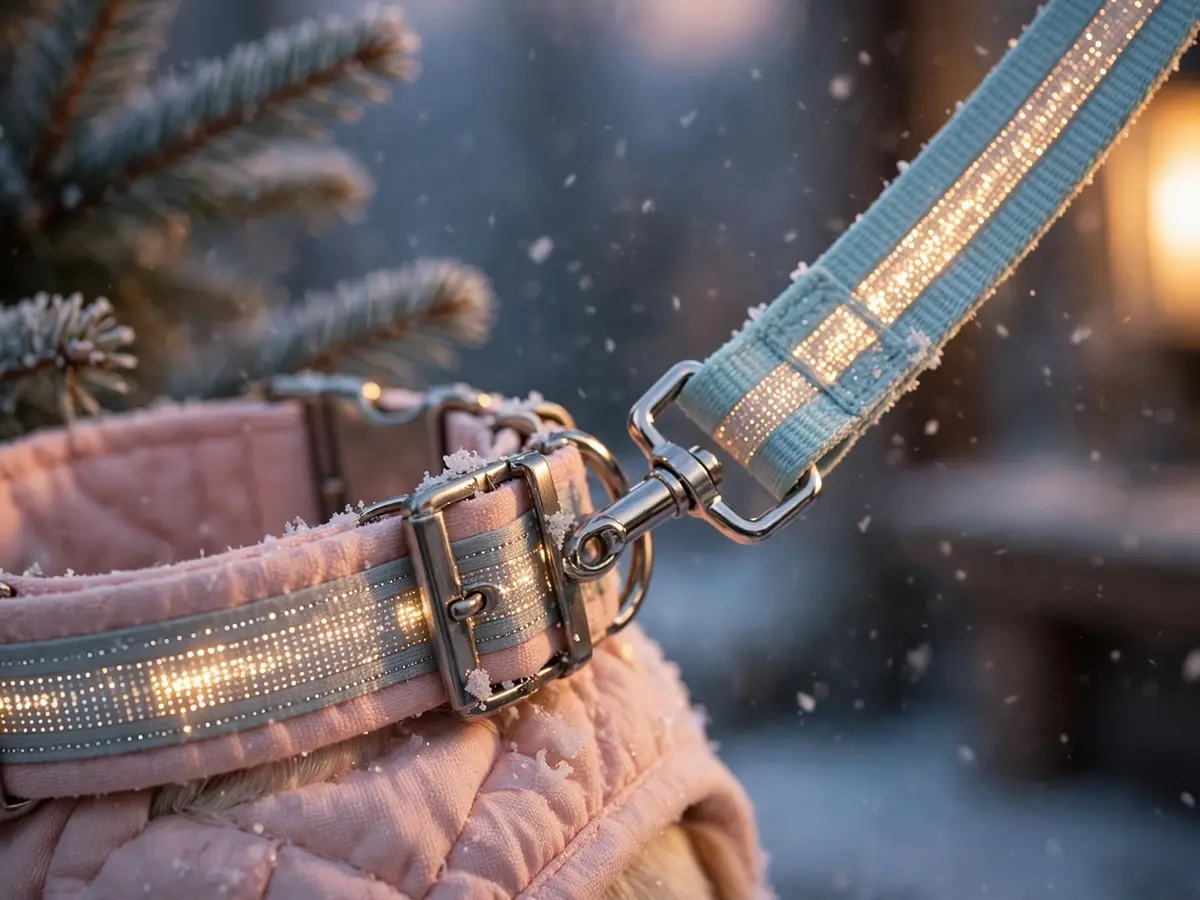
Leash handling on ice
Ice changes one thing about the leash: the dog walks beside you, not ahead. A dog pulling from three feet ahead turns your first slip into a fall; a dog at your knee turns it into a step. Short the leash on glassy stretches, walk on snow or grass where the pavement shines, and save the long-line sniffari for the days the ground grips.
Watch the dog's steps more than yours. A striding dog is fine; a dog taking tiny careful steps, or lifting paws one at a time, is telling you the surface is done. Turn for home on the next dry patch, and treat the last icy corner of the block as a walking-pace zone every single time.
The thirty-second paw check
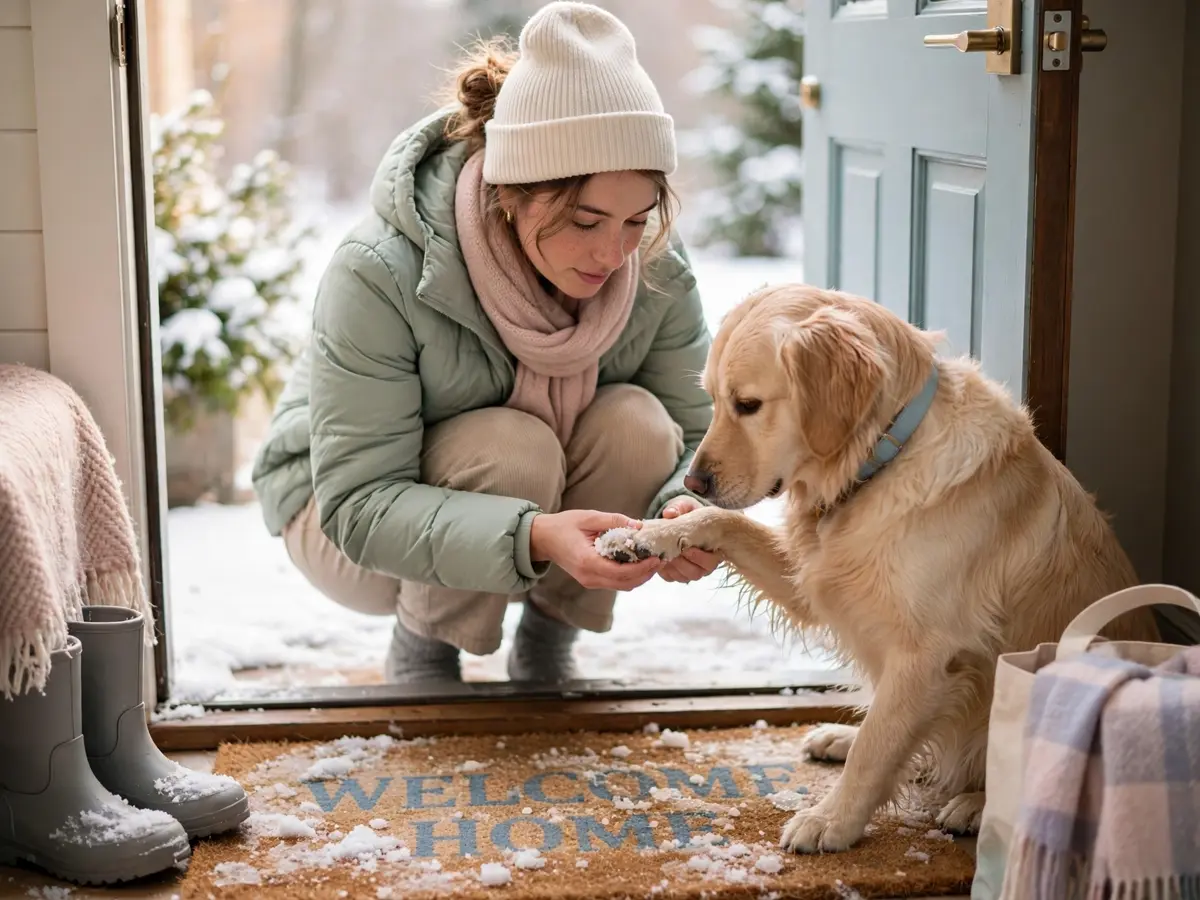
Salt and ice melt sting pads, and whatever sits between the pads comes off in the evening when the dog licks its feet. So the walk ends with a wipe, not a debate: warm water in a bowl by the entry, a towel over your knee, four paws, and a quick look between the pads for packed snow and grit.
- Dip and wipe each paw once, top and underside.
- Feel between the pads for ice balls — a dog that chews at one foot has usually found one.
- Dry the paws fully; damp pads on cold floors chap fast.
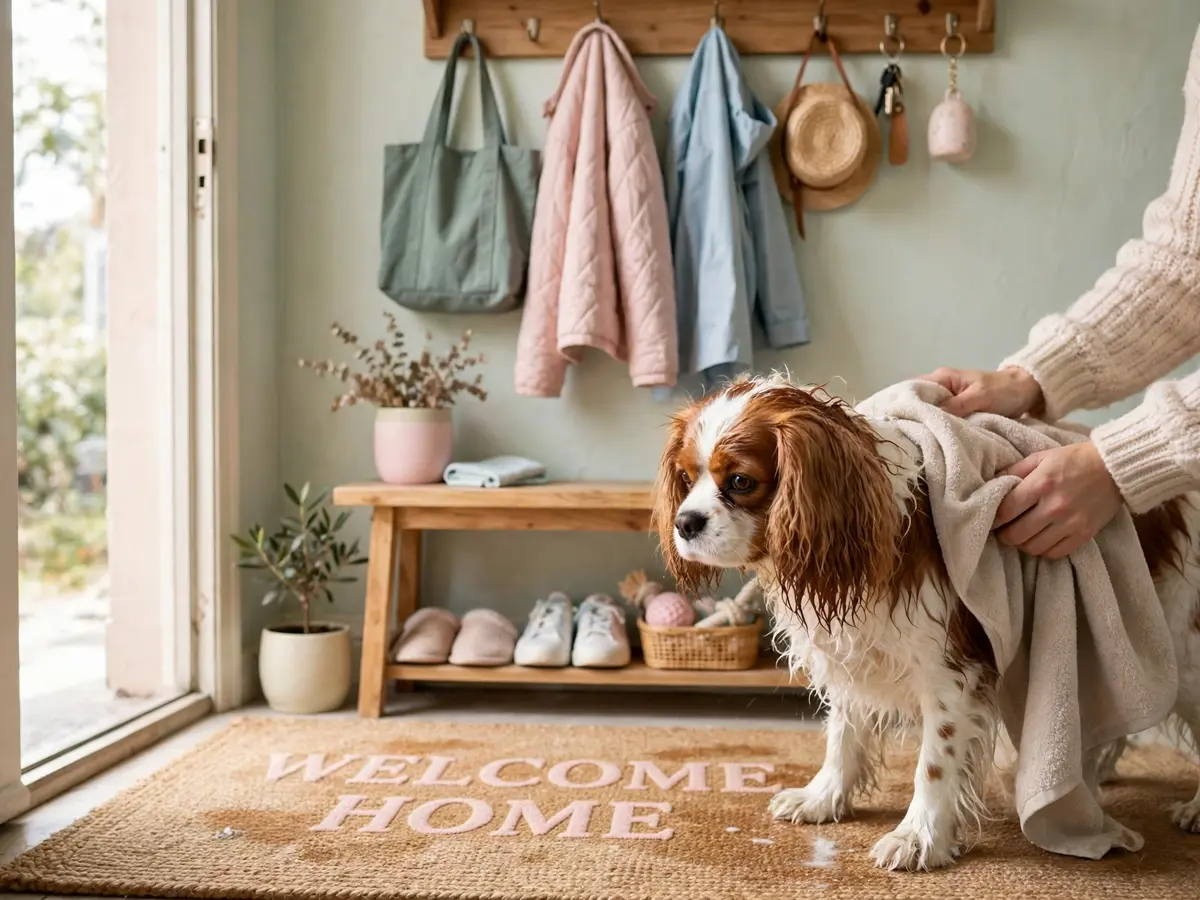
- Hang the towel on the entry hook so the next walk starts ready.
Choosing the route in the dark
Winter route picks
| Pick | When it wins | Watch for |
|---|---|---|
| Lit main street | Default dark-evening loop: sidewalks, streetlights, sightlines | Traffic spray at puddles; keep the dog on the building side |
| Snow or grass edge | Icy days: the white stuff grips where pavement glides | Packed snow between pads; run the paw check anyway |
| Short double loop | Deep cold or a hesitant dog: two warm loops beat one long cold one | Count the second loop as the walk, not a bonus |
| Apartment hallway laps | Brutal evenings: stairs and corridor still count as movement | Slippery lobby tile — the booties earn their spot here |
A winter route is chosen the morning of, not in ink. The rule is simple: light over dark, grip over shine, and short over stubborn.
The warm-up and dry-off
The walk ends at a towel, not at the sofa. Blizzards of fur first, paws second, then the damp harness comes off onto its hook rather than the floor. Fifteen minutes of warm-up — a blanket, a chew, the heat coming back — before dinner keeps the cold evening from ending in a shiver.
The entry station itself is a decor decision now: the dog-friendly apartment decor guide has the hook-mat-bowl layout that keeps all of this inside one arm's reach of the door.
Seniors and puppies in the cold
Short legs and old joints feel winter first. The senior version of this plan is the same loop at half length, twice as often; the puppy version is the same loop with a sweater the puppy tolerates and a hard stop at the first shiver. Neither needs a marathon — they need their normal walk, warm.
Winter dog walk questions
What gear actually matters for dark winter walks?
If the pet goes out after dark, a reflective collar, a secure leash and proper ID make the walk safer. A clip-on light adds a second layer on unlit streets, but the reflective set plus current ID tags is the base that does most of the work.
How do I walk a dog on icy sidewalks?
Short leash, slow pace, no lunging toward squirrels. Keep the dog at your side rather than ahead so a slip is a stumble, walk on snow or grass where the pavement is glass, and head home the moment the dog's steps start sliding rather than striding.
Is sidewalk salt bad for paws?
It stings and it gets licked off, so the routine matters more than the panic: booties if the dog accepts them, a paw wipe at the door, and a quick check between the pads after every salted walk. A bowl of warm water and a towel by the entry covers it.
How cold is too cold for a short walk?
Watch the dog, not the thermometer. A shivering dog, a dog walking on three legs, or a dog that sits down at the corner is telling you the walk is over. Short breeds, thin coats, seniors and puppies feel it first, so in deep cold the walk becomes a loop of the block and back.
What belongs in the entry station for winter?
Towels, a paw-wipe bowl, a hook for the damp harness, and a mat that grips. Everything the walk ends with should sit within one arm's reach of the door, because a wet dog does not wait.
Save this before the first icy walk
Pin the dark-and-ice routine now and pair it with the harness fit guide for the measure-first shopping habit, and the pet supplies collection for the season's full kit list.
If the pet goes out after dark, a reflective collar, a secure leash and proper ID make the walk safer. For informational purposes, consult your vet.