 PawStyle Daily
Homemade Dog Treats & Meal Planning
Sweet Potato Dog Treat Recipes That Bake Firm
Sweet potato bakes into the kind of treat that earns its jar: firm at the edge, soft in the middle, and easy to cut small enough for a training pouch. This page is one base recipe built on mashed sweet potato as the binder, the veg that can swap into the same tray, and the short keep-out list that stays taped beside the oven. For informational purposes, consult your vet.
By PawStyle Daily · Updated 19 November 2026
Good to know: one base dough · Mash as the binder · Jar-ready after a full cool.
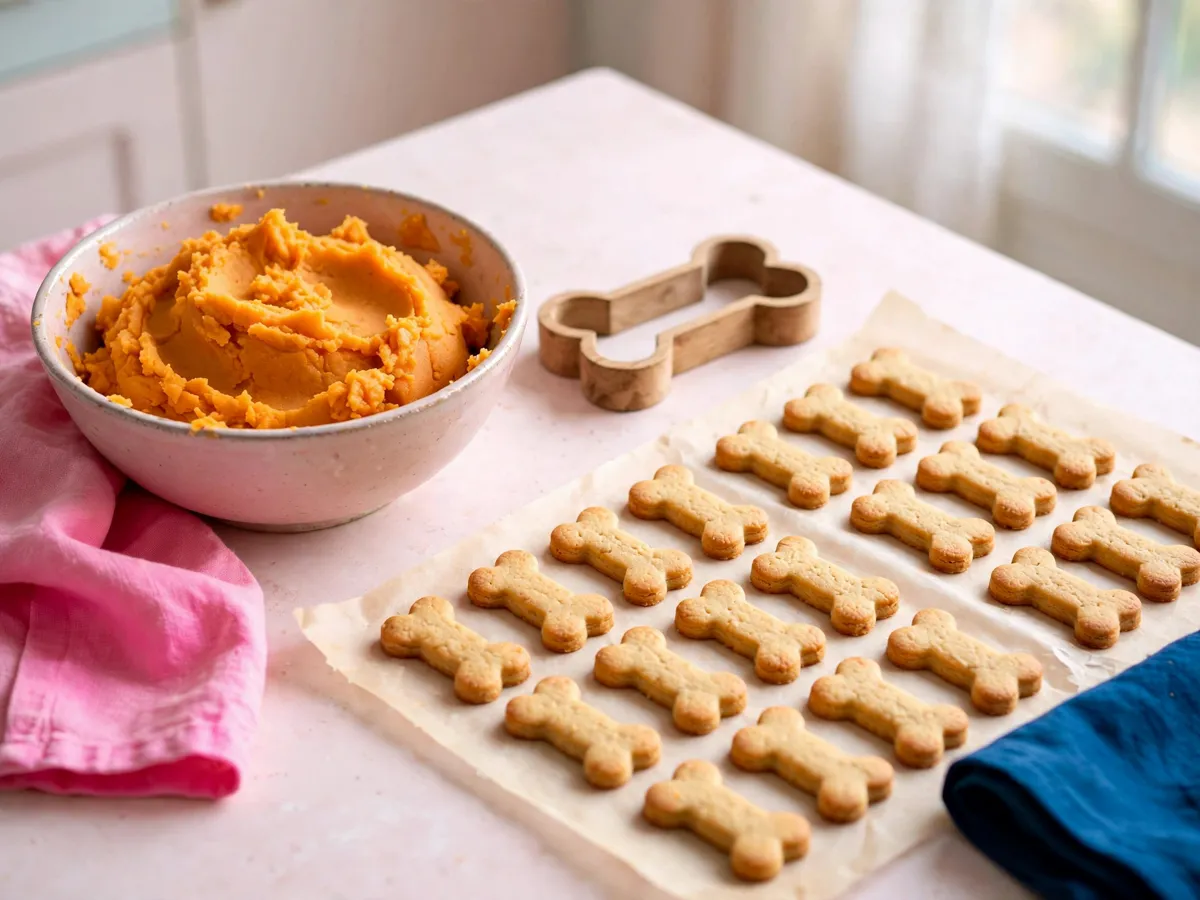
The treat rule the batch is built around
Bake day starts with the budget, not the dough. Treats should stay at no more than five percent of a dog's daily calories, so keep the pieces small. That single line decides everything on this page: the cutters are tiny, the tray fills with more pieces than you think you need, and the jar lives where the leash lives so the count stays honest. Everything here is a treat riding on top of the food your dog already eats, never a replacement for it.
If you like the habit of checking a bag before it becomes dinner, our guide to how to read a dog food label walks the same reading habit on the kibble side.
Why mashed sweet potato works as the binder
Most homemade treat dough leans on peanut butter for flavor and stickiness, and that is exactly where the jar check earns its keep: before any spoonful goes into a batch, run the peanut butter label check on the jar. Sweet potato skips that step entirely. Cooked and mashed, it turns into a sticky, spoonable base that holds oats and flour together on its own, so the dough comes together with no butter and no sweetener.
The texture is the whole trick. Mash the flesh while it is still warm, work the dry ingredients in a spoonful at a time, and stop as soon as the dough clears the bowl. A dough that still sticks to your fingers wants another spoonful of flour; a dough that cracks along the fold went too far. If your dog skips peanut butter altogether, our no peanut butter treat recipes page keeps more binder swaps like this one.
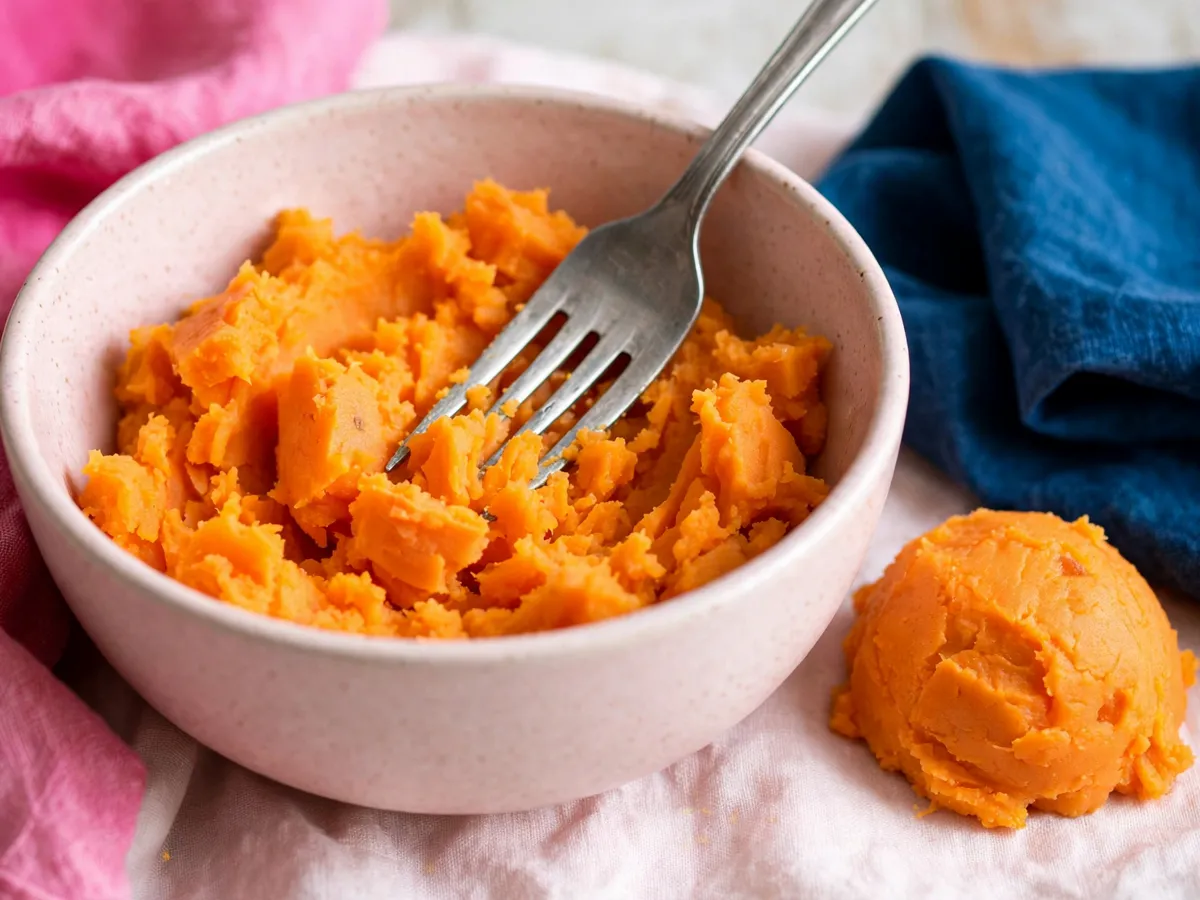
Pumpkin, the closest cousin on the shelf
Pumpkin earns its spot next to the sweet potatoes, and the plain can lives beside the baking sheet for a reason. Two tablespoons (30 g) of canned pumpkin without salt is a 15-calorie treat. That little spoonful portions neatly, mashes into the same dough, and swaps into any slot in this recipe. The plain puree is the only can that goes in the cart, because pie filling belongs to a different aisle and a different shelf of the kitchen.
If pumpkin is the direction you want the whole batch to take, our healthy pumpkin treats page has the oven version with the same label-first habit.
The base recipe, start to tray
One bowl, one sheet, and the counter stays clean. Here is the order we bake in:
- Steam or bake plain sweet potato until a fork slides through, then peel it while it is warm.
- Mash the flesh plain: no salt, no butter, no spice from the rack.
- Stir oat flour in a spoonful at a time until the mash turns into a soft dough that clears the bowl.
- Roll the dough between two sheets of parchment to about the thickness of a dog biscuit.
- Cut small. Tiny bones and little coins bake firmer than big shapes, because the middle dries at the same pace as the edge.
- Line the baking sheet with parchment and leave a thumb of space between the pieces.
- Bake low and slow, then test one piece: the treat is done when the edge holds and the center no longer dents under a thumb.
- Cool the tray completely on a rack before any piece goes near a jar, because trapped steam softens a firm bake.
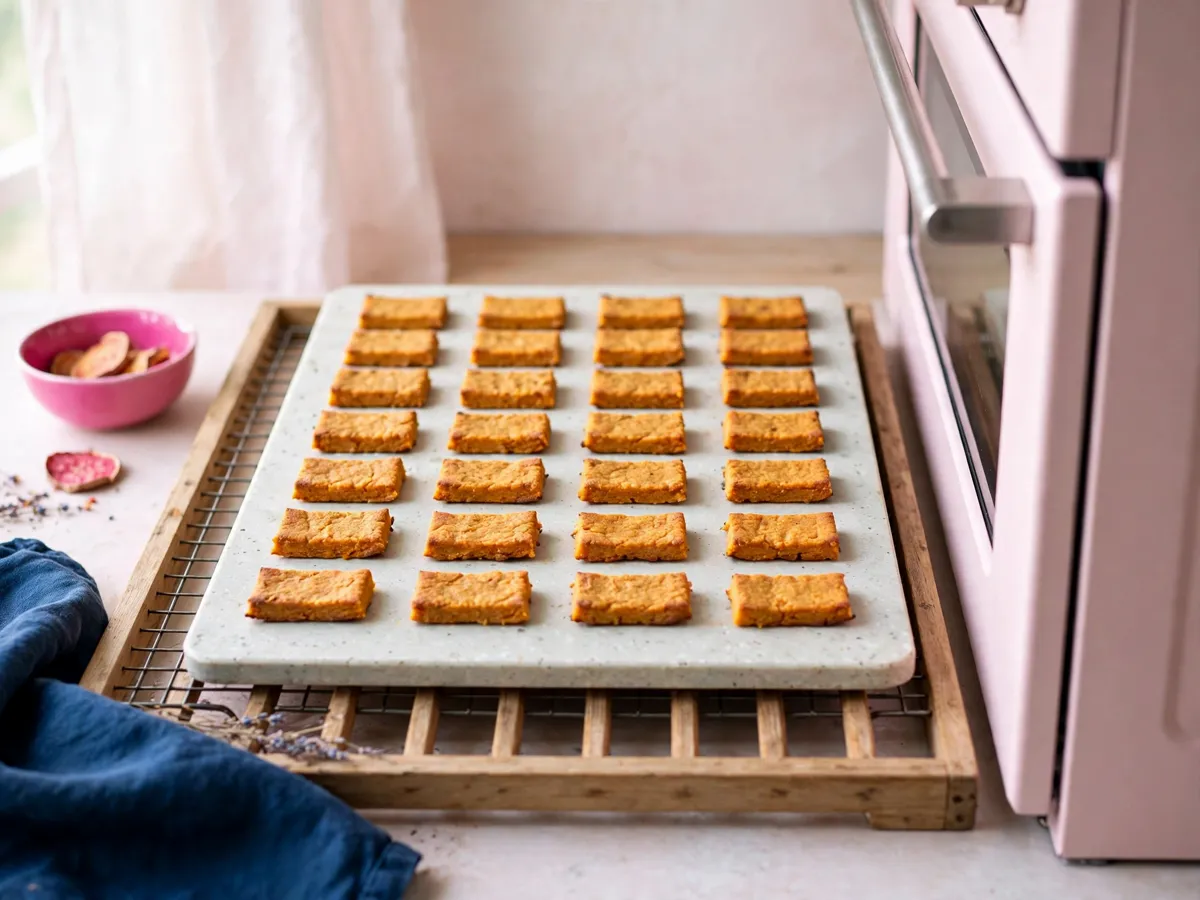
Shapes and sizes by the dog in front of you
The cutter is a portion decision, not a decoration decision. A blueberry-sized coin suits a French bulldog's little mouth; a thumb-print round suits a golden retriever working on a long down-stay. Cut for the smallest mouth in the house and the big dogs still get theirs, just two pieces instead of one.
Training days get their own cut: the same tray yields a pouch worth of crumbs if you break the cooled pieces over the jar, and crumbs are the reward size that lets a session run long without emptying the budget. When a piece crumbles by accident, the crumbs go over dinner as a topper instead of back into the jar.
The veg that swaps into the same tray
The fridge drawer usually has candidates before the shopping trip does. Small pieces of carrot, broccoli, green beans or cooked pumpkin make easy snacks. Cut everything smaller than looks necessary, steam the firm ones until a fork slides in, and skip seasoning of every kind: the bag of frozen mixed vegetables from the freezer aisle counts too, as long as the ingredient list is vegetables and nothing else.
Treat the veg tray as the rotation that keeps bake day interesting: a sweet potato batch one weekend, a carrot-and-bean tray the next, and the jar never reads as the same snack twice. Everything on the tray follows the same small-piece rule as the baked batch, and nothing on the tray replaces dinner.
The keep-out list for the oven
Every treat kitchen needs a short list that never changes, and this is mine: the ingredients that stay out of the oven no matter what the dough seems to want. Grapes and raisins can lead to kidney damage in dogs, so neither one goes into a bowl or a treat. That line earns a permanent spot on the fridge, because raisins hide in breakfast leftovers, bran muffins and the fruit bowl at the edge of the counter.
The same rule covers anything seasoned, sweetened or spiced. A sweet potato dough takes its flavor from the potato and the pumpkin, and the spice rack stays closed on bake day. If a batch ever held something from the keep-out list, the batch goes out with the trash, not into the jar.
Storage: the jar, the bag, the label
Storage is where firm treats earn their name. Cool the tray fully, then keep the near-week portion in an airtight jar on the counter, away from the stove's steam. The rest of the batch goes into a sealed bag in the freezer, laid flat so the pieces do not fuse into one lump; pull from the bag the night before they are needed and the counter jar quietly refills itself.
Label the bag with what is inside, because a month from now every baked treat looks like every other baked treat. Anything that smells off, bends instead of snapping, or grew a fuzzy edge goes to the bin, not the jar. For informational purposes, consult your vet.
Questions about sweet potato treats
Can I use fresh sweet potato instead of canned?
Yes. Steam or bake the sweet potato until a fork slides through, then mash it plain with no salt, butter or spice.
How long do baked sweet potato treats last?
About a week in an airtight jar on the counter, or three months in the freezer in a sealed bag.
What if my dog ate a grape or raisin?
Call your vet or an emergency clinic right away instead of waiting to see what happens.
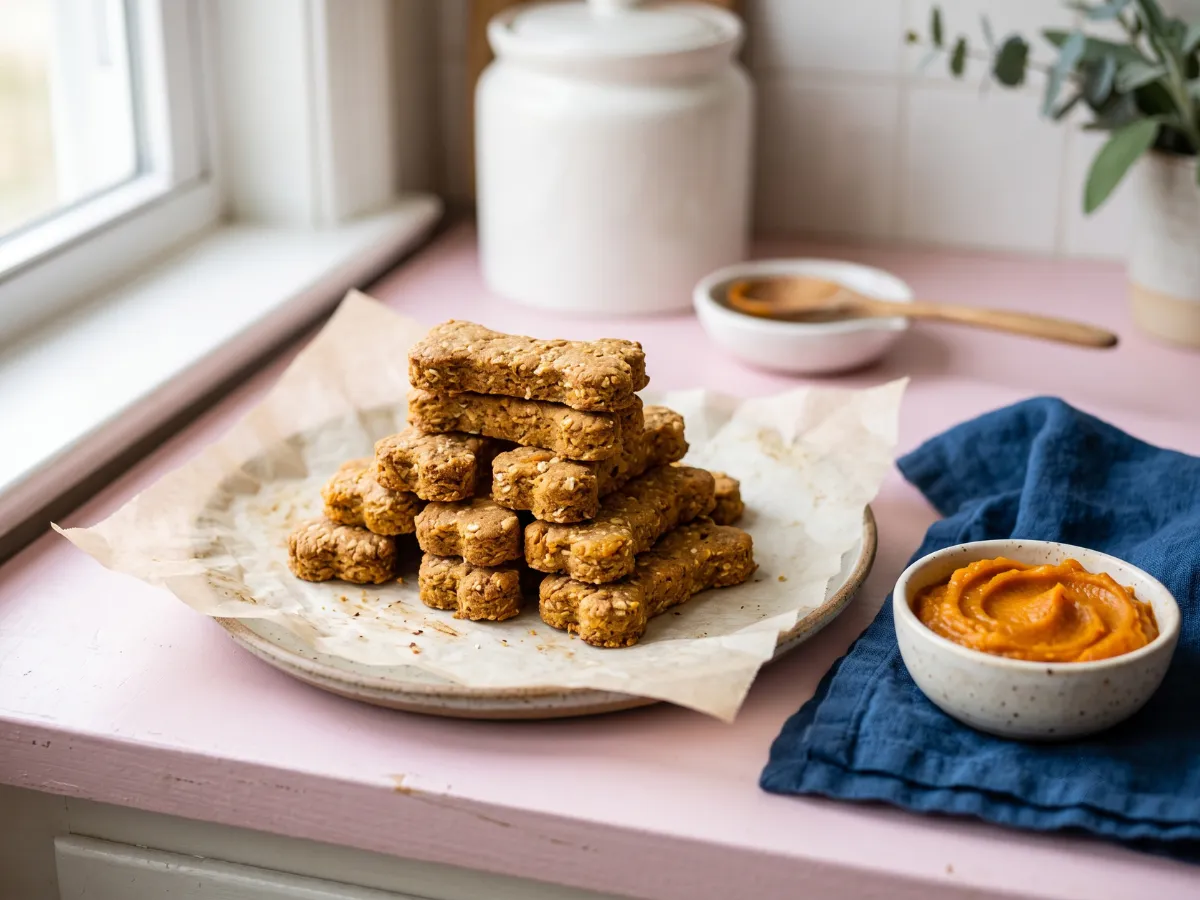
Bake day kit
Treat molds and baking basics
Silicone molds, a sturdy baking sheet and the small tools that make firm little treats easy.
See what we use →As an Amazon Associate we earn from qualifying purchases.
Save these on Pinterest
Pin the base recipe for your next bake day. The Dog Food collection holds the label-check guide, the binder swaps and the rest of the homemade shelf. For informational purposes, consult your vet.
The the frozen version of the base dough page is where this recipe goes when summer arrives.
Sweet potato carries the dough on this page; the one bowl sheet pan is the pumpkin version of the same tray.