 PawStyle Daily
Dog Food & Treats
Easy Pumpkin Dog Treats: Sheet Pan Soft Bake and Frozen Bites
Easy is a recipe style, not a lower standard. A pumpkin treat batch that mixes in one bowl, bakes on one sheet pan, and stores in two containers is a batch a normal week can actually absorb, and the dog never knows the difference between it and the fussy version. This page owns the easy route: the plain puree read, the soft bake, the frozen bites, the shaping that skips the cookie cutters, and the portion habit that keeps the whole project in the treat column where it belongs.
By PawStyle Daily · Updated 24 November 2026
Good to know: a treat recipe page, plain pumpkin only · for informational purposes, consult your vet.
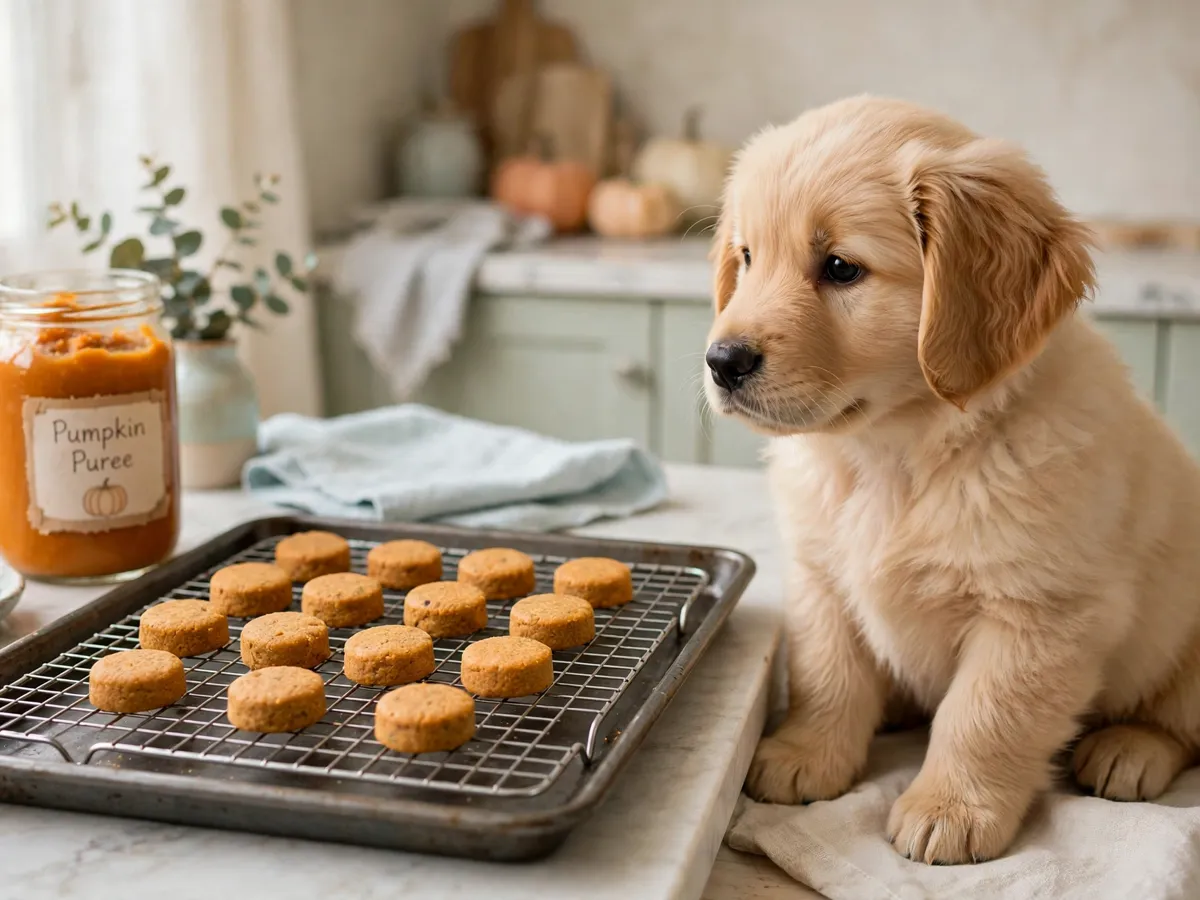
The Two Bowl Week of Pumpkin Treats
The week runs on two bowls. The first bowl is the mixing bowl: pumpkin, oats and an egg stirred into a soft dough, scooped straight onto the sheet, baked in one rotation. The second bowl is the refilled bowl a few days later, because a soft bake keeps about a week in the fridge and the batch is sized to run out right as the week turns over. Two bowls, one pan, no stand mixer, no cutters, and a jar of pumpkin in the pantry that keeps until the next round.
The gentle tummy rationale, the careful digestion reasoning and the longer story behind feeding pumpkin at all, lives on the page that owns it: the pumpkin bites for the gentle tummy page carries that half of the conversation. This page is the kitchen half. What follows is the shortest honest route from can to cooling rack, with the frozen option for the months the kitchen runs warm.
Plain Puree Versus Pie Filling
The can decision takes a moment at the shelf and decides the whole batch. Plain pureed pumpkin: one ingredient on the label, pumpkin, nothing else. Pie filling: pumpkin plus the spice cabinet plus added sweeteners, a dessert product wearing the same orange label. The plain can is the one the treat recipes are built around, and the pie can is the one that goes back on the shelf no matter how close the labels look side by side.
The read matters most because the rest of the recipe assumes it. A batch built on plain puree needs no sweetness correction and no ingredient subtraction, just oats and egg and the oven. A spoon of pie filling drags the spices and the sweeteners along into every treat on the pan, and there is no home fix for that once the dough is mixed. Buy the plain can, read the label each time, and the recipe below works exactly as written every single week.
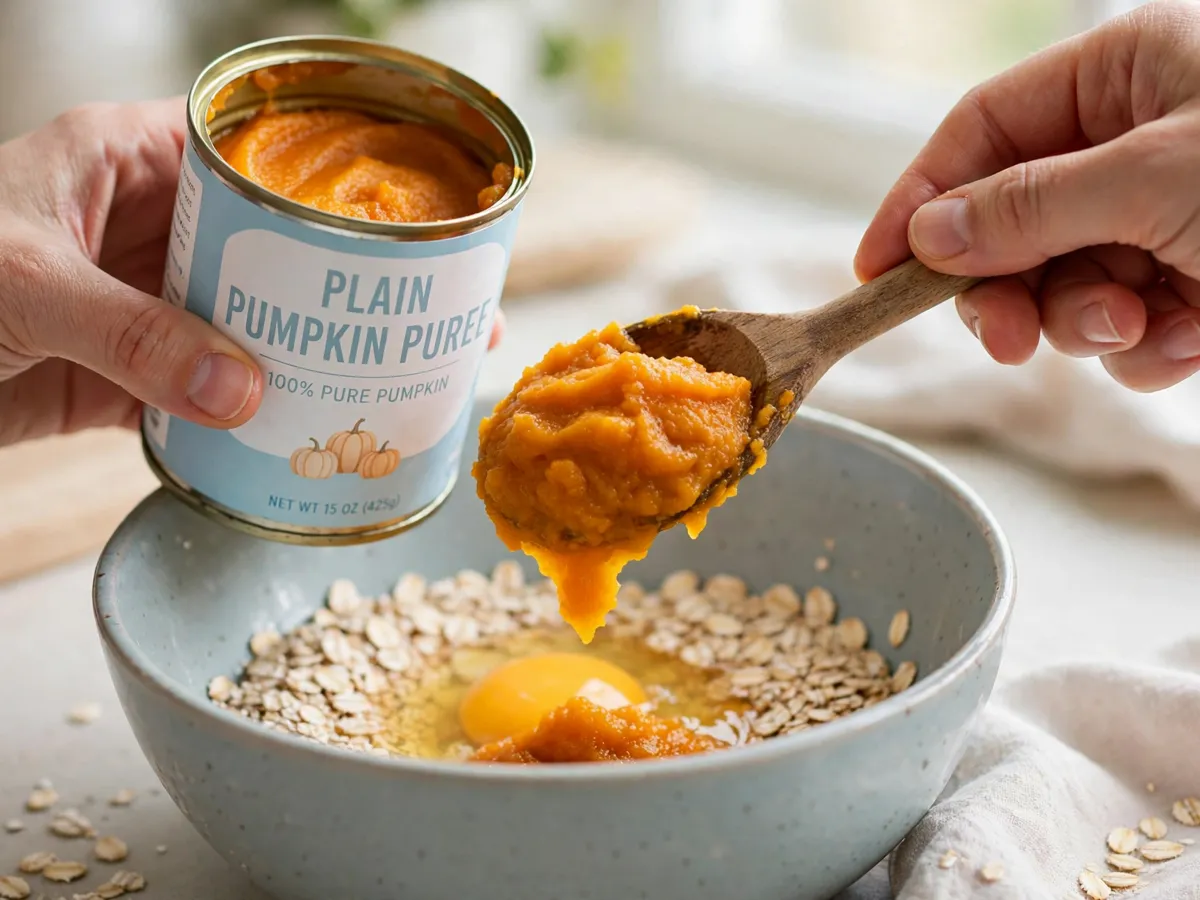
The Sheet Pan Soft Bake
The bake is a soft bake on purpose. A dog treat that runs crisp runs dry, and a dry treat is a crumb mess in a pocket and a jaw workout nobody asked for. The sheet pan version bakes low until the scoops hold their shape and spring back under a fingertip, then comes off the heat still soft in the middle, cooling into a chewy round that cuts, breaks and stuffs without shattering.
The method: line the pan, scoop the soft dough with the smallest ice cream scoop in the drawer, flatten each scoop with a wet fingertip so the tops bake even, and pull the pan when the edges look set and the centers still give. Cool fully on the rack before storage, because a warm treat sealed in a container turns into a steamed one. The oven route is the weekly workhorse, and the appliance side of the same dough, the convection version with its own timing read, lives on the air fryer dog treat recipes page, which owns that machine's whole conversation.
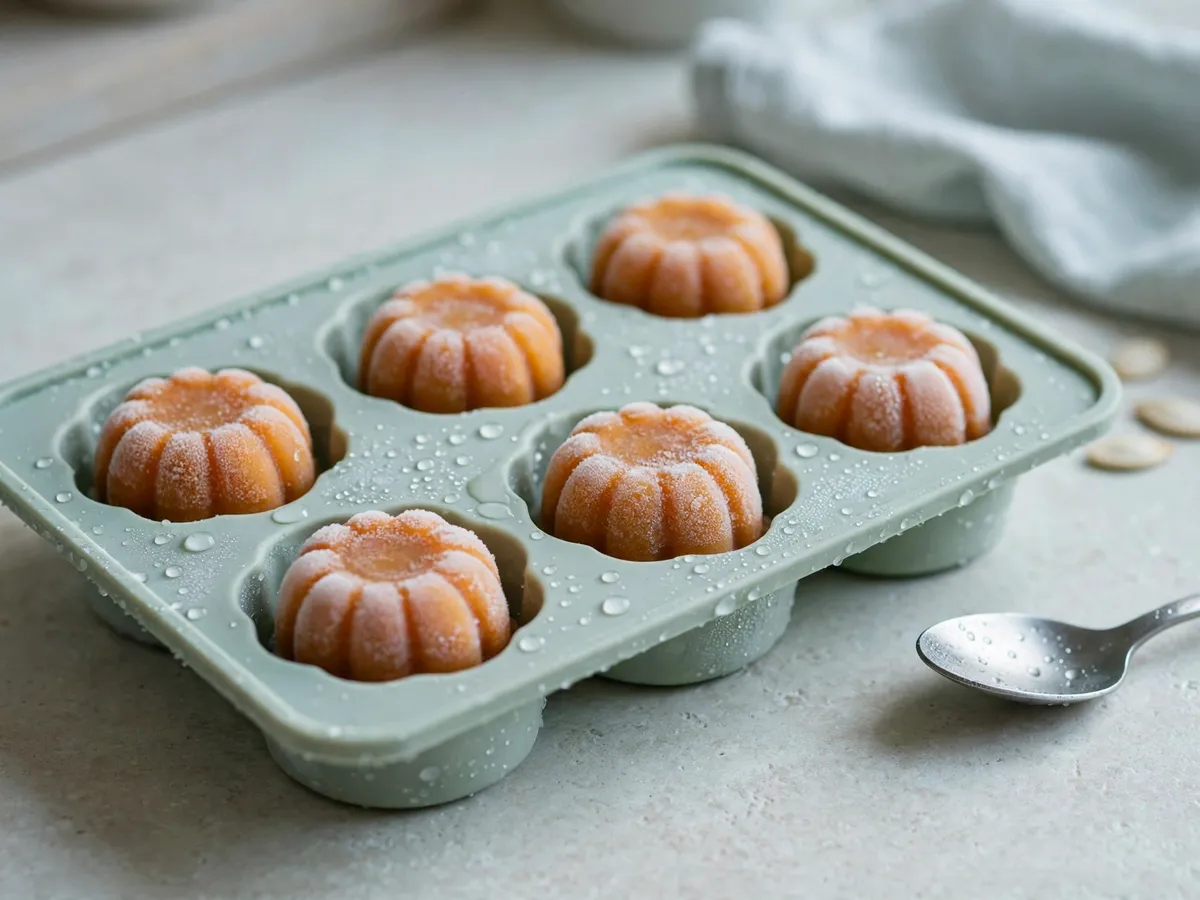
Frozen Pumpkin Bites for Warm Days
The frozen route is the same dough minus the oven entirely. Spread the puree and oat mix into a silicone tray, freeze until solid, and the treats become what the weather wants: a cold, slow, working lick that keeps a dog busy on the mat while the apartment runs warm. The bites thaw as they are worked, so the treat lasts longer than the eating of it, which is the entire trick.
Storage is built in, because the tray is the container and the freezer is the shelf. Pop the solid bites into a labeled bag, refill the tray with the next round of dough, and the pipeline runs two batches from one can. The wider frozen catalog, every flavor and format the ice tray and the freezer can hold beyond the pumpkin lane, is owned by the frozen dog treat recipes page, and this page hands off to it at the freezer door.
The frozen route earns its own calendar slot in the warm months. The oven heats the kitchen, the tray does not, and a dog working a cold bite on the mat is a dog not pacing the apartment between the tile floor and the rug. Run the frozen lane from the first warm week to the last, then swing back to the sheet pan bake when the kitchen cools, and the same one bowl dough covers the whole year without a recipe change.
Everyday Shapes Without the Cookie Cutters
The easy route drops the cutters on principle. A cutter adds a rolling step, a re roll step, a scrap step and a washing up step, all in service of a shape the dog cannot see and does not care about. The scoop and flatten method makes a round, consistent, pocket sized treat every time, and the rounds stack, store and portion identically to the stamped ones.
When a shaped batch is genuinely wanted, for a holiday plate or a gift box, that is a different project on a different day, and the cutters and the seasonal flavor pairings live where that project lives rather than here. The everyday shape is the flat round and the frozen cube, two shapes that need no equipment past a scoop and a tray, and two shapes that cover every week of the year the easy route is built to survive.
The scoop itself is the only tool worth a shopping thought. A small spring loaded scoop, the kind that sweeps itself clean with a squeeze, pays for itself in the first month by making every round the same size, and a consistent round is what makes a consistent portion, which is what makes the treat budget hold. Failing that, a pair of teaspoons and a bowl of water do the same job at the same speed: scoop with one, push off with the wet one, and keep the fingers wet so the dough never builds up.
The Portion Habit That Keeps a Treat Small
The portion habit is the recipe that matters most, and it is three decisions made at the start rather than at the hand out. Bake small: the smallest scoop in the drawer, so one treat is one treat and not a serving of three. Store small: the labeled container holds a week, and the freezer holds the rest, and neither is ever within paw reach. Hand out small: one or two rounds on a training walk, a couple of frozen bites on a warm afternoon, and the regular food stays exactly as the bowl planned it.
The habit keeps the treat column honest. A soft bake the size of a coin is a reward; a pan sized round cut into quarters is a meal wearing a costume, and the difference compounds over a month of good intentions. A dog on a vet directed plan gets the portions sized at the regular visit, by the person holding the numbers, and this page keeps its batches in the treat budget the rest of the household respects.
The last piece of the habit is the calendar. A week of treats baked on Sunday runs out on cue, the container gets washed, and the next round starts from a clean jar and a checked date label rather than from a mystery bag at the back of the shelf. That rhythm is the difference between a treat routine and a treat accumulation, and it is the one part of the easy route that takes zero extra minutes, because the week was going to pass either way.
Easy pumpkin treat questions
Can dogs have pumpkin puree from the can?
Read the can before the bowl. Small amounts of plain canned pureed pumpkin (never pumpkin pie filling) can help bind loose stool, because pumpkin is high in soluble fiber. The label has to say one ingredient: pumpkin. Pie filling carries spices and added sweeteners built for a dessert, not a dog, and the vet okay the source asks for comes first. This page keeps the treats in the treat column, not the medicine cabinet.
How do I store pumpkin dog treats?
The sheet pan bake keeps about a week in a sealed container in the fridge and longer in the freezer, and the frozen bites live in the freezer by design, where they double as the warm day option the frozen treats page builds on. Thaw the frozen route in the fridge, never on the counter overnight. Label the container with the date you baked, because a treat that smells fine is not the same as a treat that is fresh.
How many pumpkin treats can my dog have?
Treats should stay at no more than five percent of a dog's daily calories, so keep the pieces small. Pumpkin treats are treats, not a meal topper stack. For most dogs that means one or two soft bakes, or a couple of frozen bites on a warm afternoon, with the rest of the day's food staying normal. The portion habit is the recipe that matters most: bake small, store small, hand out small.
Save the Easy Pumpkin Treat Sheet
Pin the two bowl week before the next can lands in the cart. The Dog Food & Treats collection holds the rest of the year's recipes. For informational purposes, consult your vet.