 PawStyle Daily
Homemade Dog Treats & Meal Planning
9 Healthy Pumpkin Dog Treats for Sensitive Stomachs
Most of a pet's nutrition should still come from their regular diet, with treats as the extra bit. Pumpkin is the plain, simple base of this batch: plain puree, never pie filling. These nine treats keep the mix plain, the portions small and the batch dated. Every recipe lists what it skips, what to watch for, and when to stop.
By PawStyle Daily · Updated 14 November 2026
Good to know: 10-20 minutes each · Plain pumpkin puree only · For informational purposes, consult your vet.
Pumpkin rules
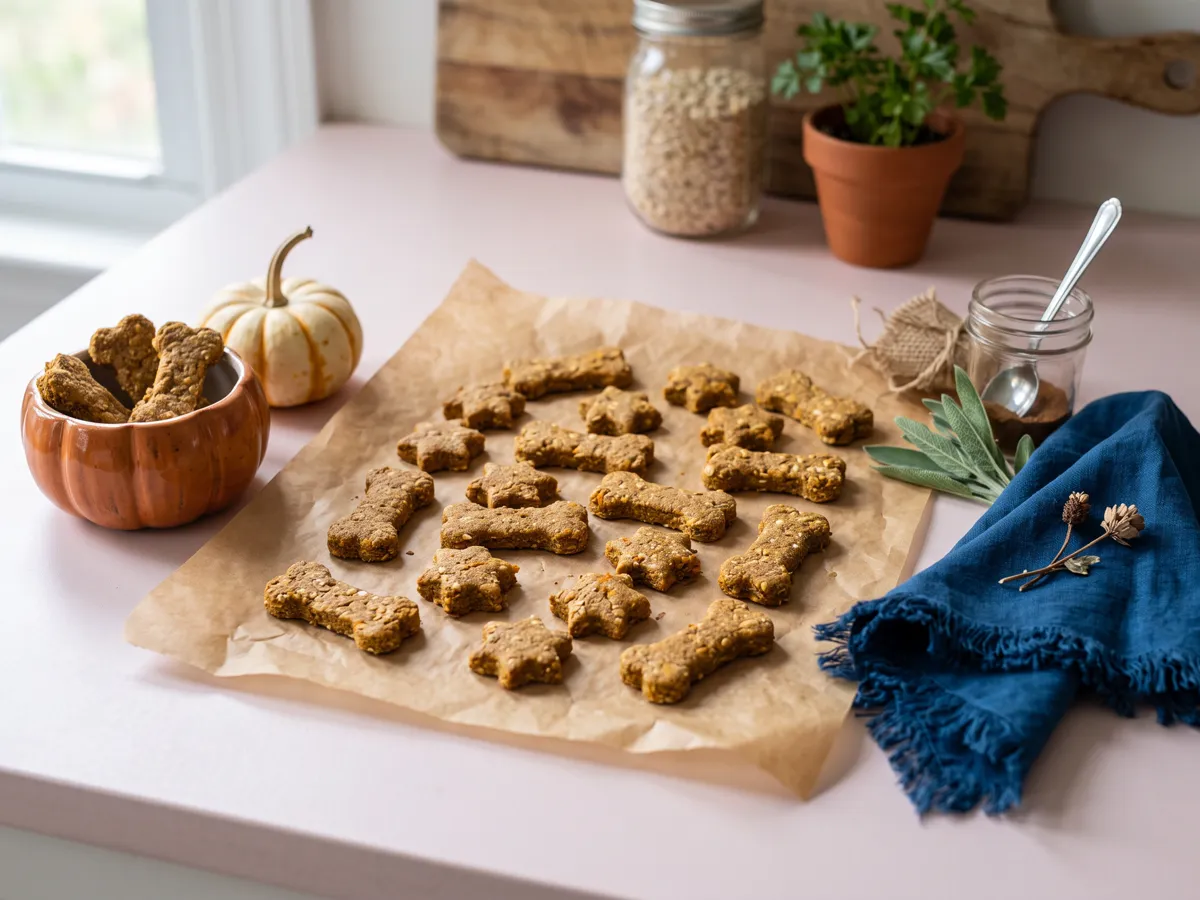
Plain pumpkin puree only, with nothing added to the can. Start with half portions, and add one new treat every two days. Loose stools, gas or skipping meals means pause and simplify. Puppies, seniors and dogs on medication need a vet check before any new treat routine.
What is in the can
Two cans sit side by side on the same shelf and only one of them belongs in a dog treat. Plain pumpkin puree lists pumpkin, or pumpkin and water. Pumpkin pie filling lists pumpkin plus sugar, spice, and often a syrup or a dairy ingredient, and it is a dessert product rather than a treat base. Read the ingredient line instead of the picture on the front, because the front of both cans is a pumpkin.
Read the label twice: once in the aisle while the can is still in the basket, and once at the counter with the can opener already out. Shelf space gets rearranged, and the can that came home in a hurry is the one that gets opened without a look.
Once the can is open, move whatever the recipe does not use into a small lidded container the same day. Pumpkin in an open can picks up fridge smells and dries at the rim, so it does not keep the way a sealed can does. Use a clean spoon every time, never the spoon that has already been in the dog’s bowl.
Leftovers past three or four days go to the freezer rather than the bin. Spoon the puree into an ice cube tray or a silicone mold, one well per portion, and freeze until the cubes are firm. Tip the frozen cubes into a bag, press the air out, write the date on it, and pull one cube at a time. Count the wells before you freeze, so you know how many treats that can gave you.
One more habit at the store: a can with no readable ingredient list stays on the shelf. There is always another can one row over.
The base dough, step by step
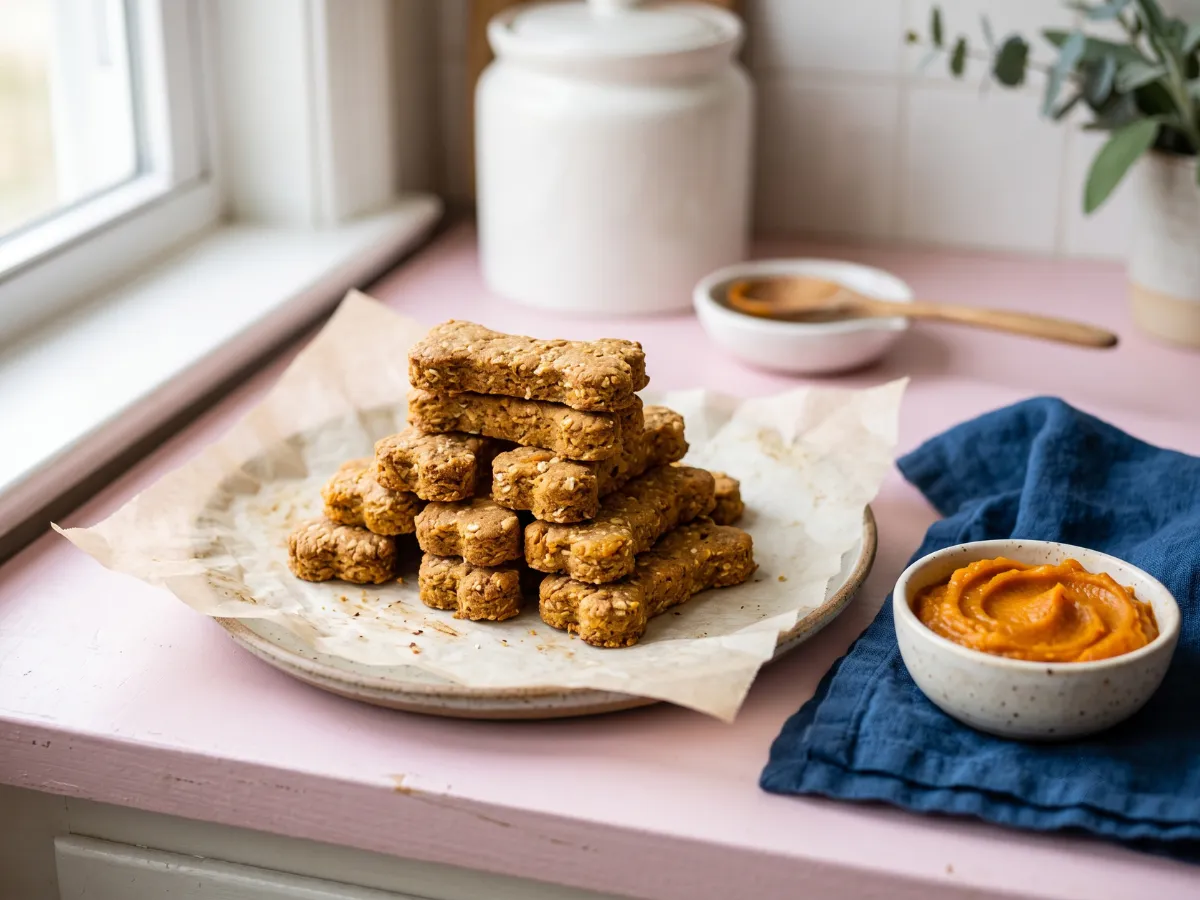
Eight of the nine treats on this page come from one plain dough, and the ninth is the frozen cube. Learn the dough once and the recipe list turns into a set of variations instead of nine separate jobs.
- Measure the dry base first. Oat flour goes into a wide bowl, and the cup gets leveled with the back of a knife so every batch starts from the same amount.
- Mash the pumpkin smooth with a fork. A lump left whole becomes a wet pocket that cracks the cookie open at the seam.
- Stir the wet into the dry with a fork rather than a whisk. Stop the moment the bowl looks shaggy and no dry flour is left at the bottom.
- Rest the dough in the fridge for 15 to 20 minutes. Chilled dough rolls without sticking to the counter and cuts without tearing.
- Roll to a thickness you can check with a finger, roughly the height of two stacked coins, and press the cutter straight down.
- Gather the scraps and re-roll once. A third pass works the dough until it turns tough, so the last few shapes are always the ugliest.
- Chill the cut shapes on the tray for 10 minutes before the oven, or skip the oven for a no-bake version and chill for an hour.
- Store the batch in a single layer, in a dated container, and write the date before the lid goes on.
The order matters more than the timing. Dry before wet keeps the flour from clumping against the bowl, resting before rolling keeps the shapes sharp, and chilling before baking keeps a soft dough from spreading into one flat sheet. None of those steps need special equipment, and the whole job fits between two other kitchen tasks.
Plain is the point of the batch. A dough that tastes like nothing much to you is the right dough for a dog with an unknown stomach, because there is nothing in it to wonder about later. Keep the mix short, keep the pieces small, and let the texture carry the treat instead of the flavor.
Watch a pumpkin batch bake
The dough above is written out step by step. This video shows a pumpkin biscuit batch on camera: pumpkin, flour, an egg and coconut oil worked into a dough, rolled, cut and baked. Watch the dough come together and how thin the shapes get rolled before you roll your own.
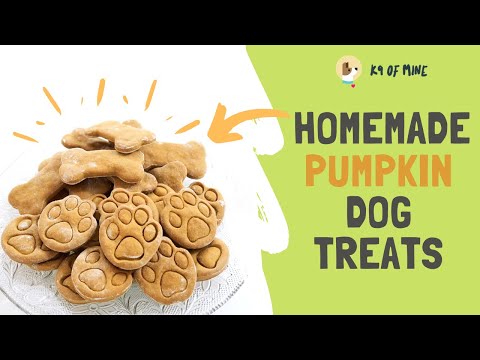
A pumpkin and oat treat baked on camera, with no health claims made for it. Video by K9 of Mine on YouTube.
The nine pumpkin treats
Recipe lineup
| Treat | Base | Texture | Time |
|---|---|---|---|
| Plain pumpkin cubes | Pumpkin puree | Frozen cube | 10 minutes |
| Oat softies | Pumpkin and oats | Soft bite | 10 minutes |
| Yogurt swirls | Pumpkin and plain yogurt | Frozen swirl | 10 minutes |
| Pea dots | Pumpkin and oats | Pea-size dot | 15 minutes |
| Banana light | Half a banana and pumpkin | Soft cookie | 15 minutes |
| Apple fresh | Unsweetened applesauce and pumpkin | No-bake bite | 15 minutes |
| Bland squares | Pumpkin and rice | Firm square | 20 minutes |
| Broth ice | Low-sodium broth and pumpkin | Frozen lick cube | 20 minutes |
| Dated freezer batch | Pumpkin base | Bagged portions | 20 minutes |
Every row starts from plain puree, and the freezer does the rest.
1-3. The gentle trio: plain cubes, oat softies, yogurt swirls
Freeze plain pumpkin in silicone molds for the simplest treat. Mash pumpkin with oats for soft training bites. Swirl a spoon of pumpkin into plain yogurt and freeze. Three textures from one plain base, rotated so a new treat never arrives on the same day as another.
Any breed · 10 minutes · Pumpkin, oats, yogurt · Half portions first 48 hours.
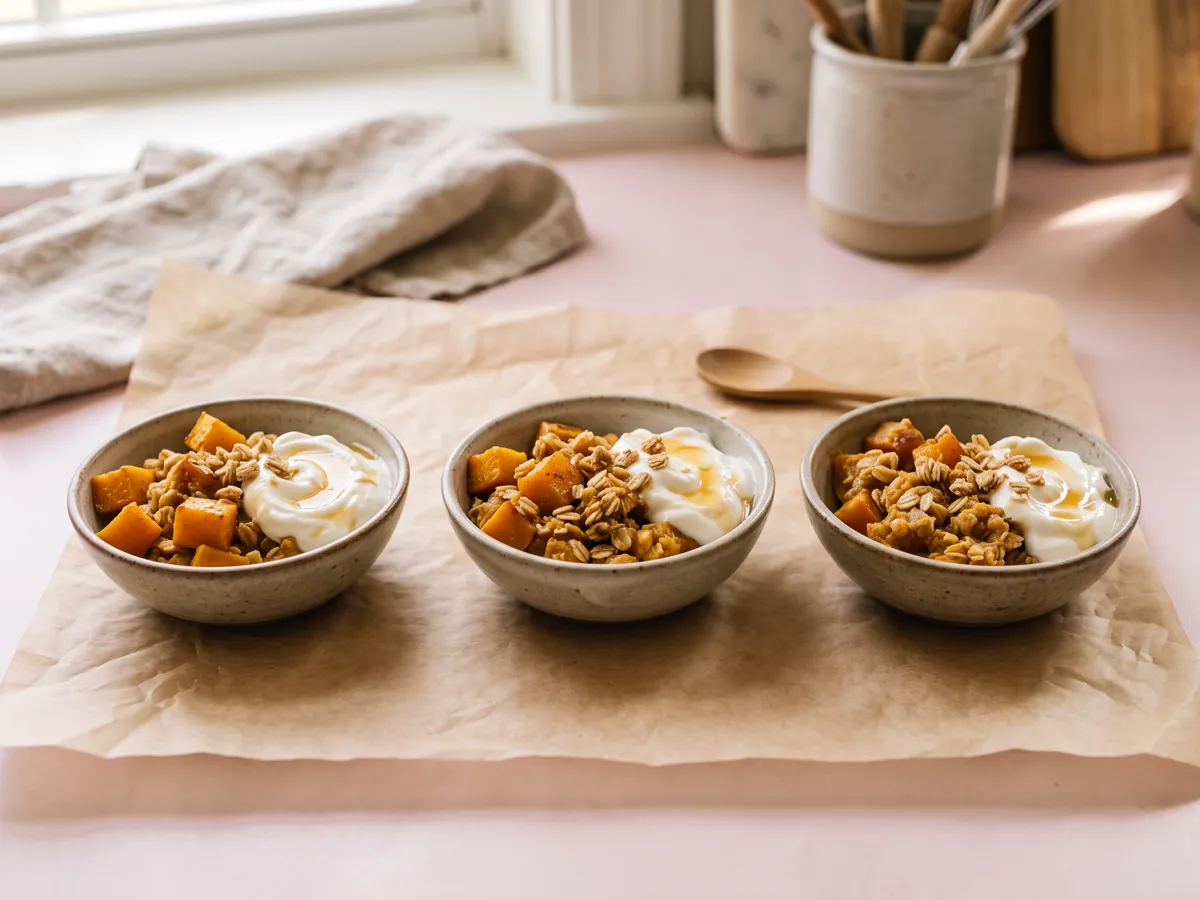
4-6. The training set: pea dots, banana light, apple fresh
Pea-size pumpkin-oat dots for daily reps. Half-banana mashed with pumpkin for a lighter cookie. Unsweetened applesauce plus pumpkin for peanut-free weeks. All three stay under rich-treat fat levels so the session stays light.
For peanut butter versions of these bites, see the no-bake peanut butter dog treats.
Training · 15 minutes · Pumpkin base, banana/apple variants · Max 10 dots per session.
7-9. Tummy-reset week: bland squares, broth ice, freezer plan
Bland pumpkin-rice squares for reset days. Low-sodium broth with a pumpkin swirl frozen into lick cubes. A dated freezer batch so reset weeks never need improvising. Plain, dated, portioned: the opposite of cute-only treats.
Pair a reset week with the crockpot chicken dog food topper.
Reset · 20 minutes · Pumpkin, rice, broth · Label the date; freezer 2 months.
Make-ahead and freezer notes
The freezer does most of the work here.
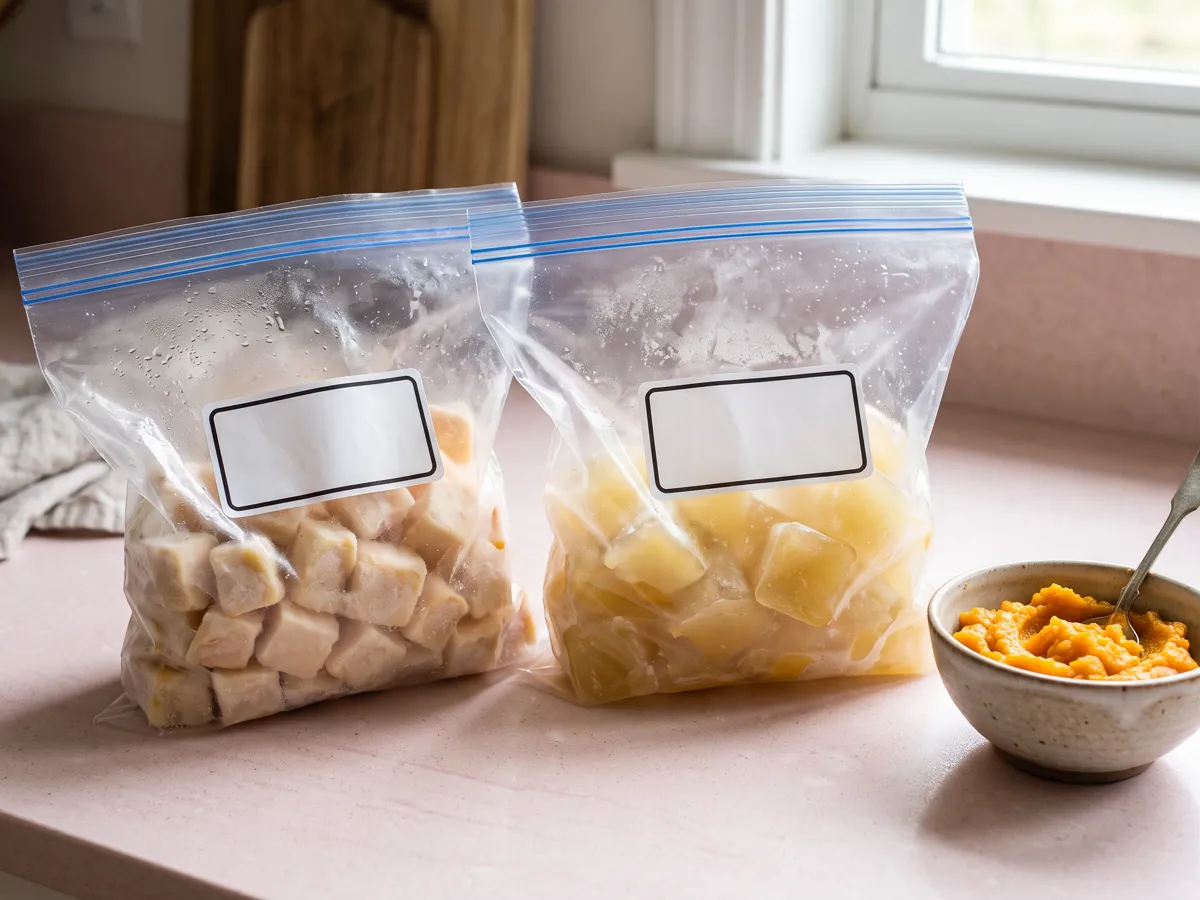
Plain pumpkin cubes freeze in silicone molds, then move into one dated bag, so a reset week never starts from an empty shelf.
Homemade dog food keeps about three days in the refrigerator and a month or two in the freezer, depending on how it's sealed. So write the date on the bag before it goes in, and keep the oldest bag at the front. The treats get their own rotation in the weekly dog meal prep planner.
Swaps that keep the batch plain
These are the swaps we actually make when the shelf is short, and each row says what changes in the dough. Change one thing per batch so the next bag of treats tells you something.
What each swap does in the dough
| Swap | What it does in the dough | What to watch for | When to skip it |
|---|---|---|---|
| Peanut butter | Adds body and holds the crumb together | Only a few peanut butter brands add xylitol, so read the ingredient label on the jar before a spoonful goes in the bowl | Skip it for a batch meant to stay as plain as possible, or when the jar in the cupboard has not been read yet |
| Unsweetened applesauce | Adds moisture so the dough comes together with less liquid | Use the unsweetened cup only, since a sweetened one changes the whole batch | Skip it when a watery puree has already made the dough wet |
| Oat flour | The dry base that gives the cookie its shape | Level the cup with a knife, because a packed cup makes a dry dough that crumbles | Skip it only if you have rolled oats to pulse in a blender first |
| Coconut flour | Thickens a wet dough fast | It drinks liquid, so add a spoon at a time and wait a minute before judging | Skip it in a first batch, because the texture changes more than the other swaps |
| Egg | Binds a baked batch so the shapes hold their edge | Beat it in a cup first so no shell lands in the dough | Skip it for every no-bake version on this page |
| Pumpkin spice | Adds aroma and a warmer smell in the kitchen | Most blends carry other spices, and a plain batch needs none of them | Skip it for any dog whose stomach is still unknown |
| Honey | Sweetens and browns the edge a little faster | A dog treat does not need it, and the batch stays plain without it | Skip it always, because plain pumpkin needs no sweetener at all |
Two swaps in one batch makes the result hard to read, so keep a note of what you changed and when. A treat that goes down well this week is easier to repeat next month.
Equipment that makes it faster
None of this is required to start. It is the short list that turned a messy counter into a twenty minute job, in the order we added it.
The tools we keep out
| Tool | What it is for | What to skip |
|---|---|---|
| Silicone mat | A non-stick surface for rolling and cutting that lifts straight onto the tray | Skip parchment underneath it, and skip a damp mat because it slides on the counter |
| Small cookie scoop | Even portions without weighing anything | Skip it for cut shapes, since the scoop is for drop-style batches |
| Mini cutter | Small shapes that suit a pea-size portion | Skip a big cutter for a small dog, because a big shape gets broken up at the bowl anyway |
| Ramekins | Holding the measured wet ingredients before they meet the dry bowl | Skip the extra washing when the recipe lets you measure wet straight into dry |
| Parchment | Lining the tray so nothing sticks and cleanup is one sheet | Skip it under a silicone mat |
| Airtight container | A single layer in the fridge with the date on the lid | Skip the big tub for a small batch, because a half-empty tub lets the pieces go soft |
| Marker | Dating every lid and every bag | Skip nothing here, an undated batch is a guess |
Start with the mat, the container and the marker. The scoop and the mini cutter are the two that make a second batch quicker than the first.
Portion and store
Treats should stay at no more than five percent of a dog’s daily calories, so keep the pieces small. That one line decides the size of everything that comes off the tray. For a small dog, the standard is a pea-size piece. For a larger dog, a grape-size piece is one reward. Cut the same dough into either size before it goes into the oven, because a big shape handed to a small dog gets torn in half at the last second and the floor gets the other half.
A cutter about the width of two fingers makes a piece that breaks cleanly. Squares are the easiest shape to stack, hearts and bones are the ones that photograph well, and thin shapes dry out faster than thick ones in the same container. If the batch is going to a training class, cut the whole tray at the smaller size and accept that the batch will not last as long.
Storage is one layer, not a pile. Pieces stacked on top of each other press moisture into the ones below, and the bottom of the tub goes soft first. A paper towel between layers takes up that moisture and keeps the shapes from sticking together. Write the date on the lid with a marker, then check the lid before you open it rather than after.
The soft treats get about four days in the fridge. The frozen ones get two months in the freezer, and they thaw in the fridge overnight rather than on the counter. Pull tomorrow’s portion tonight so the tub in the fridge is never empty at the wrong moment.
The rule at the bowl is simple: stop on loose stools. A new treat that loosens the stool comes out of the rotation that day, and the plainest option in the lineup goes back in its place. Write down the recipe and the date so the next attempt starts from something better than memory.
One new treat at a time
Nine recipes on one page is a menu, not a week. A dog with an unknown stomach meets one new treat at a time, and the next one waits two full days. Half a portion is the first serve, not a full one, and the regular meal stays exactly as it was.
Over those two days, watch three things: the stool, the appetite at the next meal, and whether the dog seems comfortable in the evening. A dog that leaves half the dinner is telling you something, and it is worth more attention than a treat that was eaten happily.
Stop the new treat on loose stools, on gas that was not there before, or on a skipped meal. Go back to the plainest cube in the lineup and give the stomach a few quiet days before the next attempt. If the loose stools run past a day or two, or the dog also stops drinking, call your vet and take the bag with you so the ingredient list is in your hand.
Keep a small note on the fridge door: the date, the recipe name, and one word for how it went. That note is the reason the second batch is easier than the first, and it is the only record that survives a busy week.
Common problems and fixes
Pumpkin dough fails in six predictable places. Every fix below stays inside the same bowl, so nothing gets thrown out over a texture problem.
What goes wrong and what to do
| Problem | Why it happens | Fix |
|---|---|---|
| The dough is too sticky to roll | A wet puree, or a cup of pumpkin that was a little over the line | Add oat flour one spoon at a time, fold rather than stir, and rest the bowl in the fridge for 15 minutes before judging it |
| The treats crack at the seam | Dry dough, or a shape rolled too thin at the edge | Warm a drop of water or puree between your palms, work it in, and roll the next batch a coin thicker |
| The puree is too wet | Water or whey at the top of the can went into the bowl with the pumpkin | Drain the clear liquid off first, then mash the solids and measure again |
| The batch goes soft in the container | Pieces stacked in a deep tub with no paper towel between the layers | Move the batch to a single layer, add a paper towel under the lid, and check the date on the lid |
| The dog gets bored of the same treat | One texture for every reward, week after week | Rotate the texture rather than the flavor: a frozen cube one week, a soft bite the next, and keep the plain dough as the base |
| The cutter sticks to the dough | A blunt edge, or a cutter pressed and twisted instead of pressed and lifted | Dip the cutter in oat flour, press straight down, lift straight up, and wipe the edge between shapes |
The last two rows are about the session rather than the recipe, and they are the two that get skipped when the kitchen is busy.
Cleanup, before the treats are cold
One bowl, one fork, one tray, and the whole job is finished before the shapes have cooled. Scrape the dough scraps into the bin rather than the sink, because oat flour swells in the drain and pumpkin stains a plastic colander. Rinse the bowl while the water is still running hot.
Wipe the counter twice: once for the flour dust, once for the pumpkin rim on the can. The can itself goes into a lidded container straight away rather than back into the fridge open, and the marker goes back in the drawer beside the freezer bags so the date on the next bag happens on time.
The tray goes back into the freezer with the next batch already on it. That is the habit that keeps a Sunday baking session from turning into a week of nightly improvising.
When to skip this batch
There are weeks when the right answer is no batch at all. These are the four we have learned to respect.
- A dog already on a limited-ingredient diet from your vet. A new treat is a new ingredient, and it undoes the point of the plan. Ask before you bake, not after.
- A new rescue whose stomach is still unknown. Give the household a few calm weeks on the food the dog arrived with, then start with the plainest cube in the lineup.
- A party where the host is already feeding the dog. Two people handing out treats from two containers is how a small batch turns into a large one, so leave the tub at home.
- A dog that guards food or the treat jar. A shared tub raises the stakes in a house with more than one dog, and a hand near the bowl is the wrong place to test a new recipe.
Skipping a batch is not a failure. A plain can of pumpkin keeps on the shelf for months, and the recipe list will still be here when the week is calmer.
Pumpkin batch checklist
- Plain puree only, never pie filling
- Half portions, then one new treat every two days
- One new ingredient at a time
- Stop on loose stools, gas or skipped meals
- Treats stay a small share of the day’s calories
- Vet check for puppies, seniors, medicated dogs
Questions we get about pumpkin treats
Pie filling or plain puree?
Plain pumpkin puree only: the can that lists pumpkin and nothing else. Pie filling brings spice and sugar, so it never goes into a treat.
How do I introduce a new treat?
One new ingredient at a time, and stop on loose stools, gas or skipped meals. Start with half portions, and add one new treat every two days.
What about xylitol?
Xylitol is a sweetener that can drop a dog's blood sugar and hurt the liver, so it never goes into a homemade treat. Pumpkin puree needs no sweetener at all, and if a batch borrows peanut butter, the label check comes first.
How many pumpkin treats go in a day?
Treats should stay at no more than five percent of a dog's daily calories, so keep the pieces small. Most of a pet's nutrition should still come from their regular diet, with treats as the extra bit.
How do I freeze leftover puree?
Spoon the puree into an ice cube tray or a silicone mold, one well per portion, and freeze until the cubes are firm. Then tip them into a bag, press the air out and write the date on the bag. The tray keeps the portions apart instead of welding them into one block, so you pull a single cube at a time and leave the rest frozen.
Can I halve the batch?
Yes, and the cleanest way is to halve every ingredient before mixing rather than splitting the dough afterwards. A half batch still needs its own container and its own date on the lid, and it fits a small tub instead of a tray that sits half empty in the freezer.
Which cutter shapes work best?
A small cutter with a sharp edge releases the dough cleanly. Bone, heart, pumpkin and plain square all work the same way. Dip the cutter in a little oat flour, press straight down and lift straight up, because twisting drags the dough back with the cutter. A decorative edge picks up dough in the corners, so expect to patch those with your thumb.
How do I date a batch?
Write the date on the container lid or the bag with a marker before it goes into the fridge or the freezer, not after. New bags slide behind the old ones so the oldest batch is always the next one you open. A batch without a date becomes a guess, and a guess goes in the bin.
Can a pumpkin treat replace a meal?
No. Most of a pet's nutrition should still come from their regular diet, with treats as the extra bit. A treat is a small reward beside a complete food, and if a dog is skipping the regular meal, that is a conversation for your vet rather than a recipe change.
What do I do if a new treat causes loose stools?
Stop the new treat and go back to the plainest option in the lineup. Write down the date, the recipe and roughly how much went in, then watch the next two days before you try anything else. If the loose stools last more than a day or two, or the dog also skips meals, call your vet and take the bag with you.
What we use
What we use for sensitive-stomach treats
Pumpkin puree, silicone molds and oat flour cover the gentle trio: pantry picks in one list.
See what we use →As an Amazon Associate we earn from qualifying purchases.
Save these on Pinterest
Pin the gentle trio for reset weeks. The Dog Food collection holds the no-bake peanut butter and crockpot guides.
Pumpkin must be plain and portions small. The ASPCA poison control center publishes a list of the people foods to avoid feeding your pets: ASPCA: people foods to avoid feeding your pets.
The gentle tummy set keeps its shapes in rotation; the plain pumpkin bake keeps the dough and drops the framing.