 PawStyle Daily
Homemade Dog Treats & Meal Planning
Peanut Butter Label Check for Dog Treats
The peanut butter jar on the shelf gets a little pause before it goes in the cart. I turn it around, read the ingredient panel, and make the call while I am still in the aisle. That tiny ritual is easier to repeat than trying to remember which jar I checked last time. For informational purposes, consult your vet.
By PawStyle Daily · Updated 16 November 2026
Label check · Before the spoon reaches the bowl · For informational purposes, consult your vet.
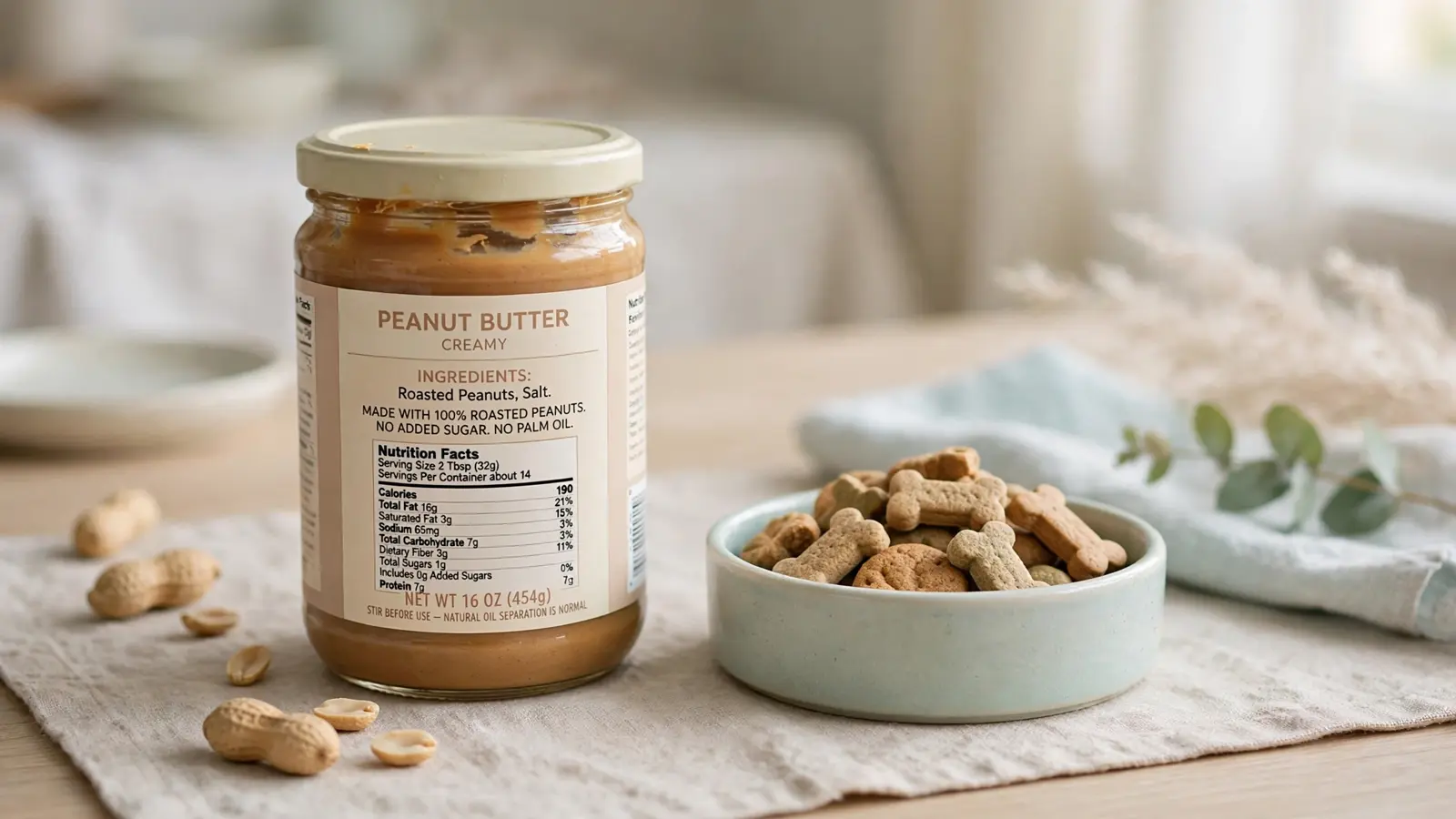
The jar gets the last word
A peanut butter label is easy to overlook when you have made the same grocery run many times. The jar on the shelf can look familiar while the ingredient panel is the part you need to read. Make the check a little moment in the routine: pick up the jar, turn it around, find the list, and decide before you buy or scoop.
Xylitol is a sweetener that can drop a dog's blood sugar and hurt the liver, so it never goes into a homemade treat.
Only a few peanut butter brands add xylitol, so read the ingredient label on the jar before a spoonful goes in the bowl.
Those two sentences are the reason for the pause. The check belongs to the label in your hand, not a memory of another jar or a note from an older grocery trip. If the panel is hard to read, set the jar back and choose one you can read. Keep the label visible when you bring the jar home, too; the ritual is useful because it can be repeated at the counter without making you guess.
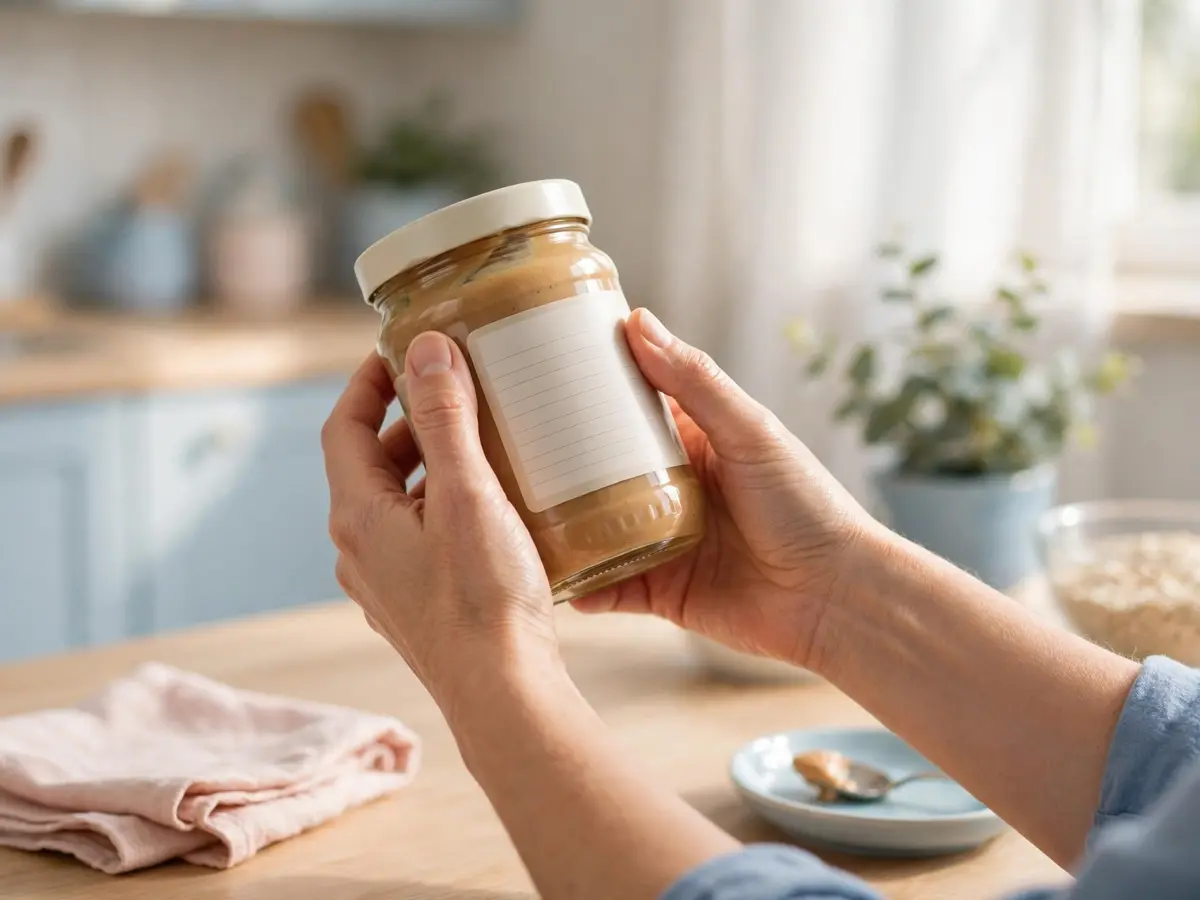
A three-minute label ritual
Treat “three-minute” as a friendly name for a small pause, not a timer or a promise about how long a label takes. The useful part is the order. Start with the front so you know which jar you picked; turn to the ingredient panel; read it with your dog's treat in mind. Put the jar down only after you have made the choice.
- Pick up the exact jar you plan to use.
- Turn it so the ingredient list faces you.
- Read the panel before the jar reaches the cart or mixing bowl.
- For a sugar-free label, check for xylitol in the ingredients.
- Keep the jar label available when you portion a treat later.
The list is a routine cue, not a way to certify an entire product for every dog. If a product is labeled sugar-free, check its ingredient list for xylitol before it goes anywhere near a dog. That sentence is the standing reminder I would put on the inside of a cupboard door, beside the measuring spoon and treat container.
Keep the ritual plain. There is no brand hunt in this guide and no special jar to seek out. The label on the shelf is the one to read. Use the ingredient words rather than the front-of-package look, and give yourself a second to read the actual panel even if the jar is one you recognize. If you bring home a different one, repeat the same steps rather than carrying over the old check.
Sugar-free products get their own check
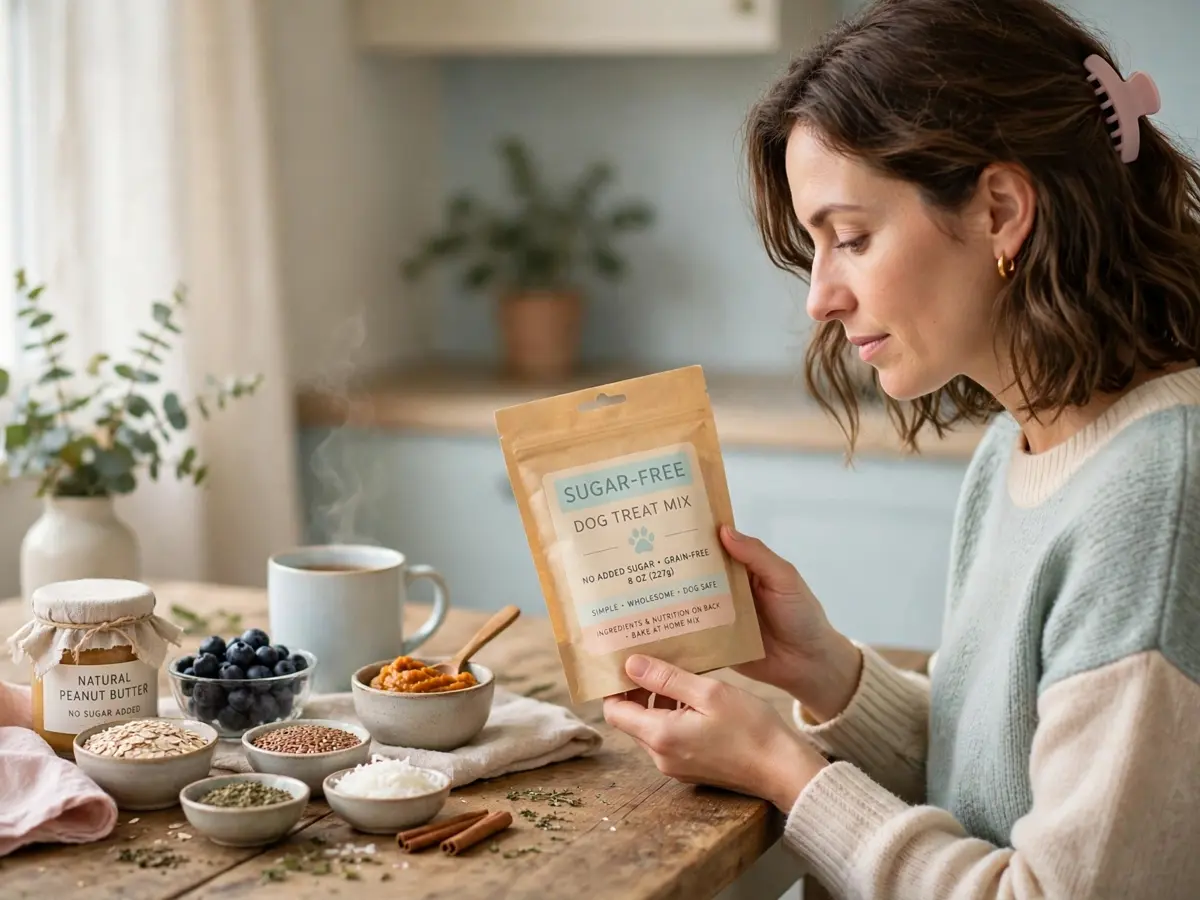
A sugar-free label deserves a deliberate ingredient check before it gets anywhere near the dog. Keep this line next to the front of the pantry list, where a person reaching for a snack can read it before opening the package.
If a product is labeled sugar-free, check its ingredient list for xylitol before it goes anywhere near a dog.
This applies to the package you are holding, not a shortcut based on how another item looked. Read the ingredient list for that product. When you are putting groceries away, keep anything you still need to check separate from the treat ingredients. If a family member asks whether a package is okay to share, show them the label-check line rather than offering a guess. That turns an uncertain moment into a readable next step.
I like to keep a small note where the peanut butter lives: “turn the jar; read the label.” It is a reminder to look at the actual ingredient panel before a spoonful goes in the bowl. The note does not replace the panel; it reminds me to check each time I open a different jar.
If a product may have been eaten
A possible exposure calls for a clear action line, not a web search spiral or a wait-and-see guess. If a product is labeled sugar-free, check its ingredient list for xylitol before it goes anywhere near a dog. If your dog may have eaten a product containing xylitol, call your vet, an emergency clinic, or animal poison control right away.
Keep the package nearby so you can refer to the product while you call. This page is a label-reading guide; it does not assess an exposure. For informational purposes, consult your vet. I keep the emergency sentence beside the pantry note because the helpful thing in that moment is having one clear line ready to read.
The same goes for a jar that has already been opened or a wrapper that is no longer on the shelf. Bring the packaging information into the conversation. If another person is with your dog, ask them to hold the label while you make the call. Use the wording below as written; do not turn it into a dosage question for this page to answer.
The emergency line
If your dog may have eaten a product containing xylitol, call your vet, an emergency clinic, or animal poison control right away.
For informational purposes, consult your vet.
Keep the treat in its little lane
A checked ingredient is still part of a treat, and this page is about a small extra alongside the regular routine. Keep the portion reminder with the jar so the label check and the serving choice are part of the same moment.
Treats should stay at no more than five percent of a dog's daily calories, so keep the pieces small.
Most of a pet's nutrition should still come from their regular diet, with treats as the extra bit.
Those are the two lines I keep near any homemade treat notes. They make the role of a treat clear without turning a peanut butter jar into a full menu. If your dog has a routine or food question that needs a personal answer, take it to your vet. For informational purposes, consult your vet.
For the full recipe context, the no-bake peanut butter recipe carries the jar check into a method. The blueberry oat treat page also puts the label reminder next to its recipe. Read either one with the same jar in hand, and keep the wording of the label itself as your reference. For informational purposes, consult your vet.
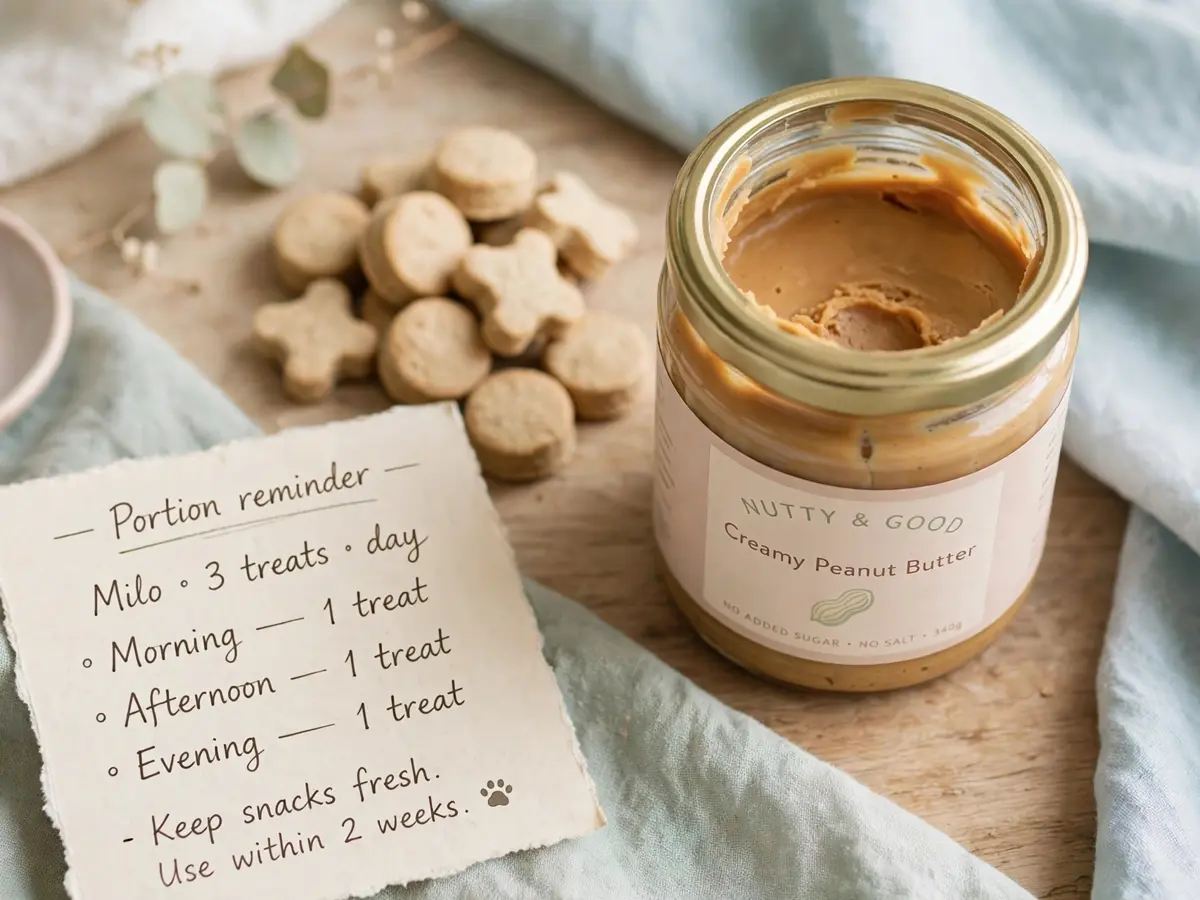
A pantry note that works for the whole household
The best note is one another person can follow without knowing what you remember from the last grocery trip. Put the jar check in plain sight. Leave the ingredient panel facing outward when the jar is on the counter. Keep the emergency line where the person reaching for the pantry can see it. These are small setup choices, but they make the next decision easier to read.
If someone else is preparing a treat, tell them to use the label on the jar in front of them. That is more useful than saying “the same one as last time,” since the label is what the person can actually inspect. If there is any doubt about the product or your dog's diet, pause the recipe and check with your vet. For informational purposes, consult your vet.
You can make this even easier on a busy morning: keep a small card near the pantry with the label reminder on one side and the portion lines on the other. Copy the registered sentences without shortening them. The full text keeps its meaning; the card is only a way to bring that text into the kitchen where a person needs it.
If your note has room for only the essentials, use the same order: read the jar, check sugar-free products, keep treats as the extra bit, and use the emergency line if a product containing xylitol may have been eaten. The guide is meant to live near the routine, not to replace the conversation with your vet. For informational purposes, consult your vet.
Turn the check into a tiny kitchen habit
The point of this guide is repetition. A jar can look familiar, a grocery shelf can change, and a different person can be the one making the treat. Keep the same order every time: pick up the jar, turn it around, read the ingredient panel, and make the choice from the words on that jar. The habit stays useful because it does not depend on remembering a brand or a previous shopping trip.
If you share the kitchen, put the reminder where the jar is stored. A small card can say “turn the jar; read the label,” while the full emergency sentence stays on this page or on a complete printed copy. The card is a cue to inspect the package, not a replacement for the ingredient list. Keep the package available if you need to ask your vet about the product. For informational purposes, consult your vet.
When you copy the routine into a household note, keep the three moments distinct: the ingredient check before the treat, the portion reminder alongside the regular diet, and the emergency action if a product containing xylitol may have been eaten. Clear spacing lets another person read the right line without turning the page into a long list of exceptions.
- Read the ingredient panel on the exact jar you plan to use.
- If a product is labeled sugar-free, check its ingredient list for xylitol before it goes anywhere near a dog.
- Keep the registered emergency line visible for a possible xylitol exposure.
- Keep treats as the extra bit beside the regular diet.
You do not need a complicated pantry system. One readable note, one ingredient panel, and one clear place for the emergency line are enough to make the next check less rushed. If the jar changes, start again with the new label. If the question is about your dog's individual diet, pause the recipe and bring the label to your vet. For informational purposes, consult your vet.
Questions about the peanut butter label check
Why check the peanut butter label?
Xylitol is a sweetener that can drop a dog's blood sugar and hurt the liver, so it never goes into a homemade treat. Only a few peanut butter brands add xylitol, so read the ingredient label on the jar before a spoonful goes in the bowl.
What if the label says sugar-free?
If a product is labeled sugar-free, check its ingredient list for xylitol before it goes anywhere near a dog.
What if my dog may have eaten a product with xylitol?
If your dog may have eaten a product containing xylitol, call your vet, an emergency clinic, or animal poison control right away.
How do treats fit into the day?
Treats should stay at no more than five percent of a dog's daily calories, so keep the pieces small. Most of a pet's nutrition should still come from their regular diet, with treats as the extra bit. For informational purposes, consult your vet.