 PawStyle Daily
Homemade Dog Treats & Meal Planning
No Peanut Butter Dog Treat Recipes That Still Bind
The treat jar does not need peanut butter to work. Yogurt presses into a firm dough, pumpkin purée keeps a soft bake together, and mashed sweet potato holds a rolled batch the way the classic jar never quite did. This page owns the recipes that skip peanut butter entirely: which binder does which job, how the dough feels when it is right, and the label check for the jars that still live in the cupboard. For informational purposes, consult your vet.
By PawStyle Daily · Updated 18 November 2026
Good to know: yogurt, pumpkin or sweet potato as the binder · No jar needed · Airtight jar or freezer.
Why skip the peanut butter
Some dogs turn their nose up at the jar and always have. Some households own a jar with an ingredient list that reads like a chemistry set, and the calmest response is to bake without it. And some of us simply ran out mid-batch one Sunday, discovered the dough never needed it, and never restocked.
Whatever sends the jar to the back of the cupboard, the mechanics stay the same. A binder does two jobs in a dog treat: it carries moisture so the flour comes together, and it holds the finished piece together after the bake. Yogurt, pumpkin purée and mashed sweet potato each do both, each in their own way.
One more reason shows up at the shops: peanut butter is the one treat ingredient that asks for a label conversation every single time. The recipes below never start that conversation, because they never open the jar.
What replaces the binder
Three pantry items cover the whole binder job, and each holds dough differently.
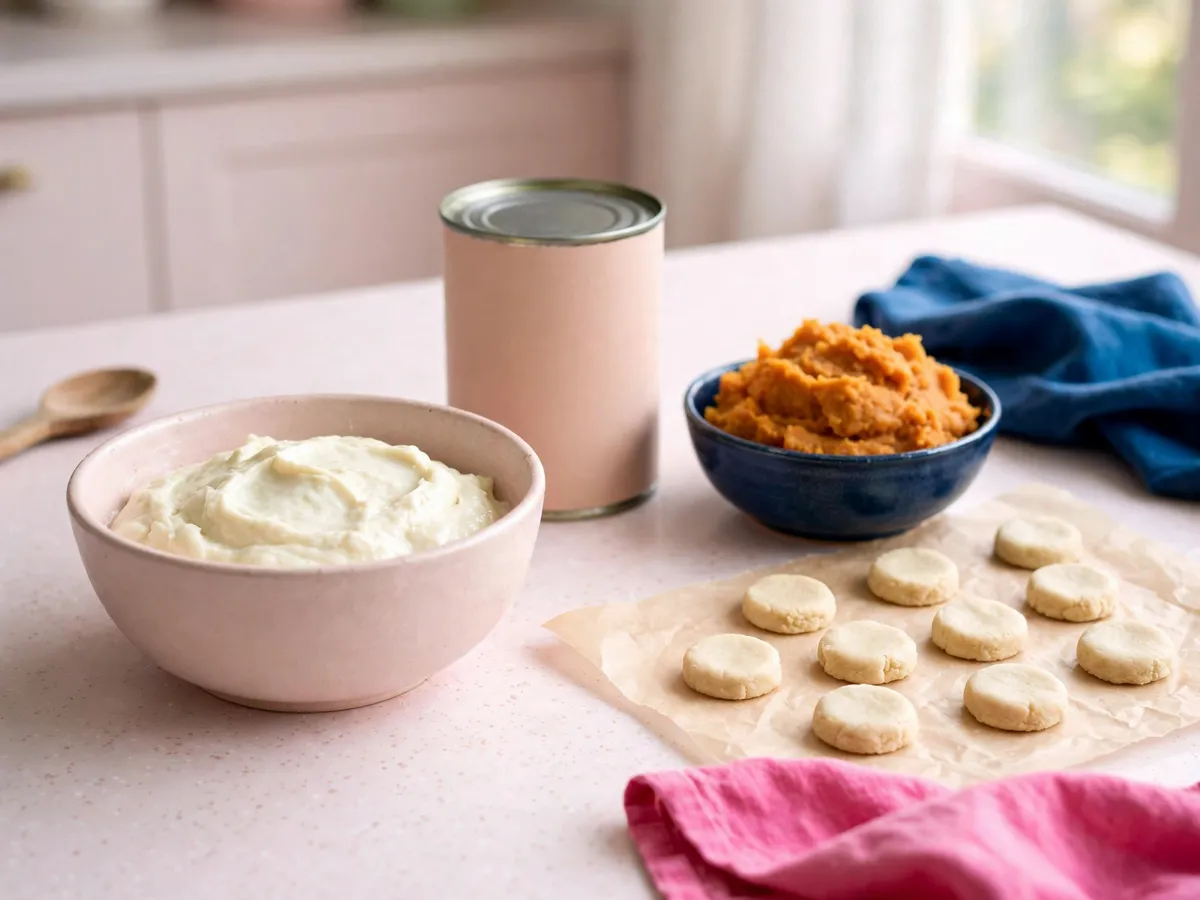
- Plain Greek yogurt. Thick enough to strain out of the tub and press into a dough that holds a shape. Choose the plain, unsweetened kind with no flavoring and no sweetener, because the flavored tubs carry things a dog treat does not need.
- Pumpkin purée. Canned plain purée, never pie filling. It is the wettest of the three, so it suits soft, spooned treats more than rolled ones.
- Mashed sweet potato. Cook a sweet potato until it gives to a fork, mash it smooth, and it folds into a dough that rolls without sticking to the pin.
- Banana. The ripest banana in the bowl mashes sweetest and carries a sticky hold, which suits drop treats that bake up cakey at the edges.
Pick the binder by the shape you want at the end. Firm and molded points to yogurt. Spooned and soft points to pumpkin. Rolled and cut points to sweet potato.
The yogurt route
Plain Greek yogurt is the binder that bakes the closest to a classic rolled treat. It presses into a firm dough, rolls without fighting the pin, and comes out of the oven matte instead of glossy, which makes it the photo-friendly choice when the treats are headed for a treat jar on open shelving.
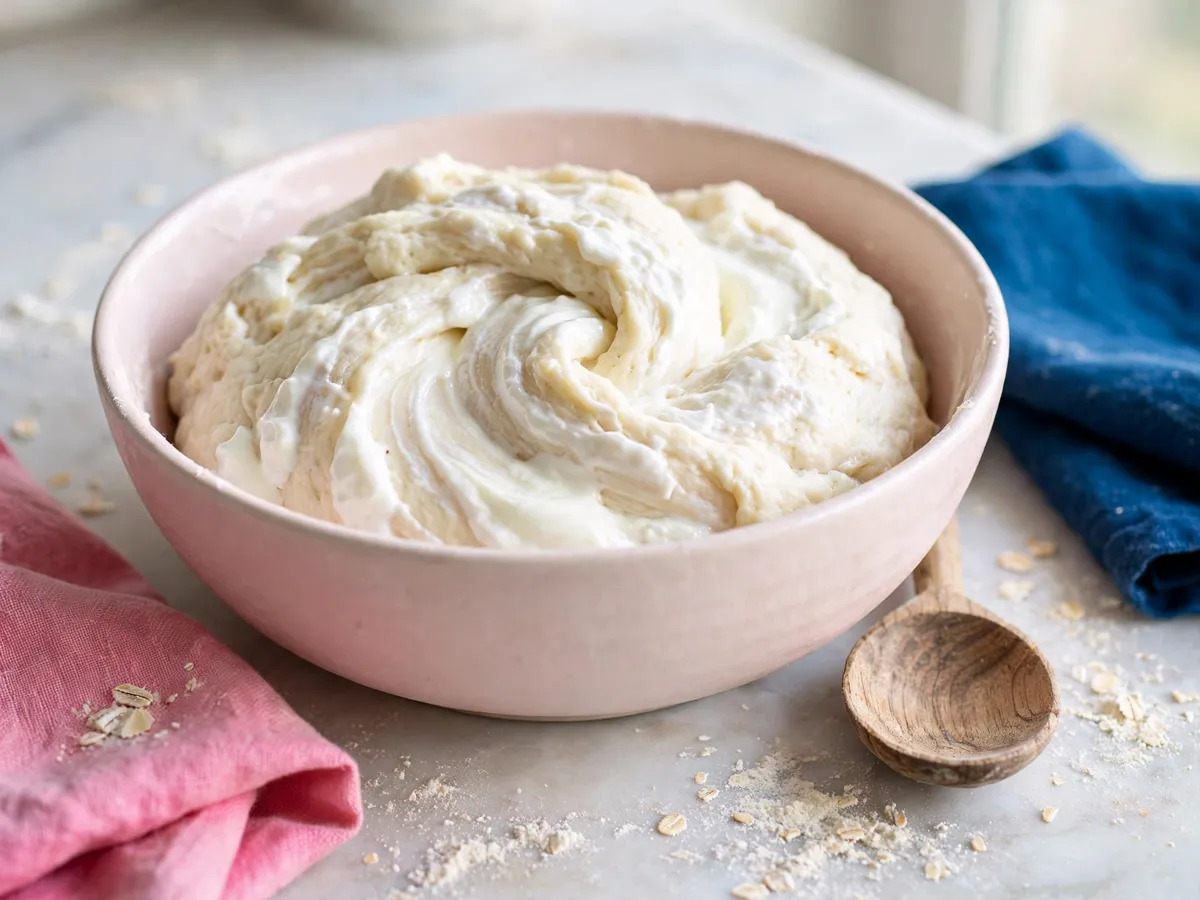
Build the batch in one bowl. Stir the yogurt into oat flour a spoonful at a time until the dough stops shagging and starts holding together. Press it into molds or roll and cut, then bake until the pieces feel firm to a fingertip and dry at the edges. Let the batch cool all the way on the rack before anything goes near a jar, because trapped steam softens what the oven just firmed.
The pumpkin route
Canned pumpkin purée is the friendliest binder in the bowl: one ingredient, nothing else on the label, and a smell that gathers the whole household in the kitchen while the batch bakes. Two tablespoons (30 g) of canned pumpkin without salt is a 15-calorie treat. That is the only figure this page carries, and it is why the spoon stays modest.
The purée is wetter than yogurt, so the dough stays soft. Drop it by the spoonful onto a lined pan instead of rolling it, smooth the tops with the back of the spoon, and bake until the edges set. What comes out is a soft-baked treat rather than a biscuit, which many senior dogs treat as the better option anyway.
One label rule, repeated because the cans live side by side on the shelf: buy plain purée, never pumpkin pie filling. The pie can carries added sweetener and spice that belong nowhere near a dog treat.
The vegetable snacks
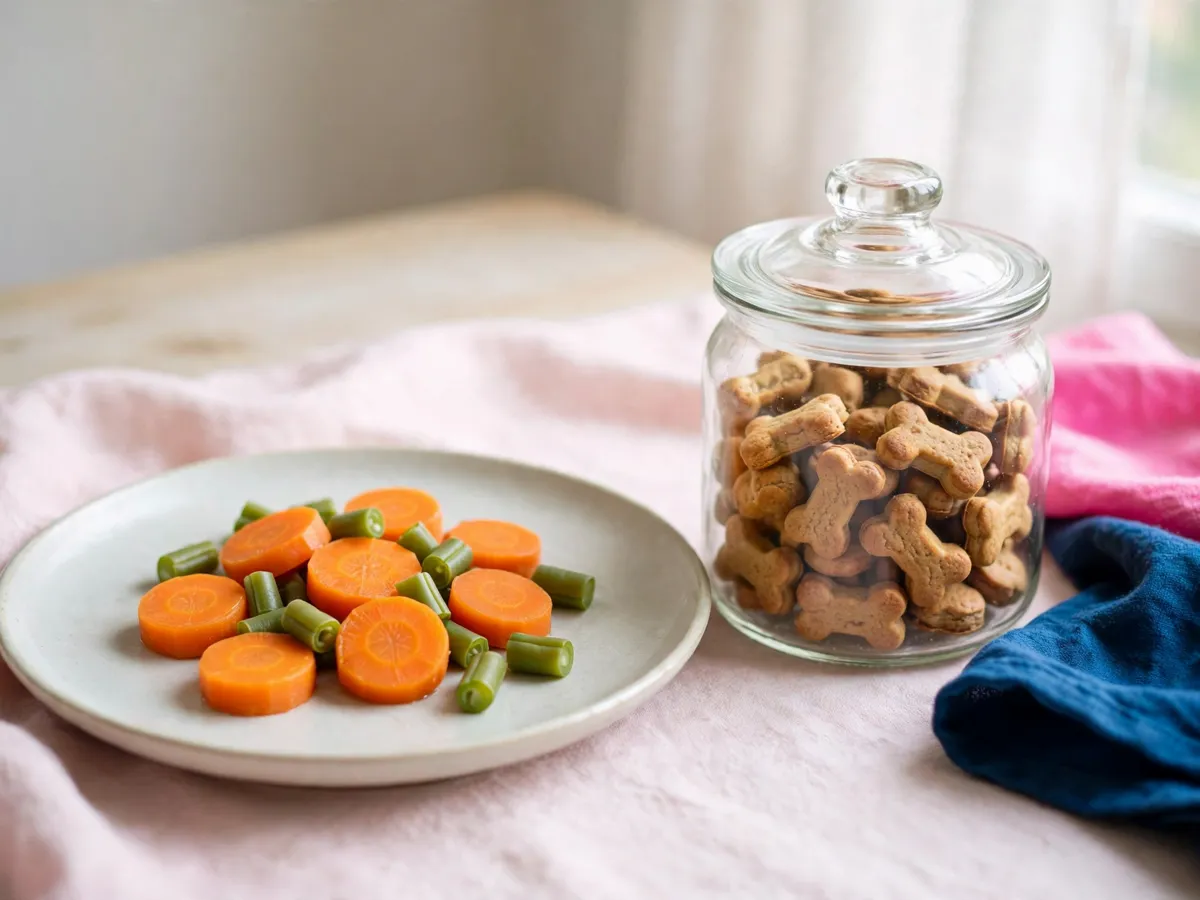
Some of the easiest peanut-free treats skip the dough entirely. Small pieces of carrot, broccoli, green beans or cooked pumpkin make easy snacks. They ask for a cutting board instead of an oven, and a jar of them steams while the oven bakes something else.
Keep the pieces plain: steamed until a fork slides in, cooled, cut small enough to carry in one bite. Seasoned vegetables from the dinner plate stay on the plate, because the salt and butter that make them good for people are the part a dog does not need.
These fit the same jar logic as the baked treats: a small plain piece, counted into the day like anything else from the treat side of the kitchen. The bag in the freezer door is a perfectly good treat jar.
Reading the jar you buy
If a peanut butter jar still lives in your cupboard for your own toast, the label check applies every time a spoonful moves toward a dog. Only a few peanut butter brands add xylitol, so read the ingredient label on the jar before a spoonful goes in the bowl. Turn the jar around, find the ingredient list, and read it start to finish rather than trusting the front of the label.
When in doubt, the recipe skips it entirely, which is the quiet luxury of this page. For the deep dive on the jar itself, the peanut butter label check goes through the jar shelf word by word, with the exact words to look for on a label.
What never goes in the jar
A page about homemade treats keeps a never-list, and this one is short and absolute. Grapes and raisins can lead to kidney damage in dogs, so neither one goes into a bowl or a treat.
And the nut aisle stays closed too. Macadamia nuts can leave a dog weak, wobbly and running a fever, so they stay out of the treat jar.
Chocolate, xylitol and everything else on the full keep-out list belong on the same sheet: our toxic foods dogs can't eat list gathers the never-lines in one printable place, and it earns the fridge door more than any single recipe does.
The five percent habit
Treats count toward the day even when they skip the jar. Treats should stay at no more than five percent of a dog's daily calories, so keep the pieces small. That is a budget, not a bowl: every treat piece nibbles at the same daily total the meals already cover.
The practical habit is counting treats into the day rather than on top of it. The training sessions, the good-girl pieces and the mid-afternoon bribes all land in the same tally, and the tally is what keeps the week honest. Small pieces deliver the same joy in a small mouth and leave room in the budget for the next one.
Storing a peanut-free batch
Peanut-free doughs store the same way the classics do, with one extra head start: the yogurt and pumpkin batches carry more moisture, so the cool-down matters more. Nothing goes into a jar warm, ever, because trapped steam softens the batch and shortens its shelf life before a single treat gets eaten.
- Cool the batch fully on a rack, with air moving around every piece.
- Keep the week's portion in an airtight jar, away from the sunny shelf.
- Freeze what the week will not finish, in a flat bag, and thaw in the fridge.
Save these on Pinterest
Pin the binder that matches your batch: yogurt for firm and molded, pumpkin for soft and spooned, sweet potato for rolled and cut. The Dog Food collection holds the full recipe shelf, and the healthy pumpkin treats bake is the next one for picky or delicate eaters. For informational purposes, consult your vet.
Questions about peanut-free dog treats
Do these recipes need peanut butter for flavour?
No, and that is the point of the shelf. The binders on this page carry taste alone: plain Greek yogurt reads gently tangy, pumpkin purée tastes softly sweet, and mashed sweet potato brings the toasty note. The batch disappears exactly the same way, just without a jar in the recipe.
Can I swap yogurt for pumpkin in the same dough?
Treat them as different helpers rather than a straight trade. Yogurt presses into a firm dough and bakes matte, so it suits rolled and molded shapes. Pumpkin purée is wetter, so the dough stays softer and suits spooned drops better. Adjust the oat flour a spoonful at a time and let the feel of the dough decide instead of a fixed ratio.
Are these treats suitable for puppies?
Small pieces suit small mouths, whatever the recipe. Ask your vet before adding anything new to a puppy's routine, keep every piece tiny next to the puppy's own food, and introduce one new ingredient at a time so you learn what agrees with your puppy and what does not.
How long do these treats keep?
An airtight jar handles the week on the counter, and the freezer takes whatever the week will not finish. Cool the batch fully before the lid goes on, and thaw frozen pieces in the fridge rather than on the counter so the texture survives the wait.
What if my dog ate peanut butter anyway?
The ingredient label on the jar is the first thing to read, and our peanut butter label check goes through a jar word by word if you want the deep dive. If your dog may have eaten something with xylitol in it, call your vet or an emergency clinic right away instead of waiting to see what happens.
Set up the peanut-free batch
Binders, molds and baking tools
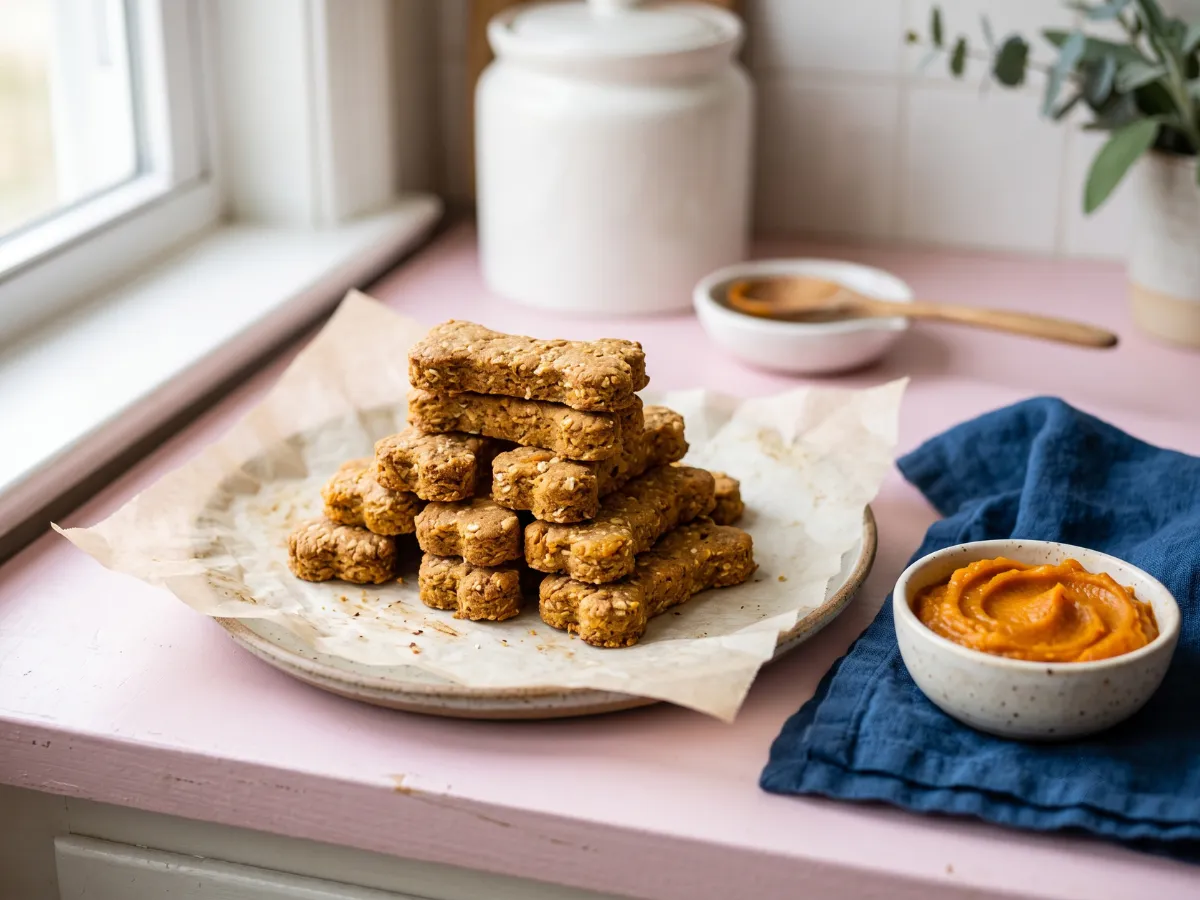
Plain yogurt, canned pumpkin, silicone molds and oat flour — the whole no-peanut-butter kit in one list.
See what we use →As an Amazon Associate we earn from qualifying purchases.