 PawStyle Daily
Homemade Dog Treats & Meal Planning
Puppy Body Condition: The Rib and Waist Check
The bowl never tells you whether the amount inside it is right. Your hands do. Three reads — ribs under a flat palm, a waist from above, a tummy line from the side — plus one number on a scale, written down once a week, is the whole check. It takes about a minute, and it is the difference between feeding a puppy and feeding a guess.
By PawStyle Daily · Updated 17 November 2026
Good to know: one minute, once a week · hands first, eyes second · the bag is a starting point · for informational purposes, consult your vet.
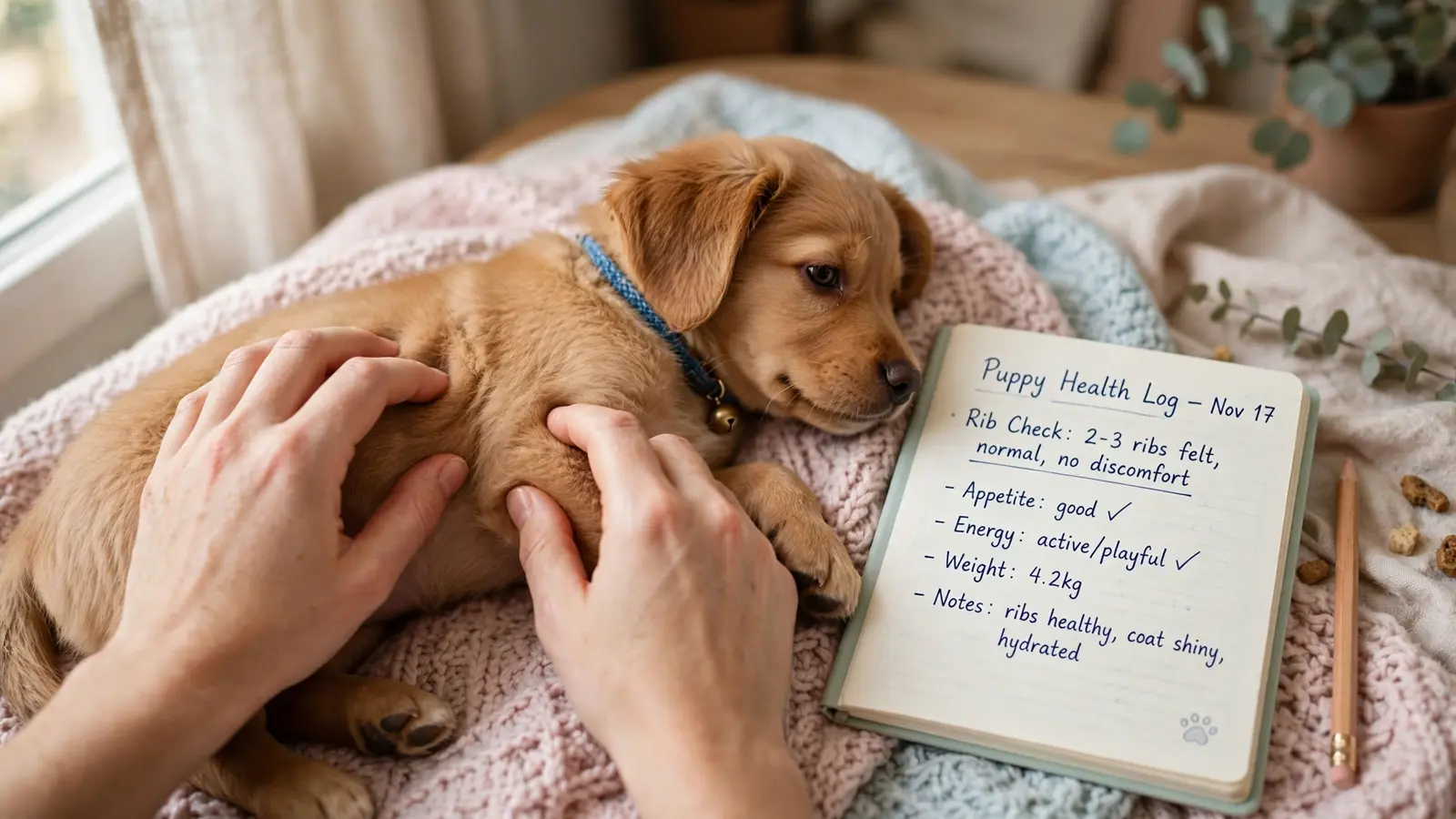
The one-minute check
Look for a waistline that curves in behind the rib cage, a tucked tummy, and ribs you can feel but not see. That single sentence is the target: three landmarks on one small body, all reachable in under a minute.
Do the reads in the same order every time, so a change stands out instead of blending in. Kneel beside the standing puppy, run a flat palm down each side of the chest, then stand behind it and look down, then crouch at eye level from the side. Same order, same hands, same puppy — the routine is what turns a feel into a comparison.
- The puppy stands on all fours. Seated puppies hide the rib line and fold the waist away.
- Warm hands, light pressure. You are reading through the body, not pressing into it.
- Look at the shape before you label it, and write the words down after — a phrase like “ribs easy to find, waist soft” beats trying to remember a trend.

Reading the ribs with your hands
A flat palm on each side of the chest, fingers together, working from the shoulder back toward the hip: you want the feel of knuckles under a thin glove — findable through a layer, not sharp under the hand. If your fingertips have to hunt, the puppy is running lean. If your palm reads a smooth curve with no edges, the puppy is carrying more than the frame needs.
Neither read is a decision on its own. Bodies change through the day, and a young puppy can look different after a long drink of water. The hands tell you what to check next, the waist and the tummy tell you whether the rib read is a blip, and the weekly number settles it over a month. One read is a photograph; three reads a week apart are a film.
Puppies of heavy-coated breeds need the hands more than the others, because the eye is reading fur, not body. Part the coat with the back of your hand and feel the sides where the chest is widest; that is the same spot the harness tape will find later.
The waist and the tuck
Stand behind the puppy and look down over its back. A puppy at its weight shows a dip behind the rib cage — an hourglass read, narrow at the waist and wider at the hips. From the side, crouched at the level of the belly, the line should tuck up from the chest toward the back legs rather than fall straight through or drop under.
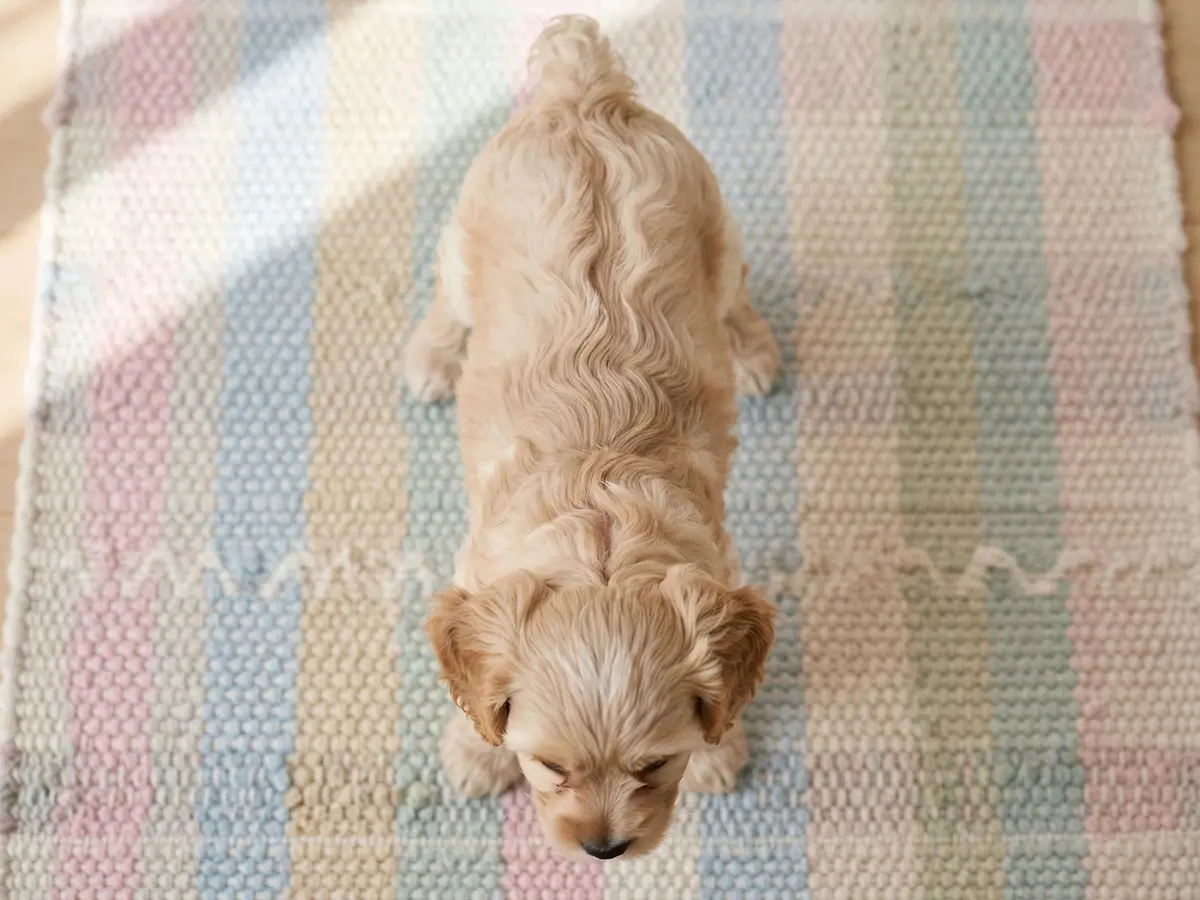
Both views hide their own lie. A long coat blurs the waist from above, and a puppy that has just eaten holds a rounder middle. Take the side view after a walk and before a meal when you can, and note the reading next to the weight so the two lines of the notebook agree with each other.
Weigh weekly and write it down
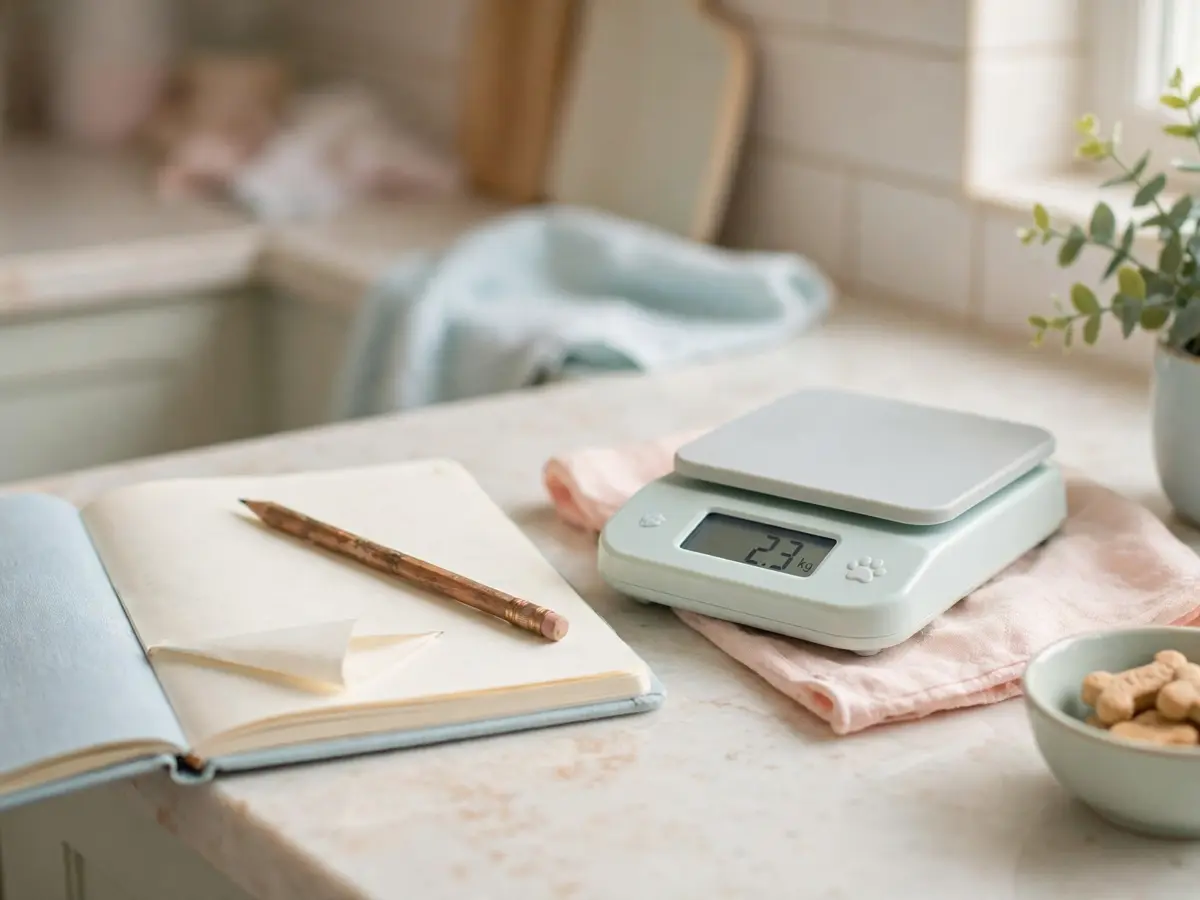
Weigh the puppy weekly and write the numbers down. Same day, same scale, same moment of the day — after the first potty break and before breakfast is the easiest slot to keep. For a small puppy, stand on the scale holding it and subtract your own weight; for a bigger one, a vet clinic scale or a luggage scale with a sling works just as well.
The number matters less than the line it draws. Two flat weeks in a growing puppy, or a line that climbs faster than the frame fills out, are both worth a look at the bowls and a call to your vet if they continue. A notebook with a date, a number and three words about hands is more useful at that appointment than anything you can remember from a month of feeling.
The bag amount is a starting point, not a rule
Portion size starts on the food package: the feeding guidelines printed on the bag are the starting point, then you adjust with your puppy's body condition. The bag is written for an average puppy of an average build at an average activity level, and no puppy in your kitchen is the average puppy. Body condition decides the portion, not how much is left in the bowl. If the hands say lean, the bowl moves up a little; if the ribs vanish under the palm, the bowl moves down a little. Slow steps, then a full week before the next opinion.
The label itself is worth learning to read, because the panels on a bag answer different questions than the big number on the front. Our guide on how to read a dog food label walks the panels in order.
Individual puppies vary, and that is the norm
A puppy's daily calories follow their target adult weight. An individual puppy may need up to 50% more or fewer calories than the average. Read that again, because it is the sentence that keeps a two-puppy house sane: half more or half fewer than the number on the tin, and both puppies can be right.
That spread is why the hands-on check exists at all. It is also why littermates fed from the same scoop can end up at different bowls, and why a puppy that looks thinner than its brother is not automatically underfed. The check reads the body in front of you; the average reads a spreadsheet.
When it is time to call the vet
Call when the reads disagree with the scale for more than a couple of weeks, when ribs stay sharp under a flat palm while the puppy still eats, when a puppy that usually cleans its bowl starts leaving food, or when the weight line falls instead of flattening. Puppies do not tell you a number; the notebook and the hands do.
Keep the last four weeks of the log beside the phone. A vet can work with a trend in a way no single appointment weight allows, and the words you wrote beside each number — “ribs easy to find, waist soft” — are the part of the page most people forget to write and most vets are glad to read.
Three reads and a number
| Check | How you read it | What you are looking for |
|---|---|---|
| Ribs | Flat palm down each side of the chest | Findable through a thin layer, not visible and not sharp |
| Waist | Look down from behind the standing puppy | A dip behind the rib cage, wider at the hips |
| Tummy | Crouch at eye level from the side | A line that tucks up toward the back legs |
| Weight | Same scale, same slot, once a week | A steady line rather than one big number |
One read is a photograph, three reads a week apart are a film. The notebook is what turns a feeling into a trend.
Puppy body check questions
How often should I do the hand check?
Once a week is enough for most puppies, on the same day as the weigh-in. Twice a week is fine during a growth spurt, and pointless once a day — a body condition read is a slow signal, and a daily read only adds noise to a number that moves over weeks.
My puppy is fluffy and I cannot see ribs at all. Is that a problem?
Coat hides ribs on plenty of puppies, which is exactly why the check is hands-on. At an ideal weight, a puppy has a waistline that curves in behind the rib cage, a tucked tummy, and ribs you can feel but not see — your palm reads what your eyes cannot.
Should I trust the amount printed on the food bag?
It is the place to start, not the final word. Portion size starts on the food package: the feeding guidelines printed on the bag are the starting point, then you adjust with your puppy's body condition. Two puppies and two bags can still land on different amounts.
What if two puppies from the same litter eat different amounts?
That is normal, and the range above is not a rule every puppy must match: an individual puppy may need up to 50% more or fewer calories than the average. Read each puppy on its own body, not on its brother's.
Do I need to change food when the count changes?
Not the same day. Switch the food over a few days, not in one meal, and only after the body check says the current bowl is not working. Most first-year changes are a portion adjustment, not a bag change.
When should I stop guessing and call my vet?
A puppy that loses weight two weeks running, has ribs that feel sharp under a flat palm, or leaves meals while still acting hungry, needs a vet rather than another scoop. For informational purposes, consult your vet.
Save these on Pinterest
Save the three-read card for the week you bring a puppy home, and keep it beside the new puppy feeding page and the growth chart and weight tracker. If the count of meals is the question this week, the how-many-meals-a-day page answers it by age.
For informational purposes, consult your vet.
Pea-size or not, training rewards add up, and the treat calories inside the daily count page shows how to fit them into the week.