 PawStyle Daily
Homemade Dog Treats & Meal Planning
How to Read a Dog Food Label Fast
Standing in the pet-food aisle with a bag in each hand can turn a quick errand into a reading assignment. I use the same calm order each time: start with the label details, read the ingredient statement as it appears, find the complete-and-balanced check, and leave brand rankings out of the decision. The bag gives you words to examine; bring questions about your dog to your vet. For informational purposes, consult your vet.
By PawStyle Daily · Updated 16 November 2026
Bag-label walk-through · No brand rankings · For informational purposes, consult your vet.
First pass: read the bag, not the hype
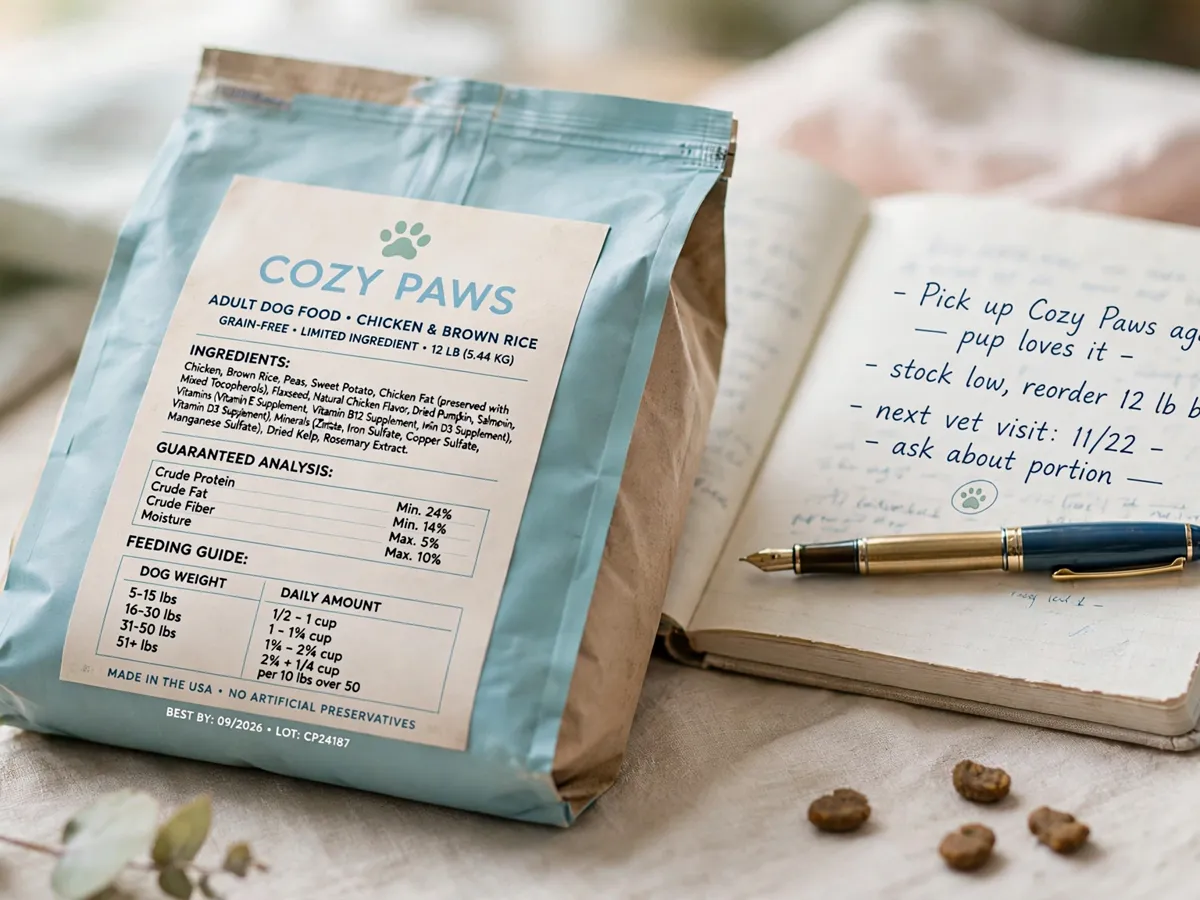
Put the front panel aside for a moment and turn the bag around. The label has a few concrete details worth locating before you compare anything else. This is a reading routine, not a scorecard. Keep a notebook open if you want to write down questions for your vet, and use the wording on the actual bag rather than a remembered phrase from a product page.
Federal rules require pet food to be safe to eat, made under sanitary conditions, free of harmful substances and truthfully labeled.
That is the regulatory context for this walkthrough. It tells you the frame for reading a label; it does not turn this page into an individual assessment of a bag or a diet. Read the package in front of you and bring a dog-specific question to your vet. For informational purposes, consult your vet.
I like to make the first pass in a fixed order because it gives me something concrete to do in the aisle. Find the product name. Find the net quantity. Find the maker's name and place of business. Then turn to the ingredients and keep the order exactly as it is printed. There is no brand recommendation hiding in this sequence; it is simply a way to read what is there.
Label anatomy: four details to locate
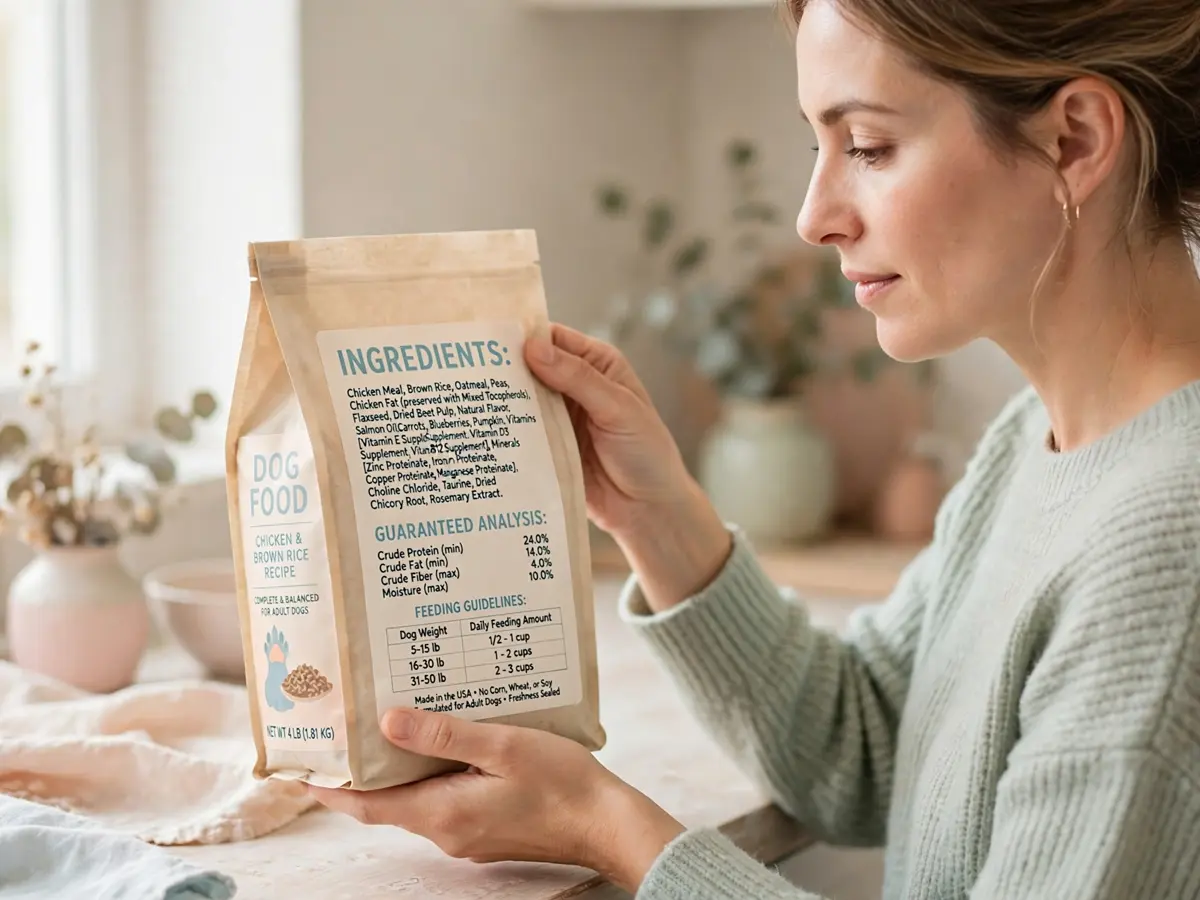
Treat this as a little bag tour. Put your finger on each detail as you read; you do not need to guess where a marketing phrase fits. The label wording below is the reference for this section, and the sequence keeps the bag easy to compare with another one without turning a quick shop into a brand-ranking contest.
A pet food label has to carry the product name, the net quantity, the maker's name and place of business, and the ingredients from most to least by weight.
Label details to find on the bag
| Detail | What to locate |
|---|---|
| Product name | A pet food label has to carry the product name, the net quantity, the maker's name and place of business, and the ingredients from most to least by weight. |
| Net quantity | A pet food label has to carry the product name, the net quantity, the maker's name and place of business, and the ingredients from most to least by weight. |
| Maker's name and place of business | A pet food label has to carry the product name, the net quantity, the maker's name and place of business, and the ingredients from most to least by weight. |
| Ingredient statement | A pet food label has to carry the product name, the net quantity, the maker's name and place of business, and the ingredients from most to least by weight. |
For informational purposes, consult your vet about a question tied to your dog's food.
In the ingredient statement, the phrase “from most to least by weight” explains the order in which the ingredients appear. Read that phrase as a description of label order. It does not rank one complete pet food over another, and this page will not translate it into a best-food verdict. The actual bag is the thing to read; the order printed there is the order described in the registered label wording.
Take a photo of the panel if you want to revisit its wording later. You can also copy the product name, net quantity, maker's name and place of business, and ingredient order into a note for a conversation with your vet. Write the words you see rather than summarizing them. That makes it easier to ask a clear question about your dog's routine without depending on aisle memory.
Read ingredient order in its own lane
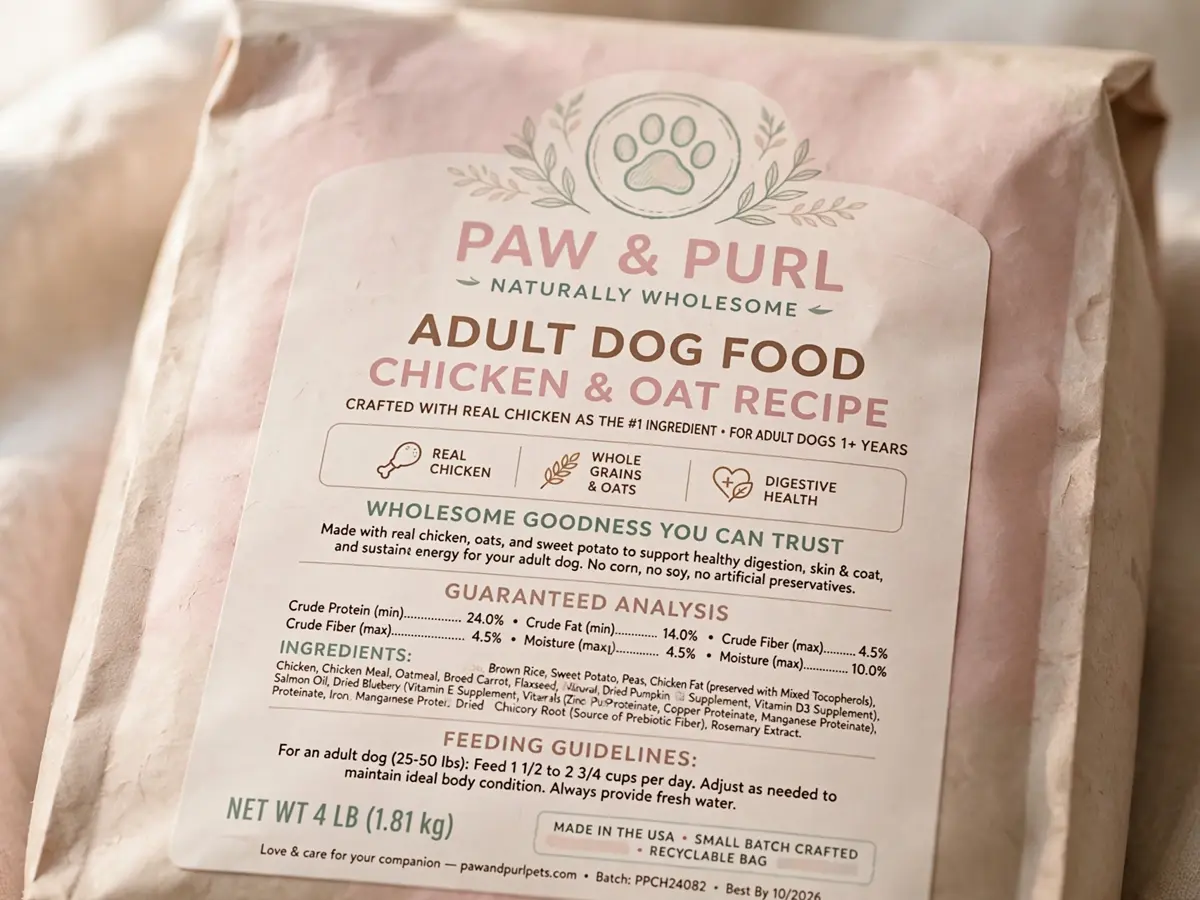
The ingredient statement is one part of the label, so give it a focused read. A pet food label has to carry the product name, the net quantity, the maker's name and place of business, and the ingredients from most to least by weight.
“From most to least by weight” describes how the ingredients are ordered on the label. I keep those words together rather than pulling out only a single ingredient name. The full sentence keeps the meaning where it belongs: in the label requirements. It does not say that a particular ingredient is a recommendation for every dog, and it does not compare the merits of two bags.
For a practical reading session, find the start of the ingredient statement, follow it through to the end, and note any wording you want to ask about. If you are looking at two bags, read each ingredient statement independently before comparing the information you actually have. Avoid filling gaps with assumptions from the package front or from a brand's sales copy. For informational purposes, consult your vet.
The point is not to turn yourself into a label detective. It is to know which details you have read and which questions remain. If a word is unfamiliar, write it down as printed and ask your vet what it means for your dog. A photo of the full panel keeps the wording available for that conversation, without relying on memory later.
The complete-and-balanced check
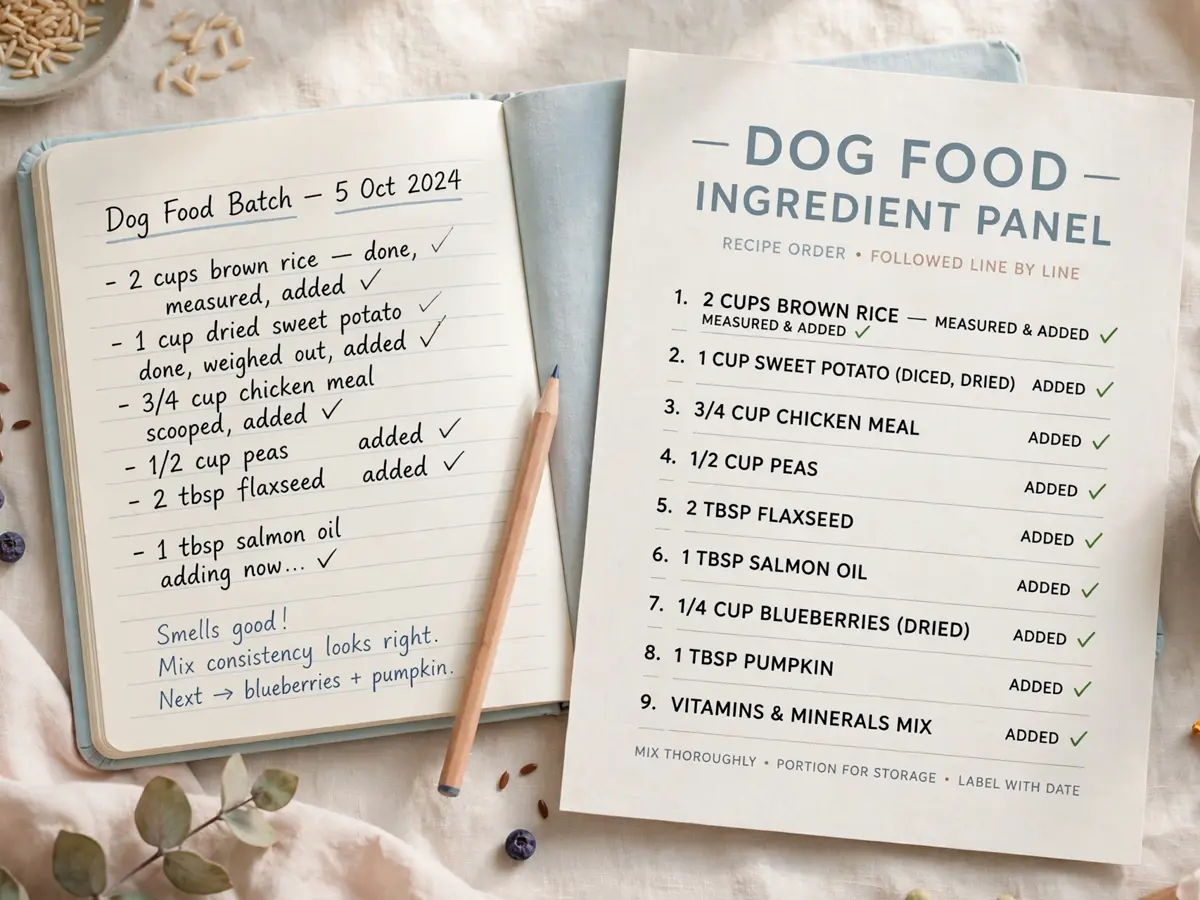
When you are reading a food label in the United States, keep this sentence in view: In the United States, look for food that has been certified complete and balanced by AAFCO.
I treat that line as a check to look for on the package, not as a brand pick or a statement that one food fits every dog. Keep the wording attached to the U.S. context and bring individual diet questions to your vet. For informational purposes, consult your vet.
If you are reading the bag for a puppy, use the puppy-specific guide alongside this one. The puppy mealtime routine keeps its own feeding notes together. This label article stays focused on how to read the package rather than choosing a food for a particular puppy.
Why “best food” rankings are marketing
The FDA does not rank one pet food over another, so a brand's own page is never the source for what is best for a pet.
That is why I keep brand rankings outside this bag-reading routine. A listicle or a glossy product page may be one person's framing, but it is not an FDA ranking. Use the label details as printed, then bring the question of what suits your dog to your vet. This page will not name a winner or score a brand.
A steady shopping note can be short: copy the product name, the net quantity, the maker's name and place of business, and the ingredient statement as you see it. Add your question below. That gives you something specific to discuss without letting a ranking do the deciding for your dog. For informational purposes, consult your vet.
If the next part of your routine is planning the week's meals, the weekly prep page offers a place to organize your own notes. If you are comparing a home-cooked idea, the homemade chicken guide is a separate read. For informational purposes, consult your vet before changing your dog's diet.
Copy this aisle checklist
- Turn the bag to its label panel.
- Locate the product name.
- Locate the net quantity.
- Locate the maker's name and place of business.
- Read the ingredient statement from most to least by weight.
- In the United States, look for food that has been certified complete and balanced by AAFCO.
- The FDA does not rank one pet food over another, so a brand's own page is never the source for what is best for a pet.
- Write down questions for your vet. For informational purposes, consult your vet.
Keep the list beside the food notes at home. The dog food bag is readable one detail at a time, and the next question can wait for a conversation with your vet rather than an aisle-side guess.
Turn the first pass into a notebook habit
The aisle routine becomes easier to repeat when it ends with a short note. Keep a small notebook or a notes app entry for the bags you want to compare. For each one, write the product name, the net quantity, the maker's name and place of business, and the first few lines of the ingredient statement exactly as printed. Copying the words keeps the note honest to the package instead of drifting toward a summary you half remember.
Leave a line at the bottom for a question. A useful question names your own dog: the age, the size, and what you noticed after the last bag. That keeps the note specific without turning it into a ranking of brands. If two bags are in the running, keep one entry per bag and compare only the details you actually wrote down. For informational purposes, consult your vet.
When you get home, keep the note with the food itself rather than filing it away. A note taped inside a cabinet door or kept in the same drawer as the scoop is more likely to be read again. If a household member feeds the dog, show them the note instead of describing it. The habit works because the same few lines travel with the bag, and the questions stay attached to the product they came from.
Over time the notebook becomes a record of what you have already checked, which makes the next shopping trip calmer. You do not need a scoring system, a spreadsheet, or a final verdict. The goal is a readable note per bag, a clear question per dog, and a conversation with your vet that starts from the words actually printed on the label.
The notebook habit works on any bag on the shelf, and the reading a freeze-dried raw bag page is the aisle question this one keeps raising.
Questions about reading dog food labels
What has to appear on a pet food label?
A pet food label has to carry the product name, the net quantity, the maker's name and place of business, and the ingredients from most to least by weight.
What do federal rules require of pet food?
Federal rules require pet food to be safe to eat, made under sanitary conditions, free of harmful substances and truthfully labeled.
What should I look for in the United States?
In the United States, look for food that has been certified complete and balanced by AAFCO. For informational purposes, consult your vet.
Does the FDA rank dog food brands?
The FDA does not rank one pet food over another, so a brand's own page is never the source for what is best for a pet.
Does ingredient order tell me which food is best?
A pet food label has to carry the product name, the net quantity, the maker's name and place of business, and the ingredients from most to least by weight. The FDA does not rank one pet food over another, so a brand's own page is never the source for what is best for a pet.