 PawStyle Daily
Puppy Training Tips
How Many Meals a Day for a Puppy? By Age
The short answer is a number that shrinks. A puppy that starts on four small bowls a day ends its first year on two, and the drop happens on a schedule you can plan around. This page walks the counts by age, explains why a measured bowl at a fixed time beats a dish that sits out, and covers the two quiet rules people forget: water stays out, and a skipped meal is information.
By PawStyle Daily · Updated 17 November 2026
Good to know: same times every day · measured bowls, never a self-serve dish · water out all day · for informational purposes, consult your vet.
The count drops as the puppy grows
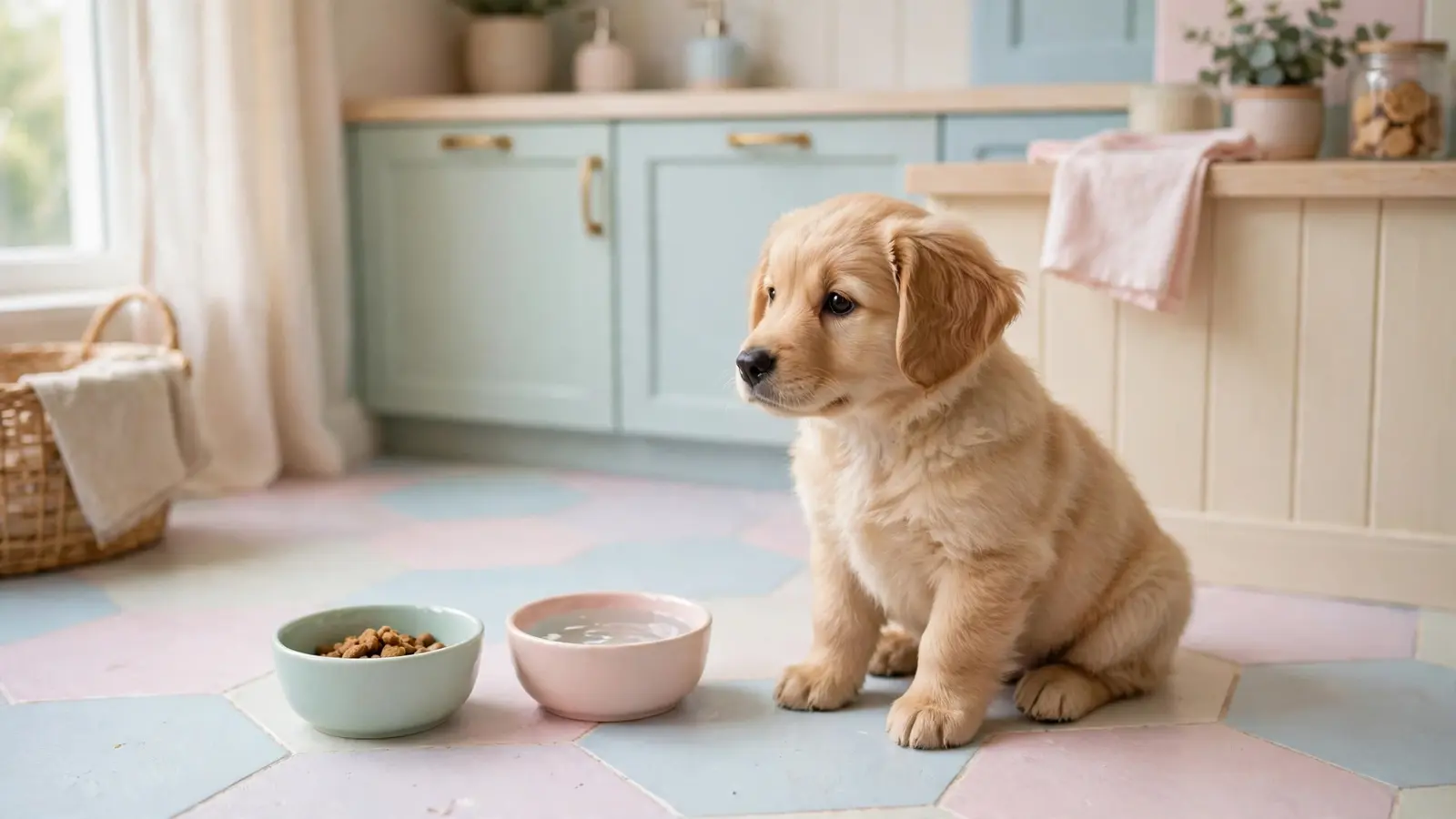
From 6 to 12 weeks, four small feedings a day are usually enough for a puppy. By 3 to 6 months drop to three feedings a day, and from 6 months two feedings a day. Four becomes three becomes two, and the puppy does the growing in between. The reason is simple body math: a tiny stomach fills fast and empties fast, so the youngest puppies need their day split into short stretches. As the body grows, the same day fits fewer, fuller stops.
The short version, if you write it on the fridge: four feedings a day from 6 to 12 weeks, then three by 3 to 6 months and two after 6 months.
The ages on that line are the usual ones, not a courtroom deadline. A small-breed puppy and a gangly large-breed puppy can sit a few weeks apart on either side of a transition, and growth spurts shuffle everyone briefly. What stays constant is the direction: as the weeks pass, the count goes down and the bowls get fuller.
Why measured meals beat a dish that sits out
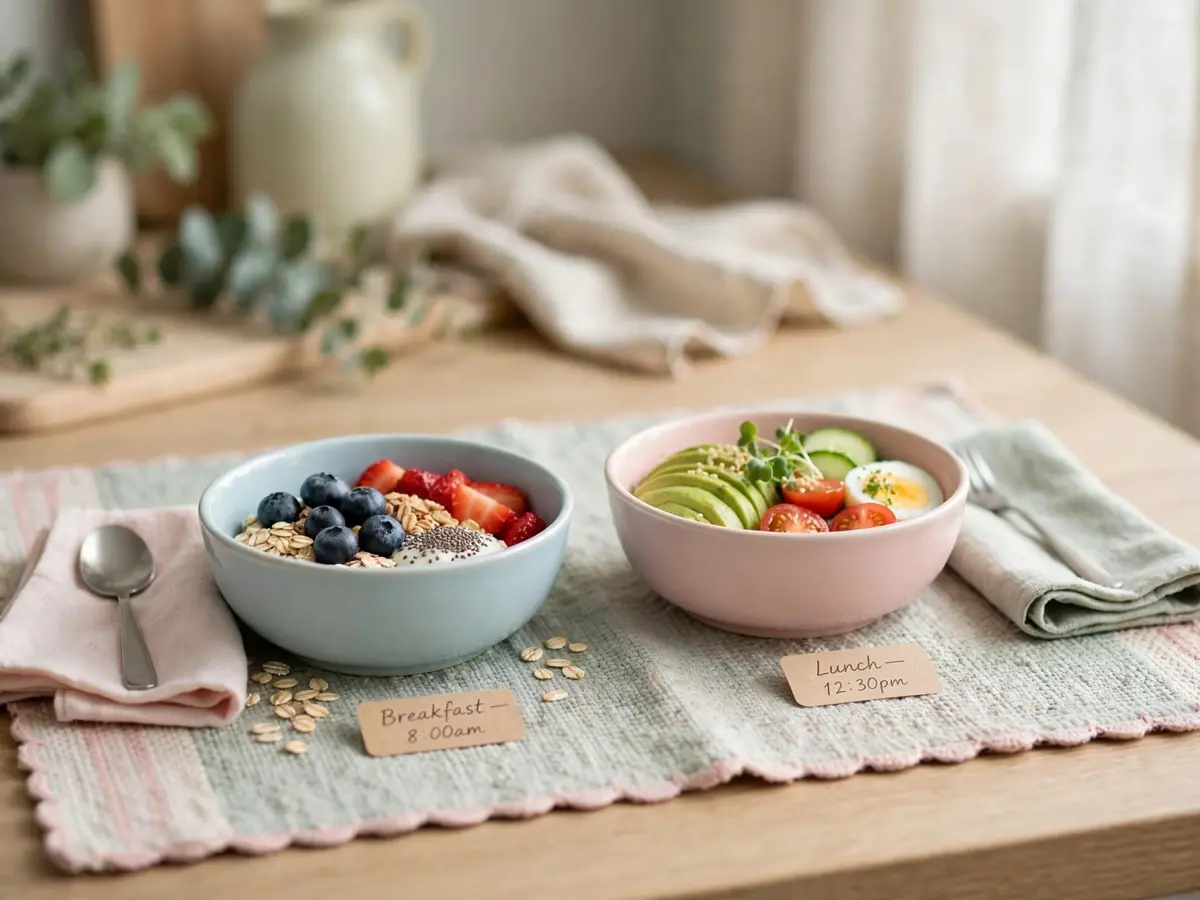
Measured meals beat food left down all day, because a puppy that eats whenever it wants is more likely to eat too much. That is half the story. The other half is what a measured bowl tells you: a puppy that empties its bowl in a minute is a different report than a puppy that noses around and walks off, and only one of those can be seen from a dish that never empties.
Food down all day also quietly trains the wrong lesson. A puppy that eats at random hours has no reason to arrive hungry at a meal, and mealtimes are one of the easiest training rails of the whole first year — they anchor potty breaks, naps and the household's day. The bowl becomes a predictable event instead of furniture.
Keeping mealtimes fixed
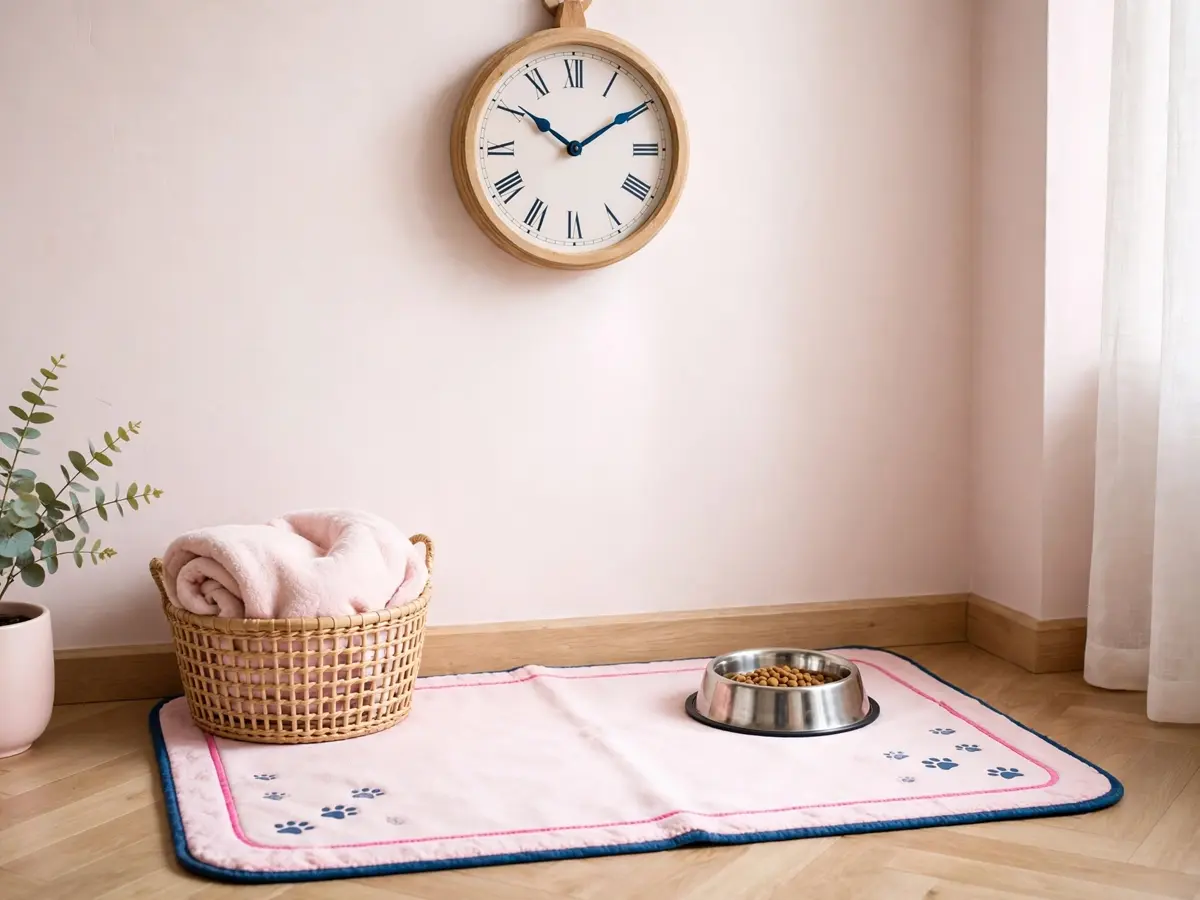
Feed at the same times daily. Pick times that already exist in your day — the coffee, the walk, the commute home — and hang the bowls on them, because a time you already keep is a time you will keep tomorrow. Four meals land like morning, midday, late afternoon, evening; three drop the late afternoon; two settle into breakfast and dinner.
- Spread the meals as evenly as the day allows, so no gap runs long enough to make a puppy frantic at the bowl.
- The last meal needs enough daylight left for a potty break and a settle before the crate — a full puppy at midnight is a schedule problem, not a puppy problem.
- Everyone in the house feeds from the same plan, so the puppy gets one day, not four.
- When the count drops, stretch the gaps first and shrink the count last, so the day reorganizes itself gently.
Water runs on a different clock
Food gets times; water does not. Fresh water stays out all day, and the water bowl gets washed daily. This is the rule people second-guess most, usually around housetraining, and the answer is to work the potty plan harder rather than the water bowl less — a thirsty puppy with no bowl learns nothing except where to look for the tap.
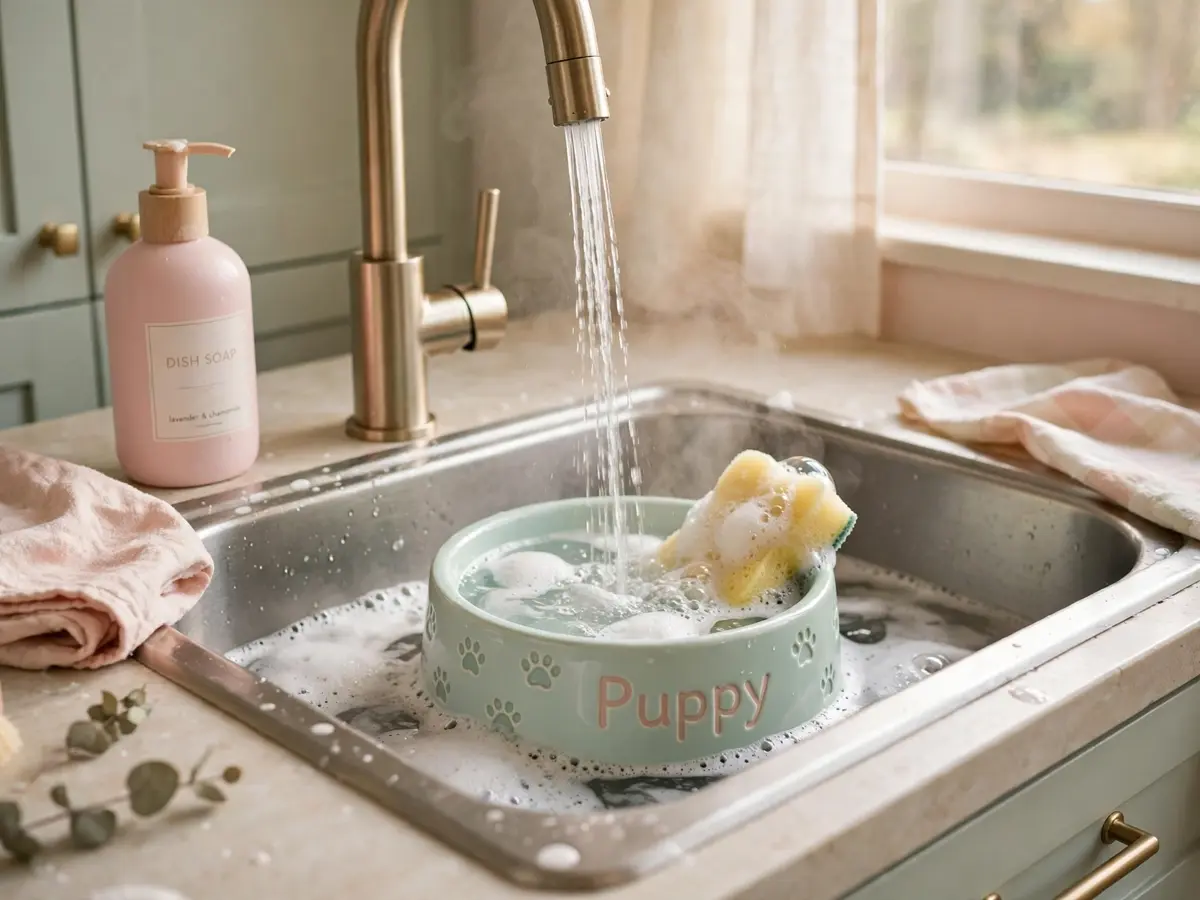
A daily wash matters because a water bowl collects a film fast, and most puppies will drink anyway. Sink, hot water, a scrub, a refill: sixty seconds that keep the bowl something you would drink from yourself. On warm days or after a big play session, refill more often and check the bowl before you leave the house rather than after.
The half-hour rule
Whatever is left in the bowl after 30 minutes goes away, so the puppy learns to eat at mealtimes. It sounds strict the first time you lift a half-eaten bowl, and it is the kindest thing in the routine. The next mealtime lands on a genuinely hungry puppy, the one after that lands harder, and within days most puppies eat when the bowl arrives instead of snacking across the hour.
Two cautions keep the rule honest. First, it teaches eating habits, not portion control — the amount in the bowl is a separate question, and body condition decides the portion, not how much is left in the bowl. Second, a skipped bowl is data. Most of the time it means the puppy was full, tired, or the kibble was boring that day. Two skipped bowls in a row, or a puppy that turns from a meal it usually finishes, is when the rule stops and the vet call starts.
What a skipped meal is telling you
One missed meal: write it down, hold the schedule, watch the next bowl. Two in a row: call your vet, because appetite is one of the few daily gauges you get with a puppy, and the whole point of measured meals is that the gauge reads something. In between those lines sit the ordinary explanations — a hot day, a longer nap, a growth week that ate the appetite instead of the kibble — and a notebook keeps them from turning into guesses.
Resist the two reflexes that make the data useless. The first is chasing the puppy with tastier toppings, which teaches that refusing a bowl upgrades dinner. The second is deciding a skipped meal is a portion problem and cutting everything, when the portion's real judge is the rib check, not one afternoon.
Training treats are part of the day's food
The meal count only holds if the meals stay the meals. When treats are for training, keep each one as small as possible and count it against the day's food — a puppy that earns a pocketful across an afternoon has already eaten one of its bowls' worth, and the evening bowl needs to know that.
For the puppy's first commands and how to keep the reward pieces tiny, see our basic puppy training commands with treat rewards. If you want the full picture of portions, weights and the bag-to-bowl math, start with the new puppy feeding page.
Field notes from the first year
A few habits make the whole system run smoother than the bag instructions alone. None of them cost money; all of them save a week of confusion later.
- Keep one notebook in the kitchen for the weekly weight, the meal the puppy skipped, and the day the count changed — it answers questions at the vet visit you cannot answer from memory.
- Same bowl, same mat, same spot. The routine is part of the meal, and puppies learn a place faster than a clock.
- Flat bowls for flat-faced puppies and a stand for tall ones cost little and make every meal more comfortable.
- Announce the meal the same way every time — one word is enough — and the puppy starts arriving before the bowl does.
The meal count at a glance
| Age | Meals | How the day feels |
|---|---|---|
| 6 to 12 weeks | Four | Short gaps, small bowls, a day that belongs to the puppy |
| 3 to 6 months | Three | The midday stretch opens up and naps get longer |
| 6 months and older | Two | Breakfast and dinner, like the rest of the house |
The ages are the usual window, and the puppy can run a few weeks either side. The pattern is what to trust: four, then three, then two.
Puppy meal count questions
Can I leave food out and let the puppy graze?
Measured meals beat food left down all day, because a puppy that eats whenever it wants is more likely to eat too much. A set bowl at a set time also tells you the moment an appetite changes, which a full dish never does.
My puppy skips one meal. Do I change the whole routine?
One skipped bowl is usually a blip, so hold the routine and watch the next meal. A puppy that skips two in a row, or turns away from a bowl it usually empties, is a phone call to your vet — that is a question for a professional, not a bigger scoop.
What if two mealtimes clash with my work day?
Feed at the same times daily, and let the schedule grow around the puppy rather than the other way round. Many families split the day so breakfast lands before work and dinner after, with the middle meals folded in by whoever is home.
Do treats count against the meals?
Yes. When treats are for training, keep each one as small as possible and count it against the day's food, so training stays training and the measured bowls stay the real meals.
When does a puppy move to two meals for good?
From 6 months two feedings a day is the steady count for most puppies, and it carries them into adulthood. Some families keep a lighter midday bowl through the first year, which is a habit worth clearing with your vet.
How long should a meal sit before I take it away?
Whatever is left in the bowl after 30 minutes goes away, so the puppy learns to eat at mealtimes. Half an hour is plenty for a hungry puppy, and it makes the next mealtime land the way it should.
Save these on Pinterest
Pin the count-by-age table for the week you bring a puppy home, and pair it with the first nights crate routine and the puppy growth chart so the bowls, the crate and the weight all live on one board. The full puppy training collection holds the rest of the first-year series.
For informational purposes, consult your vet.