 PawStyle Daily
Homemade Dog Treats & Meal Planning
High Value Treats for Puppy Training: The Pea Size Rule
A high value treat is the treat the dog works for. It is not the treat the dog gets for free, and it is not the treat the dog eats at dinner. It is the treat that earns the behavior: the one the dog will take over the distraction, the one the handler pulls out when the cue is new or the environment is hard. This page is about what makes a treat high value, the pea size rule that keeps the training moving, the daily treat budget that keeps the meals intact, and the upgrades a handler reaches for when the picky dog refuses the treat on the leash. The treat is the tool, the pea size is the cut, and the budget is the reason the cut matters.
By PawStyle Daily · Updated 22 November 2026
Good to know: smell and texture make the value · pea size keeps the rep short · count treats against the daily food · upgrade only after the distance is handled · for informational purposes, consult your vet.
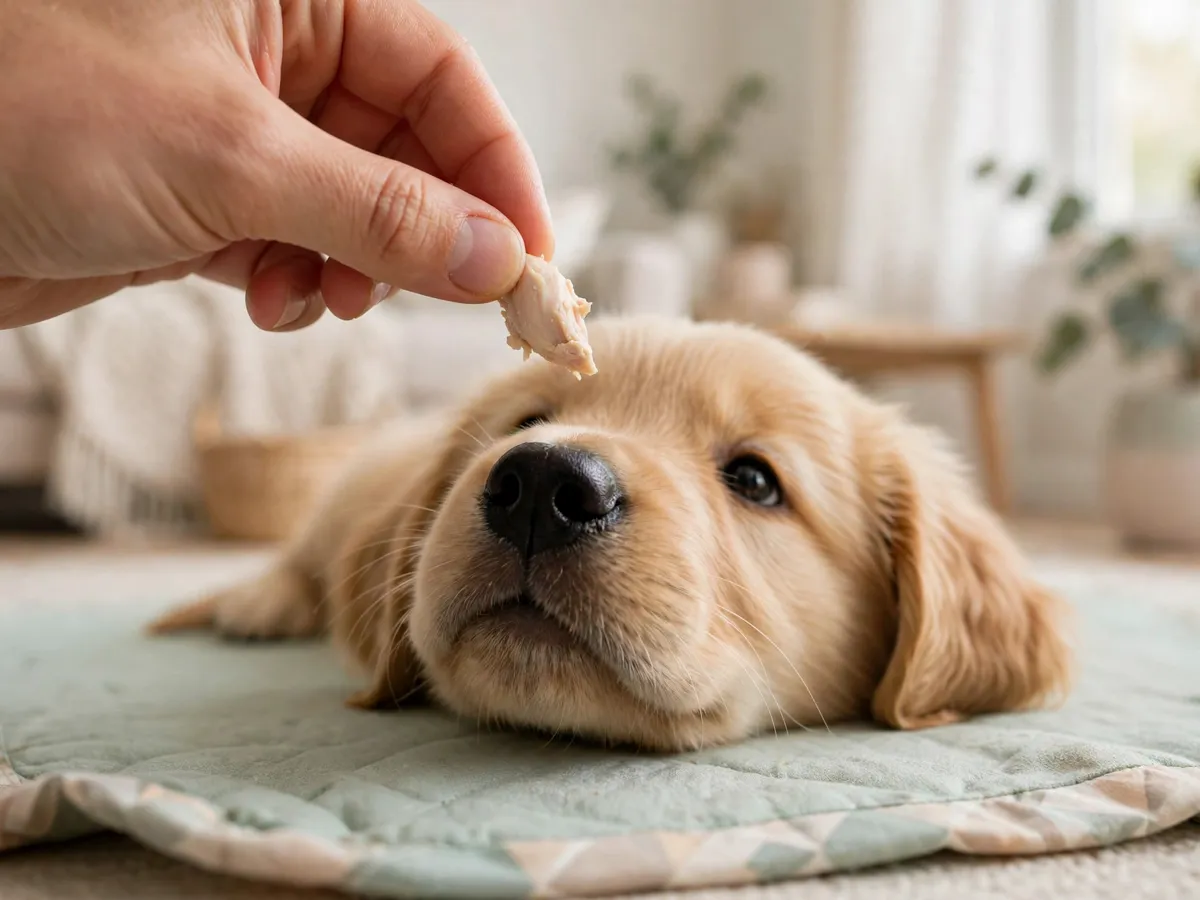
The Treat That Earns the Behavior
A high value treat earns the behavior the handler asks for. The dog sits because the sit earns the treat, the dog comes because the come earns the treat, and the dog holds the stay because the stay earns the treat. The treat is the reason the dog does the thing, and the value is the reason the treat is worth the doing. A low value treat earns the behavior in a quiet kitchen. A high value treat earns the same behavior on a street corner with a squirrel in view. The gap between those two settings is the gap the high value treat is built to cross.
Every section below assumes the handler has the basic cue in place first, because a high value treat given for a cue the dog does not know is a treat spent on confusion. The dog learns the cue in a quiet room with an everyday treat, and the high value treat comes out when the cue is solid and the environment is the next challenge. The pea size, the budget, and the upgrade ladder all assume the cue is already there.
What Makes a Treat High Value for a Dog
A high value treat is the one the dog chooses over everything else in the room. The smell is the first part: a treat that smells like meat, cheese, or fish reads as special to a dog that eats dry kibble at dinner. The texture is the second part: a soft, moist treat is one the dog can swallow without chewing, and the swallowing is what keeps the training moving. The taste is the third part, and it is the part the handler learns by watching the dog. A dog that takes the treat fast and looks for more has found a high value treat. A dog that takes the treat slow and looks away has not.
The handler tests three or four candidates in a quiet room and watches the dog's face. The one the dog lights up for is the one that goes in the pouch. Boiled chicken is the starting point for most dogs: a plain piece of breast, boiled with no salt and no seasoning, cut to pea size. A commercial soft treat is the second option, and a cheese cube is the third. The handler ranks them by the dog's face and keeps the ranking in mind, because the top of the ranking is the upgrade, not the everyday.
The high value treat is not the everyday treat. The everyday treat is the dry biscuit or the kibble piece the dog gets for a sit in the kitchen. The high value treat is the one the handler saves for the new cue, the outdoor session, or the moment the distraction is louder than the handler's voice. The everyday treat earns the easy behavior. The high value treat earns the hard one. The distinction matters because a dog that gets the high value treat for every sit is a dog that stops working for anything less, and the handler runs out of upgrades fast.
The cues the high value treat earns have their own page. The basic commands and treat rewards page covers the sit, the stay, the come, and the leave it that the high value treat is built for, and it is the page to read first if the cue is not yet in place.
The Pea Size Rule and the Treat Hand
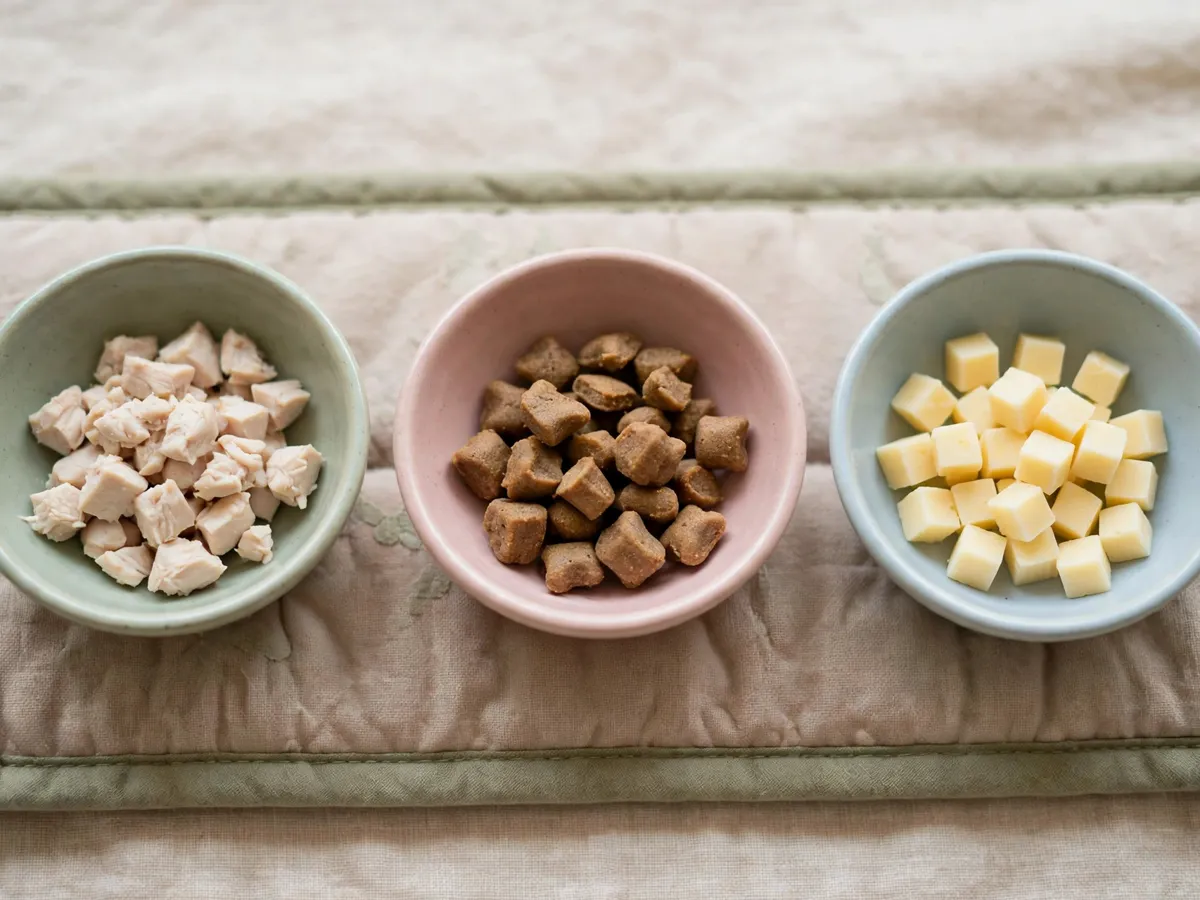
The pea size rule is the cut that keeps the training moving. A treat cut to pea size is a treat the dog swallows in one motion, and the swallow is the end of the rep. The handler marks, the dog gets the treat, the dog swallows, and the handler is ready for the next cue. A treat the dog chews is a treat that stops the session: the dog spends the chewing time on the treat instead of on the cue, the timing drifts, and the flow the training needs is gone. The pea size is the cut that keeps the rep short and the session tight.
The treat hand is the hand that delivers the pea sized piece. The handler holds the treats in one hand, the pouch on the same side as the dog, and the delivery is a flat palm or a pinch at nose height. The dog does not jump for the treat and the handler does not reach down past the dog's face. The hand opens, the dog takes, the hand closes. That is one rep, and the pea size is what makes the rep take a second instead of ten. A session of ten rewards is ten pea sized pieces, and the dog is back on the cue before the last swallow is done.
The pea size also keeps the daily treat count inside the budget. Ten full treats is a meal. Ten pea sized pieces is a snack. The cut is the reason the handler can run a session of ten or more rewards without the dog skipping dinner, and the cut is the reason the budget section below exists at all. Without the pea size, the budget is a number the handler blows through in one session.
The Daily Treat Budget for One Dog
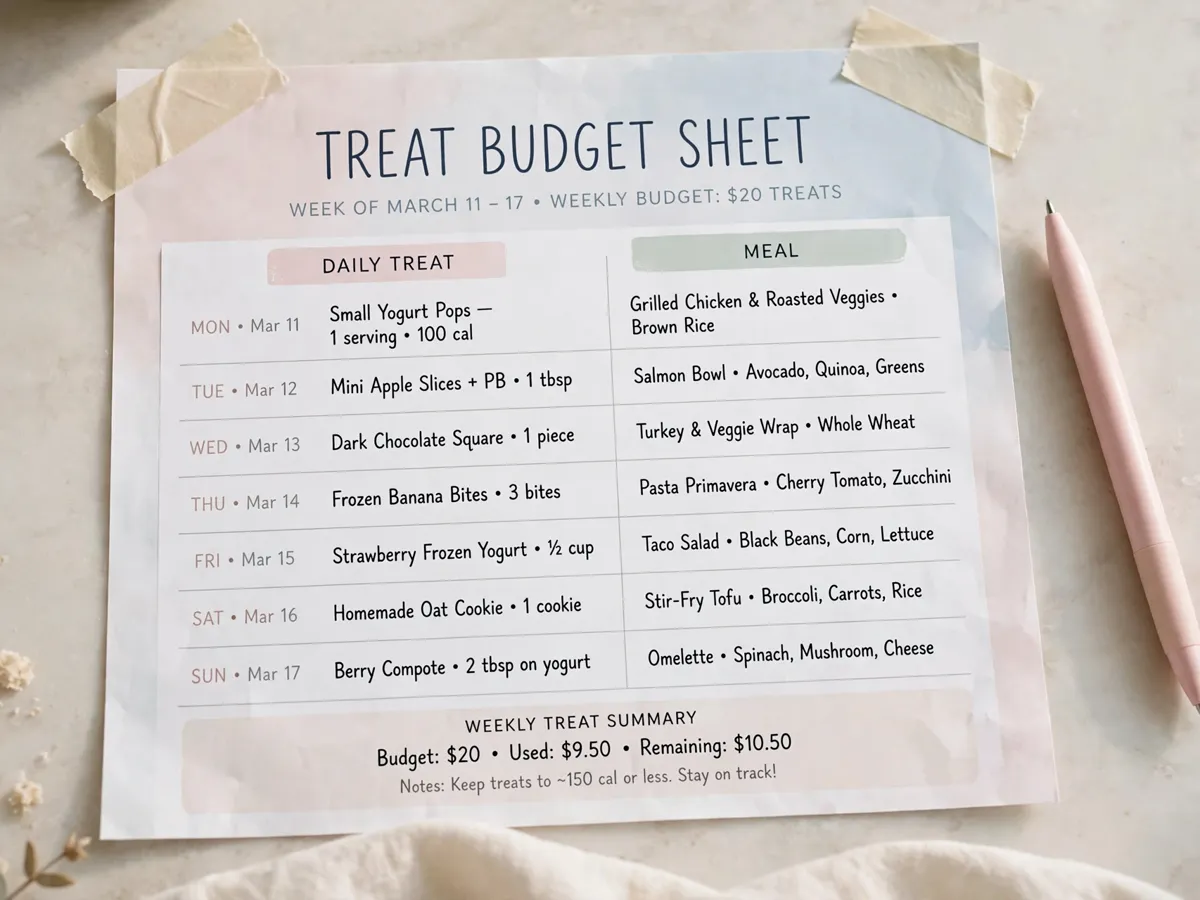
The daily treat budget is the reason the pea size matters. A dog that eats a full meal of treats is a dog that skips dinner, and a dog that skips dinner is a dog that trains worse, not better. The budget keeps the treats as a small part of the day and the meals as the main part. The handler counts the treats against the daily food, not on top of it, and the pea size is what makes the count add up to a snack instead of a meal.
The budget sheet is the printable that lives on the kitchen counter. It has a column for the daily treats and a column for the meals, and the handler fills in the treats as the day goes. The sheet is a kitchen tally: the treats in, the meals in, and the total at the bottom. The handler who writes down the treats is the handler who sees when the budget is gone, and the dog that has hit the budget gets praise for the rest of the day instead of food.
The substitution side of the budget has its own page. The treat ingredient substitutions page covers the swaps when the boiled chicken is gone, the soft treat is gone, or the cheese is gone, and it is the page to read before the second trip to the shop.
Upgrades for the Picky Dog on the Leash
The picky dog on the leash is the dog that refuses the treat the handler brought. The refusal is not about the treat in most cases. It is about the distance. A dog that is over the threshold on a walk is a dog that cannot eat, and the refusal is the first sign the distance is too close. The handler moves back from the trigger, lets the dog settle, and offers the treat again. A dog that takes the treat at the new distance tells the handler the distance was the issue, not the treat.
The upgrade is the second step. A dog that takes the treat at the new distance but loses interest fast is a dog that needs a higher value smell. The handler moves up the ladder: from the dry treat to the soft treat, from the soft treat to the boiled chicken, from the boiled chicken to the cheese. The upgrade is the treat the dog has not had in a while, and the novelty is part of the value. The handler does not use the top of the ladder every day, because a dog that gets the highest value treat for every session is a dog that runs out of upgrades.
The breed side of the treat picks has its own page. The training treat rewards page covers the breed specific picks for poodles and doodles, and the handler who trains a specific breed reads that page for the treats that match the dog.
The list of ingredients that never go in the pouch has its own page too. The toxic foods list for dogs page covers the foods that stay out of every treat bowl, and the handler who is testing a new treat checks that page first.
High value training treat questions
What makes a treat high value for a puppy in training?
Treats should stay at no more than five percent of a dog's daily calories, so keep the pieces small. A high value treat is the one the dog works for: a smell the dog loves, a texture the dog does not get at dinner, a taste that beats the distraction. For most puppies that is a pea sized piece of boiled chicken or a soft treat, cut to swallow whole.
How small should I cut a high value training treat?
Cut the treat to pea size, because the dog eats it in one swallow and the training keeps moving. A treat the dog chews is a treat that stops the cue, the timing, and the flow. The pea size rule also keeps the daily treat count inside the budget, so a session of ten rewards is ten pea sized pieces, not ten full treats.
What do I do if my puppy refuses the high value treat on a walk?
The dog that refuses the treat on a walk is over the threshold, and the treat is not the problem, the distance is. Move back from the trigger, let the dog settle, and offer the treat again. A dog that takes the treat at the new distance tells you the distance was the issue. Upgrade the treat to a higher value smell only after the distance is handled.
Save the Treat Budget Sheet
Pin the pea size rule and the budget sheet for the next training week. The Dog Food & Treats collection holds the substitution page and the toxic foods list that the treat pouch is built on.
Smell and texture make the value, pea size keeps the rep short, count treats against the daily food, and upgrade only after the distance is handled. For informational purposes, consult your vet.