 PawStyle Daily
Dog Food & Treats
Homemade Dog Food Toppers — Easy Bowls to Finish
A plain bowl of kibble gets eaten faster with one spoonful on it. This is the topper habit: the five mixes worth keeping on hand, the broth question answered at the shelf, the fish that needs a rinse, and the sealing and labelling routine that keeps a batch you cooked from turning into a mystery tub.
By PawStyle Daily · Updated 18 November 2026
Good to know: a spoon, not a scoop · broth decided at the shelf · date on every lid · for informational purposes, consult your vet.
What a topper actually is
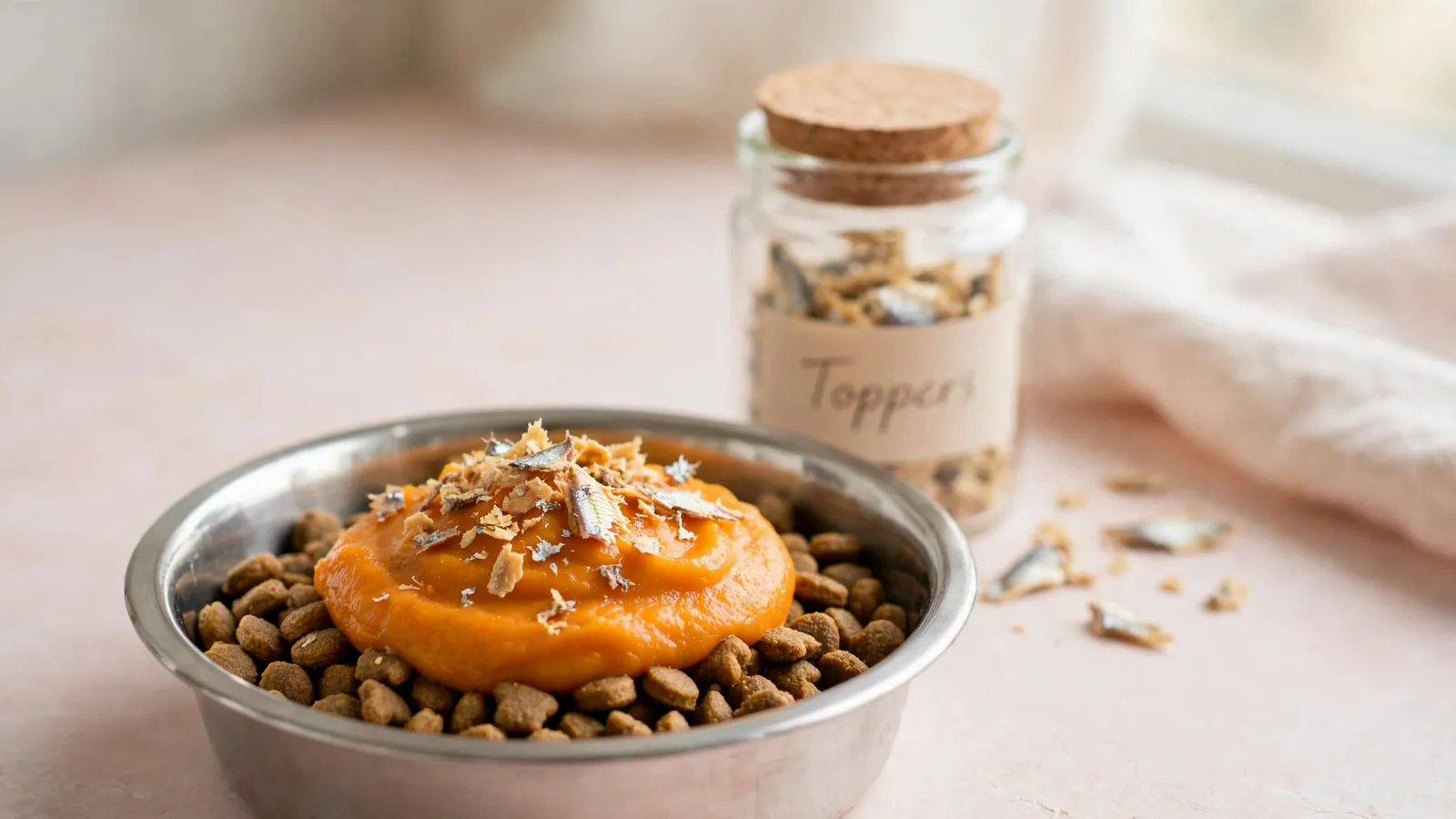
A topper is the spoonful that finishes a bowl. The base stays the complete food and the topper is the layer on it, and that order is the whole idea: a topper, a mix-in and a replacement meal are three different bowls, and this page is about the first one. It is also the cheapest upgrade a plain kibble gets — pumpkin from the can already in the cupboard, broth from the tray already in the freezer.
One boundary before the list: a topper is not an answer to a dog that has stopped eating. Appetite loss is a conversation for the vet and it comes before the pumpkin does. For informational purposes, consult your vet.
The five easy toppers
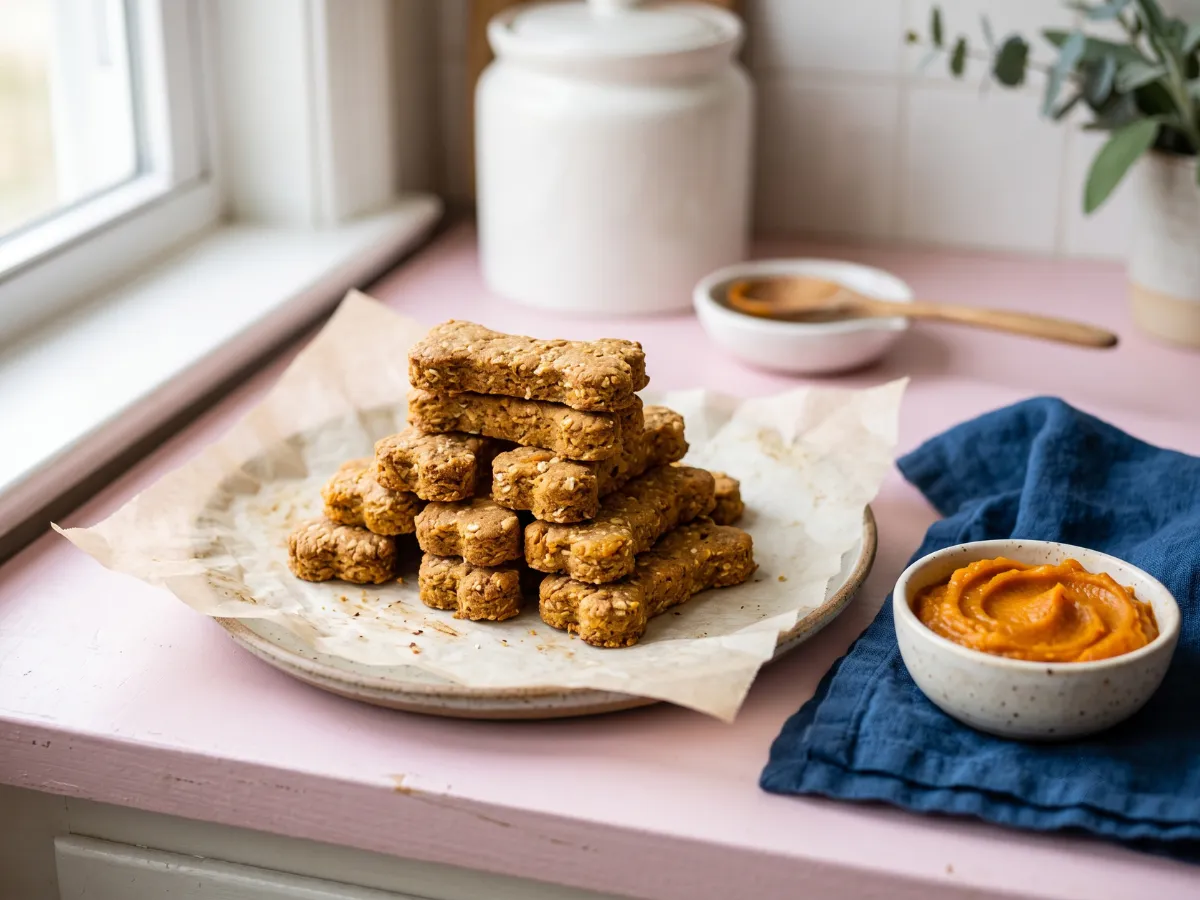
Plain canned pumpkin is first, because the can is usually already there. Two tablespoons (30 g) of canned pumpkin without salt is a 15-calorie treat. Stir it through the kibble rather than laying it on top, so the good layer cannot be eaten off and the rest left behind.
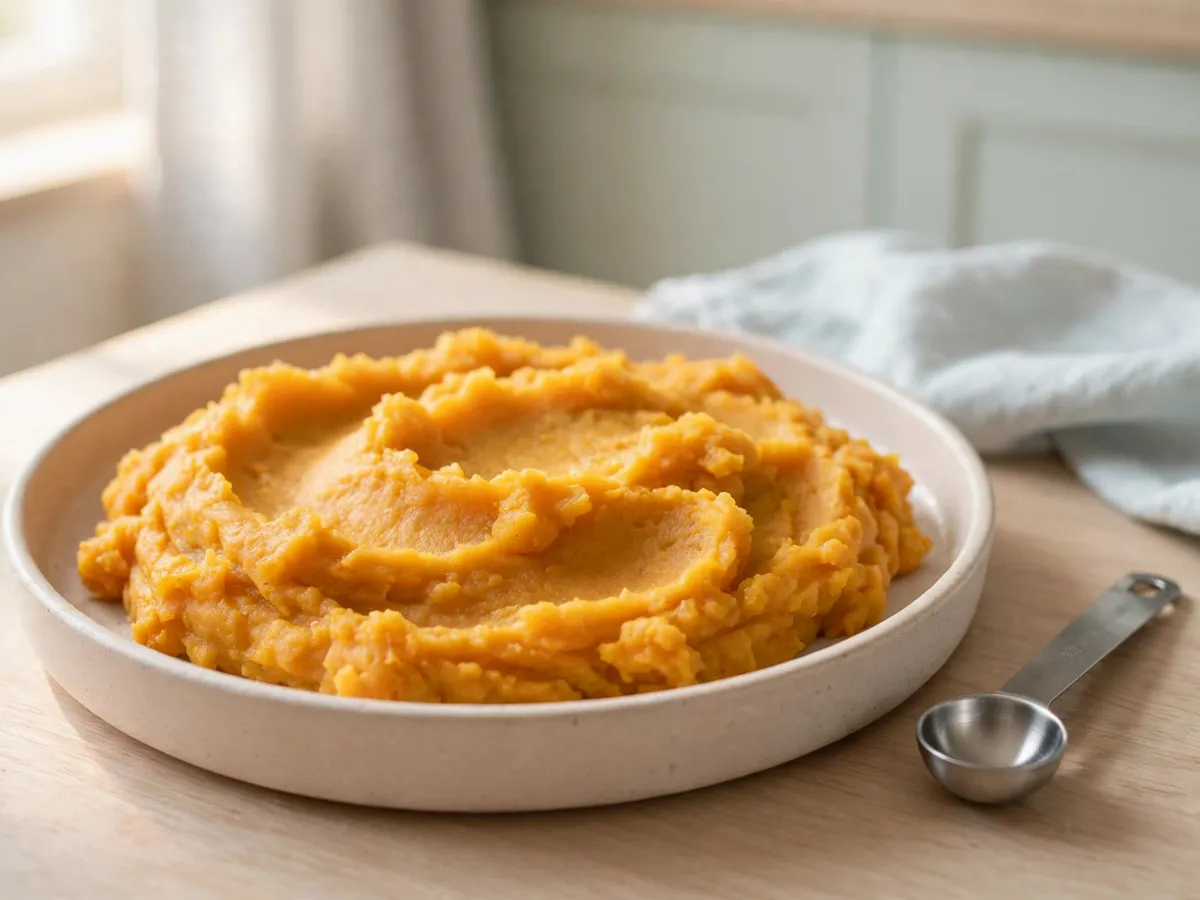
Cooked sweet potato is second: mashed, cooled, a thin layer across a dry bowl, kept in a sealed jar with the day on the lid. Warmed low-sodium broth cubes are third, and they get their own section below, because the carton decides more than the recipe does. Sardine flakes packed in water, rinsed, are fourth — the smell is most of the appeal and the rinse is most of the preparation. A spoon of plain yogurt rounds out the five: unsweetened and unflavoured, because a yogurt labelled vanilla is a dessert for a person.
Broth cubes
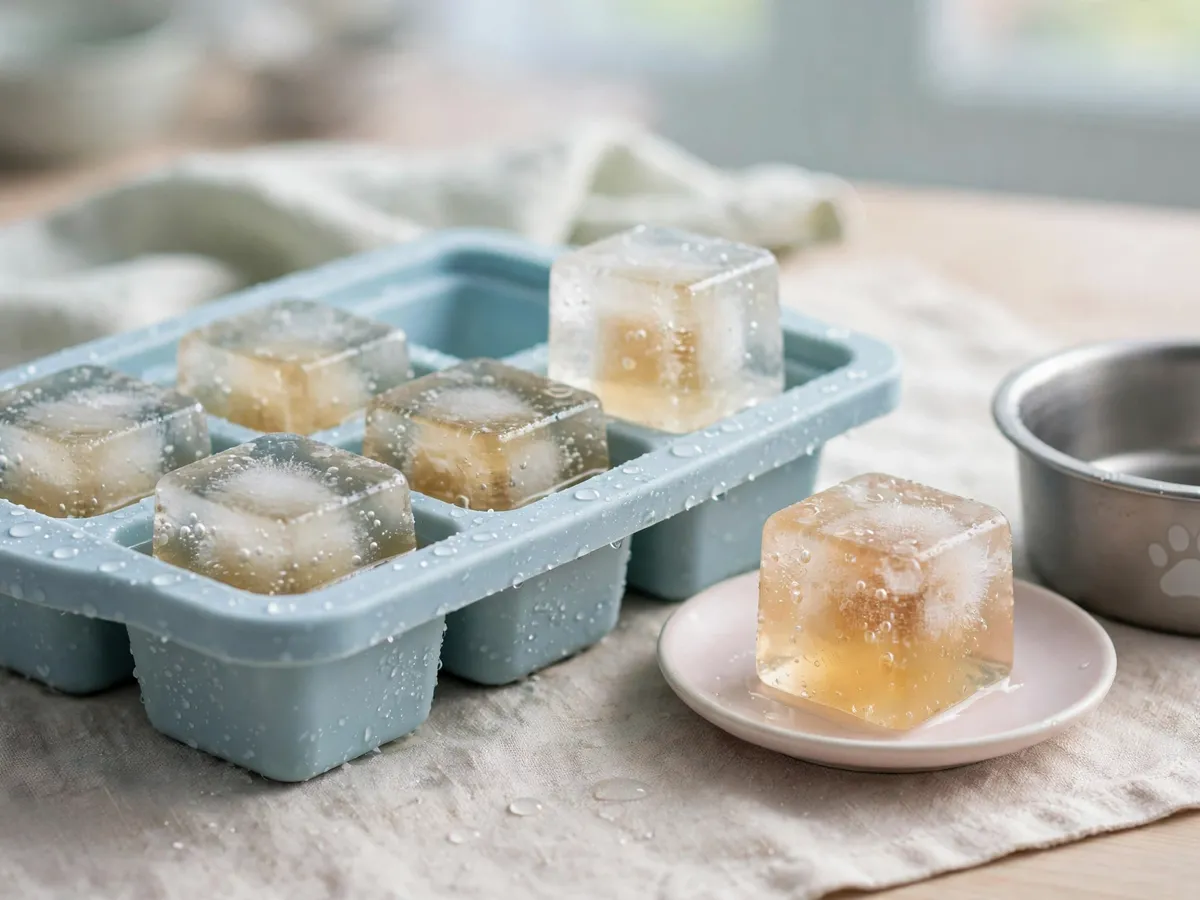
Freeze broth in an ice tray, drop one cube on the bowl, and move the tray to the fridge the night before so it thaws slowly instead of sitting in the bowl like an ice pack. The tray turns one pot into a run of single spoonfuls, which is the only form a topper should take.
The salt question is settled at the shelf: buy it without added salt, or make it at home with nothing in the pot but bones and water. Onion and garlic belong on the keep-out list as well, and they are the reason a soup-pot broth is not a dog-bowl broth whatever the carton says.
Sardine flakes and the rinse
Open the tin, drain it, rinse the flakes under the tap, then break them over the bowl with a fork. Buy them packed in water rather than oil or sauce. Start with less than looks generous and see how the dog treats the bowl that night. The smell is the point: it is why a spoon of sardine moves a stubborn dinner where pumpkin sometimes does not. It is also why the tin gets its own sealed corner of the fridge — keep it cold, and when you cannot remember the day it was opened, start fresh.
Sealing and labeling what you do not use
Every topper above is a cook-once-spoon-many habit, so the storage question is really about the batch, and the batch has one rule. Homemade dog food keeps about three days in the refrigerator and a month or two in the freezer, depending on how it’s sealed.
That rule is about the food you cooked yourself. A broth tray, an open sardine tin and a commercial bag with the seal broken carry the instructions printed on their own packaging, and those instructions are the authority for them.
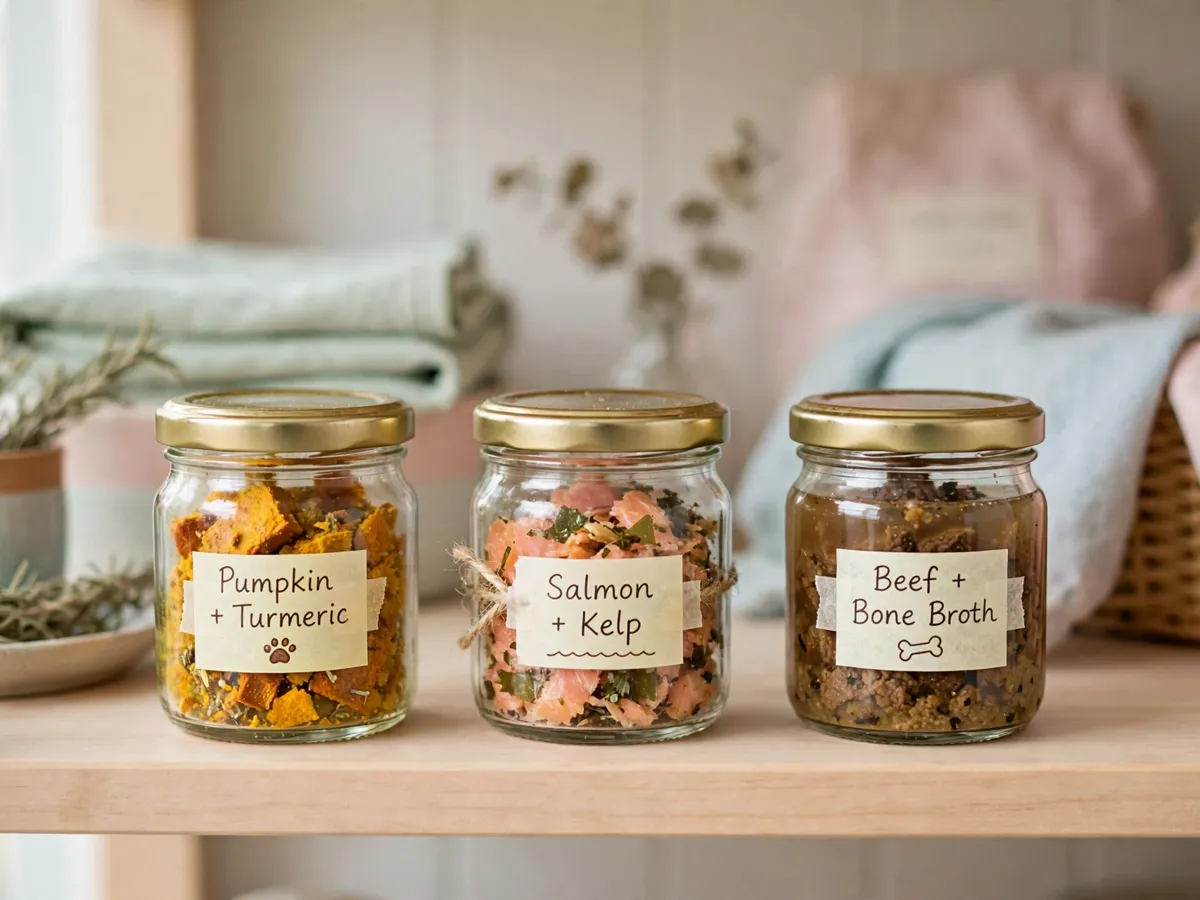
The labelling habit is two lines on every lid: what it is, and the day it was cooked. Front of the fridge rides now, back rides later. A tub marked only "dog food" answers nothing the next time it is opened, and a batch that smells sour or turns slimy is finished whatever the lid says.
Where each topper lives
| Topper | Keeps where | The lid says |
|---|---|---|
| Cooked pumpkin or sweet potato | Sealed jar, fridge shelf | What it is, and the day it was cooked |
| Broth cubes | Tray in the freezer, bagged once hard | Broth, and the day the pot was made |
| Sardine flakes | Sealed, cold, short ride | Flaked, and the day the tin was opened |
| A batch you cooked | Fridge front for now, freezer back for later | Base and the day it was cooked |
Sealed, cold, labelled — and when the day is forgotten, start fresh.
Where a topper stops being a meal
A topper is the extra layer, and the honest line sits exactly there. Most of a pet’s nutrition should still come from their regular diet, with treats as the extra bit.
No spoonful is balanced. A bowl that has drifted until the spoonful is most of it has stopped being a topper habit and become a home-cooked diet project, and that project belongs to a nutritionist rather than to a page of spoonfuls. The homemade food safety and storage page covers the handling before anything gets that far.
Toppers by dog, not by trend
An older dog on soft food takes a topper as moisture first and interest second: a spoon stirred through a softened dinner rather than stacked on a dry pile. The soft-food page for older dogs is the deeper guide for that bowl. A puppy is the opposite read — small teeth, small portions, and a bowl that has to stay a puppy food; the new-puppy feeding page owns that one, and a topper here only makes sense as the same small spoon, given rarely.
A dog that gulps gets the other problem solved: the topper frozen into a cube and given as something to work at, or stirred through a slow feeder so the dinner cannot be inhaled in one pass. A dog on a training-heavy week spends from the same pool as the bowl, so the pouch and the dinner have to be counted together rather than one after the other.
Three toppers to skip
Onion and garlic in any form, powder included, never ride on a dog bowl, because a topper inherits whatever was in the pan. Anything sweetened with the same sweetener that hides in peanut butter stays out of the bowl too. And a table scrap dressed for a human dinner is a third category: seasoned, salted, and intended for somebody else. The full keep-out list, ingredient by ingredient, has its own page, and it is worth reading once rather than half-remembering at the counter.
Topper questions
How much topper goes on a bowl?
A spoon, not a scoop. The bowl underneath stays the main event, and the topper is the layer on it. The day's training treats and the topper ride on the same allowance together, not one each.
Can a puppy have toppers?
A puppy eats a complete puppy food first, and anything extra rides on top of that. The new-puppy feeding page on this site walks the bowl through the small months.
Will a topper make a picky dog refuse kibble?
Nobody can promise either way, and a dog that has learned to wait for the good layer is a real pattern. Mixing the spoon through the kibble instead of stacking it on top keeps the bowl one dish, and a strike that lasts is a vet question.
Can I warm a topper up?
Warm a splash of water through it and test the mix against your wrist — if it feels like nothing, it is right. Nothing goes in the microwave for the dog's bowl.
Does a broth cube count as homemade dog food?
No. The storage window on this page is about the batch you cooked yourself. A broth tray, an opened tin of sardines or a cut-open commercial bag keeps on its own terms: sealed, cold, and start fresh when you cannot remember the day.
Finish the bowl
Pumpkin, broth trays and sealed jars
Silicone trays that freeze a pot into single spoonfuls, sealed glass jars for the fridge shelf, and date labels for every lid — the topper kit in one list.
See the topper kit →As an Amazon Associate we earn from qualifying purchases.
Save these on Pinterest
Pin the five toppers and keep the lid habit beside them. The Dog Food collection holds the rest of the homemade series, including the batch cooking page for the pot behind a week of spoonfuls. A spoon on top of a complete bowl, sealed and dated — and the honest line tells you where it stops. For informational purposes, consult your vet.
The honest line above stays where it is, and the feeding the dog that says no page picks up the bowl question after the vet has cleared it.