 PawStyle Daily
Homemade Dog Treats & Meal Planning
Foods Dogs Can't Eat: Safe List
This is the list I keep on my fridge: a printable-style pause before I open a jar, set out a snack, or start mixing a homemade batch. The page is deliberately easy to scan. Keep the never-list together, keep the snack contrast nearby, and keep the emergency line visible. For informational purposes, consult your vet.
By PawStyle Daily · Updated 16 November 2026
Fridge copy · People-food reference · For informational purposes, consult your vet.
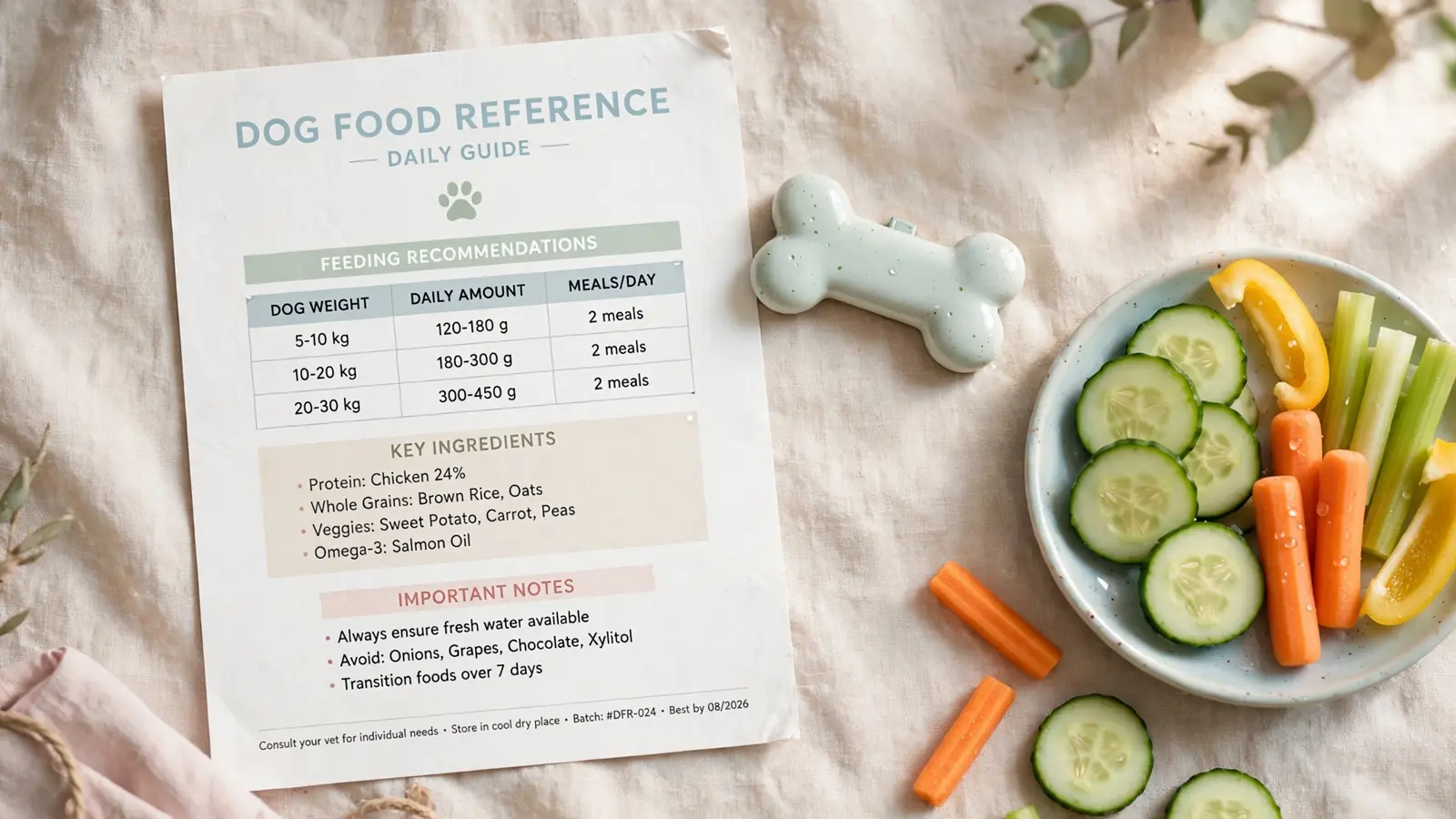
The fridge copy I want in one glance
A reference only earns its little square of fridge space when the important words stay readable. I leave the full sentence beside each ingredient name instead of shrinking it into a warning label. If you print this page, give yourself room to underline, circle, or add a note from your own vet. Keep the original wording intact as your starting point, then ask about anything that belongs to your dog's specific situation.
The list I keep on my fridge begins with the items most likely to show up in a kitchen conversation: a chocolate treat, a savory bit from a plate, a bowl of fruit, or dough left on the counter. The point of this reference is to make a pause feel simple. Read the ingredient name, find the matching line, and use the emergency note if the concern is xylitol.
Dog food fridge reference
| Never-list reminder | Snack-side contrast |
|---|---|
| Chocolate is toxic to dogs, so no chocolate, cocoa or coffee ever goes into a treat. | Small pieces of carrot, broccoli, green beans or cooked pumpkin make easy snacks. |
| Onion, garlic and chives belong to the allium family and can damage red blood cells, so they stay out of every homemade batch. | Small amounts of plain canned pureed pumpkin (never pumpkin pie filling) can help bind loose stool, because pumpkin is high in soluble fiber. |
| Grapes and raisins can lead to kidney damage in dogs, so neither one goes into a bowl or a treat. | Keep this column beside the full list, not in place of a conversation with your vet. |
For informational purposes, consult your vet. Keep the full wording visible when you copy this reference.
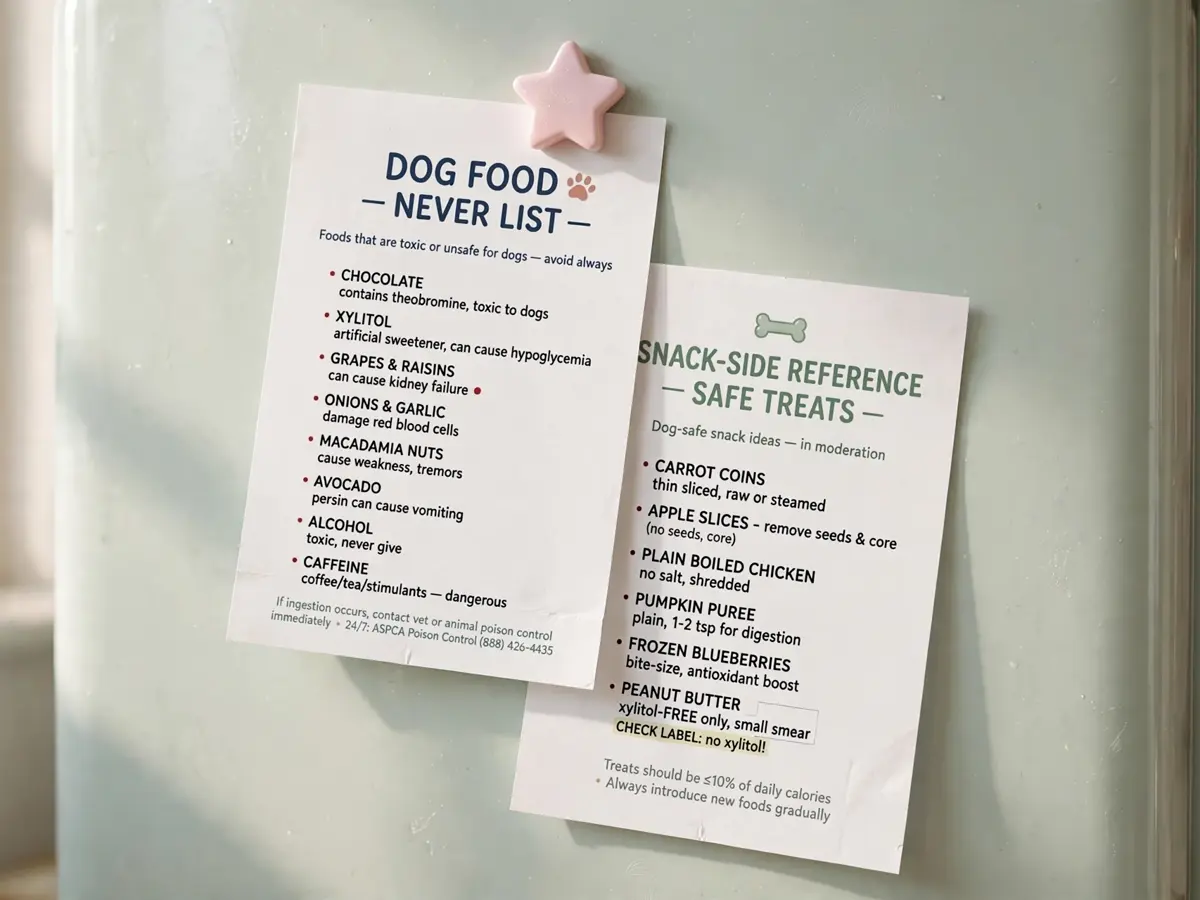
The never-list: keep the whole sentence
This is the part I would print in the largest type. Read it as a reference, not as a reason to guess about an exposure. The registered wording is the useful detail, so let it stay whole when you make a fridge copy or share the page with someone who shares dog-feeding duties.
Chocolate, cocoa and coffee
Chocolate is toxic to dogs, so no chocolate, cocoa or coffee ever goes into a treat.
Onion, garlic and chives
Onion, garlic and chives belong to the allium family and can damage red blood cells, so they stay out of every homemade batch.
Grapes and raisins
Grapes and raisins can lead to kidney damage in dogs, so neither one goes into a bowl or a treat.
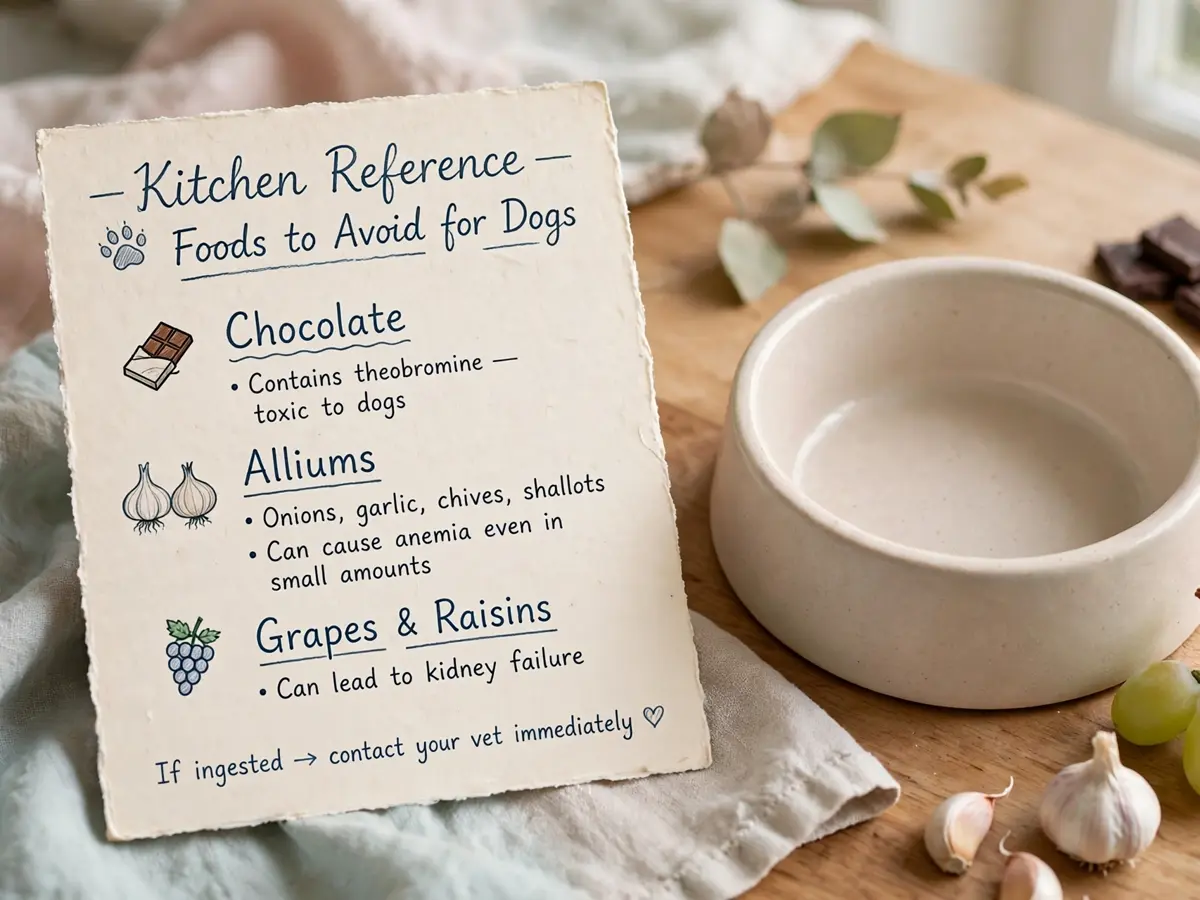
Keep these lines beside the first ones
The next lines belong on the same sheet. When a kitchen gets busy, separate notes can be hard to find; one continuous list is easier to revisit. I leave a little white space next to this block for a personal reminder, but the source wording stays unchanged.
Raw dough
Raw dough can swell in the stomach and bloat, and the yeast in it turns into alcohol as it sits there.
Xylitol
Xylitol is a sweetener that can drop a dog's blood sugar and hurt the liver, so it never goes into a homemade treat.
If a product is labeled sugar-free, check its ingredient list for xylitol before it goes anywhere near a dog.
Macadamia nuts
Macadamia nuts can leave a dog weak, wobbly and running a fever, so they stay out of the treat jar.
Raw meat, raw eggs and cooked bones
Raw meat and raw eggs can carry salmonella and E. coli, and cooked bones can block a gut and need surgery.
The snack-side contrast
I keep a contrast column on the same page because a reference is easier to use when it offers a next thing to read. This is not a complete menu or a substitute for a conversation about your dog. It is a short, plain list to hold beside the never-list.
Small pieces of carrot, broccoli, green beans or cooked pumpkin make easy snacks.
Small amounts of plain canned pureed pumpkin (never pumpkin pie filling) can help bind loose stool, because pumpkin is high in soluble fiber. For informational purposes, consult your vet.
If a snack idea leads you into a recipe, keep the recipe page close to the list instead of relying on memory. The pumpkin recipe page is a companion read, and the no-bake peanut butter treats page keeps its own label check with the method. For informational purposes, consult your vet.
The ASPCA pointer
The ASPCA poison control center publishes a list of the people foods to avoid feeding your pets.
Open the ASPCA people-foods list. Keep that source beside this fridge page when you want to read beyond the items shown here. The printed sheet is a starting point for a conversation, not a replacement for your vet's guidance.
The emergency line I keep visible
If a product is labeled sugar-free, check its ingredient list for xylitol before it goes anywhere near a dog.
If your dog may have eaten a product containing xylitol, call your vet, an emergency clinic, or animal poison control right away.
I print these two lines together and leave space below them for the contact details I want close at hand. Copy the words as written. For informational purposes, consult your vet.
Print it without losing the useful part
If you turn the page into a fridge note, keep the ingredient name and the whole claim on the same line. Leave the emergency note separate enough to find quickly. Use a pen to add questions for your vet, not to rewrite the source wording into a shorter rule. The printed version should still sound like the page it came from.
When someone else is helping with a snack, hand them the same reference instead of giving a rushed summary from memory. Ask them to read the ingredient label, check the never-list, and use the emergency line for a possible xylitol exposure. The page stays simple when every person starts from the same written words.
For a treat recipe, pair the list with a portion reminder. Treats should stay at no more than five percent of a dog's daily calories, so keep the pieces small. Most of a pet's nutrition should still come from their regular diet, with treats as the extra bit. For informational purposes, consult your vet.
You can keep the page beside the weekly dog meal prep planner. If your next question is about the jar itself, read the peanut butter label-check guide. For informational purposes, consult your vet.
Make a copy for the people who share the kitchen
A fridge reference works best when everyone reads the same version. Keep the printed page in one familiar place, and use the full lines rather than a shortened note that leaves out what the sentence is about. If another person prepares a snack or a homemade batch, point them to the matching line on the page instead of passing along a memory of it.
Leave a blank margin beside the never-list. Use that space for a question you want to bring to your vet, or a reminder about where your household keeps the package labels. Keep personal notes visually separate from the registered reference wording so it is easy to tell which words came from the guide and which ones were added for your own routine. For informational purposes, consult your vet.
- Chocolate is toxic to dogs, so no chocolate, cocoa or coffee ever goes into a treat.
- If a product is labeled sugar-free, check its ingredient list for xylitol before it goes anywhere near a dog.
- If your dog may have eaten a product containing xylitol, call your vet, an emergency clinic, or animal poison control right away.
Before you share the sheet, check that its title is visible, the whole sentence for each item remains together, and the emergency line is not hidden beneath another note. If you make a smaller kitchen copy, keep a full version nearby for the complete wording. Do not turn the short format into a new rule or add an ingredient decision that is not on the page. The note is a reading aid; a question about your own dog still belongs in a conversation with your vet. For informational purposes, consult your vet.
This page can sit beside a shopping list, but it does not need to become a complicated tracking system. A date, a product label you want to ask about, and a clear question are enough to start your own note. Keep that note separate from the claims on this page. If a possible xylitol exposure is the reason for opening the reference, use the emergency line above rather than spending time editing or reformatting the printable. Keep the original source wording intact when you come back to the page later.
Questions about the dog food fridge list
Which foods belong on the fridge list?
Chocolate is toxic to dogs, so no chocolate, cocoa or coffee ever goes into a treat. Onion, garlic and chives belong to the allium family and can damage red blood cells, so they stay out of every homemade batch. Grapes and raisins can lead to kidney damage in dogs, so neither one goes into a bowl or a treat.
What should I do if a sugar-free product may have been eaten?
If a product is labeled sugar-free, check its ingredient list for xylitol before it goes anywhere near a dog. If your dog may have eaten a product containing xylitol, call your vet, an emergency clinic, or animal poison control right away.
What can I put in the snack column instead?
Small pieces of carrot, broccoli, green beans or cooked pumpkin make easy snacks. Small amounts of plain canned pureed pumpkin (never pumpkin pie filling) can help bind loose stool, because pumpkin is high in soluble fiber. For informational purposes, consult your vet.
Where can I check a longer people-food list?
The ASPCA poison control center publishes a list of the people foods to avoid feeding your pets. Open the ASPCA people-foods list from the page and keep the source with your printed reference.