 PawStyle Daily
Homemade Dog Treats & Meal Planning
Homemade Dog Food: Safety & Storage
The safest homemade-food routine is the boring one: one clean batch day, one set of dated containers, and one plan for what is a topper versus what is meant to be a full diet. Cook it, cool it, portion it, label it and put it away before the kitchen turns into a guessing game. This guide keeps the storage side clear, then puts the nutritionist check in the place it belongs: before a home-prepared recipe becomes the whole bowl.
By PawStyle Daily · Updated 17 November 2026
Good to know: cook fully · label every portion · fridge about three days · for informational purposes, consult your vet.
Start with the job of the food
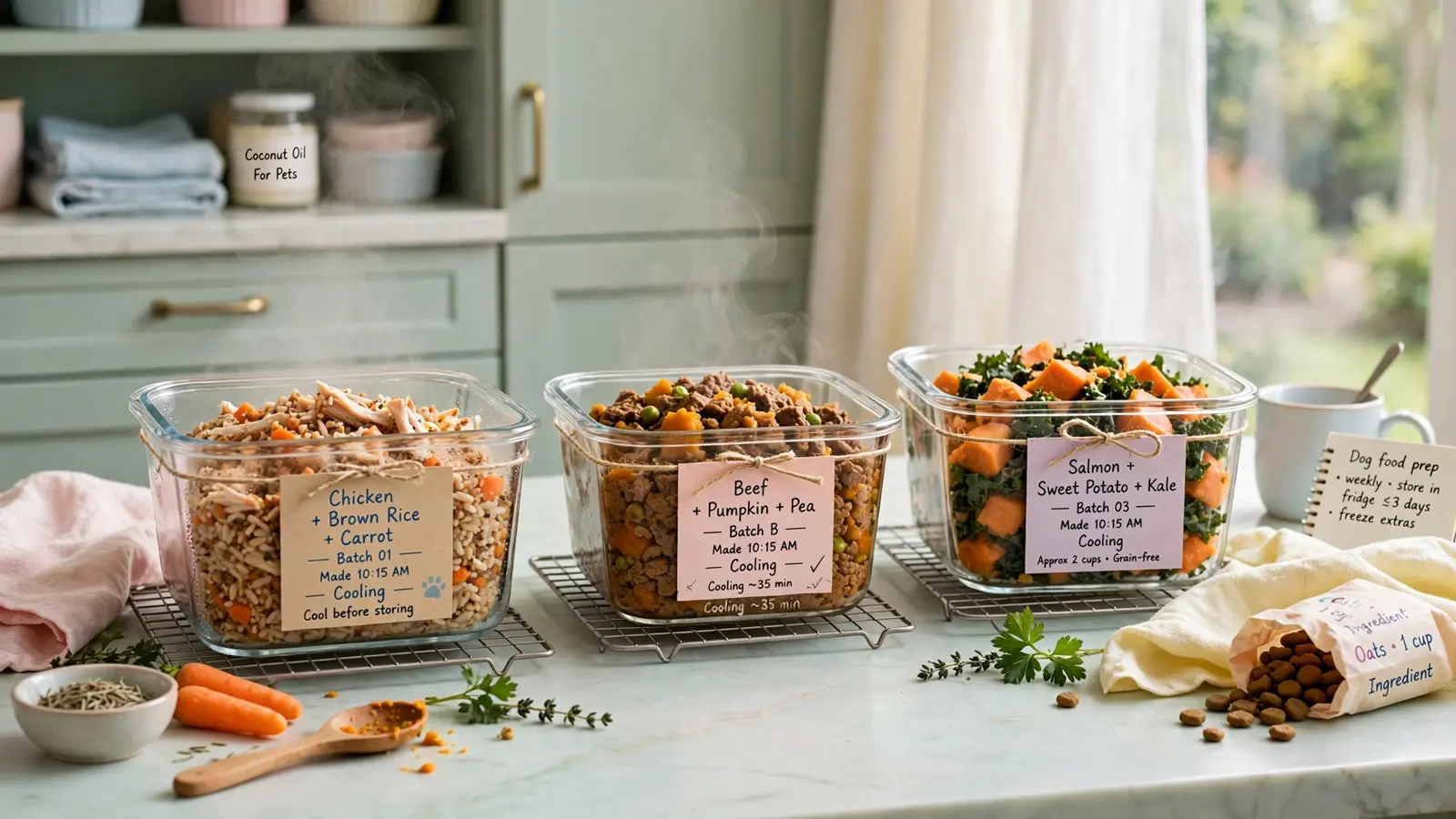
Before buying ingredients, write one sentence at the top of the recipe: “This is a topper” or “This is the dog's full diet.” The first sentence describes a small addition to the regular bowl. The second describes every meal, every day, and needs a nutrition plan rather than a pretty recipe card.
The majority of homemade pet-food recipes published in books and online, even those written by veterinarians, do not provide complete and balanced nutrition. That is why a recipe can look sensible and still not be the right full bowl for a particular dog. Keep the recipe and the storage plan together, but do not let a storage success stand in for a nutrition review.
The clean-cook batch flow
- Clear the counter: one cutting board, one knife, one large pot and clean containers. Put the dog's bowl away until the batch is finished.
- Cook the recipe fully: follow the registered recipe you chose, and keep raw ingredients separate from the finished food.
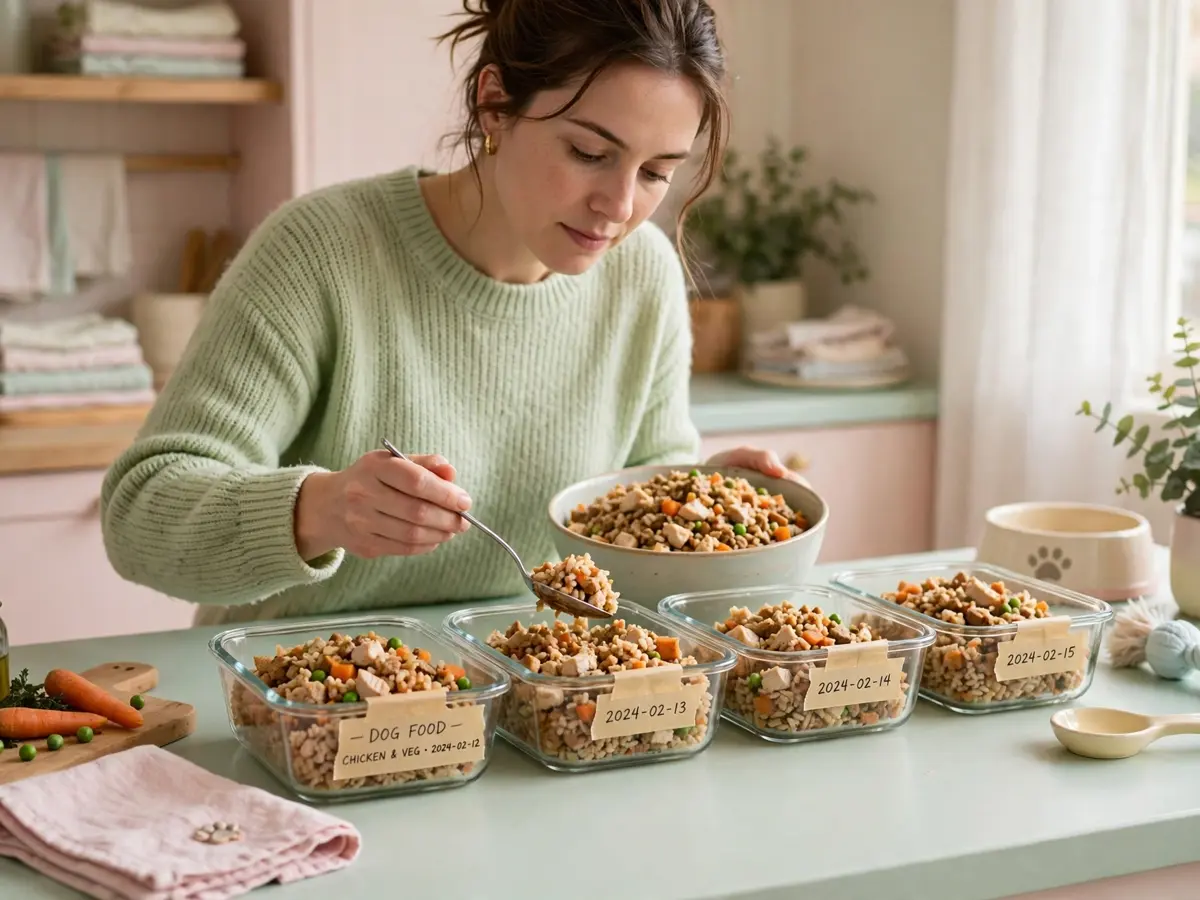
- Cool before closing: spread the batch into a shallow dish or several portions so steam can leave before the lids go on.
- Portion: use the same scoop for every container. Consistent containers make the next meal a simple grab, not a new measurement exercise.
- Label: write the recipe name, cook date, portion and fridge/freezer destination on every lid.
Raw meat and raw eggs can carry salmonella and E. coli, and cooked bones can block a gut and need surgery. This batch flow stays fully cooked and boneless; it does not turn a raw recipe into a safe one by adding a label at the end.
Fridge versus freezer
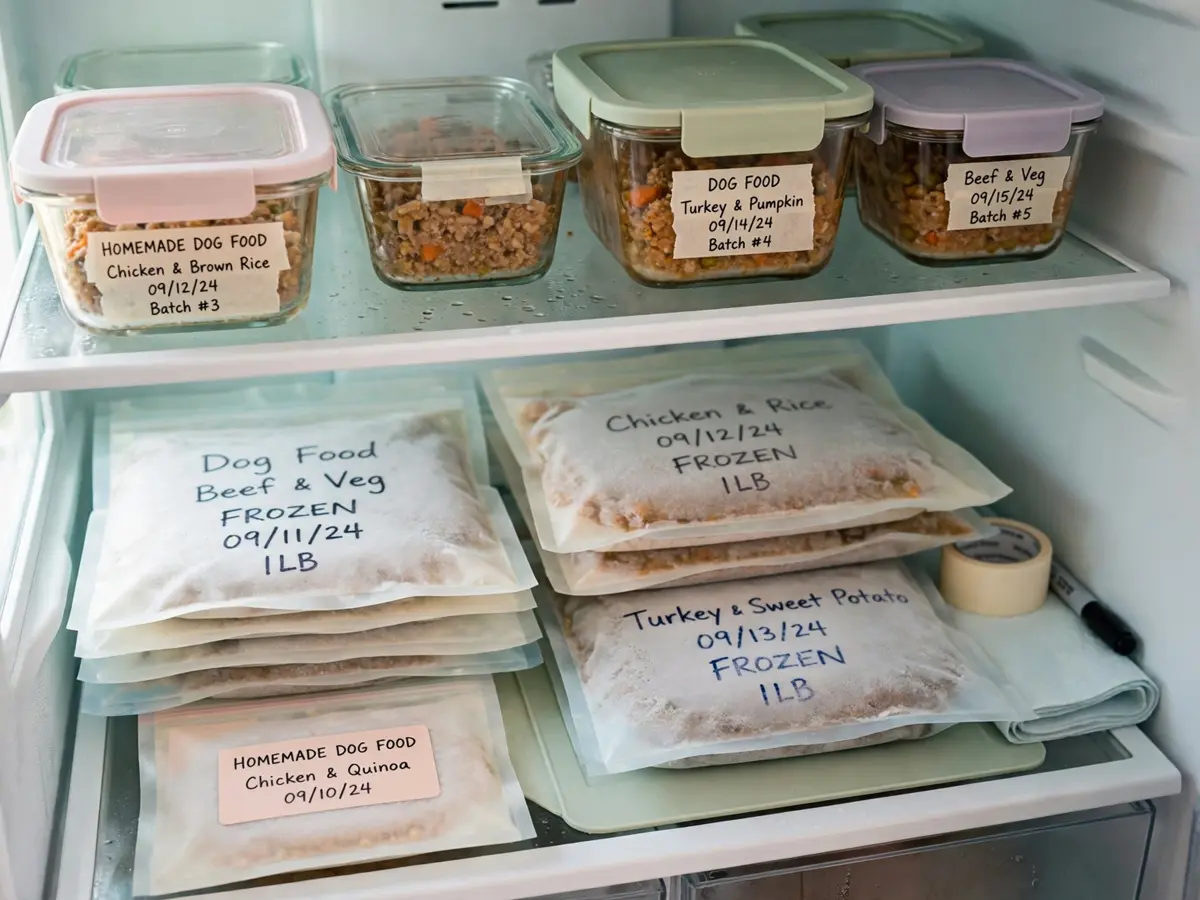
Homemade dog food keeps about three days in the refrigerator and a month or two in the freezer, depending on how it's sealed. Treat that as a planning window, not a reason to push a mystery container past its label. The container date is the answer when the fridge is full and everyone asks, “When did we make this?”
How each portion is packed and labeled
| Destination | How to pack it | Label it |
|---|---|---|
| Refrigerator | Small sealed containers, one or two meals each | Cook date + use-by day + portion |
| Freezer | Flat freezer bags or leakproof containers with room for expansion | Cook date + recipe + portion + thaw note |
| Thawing | Move one portion to the refrigerator before the next day | Write the thaw date on the lid |
| Serving | Scoop from the labeled portion, close it and return the rest | Keep the original label with the food |
A month or two in the freezer depends on how the food is sealed. If the seal is broken or the date is missing, ask your vet or discard the unknown portion.
The label that saves the week
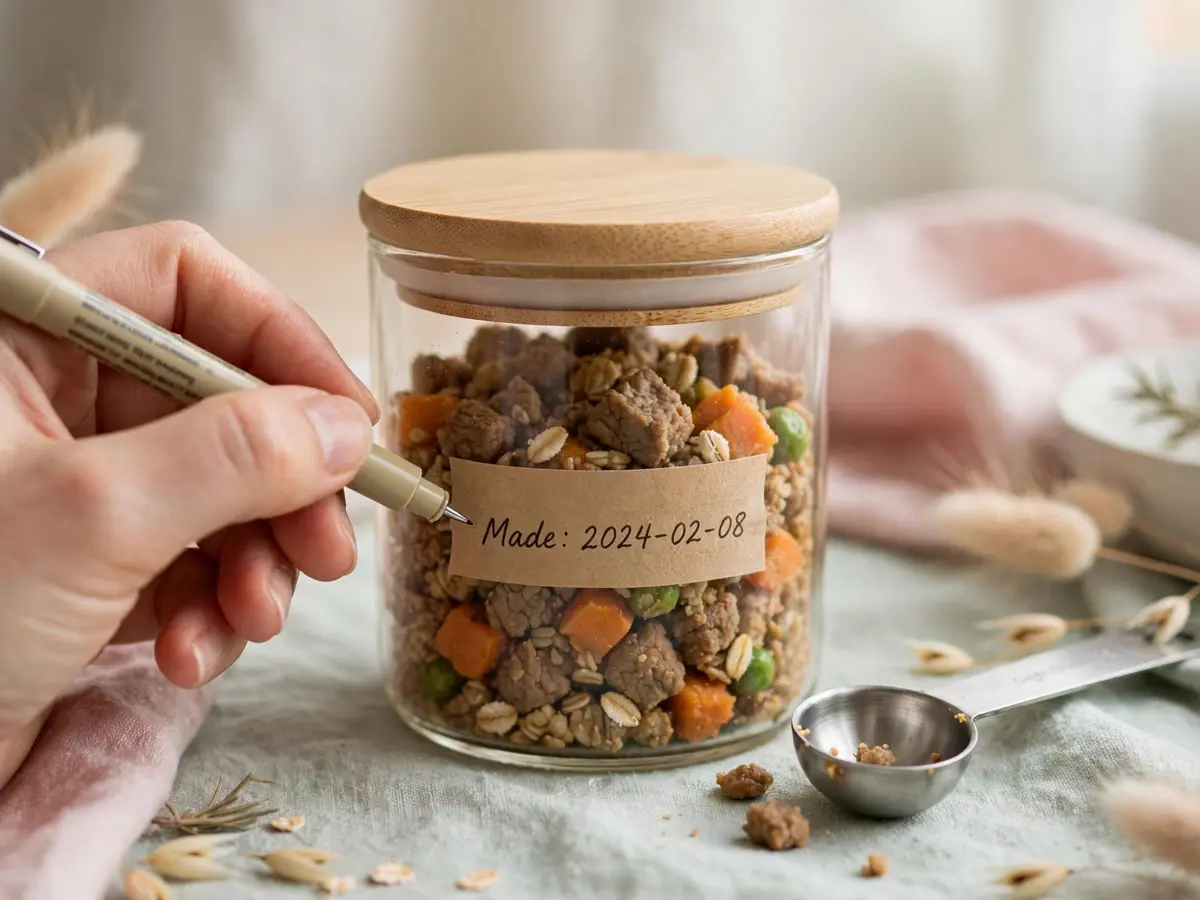
A good label answers five questions without opening the lid: what is it, when was it cooked, how much is one portion, is it for the fridge or freezer, and is it a topper or a full-diet recipe? Use painter's tape and a marker so the note survives a freezer drawer and peels off cleanly later.
- Recipe: turkey and rice, chicken topper or the name on your recipe card.
- Cooked: the date the batch finished cooking, not the shopping date.
- Portion: one scoop, one container or a weight you can repeat.
- Destination: fridge or freezer, plus the planned use-by day.
- Role: topper or full diet — the word answers the tired evening question.
Put the nutritionist check before the batch
For pet owners who prefer to feed home-prepared diets, a consult with a board-certified veterinary nutritionist is recommended. Bring the exact recipe, brand names, ingredient amounts, portion size, the dog's age and the chart from the last vet visit. The goal is a plan you can cook and store consistently, not a meal that only works on the day the photo is taken.
If your plan is a topper, say that clearly in the appointment. If it is intended as the full bowl, say that too. The same container can hold either one, but the nutritional job is not the same.
Three pages to keep beside this one
Use the storage system with a recipe you already understand. Theturkey and rice bowls page is the batch-day starting point; the crockpot chicken topper page suits a hands-off cooking afternoon; and the foods dogs can't eat list belongs on the fridge before any new ingredient joins the bowl.
Homemade dog food storage questions
How long does homemade dog food keep in the fridge?
Homemade dog food keeps about three days in the refrigerator and a month or two in the freezer, depending on how it's sealed. Label every container with the cook date and the planned last day instead of trusting memory.
Should homemade food be a full diet or a topper?
That decision belongs in a vet conversation. The majority of homemade pet-food recipes published in books and online, even those written by veterinarians, do not provide complete and balanced nutrition. A topper plan and a full-diet plan are different jobs, so write down which one you mean before you batch-cook.
Do I need a veterinary nutritionist for homemade food?
For pet owners who prefer to feed home-prepared diets, a consult with a board-certified veterinary nutritionist is recommended. Bring the recipe, the ingredients, the portion size and the dog's current food to that conversation.
Can I use raw meat, raw eggs or cooked bones?
Raw meat and raw eggs can carry salmonella and E. coli, and cooked bones can block a gut and need surgery. This page uses a fully cooked, boneless batch flow, and any change from that flow deserves a vet conversation first.
What is the easiest way to portion a batch?
Cool the batch, line up identical containers, divide the food while it is still in one bowl, and label every container before it goes into the fridge or freezer. Flat freezer bags save space; small containers make the next meal easy to see.
Cook once, label everything
Save this page for batch day: the food gets cooked, cooled, portioned and labeled before the counter is cleared. For the rest of the recipe and treat collection, visit homemade dog treats and meal planning.
Homemade dog food keeps about three days in the refrigerator and a month or two in the freezer, depending on how it's sealed. For informational purposes, consult your vet.
Home cooking is one road to the same bowl, and the a raw option without the chopping page reads the store-bought road.