 PawStyle Daily
Homemade Dog Treats & Meal Planning
Soft Food for Senior Dogs: Moist Meals and Easy Chews
An older dog does not always refuse dinner. Sometimes it eats a little less of it, a little more slowly, and leaves the hard pieces at the bottom. Softening the meal and splitting it into smaller bowls is the gentlest change in the kitchen, and it costs almost nothing.
By PawStyle Daily · Updated 18 November 2026
Good to know: warm, never hot · shallow bowl, non-slip mat · water close and clean · for informational purposes, consult your vet.
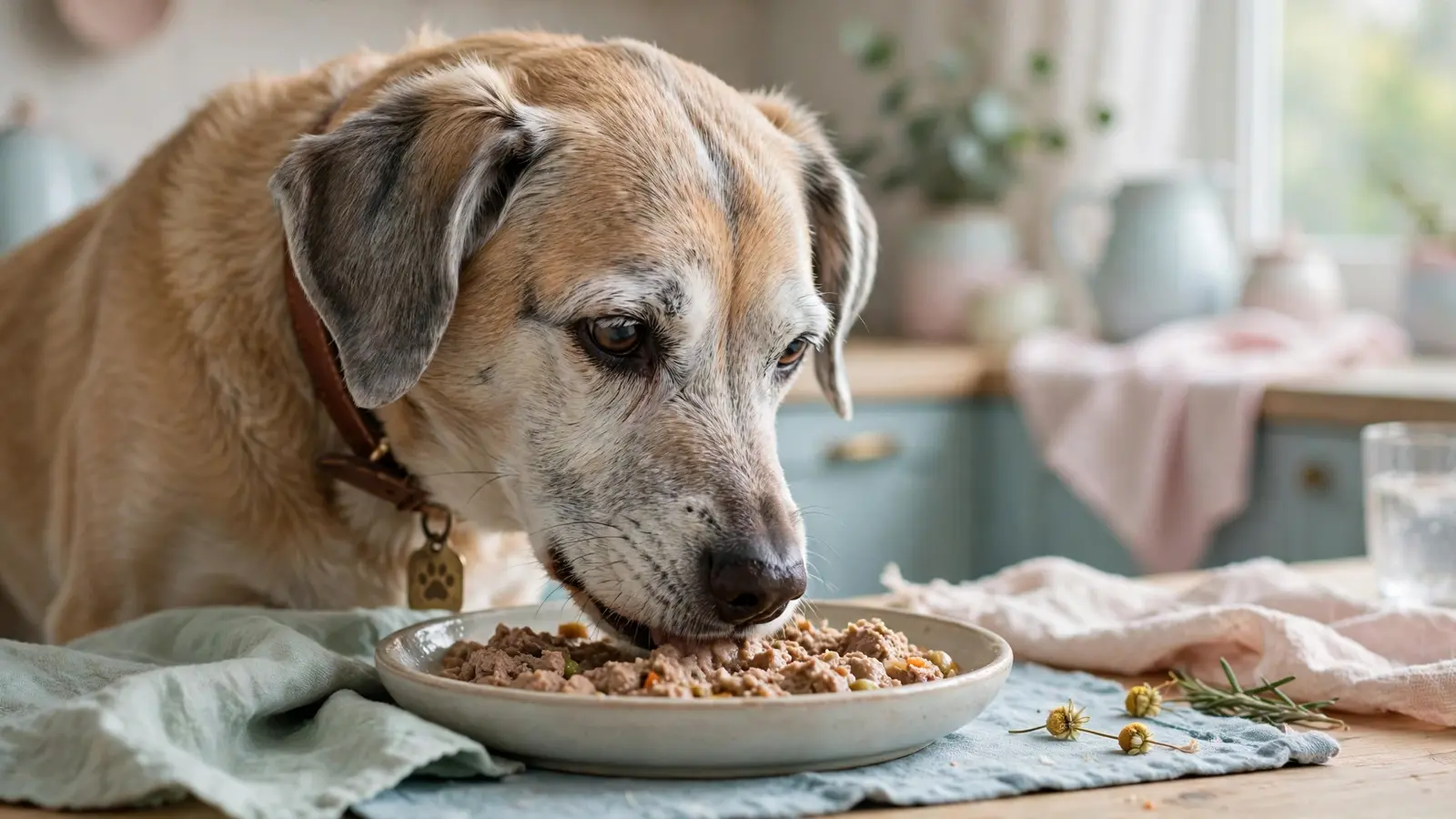
Older teeth, smaller appetite
Teeth wear down, gums get tender, and a dog that once cleared a bowl starts chewing on one side and leaving the rest. Watch how the dog eats, not only how much: dropped kibble, a head tilt, a bowl that stays half full at the end of the day.
A soft meal is not a lesser meal. It is the same food with more water in it, served in a way that asks less of the mouth, and a senior dog usually says thank you by finishing the bowl.
Warming and softening without cooking twice
Warm water poured over kibble is the simplest soft meal there is. Let it stand for a few minutes until the pieces give when you press one with a spoon, and test the temperature on your wrist before the bowl goes down.
Unsalted broth works the same way and adds a smell that gets an older nose interested. No salt and no seasoning, and nothing from the stock cube shelf: plain broth or the water from boiled chicken is enough.
Warm, not hot. A bowl that steams hard is a bowl that burns a nose, and an older dog will not always pull back in time. If the bowl is too warm for your wrist, it is too warm for the dog.
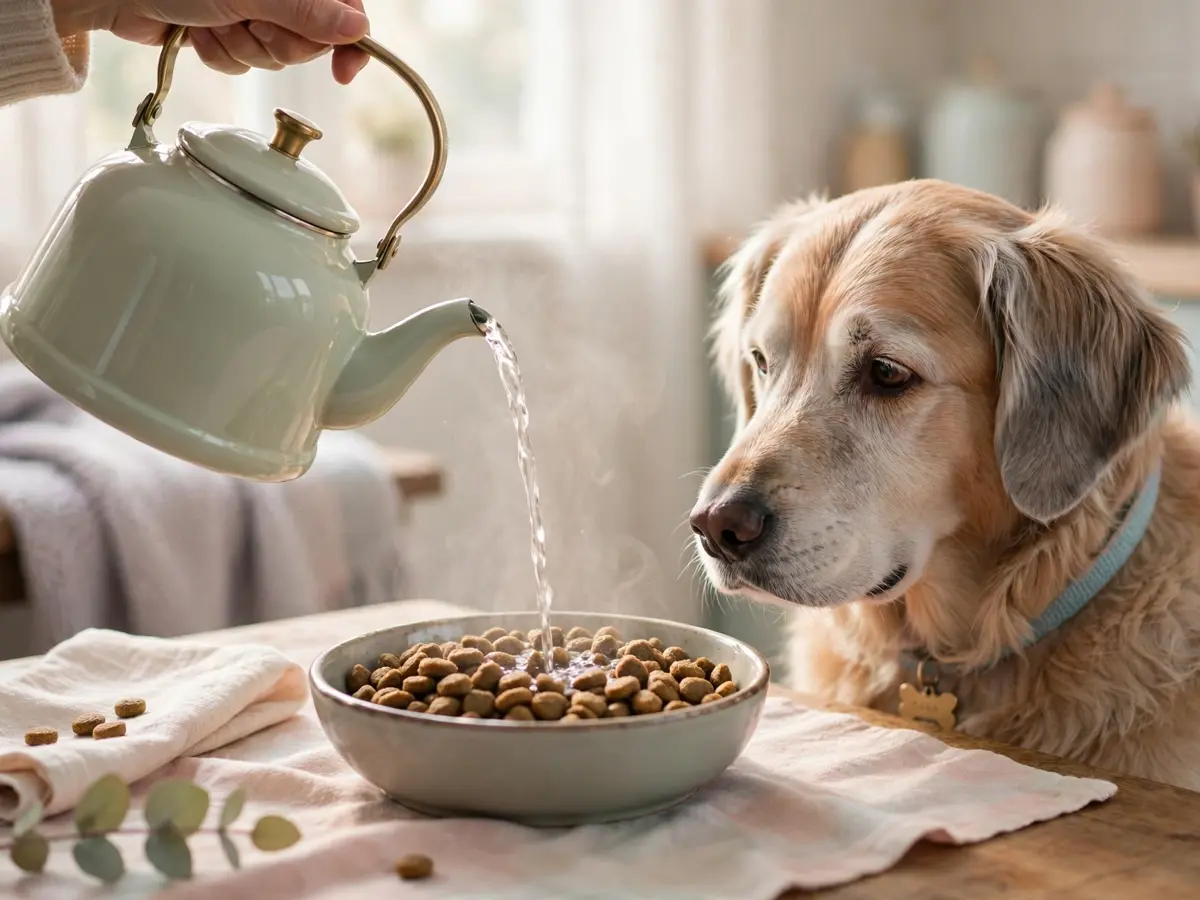
Smaller bowls, more often
If the bowl comes back half full, try the same day’s food in three smaller bowls instead of two. The total stays the same and only the rhythm changes, and a smaller bowl is easier to finish, which makes the day look better to everyone.
Feed at the same times daily. A senior that knows when the bowl arrives asks for it, and an appetite that shows up on schedule is easier to read than one that appears at random.
Keep the last bowl of the day early enough that the dog is not lying down on a full stomach. A short sniff around the block afterwards is a good end to the day for both of you.
The bowl itself
A shallow ceramic bowl is easier than a deep one, because the nose does not have to go all the way to the bottom to reach the last of the meal. A non-slip mat underneath keeps the bowl where the dog left it, and a heavy base means a wobbly jaw cannot tip it over.
Wash the bowl after every meal and keep a second one on the shelf, so a slow eater is never waiting on the sink. Two bowls also let you serve the smaller meals without washing up between them.
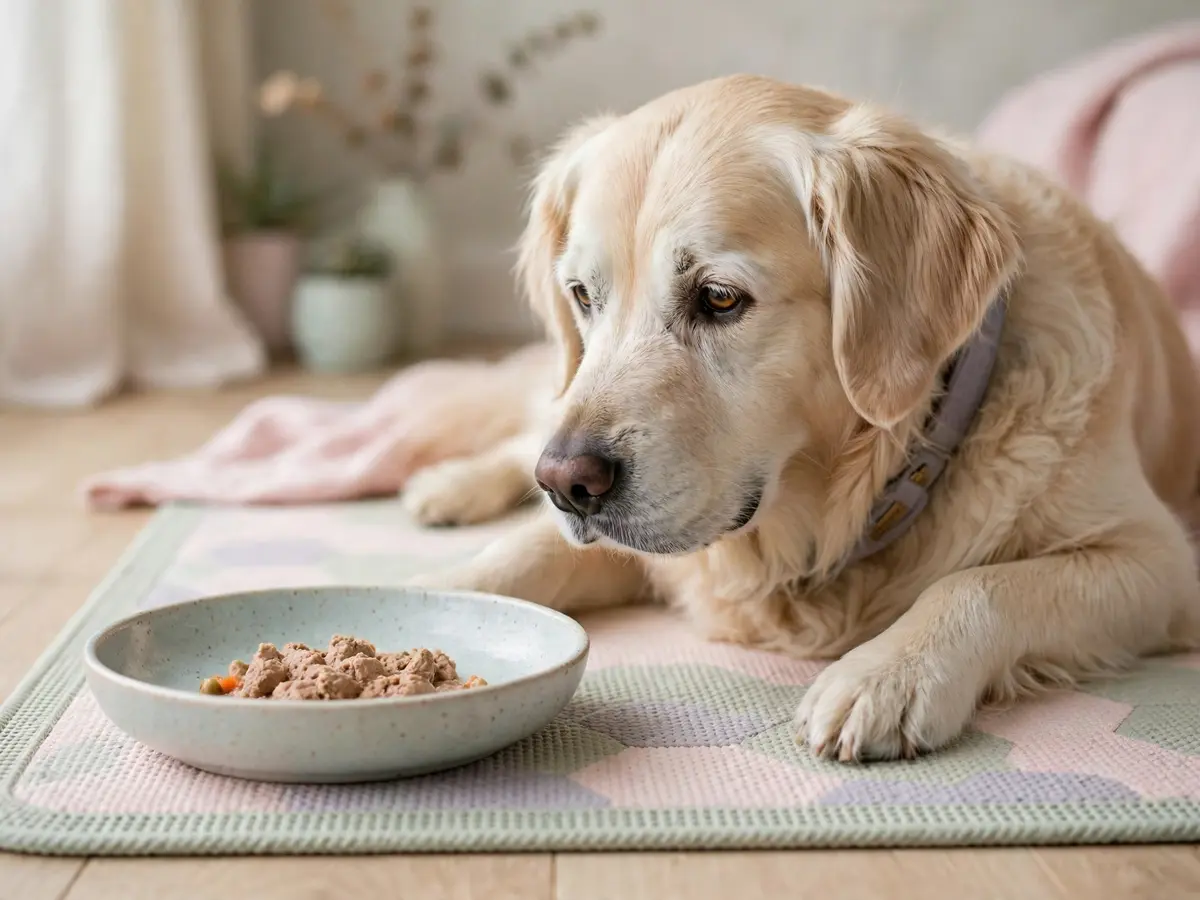
Water close and clean
Fresh water stays out all day, and the water bowl gets washed daily. Put a second bowl in the room where the dog sleeps, so a stiff older body does not have to cross the flat for a drink in the middle of the night.
Watch the water bowl as closely as the food bowl. A senior that suddenly drinks much more, or stops drinking, is a question for your vet rather than a puzzle for the internet.
The weekly weigh-in and the hand check
Senior care keeps one habit from puppyhood: Weigh the puppy weekly and write the numbers down. A page with a date and a number per week shows a slow drift that a hand on the ribs can miss, and that page is the record your vet will ask for.
The hands-on check pairs with the scale. Look for a waistline that curves in behind the rib cage, a tucked tummy, and ribs you can feel but not see. On a fluffy senior, hands tell you more than eyes do, and a weekly rhythm catches a change before the collar does.
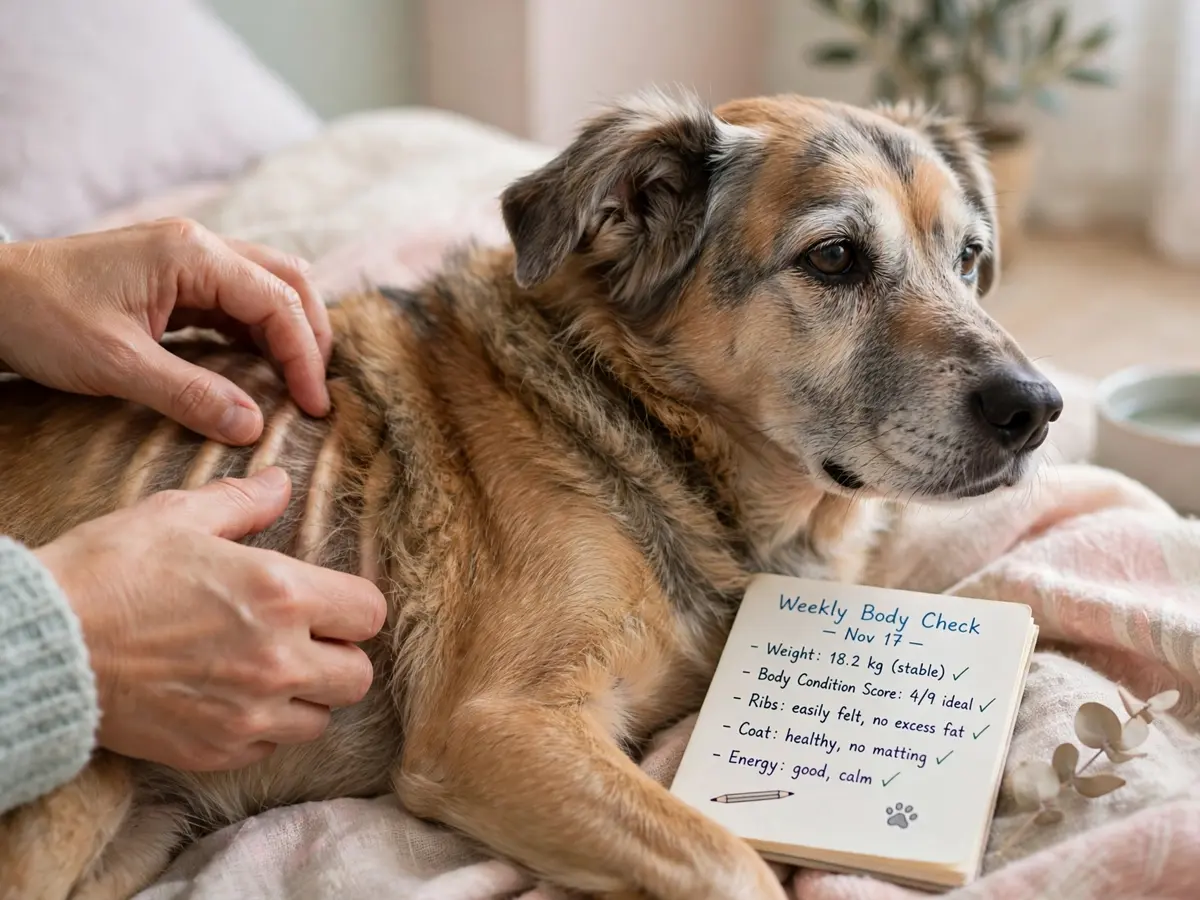
A softer day, bowl by bowl
| Moment | What goes in the bowl | What to check |
|---|---|---|
| Morning | Kibble softened with warm water | The bowl comes back mostly empty |
| Midday | A small second bowl, same food | Water is fresh and the bowl is clean |
| Afternoon | A soft chew or a spoon of wet food | Chewing is easy and unhurried |
| Evening | The last softened bowl, on the early side | The dog settles without pacing |
| Weekly | The same meal, on the scale | The number goes in the notebook |
The daily total is your vet's call, especially for a senior carrying extra weight or losing it. The kitchen can own the softening, the timing and the notebook.
When a smaller appetite needs a vet
A senior that skips one meal is worth watching. A senior that skips meals for two days is worth a call, and so is a dog that eats but keeps losing weight or starts dropping food from the side of its mouth.
Write down what changed and when, then bring the notebook to the appointment. A vet can work with a record; nobody can work with a guess.
If the older dog still enjoys a baked treat, the soft homemade treats for senior dogs are built for exactly this stage.
Soft senior meals questions
Can I just add warm water to the kibble?
Warm water poured over the kibble is the simplest soft meal there is. Let it stand for a few minutes until a piece gives when you press it with a spoon, and test the temperature on your wrist before the bowl goes down.
How many meals should a senior dog eat?
That number belongs to your vet, especially for a senior carrying extra weight or losing it. What the kitchen can do is keep the daily total steady and split it into smaller bowls if the dog leaves food behind. Feed at the same times daily.
My older dog eats less but seems happy. Is that fine?
A slow drop over months is worth writing down and worth mentioning at the next check-up. A sharp drop over days is worth a call now. The bowl is a good diary: note what went in and what came back, and bring the note with you.
Do soft treats count against the day like the bowl does?
Yes. Most of a pet's nutrition should still come from their regular diet, with treats as the extra bit. A soft training treat is the kindest reward for an older mouth, so keep the pieces small and let them come out of the same day.
How often should I weigh a senior dog?
Weekly, on the same scale, with the number written down. Weigh the puppy weekly and write the numbers down is the habit to keep, and the page you started years ago becomes the most useful thing you bring to a check-up.
When does a smaller appetite need the vet?
When a meal is skipped twice in a row, when food is dropped from the side of the mouth, or when the dog eats but the ribs keep getting easier to find. Book the visit and bring the notebook; a vet can work with a record.
Save these on Pinterest
Pin the softer-day table for the next grocery run, then pair it with the homemade dog food storage rules, the body condition rib check and the weekly meal prep planner. One older dog, one gentler week.
Most of a pet's nutrition should still come from their regular diet, with treats as the extra bit. For informational purposes, consult your vet.
A softer bowl is one answer, and the appetite changes in an older dog page is where the appetite question behind it begins.