 PawStyle Daily
Cat-Friendly Apartment Decor
Cat Litter Types Compared: Clumping Clay, Tofu, Pine, Paper and Crystals
One bag of clay, two cats, and a floor that stays gritty for weeks. Most litter choices get made on the smell of the shop aisle. This page lines the types up on the four things you feel at home: grain size, weight in the basket, what rides out on fur, and how much of the bag goes in the bin instead of the box.
By PawStyle Daily · Updated 18 November 2026
Good to know: material traits only · one box per cat plus a spare · for informational purposes, consult your vet.
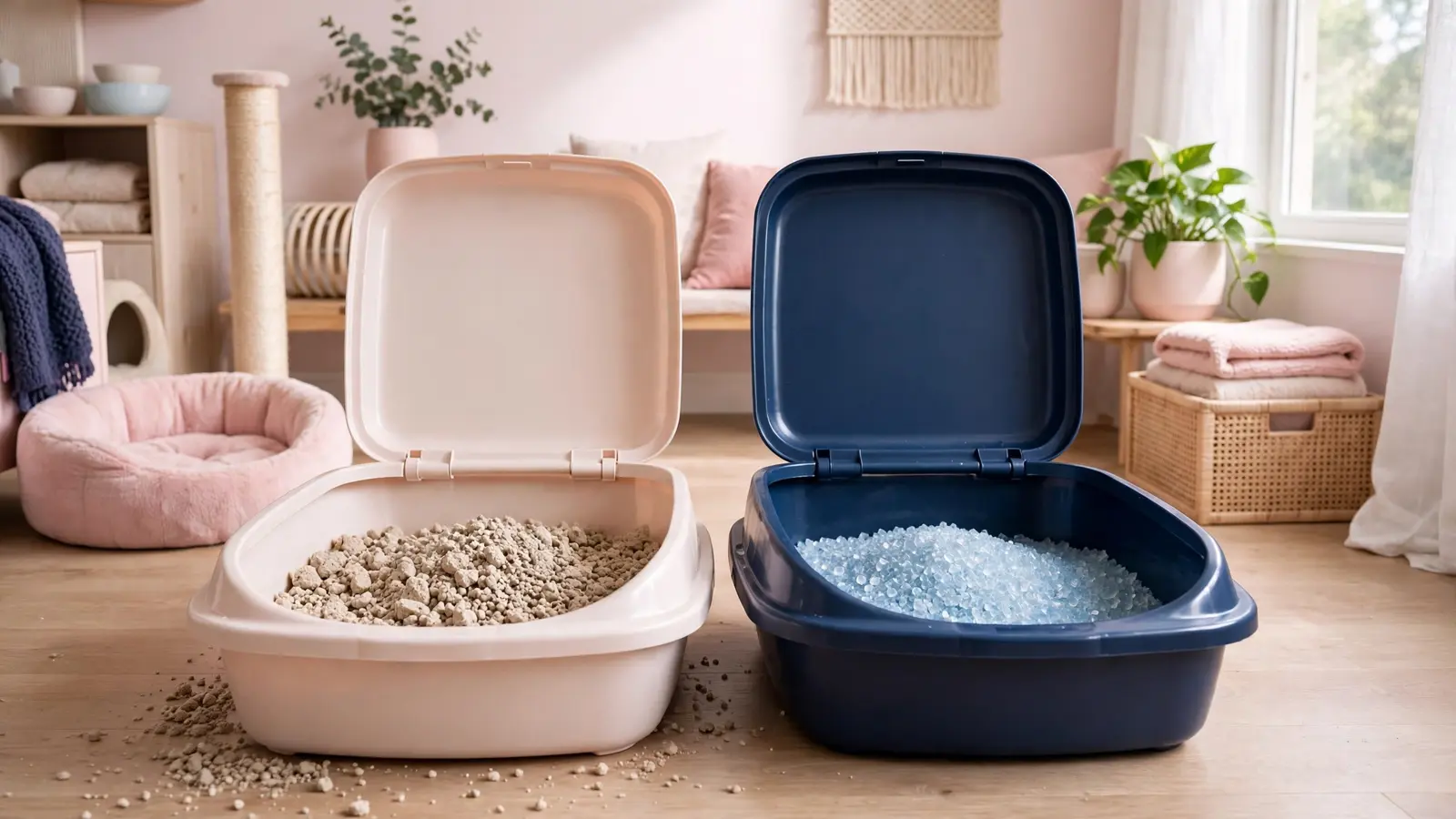
Litter is the one purchase in a cat home that gets used every single day, so the small annoyances add up fast. A bag that tracks leaves grit by the bed. A bag that smells of perfume fills a studio in an hour. A bed that never clumps means the whole box ages at once. None of those are reasons to panic. They are reasons to pick the type on purpose.
Clumping clay: what the lump does
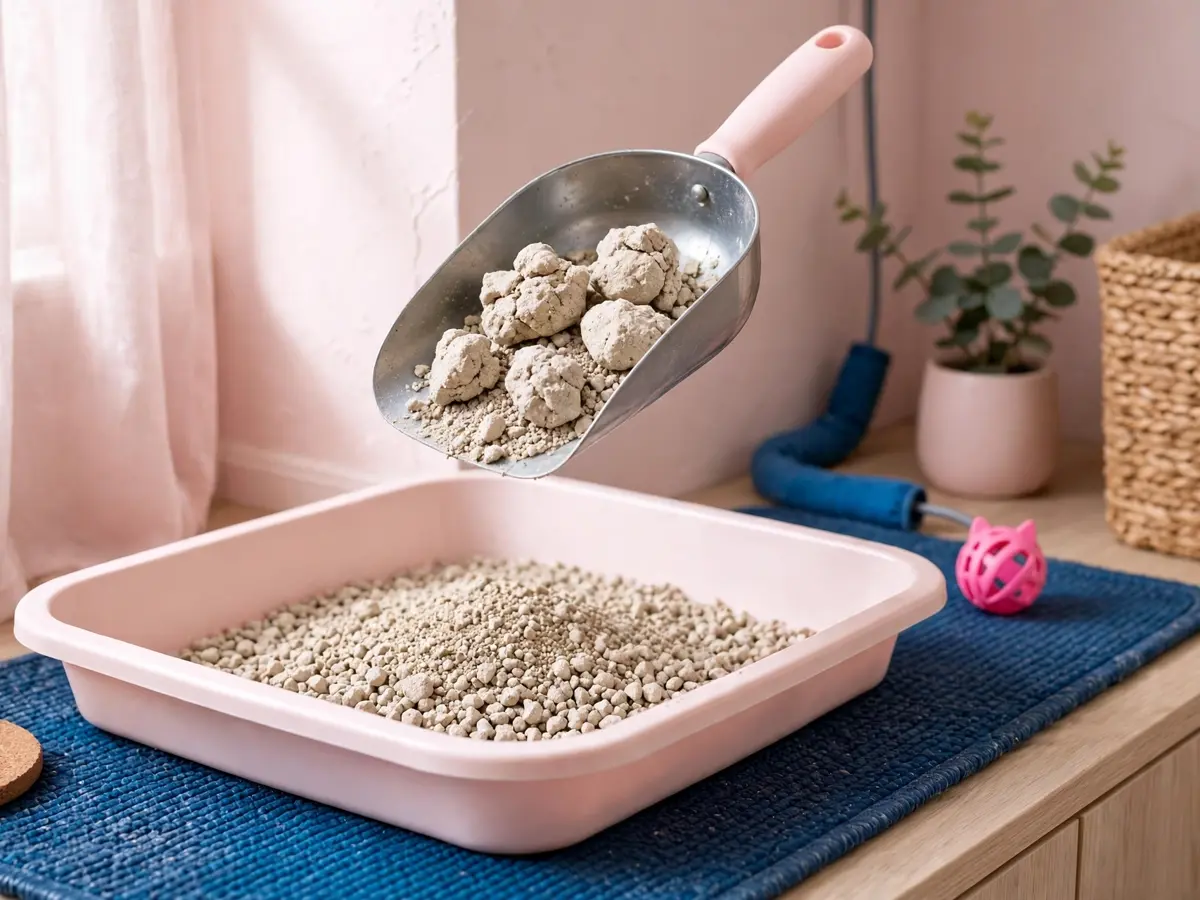
Sodium bentonite clay swells into a solid lump when it meets urine. The lump lifts out on a scoop and the rest of the bed stays dry, so the daily job is short and the bag lasts. That is the whole trick, and it is why clumping clay is the default bag in most US shops.
The cost sits in the grain and the weight. Fine sand-like grains cling to paw pads and travel across the room. A full bag is heavy, and a third-floor walk-up finds that out in the first week.
Non-clumping clay is the same mineral without the swelling. It covers the wet spot, the whole bed ages together, and the change happens on a calendar rather than on a scoop.
Tofu, pine, paper and walnut: the plant group
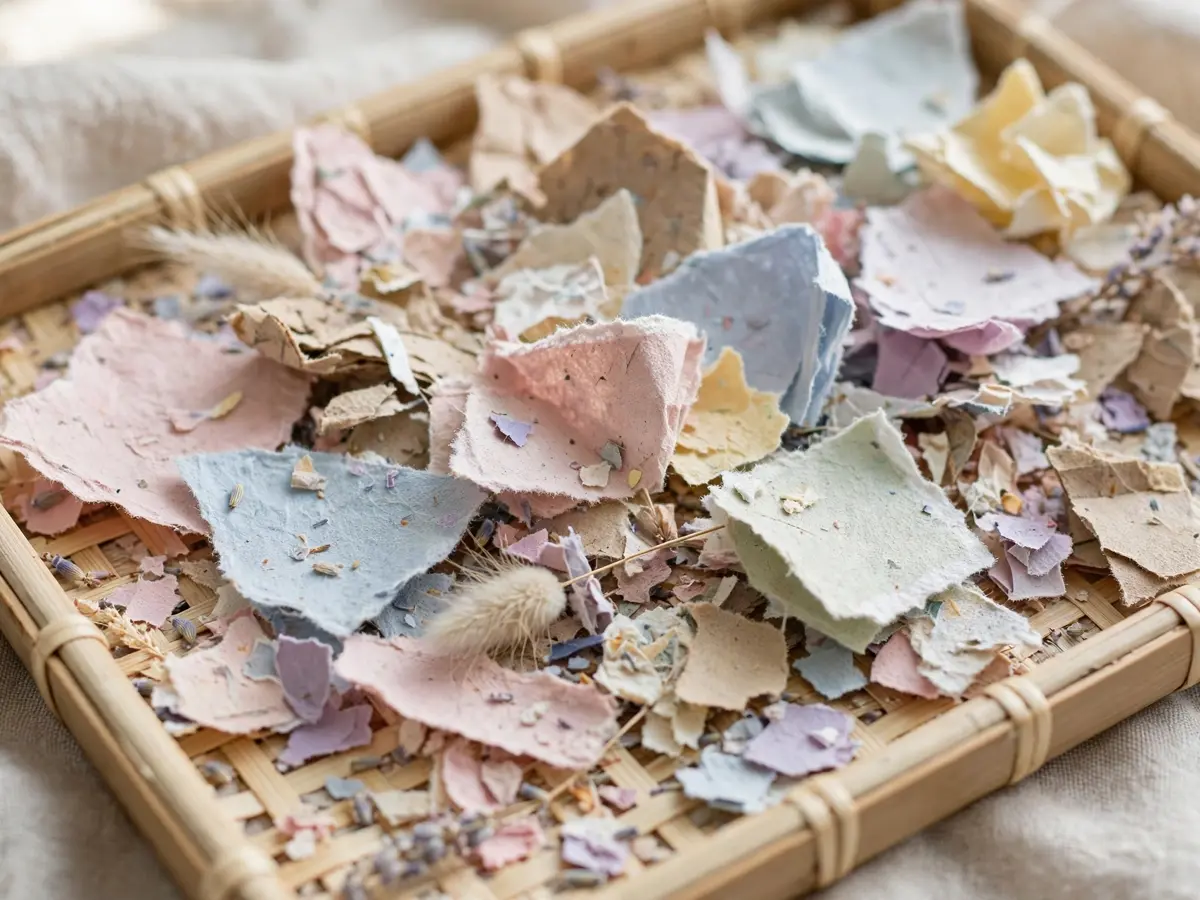
Four plant materials, four shapes. Tofu is compressed soy okara sold as short strands or pellets, and it softens in water. Pine is compressed sawdust in a pellet that crumbles to dust when wet, so the wet fraction drops under the scoop while the dry pellets stay in the box. Paper is pressed pulp in small pellets that soak and hold. Walnut is ground shell in a fine grain that clumps like clay.
The plant group is lighter per bag than clay and the grains are larger, so less of it rides out on fur. The trade is the smell profile: pine carries its own resin scent, and the crumbled fraction needs a small bin beside the box.
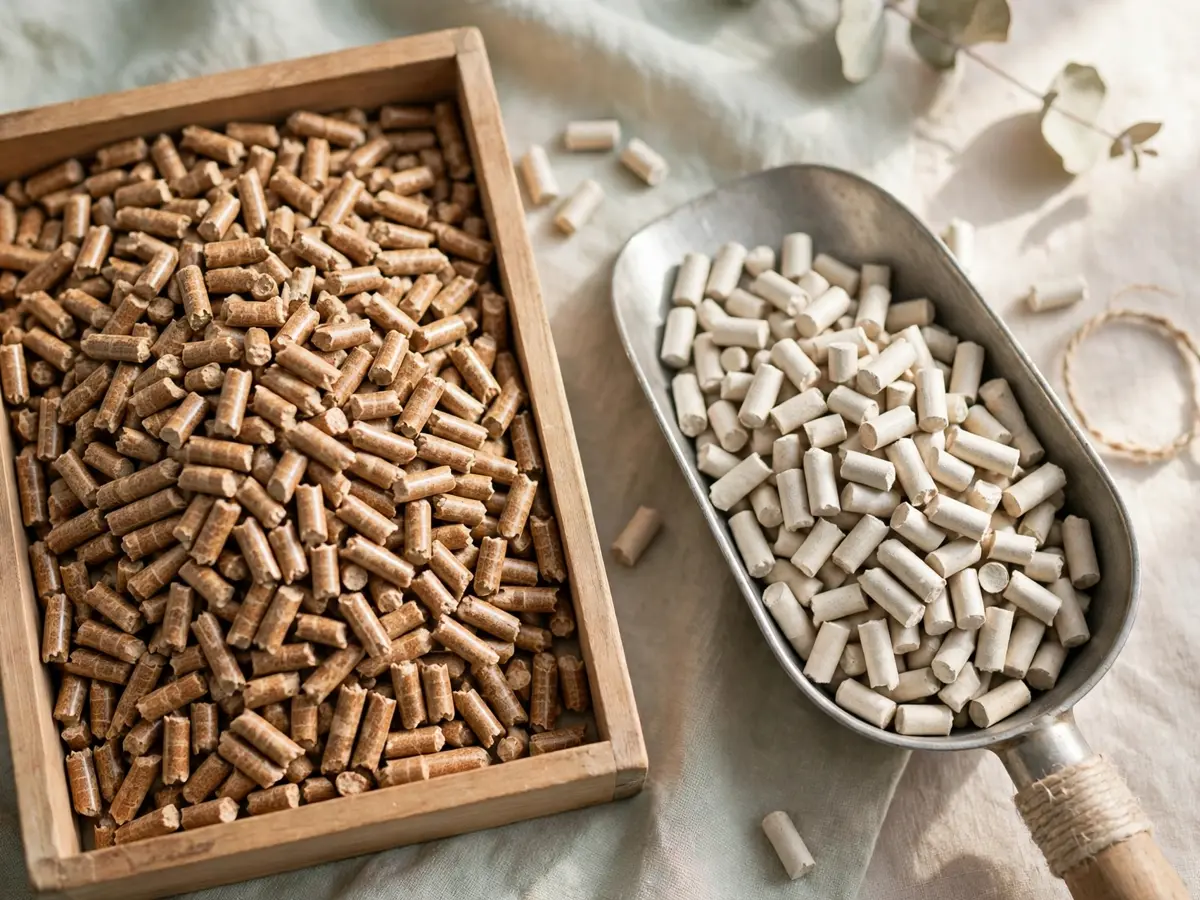
Pine crumbles when wet; paper holds. Same scoop, two different jobs.
Silica gel crystals: the no-scoop type
Silica beads take moisture into the bead instead of forming a lump, so there is no wet fraction to lift out. Solids still come out, and the bed changes when it is spent, on the bag's schedule rather than on a weekly one. The beads are large and dry, so tracking is low and the bag is very light. The downsides are price per month and a bed a cat cannot dig into the way it digs into clay.
Cat litter types side by side
| Type | Grain | Wet fraction | Tracking | Bag weight | Apartment note |
|---|---|---|---|---|---|
| Clumping clay | Fine, sand-like | Forms a solid lump | Highest | Heavy | Fastest scoop, most grit on the floor |
| Non-clumping clay | Fine, sand-like | Soaks into the bed | Highest | Heavy | Full change on a calendar |
| Tofu | Short strand or pellet | Softens and swells | Low | Medium | Dissolves in water, light to carry |
| Pine pellet | Compressed sawdust pellet | Crumbles to dust | Low | Light | Resin scent of its own, needs a small bin |
| Paper pellet | Pressed pulp pellet | Soaks and holds | Low | Lightest | Shallower fill than clay |
| Walnut shell | Fine ground shell | Forms a lump | Medium | Medium | Clumps like clay, plant material |
| Silica crystals | Dry bead | Absorbs into the bead | Low | Very light | No wet fraction to lift, no digging |
Traits read from the bag and the box in 2026. Scoop and change cadence follows the bag instructions, not this table.
Scent, liners and deodorizing powder
Perfumed litter smells strong for the first days after a fill, then fades. The scoop schedule and the wash schedule stay the same whichever bag you open, so the perfume buys nothing in the long run. Cats often find aromatic litter and litter deodorizers offensive, and no product removes the need to clean the box.
Powders, scented liners and slotted grills sit between the cat and the litter, and each one adds a step. The litter should be a fine, sand-like, non-scented, clumping material, and liners, slotted grills and deodorizing powders are best avoided.
The box the litter goes in
Size comes from the cat, not from the bag. A rectangular box one and a half times the length of the cat from nose to base of tail is the recommendation, and bigger is better. Measure the cat lying flat with a tape, then buy the box that number points at.
An open box is recommended where possible, because it is easier to monitor and scoop and it does not trap odors. A hood keeps large pellets inside the rim and hides the wet spot from you, which is the trade a studio makes when the box sits near a sofa.
Washing is the same for every type. Wash the box with soap and hot water only, and avoid strong chemicals or any ammonia-based product. Empty it, wash it, dry it in the sun, refill it.
Litter type and box pairing
| Litter type | Box shape | Why it pairs |
|---|---|---|
| Clumping clay | Open rectangular, high sides | Deep bed for digging, wet lump easy to spot |
| Tofu or paper pellets | Open tray, shallow fill | Large grains stay on a flat bed |
| Pine pellets | Open tray or two-layer box | Crumbled fraction drops away from the dry pellets |
| Silica crystals | Open rectangular | Beads spread flat and there is no digging |
Pairings from the box shapes sold in US shops in 2026.
Tracking, by grain size
Tracking follows two things: the grain and the exit. Fine grains cling to the paw pads and to the back of the hind legs, then drop across the room as the cat walks away. Larger grains are heavier per grain and fall off sooner. So the levers are the litter you pick and the mat you put outside the lip.
Put a low-pile mat wide enough that the cat takes two steps on it, and keep the box off the edge of a rug. The mat is where the grains end up, and it lifts off the floor in one pass.
Which type to start with
Start on a fine, non-scented, clumping clay if the floor is hard and the box sits indoors. That is the type most cats already know, and the box recommendation above is written around it.
- Switch to tofu or paper when the bag carry is the problem or the floor stays gritty after two sweeps. The grains are large, the shapes still let a cat dig, and both are light.
- Try pine when the monthly cost matters most. It is the cheapest of the plant group, and it smells like a sawmill for the first week.
- Try silica when scooping is the part you keep skipping. There is no wet fraction to lift, and the spent bed goes out in one pass.
- Keep a spare box on another spot in the room. Two cats want two choices, and a spare box is the cheapest upgrade in the whole setup.
Where the boxes go, how many stations a small home needs, and the full cleaning calendar live on the pages below. Start with litter box 101: setup and cleaning schedule if the box is new, and with how to choose clumping unscented litter if the bag is the only decision left.
Cat litter type questions
Which cat litter tracks the least?
Grain size drives what leaves the box on fur. Fine clay grains pick up on paws and spread across the floor. Larger grains, such as pine pellets, tofu strands and paper pellets, stay put more often and drop off at the mat.
Is tofu litter the same as soy litter?
Tofu litter is compressed soy okara, the pulp left after soy milk. Shops sell it as short strands or as pellets, and it softens in water. Walnut litter is a different material: ground shell in a fine grain that clumps.
Do scented litters keep a studio box smelling fresh?
Perfume in the litter smells strong in the first days after a fill and then fades. Scooping and the wash routine stay the same either way. Cats often find aromatic litter and litter deodorizers offensive, and no product removes the need to clean the box.
How deep should the litter bed be?
Read the bag. Clay and clumping bags usually ask for a deeper bed than pellet bags, and paper pellets are sold to a shallower fill. A bed deep enough for the cat to dig and bury is the aim.
What changes when I switch litter types?
Mix the old litter into the new bag over about a week and keep the box in the same corner. Cats read a change by smell and texture first, and by the shape of the box second.
Does a hooded box work with any litter type?
A hood keeps large pellets inside the rim, and it also hides the wet spot from you. An open box is recommended where possible, because it is easier to monitor and scoop and it does not trap odors.
Save these on Pinterest
Pin the comparison table to your cat board so the swap decision is one tap away at the shop aisle. Pair it with the hidden litter box ideas for a small apartment and the cleaning schedule, then keep the whole set on the cat-friendly apartment collection.
Material traits only, no brand picks. For informational purposes, consult your vet about your cat.