 PawStyle Daily
Cat-Friendly Apartment Decor
Why Does My Cat Lay in the Litter Box?
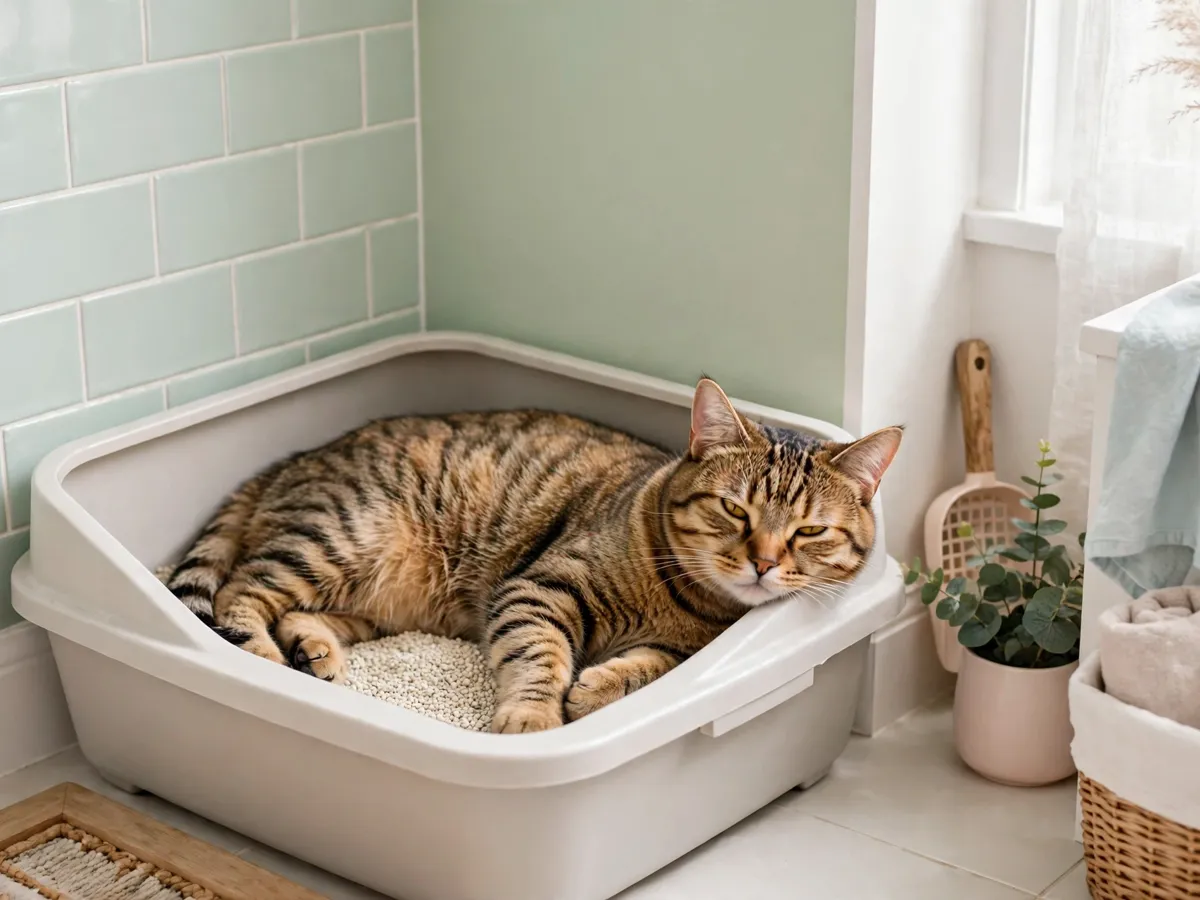
The photo every cat household takes eventually: the cat, in the box, lying down, looking pleased. The behavior looks alarming in a feed and ordinary in a kitchen, and the difference between the two is context. This page sorts the comfortable reasons a cat picks the box from the signals worth watching, walks the box habits that keep a cat returning, and names the pair of signs that point to the vet. Nothing here names a brand, and nothing here replaces a veterinarian.
By PawStyle Daily · Updated 19 November 2026
Comfortable reasons come first · change signals get watched · box habits keep the cat returning · two signs point to the vet.
The box is furniture to a cat
A litter box is a piece of the cat's world in a way no other household object is. It holds the finest, softest granular surface in the home, it sits in the quietest corner the household offers, and it smells like the cat itself. To a cat, the box is not the embarrassing thing the internet says it is; the box is a bed that happens to have a job.
The laying behavior that surprises owners is usually the box being what it is: a cool, contained, fine-grained spot in a house of hard floors and soft furniture the cat has decided not to claim. A cat that lies in the box and behaves normally everywhere else is a cat answering the same question every cat answers - where is the good spot - and the box is a defensible answer. The behavior is common, the photos are everywhere, and the photos are funny because the behavior is harmless far more often than it looks.
The box habits around the laying are the piece this page walks, and the habits live on two pages the household already needs. The litter box cleaning schedule page holds the daily and monthly rhythm, and the best clumping unscented litter page holds the material the box should hold. This page holds the behavior, and the behavior is the piece the next sections sort.
The comfortable reasons a cat picks the box
The temperature is the first reason. Litter holds a cool surface in every season, and a cat in a warm apartment picks the cool spot the way a cat in a cold apartment picks the laptop. The granules stay cooler than the carpet and the couch, and the box is the place the cool concentrates.
The containment is the second reason. A box has walls, and the walls are the piece a curled cat reads as security. A nervous cat picks the enclosed spot, a new cat picks the enclosed spot, and a cat that just moved to a new home picks the enclosed spot. The box is the smallest room in the house from the cat's side, and the small room is the one that feels safe.
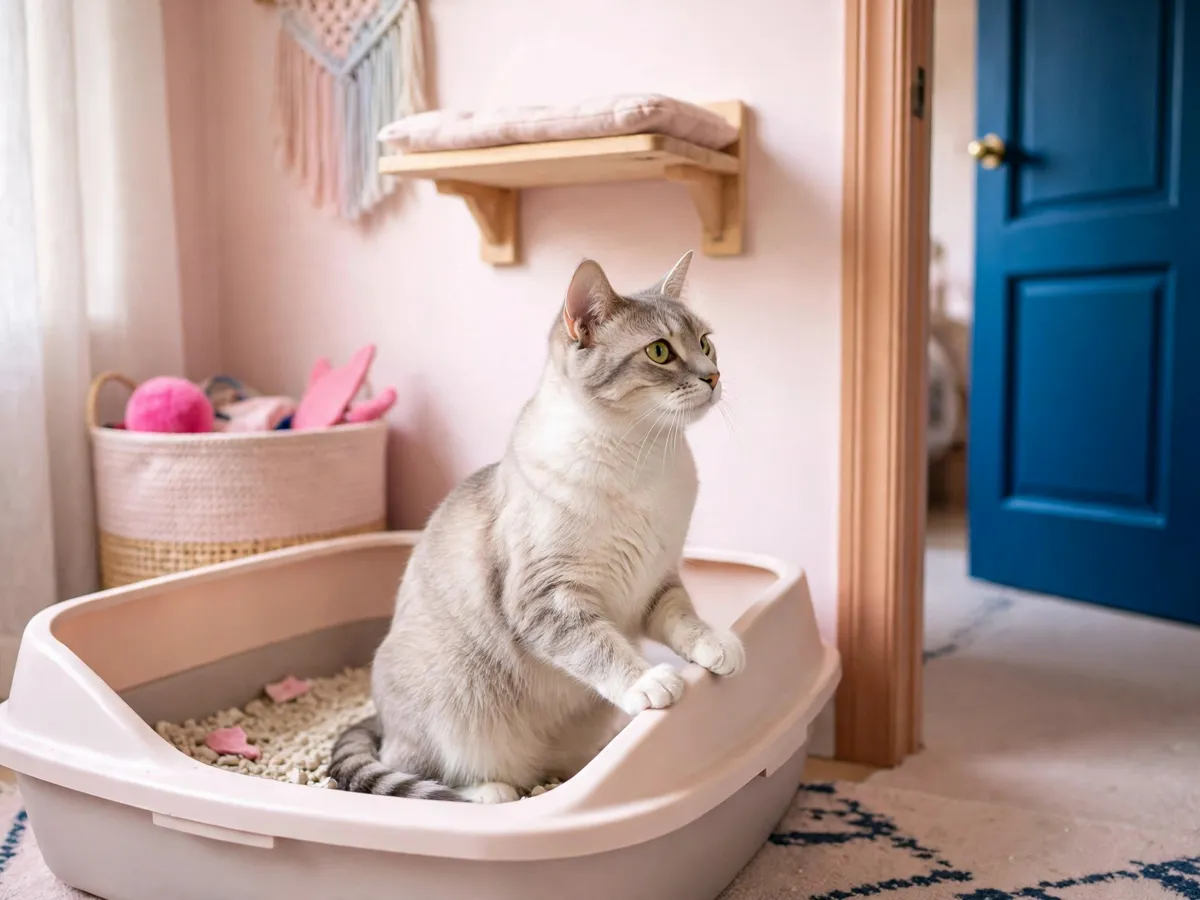
The scent is the third reason. A box that smells like the cat is a box that carries the cat's own marker, and the marker is the piece a cat reads as home. A freshly washed box loses the marker for a day, and the freshly washed box is the one a cat may re-claim by sitting in it. The three reasons stack: the box is cool, contained, and carries the cat's scent, and the stack is why the behavior shows up in healthy cats doing healthy cat things.
The timing is the piece that tells the household which reason is running. A cat that lies in the box in July is a cat answering the temperature, and a cat that lies in the box the week after a move is a cat answering the containment. A cat that lies in the box right after the monthly wash is a cat re-claiming the marker, and the re-claiming is the version the household can watch on purpose. The reasons rotate, the cat does not explain, and the household that reads the timing reads the behavior without worrying about it.
The change signals worth watching
The behavior to watch is change, not lying. A cat that has always lounged in the box is a cat with a habit; a cat that starts lying in the box after years of ignoring it is a cat with a change, and the change is the thing the household watches. The watching is the piece this section walks - what to notice, and which pair of signs moves the cat to the vet.
The first signal is frequency. A cat that starts visiting the box many times an hour without producing anything is a cat the household watches closely, and the visits are the piece the household counts. The second signal is the cry - a cat that vocalizes in the box is a cat the household hears. The pair is the piece that matters: lying in the box plus straining, or lying plus crying, is the pair that goes to the vet the same day.
The third signal sits around the box rather than in it. A cat that stops using the box, or starts using the corner beside it, is a cat with a change in habit, and the change is a sign the household takes to the vet rather than fixes at home. The household's job is to notice and to carry the cat in; the sorting of the cause is the job the vet does.
The note is the piece the household brings along. A few days of observations - when the cat visited the box, whether the visit ended in use, what the lying looked like - is the record the vet reads fastest, and the record is the piece that turns a vague complaint into a specific one. The household that writes the pattern down is the household whose vet visit starts with the answer instead of the question. The note costs nothing, and the nothing is the right price for the piece that moves a vet visit along.
The box habits that keep a cat returning
Remove waste from the litter box at least once a day, and wash the box every one to four weeks. That line is the habit the whole page sits on. A box that meets that rhythm is a box the cat returns to, and the returning is the piece the household can control. The scoop is the daily piece, the wash is the monthly piece, and the two together are the routine that keeps the box a place the cat wants to use.
Wash the box with soap and hot water only, and avoid strong chemicals or any ammonia-based product. That line is the piece the monthly wash runs on. A box washed with the wrong products is a box that smells wrong to the cat, and the wrong smell is the piece that can push a cat away from the box it was lounging in. The soap and hot water are the routine, and the routine is the piece that keeps the box itself neutral.
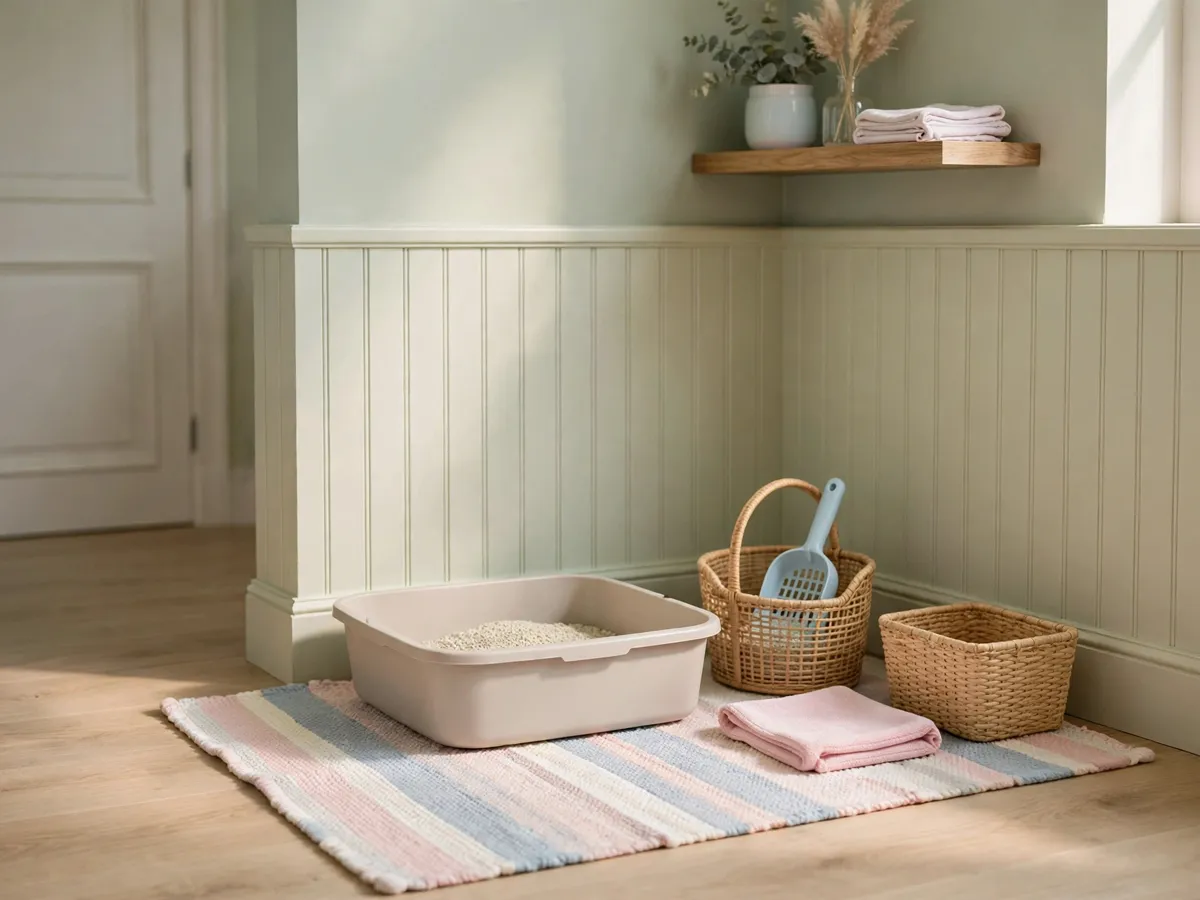
The placement is the piece around the cleaning. A box in the quiet corner is a box the cat can use and leave without crossing the household's noise, and the quiet corner is the one the laundry machines do not live in. The mat under the box catches the scatter, and the mat is the piece the household washes on the same schedule the box gets. The count is the last piece: enough boxes for the household plus a spare, placed in separate spots, so the napping cat and the using cat are never competing for the same box.
The setup is the piece the household runs once and then keeps, and the keeping is what makes the box a fixture instead of a chore. A household that scoops daily, washes monthly, and keeps the boxes in quiet corners is the household whose cat has no reason to change its box habits, and the unchanged habits are the baseline the change signals read against.
The napping itself settles once the routine holds. A cat that has an untouched box to use and a household that keeps the rhythm is a cat that naps in the box without cost, because the box it lounges in is not the only box in the house. The households that run into trouble are the single-box households, where the nap sits on top of the bathroom and the cat has to choose between the two. The spare box is the piece that ends the choosing, and the choosing is the piece the photos never show.
Questions about cats lying in the litter box
Is it bad if my cat sits in the litter box?
Not on its own. Cats lounge in cool, fine-grained spots, and a fresh box is often the softest quiet surface in the room.
Should I add more boxes if my cat naps in one?
Enough boxes for the household plus a spare covers the household. A napping cat still wants an untouched box to use.
When does lying in the box become a concern?
If the cat strains, cries, or keeps returning without using the box, the vet comes first. Lying plus straining is the pair worth acting on.
Save these on Pinterest
Pin the behavior guide for the next photo the cat gives you, or send it to a friend who just texted a box photo with a question mark. The Cat-Friendly Home collection holds the cleaning schedule page, the litter guide, and the odor control page that run beside this one, so the whole box routine lives in one place.
For informational purposes, consult your vet.
Sitting in the box is one behavior and missing it is another; the when the poop lands outside the box page covers the second.
A cat laying in the box is a comfortable story; what makes a cat miss the box starts where the story stops and the floor gets wet.