 PawStyle Daily
Cat-Friendly Apartment Decor
Apartment-Friendly Cat Wall Shelves — the Renter Setup
Wall space is the room a small rental hides in plain sight. The litter corner takes the floor, the food bowl takes the other corner, and the human furniture takes the rest — the vertical plane is the space you already pay for. This setup builds a climbing route without asking the wall for a single hole, and reads as a path from bottom step to window perch.
By PawStyle Daily · Updated 18 November 2026
Good to know: mount tiers from zero holes up · a route the cat already walks · sisal where the claws land · for informational purposes, consult your vet.
Why the wall is the floor space you have left
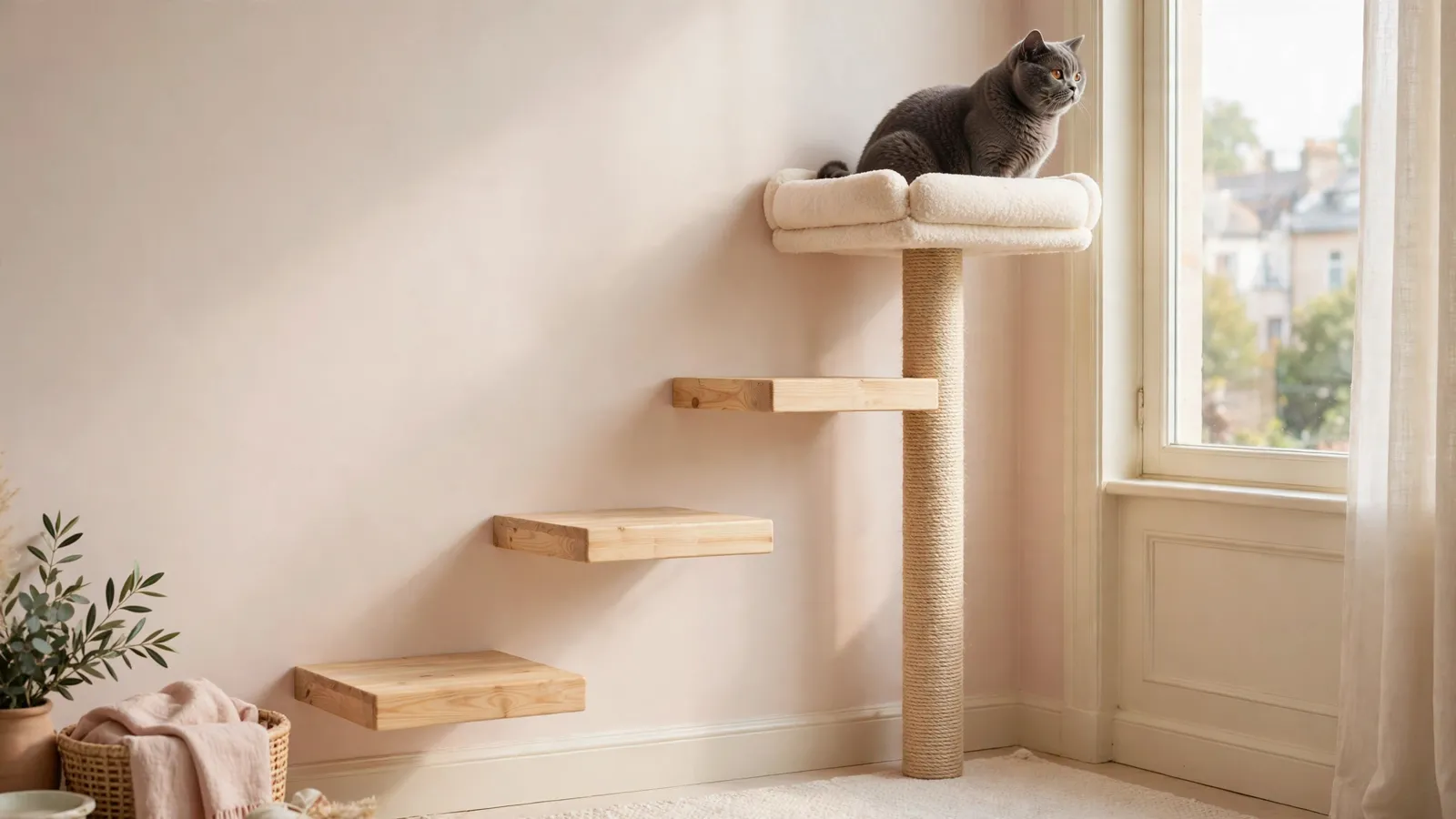
Walk the apartment the way a cat does and the verdict is quick: the litter corner, the food bowl, the water station and the human furniture have taken the floor, and what is left for a cat is the space under a sofa. A small rental cannot give a cat ground, but it can give it height — the one plane nobody's lease argues about, and the one that costs nothing in square footage because it was always wall.
What a shelf has to earn
An ideal perch is elevated, with a padded cover, and an elevated area gives a cat vertical space to monitor its environment. That is the job description, and a board that only holds weight has not applied for it. Three practical reads separate a perch from a plank:
- Deep enough for a full loaf. The whole cat fits with all four paws on the wood, or the cat passes it by.
- A cover that does not slide. A padded top sits still under a landing cat; a slick cushion asks for a slip.
- An edge you can judge from below. A cat leaps at a silhouette, so the rim should read true from the floor.
Drilled, hybrid, or nothing at all
Three tiers of fitting, in the order a renter should try them — zero holes first:
- Tension pole and leaning ladder. A pole spanned floor to ceiling and a ladder that leans carry their weight on the floor, and both leave the wall the way it was found.
- Adhesive-backed steps. For a smooth painted wall: stick, test one corner with a firm press, then trust the rest of the wall only as far as that corner earned.
- Studs-only floating steps. The tier for a landlord who says yes — each step lands on wood and holds fast.
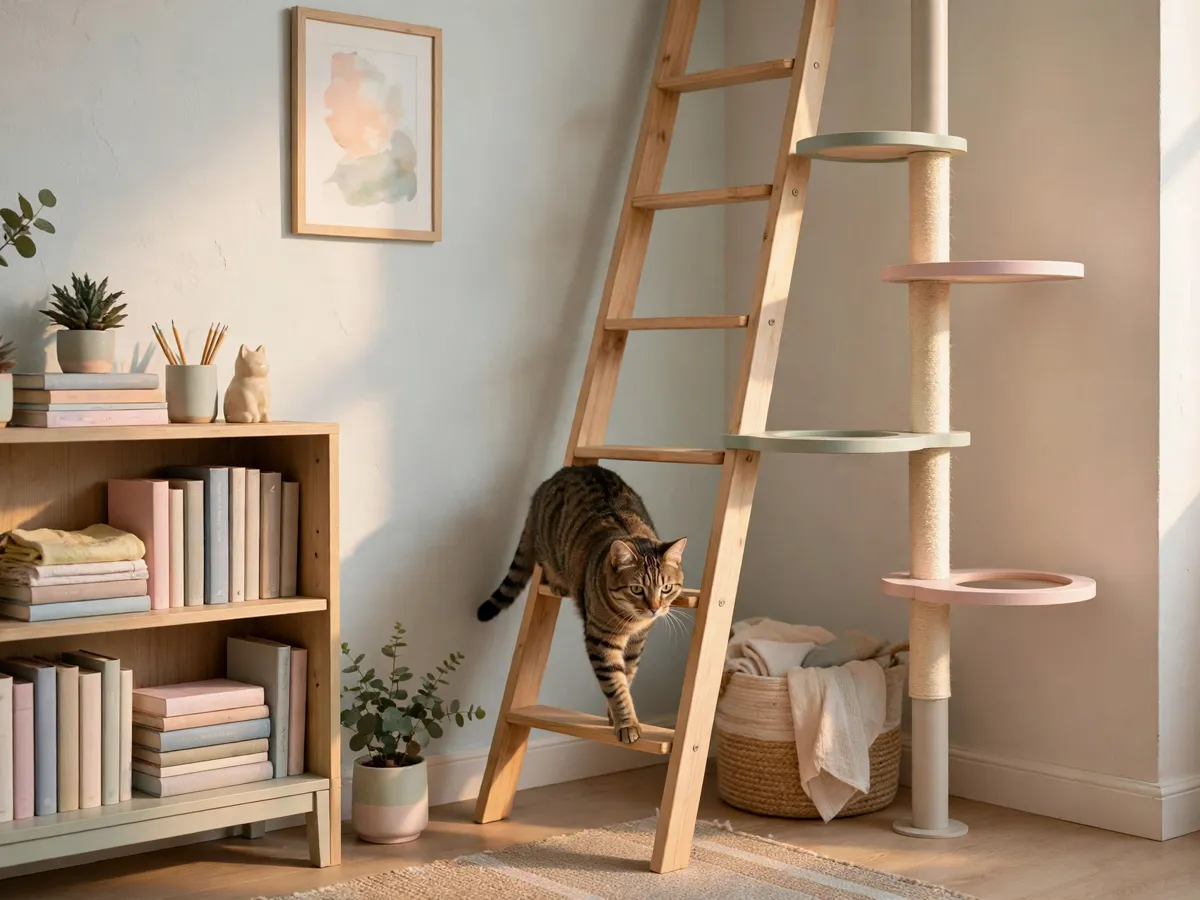
Whatever the tier, the check before the first climb is the same: press each step with an open hand and feel for wobble at the wall. Photograph the wall before anything goes up and after everything comes down, so the deposit argues its own case.
Reading the route as a path
Stagger the boards instead of stacking them: alternate which side the landing faces, so a cat climbs the way it naturally turns. Leave a launch spot at the bottom — the sofa arm already in the room works — and an exit at the top that does not dead-end. One perch that stops mid-wall invites a jump to the bookshelf instead, because a path with an exit gets used and a platform without one gets admired.
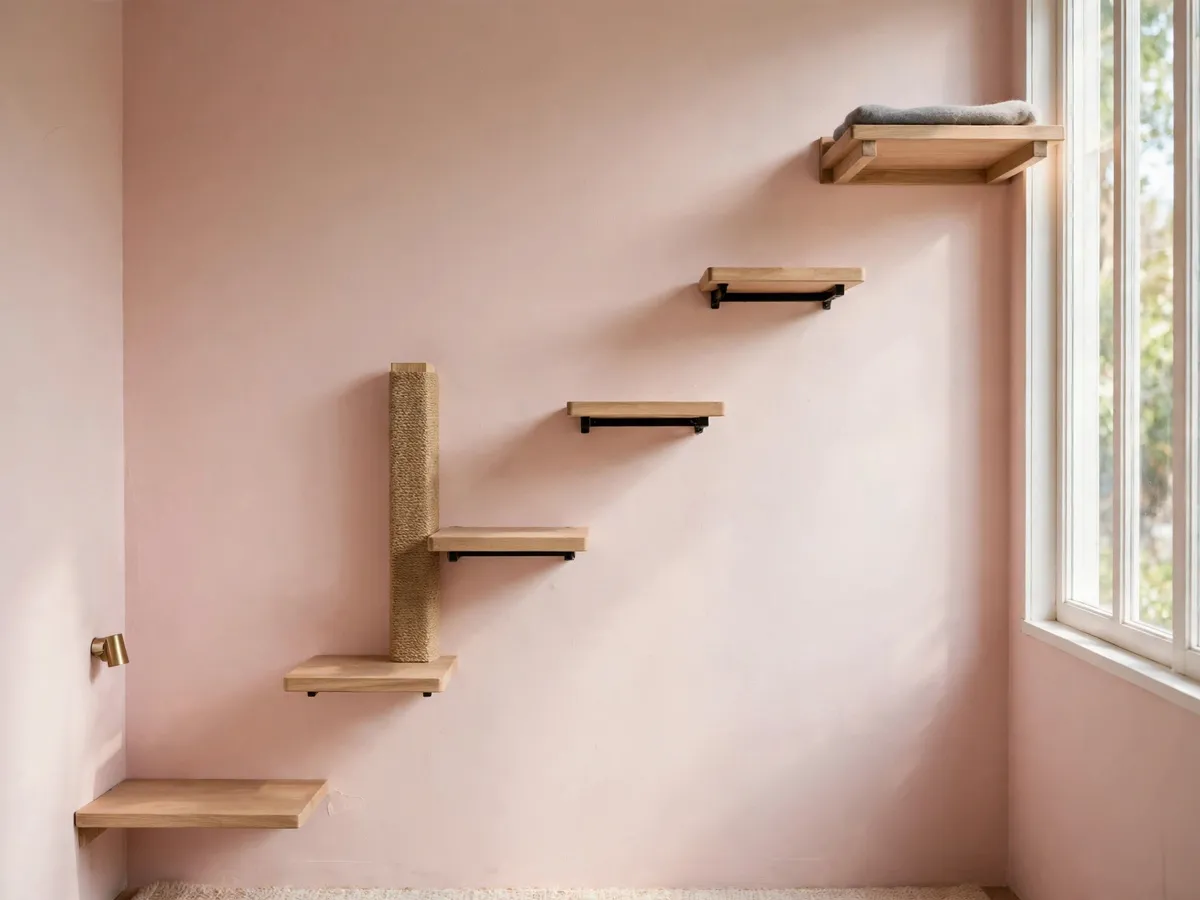
The spacing test needs no ruler: one hand-width of overlap so the paws land on wood rather than air, the first step about waist height, and every jump afterwards one the cat already makes off the sofa.
The low route and the ramp
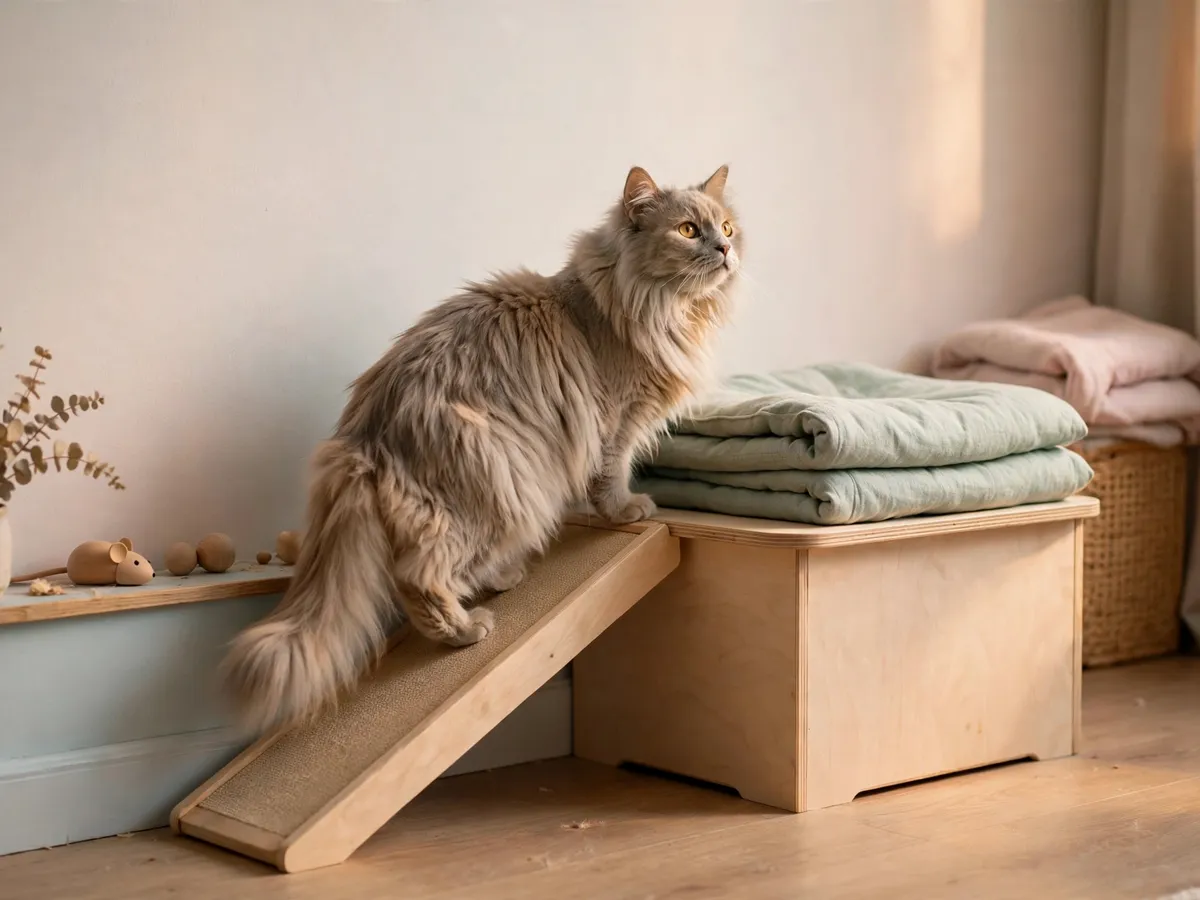
For kittens and older cats with limited mobility, keep boxes, perches and shelves low or reachable by a ramp. The whole route drops for those cats: a bottom step reachable from the floor, a short ramp screwed to the lowest platform, and the first perch beside the bed rather than above the door. The senior cat ramps and low perches page takes that route further.
Sisal where the claws land
Scratching areas can be a sisal-covered surface on an elevated perch or a scratching pad, and key resources should be available in multiple locations. On a wall route that lands as: wrap the riser the cat actually steps onto with sisal, so the climb and the claws share a surface, and keep a scratching pad on the floor beside the route as the second stop.
The honest note: a sisal wrap gives the claws a place on the way up, and it is an option rather than a promise about the sofa. The scratching post placement page covers the rest of that decision.
Place the top perch where the view is
Indoor resting areas, such as a perch or a secluded surface, should include a spot where the cat can see outdoors. So walk the window side of the room first: the bird-feeder window, the street window, the one with the afternoon light. The top perch belongs where that view is — below the window line, in the light, facing the glass — and a secluded surface beside it gives the cat the quiet version of the same spot. A window seat is a nice neighbour to the route, not a substitute for the boards that lead to it.
What cats actually do with a new shelf
The first days are sniffing, not sleeping. A cat investigates the boards, tests one jump, and waits — a day of nothing is part of the plan, not a failed install. Rub a pinch of dried catnip or silvervine on the middle step, leave a treat on the bottom one, and let the surface earn the nap.
In a two-cat home, one takes the top and another takes the bottom, and neither approves of a promotion. If weeks pass and the bookshelf still wins, the boards are on the wrong wall — sweep the route the cat already walks and rebuild along it. The multi-cat resource page maps the rest of the sharing.
The weekly check
A short routine, no schedule required: press each step with an open hand, run a thumb over the sisal for fraying, check the wobble at the wall, and glance below the route for the knocked things of the past days. Tighten what needs tightening, rewrap what has frayed, and the path stays the path.
Renter shelf questions
Will a no-drill shelf hold a heavier cat?
The fitting decides, not the cat. A tension pole spans floor to ceiling and leans nothing on the shelf board, an adhesive-backed step on a smooth painted wall carries a sitting cat easily, and the studs-only tier holds what it lands on. Press each step with an open hand before the first climb — the wall and the fitting answer the question the shelf cannot.
How many shelves does a small room need?
Fewer than people expect. A bottom step, a middle step and a top perch, with a route between them, is a complete path. Lay the boards along the way the cat already travels rather than building a heap of platforms in one corner.
My cat ignores the shelves. What now?
The first days are sniffing, not sleeping, so a day of nothing is not a verdict. Rub a pinch of dried catnip or silvervine onto the middle step, leave a treat on the bottom one, and give it time — some cats approve of a surface long before they nap on it.
My landlord will not allow drilling. What are my options?
All three tiers on this page exist for exactly that: a tension pole that leans on the floor and ceiling, adhesive-backed steps tested in one corner of a smooth painted wall first, and a leaning ladder that carries its own weight. Photograph the wall before anything goes up and after everything comes down, so the deposit argues its own case.
Do I need a ramp for an older cat?
For a kitten or an older cat that moves stiffly, the whole route drops instead: a bottom step reachable from the floor, a short ramp up to the first platform, a perch beside the bed rather than above the door. If the stiff movement is new, that is a conversation for the vet before the route gets steeper.
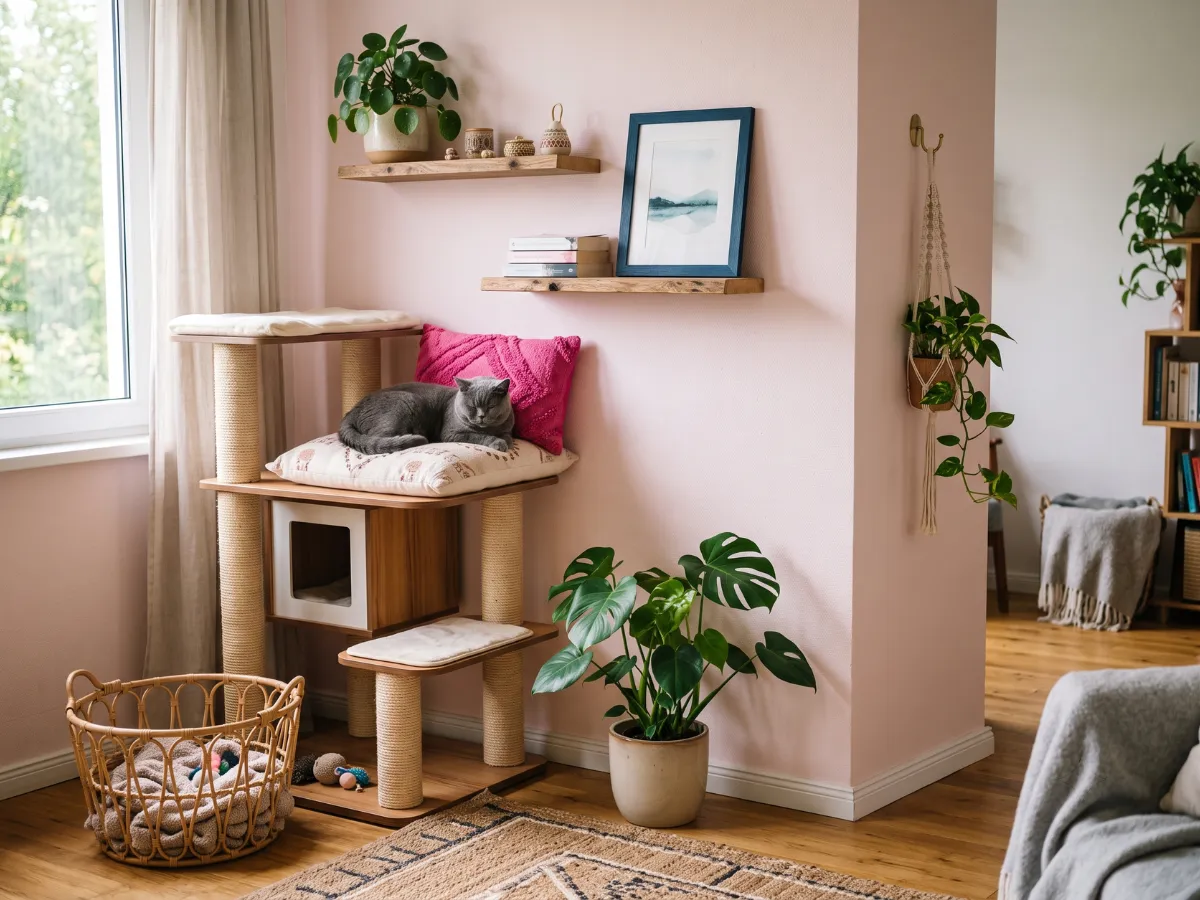
Build the route
Steps, sisal pad and a perch cushion
The pieces the route is built from: steps that hold to the wall, sisal where the claws land, and a padded perch for the window end.
See the route kit →As an Amazon Associate we earn from qualifying purchases.
Save these on Pinterest
Pin the route before the drill comes out — the mounting tiers, the spacing and the weekly check all live on this one page. The Cat Home collection holds every decor guide on the site, and the DIY wood shelf plans are the build-it-yourself version of the same path. Start with a bottom, a middle and a top, stagger the landings, and let the cat grade the route. For informational purposes, consult your vet.
The renter page settles drill or no drill; cat wall shelf spacing is where the drilled route becomes an ordered path up the wall.