 PawStyle Daily
Cat-Friendly Apartment Decor
Where to Put a Cat Scratching Post in an Apartment
Your sofa already knows where the scratching post should go. Walk the flat before you buy anything and find the two or three places the cat has picked: the arm of the couch, the corner of the rug, the door frame by the kitchen. A post placed beside that damage gets used on the first night, and the same post in a tidy corner gets ignored for a month. This guide covers where the posts go, how tall they need to be, how many surfaces a one-bedroom actually uses, and the swap that keeps them interesting.
By PawStyle Daily · Updated 17 November 2026
Good to know: two scratch spots beat one · sisal at full stretch · check the base for wobble · for informational purposes, consult your vet.
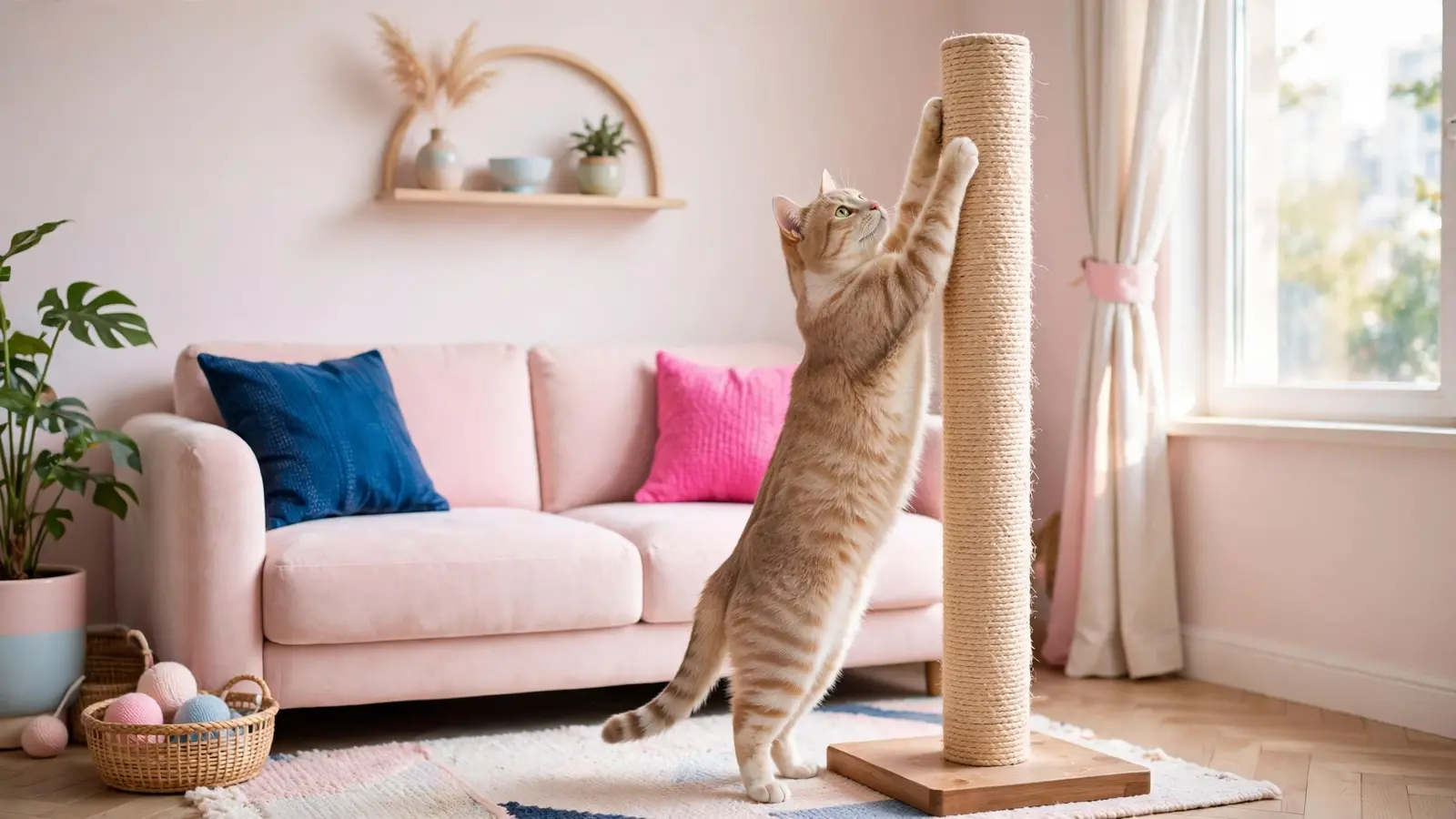
Start at the damage
Run a hand along the sofa arm and look at the door frame at cat height. Scratches show up where the cat already stops, turns and stretches, and those are the addresses that matter. A post placed beside the worn arm is not a new object in the room; it is a better surface at a spot the cat chose itself.
Scratching areas can be a sisal-covered surface on an elevated perch or a scratching pad, and key resources should be available in multiple locations.
That sentence is the whole placement brief. The expensive mistake is a tall post in the corner of the room you find least visible: the cat has no reason to detour there, and the sofa keeps the job it never asked for.
Placement note · Beside the damage · Never in the empty corner
Two posts, two jobs
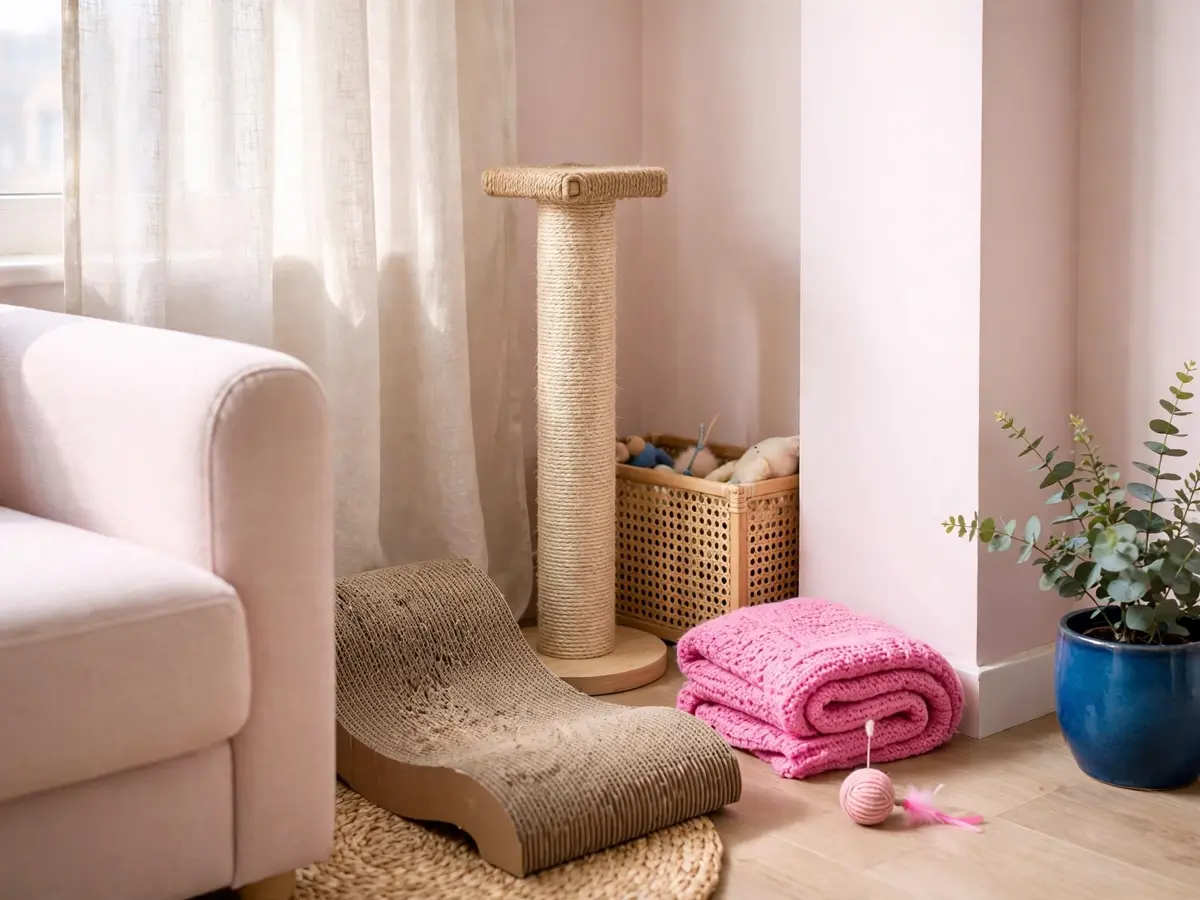
A one-bedroom with one cat works with two active scratch surfaces: one beside the spot where the cat sleeps, and one beside the door it patrols. The sleeping post catches the long stretch after a nap; the door pad catches the marking scratch on the way through.
Give each resource its own spot and let the cat choose: a minimum of two resting areas, two feeding areas and two toileting areas.
The guideline offers that count as its own example of choice per resource, not as a floor plan to copy into every flat. For scratching, the practical version is the same idea: a second surface across the room, so a cat that wakes on the wrong side of the apartment does not have to use the sofa.
Sisal on an elevated perch
A cat scratches to stretch the whole body, so height is not a luxury. A post shorter than the cat standing on its back legs gets clawed at the top band only, and that band unravels first. A full-height column takes the pull at shoulder height, which is where the sisal wears evenly.
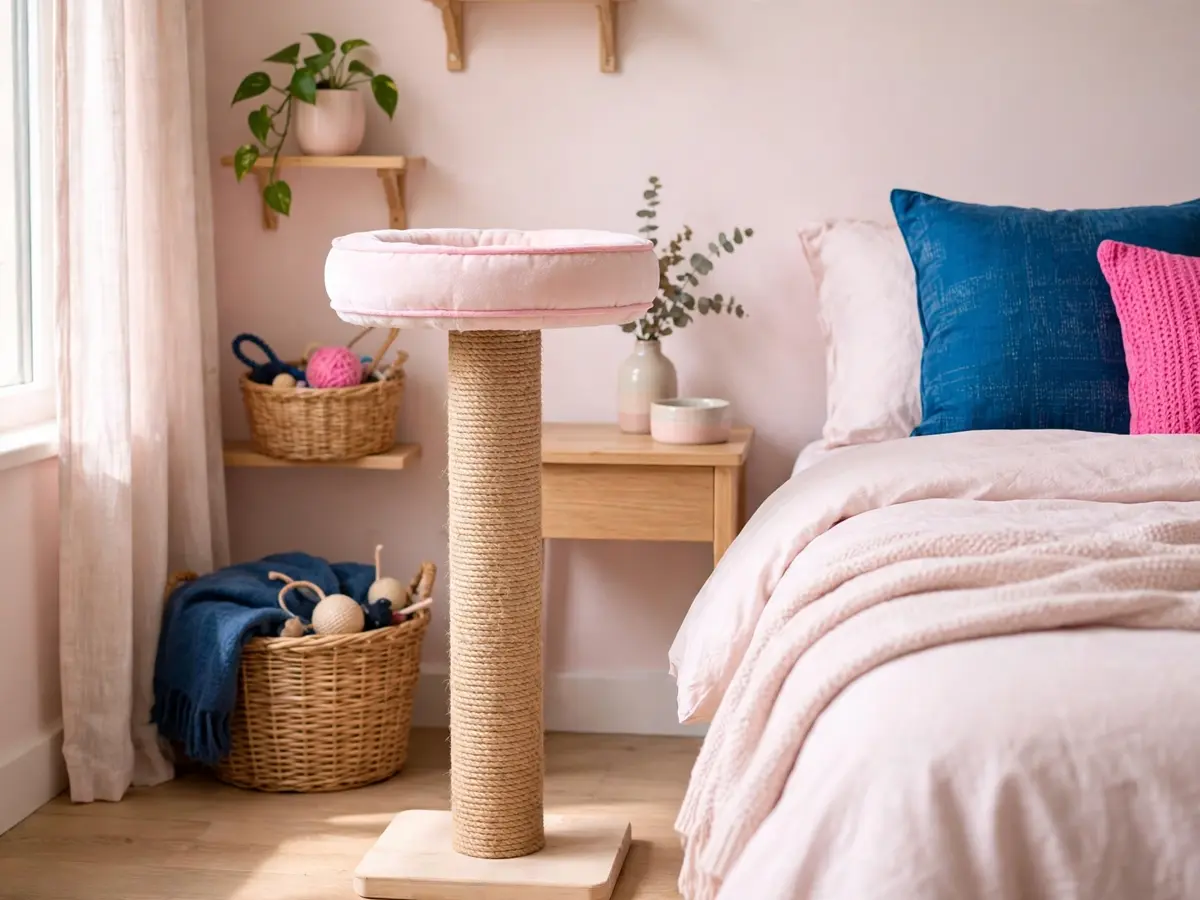
An ideal perch is elevated, with a padded cover, and an elevated area gives a cat vertical space to monitor its environment.
A perch with a sisal column does both jobs in one footprint: the column takes the stretch, the padded top takes the nap, and the cat spends more of the day next to the surface you want it to use. Put the highest perch where the cat can see the door and the window at the same time.

Height, base and the wobble test
Before the post comes home, test it where you buy it: push the top with two fingers and watch the base. A post that rocks, skates or tips is a post a cat will not put its weight into, and a cat that does not put its weight in goes back to the sofa.
- Column height: taller than the cat at full stretch, so the claws meet sisal rather than the platform.
- Base: wider than the top platform, and heavy enough to stay flat when the cat pulls.
- Surface: sisal rope wrapped tight, with no loose end at nose height.
- Top: a padded platform the cat can sit on after the scratch, because the post is furniture as much as a tool.
In a rental, a tension pole between floor and ceiling avoids a drill hole and gives a full-height column in a narrow corner. Fit it against a solid ceiling, tighten it until it does not move, and re-check it once a month — the same wobble test, standing up.
How many scratch spots a one-bedroom needs
For one cat in a one-bedroom, three surfaces is a comfortable count: a tall post by the sofa, a flat pad by the door, and a panel on the side of a shelf or the balcony door. Two cats: add one more, and place it so neither cat has to pass the other to reach a scratch.
Count surfaces, not objects. A cat tree with one sisal column is one scratch spot however tall it is, and a flat pad on the floor is a second even when it cost less than the tree. Mixing shapes matters more than matching furniture: some cats scratch vertically, some prefer the floor, and a few do both depending on the hour.
If the tree is still on the shortlist, our cat tree buying guide covers columns, platforms and the scratch surface that comes with them, and the DIY cat tree and wood shelf plans show how to wrap a column yourself if the budget is tight.
The three-week rotation
Sisal packs down and loses its texture, and a post that never moves becomes part of the wall. Every three weeks, change one thing and leave the rest: slide the post to the other end of the sofa, turn the flat pad a quarter turn, swap the two posts between rooms, or work a pinch of catnip into the sisal.
One change at a time is the point. A cat that loses the map of its own room goes back to the sofa, the rotation turns into a week of repairs, and the whole exercise costs more than leaving things still.
The three-week rotation
| Week | One change | What to check |
|---|---|---|
| Week 1 | Turn the flat pad a quarter turn | Edges still flat, no curl at the corners |
| Week 2 | Swap the two posts between rooms | Both bases level on the floor |
| Week 3 | Brush the sisal and add a pinch of catnip | Rope tight, no loose end |
| Week 4 | Start again with the pad in a new spot | Scratches on the new surface, not the sofa |
Change one thing at a time, and give the cat a week with each version before the next swap.
Placement chart for a small flat
Five spots cover most apartment layouts. Pick the two or three that match the scratches you already have, and ignore the ones the cat never walks past — furniture in the right place beats furniture in every place.
Where a scratching post works in an apartment
| Spot | Why it works | What to check |
|---|---|---|
| Beside the worn sofa arm | Same address, better surface | Post top above the cat at full stretch |
| Next to the sleeping spot | First stretch after a nap | Base flat on a wood floor |
| Beside the door it patrols | Marking scratch on the way through | Pad stays flat, no curled corners |
| Balcony or window door | Scratch and a view in one stop | Panel fixed without a drill hole |
| Hallway corner | A second surface for a second cat | Clear run in and out |
A post earns its place when the cat already stops there.
When the sofa still takes the damage
If the cat keeps choosing the sofa after a fortnight, check three things in order: distance, height and wobble. Move the post to the damaged arm, add a column if the cat has outgrown the height, and tighten the base until the top stays still under a push.
A throw over the sofa arm gives the post time to become the habit, and double-sided tape is a marker rather than a plan. Scratching is normal cat work: the goal is redirection, not a ban, and a cat with three good surfaces will still scratch the post in front of you to make a point.
Questions about scratching post placement
Where exactly should the post go?
Beside the surface your cat already scratches. Scratching areas can be a sisal-covered surface on an elevated perch or a scratching pad, and key resources should be available in multiple locations. Start at the worn sofa arm and add a second pad by the door the cat uses most.
How tall should a scratching post be?
Tall enough that the cat can stretch to full height with its claws in sisal rather than hooked over the top edge. Push the top before you buy: a post that moves under two fingers will move under a cat, and a post that moves gets abandoned.
Do I need one post in every room?
No. Three surfaces in a one-bedroom, spread across the rooms the cat already uses, cover a normal day. What matters is that a scratch is always a few steps away, not that every room holds a piece of cat furniture.
My cat ignores the new post. What now?
Move it closer to where the scratching happens, rub a pinch of catnip into the sisal, and drag a wand toy up the column so the claws meet the surface in motion. Give it a week in the new spot before you buy anything else.
Is a cardboard pad as good as sisal?
Cardboard wears faster and leaves confetti on the floor, but a cat that ignores sisal may still use it. Offer both shapes for a fortnight and watch which one the cat goes back to on its own.
Will a post stop the sofa scratching?
Not on its own. A post beside the damaged arm makes the better surface easy to reach, and most cats move the bulk of their scratching there. Keep a throw over the sofa corner while the habit resets, and replace the sisal when it shreds through.
Save these on Pinterest
Pin the placement chart for the next furniture move, and pair it with the cat tree buying guide, the small apartment cat corner ideas and the rest of the cat-friendly apartment decor collection. For informational purposes, consult your vet.
Two scratch spots, sisal at full stretch, and a post that stays still: that is the whole setup.