 PawStyle Daily
Cat-Friendly Apartment Decor
Senior Cat Ramps and Low Perches for Easy Access
An older cat does not stop wanting the window. It stops making the jump. The fix is rarely a new cat tree and almost never a bigger flat — it is a ramp, a step and a padded perch at a height the cat can still reach, arranged so the day's route stays flat from the bed to the bowl to the sun. This guide lowers the apartment without taking the view away.
By PawStyle Daily · Updated 17 November 2026
Good to know: lower perches, add steps · carpet under paws · warm and draft-free · for informational purposes, consult your vet.
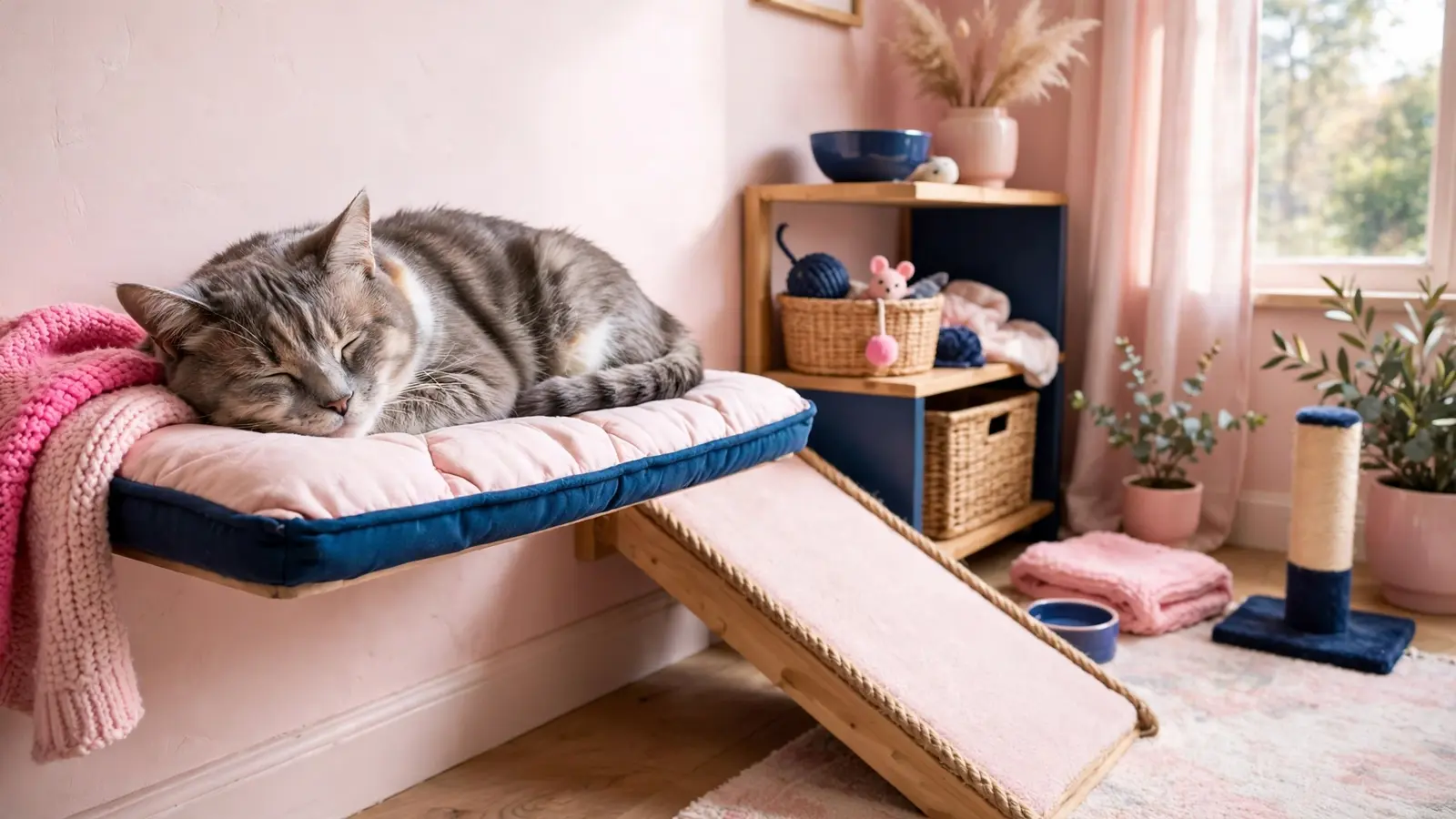
Lower the house, not the cat
Start with a lap of the flat and a critical eye on every jump. The windowsill, the back of the sofa, the bed, the top of the bookshelf: each one is a height the cat used to take in stride. For kittens and older cats with limited mobility, keep boxes, perches and shelves low or reachable by a ramp.
The trick is to add a route rather than remove a favourite spot. A step beside the sofa keeps the sofa. A ramp to the windowsill keeps the window. A low bed in the same sunny patch keeps the afternoon nap. Nothing the cat loved gets taken away; each place simply gains an easier way in.
Build the route from the floor up and test it yourself on hands and knees. If the cat has to jump up to reach the ramp, the ramp is in the wrong place. It should start on the floor, on a surface that stays put, and end level with the seat it serves.
The principle · Keep the spot · Change the way in
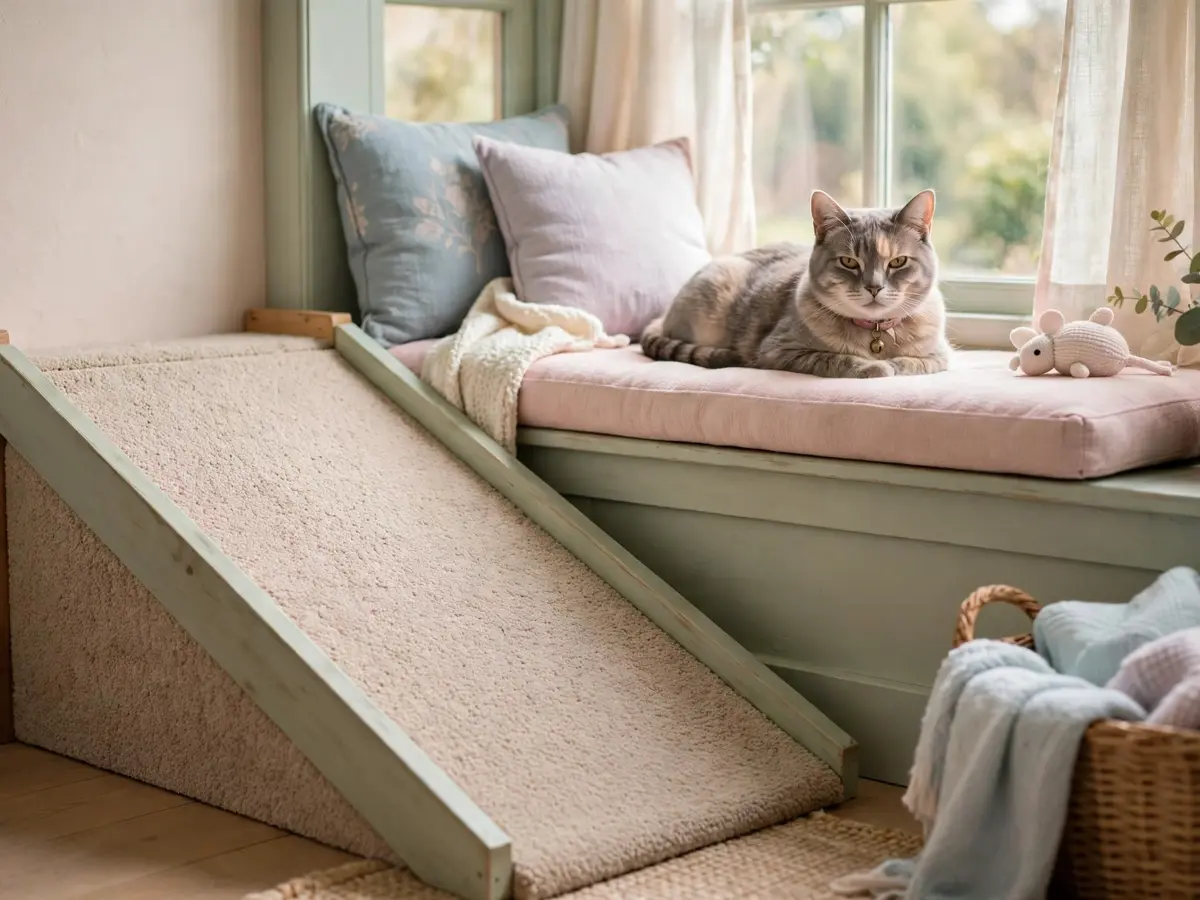
The padded perch by the window
An ideal perch is elevated, with a padded cover, and an elevated area gives a cat vertical space to monitor its environment.
For an older cat, "elevated" is relative. A perch at knee height with a thick pad is still a perch, still above the floor, and still a place to watch the street. What changes is the jump: the cat reaches it by a step or a short ramp, not by a leap from the rug.
Indoor resting areas, such as a perch or a secluded surface, should include a spot where the cat can see outdoors.
Padding is not decoration on a senior perch. Old joints meet a hard surface with less enthusiasm, so choose a cover you can wash, a base that does not rock, and a rim the cat can lean against. A folded duvet on a stable bench under the window costs nothing and does the same job as a bought perch.
Ramp or step? Both, in different places
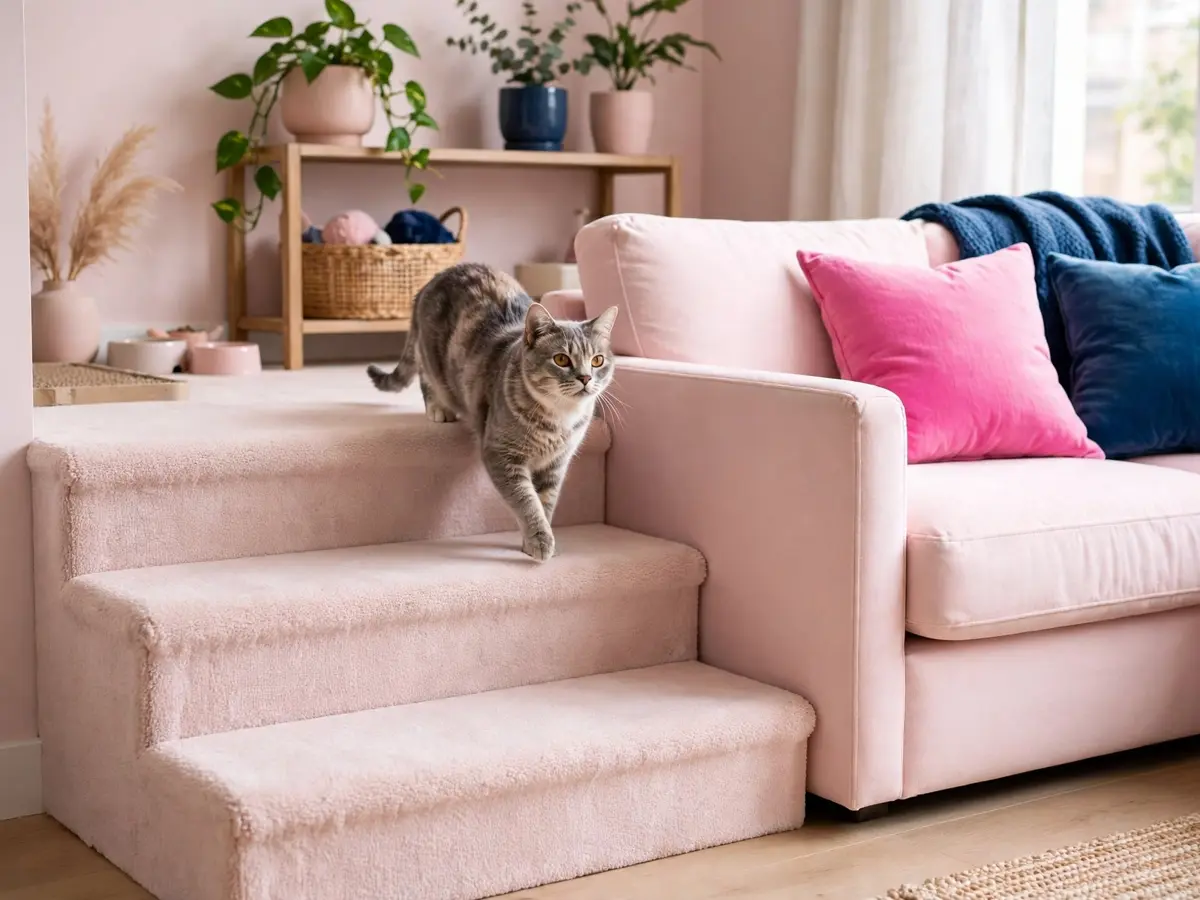
A ramp suits a long, low climb: the floor to a window seat, the floor to a bed, the floor to the top of a low dresser. A step suits a short gap: the sofa seat, the armchair, the second shelf of a cat tree. Most senior layouts end up using both, and neither is expensive.
- Slope: gentle enough that the cat walks it, not scrambles up it.
- Surface: carpet or a rubber-backed runner, so the paws stay put.
- Lip: a low edge on the open side, so a sleepy cat does not step off.
- Join: the ramp top sits level with the seat, with no lip to climb.
- Base: a floor that does not slide under the bottom end.
A ramp changes the furniture, not the cat. If the cat refuses the ramp, check the slope first, then the surface, then the height of the top join. If it still refuses to use a spot it always loved, that is a conversation for your vet rather than a reason to buy a second ramp.
Which access piece goes where
| Place | Piece | What to check |
|---|---|---|
| Window seat | Carpeted ramp | Top sits level, no step at the join |
| Sofa seat | Single wide step | Step base flat on a rug, not on bare floor |
| Bed | Low platform bed or step | Cat can reach it without a jump |
| Cat tree | One added step or a short ramp | Each jump shorter than the last |
| Hallway | Rubber-backed runner | Corners stay flat, no curl |
Add a route to the spot instead of moving the spot the cat already uses.
Floors that do not slide
Slick flooring is the quiet problem in a senior-cat flat. A cat that slips on a turn starts taking the long way around, and the long way usually means skipping the water bowl. Runners along the main routes and mats under the bowls turn the flat back into a place with grip.
Choose mats with a rubber backing and test them with a push of the foot. A mat that slides is worse than no mat, because the cat commits weight to it. At the top of a stair or the edge of a balcony door, use nothing loose at all.
The food and water corner deserves the same attention. A mat under the bowls catches splashes and stops the bowl from travelling, and a shallow bowl is easier for a cat that does not want to dip its chin. Keep the water a short walk from the food, and add a second bowl in the room where the cat sleeps.
A warm corner without a draft
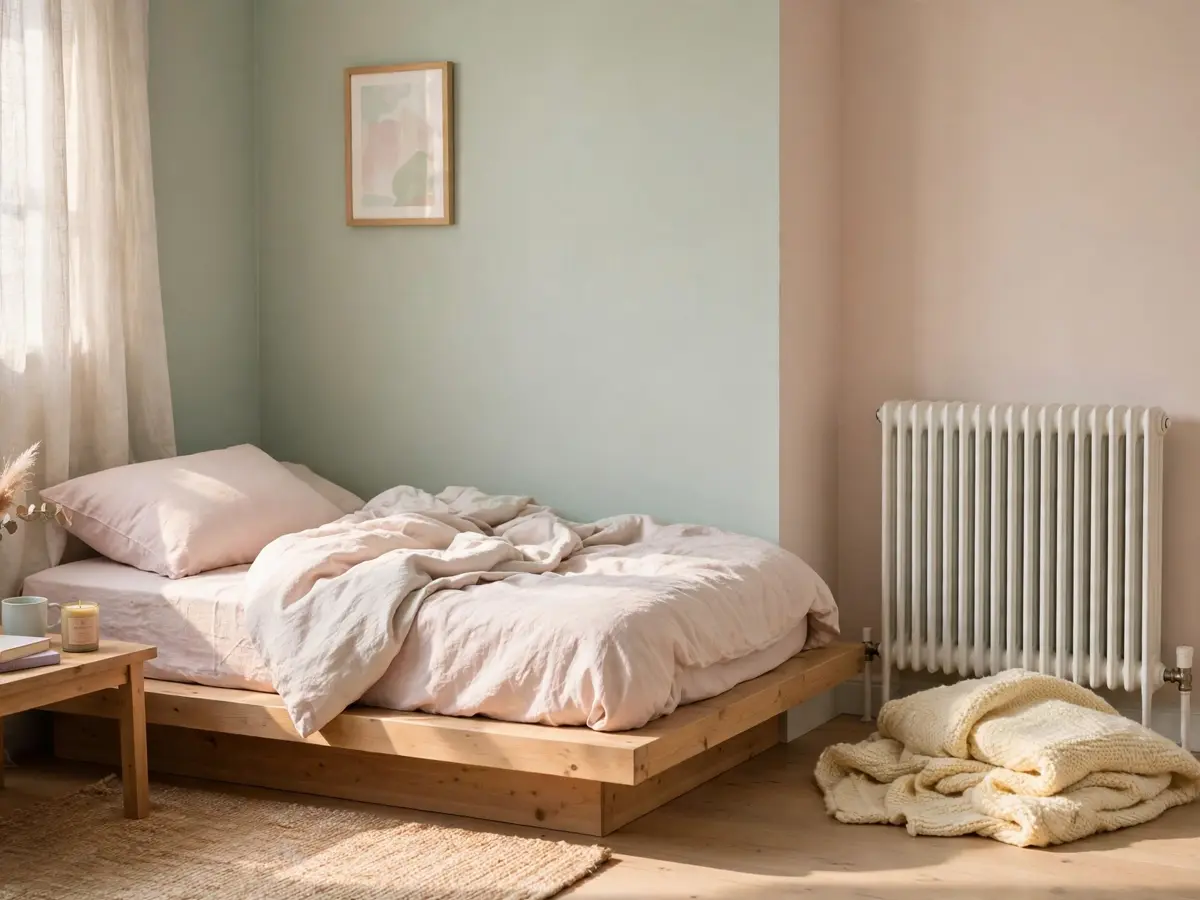
Older cats choose warmth the way younger cats choose height. Put the main bed off the floor on a low platform, away from the door draft and out of the path of the air conditioner, and give it a blanket the cat already likes. Near a radiator is good; against a radiator is not, so leave a hand-width of space and keep fabric off the fins.
A second warm spot costs one more bed and saves a climb. The window perch in the morning, the low bed by the radiator in the afternoon, and a folded blanket on the sofa for the evening: three spots, no jumps, and the cat moves with the sun instead of following it up the furniture.
Move the day closer to the cat
Distance is the other half of access. A cat that has to cross the flat for water drinks less often, and a cat that has to climb for food eats in shorter visits. Put one feeding spot and one water spot in the room where the cat spends the day, and keep the route to the box short and clear.
Keep the litter box on the same floor as the beds. A box at the bottom of a flight of stairs is a box an older cat starts to avoid, and a box behind a door that sticks is the same problem with a smaller excuse. Clear the path of laundry baskets and shopping bags, and check the lighting on the night route.
If the flat has a step between rooms, a shallow threshold ramp is enough to keep the route flat. The same carpet and rubber-backing rules apply: grip first, looks second.
The senior-cat access check
A room-by-room access check for an older cat
| Area | What to change | What to test |
|---|---|---|
| Window | Ramp or step up to a padded low perch | Cat walks up without a pause |
| Sofa | Wide step with a carpeted top | Step stays put under a push |
| Hallway | Rubber-backed runner | Corners flat, no sliding |
| Food and water | Bowl mat, shallow bowl, water in two rooms | Cat drinks without a long walk |
| Litter | Box on the same floor, path cleared | Cat reaches it without a jump |
| Sleeping | Low bed, off the floor, away from drafts | Cat settles without circling |
Test each change on hands and knees, at the cat's eye level, before the cat tests it for you.
For the perch side, the no-drill window perch guide covers rented-safe mounting at a lower height, and the cozy cat winter corner shows how the warm spots fit around the same window.
When it belongs with your vet
Furniture solves furniture problems. It does not solve a cat that struggles to rise after a nap, misses the box, stops grooming, or starts calling at night. Those are clinic questions, and the sooner they are asked, the more room there is to work with.
Write down what you see before the visit: which jump the cat avoids, how long the hesitation lasts, whether the change came on gradually or overnight. Keep the easier route in place while you wait for the appointment, and do not add a new supplement or a new food as a substitute for the examination.
For informational purposes, consult your vet about any change in movement, appetite or box use. The ramps and low perches on this page are there to keep the flat comfortable in the meantime.
Senior cat access questions
How do I know my cat needs a ramp instead of a jump?
Watch the jump, not the cat. A hesitation before takeoff, a heavy landing, or a long look at the gap between the floor and the sofa is the cat telling you the gap got bigger. For kittens and older cats with limited mobility, keep boxes, perches and shelves low or reachable by a ramp.
What makes a ramp easy for a cat to use?
A gentle slope, a carpeted surface, and a low lip on the open side. The ramp should start on a floor that does not slide and finish level with the seat, with no step up at either end. If the cat ignores it, the slope is usually too steep, not the idea.
Can I keep the tall cat tree?
Often, yes. Add a step or a ramp to break the climb into shorter jumps, and pad the landings. An ideal perch is elevated, with a padded cover, and an elevated area gives a cat vertical space to monitor its environment. A perch the cat can reach still counts even if it is lower than before.
Where should the bed go in a senior-cat flat?
Indoor resting areas, such as a perch or a secluded surface, should include a spot where the cat can see outdoors. Put the bed by the window but out of the draft, a hand-width off the radiator, and add a second bed at floor level so the cat does not have to climb to rest.
Do non-slip rugs matter that much?
They matter more than a new bed. Slick floors make every turn a small gamble for an older cat, and a runner along the main route turns the kitchen sprint into a walk. Choose mats with a rubber back, and check that the corners stay flat.
When is a change in jumping a vet question?
When the cat stops using a spot it always used, struggles to rise, or starts missing the box. A ramp changes the furniture, not the cat, so book the visit and keep the easier route in place while you wait. For informational purposes, consult your vet.
Save these on Pinterest
Pin the access check for the next home visit, and pair it with the small apartment cat corner ideas, the cat tree buying guide and the rest of the cat-friendly apartment decor collection. For informational purposes, consult your vet.
Keep the window, keep the sofa, keep the sunny nap: add a route instead of removing the spot.