 PawStyle Daily
Budgie & Cockatiel Corner
Bathing a Budgie: Three Gentle Ways
Birds bathe differently and one method rarely suits everyone. This page sets up the three that work in a small flat, shows how to read the bird's yes or no, and finishes with the drying half that most people skip. Nothing here is forced, and nothing but water goes in the dish.
By PawStyle Daily · Updated 18 November 2026
Good to know: you offer the water, the bird decides · plain water only, no additives · check with an avian vet for anything about health.
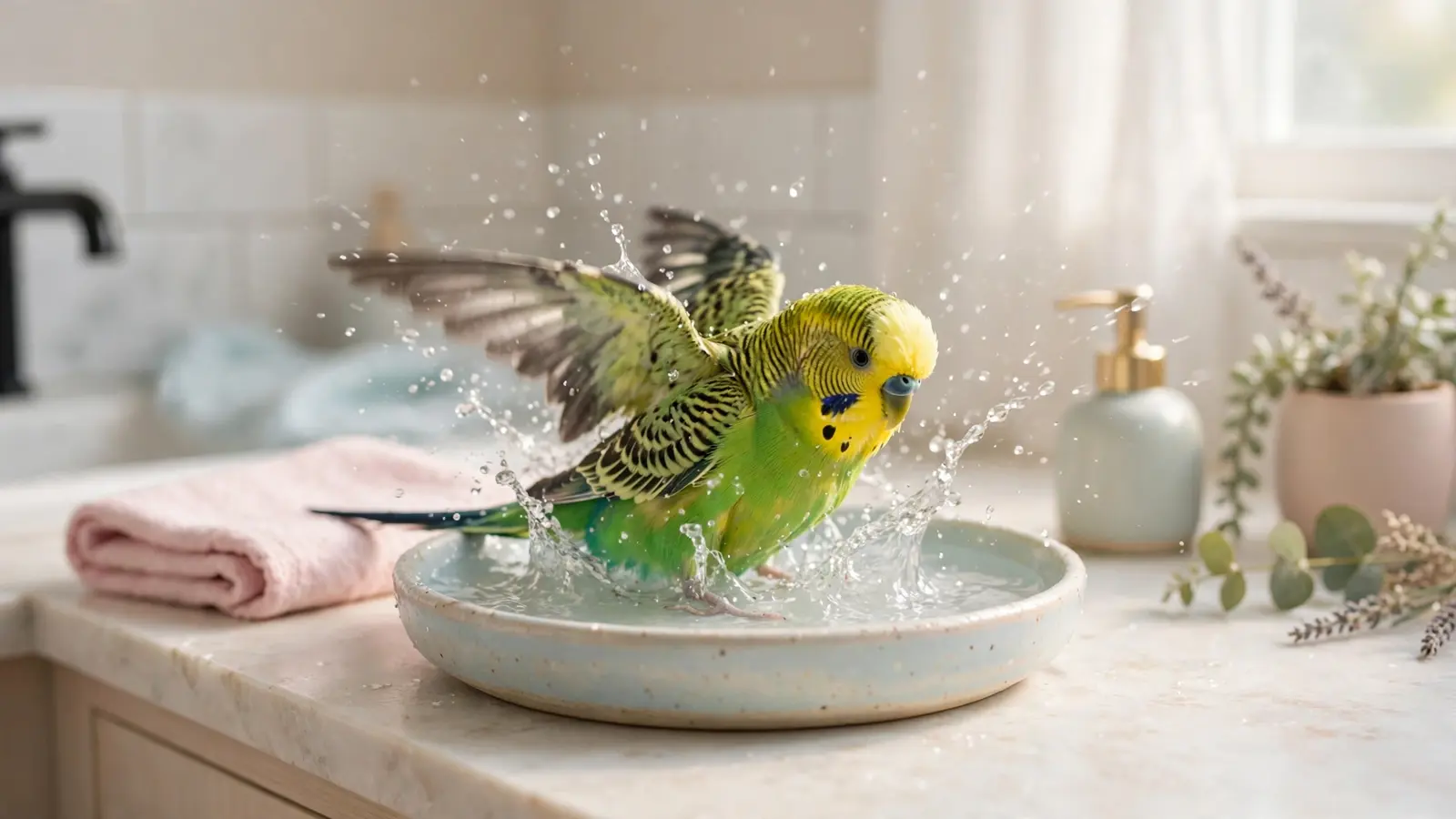
Bathing as part of the routine
A pet bird should be given opportunities to bathe as part of a regular grooming routine. It sits in the same column as nail and feather care: something the household provides, not a trick you have to earn.
Watch what a bird does once its plumage is damp — the long stretch, the careful work along each wing, the settle into a warm perch. That is the routine doing its job, and it is the reason the water stays on offer.
Note the wording above: opportunities. You set the water out and the bird decides. A budgie that ignores the dish for a fortnight has not failed at bathing, and there is no schedule to catch up on.
The three options
A shallow dish of water, a mist from a clean spray bottle, or a shower under the faucet are the three bathing options a bird owner can offer. All three are legitimate, so pick by the bird in front of you and keep a second one in the drawer for the days the first fails.
Which option suits which bird
| Option | Setup | Birds that usually take to it | What gives it away |
|---|---|---|---|
| Shallow dish | Wide, heavy, on a towel on the floor or a low shelf | Ground bathers and splashing budgies that like to stand in water | Tip-overs, or a dish the bird circles but never enters |
| Mist from a clean bottle | Fine spray, held above head height and angled up | Curious birds, and birds in moult that dislike the dish | A bird that hides or flaps away: that is your answer, stop |
| Under the faucet | A low stream into a clean basin, your hand beneath, warm room | Birds that investigate water and bond with you at the sink | Water pressure, a draught, and a bird standing too near the spout |
No option is the best one. The bird that finishes the routine is the right one.
The dish, set up so it survives
A dish that flips is a bath that ends in a wet floor and a frightened bird, so the container matters more than the water.
- Wide and shallow, with a rim the bird can stand on and step into. Depth reads as danger, not invitation.
- Heavy ceramic or a dish with a weighted base. A plastic lid bends and the whole thing tips.
- On a towel, on the floor or a low shelf, in the room the bird already patrols.
- Nothing around it that moves: no spinning fan, no dog bed, no doorway the household walks through.
- Empty and rinsed after every session. Standing water in a corner dish is not what the bird should drink from later.
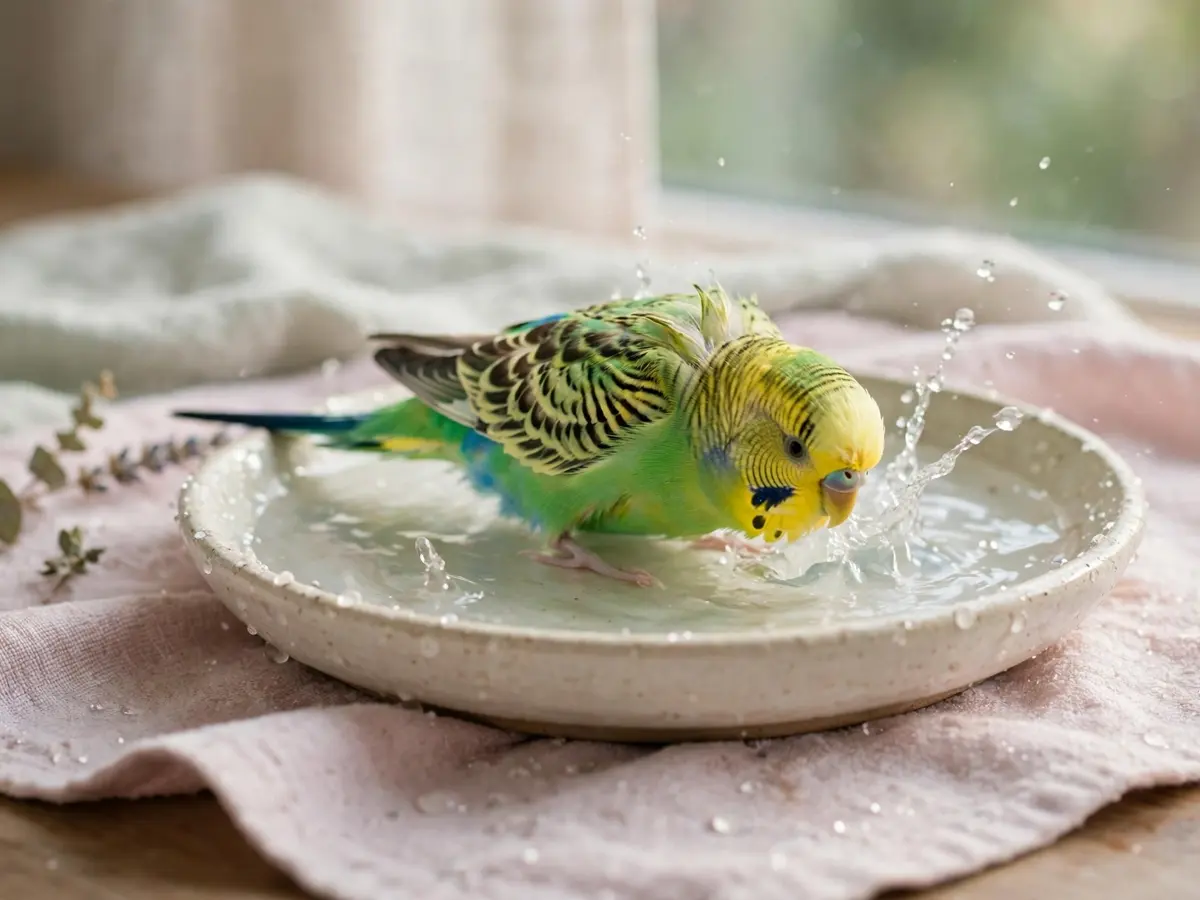
First session: put the dish in, sit back down with your own tea, and expect nothing. Most birds investigate the dish long before they stand in it, and that inspection counts as the bath starting.
Misting without frightening the bird
A bottle is the option people get wrong, because they spray at the bird. The mist should fall from above, like weather, not arrive at them like a jet.
- Keep one bottle for this alone. Rinse it and refill it with plain tap water so it never holds anything else.
- Hold it above and in front of the bird, aimed at the ceiling, and let the droplets come down through the air.
- One or two pumps the first time, then wait and watch the posture: feathers loose and leaning in, or feathers tight and moving away.
- If the bird leans in, work around the back and the wings. Avoid the face and the bill, and never soak the tail through.
- End while the bird still looks interested. A bird chased around the cage by a bottle learns to fear the bottle, not the water.
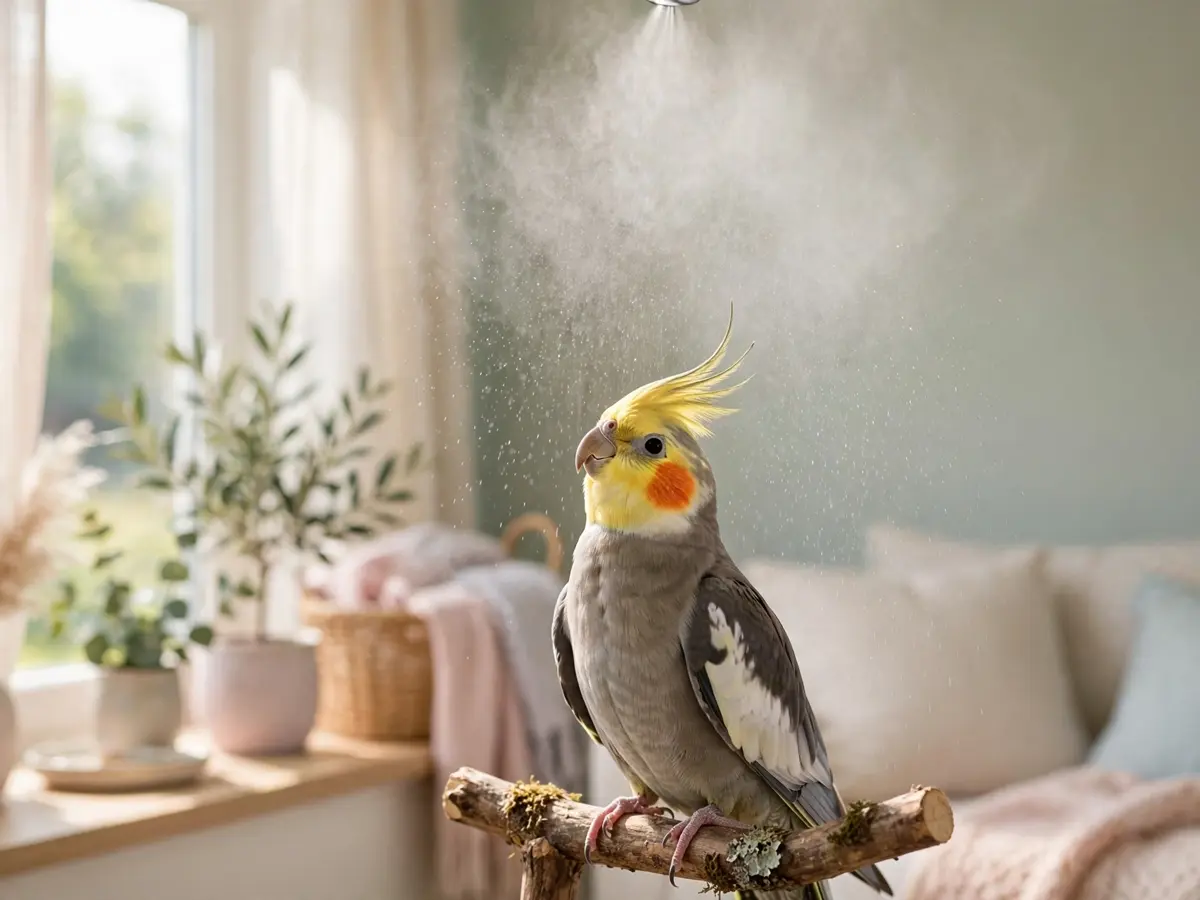
The sink and the faucet
This is the option that turns into a shared routine, because it happens where you are standing rather than on the floor.
- Warm the room first, and shut the window. A cold bathroom makes the whole thing unpleasant.
- Rinse the basin or sink with plain water: no cleaner left in it, no standing film.
- Run the stream low and let the bird sit on your hand or the rim, close enough to investigate.
- Keep the water off the head. Wet the back and the wings and let the bird preen the rest out.
- Lift the bird out before it slips once. A scare at the sink takes a long time to undo.
- Keep one towel on the shelf for hands, paws and the perch, so the floor stays dry.
Where the bird lives shapes this as much as the water does. The cage setup and care basics page covers placement and the room, and the perch diameter and wood guide covers the footing a damp bird has to grip.
Drying, the part people skip
Damp plumage holds cold, so the last ten minutes of the session matter as much as the bath.
- Warm room, closed window, no fan and no draughty corridor.
- Move the bird to a dry perch, or wrap it in a towel and hold it. Many birds doze mid-preen, which is the compliment at the end of a good routine.
- No hairdryer. The noise and the airflow are a bad combination for a bird, and the heat is impossible to judge from outside.
- Do not cover a soaking bird. Dry first, cover the cage later, when the plumage is back to normal.
- Rinse the dish, empty the basin and put the bottle away so the next session starts clean.
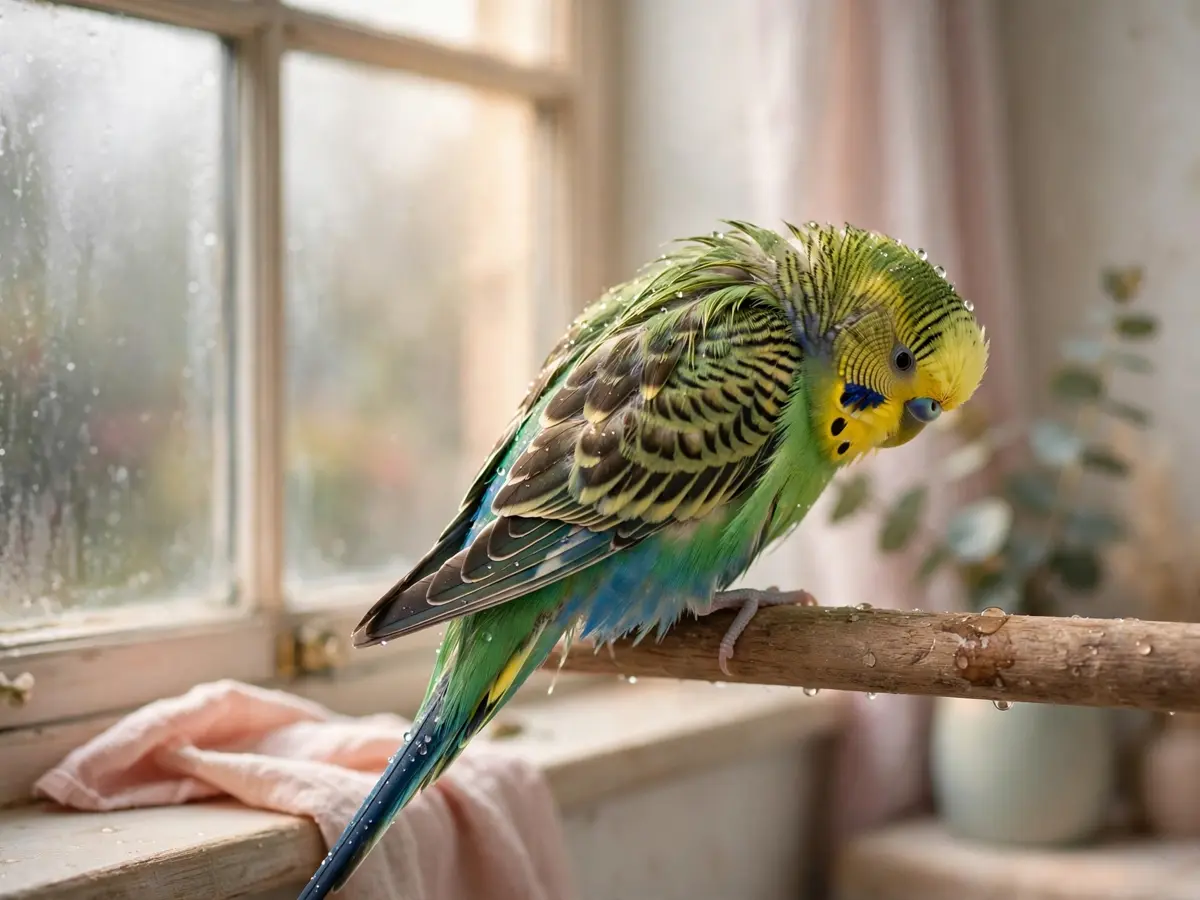
When a bird refuses
A refusal is information rather than a defect, and the honest answer is to change the option instead of raising the effort.
- A newly arrived or rehomed bird usually needs weeks of settling before any bathing routine starts at all.
- A bird sitting fluffed and quiet is not a bathing candidate. That bird needs warmth, quiet and an avian vet, in that order.
- A bird in moult often wants more, and a bird that has just moulted may want less for a while. Follow the bird rather than the calendar.
- Never bath over the food bowl, and never leave water in the cage where the bird drinks.
- Never hold a bird under the spray or in the dish. Restraint turns a grooming routine into a fight the bird remembers.
If you want the bird entertained while it dries, a foraging toy on the far side of the room keeps it busy and off the wet plumage. The DIY foraging toy build is the fastest one to make tonight.
Bird bathing questions
My budgie runs from the dish. Should I push it?
No. Bathing is offered, not imposed, and a bird that leaves the dish today will inspect it again next week. Put it in for an afternoon with nothing expected, then take it away while the bird is still curious rather than after it panics.
Can I use shampoo or a bird wash additive?
Plain water is the whole routine. Nothing goes in the dish, the bottle or the basin but water, and a bird that is dirty in a way water will not shift is a conversation for an avian vet rather than a bottle from the shelf.
Is misting the same as a bath?
Misting is one of the three options, and some birds treat it as the full event: feathers lifted, spray falling, then preening afterwards. Others only get damp plumage from it and still want the dish. Watch which one the bird finishes.
My cockatiel bathes in the sink but ignores the dish. Why?
Where the water sits matters as much as the water. A sink is high, close to you, and has a sound some birds find interesting, while a dish on the floor of a busy room is a different proposition. Move the water to where the bird already spends its day.
How do I keep the bathroom from getting soaked?
A towel under the dish, a towel on the shelf the perch stands on, and a bath placed low enough that the bird cannot launch upward and shake. Towelling the perch afterwards is quick; rinsing the room is not.
Should I bathe a bird that looks unwell?
Skip the water while a bird is off colour and check with an avian vet instead. Warmth, quiet and food matter more than plumage then, and a bird that sits fluffed up is not a bathing candidate.
Save these on Pinterest
Pin the three-option table next to the drying checklist, then keep the rest of the bird shelf together: the budgie cage setup checklist, the pellet conversion page and the board index at the Budgie & Cockatiel Corner.
Offer the water, read the answer, dry in a warm room. For anything about a bird's health, weight or breeding, check with an avian vet.