 PawStyle Daily
Budgie & Cockatiel Corner
Cockatiel Cage Setup & Daily Care Basics
A cockatiel's whole world is one cage and the ten minutes you spend on it each morning. Get the perches varied, the dishes on the bars instead of the floor, and the paper under everything fresh — and the rest of the day takes care of itself. This page walks a full setup from empty cage to first-night routine, then the daily ten-minute clean that keeps it that way. Check with an avian vet on anything that touches health.
By PawStyle Daily · Updated 17 November 2026
Good to know: perch variety · side-mounted dishes · daily ten-minute clean · check with an avian vet.
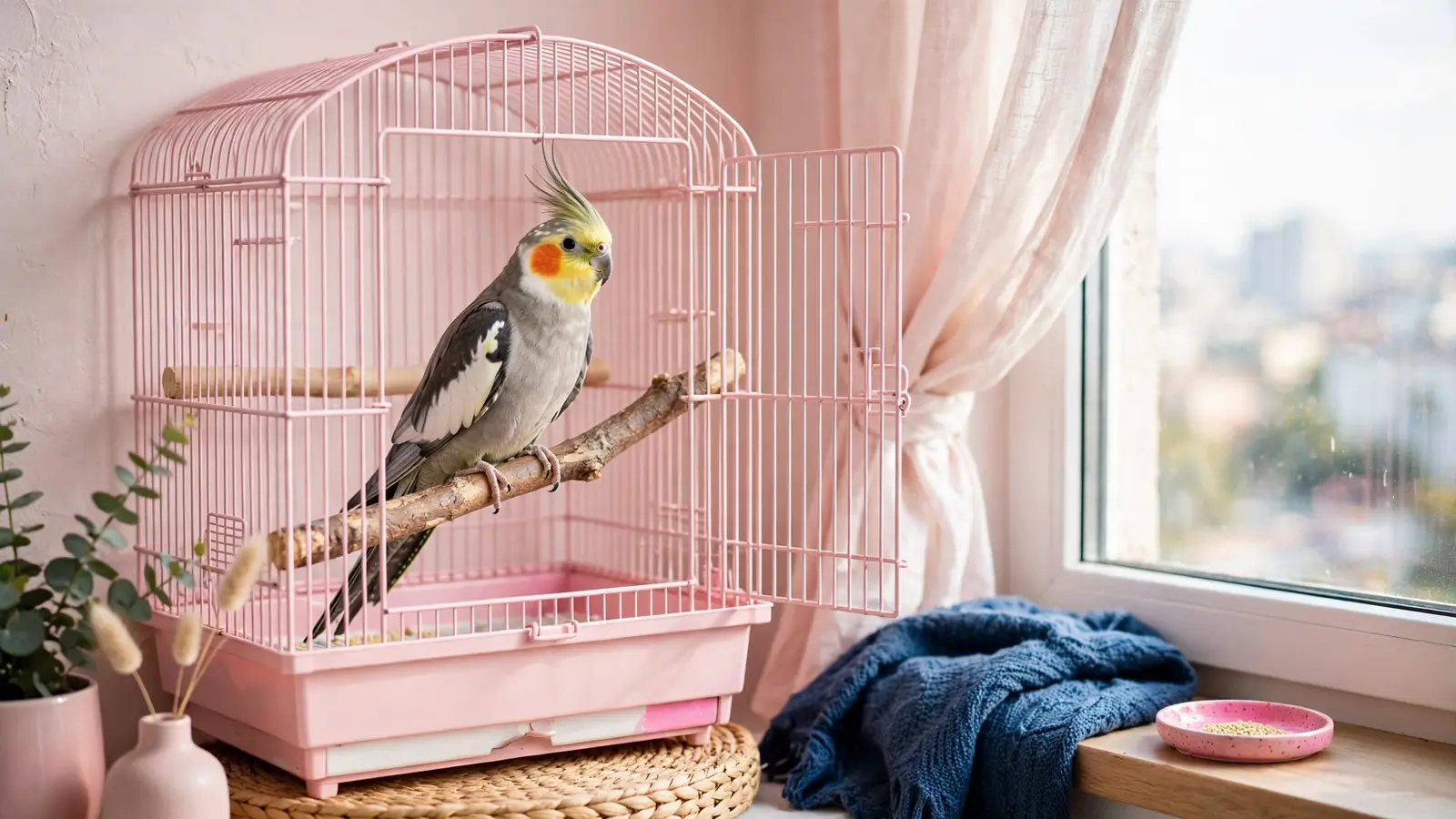
Where the cage goes
The placement rules are short: chest height or a touch higher, one solid wall behind the cage, daylight without direct sun, and no kitchen. A cockatiel relaxes with its back covered and its eyes on the room; direct sun turns a cage into an oven by afternoon; and a kitchen shares cooking fumes with a respiratory system built for clean air.
- Away from the door: the draft and the swing of an opening exterior door both land badly on a small bird.
- Near the action, not in it: a corner of the living room where people pass beats both the empty hallway and the middle of the TV wall.
- Cover at night: a fitted cage cover or a dark sheet gives the ten-to-twelve hours of dark quiet a cockatiel sleeps by.
The perch plan
Offer perches in an assortment of diameters, shapes and textures with natural wood ideal, and never use sandpaper perches because they are too abrasive for a bird's feet. In practice that means a natural-wood branch perch as the sleeper, a second natural perch of a different thickness near the food, and one rope or platform perch for the daytime spot.
Perch placement in a cockatiel cage
| Perch | Spot | Job |
|---|---|---|
| Natural wood, medium | The highest position — the sleep spot | Overnight grip with bark texture for the toes to work |
| Natural wood, different diameter | Beside the food station | A different grip while eating; keeps feet from one repetitive hold |
| Rope or cotton perch | Mid-cage, the daytime hangout | Soft standing for long afternoon sits |
| Platform perch | Opposite corner, lower | A flat rest for a foot that wants a change |
Spacing rule: perches sit far enough apart that the bird hops or flies between them, and no perch sits directly over another — nothing should land on the bird below.
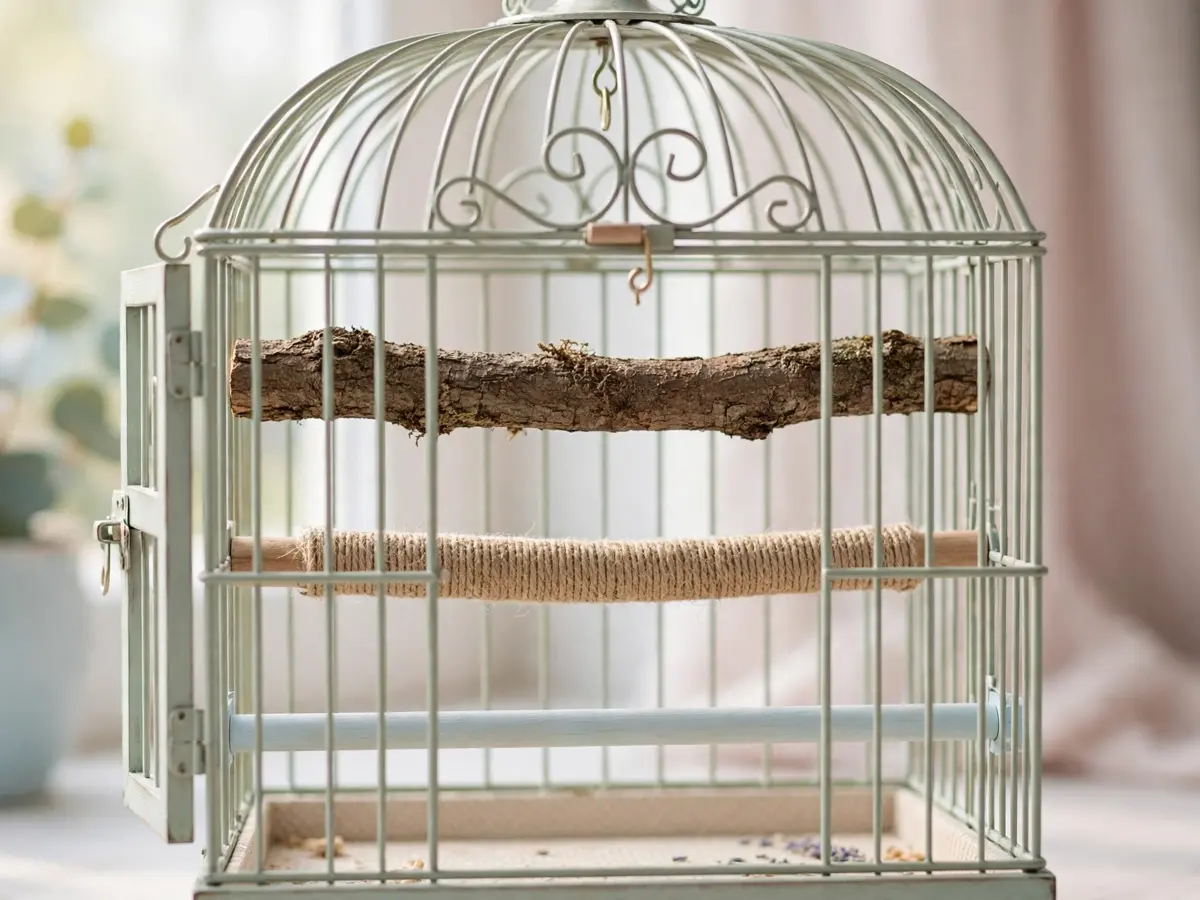
Dishes on the bars, not the floor
Attach sturdy, non-toxic food and water dishes to the cage sides rather than the bottom so droppings do not fall into them, and clean and disinfect them every day. Two side dishes — mounted beside a perch so the bird eats comfortably — plus a water dish on the opposite side keeps the daily wash to a five-minute job.
The same bar-mount habit makes travel and deep-clean days easier: dishes pop off the brackets, get scrubbed in the sink with a bird-safe dish soap, and go back before the morning refill.
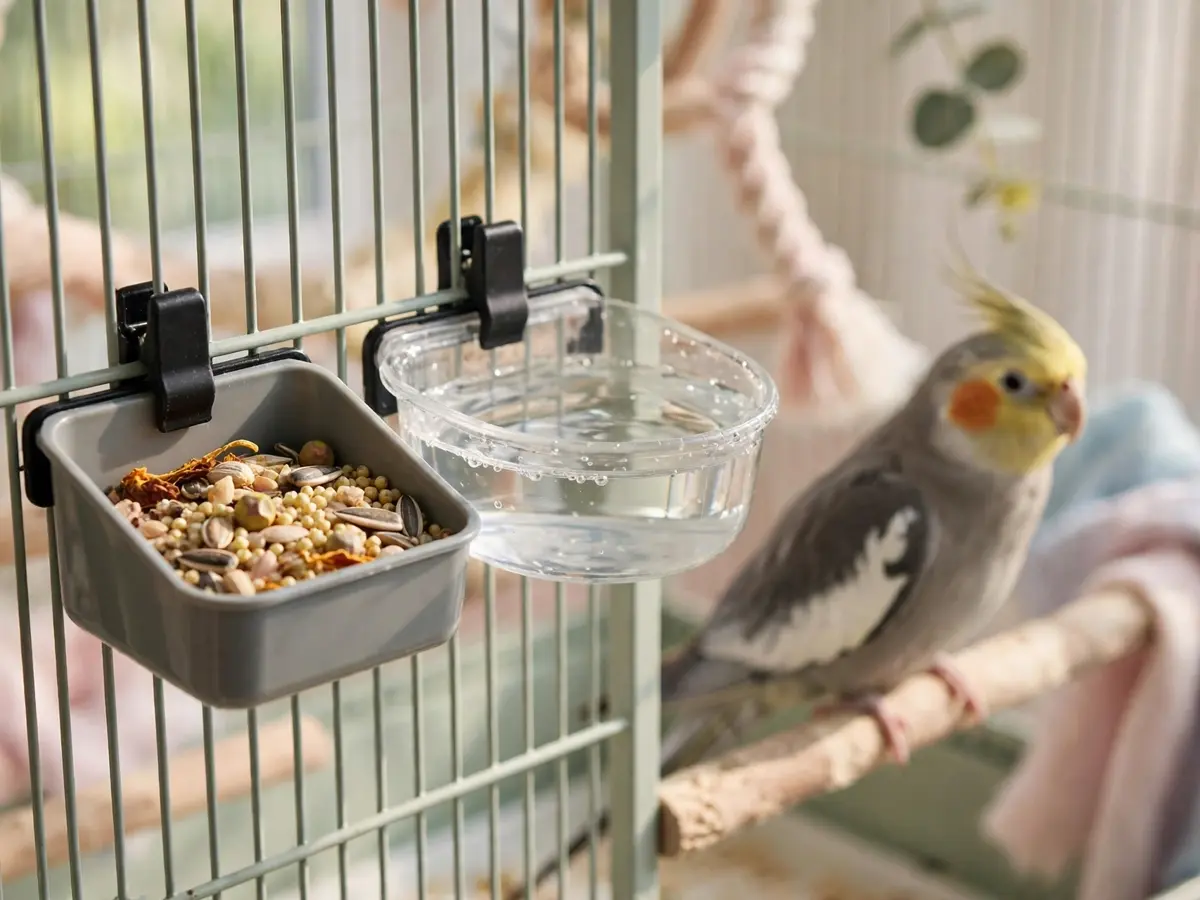
The dish contents: pellets first
Build the diet on pellets with produce - about 75-80 percent pellets with 15-20 percent fruits and vegetables - keep seeds and nuts strictly limited, and never starve a bird into pellets. Seeds are the treat and training currency, not the bowl. For the bird that arrived seed-only, the slow conversion method lives in our pellet diet conversion guide.
The produce share is the fun part: leafy greens hung from a clip, a slice of bell pepper on a side dish, a shred of carrot. Rotate what goes in so the week's bowl never looks the same twice, and check with an avian vet about anything new.
The ten-minute daily clean
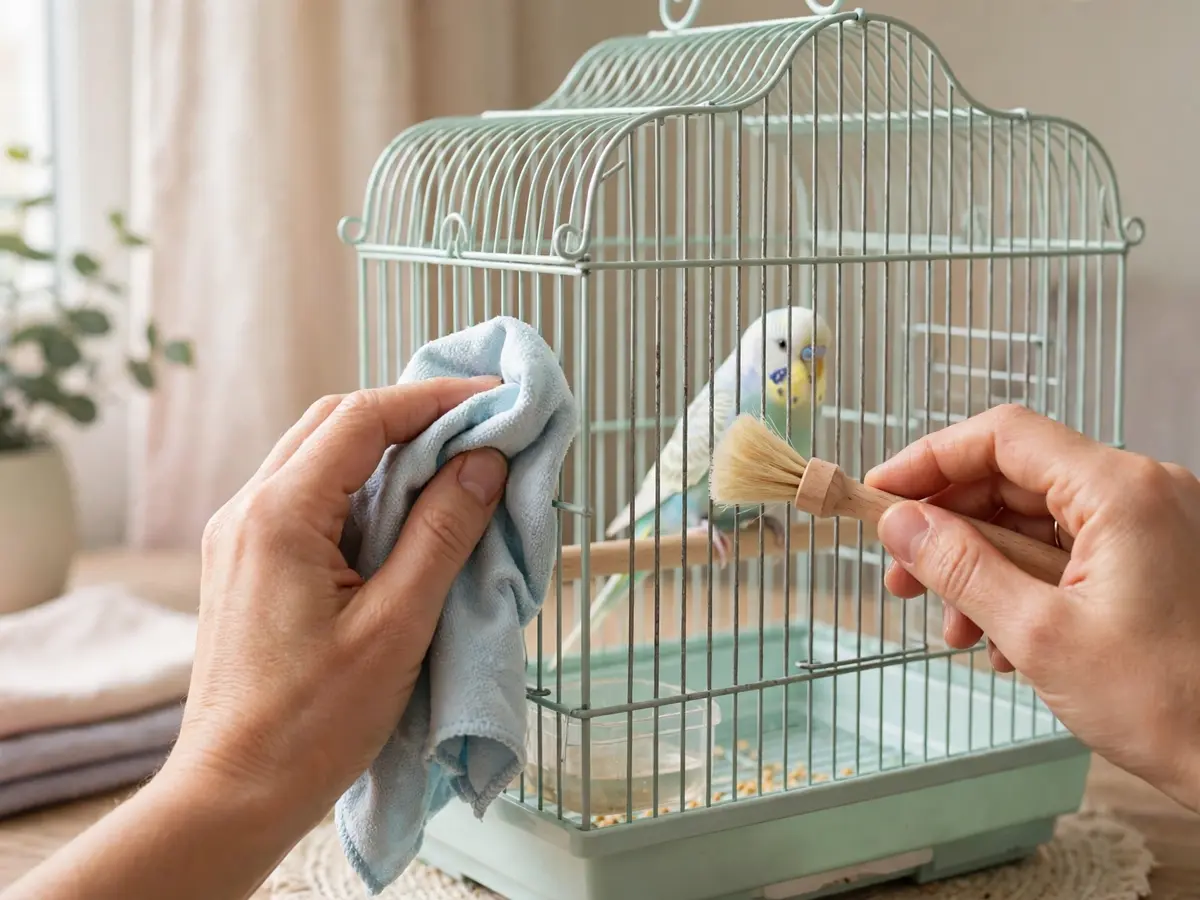
The routine is the same every morning, which is why it works. Paper out, dishes to the sink, wipe, refill, back in — done before the coffee finishes brewing.
- Slide the tray, fold the old paper over itself, and lay fresh paper — plain newspaper or cage liner, nothing scented.
- Take both dishes to the sink, scrub, refill: pellets in one, fresh water in the other.
- Wipe the sleep perch and any bars near the food station with a damp cloth.
- Spot-sweep the floor under the cage with the dedicated hand brush — the seed-husk drift stops at a weekly mop otherwise.
- Top up one foraging toy from the rotation; the DIY foraging toys guide has the paper-and-treat builds.
Sunday version: everything out, perches scrubbed, bars wiped down, tray washed, dried, rebuilt. About forty minutes.
The apartment-bird checklist
A cockatiel in a small apartment comes with a short list of household rules — no non-stick pan fumes in shared air, no candles or aerosols near the cage, windows screened before out-of-cage time, and the cage cover as the nightly off switch. The full apartment-side setup, from cage placement to a fume-safe kitchen habit, is in the budgie cage setup checklist, which runs the same rules for both small birds.
Cockatiel cage and care questions
How many perches does a cockatiel cage need?
Three or four, and none of them sandpaper. Offer perches in an assortment of diameters, shapes and textures with natural wood ideal, and never use sandpaper perches because they are too abrasive for a bird's feet. Varying the diameter is the point — same-size dowels give a foot one repetitive job all day.
Where do the food and water dishes go?
On the cage sides, not the floor. Attach sturdy, non-toxic food and water dishes to the cage sides rather than the bottom so droppings do not fall into them, and clean and disinfect them every day. Side dishes stay clean hours longer and pop out for a wash in one hand.
What does the daily clean actually involve?
Ten minutes: swap the cage-floor paper, wash and refill both dishes, wipe the perch the bird sleeps on, and spot-clean the bars near the food station. A weekly deep clean — everything out, scrubbed and dried — then fits a Sunday afternoon rather than a whole day.
Where should the cage stand in an apartment?
Against a wall at chest height, near daylight but out of direct sun, away from the kitchen and out of the direct line of an exterior door. Birds like one solid wall behind them and a view of the room — and a kitchen draft of fumes is a reason to keep the cage on the living-room side of the apartment.
How much of the diet should be pellets?
Build the diet on pellets with produce - about 75-80 percent pellets with 15-20 percent fruits and vegetables - keep seeds and nuts strictly limited, and never starve a bird into pellets. The conversion from seed takes patience; the pellet conversion guide below walks the slow way.
Save the setup, pin the routine
Pin this page beside the cage checklist and the conversion guide — the three together cover setup, food and cleaning. For everything bird-related on the site, start at the budgie and cockatiel collection.
Offer perches in an assortment of diameters, shapes and textures with natural wood ideal, and never use sandpaper perches because they are too abrasive for a bird's feet. Build the diet on pellets with produce - about 75-80 percent pellets with 15-20 percent fruits and vegetables - keep seeds and nuts strictly limited, and never starve a bird into pellets. Check with an avian vet on diet and health questions.