 PawStyle Daily
Budgie & Cockatiel Corner
5 DIY Foraging Toys for Budgies and Cockatiels
A foraging toy turns a bowl of pellets into ten minutes of work, and ten minutes of work is a busy, tired bird. These five builds come from paper, cardboard and natural wood, cost close to nothing, and take an evening each. The rules around them are short: plain materials only, a daily rinse, and supervision while the bird learns. Check with an avian vet.
By PawStyle Daily · Updated 16 November 2026
Good to know: one evening each · paper, cardboard, natural wood · supervised first week.
Why forage at all
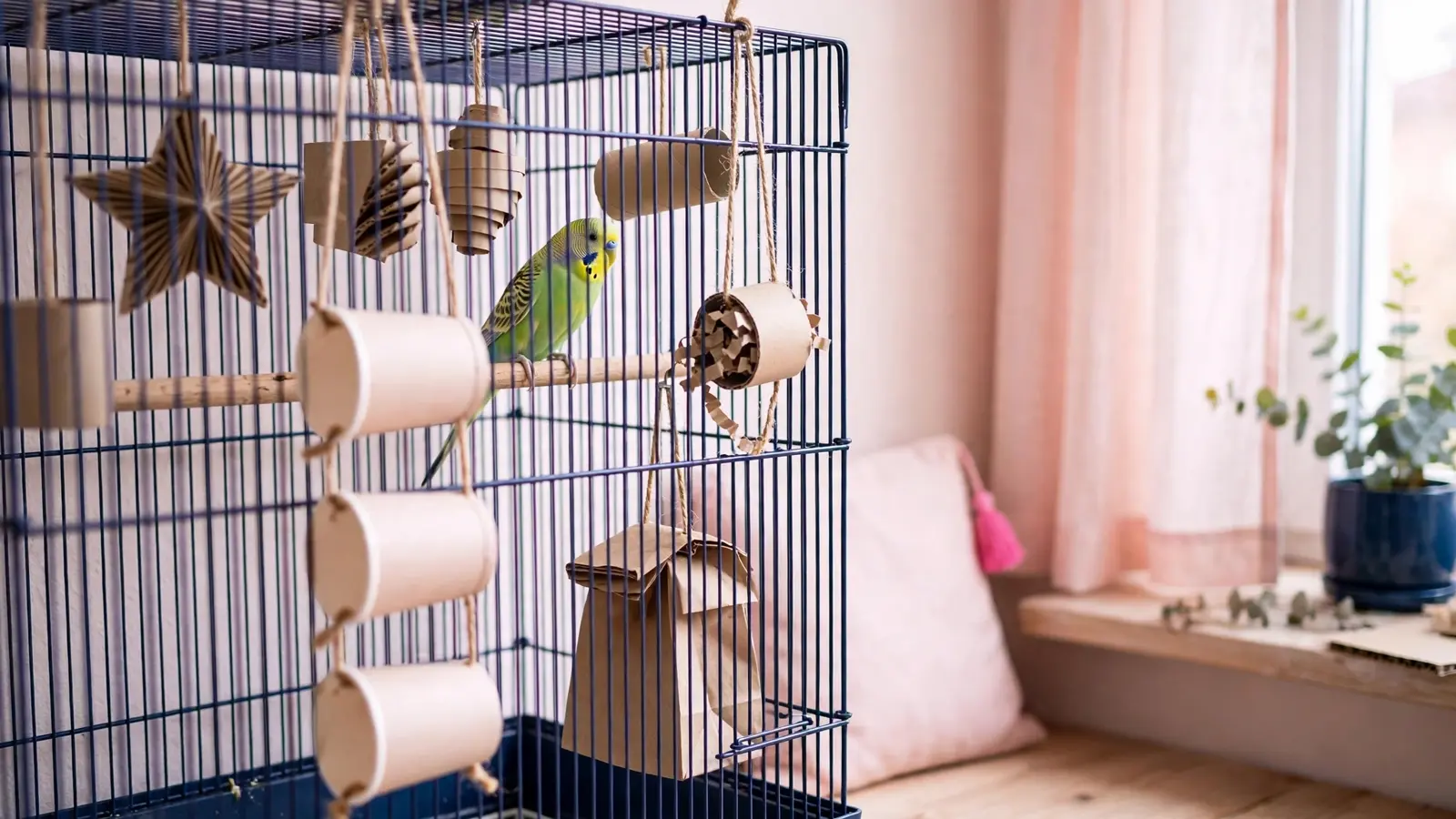
A wild parrot spends most of its day finding food, and a bowl in a corner finishes that job in three minutes. The rest of the day has to go somewhere, and in a small apartment it usually goes into chewing the perches, the dishes or the bars. A foraging station gives the day a job: food hidden in paper, tucked into folds, threaded onto wood, worked out piece by piece.
Build the diet on pellets with produce - about 75-80 percent pellets with 15-20 percent fruits and vegetables - keep seeds and nuts strictly limited, and never starve a bird into pellets. The toys below carry that diet; they never replace it, and every build starts with the bird's own pellets rather than new food it has never seen.
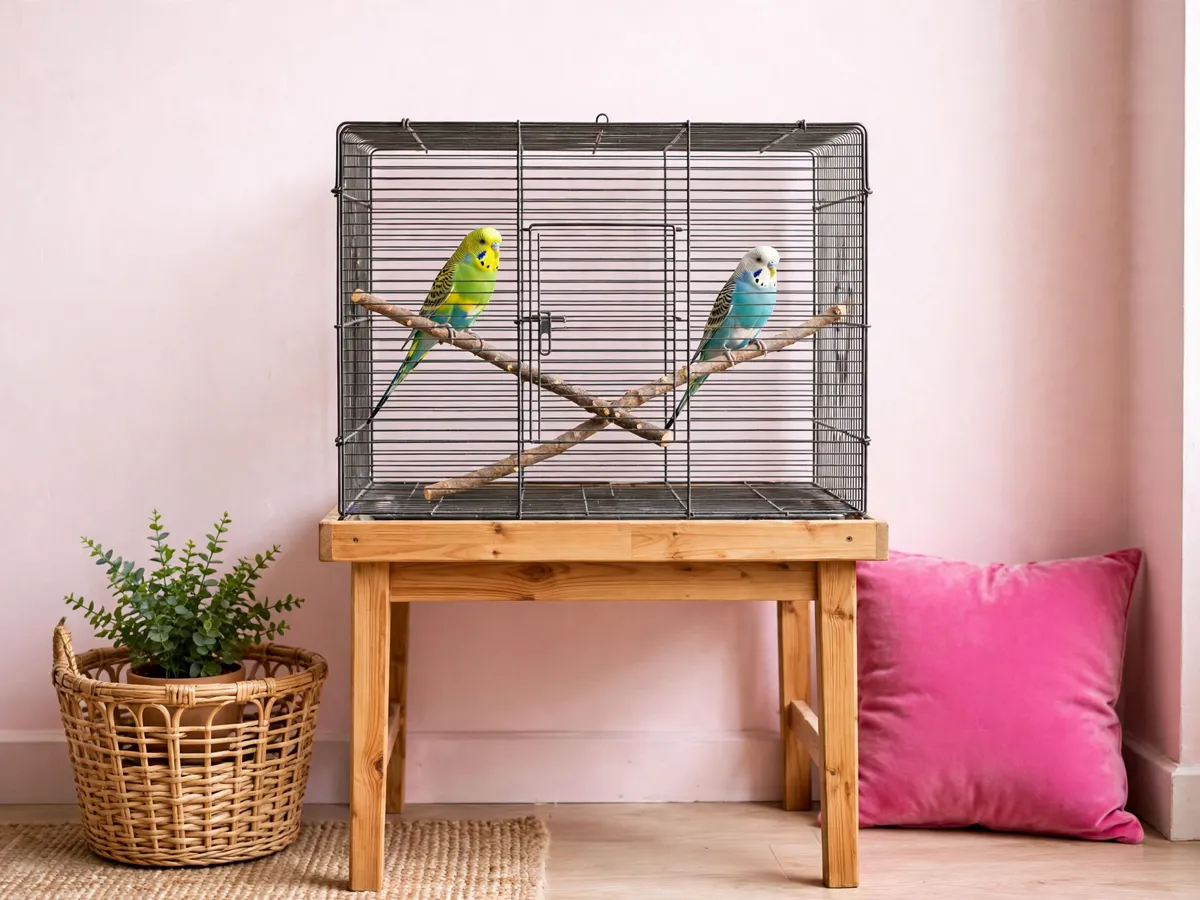
The other half of foraging is the cage it lives in. A budgie’s cage should be big enough to turn around without striking anything, move from perch to perch, and stretch or flap its wings - the minimum guideline is 1 ft x 1 ft x 2 ft (30 cm x 30 cm x 60 cm), and bigger is better. A foraging station in a small cage becomes an obstacle course, so the space rule comes first.
The material rules
Every build on this page uses three materials: plain paper, unprinted cardboard, and natural wood. Plain paper means printer paper, packing paper or a paper lunch bag, nothing glossy, scented or printed with colored inks. Cardboard means the inside of a shipping box, with the tape and staples cut away. Wood means a branch from an unsprayed tree, dried in the sun for a few days before it goes in the cage.
What goes in and what stays out
| Material | In or out | Why |
|---|---|---|
| Plain printer or packing paper | In | Chews into soft pieces, no coatings |
| Unprinted cardboard, tape removed | In | Holds its shape when wet, tears in beak-sized pulls |
| Natural branch, bark on, sun-dried | In | A perches-and-puzzle piece in one |
| Paper lunch bags | In | A whole foraging cup that folds shut |
| Glossy, printed or scented paper | Out | Coatings and inks are not chew material |
| Tape, glue, staples, thread | Out | A bird can untangle or swallow them |
| Treated or painted wood | Out | The treatment is the problem, not the wood |
| Plastic mesh and fabric scraps | Out | Frays into threads a bird can pull loose |
When a material is not on the In list, it stays out of the cage; paper and wood carry the whole page.
1-3. Three builds from paper
1. The paper twist. Fold a sheet into a strip, pour a line of pellets along the middle, and roll it into a loose twist with the ends tucked in. Hang it horizontal between two bars and cut one small hole near the center, so the first pellet shows. The bird learns the trick by seeing the food through the hole, and the twist gets rolled tighter over the following weeks.
Beginner · About 10 minutes · Paper + the day’s pellets.
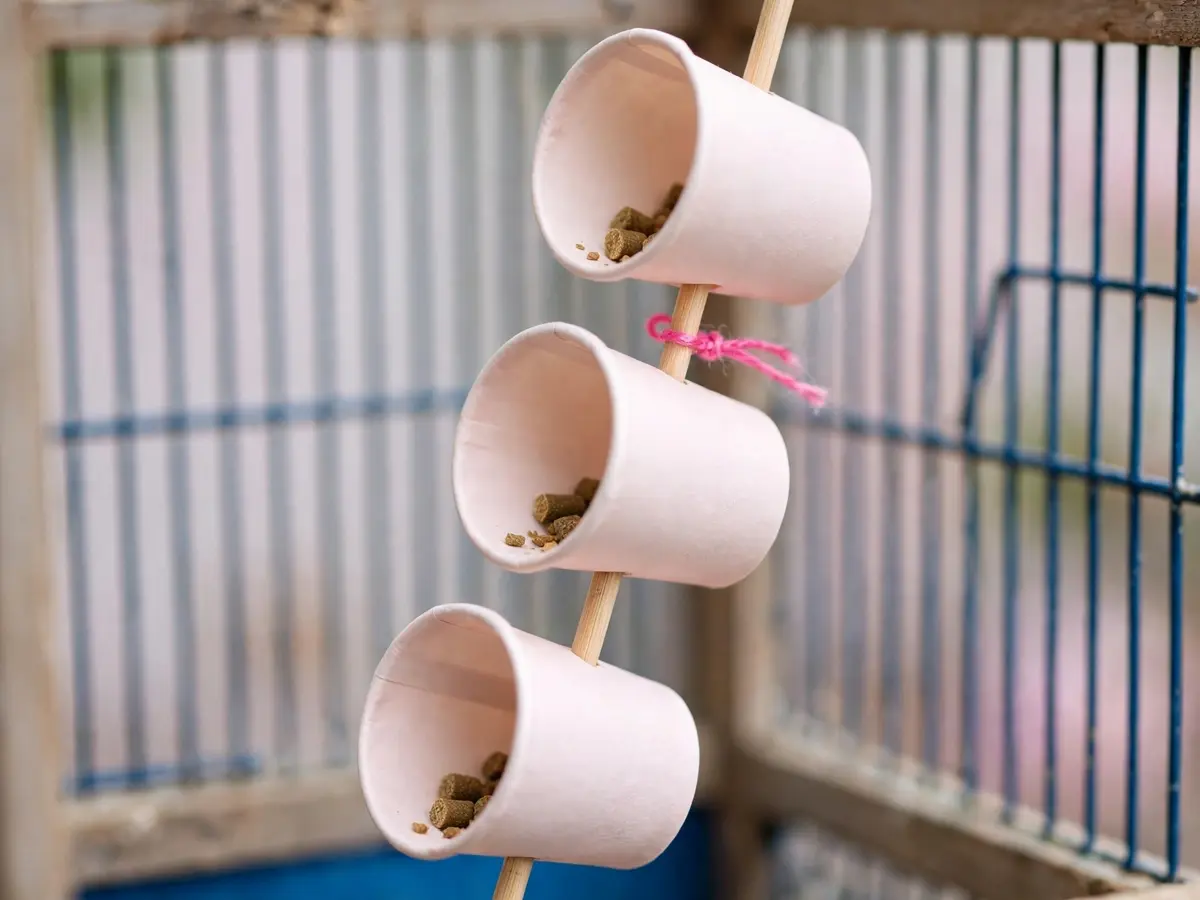
2. The cup ladder. Three paper cups, each with a few pellets in the bottom, taped to nothing and instead threaded onto a wooden skewer through a hole poked in the base, hung at an angle. Each cup sits a little off from the last, so the bird hops cup to cup rather than draining one. Crumple a small ball of paper over the pellets in the top cup for the harder level.
Beginner · About 20 minutes · Paper cups + a wooden skewer.
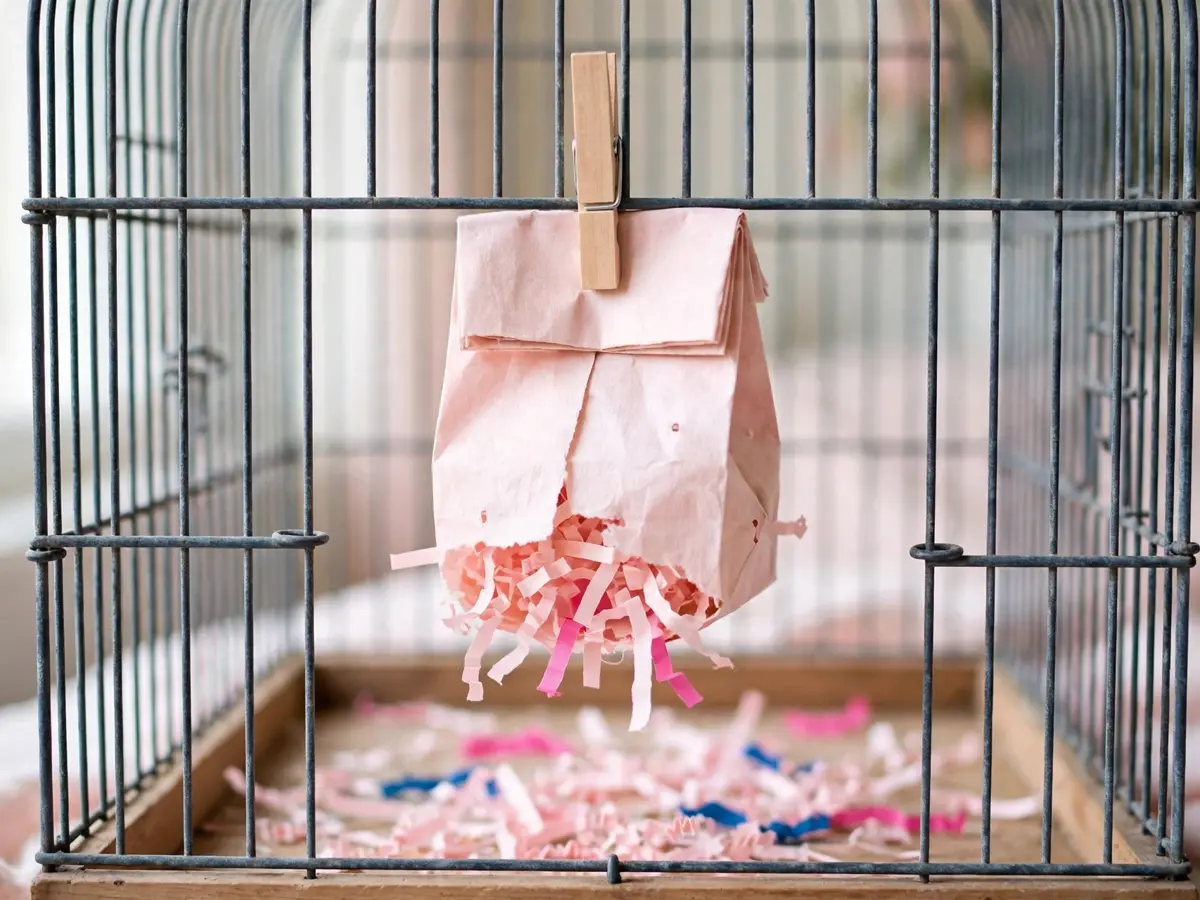
3. The lunch bag pinata. A paper lunch bag with pellets and a strip of shredded paper inside, folded twice at the top and hung from the cage bars with a plain wooden clip. The bird chews through the fold to reach the paper, then works the paper to reach the food. It is the messiest build and the favorite of most budgies, so it hangs over the tray, not over the room.
Beginner · About 15 minutes · Lunch bag + shredded paper + a clip.
4-5. Two builds from wood and cardboard
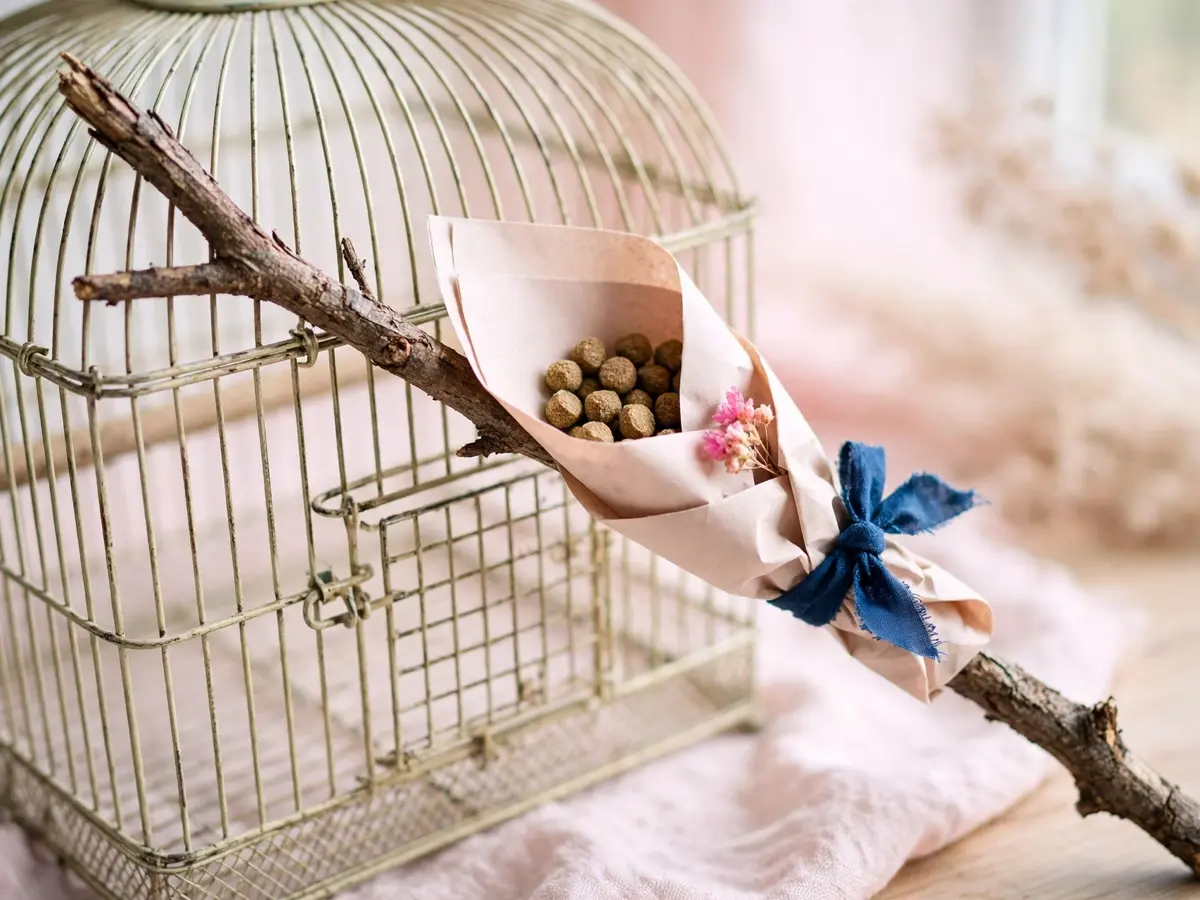
4. The branch skewer. A sun-dried branch, a few pellets threaded onto it between folds of paper, and the whole thing hung at an angle from the cage top. The bird lands on the branch itself, which makes the toy a perch and a puzzle in one. Offer perches in an assortment of diameters, shapes and textures with natural wood ideal, and never use sandpaper perches because they are too abrasive for a bird’s feet. The skewer adds one more diameter to the set, never replaces it.
Intermediate · About 30 minutes · Natural branch + paper folds.
5. The cardboard drawer. A small box with one side cut into flaps, the flaps folded inward like a drawer with pellets and shredded paper underneath. Each flap is a layer the bird has to pull aside, and the box gets mounted low in the cage where a bird that prefers floor work can stand on the tray and pull. Cut the flaps wide enough that a beak fits under them, and no narrower.
Intermediate · About 30 minutes · Cardboard box + shredded paper.
Where the toys hang
A foraging station has three bad neighbors: the dish line, the sleeping perch and the door swing. Keep the toys out of all three, and everything else in the cage is fair game. Attach sturdy, non-toxic food and water dishes to the cage sides rather than the bottom so droppings do not fall into them, and clean and disinfect them every day; a toy hung above the dishes undoes that rule in a day, so the toy line and the dish line stay separate.
The tray is the other boundary. Paper and cardboard builds shed as they get worked, and the shed lands somewhere. Hang the messy builds over the tray end of the cage, and the tray gets a fresh liner every morning the way it always does. For the rest of the cage layout, our budgie cage setup checklist covers perch heights, dish clips and the Sunday reset.
The rinse and rotation
Foraging toys get food on them, and food on paper is a short life. The rotation keeps that from becoming a problem: paper twists and bag pinatas last about a week, cup ladders two, wood skewers a month with fresh paper each refill. Whatever the material, the toys get a rinse in warm water on the same day the dishes are washed, and a full dry in the sun before they go back in.
Cleaning rotation for foraging toys
| What | How often | What to do |
|---|---|---|
| Paper twist and bag pinata | Weekly, or when chewed through | Replace the paper, keep the clip, rinse the clip |
| Cup ladder | Every two weeks | Fresh cups on the same skewer; the skewer gets a rinse and a sun dry |
| Branch skewer | Monthly, paper refilled each week | Rinse the wood, dry in the sun, re-thread with fresh paper |
| Cardboard drawer | Every two weeks | New box, same spot; flaps cut fresh each time |
| Anything wet or soiled | The same day | Out of the cage, rinse, full dry, or replace outright |
Warm water and sun carry the whole rotation; nothing on this table needs a bottle.
The supervised first week
A bird that has never foraged treats a full toy as scenery. Fill the first build in front of the bird, cut one visible hole, and hang it beside the bowls rather than across the cage. Stay in the room for the first few sessions, and watch the feet rather than the beak: a bird that grips well and pulls is working the toy, a bird that hangs on with one foot and flaps is stuck, and the build comes down for a re-think.
Rotate one build at a time. Two toys in the cage at once is a busy cage; five is furniture, and the bird picks the easiest one. When a build stops being interesting, retire it for a week and bring it back rather than buying the next one.
Budgie, cockatiel, and the size difference
The five builds are one family of toys scaled by paper width. A budgie works a fold with its tongue and a quick bite, so a roll narrower than a finger is enough, and a hole the width of a pencil is already a puzzle. A cockatiel brings a bigger beak and a longer reach: the same roll becomes a wider strip, the hole becomes a thumb-width gap, and the branch skewer moves up a diameter.
Nothing in the build changes except the opening. Cut the first version generous, watch one session, and tighten only after the bird has solved the easy one. A toy that is too small for the bird is the more common mistake: paper that tears before the food comes out ends the game in seconds, and a cup a cockatiel can crush flat teaches nothing.
Species also decides where the toy sits. Budgies work in short bursts and use the whole cage, so a toy near the middle bars gets the most traffic. Cockatiels tend to pick a station and stay, so the build that hangs beside the favorite perch is the one that gets worked. Watch a week before adding a second.
Shredded paper, and what it is for
Shredded paper is not filler. It is the part of the build the bird has to move before the food appears, so cut it into strips about the width of the bird’s beak and pack it loose. Packed tight, it becomes a wall; packed loose, it becomes a puzzle the bird can pull apart in a few pulls.
Keep one box of strips cut ahead of time, from plain paper only, and refresh the stuffing when a toy is rebuilt. The strips that come out of a used toy go in the bin rather than back in the box, because they have been in a cage for a week.
The same strips line the box for the cardboard drawer and give the lunch bag its inside layer. Two or three handfuls per build is plenty; the toy should look half full, not stuffed, so the first pull already shows food.
Common failures and the fix
Foraging builds fail in the same few ways every time, and the fix is nearly always easier paper, not a better design.
What goes wrong and what to do
| Failure | Why it happens | Fix |
|---|---|---|
| The bird never touches the toy | The food is invisible and the paper is too tight | Cut a window, show the pellets when you fill it, roll looser |
| The twist empties in one minute | The roll is too loose for a learner | Roll tighter, fold the ends in, add a paper ball inside |
| Food lands in the water dish | The toy hangs over the dish line | Move the toy to the tray end; the dish line stays clear |
| The paper goes soggy in a day | Produce in the toy touching damp paper | Wet produce goes in the dishes; the toys carry pellets |
| The bird chews the clip instead | A plastic clip is the shiniest thing on the build | Switch to a plain wooden peg or a paper loop |
| The cage feels crowded | Too many builds at once | Two toys in the cage, the rest in the rotation box |
Every row resets to the same rule: plain materials, dry paper, and food the bird already eats.
Foraging toy checklist
- Plain paper, unprinted cardboard, sun-dried natural wood
- No tape, glue, staples, thread, gloss or scent anywhere
- Toys hung clear of the dish line, the sleeping perch, the door
- Food the bird already eats, visible through the first hole
- A daily rinse with the dishes, a full dry before it goes back
- Two builds in the cage at a time, the rest in rotation
- Supervised sessions in the first week
Questions we get about foraging toys
What materials are safe for a DIY foraging toy?
Plain paper, unprinted cardboard, and natural wood branches with the bark on, dried before use. Anything gluey, glossy, metallic, painted, scented or sticky stays out of the build, and so does anything with a thread a bird can untangle. Untreated paper and wood are the whole material list; the point of the toy is the puzzle, not the craft. Check with an avian vet.
How often do I replace a foraging toy?
Paper and cardboard toys are single-week builds: swap them when they look chewed through, wet or flattened. Attach sturdy, non-toxic food and water dishes to the cage sides rather than the bottom so droppings do not fall into them, and clean and disinfect them every day; toys get the same daily rinse and a weekly dry-out in the sun.
Where do I hang the toy in the cage?
Away from the dish line, the sleeping perch and the door swing, so the bird can land on it without dropping food into a bowl. A budgie's cage should be big enough to turn around without striking anything, move from perch to perch, and stretch or flap its wings - the minimum guideline is 1 ft x 1 ft x 2 ft (30 cm x 30 cm x 60 cm), and bigger is better, so a foraging station still leaves flying room.
Do foraging toys replace food bowls?
No, they sit beside them. Build the diet on pellets with produce - about 75-80 percent pellets with 15-20 percent fruits and vegetables - keep seeds and nuts strictly limited, and never starve a bird into pellets. Foraging toys carry a portion of the day's pellets and produce, and the bowls keep the rest, so a bird that ignores the toy still eats.
My budgie ignores the toy. What now?
Show the food first. Fill the toy with the bird's favorite pellets in front of it, leave it half open so the first piece falls out on its own, and start the build beside the bowls rather than across the cage. A bird that has never foraged needs one visible win before the puzzle is worth solving. Check with an avian vet.
Are there toys I should not build at all?
Anything with long threads, loose staples, tape, glue, metallic shine, mirrors meant for children's crafts, or fabric that frays. A too-small or weak toy is a hazard in itself, and a toy that holds water is worse than no toy. When in doubt, leave it out and rebuild from paper.
What we use
What we use for foraging builds
Paper cutters, wooden pegs, skewers and spare dishes for the foraging rotation, in one list.
See what we use →As an Amazon Associate we earn from qualifying purchases.
Save these on Pinterest
Pin the build your bird would like. The Budgie & Cockatiel Corner collection holds the cage setup checklist.
For the corner around the cage, the cat-side small apartment cat corner aesthetic guide has the same renter rules for perches and trays.
Sources
The housing and diet rules on this page come from veterinary sources, not from our own head: