 PawStyle Daily
Budgie & Cockatiel Corner
Bird Perch Diameters and Safe Wood Types
The perch aisle is the most confusing five minutes of bird ownership, and it does not have to be. A budgie or cockatiel needs a handful of perches in different thicknesses, natural wood where possible, and none of the sandpaper sleeves that still come glued to some starter kits. This page turns the aisle into a short checklist: what diameter to reach for, which wood to buy, what to skip, where the dishes hang, and the cage size that holds it all. For informational purposes, check with an avian vet on anything that touches your bird's health.
By PawStyle Daily · Updated 17 November 2026
Good to know: assorted diameters · natural wood first · no sandpaper perches · side-mounted dishes, washed daily · for informational purposes, check with an avian vet.
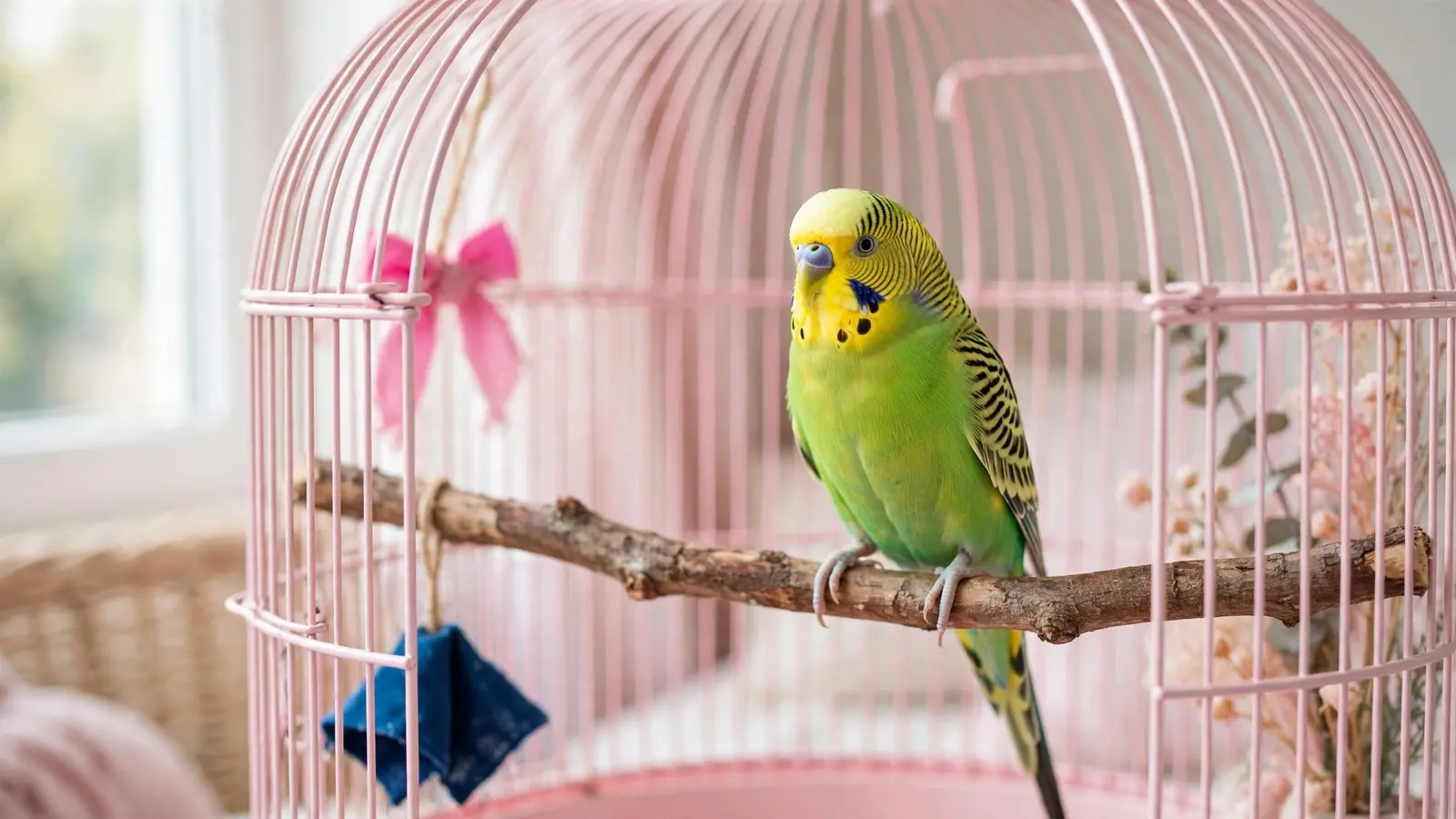
Why one dowel is not a setup
A bird stands on its feet roughly all day and all night. When every perch in the cage has the same diameter, the same joints bend to the same angle hour after hour, and the foot never gets a different job. That is the argument for variety — not decoration, but the chance to change grip.
Starter cages often ship with two identical wooden dowels and one plastic swing. It looks complete. In practice the bird spends months holding one shape, and the owner later wonders why the cage feels bare of anything worth hopping to. The fix costs less than dinner: a branch perch, a second natural perch of a different thickness, and one soft daytime option.
Offer perches in an assortment of diameters, shapes and textures with natural wood ideal, and never use sandpaper perches because they are too abrasive for a bird's feet. Everything else on this page arranges itself around that one paragraph.
Choosing diameters without a ruler
You do not need calipers to buy a perch. You need your hand, because the household objects below are close enough to sort any bin at the bird shop. Hold the object against the perch and match it.
Diameter markers from around the house
| Everyday object | Rough diameter | Who it fits |
|---|---|---|
| Standard pencil | About half a finger width | The narrow end of a budgie's range |
| Your index finger | The everyday small-bird perch | Budgies and cockatiels at rest |
| Broom handle | A step up from the finger | The wider daytime perch |
| Two fingers together | The thick end of the range | A change of grip, not the sleeper |
The test that outranks the table: on the right perch the front toes wrap most of the way around without meeting the back toe, and the foot rests flat. Toes that overlap mean too thin; a foot that cannot close means too thick.
Buy for the feet you have, not the number on the label. A perch that passes the finger test in the shop is the right perch, whatever the packaging calls it.
Natural wood, and how to pick it
Natural wood wins for one plain reason: bark. Bark gives toes something uneven to work against, and no lathe-turned dowel copies it. Branch-shaped perches also bend and fork, so one piece holds two grip widths at once.
- Shop perches first: bird-shop branch perches are dried, cleaned and sized for small birds, which makes them the safe default for a first setup.
- Home branches with rules: only from a tree you can name, untreated, scrubbed and dried before it goes anywhere near the cage. Skip anything cut beside a road or sprayed this season.
- Texture mix: bark-on wood, one rope or cotton perch for the daytime, and a flat platform for a change of stance. Three materials, three different jobs.
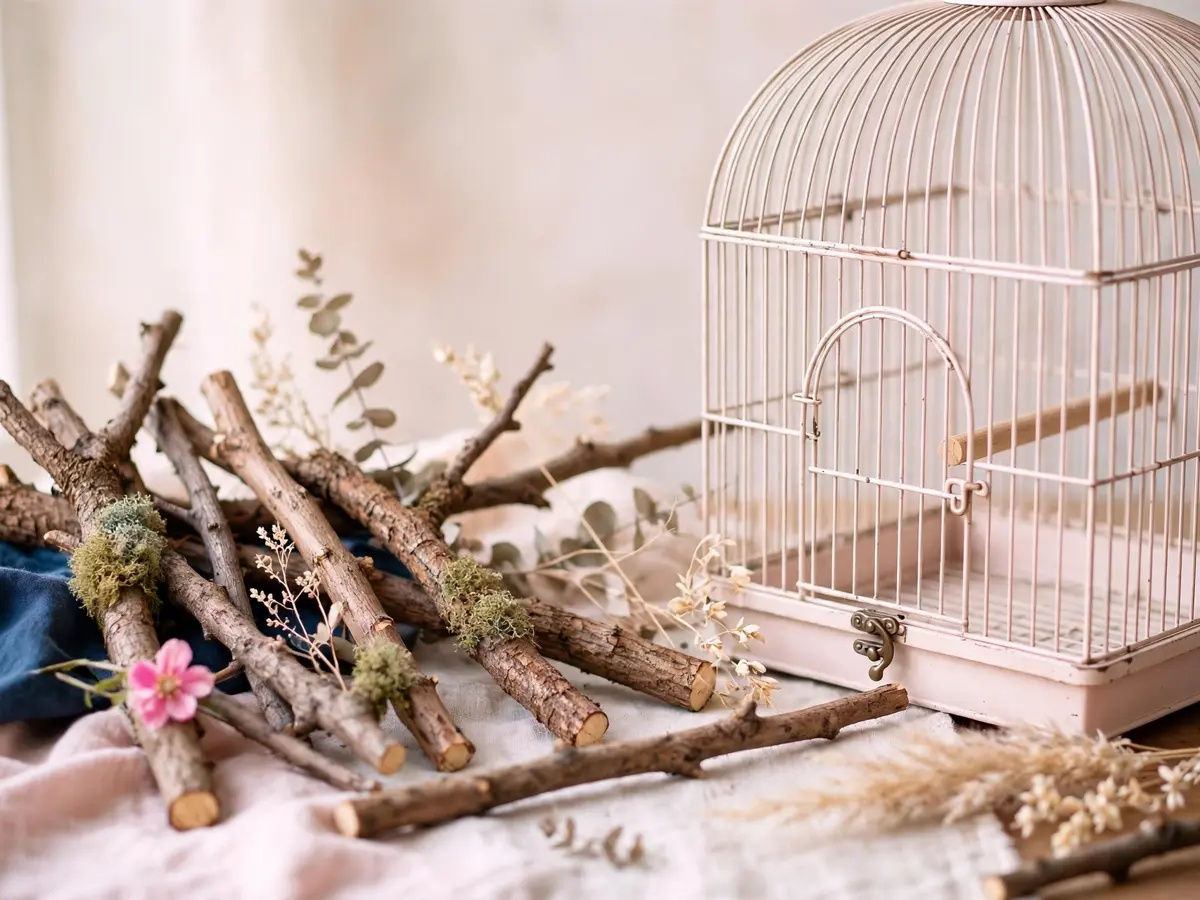
The perches to pass on
The skip list is short, which is good news for anyone holding a starter kit and a receipt.
- Sandpaper perch covers: the abrasive sleeve glued on top is the item the care guides single out — take it off and bin it. The perch underneath can stay.
- One identical dowel set: two or three dowels of the same thickness count as one perch, grip-wise. Replace two with different diameters.
- Worn rope with loose strands: a rope perch in good order earns its spot, but frayed ends catch toes and get chewed. Trim or retire them.
- Anything wobbly or cracked: a perch that shifts under the bird is a perch it will avoid, and cracks collect mess that should be wiped away instead.
One perch high, for sleeping
Birds sleep at the top of their space, so the highest perch earns the job of bed. Situate it away from the food dishes, in a corner with a wall behind it if the cage shape allows, and make it the firmest natural-wood piece you own. The rest of the perches step down from there.
Two placement rules finish the picture. Keep a clear flight path across the cage — perches should not sit directly over one another, because nothing should land on the bird below. And leave enough gap between perches that the bird hops rather than shuffles between them.
Dishes on the bars, not the floor
Attach sturdy, non-toxic food and water dishes to the cage sides rather than the bottom so droppings do not fall into them, and clean and disinfect them every day. That single habit removes the most common mess in a small cage: a floor dish sitting under the bird's favorite perch.
Mount each dish beside a perch so the bird stands comfortably while it eats, and keep water on the opposite side from food. Bar-mounted dishes pop off their brackets for the sink, which turns the morning wash into a one-hand job.
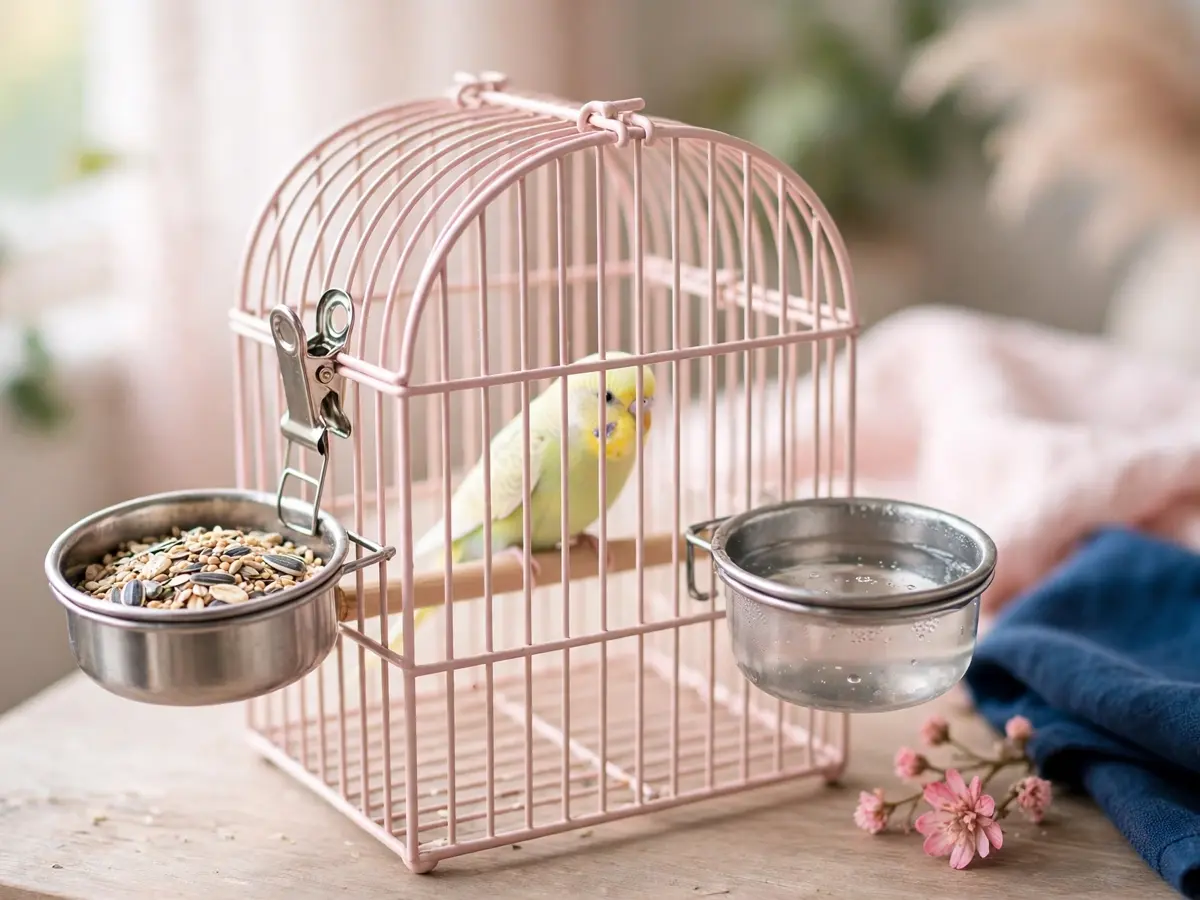
The daily dish routine
The routine below fits between kettle and coffee. Same order every morning, so nothing gets skipped on a busy one.
- Take both dishes off the bars and tip out leftovers.
- Scrub in hot water with plain dish soap, then rinse well.
- Refill: seed or pellets in one, fresh water in the other.
- Click both back onto the bars before the bird wakes fully.
Morning dish check, minute by minute
| Step | What you do | What you look for |
|---|---|---|
| Remove | Both dishes off the brackets | Cracked rims or loose clips |
| Scrub | Hot water and plain dish soap | Slimy film on the water dish — it comes off with friction |
| Refill | Food and fresh water back in | Water level the bird can reach from its perch |
| Remount | Click dishes onto the side bars | Dish sits level and does not spin |
If the water dish looks cloudy or the food dish smells at all, run them again — the daily wash is the difference between a five-minute habit and a weekly deep-clean that eats an afternoon.
Cage size: the frame around all of it
A budgie's cage should be big enough to turn around without striking anything, move from perch to perch, and stretch or flap its wings - the minimum guideline is 1 ft x 1 ft x 2 ft (30 cm x 30 cm x 60 cm), and bigger is better. Read that as permission to shop wide: a long, low cage fits perches farther apart than a tall narrow tower, and sideways distance is what a flying bird actually uses.
Perches, dishes and cage size work as one system. The cage needs enough width for a hop between perches, the perches need different diameters for the feet, and the dishes need bar space beside a perch. Shrink any one of the three and the other two stop working as intended.
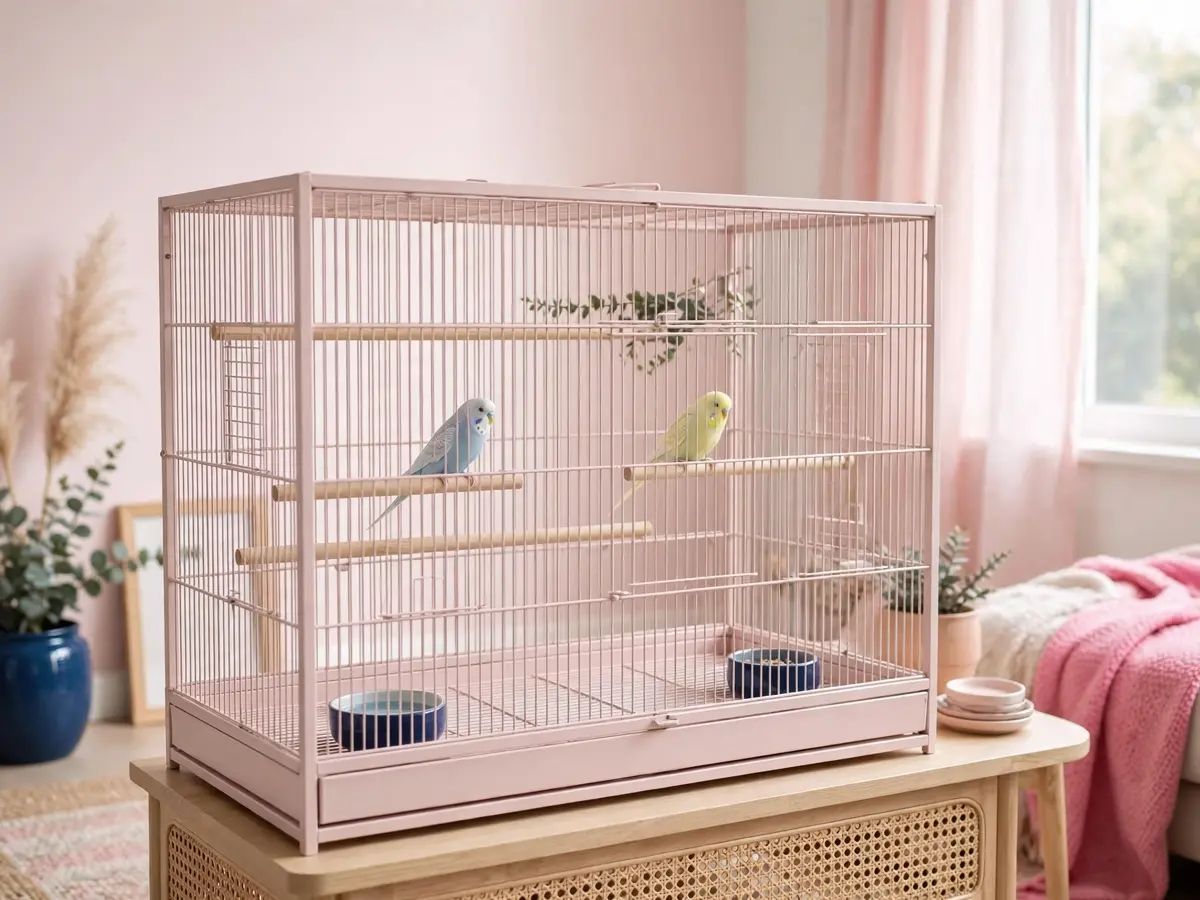
Bird perch questions
How do I know if a perch diameter fits my budgie?
Watch the grip. On a good perch the front toes wrap most of the way around and never meet the back toe, and the foot rests flat rather than sliding. If the toes overlap or the foot looks stretched flat, swap that perch for one a step thicker or thinner.
Is one straight dowel really a problem?
It is the sameness that is the problem. A single same-size dowel asks the same joints to hold the same bend all day, so the fix is not one perfect perch but several different ones. Offer perches in an assortment of diameters, shapes and textures with natural wood ideal, and never use sandpaper perches because they are too abrasive for a bird's feet.
Can I use branches from my own yard?
Only from trees you can name and trust to be untreated, and scrubbed before they go in. If you cannot name the tree or you suspect pesticide, buy perches from a bird shop instead — they arrive already dried and sized for small birds.
Why do the dishes hang on the cage sides?
Because a floor dish collects whatever lands above it. Attach sturdy, non-toxic food and water dishes to the cage sides rather than the bottom so droppings do not fall into them, and clean and disinfect them every day. A dish beside a perch also gives the bird a comfortable place to stand while it eats.
How often should I clean the dishes?
Every day, without exception. Wash both dishes in hot water with plain dish soap, rinse well, and refill before the morning feed. The daily wash is the whole trick — nothing builds up, and the weekly deep-clean of the cage stays quick.
What size cage should I buy first?
Start bigger than the minimum, because the perches need room between them. A budgie's cage should be big enough to turn around without striking anything, move from perch to perch, and stretch or flap its wings - the minimum guideline is 1 ft x 1 ft x 2 ft (30 cm x 30 cm x 60 cm), and bigger is better. Wide matters more than tall, since birds fly sideways.
Save these on Pinterest
Pin the perch checklist for cage-shopping day, then pair it with the budgie cage setup checklist and the cockatiel cage setup and care guide. For paper toys that keep a cage interesting, the DIY foraging toys guide has the builds, and the budgie and cockatiel collection holds every bird page on the site.
For informational purposes, check with an avian vet.