 PawStyle Daily
Puppy Training Tips
Puppy Potty Training Regression: How to Spot It and Reset
The puppy that used to walk to the door and wait has started leaving puddles on the way. Nothing about the puppy looks different, the door has not moved, and the confusion that follows is the reason this page exists. A backslide is not the routine failing; it is the routine being asked a question it was never built to answer, and the answer to that question is almost always sitting in the household, quietly, wearing an ordinary face.
By PawStyle Daily · Updated 20 November 2026
Good to know: read the pattern, not the calendar | the change came first | the reset goes back to the beginning | clean, never scold.
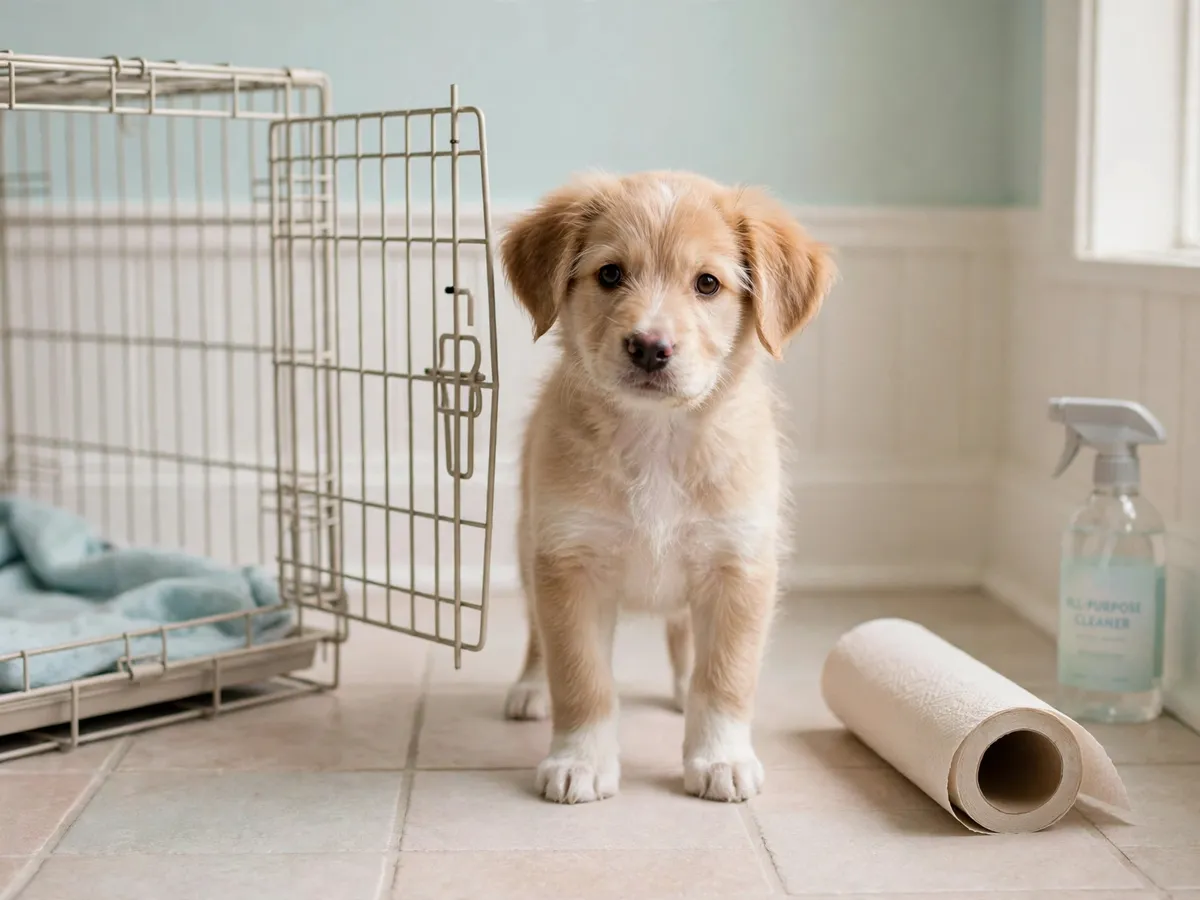
What a backslide actually is
A regression is a loss of a thing that was true. The puppy was reliable, the trips outside were predictable, and then the record stopped holding. That is the whole definition, and it matters because the fix depends on the distinction: a skill that was never installed needs teaching, while a skill that was installed and then lost needs the circumstances examined. The same wet spot on the hall floor means two completely different jobs.
House training is a loop the puppy runs: feel the pressure, go to the door, hold until outside, get the outcome. A break anywhere in that loop shows up as the same puddle. The pressure can be stronger than the hold, the door can be out of reach, the hold can be shorter than the gap between trips, or the outside spot can have stopped paying out. This page is about reading the loop and finding which link snapped, not about running the loop harder.
One boundary before the checklist. The day-to-day routine is owned elsewhere: the puppy potty training schedule page ties the trips to the day's meals and the crate's place in it, and the potty training a puppy while at work page handles the long middle of the day. This page picks up when that whole apparatus was working and then stopped.
Reading the signal before naming it
The first job is to look at where the misses are landing, because location is the cheapest clue there is. Misses near the door, in front of it, on the threshold, mean the puppy knows where to go and cannot hold long enough to get there; the hold is being asked to outlast the gap between trips. Misses tucked behind the sofa or in the far corner mean the puppy is hiding the event, which is a different problem with a different history, and the wrong half of the house being punished for the right one.
Misses that come after play, after a nap, after a big drink, mean the loop is intact and the supervision is not: the trigger events are known, the trips simply were not scheduled around them. And misses that only happen when the house is full of visitors or noise are emotional weather, not a training failure, and they pass with the weather. Four patterns, four different doors, and naming the right one is most of the work.
A note on what a found accident is not. It is not a message, not a grudge, and not a test of who is in charge. A puppy does not have the machinery for any of those readings. The accident is an event that happened where nobody was watching, and the only response that changes anything is the clean-up. The found puddle teaches the puppy nothing about outside; what teaches the puppy is the pattern of trips that keeps landing it outside.
What usually changed first
The regression walks in with something else, and the something else usually arrives before the first puddle. A new person in the house, a new schedule for the humans, a moved crate, a changed route to the garden, a longer stretch alone, a growth spurt that raised the water bowl's importance, a trimmed walk that took the old scent markers out of the day. The list is boring, which is why it gets skipped: the household looks for a problem with the puppy when the problem is the calendar.
Work the list honestly. When did the last reliable week end, and what entered the house in the week after it? The answer is often embarrassing in its smallness, a guest who stayed, a door that started staying locked, a workday that grew. Whatever it was, the routine was tuned to the old shape of the day and has not been re-tuned to the new one, and the puppy is the part of the system with the least slack in it.
Two changes deserve their own sentence. A growth spurt raises both the intake and the output, so a hold that was comfortable in a smaller body is now being asked to carry more; that gap closes on its own as the body catches up, provided the trips meet it halfway. And a moved crate or a moved door route breaks a habit that was built on geography, not understanding; the puppy follows the old map to a wall, and the wall does not lead outside anymore.
The reset: go back to the beginning
The reset is not a punishment and it is not a new method. It is the first week of training again, run with the same patience and the same party at the door, because the fastest way back to a skill that lapsed is the same way the skill went in. Treat the puppy as a beginner for a stretch: trips out at the old beginner frequency, eyes on the puppy whenever it is loose in the house, the crate as the pause between supervised runs, and the full celebration every time the feet land on grass.
The notebook is the tool that carries the reset. Write down every trip and every miss: the time, the place, and what happened just before. A page of that record shows the shape of the backslide in a way memory cannot, because memory smooths the misses into one vague bad week while the notebook shows they cluster after the afternoon nap, or during the visitor hour, or on the days the walker comes late. The pattern names itself on paper, and then the day is bent around it.
The crate returns for its original job only: the pause that keeps an unsupervised stretch from becoming a rehearsal of the wrong habit. It is not a cell and not a sentence. The reset loosens as the record cleans up, and the puppy earns back the freedom it was using well, one room at a time, until the day looks like it did before the backslide began.
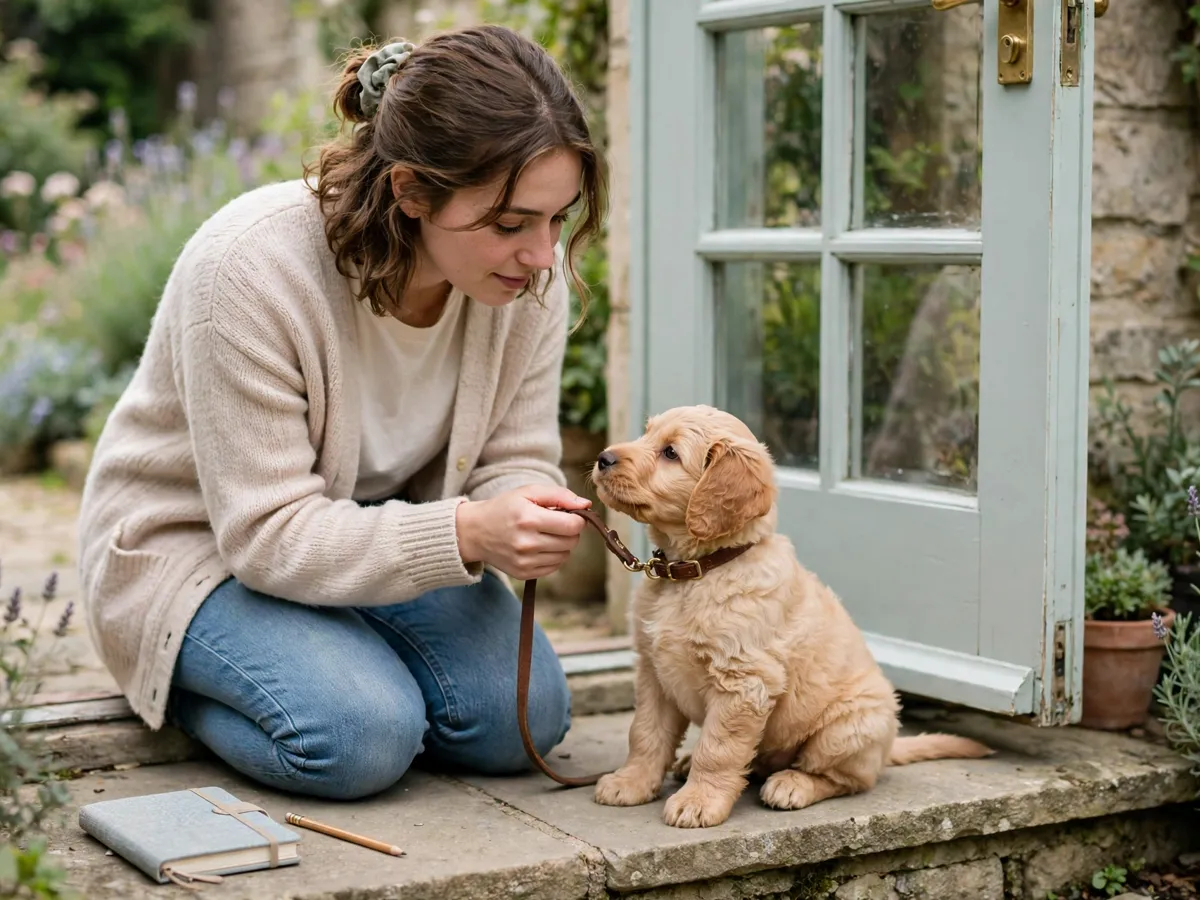
The short lead is the whole of the equipment. A puppy on a lead by the garden door cannot practice missing, and it cannot practice anything else either, which is the point.
What not to do, and when to ask
The list of wrong responses is shorter than the internet makes it. No scolding, no nose-to-the-mess, no interrupting a puppy mid-stream to carry it outside, and no sudden confinement as attitude. Every one of those teaches the puppy that the event is discovered by humans, and a puppy that learns that stops toileting in front of you and starts finding privacy, which looks like improvement and is the opposite.
Clean the spot properly and move on. An enzymatic cleaner, the whole area, and enough patience to let it dry, because a spot that still smells like a toilet keeps inviting the same return trip. The cleaning is not the gap between failures; it is half of the actual work.
And the honest edge of this page: some backslides are not training stories at all. A miss that comes with straining, with a change in drinking, with an accident that happens while the puppy is asleep, or a return of soiling in a puppy that was solidly trained deserves a vet's eyes before it deserves another week of a reset. The routine pages cannot see inside the puppy; a vet can, and asking early costs nothing but the appointment.
Questions we get about potty training regression
Is this a regression or was it never learned?
Read the pattern rather than the calendar. A puppy that never learned the door misses on the way out at every age, while a regressed puppy was reliable and began missing after something in the household moved. The reset looks the same from the outside; the answer to what changed does not.
Do I go back to the crate?
For a short stretch, yes, and only as the tool it already was. The crate page covers the size and the first nights; here the crate is simply the pause that keeps an accident from turning into the usual place.
What should I not do when I find a mess?
Nothing in the moment except clean it. A puppy reads a raised voice as being about the puddle and not about where the puddle went, and the next one happens behind the sofa where nobody sees it coming.
Save this reset before you need it
Pin this page for the week the record stops holding, because the notebook trick and the location-reading habit are the two things worth having at arm's length when the floor is wet. The puppy potty training schedule page holds the routine the reset returns to, and the potty training a puppy while at work page holds the workday half of the same loop.
Read the pattern, not the calendar | find what changed first | go back to the beginning | clean, never scold | ask a vet early.
For informational purposes, consult your vet.
The reset works because of the praise-first training at home habit underneath it, which has its own page.
The notebook named the pattern here, and the a chart that shows the pattern page is the same record with a column for every trip.