 PawStyle Daily
Puppy Training Tips
Potty Train a Puppy While You Work Full Time
The advice written for someone home all day does not fit a household that leaves at eight and comes back at six. A puppy away from its people for that stretch needs a different plan, and the difference is not willpower or a bigger crate: it is where the day's trips go and who covers the middle of the day. Most owners who work away from home learn the same lesson in the first fortnight, usually from a puddle on the rug and a guilt spiral on the drive home. The plan below keeps the morning and the evening tight, solves the midday gap with something other than hope, and reads the accidents as information about the routine rather than a failing on the puppy's part.
By PawStyle Daily · Updated 20 November 2026
Good to know: the first trip of the day starts the clock · one spot, always the same one · a midday cover is not optional · for informational purposes, consult your vet.
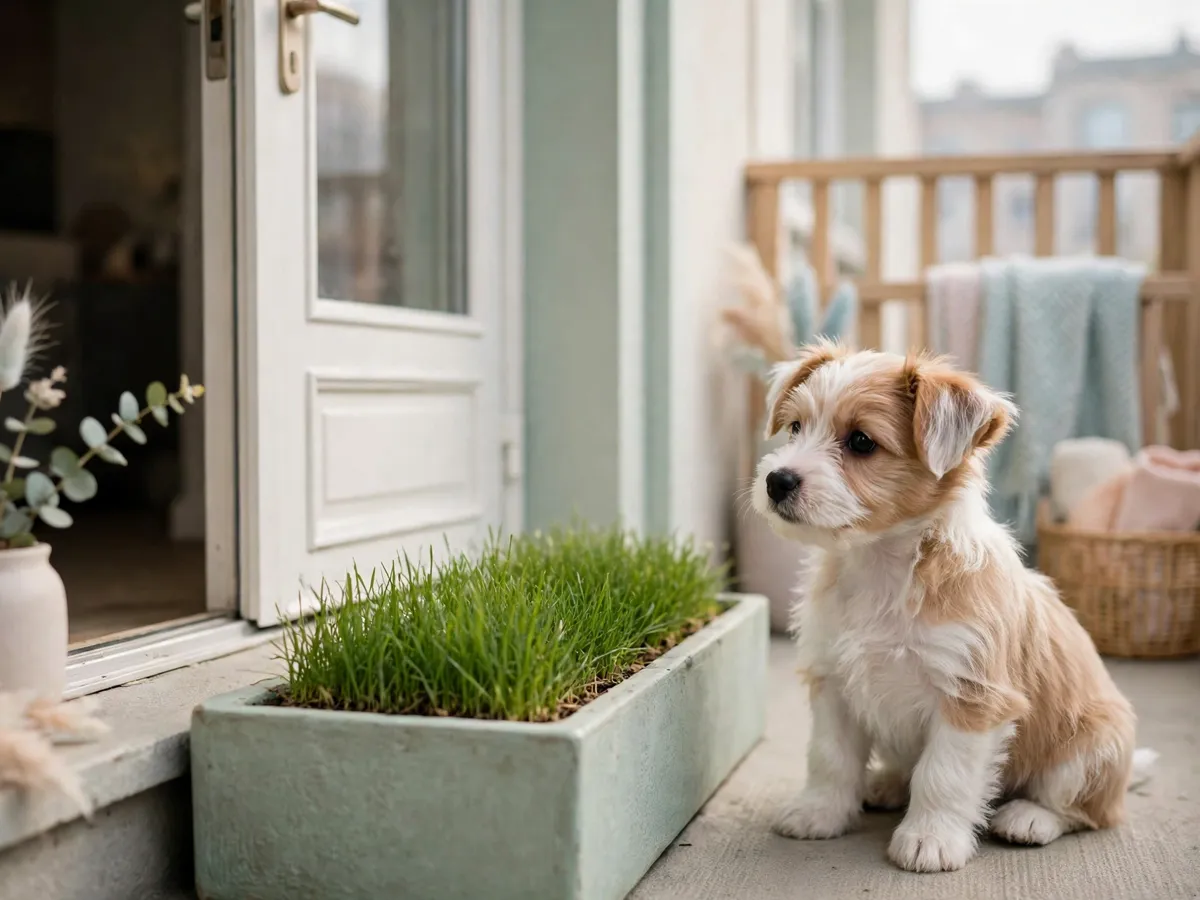
What a work day changes
Potty training is repetition in the right places, and a full-time work day removes the middle of the repetition. A puppy at home with someone around gets a trip after every nap, every meal and every play session, a dozen chances a day to get it right. The same puppy with an owner at a desk gets maybe four. So the working plan is not that plan squeezed into fewer slots: it moves the weight to the hours the owner controls, the first hour after waking and the last stretch before bed, and it fills the gap with something that works without the owner present.
The other change is what an accident means. On this plan a puddle on the rug is rarely a puppy being stubborn. It is a clue that the gap was too long, the pen too small, the water bowl topped up right before leaving, or the morning trip rushed. Read it that way and the fix is a routine adjustment rather than a scolding, which matters: a puppy told off for accidents learns to hide the signs instead of going outside. The potty training schedule page holds the day-by-day version for a household with someone home, and this one covers the shape a work day needs instead.
The morning that sets the day
A puppy wakes with a full bladder and empties it in the first minutes, so the morning trip goes out the door the moment the puppy is up, before the coffee, before the shower. Stand at the same spot, keep the walk short, wait for the business to happen, and praise it there. Then come in for the morning food. Eating on a settled bladder is the point of that order: the trip comes first, the bowl comes second, and the puppy gets a few minutes of free movement indoors rather than a sprint to the door with a full stomach.
Leave the house on a purposeful note rather than an emotional one. Water goes down with the food and comes up about half an hour before the door, which keeps the last stretch of the morning predictable without restricting the puppy's drink for the whole day. Give something to do with the mouth before leaving, a stuffed Kong or a snuffle mat in the pen, because a puppy busy with its mouth settles instead of pacing, and a pacing, anxious puppy empties its bladder more often than a settled one. A quick, goodbye-less departure beats a long farewell: the drama teaches the puppy that leaving is an event.
Covering the gap
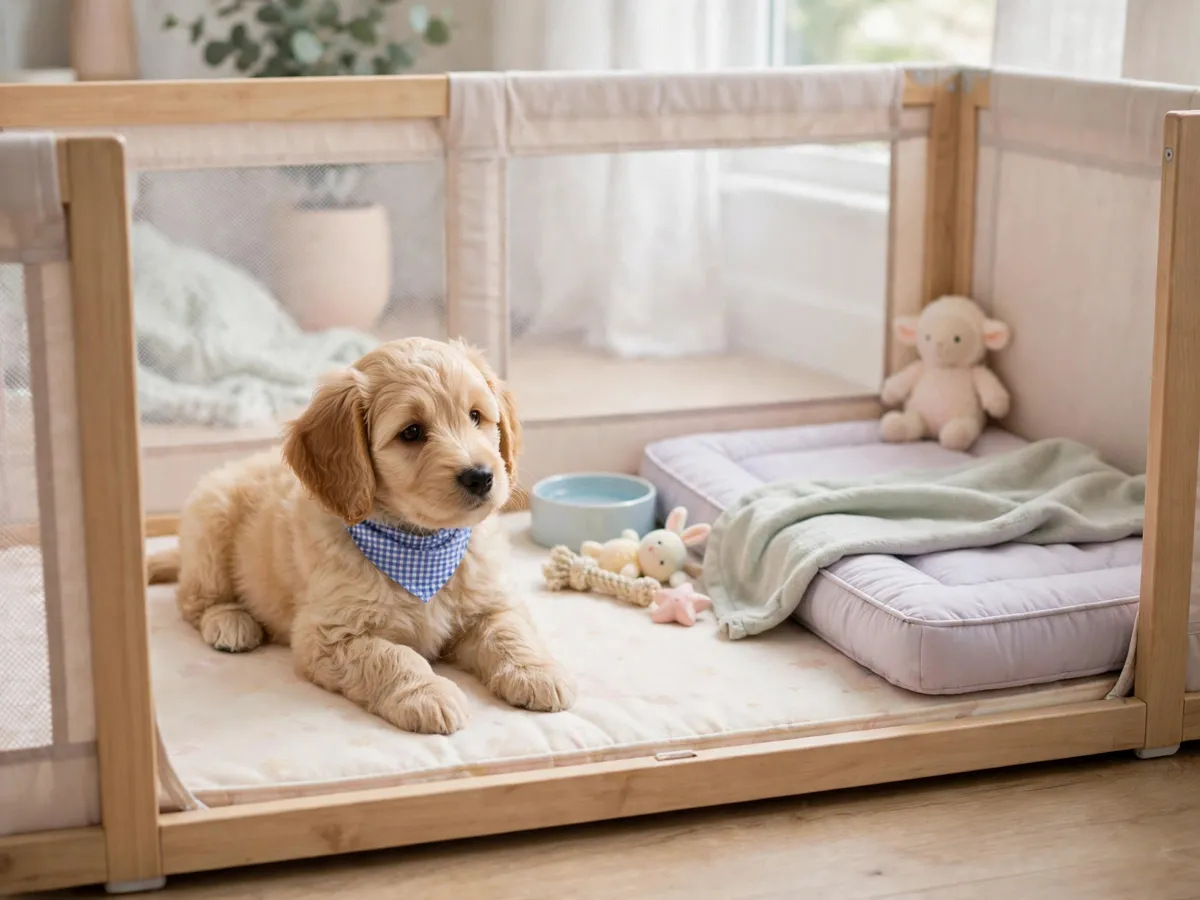
Three covers work, and the right one depends on the building and the budget. A dog walker booked for the midday slot is the cleanest: the puppy gets a real trip on grass and a break in the day, and the owner's routine stays untouched either side. A lunchtime visit from a partner, a parent or a neighbour does the same job for less money if someone lives close enough. And a pen with a pad corner is the version that needs nobody, which makes it the starting point for most households in the first weeks while the puppy is too young for a long gap at all.
The pen layout is the whole trick. A puppy will not usually go where it sleeps, so the bed goes in one quiet corner and the pad at the far end, with the water and the toys in between. Make the pen long enough that the puppy has to walk away from the bed to reach the pad, and keep the floor covered so a miss lands on washable material rather than the rug. A pad is a temporary surface, not the goal: as soon as the walker or the lunchtime visit is regular, the pad's role shrinks to the odd day it is needed, and the trips outside take over. Moving a pad onto a balcony or a small grass patch is the apartment version of the same idea, and the puppy learns one place rather than two competing ones.
The evening reset
The door opens and the day's real work starts. First trip out immediately, before greetings, before the bag goes down, because a puppy that has held on all day is least able to concentrate in that first minute. Come in, feed dinner, then let the puppy settle: a full bowl and a quiet hour set up a settled night. After that, a short play session, then the trips that carry the puppy to bed, one after the play and one last, right before the crate goes dark.
Keep the last hour low. Rough play, a doorbell and a house full of guests make the night trips worse, and a puppy that falls asleep mid-play wakes needing to go. Put the crate in the room where the owner sleeps for the first stretch, so a whimper gets a trip rather than a negotiation, and take the puppy straight out to the same spot when it wakes. Nights are where most working owners lose the plot: a puppy that empties its bladder at two in the morning is asking the same question the pad at midday answered. If the night accidents keep happening after the routine is steady, or the puppy seems uncomfortable going, that is a conversation for the vet rather than a training forum.
Setup, gear and the log
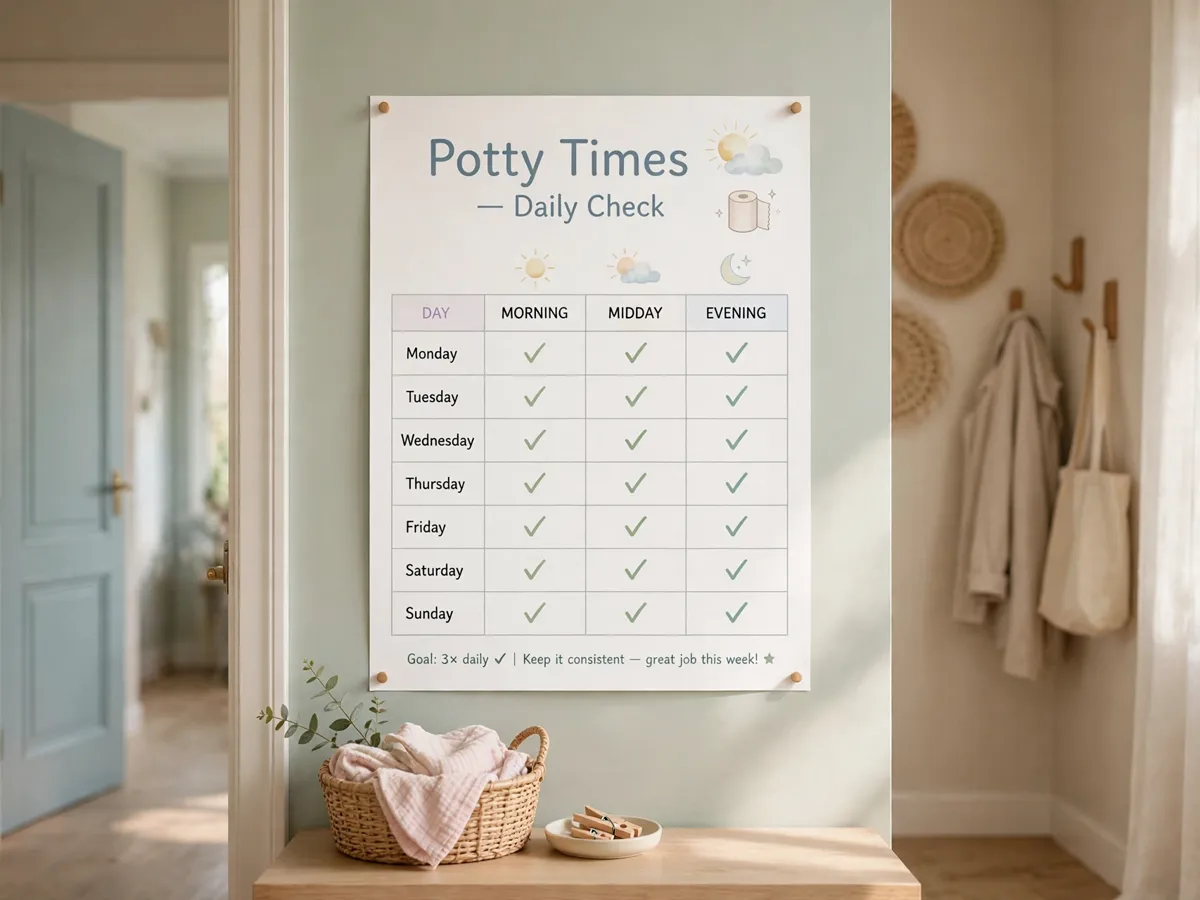
The gear list is short: an exercise pen or a baby gate, a washable pen mat, pads if the building needs them, an enzymatic cleaner for the indoor spots, and a torch for the dark trips. The cleaner matters most, because a household that wipes a puddle with a general-purpose spray leaves the scent behind and the puppy returns to the same corner. Keep it under the sink within easy reach, and clean the accident while the puppy is elsewhere.
Then log the day on a card stuck to the fridge: the morning trip, the food times, the midday cover, the evening trips and the night wake. A week or two of that tells an owner more than any guide, because the pattern shows where the gap is too long for this puppy. The log is also what a walker or a lunchtime visitor works from. When the pattern holds and the accidents thin out, the pad goes, the gap gets longer, and the crate plan from the crate training first week walkthrough takes over for the nights.
Potty training on a work day
Can potty training work if nobody is home midday?
Yes, with a tighter morning and evening routine and a midday plan: a dog walker, a lunchtime visit, or a long pen with a pad corner far from the bed.
Should the pad stay inside the pen all day?
Only while the puppy is very young. The pad sits at the far end from bedding, and it shrinks away as the midday plan takes over.
What does the evening routine look like?
Out the moment you get home, dinner, a play session, then two more yard trips before bed. The last trip lands just before the crate.
Save this work-day potty plan
Pin it before the first solo day, and put the log card on the fridge where the morning coffee gets made. The Puppy Training collection holds the crate plan, the day-by-day routine and the first-week walkthrough that sit beside this one.
For informational purposes, consult your vet.