 PawStyle Daily
Homemade Dog Treats & Meal Planning
Large Breed Puppy Food: The Slow-Growth Nutrition Standard
A large breed puppy does not grow on the clock a small dog grows on. The frame keeps filling out long after a smaller puppy looks finished, and the food that carries those months has its own standard: growth paced slow, calcium held in a stated range, and portions keyed to the adult size the puppy is growing toward rather than the size it is today. This page is that standard in one place: what slow growth looks like in practice, the calcium line to read on the bag, the label wording that names a big breed, and the way a portion follows expected adult weight.
By PawStyle Daily · Updated 22 November 2026
Good to know: slow growth is the standard, not a bonus | the calcium range is read off the bag | portions follow expected adult size | for informational purposes, consult your vet.
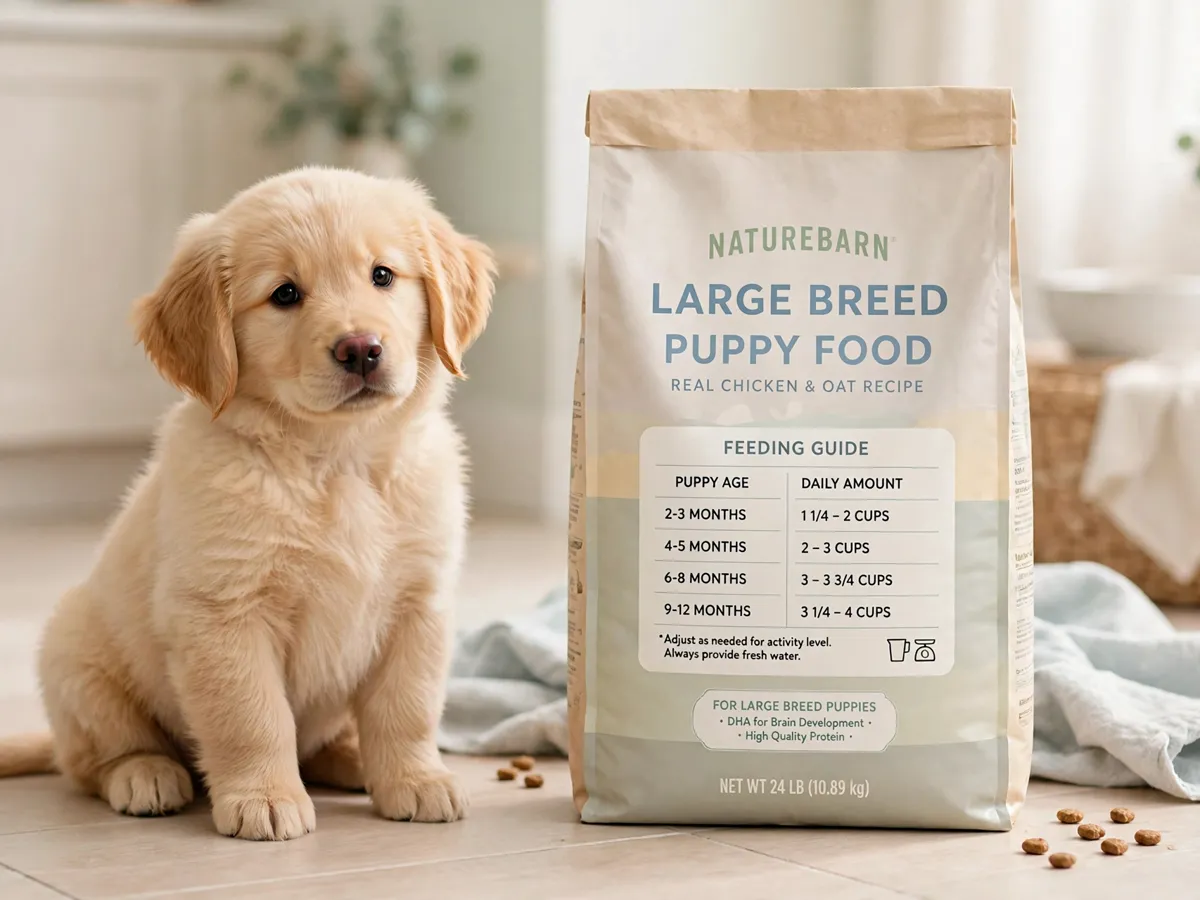
A Big Breed Puppy Grows on a Different Clock
A small breed is often close to its adult shape by the middle of its first year. A large breed is not. The frame keeps filling out through the rest of that year and into the next, and for all of those months the skeleton is building while the weight keeps arriving. The job of the bowl is to hold the two together: growth paced so the frame is never outrun by the load it carries, food built for that job, and a portion that follows the size the puppy is growing toward.
The standard shows up in three places a buyer actually touches: the panel on the bag, the rows printed on its side, and the weekly record you keep at home. Read in that order, the shopping decision becomes almost mechanical. The panel tells you what the food was built for, the rows tell you where the portion starts, and the record tells you whether the two are working for the puppy in your kitchen. A buyer who skips the first step and shops by front-of-bag claims is guessing; a buyer who skips the third is flying without a log.
That is a different standard from the one a small dog needs, and it is worth naming before the shopping trip rather than after it. This page holds the standard itself: the growth pace to aim for, the calcium line to read, the label wording that names a big breed, and the portion logic that fits a long growth season. Where a topic has its own page, this one links to it instead of repeating it, so the standard stays in one readable place.
Fast Growth Is the Risk, Not the Goal
The goal is a lean puppy on a steady curve. Run a flat hand along the ribs and feel them without pressing; look down from above and see a waist curve in behind the rib cage; watch the scale tick up in small, even steps from week to week. A puppy in that condition is carrying exactly what the frame is building, and the curve itself becomes the evidence that the standard is working.
Racing looks different, and it is easy to miss from week to week. The bowl emptied to the last piece at every meal, the scale jumping between weigh-ins, the rounds softening under a coat that hides the change. The fix is portion and pace, not a search for a different bag: hold the daily total where it is, weigh again in a week on the same scale, and let the ribs answer before the scoop moves. For the age-by-age rhythm of meals, the new puppy portions page carries the detail; for the move into adult food, the puppy to adult food switch page owns that timeline.
Controlled Calcium: The Number on the Bag
Big-breed growth foods carry a stated calcium range on the panel, printed for growth rather than for maintenance, and that range is one of the lines that separates a large-breed growth formula from an all-stages bag. Read the range off the bag you are holding: the figure sits in the analysis lines, set for a big frame building slowly. The range belongs to the food as formulated; it is not a target to push toward from the pantry.
Nothing gets layered on top of a complete growth food. No pantry calcium, no bone meal spooned over the bowl, no extra dairy on the side: the bag is engineered as a whole, and anything added above the measured portion moves the very line you just read. If a puppy seems to need something the bag does not list, that question goes to the vet, bag in hand, not to the aisle.
The range also explains why an all-stages bag is a compromise for a big frame. A single formulation stretched across every size of dog has to sit somewhere that works for none of them in particular, and the growth wording on a large-breed line exists precisely to close that gap. When two bags sit side by side on the shelf, the panel with the stated growth range and the breed size wording is the one doing the job this page describes.
The Label Line That Names the Breed Size
The line to find on the panel names two things at once: the life stage and the breed size. A growth line written for large breeds says so in its wording; an all-stages line stretches one statement across every size of dog, and a big frame deserves the line that was built for it. The wording sits near the analysis figures on the same panel, and finding it takes a moment once you know where to look.
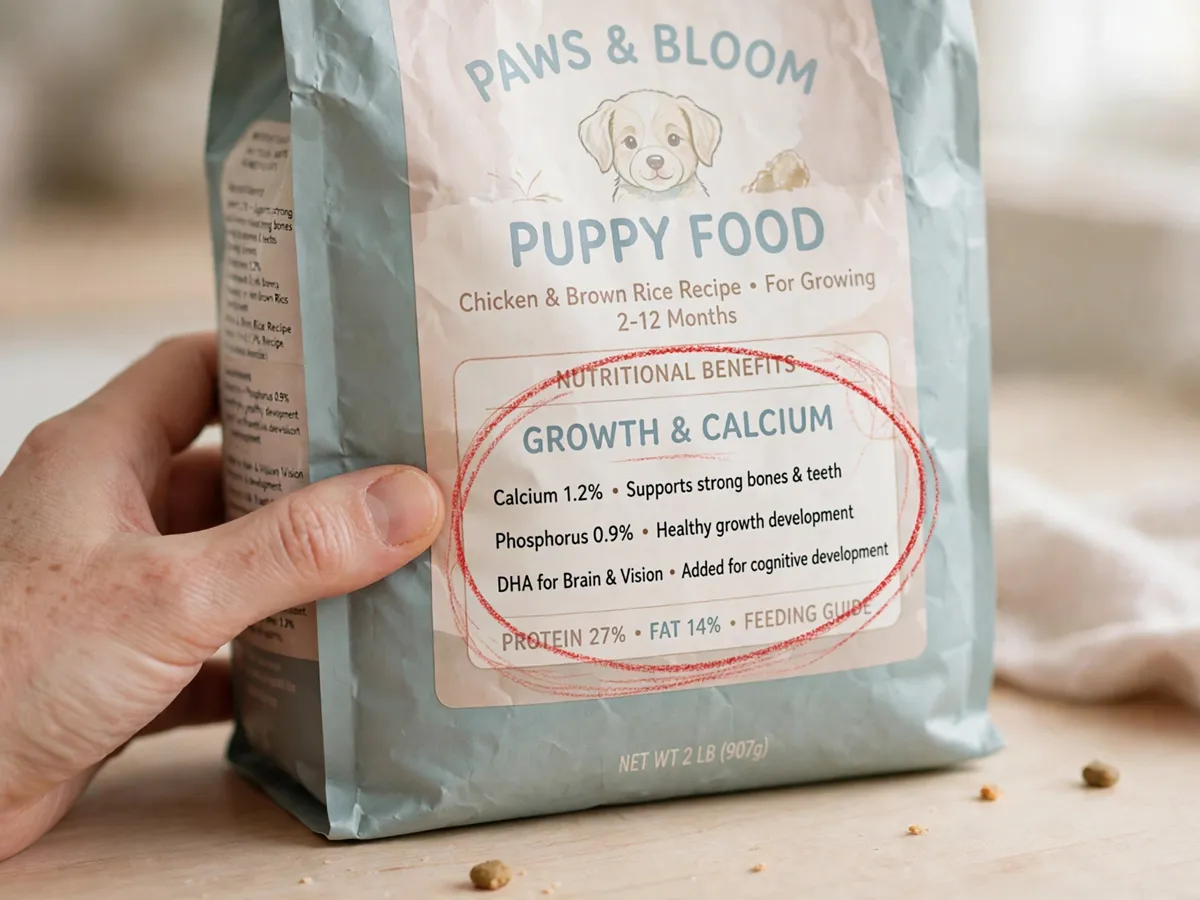
The rest of the panel is a reading skill of its own: the ingredient statement in order, the analysis lines, the feeding rows on the side of the bag. That walk-through lives on the how to read a dog food label page , and this page only names the line a big breed needs. The two together cover the whole bag: what the panel says and which wording a large breed is shopping for.
Portions Read Off Expected Adult Weight
The rows on the bag are keyed to expected adult size, and that is the row a large breed puppy eats from: the row for the size it is growing toward, not the row for the weight on the scale this week. Read the daily total off that row, split it across the day’s meals, and measure with the scoop that came in the bag so your measure and the bag’s measure stay the same thing.
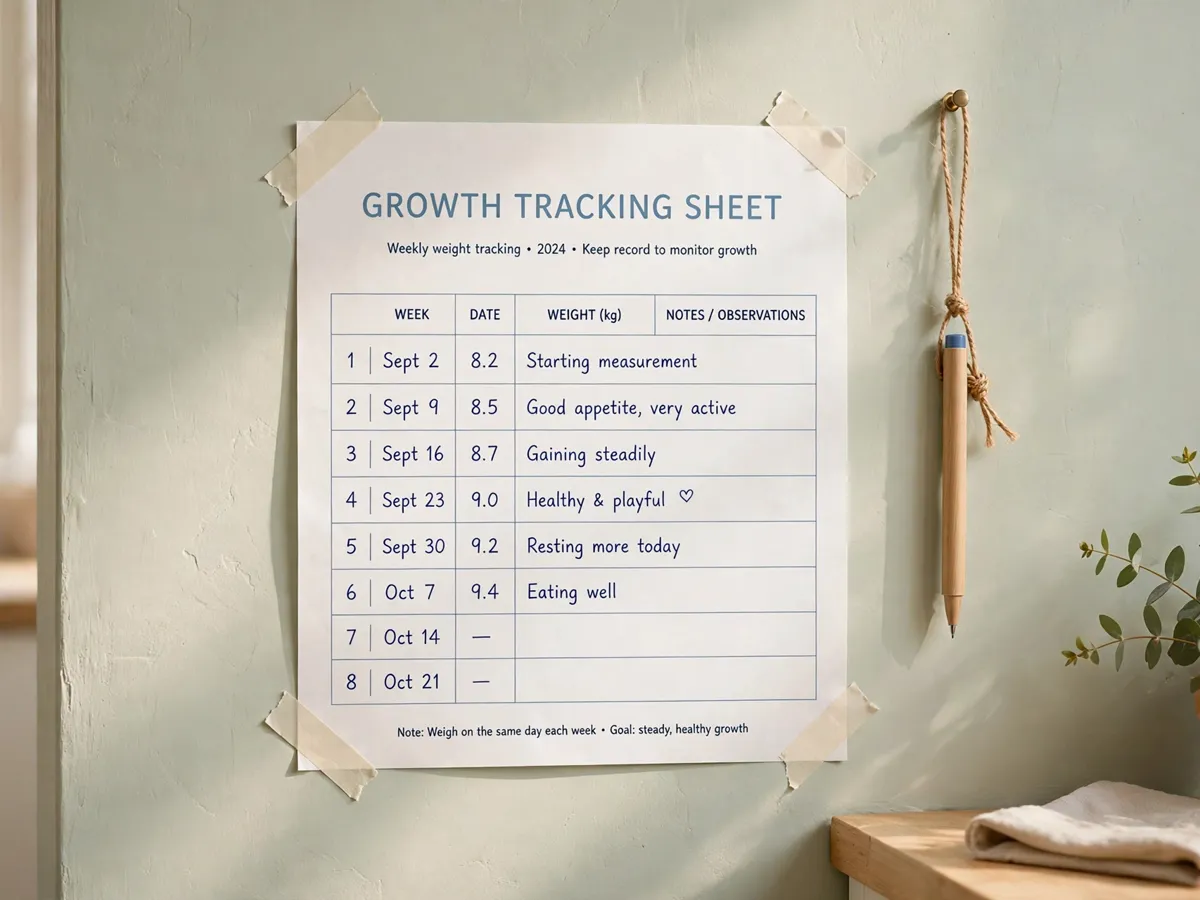
The weekly check is what turns a portion row into a portion that fits. Weigh the puppy on the same scale at the same time each week, run the rib check with a flat hand, and write both down on a printed growth tracking sheet taped where the scale lives. A puppy that leaves food in the bowl is saying the portion is ahead of the appetite; a puppy that clears it and still looks hollow needs a re-read of the row. The sheet turns those two signals into a record the vet can read at a glance.
Nothing here pins a fixed figure to a puppy: the row is the starting point and the weekly record is the adjustment. If the log and the bowl disagree for a couple of weeks running, bring the sheet to the vet appointment and read it together.
One habit keeps the portion honest across the whole household: whoever feeds writes on the same sheet. A big puppy eats more meals than a grown dog does, and the meals land at hours when a partner or a housemate is the one at the bowl. When everyone reads from the same row and writes on the same line, the record stays a single story instead of a set of footnotes, and the curve you bring to the vet is the one the whole week actually made.
Where the Breed Pages Sit Under This One
This page holds the standard so the breed pages do not have to repeat it. Golden retriever specifics live on the golden retriever feeding page : the growth pace the breed tends to, the treat budget that fits a food-motivated dog, the rhythm that works for the breed’s size. The same pattern runs under the other big breeds on this hub: the breed name acts as a modifier on titles and pins, and the standard above stays the same underneath them.
What stays with the vet is anything that reads on the body rather than on the bag: a growth curve that jumps or stalls, ribs that will not settle into range, a puppy that seems hungry in a way the portion does not explain. The log, the sheet and the bag give that appointment its starting evidence.
The shape of the whole season looks like this from the outside: pick the bag with the growth wording and the stated calcium range, tape the growth sheet where the scale lives, weigh weekly, read the ribs weekly, and let those two readings move the scoop a little at a time. No stage of that needs a special tool. It needs the bag, the sheet, the same scale, and the patience to let a long season build the frame it was always going to build.
Large breed puppy food questions
Why does a large breed puppy need slow growth instead of fast growth?
A puppy that grows too fast has a higher risk of bone and joint problems, so large and giant breeds need slow, steady growth. The skeleton of a big breed is still soft cartilage while the frame fills out, and weight that arrives faster than the frame can carry loads the joints. The goal is a lean puppy on a steady curve, not the biggest one on the block.
What do I look for on the bag when I shop for a large breed puppy food?
Look for a statement that names the life stage and the size, a calcium range stated for growth, and the growth wording rather than an all-stages line. The bag is the manufacturer line: it tells you what the food is built for. Check the label panel the way the label reading guide walks through it, and take the bag to the vet appointment and read it with the vet.
How do I portion food for a large breed puppy without overfeeding it?
Portion a large breed puppy off the expected adult weight of the breed, not the weight it carries today, and read the ribs weekly with the body condition check. A puppy that leaves food in the bowl is saying the portion is ahead of the appetite. Weigh the puppy weekly on the same scale, and let the rib check, not the scoop, set the portion.
Save the Large Breed Puppy Sheet
Save this page for the shopping trip and for the weekly weigh-in that follows it. The three pieces work as one set: the label line names the food, the calcium range is read once off the panel, and the growth tracking sheet turns every week into a line of evidence. Pin it, tape the sheet up, and let the steady curve do the talking. For informational purposes, consult your vet.