 PawStyle Daily
Homemade Dog Treats & Meal Planning
Puppy to Adult Food: When to Switch
The question is usually not a date on the calendar. It is where your puppy is in the growth story, what size they are expected to reach, and how to make the change gradually once they are ready. Keep the timeline below as a conversation starter for your vet, not as a one-size-fits-all switch appointment. For informational purposes, consult your vet.
By PawStyle Daily · Updated 16 November 2026
Growth-stage guide · No one-size switch date · For informational purposes, consult your vet.
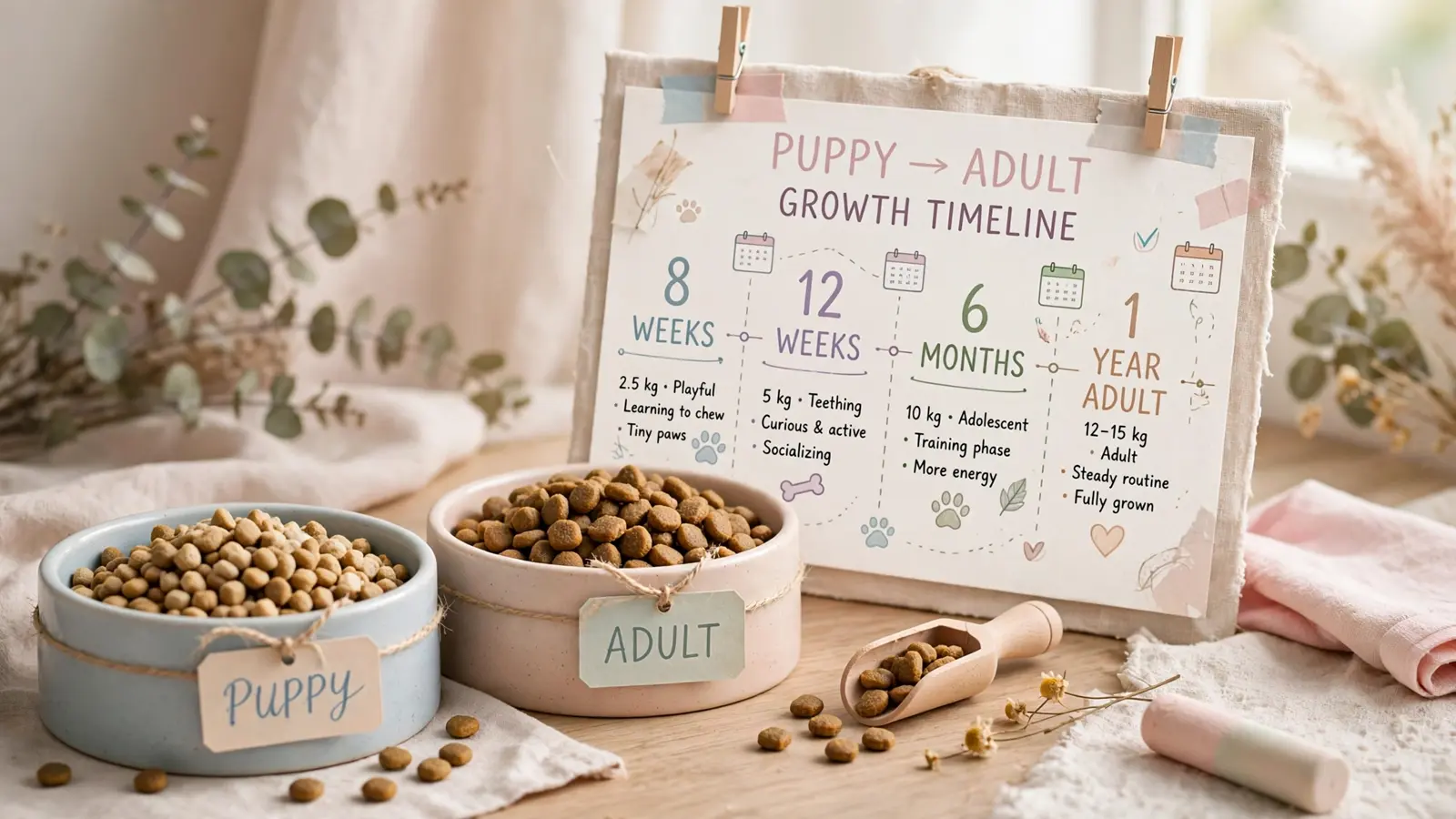
Start with food made for growth
Puppies need a complete and balanced diet made for growth, and adult food arrives gradually when they are ready for it.
That is the starting point for this timeline. Keep the current puppy food in place while you work out the next question with your vet. There is no need to rush toward a new bag because a calendar page changed. For informational purposes, consult your vet.
Before thinking about transition steps, keep the stage of growth in focus. A food made for growth belongs to the puppy part of the timeline; adult food arrives as a gradual next step when the puppy is ready. The switch should follow your dog's development rather than a date copied from another dog or a label on a calendar.
If you are still choosing a food or reading a bag, our bag-label walkthrough walks through what to locate on the package. Use it alongside a question for your vet; this article focuses on the timing and transition part of the routine. For informational purposes, consult your vet.
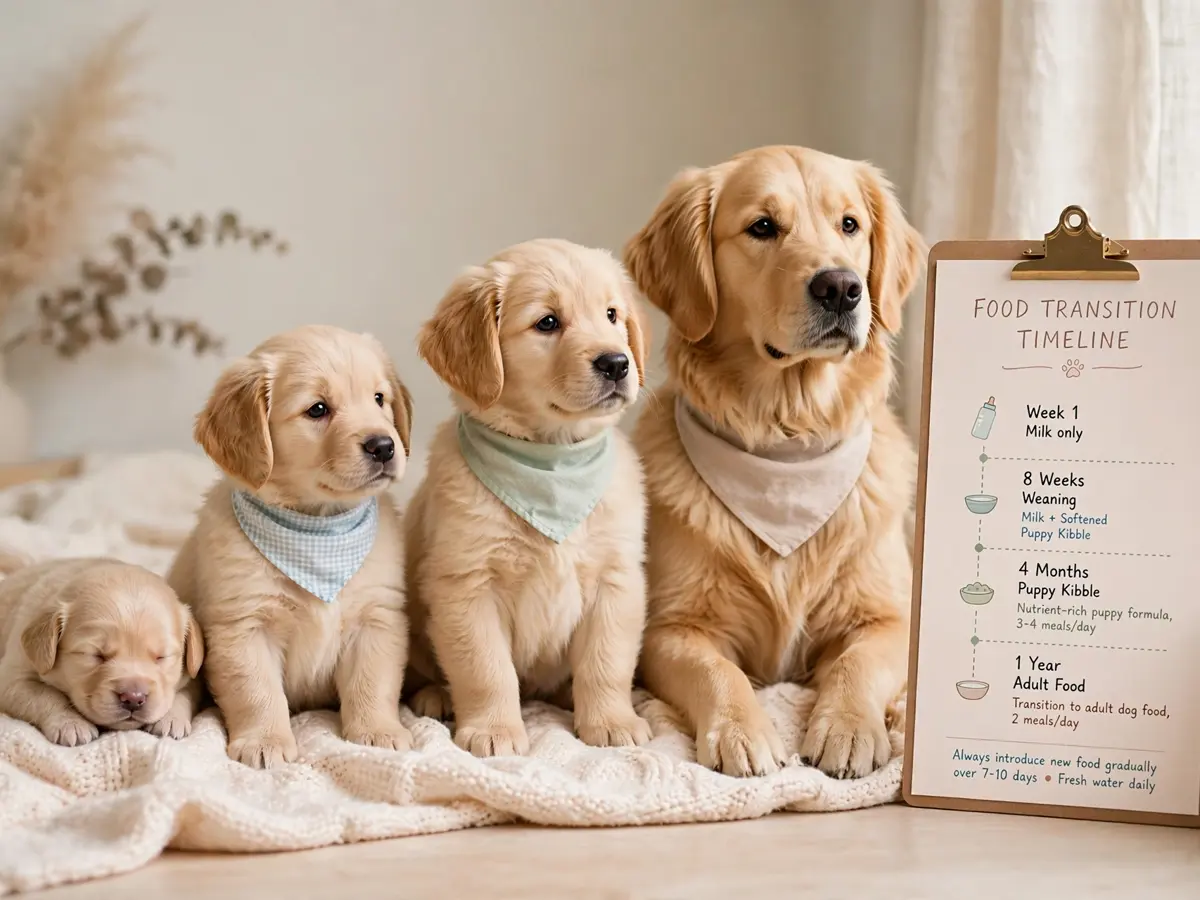
Breed size shapes the timeline
A puppy's calendar is not the whole story. Small-breed puppies can move to adult food around 7 to 9 months, while large-breed puppies often stay on puppy food past 12 months.
Small and medium breeds reach adult size around 10 to 12 months, while large and giant breeds keep growing until 18 to 24 months. Those two lines show why a single age on a generic calendar cannot stand in for the growth picture. For informational purposes, consult your vet.
Growth-stage timeline notes
| Growth context | Registered timing wording |
|---|---|
| Small-breed puppies | Small-breed puppies can move to adult food around 7 to 9 months, while large-breed puppies often stay on puppy food past 12 months. |
| Small and medium breeds | Small and medium breeds reach adult size around 10 to 12 months, while large and giant breeds keep growing until 18 to 24 months. |
| Large and giant breeds | A puppy that grows too fast has a higher risk of bone and joint problems, so large and giant breeds need slow, steady growth. |
For informational purposes, consult your vet about your puppy's individual growth.
Read the comparison as context, not a contest between breed groups. The useful takeaway is that growth timelines vary. Write down the question you have about your dog and talk it through with your vet rather than picking a switch month from one row alone. For informational purposes, consult your vet.
Keep the growth milestone in view
Keep your puppy on puppy food until they have reached about 80% of their adult size.
That is the growth cue to keep with the calendar notes. It is a useful line to discuss with your vet when you are working out how close your puppy is to the next stage. This guide does not estimate your puppy's adult size or decide that milestone for you. For informational purposes, consult your vet.
I would write the milestone at the top of a paper timeline, then leave a blank space below for observations and questions. The blank is intentional: your dog's growth belongs in a conversation about your dog, rather than a guessed figure copied from another puppy. Keep the current routine steady while you gather that context.
A puppy that grows too fast has a higher risk of bone and joint problems, so large and giant breeds need slow, steady growth. That is another reason not to rush a large-breed puppy through a calendar-based transition. Bring the timeline to your vet and discuss the individual dog. For informational purposes, consult your vet.
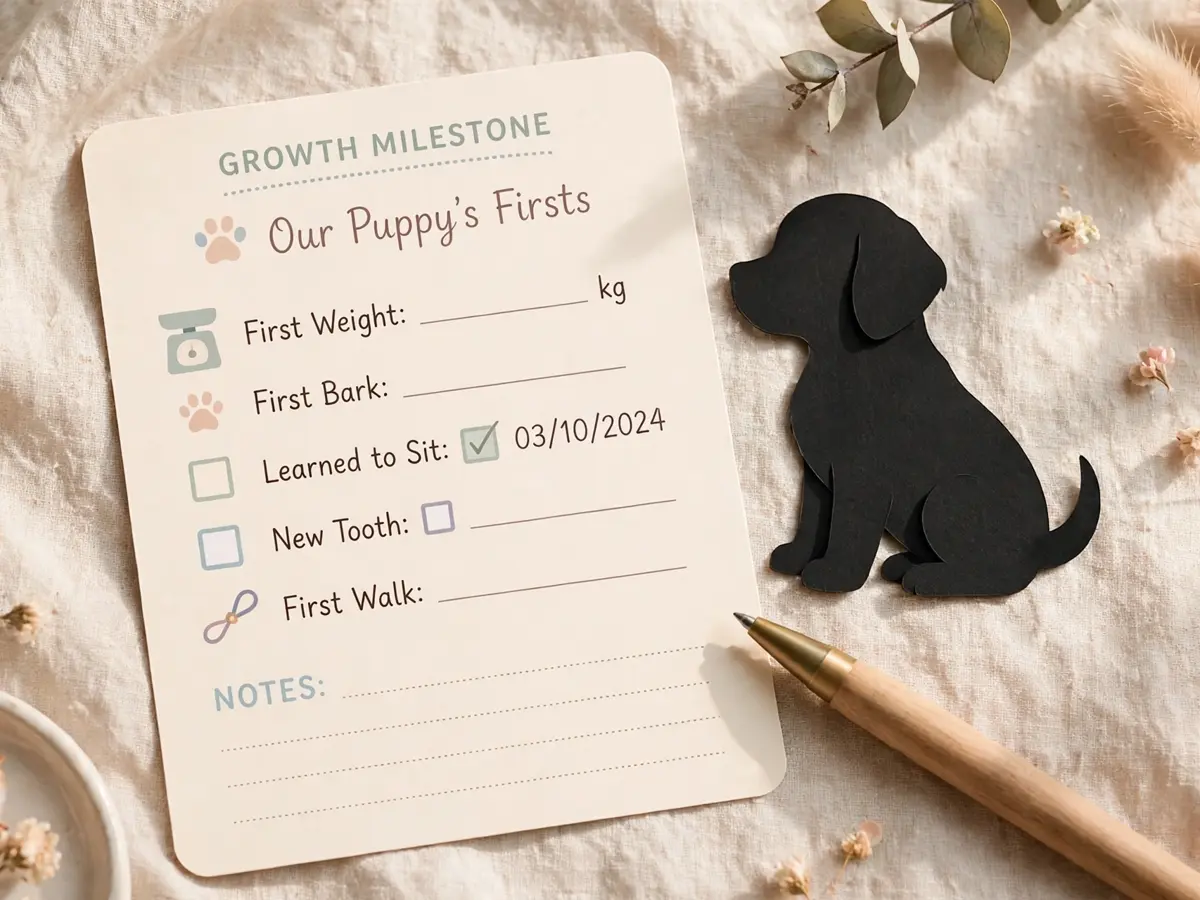
Keep portion questions tied to the puppy
A puppy's daily calories follow their target adult weight.
Keep this as context for a food conversation, not as an invitation to calculate a number from this page. There is no target weight chart here. Ask your vet how the guidance applies to your puppy and the food you have picked. For informational purposes, consult your vet.
The portion conversation belongs alongside the growth conversation. If you want the meal-by-age context in one place, the puppy meal-rhythm notes has the registered feeding rhythm. Keep your own bag and your vet's guidance at the center of the actual portion decision.
Meal rhythm by age
Four feedings a day from 6 to 12 weeks, then three by 3 to 6 months and two after 6 months.
Registered puppy feeding rhythm
| Age cue | Feeding rhythm |
|---|---|
| 6 to 12 weeks | Four feedings a day from 6 to 12 weeks, then three by 3 to 6 months and two after 6 months. |
| 3 to 6 months | Four feedings a day from 6 to 12 weeks, then three by 3 to 6 months and two after 6 months. |
| After 6 months | Four feedings a day from 6 to 12 weeks, then three by 3 to 6 months and two after 6 months. |
For informational purposes, consult your vet about the routine for your puppy.
This meal rhythm is separate from the decision to move to adult food. Keep the two questions in different notes: one asks about the daily routine, and one asks whether the puppy is ready for a new stage of food. That keeps a change in meal count from accidentally becoming a reason to change the food as well.
Make the food change gradual
Once the food is picked, stay with it, because sudden switches can mean an upset stomach and loose stools.
Switch the food over a few days, not in one meal.
These lines are the transition reminder. Keep the decision to switch and the process of switching as two separate moments. First talk about readiness with your vet; when a change is the plan, follow a gradual transition rather than changing the whole bowl in one meal. For informational purposes, consult your vet.
A simple note can keep the household on the same page: current food, next food, and the instruction to transition gradually. Leave out a percentage ladder or a fixed number of days per step. The registered guidance here is intentionally broad, and your vet can talk it through with you. For informational purposes, consult your vet.
Keep the setup around the bowl familiar while the food changes. Give anyone helping with meals the same written note, so one person is not making a separate switch decision from another. Once the food is picked, stay with it, because sudden switches can mean an upset stomach and loose stools. For informational purposes, consult your vet.
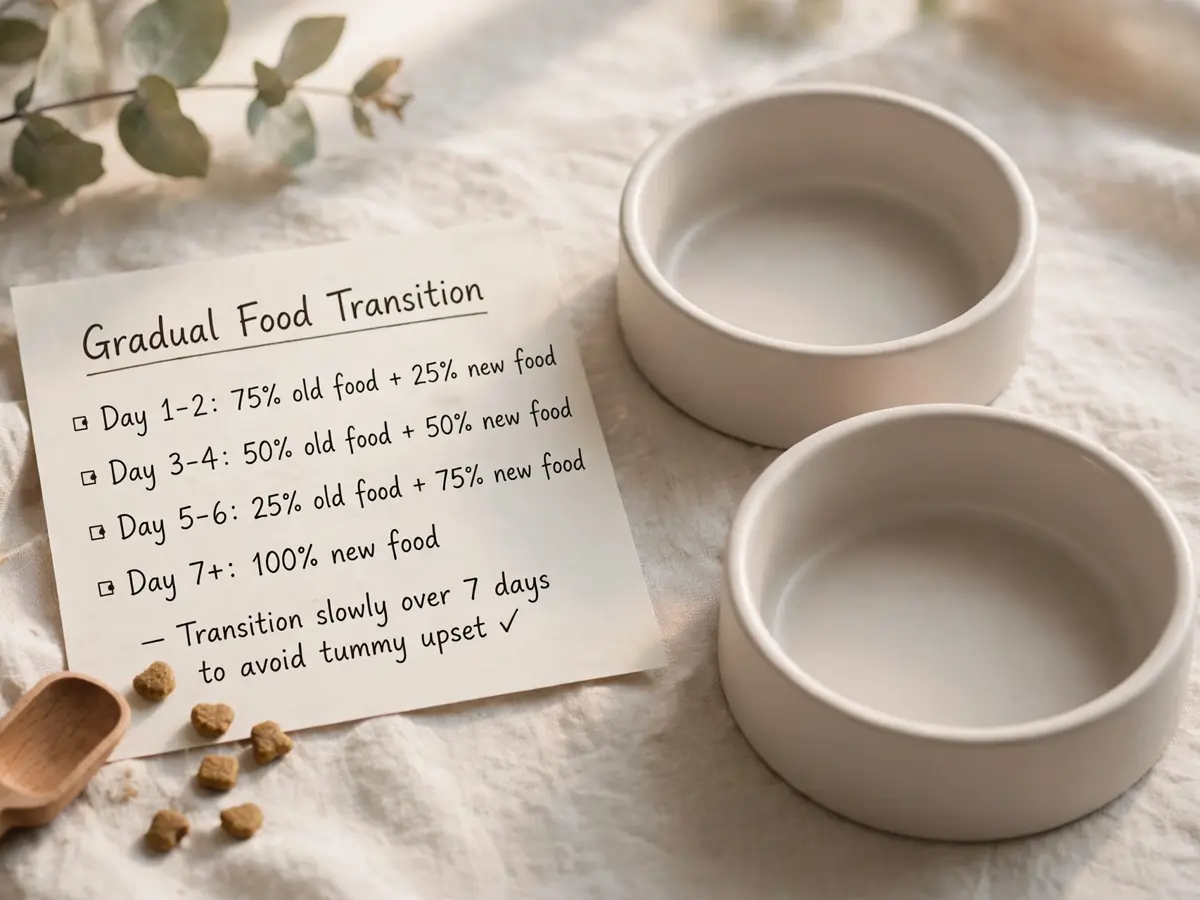
Copy this timeline card
- Puppies need a complete and balanced diet made for growth, and adult food arrives gradually when they are ready for it.
- Keep your puppy on puppy food until they have reached about 80% of their adult size.
- Small-breed puppies can move to adult food around 7 to 9 months, while large-breed puppies often stay on puppy food past 12 months.
- Small and medium breeds reach adult size around 10 to 12 months, while large and giant breeds keep growing until 18 to 24 months.
- A puppy that grows too fast has a higher risk of bone and joint problems, so large and giant breeds need slow, steady growth.
- A puppy's daily calories follow their target adult weight.
- Switch the food over a few days, not in one meal.
- Four feedings a day from 6 to 12 weeks, then three by 3 to 6 months and two after 6 months.
- For informational purposes, consult your vet.
Leave a blank for the date you discussed the switch and the notes your vet gave you. The page provides the registered wording; the personal details belong to your puppy's care conversation.
Keep these guides beside the timeline
The puppy mealtime notes page is the companion for meal rhythm. For reading the package itself, return to the dog food label walkthrough. Keep the discussion with your vet specific to your own puppy. For informational purposes, consult your vet.
Keep a transition note for the household
A food change goes more smoothly when everyone helping with meals reads the same note. Write down the current food, the next food, and the reminder to switch gradually over a few days rather than in one meal. Keep the note with the feeding supplies so it is read at the bowl, not remembered from a conversation.
Leave a blank line for observations. A loose stool, a skipped meal, or a change in energy belongs in that line, and the note itself stays plain and observational. If something concerns you, stop and ask your vet instead of adjusting the transition on your own. For informational purposes, consult your vet.
Keep the note short enough that another person will actually read it. Three lines are usually enough: the food in the bowl today, the food it is moving toward, and the pacing reminder. If your puppy has a specific health context, your vet can tell you what to add to the note. The page does not provide a percentage ladder or a fixed number of days per step, and the note should not invent one either.
Once the switch is complete, keep the note for a few days in case a question comes up later. A dated record of what changed, and when, is easier to reference in a vet conversation than a memory of “sometime this month.” Then retire the note and return to the ordinary routine, with the same bowl, the same place, and the new food staying consistent from day to day. For informational purposes, consult your vet.
The switch note starts with the food in the bowl today, and the the first bag for a big puppy page is where that first bag gets chosen.
Questions about switching puppy food
When should I move my puppy to adult food?
Puppies need a complete and balanced diet made for growth, and adult food arrives gradually when they are ready for it. Keep your puppy on puppy food until they have reached about 80% of their adult size. For informational purposes, consult your vet.
Does timing vary with breed size?
Small-breed puppies can move to adult food around 7 to 9 months, while large-breed puppies often stay on puppy food past 12 months. Small and medium breeds reach adult size around 10 to 12 months, while large and giant breeds keep growing until 18 to 24 months.
Why does slow growth matter for large breeds?
A puppy that grows too fast has a higher risk of bone and joint problems, so large and giant breeds need slow, steady growth.
How do I change from puppy food to adult food?
Switch the food over a few days, not in one meal. Once the food is picked, stay with it, because sudden switches can mean an upset stomach and loose stools. For informational purposes, consult your vet.
How many meals does a puppy have by age?
Four feedings a day from 6 to 12 weeks, then three by 3 to 6 months and two after 6 months.
What guides a puppy's daily calories?
A puppy's daily calories follow their target adult weight. For informational purposes, consult your vet.