 PawStyle Daily
Homemade Dog Treats & Meal Planning
7 Poodle Training Treat Rewards for Doodles (Small Bites)
Every training rep ends the same way: one small bite. These pea-size bites fit tiny poodle mouths, slip into a treat pouch, and keep training days light and happy. For informational purposes, consult your vet.
By PawStyle Daily · Updated 26 October 2026
Good to know: pea-size bites only · read every jar · training days stay light.
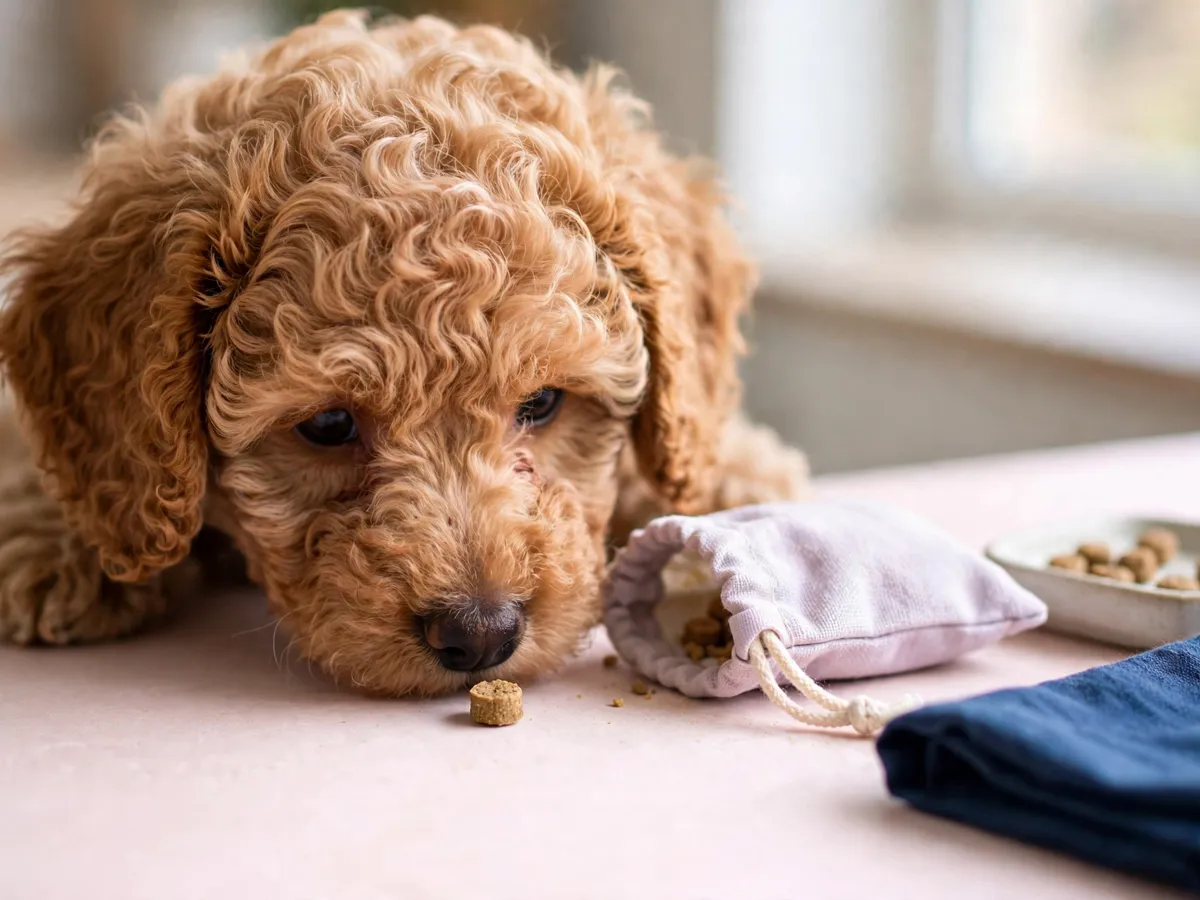
The pea-size system
Poodles notice everything, so tiny wins land fast. One pea-size bite per rep keeps pockets crumb-free and doodle noses in the game. When treats are for training, keep each one as small as possible and count it against the day’s food. Treats should stay at no more than five percent of a dog’s daily calories, so keep the pieces small.
Count the day’s bites the way you count kibble scoops, small squares on a fridge card do the job.
The commands behind these bites are on the basic puppy training commands page.
Pea size, actually pea size
A pea-size bite is smaller than most of us hand over. Hold the piece between your thumb and forefinger and look at it beside your doodle’s muzzle: the bite should sit inside the front of the mouth rather than fill it. If the dog has to chew, swallow, and look up before the next cue, the piece was a snack. A reward is gone in a second and the dog is back on you.
Cut a chilled square down in two passes. Strips first, then turn the board and cut the strips into small squares. A straight-edge knife pressed down cuts cleaner than a sawing motion, and a cold slab cuts cleaner than a warm one. When the dough drags and tears, chill the slab for ten minutes and start again with a clean blade.
Cut the whole batch in one sitting, right after the chill, while the slab is still cold. One board, one knife, and the week of rewards is done before the kettle boils. Keep the odd ends in a separate tub for reps at home, and let the squares cool apart so they do not press into each other.
Pea-size · about a dozen bites per pouch · cut cold, dry on a rack, store single layer.
The jar-label safety check
Peanut butter jars look alike on the shelf, so the label gets a five-second read before anything lands in the bowl. Xylitol is a sweetener that can drop a dog’s blood sugar and hurt the liver, so it never goes into a homemade treat. Only a few peanut butter brands add xylitol, so read the ingredient label on the jar before a spoonful goes in the bowl.
Shop the small jars, read every new jar, and keep the treat jar shut between reps.
Jars change between batches, so the label you read in March is not always the label on the shelf in June. We read it at the store, read it again at home, and leave the jar in the cupboard instead of decanting it into an unmarked tub. A label you can still read is a label you can check.
One habit from the store shelf: buy the smaller jar. A small jar runs out before it goes stale, and it gives you a reason to read a fresh label instead of working through a big tub on memory alone.
For homemade versions of these bites, see the no-bake peanut butter dog treats.
Sizing the bite
This table sorts bites by training moment rather than by dog size, because the piece stays pea-size from the first rep to the last. What changes is how many you count and when you stop.
Bite size by training moment
| Training moment | Bite size | How it counts |
|---|---|---|
| First rep of a new cue | Pea-size | One square on the fridge card |
| Repeat reps in one session | Pea-size | One square per bite |
| A trick that already works | Pea-size | Still counted with the day's food |
| The last rep of the day | Pea-size | Jar shut, card closed |
One bite size for every doodle, and every bite still counts against the day's food.
The prep counter
A batch takes one sitting, and the sitting goes quicker when everything is already on the counter. This is the line-up we set down before the bowl comes out, in the order it gets used.
- A wide mixing bowl, a spatula, and a small bowl for the wet ingredients, so nothing drips across the counter mid-mix.
- One rimmed tray lined with parchment, sized to fit the shelf where the slab will chill.
- A straight-edge knife and a cutting board, plus a plate for the cut squares.
- A cooling rack with a sheet of parchment underneath, set out before the first cut.
- One lidded tub, a marker, and the fridge card, all three within arm’s reach of the rack.
Wash and dry every piece before the dough starts, because a wet board is a board the slab sticks to. The tub and the marker come out at the start as well, so the batch has somewhere to go the moment the last square leaves the rack.
One board, one knife, one marker · cut on the board, dry on the rack, write on the lid.
The base batch
The seven rewards on this page follow one method. Change the flavor and keep the steps. This is the order we run every batch, and it works the same for a poodle, a doodle, or the terrier next door.
- Measure the dry base into a wide bowl, then add the wet ingredients in two goes and fold between each one.
- Mix until the dough leaves the sides of the bowl in one soft lump. If it crumbles, add liquid a spoon at a time.
- Press the dough into a thin slab on parchment, about the depth of a pencil. Thin is the point, because a thick slab cuts into bites that are too big.
- Chill the slab until firm, roughly an hour in the fridge. Cold dough cuts clean and does not stick to the blade.
- Cut the cold slab into a grid, strips first and then squares. Pea size for training, a little bigger for a chew at home.
- Dry the cuts on a rack so the faces firm up. A soft square welds to its neighbor once the tub is shut.
- Store the batch in one container you can label, and put the container where you will see it tomorrow.
The slab is the whole trick. Balls roll, slabs cut, and a grid of squares loads a pouch in seconds.
Swaps for the seven rewards
Every reward here is a small change to the same dough. Pick one row, keep the method above, and write what you used on the lid so next week is not a guess.
What each reward does in the dough
| Reward | What it does in the dough | What to skip |
|---|---|---|
| Peanut butter | Holds the dough together so the slab presses out in one piece | A jar with xylitol on the label, and any jar you have not read yet |
| Unsweetened applesauce | Adds moisture so the slab presses flat without cracking at the edge | Sweetened sauce, and anything with added sugar |
| Oat flour | The plain base that gives the square its shape and its dry crumb | Flavored oat cereal, and anything dusted with sugar |
| Coconut flour | Thickens a wet dough fast, so it goes in a spoon at a time | Sweetened coconut, and long shreds that clump in the bowl |
| Egg | Binds a crumbly mix so the square holds its corner | A bowl of raw mix left standing on the counter |
| Plain pumpkin | Softens the bite and gives the batch a softer set | Pumpkin pie filling, which is a different can |
| Finely grated cheese | A pinch pressed on top of each square before the batch dries | Rinds, mold, and anything grated with a flavor coating |
Swap one row at a time, so the next session tells you something. Two new ingredients in one batch and the dog's reaction is a coin toss.
Load the pouch
A pouch that is too full is a pouch that spills. Count the day’s bites out at the counter, tip them in, and leave the rest of the batch in the tub. A dozen pea-size squares fills a small pouch without giving the dog enough to bury a nose in.
Two pouches, two rooms. One hangs by the back door for garden reps and one sits in the kitchen drawer for indoor work, and both get refilled at the same time so neither runs dry halfway through a session.
A quick session in a parking lot needs nothing more than a pocket. A zip pocket holds ten squares and keeps them off the ground. For the car, a small lidded container lives in the console, and it comes back inside at the end of the day: a pouch left on a dashboard in summer is a pouch of spoiled treats.
At home the jar is the source and the pouch is the day’s portion. Once the pouch is empty, the session is done, and that is an easier rule to keep than a number in your head.
Run a short session
Pick one cue before the pouch comes out. One cue, not five. The session is about that one thing, and the bite is the reward for trying it.
We keep a session to five or ten reps and stop while the dog is still leaning in. That is a choice about how the week feels, not a rule that changes the dog. Ending on a rep that went well gives you one clean line for the card, and one line a day is enough to see the week.
Put the pouch away at the end, out of sight, and say nothing dramatic about it. Then write one line on the fridge card: the cue, and how it went. Two words are enough. After a week the card shows the pattern, which cue got the most reps, which day was short, and which reward the dog walked away from.
Then let it go until tomorrow. A training habit survives on short sessions you actually do, and ten minutes after breakfast beats an hour you keep postponing.
The training week
One batch covers a week of short sessions, and the week runs the same way each time. Write the days on the fridge card before the first session, so the rhythm is a line on paper instead of a decision at seven in the morning.
- Batch day: cut the week of squares, dry the faces, date the tub, and put the card on the fridge.
- Session day: load the pouch from the tub, run one cue, and tally the bites on the card as they go.
- Midweek: open the tub, check the squares, and move the batch to the freezer if the week is going to run long.
- End of week: add up the boxes, note the cue that got the most reps, and pick the cue for the week ahead.
Two session days back to back is the pattern we use in a first week, and one is enough in a busy one. The tub holds either way, and the card shows how many bites each day actually used, which is the number that matters when the week adds up.
Count the day’s treats
Treats should stay at no more than five percent of a dog’s daily calories, so keep the pieces small. That sentence is the whole budget, and the tally is how you stay inside it without weighing a single square.
Count the bites against the day’s food rather than as a separate number. If dinner is a measured scoop, the training bites come out of that same total, so a day with two sessions means a slightly smaller bowl at night.
Some days the session uses more than you planned. Trim the next session instead of skipping a meal: the bowl stays the same size at night, and the card keeps the tally honest.
Most of a pet’s nutrition should still come from their regular diet, with treats as the extra bit. A fridge card with seven boxes, one per day, and a tally mark per bite, is enough bookkeeping for most households. If the card is full by Thursday, Friday is a walk instead of a session.
When a session stalls
Some sessions stall. The room is new, the reward came out of the fridge cold, the session ran long, or the cue is one the dog has not seen this week. None of that needs a fix in the moment.
End the session first: pouch away, one line on the card, dog released. Then change one thing before the next try, either a different reward from the table above, a different room, or a shorter session. One change at a time, so the card can show which one you tried.
The next try can be later the same day or the next morning, whichever fits the household. Write the time on the card too, and after a week the page shows where the short sessions landed.
Three stalls on the same cue in a row is the signal to park it. Write the cue on the card, run one the dog already knows for a week, and bring the parked cue back when the week is calmer.
Store the batch
One airtight container, one single layer, one paper towel between layers. The towel takes up the moisture that would otherwise soften the bottom row, and a single layer means no square is pressing on another.
Date the lid with a marker rather than a sticky note that falls off. In our kitchen a soft batch gets five days in the fridge, and the rest goes in the bin after that. The freezer is the long hold: freeze the squares on a tray first so they do not weld together, bag them with the date, and thaw a portion in the fridge overnight.
Write the flavor on the lid too. Two tubs of pale squares look identical at seven in the morning, and the cheese batch is not the one you want for a settle cue.
Common problems and fixes
Most batches go wrong in one of six places, and every fix happens before the treats reach the pouch.
What goes wrong with a training batch
| Problem | Why it happens | Fix |
|---|---|---|
| Squares crumble when cut | The dough was dry, or a warm slab met the knife | Fold in liquid a spoon at a time, chill until firm, and press the blade down instead of sawing |
| The batch goes soft by day two | Squares were stacked warm or sealed before they cooled | Dry the faces on a rack, store in a single layer with a paper towel, and leave the lid loose until the batch is cool |
| Only one reward goes into the pouch | The same square went in for every session, so the pouch had nothing to rotate | Load two rewards, one from each end of the swap table, and alternate them between sessions, so the pouch covers more than one cue |
| The pouch leaks crumbs | Squares were cut warm, or the pouch has a mesh base | Cut cold, dry the faces, and use a pouch with a lined base for pea-size pieces |
| Treats stick together in the tub | A soft batch went in before it cooled | Cool on a rack, dust a little oat flour between layers, and keep the layers single |
| The squares stick to the parchment | The slab went in before the dough was firm, or the sheet was reused | Chill the slab until it lifts in one piece, and start every batch on a fresh sheet of parchment |
Five of the six come back to the same three habits: chill the slab, dry the faces, and store the batch in a single layer.
When to skip the homemade batch
A homemade batch is a nice thing, not a required one. Some weeks the honest answer is a bag of small plain treats and the board back in the cupboard.
A dog on a vet-prescribed diet comes first. The batch is a new ingredient, and the plan came from a clinic, so ask before you add anything. If the answer is no, the answer is no.
A puppy still on a starter food is a different case. Every new ingredient is one more thing to watch in a week that already has enough change in it, so wait until the food is settled.
A household that feeds from a shared jar is the third. When three people reach into the same tub, nobody knows the tally. Either one person owns the count or the batch waits.
And a dog who guards food or a chew is a conversation with a trainer or a vet behaviorist before it is a batch of treats. Handing bites over is a different picture from a bowl on the floor, and that gap is worth a professional eye.
Poodle training-day checklist
- Pea-size bites, one per rep
- Every bite counts against the day’s food
- Read the jar label before the first scoop
- No xylitol in any jar
- Cut the slab cold, dry the squares on a rack, and store them in one layer with a paper towel.
- Load the pouch with the day’s portion only
- One cue per session, five to ten reps, and end while the doodle is still leaning in.
- Date the lid and write the flavor beside it
- Roll pea-size bites, chill the tray, and tuck the jar label where you can see it.
- Pin this page to your Poodle board for training-day duty.
Questions we get about poodle training treats
Does the peanut butter contain xylitol?
Only a few peanut butter brands add xylitol, so read the ingredient label on the jar before a spoonful goes in the bowl. Xylitol is a sweetener that can drop a dog's blood sugar and hurt the liver, so it never goes into a homemade treat.
How big is one training bite?
When treats are for training, keep each one as small as possible and count it against the day's food. A pea-size bite fits a poodle mouth and keeps the session light.
Store-bought or homemade?
Most of a pet's nutrition should still come from their regular diet, with treats as the extra bit. A homemade batch lets you read every ingredient, and the no-bake version is the easiest place to start.
How do I cut a treat down to pea size?
Chill the slab first, cut it into strips, then turn the board and cut the strips into small squares. A cold slab cuts clean and does not drag, and pressing the blade down cuts better than sawing it. Cut the whole batch in one sitting while the slab is still firm.
Do the treats need to be baked or dried?
A soft batch can be used straight from the fridge, but a dried batch travels better and keeps longer. Dry the squares on a rack so the faces firm up, then store them in one layer with a paper towel between layers. A square that dries on a rack does not stick to its neighbor in the tub.
How long does a homemade batch keep?
Keep a soft batch in the fridge for about five days in a single layer, and write the date on the lid. For a longer hold, freeze the squares on a tray first so they do not weld together, then bag them with the date and thaw a portion in the fridge overnight.
How do I keep count of the day's treats?
Treats should stay at no more than five percent of a dog's daily calories, so keep the pieces small. Count the bites against the day's food rather than as a separate number, and tally them on a fridge card. If a session used more than you planned, trim the next session instead of skipping a meal.
My dog gets bored halfway through a session. What do I do?
End the session, put the pouch away, and let the dog go. Then change one thing before you try again: a different reward from the swap table, a different room, or a shorter session. One change at a time, and one line on the card for each try.
Does a store-bought training treat work just as well?
Yes. A small plain store-bought treat is a perfectly good reward, and a homemade batch is a choice you make for the ingredient list rather than a requirement. Read the label on any new bag the same way you read a new jar, and count those bites against the day's food too.
How many treats fit in a training pouch?
About a dozen pea-size squares fills a small pouch without giving the dog enough to bury a nose in. Count the day's bites at the counter, tip them in, and leave the rest of the batch in the tub. When the pouch is empty, the session is done.
Can I leave the pouch in the car between sessions?
Take the pouch inside at the end of the day. A pouch left on a dashboard in summer is a pouch of spoiled treats, and a warm container is a bad place for a soft batch. A small lidded tub in the console works for a car session as long as it comes back in with you.
Can I cut a square smaller than pea size?
Yes. Halve a square for a very short rep or a small mouth, and keep the half on the card as one bite. The point of the size is the count, so a half still gets a mark and still comes out of the day's food.
What about the crumbs at the bottom of the pouch?
Tip them into a small tub and use them as a topper on dinner, counted the same way as a whole square. A lined pouch base gives you fewer crumbs to start with, and a batch that dried on the rack sheds less than one that went in soft.
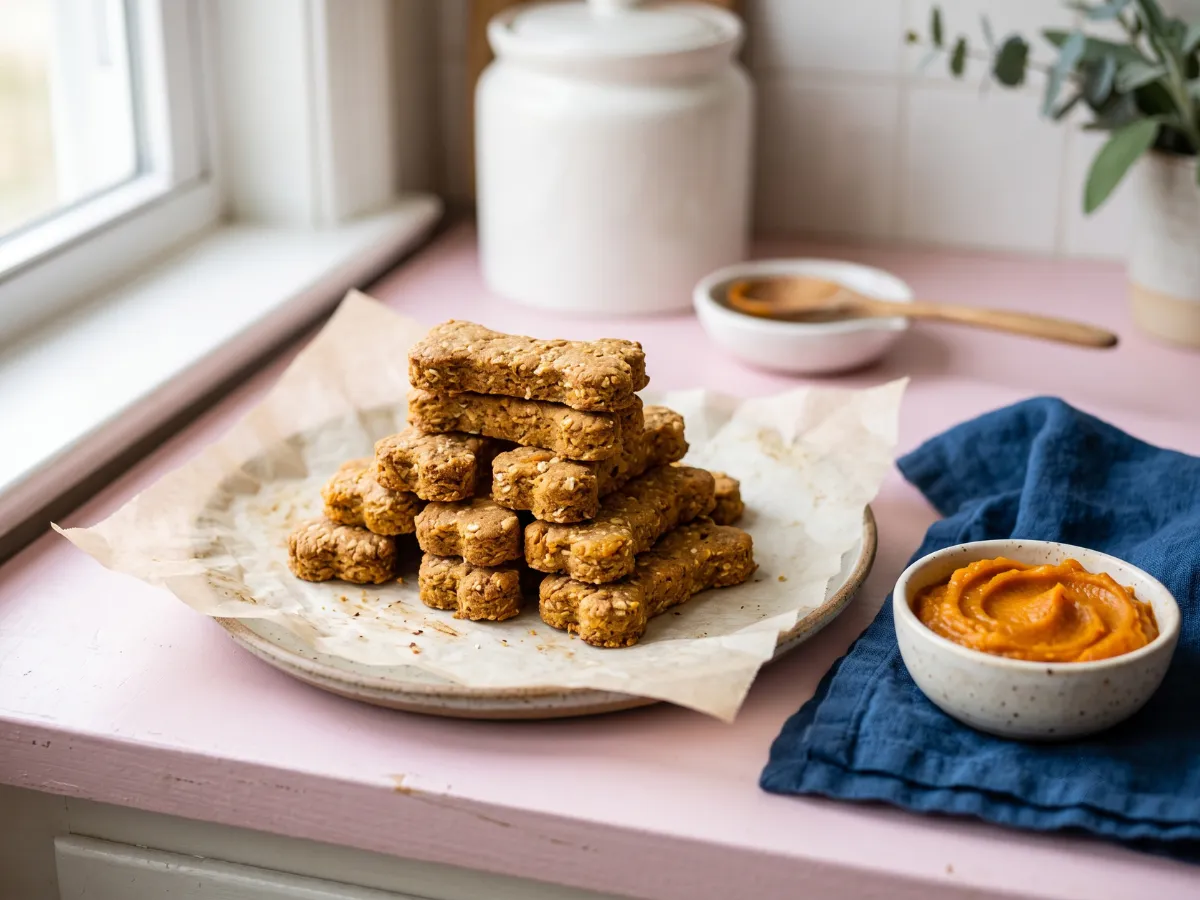
What we use
What we use for poodle training
Pea-size molds, pouches and measuring scoops cover training days, picks in one list.
See what we use →As an Amazon Associate we earn from qualifying purchases.
Save these on Pinterest
Pin the checklist for fridge duty. The Dog Food collection holds the no-bake bites and the puppy portions page.
Sources
Every number on this page comes from a veterinary or veterinary publisher source, not from our own head: