 PawStyle Daily
Puppy Training Tips
Loose Leash Walking for Small Dogs
A small dog on a loose leash is a pleasure and a small dog on a tight leash is a workout. The difference is not the dog's size or the leash length. It is where the lesson starts, where the reward sits, which harness clip you use, and what happens when the pulling begins. Below is the sequence that takes a small dog from the hallway to the street, with the safety kit for the evening walk that comes after.
By PawStyle Daily · Updated 19 November 2026
Good to know: hallway drill first · reward at the seam · front-clip for pullers · reflective collar after dark · for informational purposes, consult your vet.
Why small dogs need their own walk plan
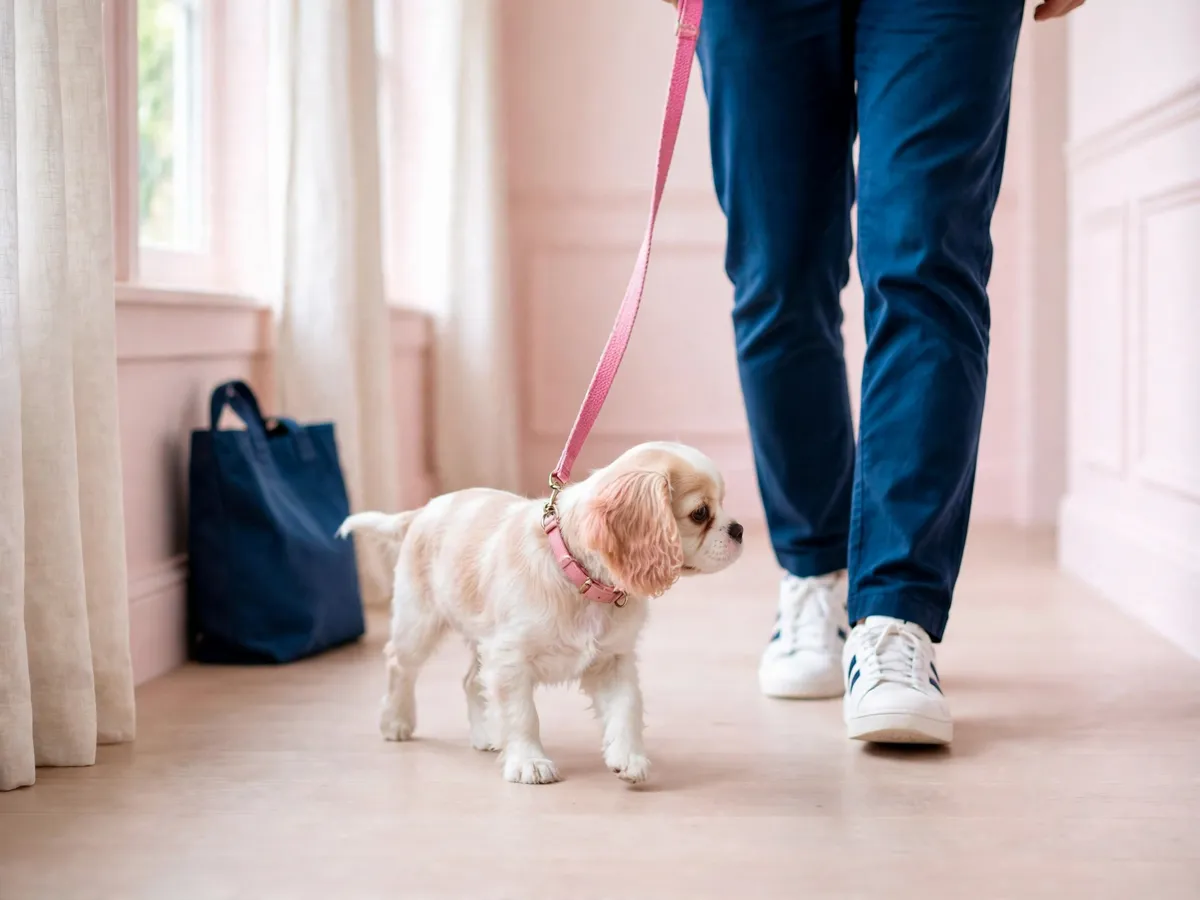
A small dog is closer to the ground, closer to the smells, and closer to the things on the pavement that a large dog walks past. The leash is shorter, the stride is shorter, and the pulling is harder on a body that weighs ten pounds. Loose leash walking for a small dog is not a scaled-down version of the big-dog plan. It is its own drill, and it starts inside.
The five-command foundation from the basic dog obedience at home page is the prerequisite. A dog that can sit and stay at the door is a dog that can pause before the walk begins, and that pause is where the loose leash starts.
The hallway drill: start inside
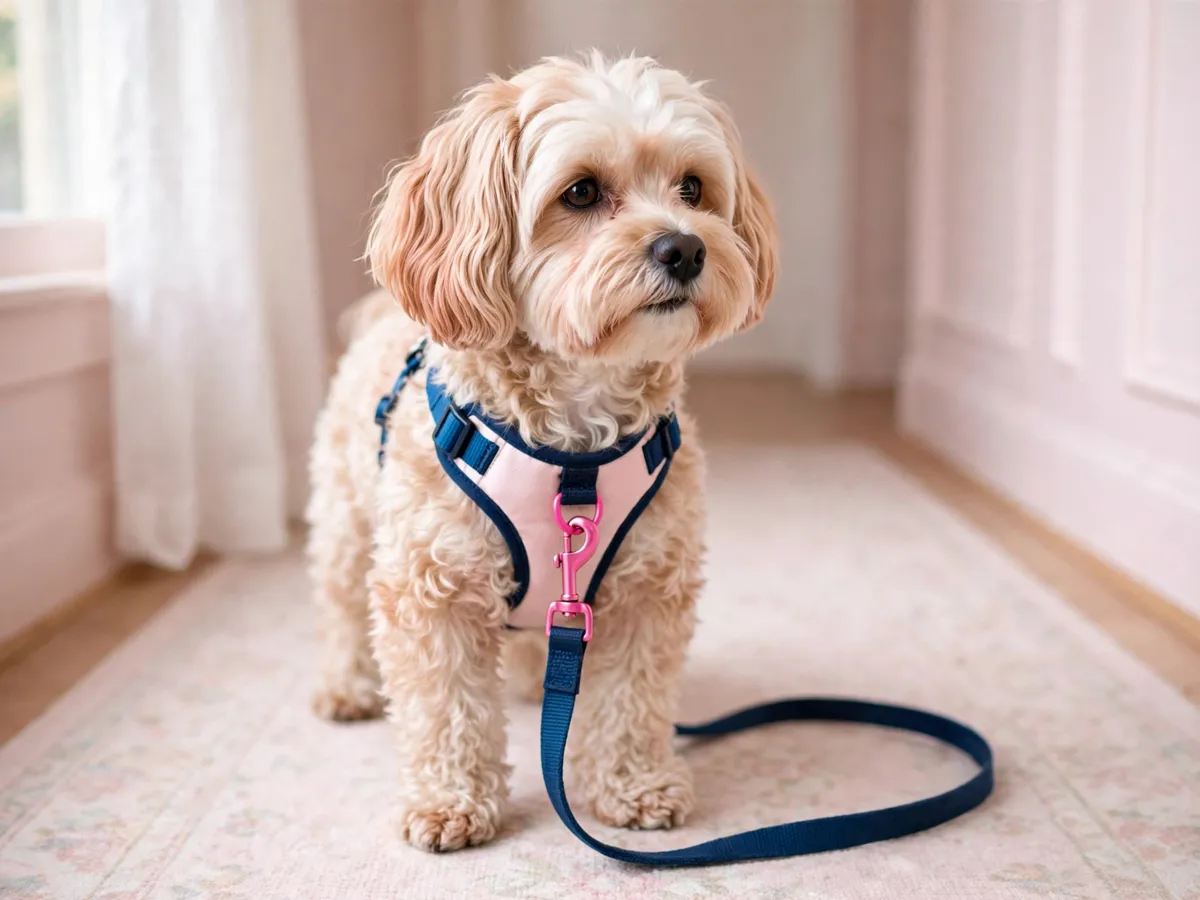
The hallway is the classroom. No squirrels, no other dogs, no traffic noise. Just ten feet of floor, a leash, and a dog that learns the shape of a walk before the walk begins. Put the harness on, clip the leash, stand at one end of the hall, and take one step. If the leash stays slack, mark and pay. If the dog surges ahead, stop. The step does not happen again until the leash loosens.
Three to five minutes is the session length. Short and successful beats long and frustrated, because a small dog that is tired of the drill is a small dog that pulls to end it. Run two or three sessions a day for a week, and the hallway walk becomes the default: leash on, slack leash, one step at a time, paid at the seam between you and the dog.
The U shape is the visual. A loose leash hangs in a shallow U between the hand and the harness. A tight leash is a straight line, and a straight line is the signal to stop. The dog learns that a slack U moves forward and a tight line does not. No words needed. The leash teaches the lesson.
The reward position
The reward position is at the seam: the spot where your leg meets the dog's shoulder. That is the place the treat lands, every time, so the dog learns that the good thing happens at your side, not three feet ahead. A treat thrown forward rewards the pulling. A treat delivered at the seam rewards the position you want.
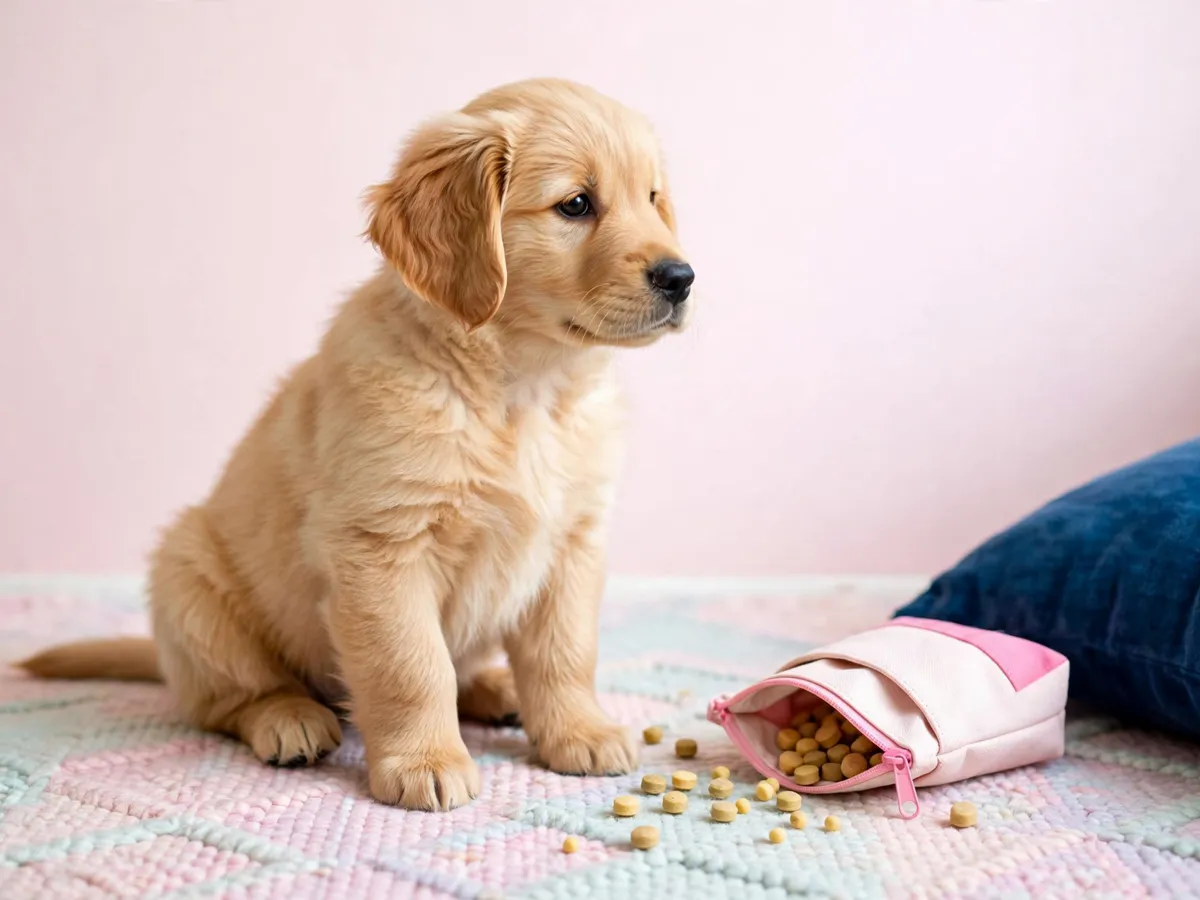
When treats are for training, keep each one as small as possible and count it against the day's food.
The same rule that governs the obedience session governs the walk. Pea-size pieces from the daily ration, delivered at the seam, five or six times per hallway session. The pouch sits on the hip closest to the dog, so the hand that delivers the treat does not cross the body and pull the leash sideways. Everything stays on one side: the pouch, the hand, the treat, the dog.
A small dog is low, and the delivery matters. Drop the treat to nose height rather than making the dog jump for it, because a jump is a pull on the leash and a pull is the habit we are breaking. The hand goes down, the treat opens, the dog eats at the seam. That is one rep.
Harness clip: front or back
On a front-clip harness the leash attaches near the chest and helps redirect a dog that pulls, while a back-clip harness attaches between the shoulder blades.
The clip is the steering wheel. A front clip turns the dog back toward you when the leash tightens, because the attachment point is at the chest and a pull swings the body sideways instead of forward. A back clip lets the dog lean into the pull, because the attachment is behind the shoulders and the body lines up with the tension. For a dog that pulls, the front clip is the answer. For a dog that already walks on a loose leash, either clip works.
A small dog in a front-clip harness is a dog that gets turned around gently instead of dragged backward. The harness does the correction, the handler does not, and the leash stays slack because pulling stops being rewarding. Try the harness on before the walk, check that a finger fits under the strap, and make sure the clip sits at the centre of the chest, not off to one side.
The age of the dog matters as much as the harness. A puppy goes through a socialization period in its first three months that permanently shapes its adult personality and how it reacts to its environment.
That window is the reason a puppy gets safe, low-traffic exposure to the street early, with the harness and the hallway drill as the foundation. The walks are short, the routes are quiet, and the goal is confidence, not distance. For the full age-by-age plan, the puppy training schedule by age page has the week-by-week breakdown.
When the pulling starts
The pulling starts the moment the hallway ends and the street begins, because the street is full of smells and the smells are more interesting than the seam. The drill is the same: stop when the leash tightens, move when it loosens. No words, no corrections, no yanks. The leash is the teacher, and the dog learns that a tight line means standing still and a slack U means moving forward.
The first street session is shorter than the hallway session. Three minutes on a quiet pavement, one direction, turn around, come back. The route is boring on purpose, because a boring route is a route the dog can succeed on. Add distance across weeks, not days, and add distractions one at a time: a parked car, a quiet corner, a neighbour with a calm dog.
If the dog surges at a smell, stop and wait. The smell is still there when the leash loosens, and the dog gets to investigate once the slack returns. The lesson is not "no sniffing." The lesson is "sniffing happens on a loose leash," and the dog learns the order fast because the reward at the seam is consistent.
The evening walk: safety after dark
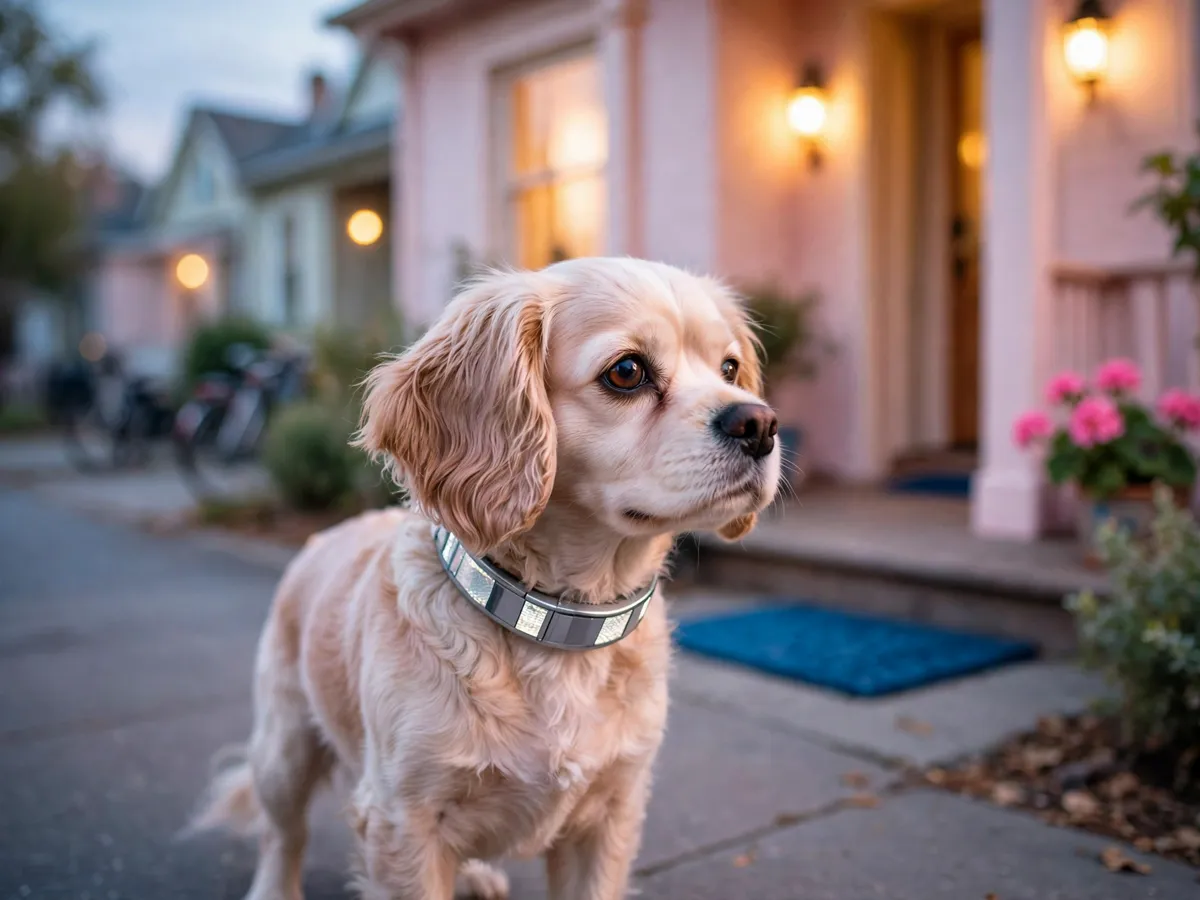
The evening walk is a different walk. The light is low, the pavement is darker, and a small dog at ankle height is harder for a driver, a cyclist or a runner to see. The gear changes with the hour, and the safety kit is small, cheap, and the difference between a walk that is fine and a walk that is not.
If the pet goes out after dark, a reflective collar, a secure leash and proper ID make the walk safer.
A reflective collar catches headlights and porch lights and turns the dog into a visible shape on the pavement. A secure leash means a leash that clips to the harness, not a retractable that extends into the road. Proper ID means the tag on the collar with a phone number, because a small dog that slips a harness in the dark is a dog that needs to be found fast.
The evening route is a route you know. No new streets, no unlit paths, no shortcuts through the park. The walk is shorter than the daytime walk, the pace is steady, and the phone is in the pocket, not in the hand. A small dog on a loose leash in the dark is still a small dog on a loose leash, and the hallway drill holds, but the margin for error is thinner and the gear matters more.
For the walk length that matches the dog and the breed, the daily walk length by breed page has the numbers.
Loose leash walking questions
How long should the first leash session be?
Three to five minutes in a quiet hallway is enough for the first few sessions. Short and successful beats long and frustrated.
Front-clip or back-clip harness for pulling?
A front-clip harness attaches near the chest and redirects a dog that pulls. A back-clip harness attaches between the shoulder blades and suits a dog that already walks nicely.
When is it safe to walk my puppy outside?
Ask your vet about your puppy's vaccination status before walks on public ground. The first three months are the socialization window, so safe, low-traffic exposure matters.
The walk kit
Front-clip harness, reflective collar and leash for small dogs
A front-clip harness that turns the puller back, a reflective collar for the evening route, and a secure leash with a clip that stays shut — the three-piece kit for a small dog that walks loose.
See the walk kit →As an Amazon Associate we earn from qualifying purchases.
Save these on Pinterest
Pin the hallway drill and the front-clip guide for the next training week. The Puppy Training collection holds the obedience page, the age schedule and the walk-length guide for the full plan.
Hallway first, reward at the seam, front-clip for pullers, reflective collar after dark. For informational purposes, consult your vet.
Small-dog handlers tend to have small yards too, and the agility that fits a small yard page is sized for exactly that.
When the pulling has a stranger behind it, the distance games for leash frustration page is the next read.