 PawStyle Daily
Puppy Training Tips
Desensitizing a Puppy to Christmas Sounds
A puppy's first Christmas is the one where the house is loudest. The doorbell goes off every twenty minutes, the speaker carries music a puppy has never heard, and the fireworks start before midnight on the loud night. A puppy that has only ever heard the apartment at its quietest does not have a reference for any of it, and the first loud sound it meets unprepared is the one it remembers. This guide walks the quiet reps that come before the loud day, the safe room that is ready before the guests arrive, and the signs that say the pace needs to slow down.
By PawStyle Daily · Updated 19 November 2026
Good to know: quiet reps in the weeks before, a safe room set up in advance, and three body-language signs that say slow the pace down.
Why the first Christmas is different
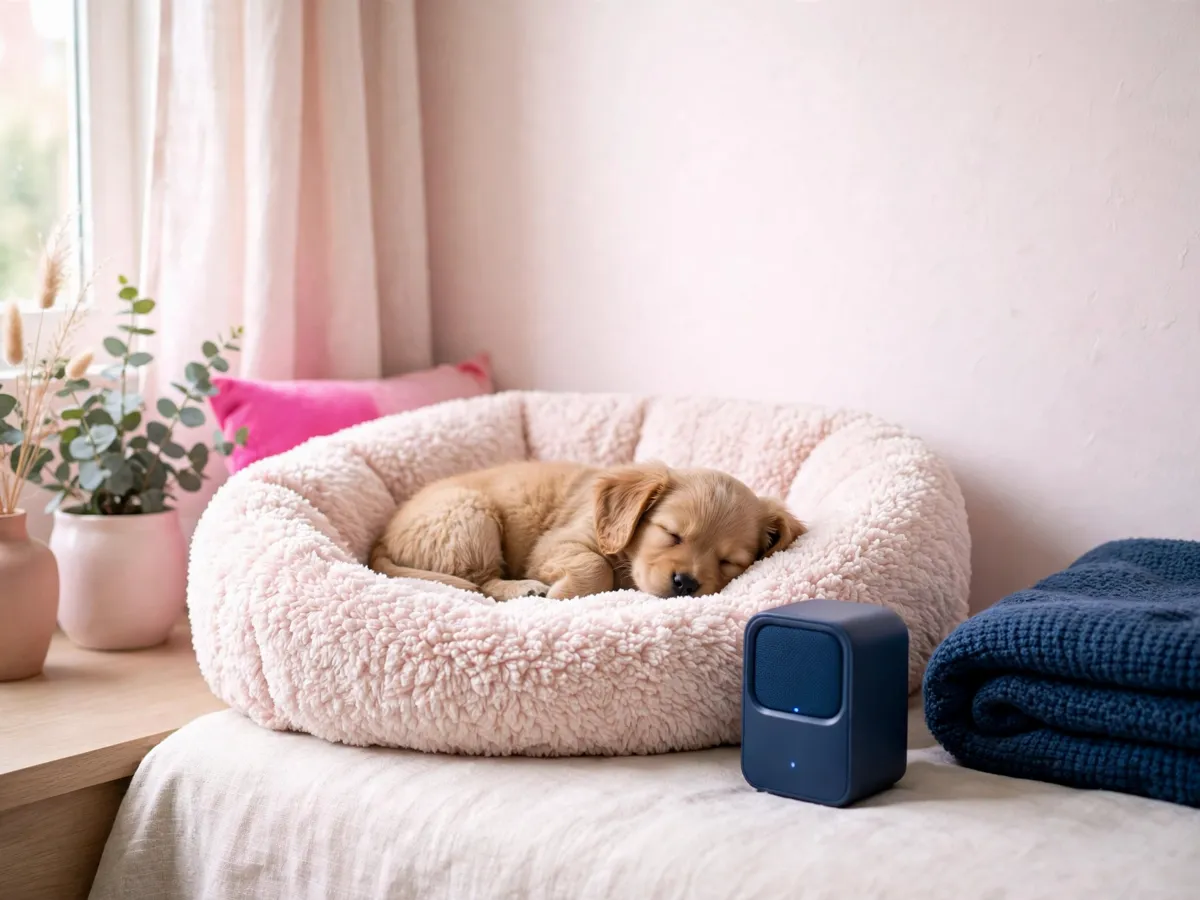
A puppy goes through a socialization period in its first three months that permanently shapes its adult personality and how it reacts to its environment. That window is the one where the puppy is most open to new sounds, and the sounds it meets calmly in that window are the sounds it carries into adulthood as background rather than threat. Christmas is the one holiday that drops every loud sound at once, and a puppy that meets them for the first time on the loud night is a puppy that has to choose between panic and the safe room with no rehearsal.
The job is simple: the puppy meets the sounds at a volume it can take, in the weeks before, and the safe room is ready before the first guest arrives. The two pieces work together, because the quiet reps are what teach the puppy the sound is not a threat, and the safe room is what the puppy falls back on when the sound is louder than the reps prepared it for. For informational purposes, consult your vet.
If the puppy is still in the early socialization window, the puppy socialization checklist covers the full list of sounds, surfaces and people the puppy should meet before the window closes. This page picks up the Christmas-specific slice of that list.
The socialization window and the loud night
The socialization window is the stretch where the puppy is most curious about new things and least likely to spook. After it closes, the puppy still learns, but the learning takes more reps and the default reaction to a new sound shifts from curiosity toward caution. A puppy that meets Christmas sounds inside the window has a different relationship with those sounds at next year's Christmas, because the sounds are already filed as background.
The loud night itself is the test. Loud music and fireworks can scare pets, so leave them a safe room to retreat to. The safe room is not a backup plan for a puppy that was not prepared, it is the second half of the preparation. The quiet reps come first, and the safe room is where the puppy goes when the reps have run their course and the sound is still going.
A note on the calendar: the loud night is not the only loud day. The doorbell, the music and the kitchen sounds build across the whole season, and the safe room earns its keep on every one of them, not just the one with fireworks. The New Year follow-up sits on the New Year's Eve pet safety page, and the same safe room carries straight through.
The quiet reps
The quiet reps are the core of the work, and they are the simplest part. The puppy hears the sound at a volume low enough that it keeps doing whatever it was doing, and a small treat follows the sound. The volume goes up a notch when the puppy ignores the current one, and the reps continue at the new volume until the puppy ignores that one too.
The sounds to rehearse are the ones the puppy will meet on the loud day: a doorbell, a knock, party music with a bass line, a kitchen timer, and the recorded sound of fireworks. Play each one from a phone or a speaker at the lowest volume the puppy can hear, and watch the puppy, not the clock. If the puppy looks up and then goes back to its chew toy, the volume is right. If the puppy freezes, the volume is too high and the next rep is quieter.
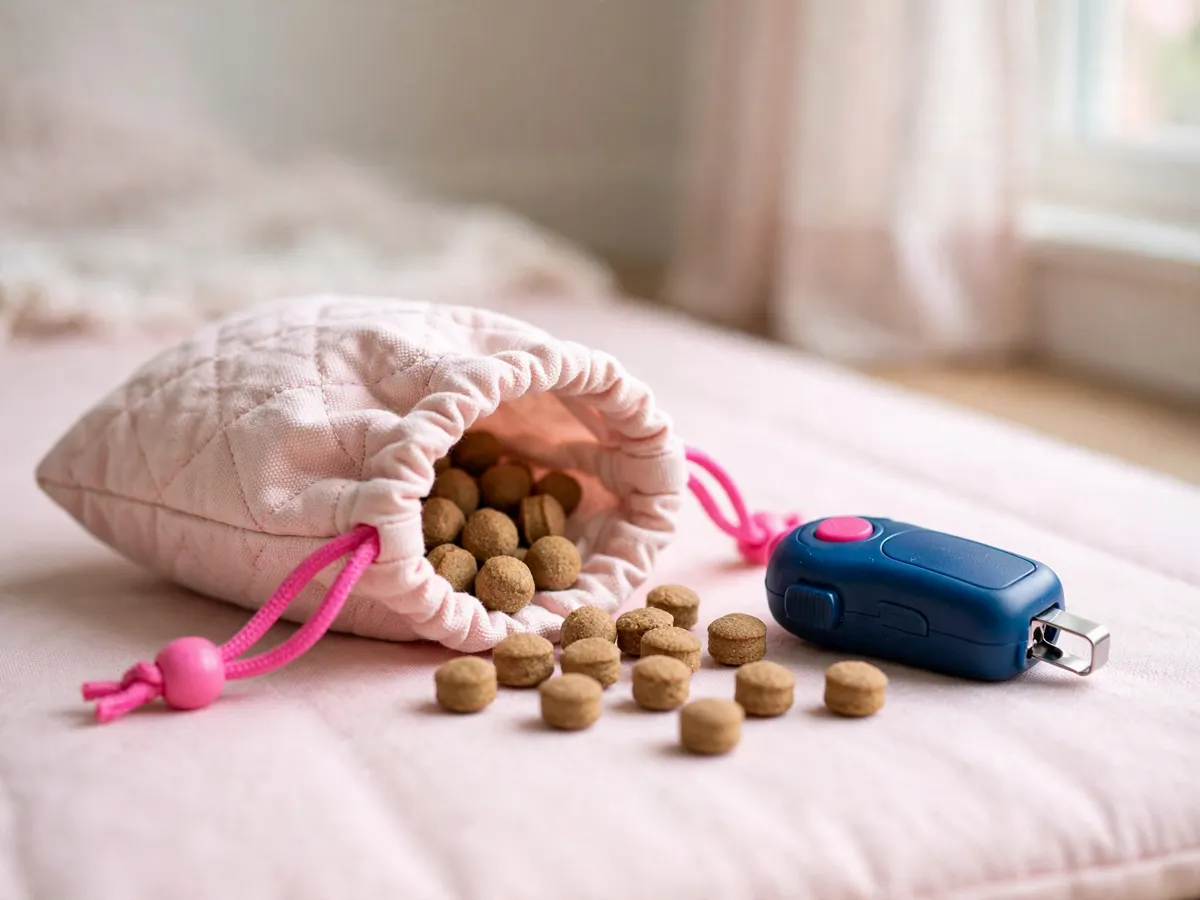
The treats are pea-size, soft and high-value. The puppy gets one after the sound, not before, so the sound becomes the thing that predicts the treat rather than the thing the treat is trying to distract from. A treat pouch on the hip keeps the timing tight, and a soft clicker marks the moment the puppy stays calm. The reps are short, a few quiet rounds, and they end before the puppy gets bored or full.
The safe room
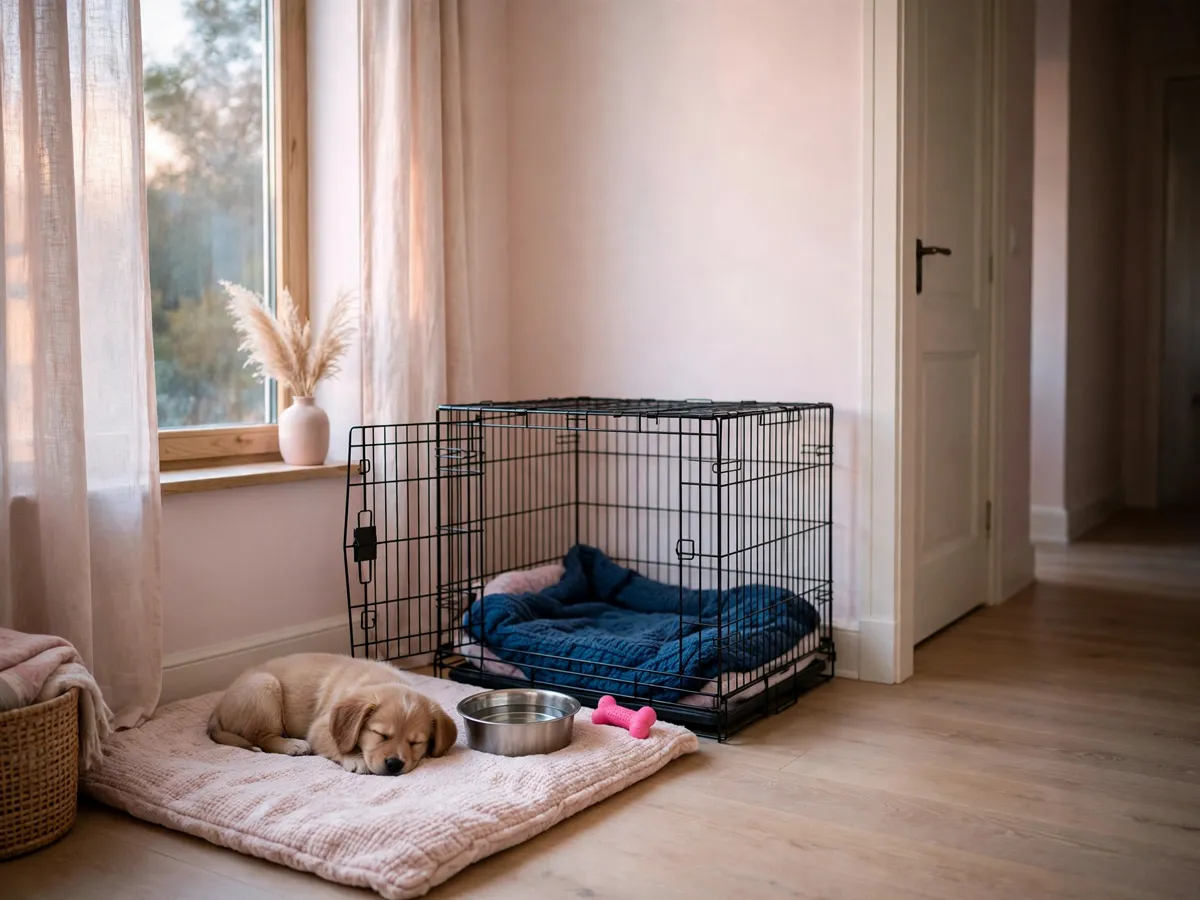
The safe room is the one the puppy goes to when the reps have run their course and the house is still loud. It is a room with a door that closes, away from the hallway and the speaker, and it has the crate, a water bowl, a soft mat and a bed that smells like home. The room is set up before the guests arrive, not after the puppy is already overwhelmed, and the puppy has spent quiet time in it before the loud day so the room is familiar.
The crate is the puppy's spot inside the room, and the door stays open so the puppy chooses to go in rather than being put in. A chew toy and a lick mat fill the time the puppy spends there, and the lights stay low. The puppy gets a break in the safe room every hour or two on the loud day, and the break is not a punishment, it is a rest.
The crate itself is a separate skill, and if the puppy is new to it, the crate training first week plan walks the slow version that earns a crate the puppy chooses to enter. A crate the puppy already trusts is the one that works on the loud night.
The signs that say slow the pace
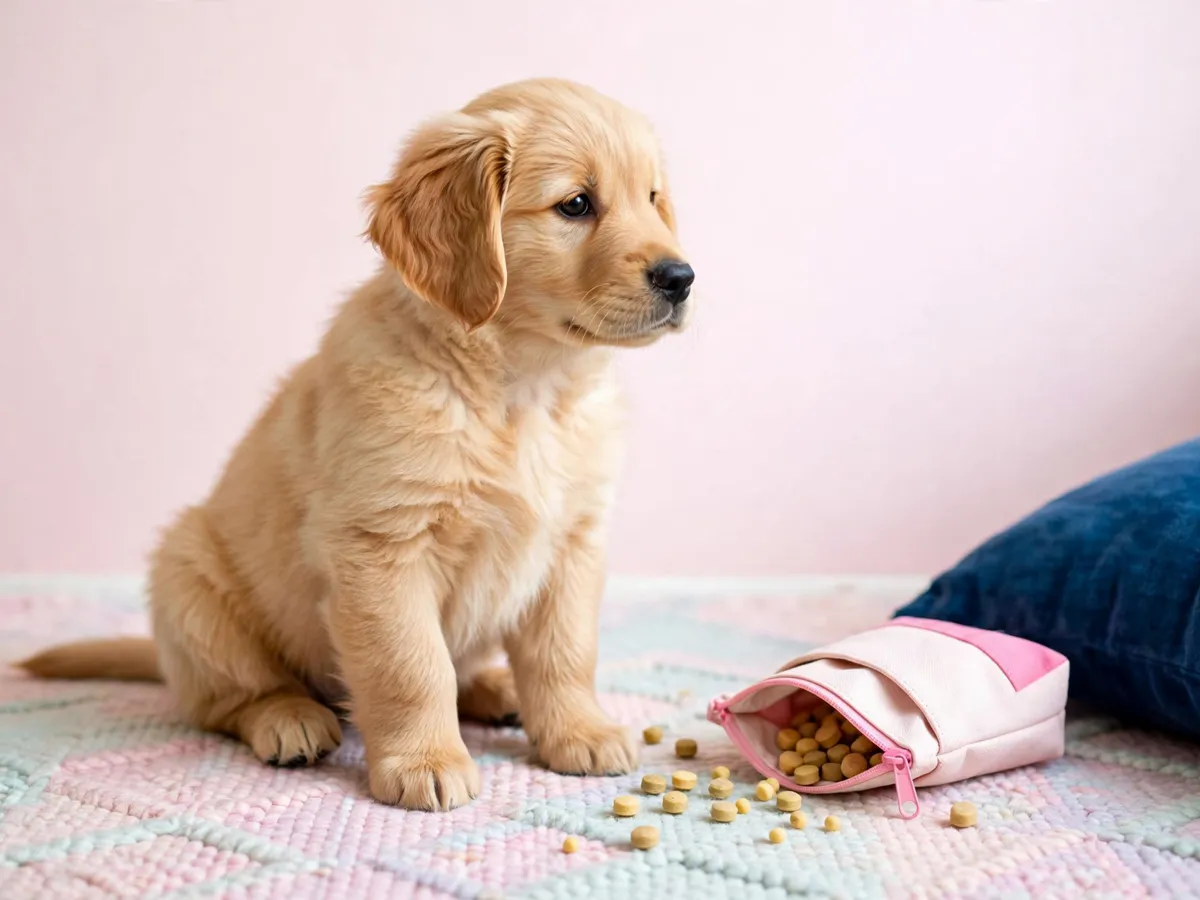
Three body-language signs say the pace is too fast and the volume needs to drop. The first is tucked ears, where the puppy presses its ears flat against its head instead of holding them up and curious. The second is a tucked tail, where the tail drops below the neutral line and presses against the belly. The third is lip-licking that is not about food, the quick flick of the tongue that says the puppy is uncomfortable with the current moment.
Any one of the three is a signal to drop the volume and hand out a treat at the pace the puppy can take. Two of the three at once is a signal to move to the safe room and end the reps for the day. The signs are the puppy's way of saying the work has gone as far as it can go today, and the next rep is tomorrow, not in an hour.
The signs also tell you when the safe room is the right call on the loud night itself. A puppy that shows two of the three signs while the music plays is a puppy that needs the safe room, not more reps. The room is ready, the door closes, and the puppy gets the quiet it asked for.
The whole plan, one list
- Start quiet reps in the weeks before the loud day
- Doorbell, knock, party music, kitchen timer, fireworks
- Lowest volume the puppy can hear, treat after the sound
- Pea-size soft treats, treat pouch on the hip, soft clicker
- Short reps, end before the puppy is bored or full
- Safe room: closed door, crate, water bowl, soft mat
- Puppy spends quiet time in the room before the loud day
- Break in the safe room every hour or two on the loud night
- Watch for tucked ears, tucked tail, lip-licking
- Two signs at once means move to the safe room
Questions about noise training a puppy for Christmas
When should I start noise training for Christmas?
The weeks before, not the day of. A puppy in its first three months is still shaping how it reacts to the world, so quiet reps now earn the calm on the loud night.
What does a safe room look like?
A closed door, the crate, a water bowl, and a bed that smells like home. The room is ready before the guests arrive, and the puppy gets a break there every hour or two.
What if my puppy gets scared anyway?
Move to the safe room, drop the volume, and hand out small treats at the pace the puppy can take. The signs to watch for are tucked ears, a tucked tail, and lip-licking that says slow the whole pace down.
What we use
What we use for noise training
A treat pouch, pea-size soft treats, a soft clicker and a training mat, the four things that make the quiet reps work.
See what we use →As an Amazon Associate we earn from qualifying purchases.
Save these on Pinterest
Pin this before the loud night arrives. The Puppy Training collection holds the socialization checklist, the crate plan and the noise guide in one place.