 PawStyle Daily
Puppy Training Tips
Puppy Bath Training: The First Wash Without a Fight
A puppy bath is the moment most owners lose the room. The tap runs, the feet slip, the puppy climbs the side of the tub, and the owner ends up more soaked than the dog. The wash itself is a short job once the setup is honest, and the fight is almost never about the water. It is about the tub that offers nothing to grip, the face that gets blindsided, and the rinse that leaves a slick film the puppy shakes off across the bathroom. This page owns the bath and nothing else: the mat under the feet, the water tested by elbow, the body washed before the face, the rinse with no film left behind, and the towel before the door.
By PawStyle Daily · Updated 20 November 2026
Mat first, water second | test by elbow, not by eye | body then face | rinse until the coat squeaks | towel before the door | For informational purposes, consult your vet.
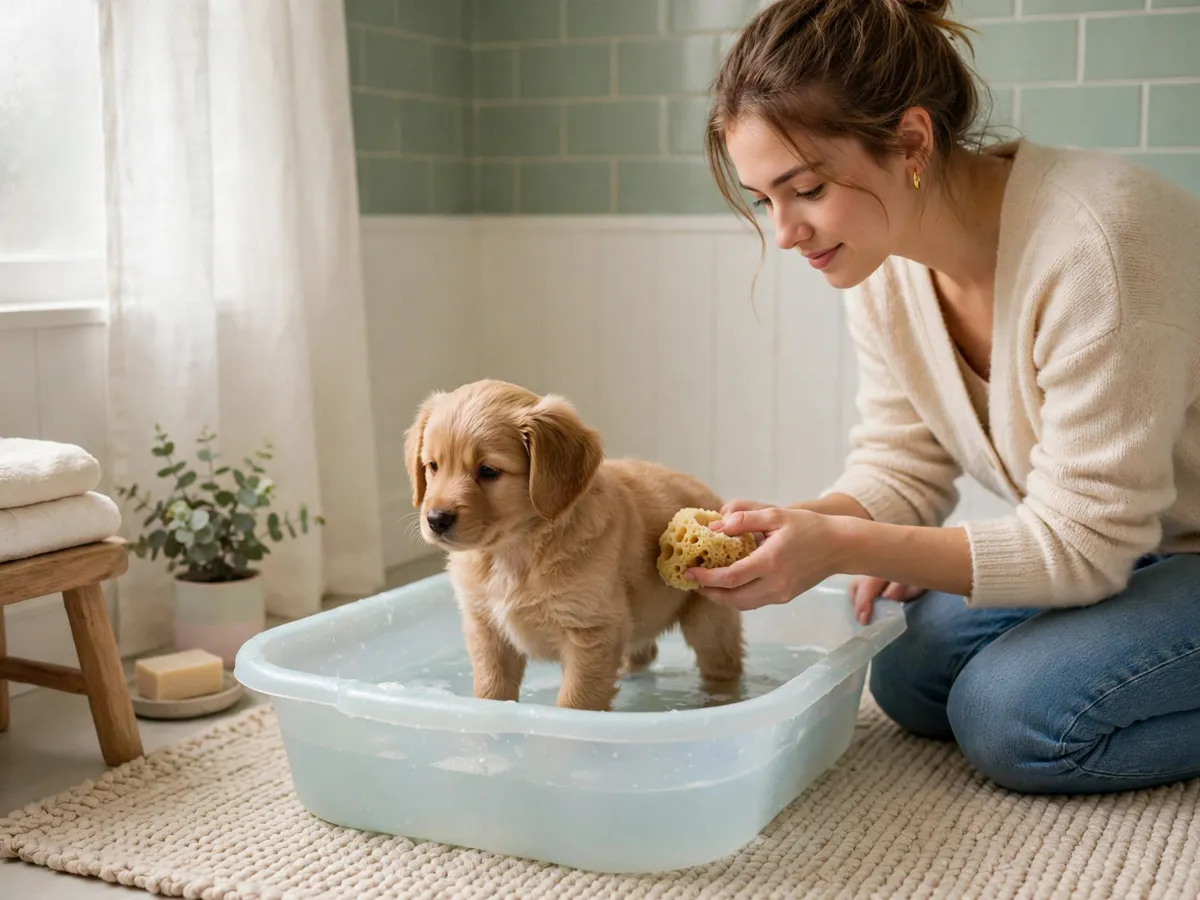
Why the bath is a setup problem, not a water problem
The first bath fails for the same reason every time, and the reason is never the puppy. A puppy placed in a bare plastic tub has nothing under its feet but a slick surface, and the response is predictable: the legs splay, the body stiffens, and the scrambling starts before the water does. The owner reads the scramble as fear of water and moves the hose closer, which makes the surface slicker and the scramble worse. The fix is underneath the puppy, not above it. A rubber bath mat or a folded towel on the bottom of the tub gives the feet something to push against.
The second failure is order. An owner who wets the head first sends water toward the eyes and ears before the puppy has decided the tub is tolerable, and the face is the part the puppy guards most. The face goes last, wiped with a damp cloth, once the body is already washed and rinsed. A bath that follows this order reads as routine instead of ambush, and a puppy that reads it as routine sits through the next one.
This page stays inside the tub; the rest of the puppy's daily routine belongs to the pages that own it. The bath is a handling task on a single afternoon, and a puppy socialization checklist tracks how the wash sits beside the other new experiences of the same month. Brushing is its own routine, and the dog teeth brushing routine owns the mouth end. This page owns the tub, the water, the rinse, and the towel.
The tub: a mat, water by elbow, and the door shut
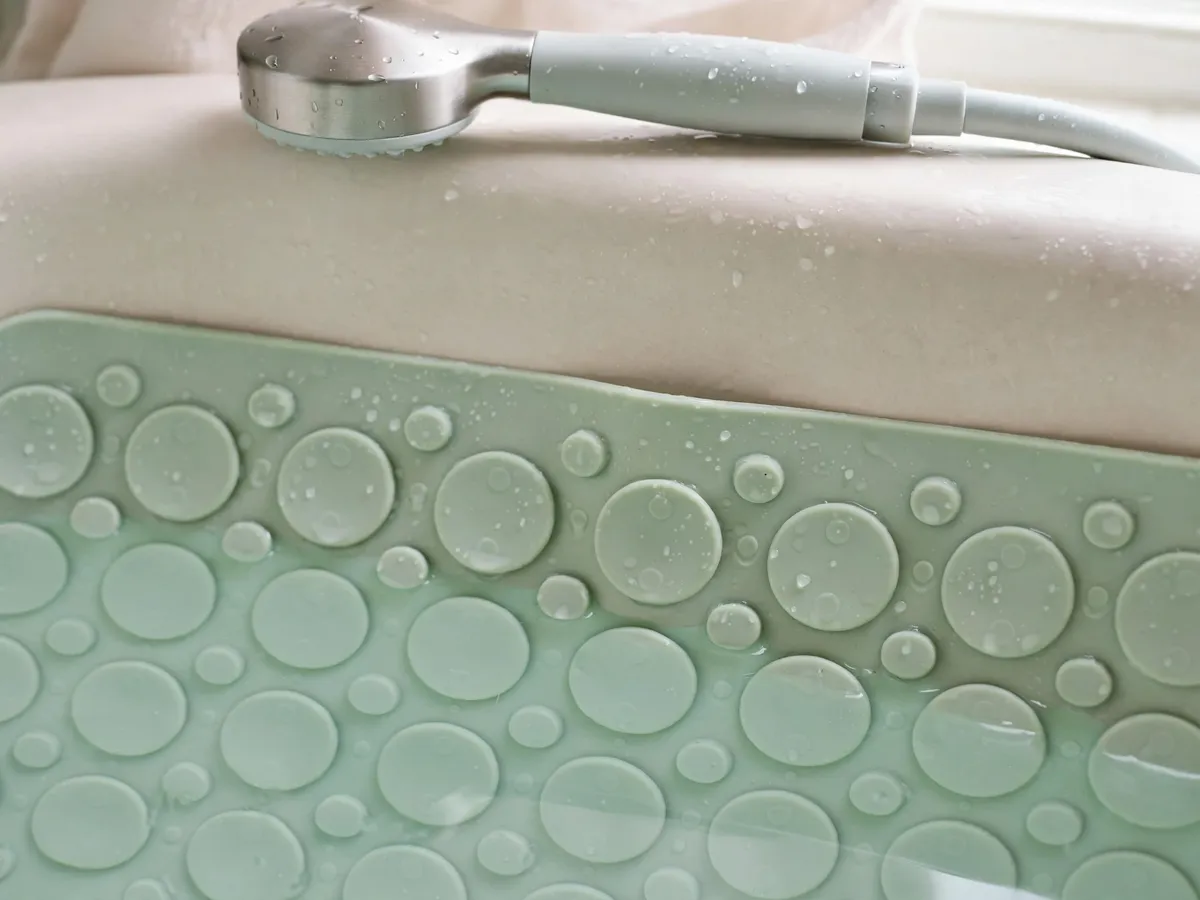
The setup is decided before the puppy sees the tub, and the order is unforgiving. Lay the mat down first, a rubber bath mat or a folded towel pressed flat to the bottom of the basin, so the surface the puppy stands on is not the slick plastic or enamel underneath. Run the water before the puppy arrives, never while the puppy is standing in the tub. The running tap is noise and cold hose arriving on warm skin, and a puppy that hears the tap as the first thing the bath offers braces against everything that follows.
Test the water by elbow, the same way a parent checks a baby bath. The elbow is more sensitive than the wrist to warmth, and it cannot tolerate water a hand calls fine. Hold the inside of the elbow under the stream and let it run; the water should feel tepid and unremarkable, neither warm enough to notice nor cold enough to startle. The elbow is the only honest test, because a puppy's skin reads warmth differently and a stream that feels merely comfortable to a hand can be too warm for the coat. No thermometer, no number; the elbow is the tool.
Fill the tub shallow. The water should cover the mat and reach the puppy's pasterns and no higher, enough to wet the legs and let the sponge draw, not enough to float the body or reach the belly. A shallow fill is a fill the puppy can stand in, and standing is the posture the bath is built around. Shut the bathroom door before the puppy goes in. A puppy that sees the hallway open plans the exit before the water touches it.
Wetting: body first, face last, one hand on the shoulder
Lift the puppy onto the mat and set it down, do not drop it. The first contact with the tub is the mat, not the water, and a puppy that lands on a grippy surface and finds its feet stays standing. Keep one hand flat on the shoulder blade the whole time the puppy is in the tub. The hand is not pushing the puppy down; it is a steady weight the puppy leans into, the same way a hand on a scooter rider's back tells the rider the adult is there. The hand stays through the wetting, the wash, and the rinse.
Wet the body first with a cup or a handheld shower head on a slow setting, working from the neck back to the tail. Avoid the head entirely during the wetting. The water runs down the back and the sides, the belly gets wet from the splash, and the legs are already in the shallow fill. A handheld head held close to the coat is quieter than an overhead hose and lets the water follow the contour of the body instead of falling from a height. Move slowly.
The face is the last thing that gets wet, and it gets wet with a damp cloth, not a stream. Run the wash over the body first, then lift a soft cloth from the tub water, wring it until it is damp and not dripping, and wipe from the top of the head down toward the muzzle. Wipe away from the eyes, never toward them, and fold the ears forward over the skull so no water runs into the canal. The face wiped last is the face that has already watched the whole body get washed without incident. A face wet by surprise is the bath that ends the series.
The rinse: no slick, no film, water until the coat squeaks
The rinse is the step owners cut short, and the step that pays back the cutting. Wash left in the coat dries to a film the puppy feels on the skin, and a puppy that feels a film rubs against the couch and the rug, spreading the residue across every surface it touches. The first sign a rinse was too short is the puppy rolling on the rug the moment the bath ends; the second sign is the coat that feels tacky instead of clean the next morning. The rinse is longer than the wash, every time.
Rinse with clean water from a cup or the handheld head on a slow setting, running the water from the neck toward the tail the same way the wetting went. Work the water through the coat with the flat of the hand, not the tips of the fingers, so the water reaches the skin rather than sheeting off the topcoat. The rinse is done when the coat squeaks under the hand, the same squeak a clean dish makes under a wet sponge. A coat that is still slick with wash slides under the hand and does not squeak, and a coat that slides is not done. The test is feel, not a timer.
The face gets a separate rinse with the damp cloth, wrung and re-wetted in clean tub water, wiped the same direction as before. No wash goes on the cloth that touches the face. The bath is over when the squeak runs from the shoulders to the tail and the cloth has done the face, and the puppy is standing, not scrambling, with the hand still on the shoulder blade.
The towel: end the shake before the door opens
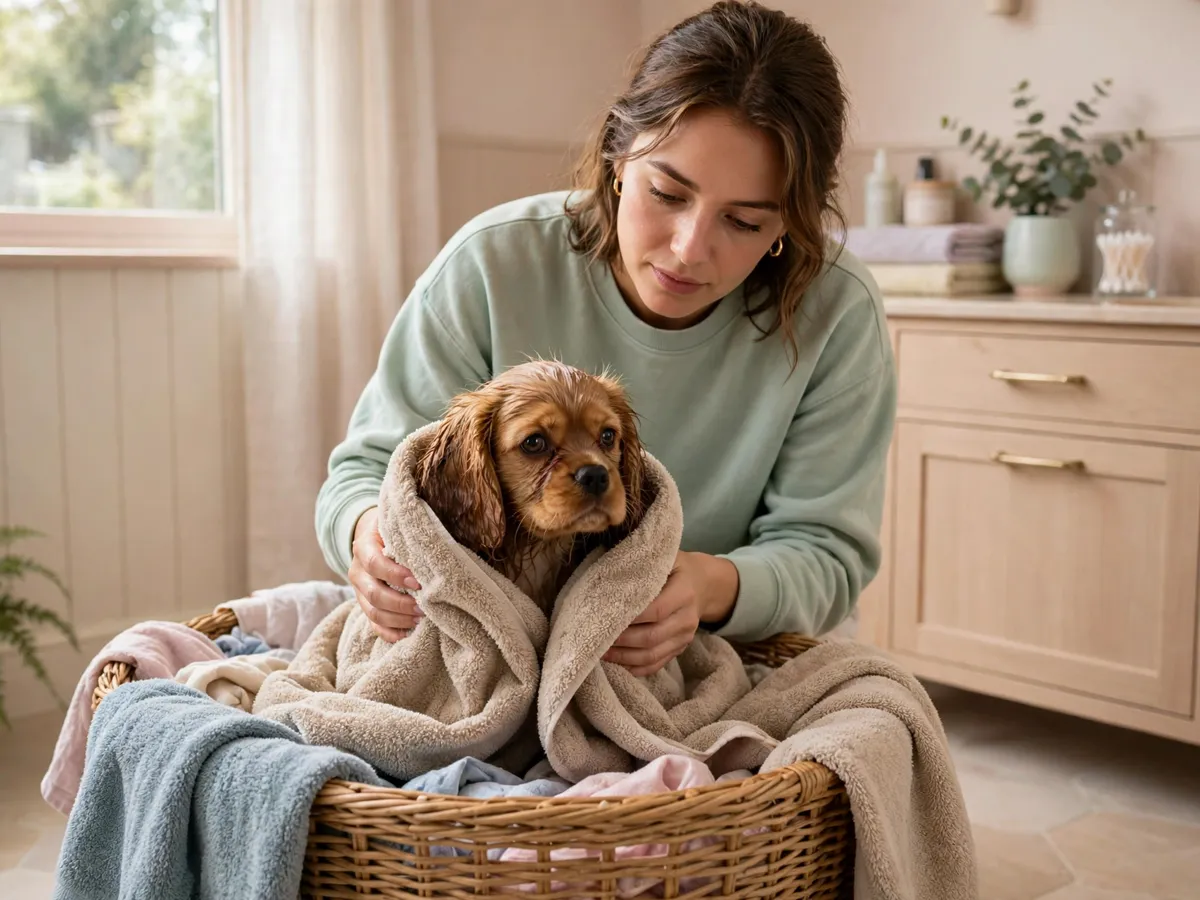
The shake is the bath's finishing move, and it happens on the way out of the tub. A wet puppy that steps from the tub onto the bathroom floor and feels the draft of the hallway shakes, and the water goes everywhere the bath worked to keep dry. The towel ends the shake before it starts. A large towel, warmed on the radiator or in the dryer while the bath ran, is laid open on a laundry basket before the puppy comes out. The puppy is lifted from the tub straight onto the towel, not onto the floor, and the towel is wrapped around the body the moment the feet leave the mat.
Dry from behind the ears forward, the same direction as the wash, with the towel pressed flat rather than rubbed. Rubbing tangles a wet coat and roughs the skin; pressing absorbs the water without dragging it. Keep one hand through the towel on the shoulder blade, the same hand that was on the shoulder in the tub, so the contact does not break. The towel is a continuation rather than a new experience.
The face is patted with a corner of the dry towel, not the body section, and the ears are folded back and the inner edge blotted gently. Do not probe the ear canal; the cloth outside the ear is the whole face job. Let the puppy stand in the towel on the laundry basket until the dripping stops, then move to a dry towel for a second press. The door stays shut through the toweling and opens only when the coat is damp rather than wet.
Questions about the first puppy bath
How do I stop the puppy scrambling in the tub?
Give the feet something to grip before the water starts, and keep one hand flat on the shoulder blade the whole time. A scrambling puppy is a puppy with nothing to hold, not a puppy that hates water.
Should I wet the head last?
Yes. Wash the body, then wipe the face with a damp cloth rather than a stream, so nothing runs into the eye and the puppy is not blindsided at the end of the bath.
What if the puppy shakes all over the bathroom?
Towel from behind the ears forward, with the mouth closed on a dry cloth. The shake happens on the way out of the tub, so be wrapped before the door opens.
Save the bath steps on Pinterest
Pin the elbow-water test and the towel-before-the-door move for the next wash day, or send the grip-mat tip to a friend about to bath a puppy for the first time. The Puppy Training collection holds the socialization checklist, the loose-leash walk, and the brushing routine that sit beside this bath on the same calendar.
For informational purposes, consult your vet.