 PawStyle Daily
Best Pet Supplies & Gift Guide
Cat Travel Carrier Guide for Trips
A cat carrier is the one piece of gear that sits between your cat and every vet visit, every move, and every holiday road trip. The right one is less about the brand and more about three features, one habit, and the weeks of patience that turn the box from a trap into furniture. This page covers what to look for, how to make the carrier part of the room, and where it goes in the car when the day comes.
By PawStyle Daily · Updated 19 November 2026
Amazon links on this page are affiliate links. As an Amazon Associate, PawStyle Daily earns from qualifying purchases. See the disclosure page.
Why the carrier matters before the trip
Most cat owners meet the carrier on the morning of the vet visit, and most cats meet it with the same enthusiasm they would meet a bath. The carrier comes out of the cupboard, the cat vanishes under the bed, and the morning turns into a chase. The fix is not a better carrier, it is a different timeline. The carrier that lives in the room is the carrier the cat walks into, and the carrier that lives in the cupboard is the one the cat runs from.
This page is the order that works: pick the carrier for the features it needs, make it furniture, teach the cat to walk in, and then handle the car and the trip with a calm cat and a plan. Every step is easier than the one the cupboard method gives you.
What a carrier does, and why it closes
A carrier provides safety for the cat and the owner during transport, and a closed carrier often gives a cat a sense of security.
Read that twice. The carrier is not a box you put a cat in; it is a enclosed space that keeps the cat from moving around a moving car, and the closed sides give the cat one thing to look at instead of a hundred. A loose cat in a car is a hazard to itself and to the driver, and a cat that can see the world rushing past through a window is a cat that gets aroused, vocal, and eventually carsick.
The carrier does not have to be a hard shell. A soft carrier with a sturdy frame works as well as a hard one, and the closed fabric sides do the same job as a solid wall. The point is that the carrier is enclosed, secure, and the cat cannot push a door or a zip open from the inside.
The removable top, and why it earns the price
A carrier with a removable top lets a fearful cat be examined while it stays in the bottom half.
That one sentence is the reason the carrier earns its price tag. A fearful cat at the vet is a cat that has two options in a standard carrier: come out, or be pulled out. Both are stressful, and a pulled-out cat is a cat that remembers the vet as the place it was grabbed. The removable top turns the carrier into a half box the vet can work around, and the cat stays in the bottom on its own blanket, in its own scent, with the sides it knows.
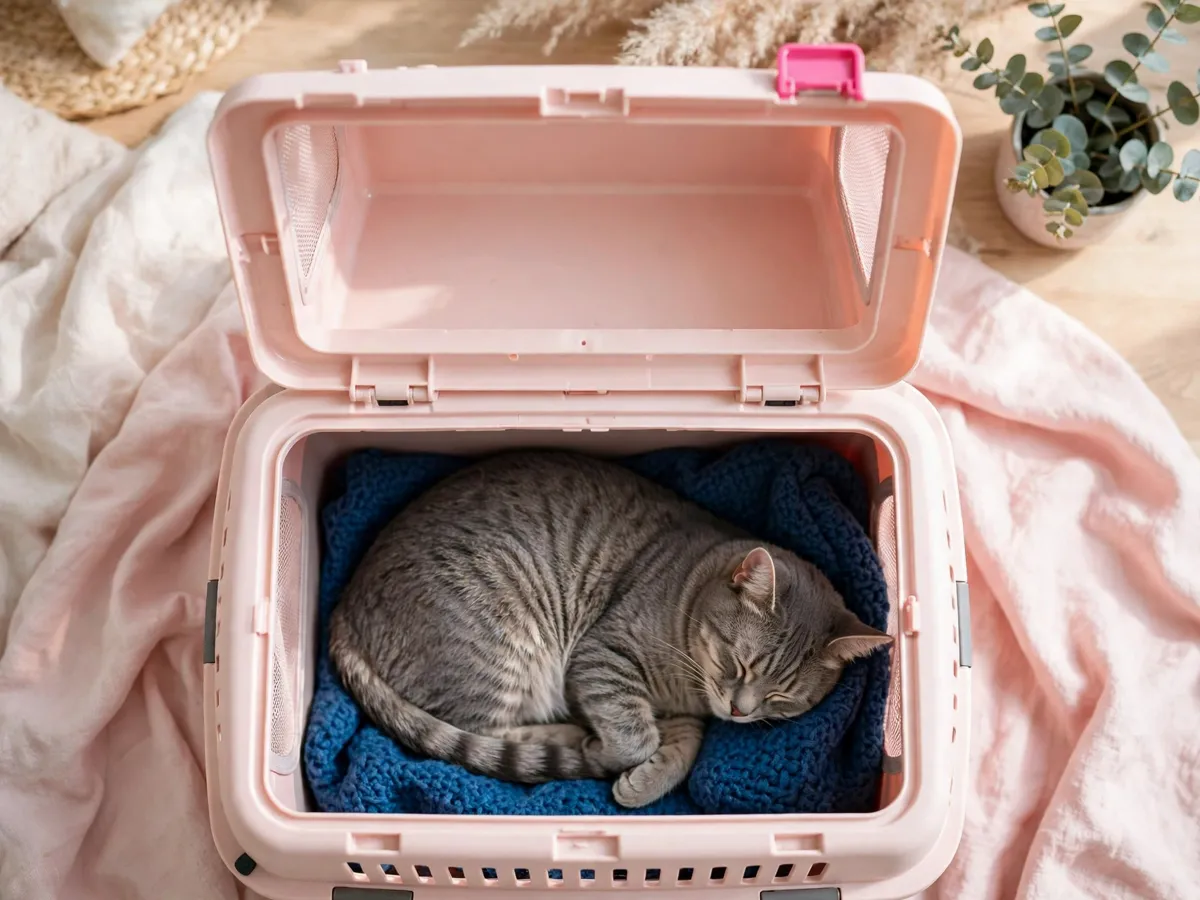
If you are choosing between two carriers and one has a removable top, pick that one. The price difference is small, and the vet visits are years of the cat's life. A carrier that opens from the top, the front, or both is the one that grows with the cat from the first checkup to the senior years.
Making the carrier furniture
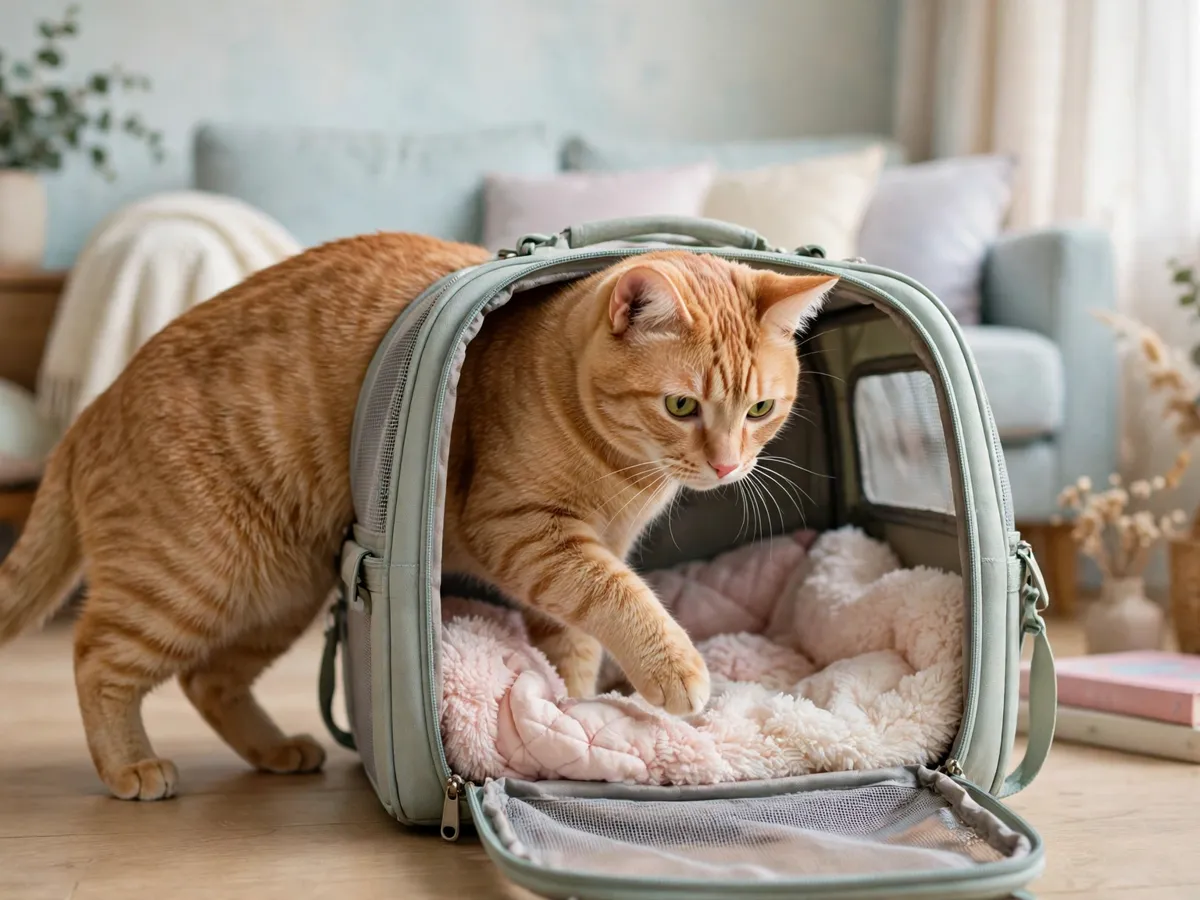
The goal is a cat that walks into its carrier voluntarily, which starts with the carrier staying out at home as part of the furniture with soft bedding inside.
That is the whole training method in one sentence, and it is the one most owners skip. The carrier sits out in the room, the door is open, a soft blanket that smells like the cat is inside, and nothing happens. No trip, no vet, no car. The cat investigates on its own schedule, and within a week or two the carrier is just another bed the cat sometimes naps in.
- Put the carrier in a quiet corner the cat already uses, with the door fixed open or removed entirely.
- Put a blanket or towel inside that the cat has slept on, so the inside smells like home.
- Drop a treat or a pinch of dry food inside once a day, and do not watch the cat eat it. The cat has to find it on its own.
- Leave the carrier out for weeks, not days. The cat decides when it is comfortable, and rushing it undoes the patience.
- Once the cat naps inside, close the door for a short while while the cat is relaxed, then open it again. Build the closed-door time slowly across days.
For the full training progression from the first treat to a cat that walks in on cue, the carrier training walks page covers the method in detail.
Travel day: the carrier in the car
During travel the carrier goes on the floor or under a seatbelt, and a towel over it blocks the view that arouses the cat.
The floor behind a seat is the safest spot in a car for a carrier, and a seatbelt threaded through the handle or the dedicated strap loop is the second option. The carrier never rides loose on the seat, because a carrier that slides in a stop is a carrier that scares the cat and hits the door.
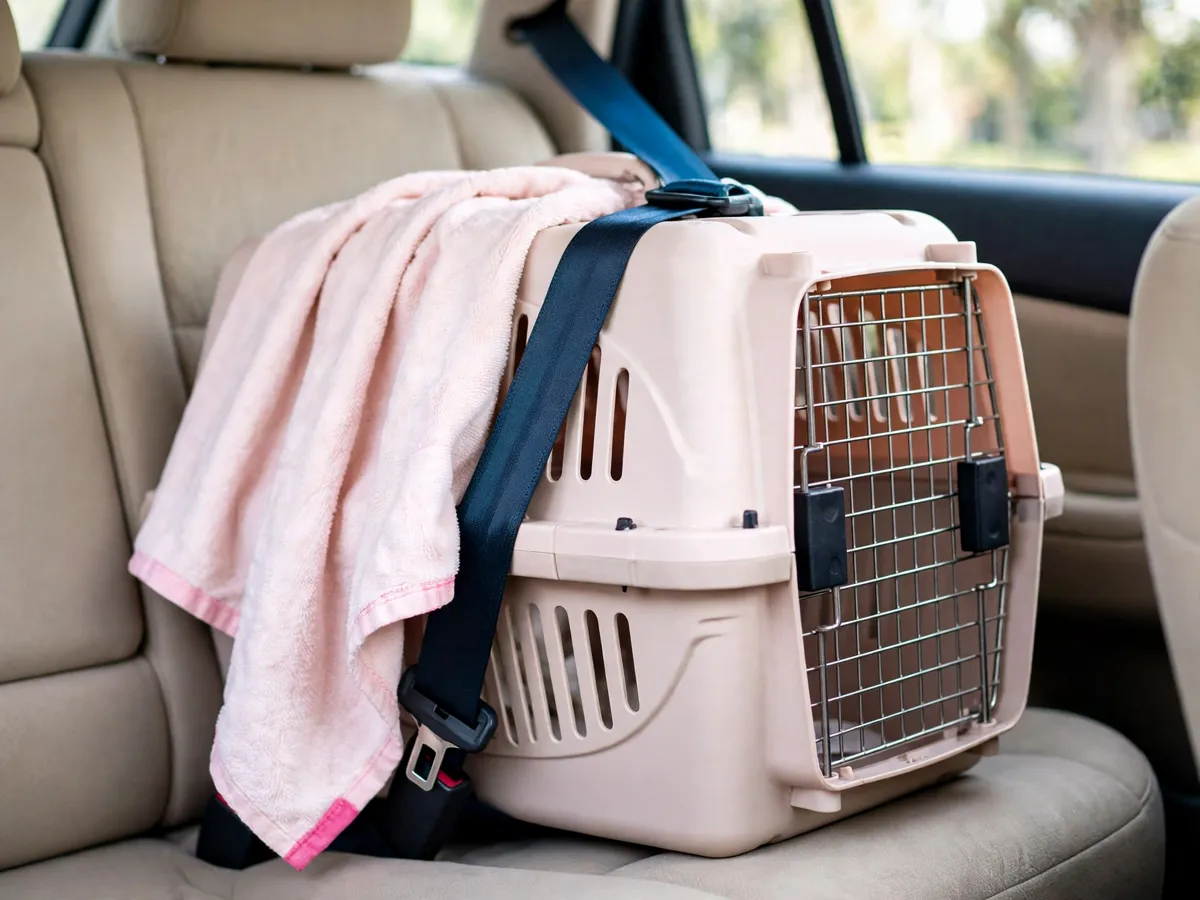
The towel is the small move that makes the biggest difference. A cat that can see the world rushing past through a car window is a cat that gets aroused, vocal, and eventually carsick. A towel over the front of the carrier blocks that view, and the cat settles into the dark, enclosed space it already knows from home.
Longer trips and the airline question
For a road trip longer than the vet visit, the carrier stays the same and the routine around it grows. A longer trip means a planned stop for water and a litter box, and the carrier stays closed in the car between stops. A cat that is let loose in a moving car is a cat that can get under a pedal or into a gap it cannot get out of.
For air travel, the airline sets the rules and the carrier has to meet them. Check the airline's carrier dimensions before you buy, and the material requirements, because a carrier that is an inch too tall is a carrier that does not fly. The soft, flexible carriers that fit under a seat are the ones most airlines accept in the cabin, and the hard-shell crates are the ones that go in the hold.
For the holiday-side of the same trip, the traveling with pets checklist covers what to pack alongside the carrier.
Carrier features and what they earn you
| Feature | What it does | Why it matters |
|---|---|---|
| Closed sides | Blocks the view out | Keeps the cat calm and secure in transit |
| Removable top | Top half lifts off at the vet | The cat stays in the bottom on its own blanket for the exam |
| Seatbelt strap or loop | Anchors the carrier in the car | Stops the carrier from sliding in a stop |
| Soft bedding inside | Smells like home | Turns the carrier from a trap into furniture the cat chooses |
| Towel over the front | Blocks the car-window view | Stops the cat from getting aroused and vocal on the drive |
The carrier that lives out at home is the carrier the cat walks into. The one in the cupboard is the one it runs from.
Cat carrier questions
Hard shell or soft carrier?
Both work when the frame is secure. A closed carrier often gives a cat a sense of security either way, and the removable top is the feature that earns its price at the vet.
How long before the trip should the carrier come out?
Weeks, not hours. The goal is a cat that walks in voluntarily, and that starts with the carrier living in the room as furniture with soft bedding inside.
Where does the carrier go in the car?
On the floor behind a seat or strapped in with a seatbelt, never loose on the seat. A towel over the front blocks the view that arouses the cat.
Save these on Pinterest
Pin the feature list and the furniture method so the carrier is ready before the trip. The Gifts & Supplies collection holds the harness sizing guide for the dog side of the same trip.
Closed carrier, removable top, and the box that lives out as furniture. For informational purposes, consult your vet.
The carrier page gets the cat there; the the litter box side of the trip page plans where the box goes once you land.
What we use
What we use for carrier training and travel
A closed carrier with a removable top, a seatbelt strap, and the calming towel - the travel kit that earns its shelf space.
See what we use →As an Amazon Associate we earn from qualifying purchases.