 PawStyle Daily
Cat-Friendly Apartment Decor
Carrier Training: A Cat That Walks In
Most cat owners own a carrier and hate owning it: it lives in a closet, comes out twice a year, and the twenty minutes around it are the worst of the whole vet visit. The fix is unglamorous. The carrier moves into the room, gets a blanket, and stops being a trap. Then the walk-in is taught in stages, and the trip itself is set up properly. For informational purposes, consult your vet.
By PawStyle Daily · Updated 18 November 2026
Good to know: carrier out permanently, door off or propped · bedding inside · the cat walks in on its own · floor or seatbelt in the car.
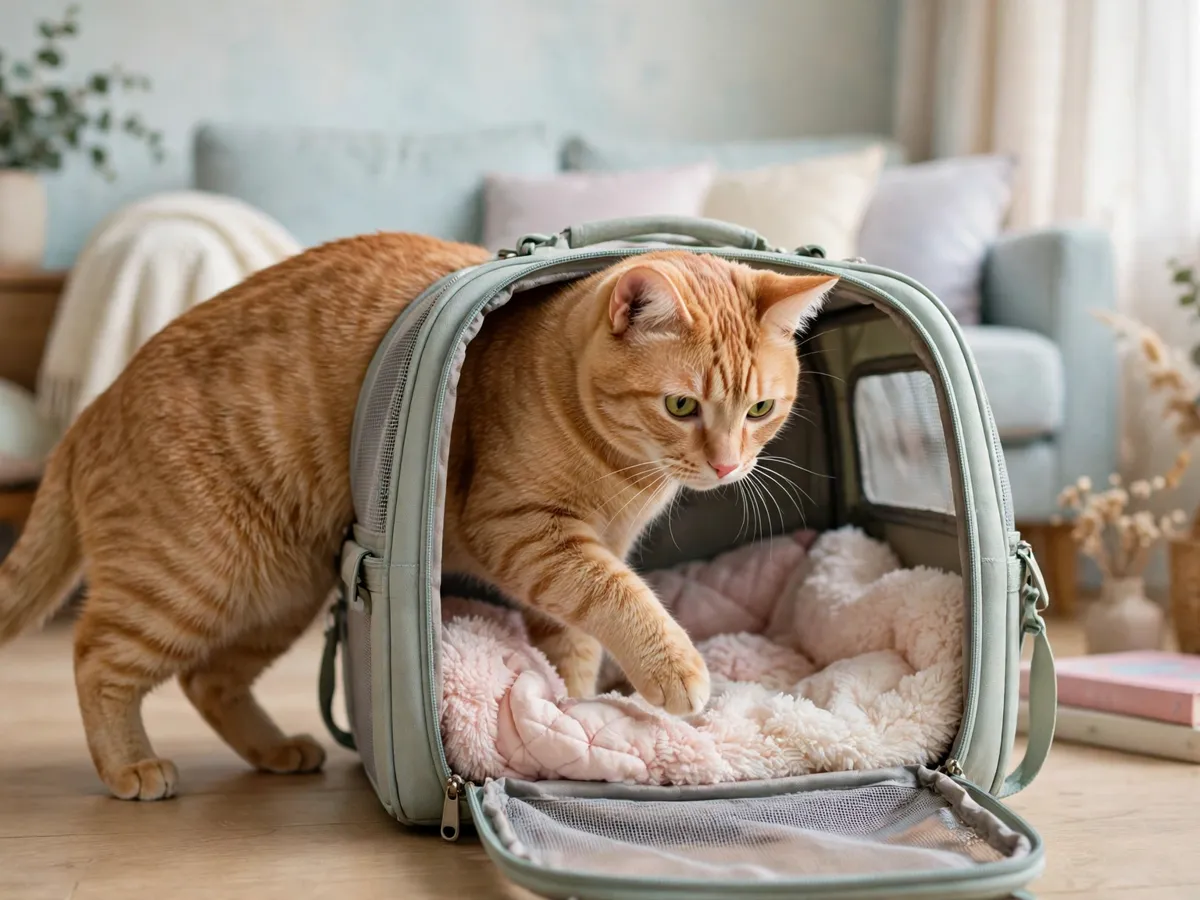
The carrier is furniture now
The goal is a cat that walks into its carrier voluntarily, which starts with the carrier staying out at home as part of the furniture with soft bedding inside.
That single sentence ends most carrier fights, and it costs nothing but floor space. Pick the corner the cat already likes — beside the radiator, under the bench by the window, at the end of the bed — and put the box there with the door off or held wide. One folded blanket, one flat cushion, nothing that smells of the last cat.
- A second carrier door, or the door unbolted, so the entrance is not a threshold with a trap at the end.
- The litter box and the food station stay in different rooms. A carrier is not a bed for a cat that shares a flat with anything else's smell.
- No spraying, no wiping with anything scented. Cats walk past a clean-but-strong smell rather than through it.
- If the cat ignores it for a fortnight, that is fine. Ignored furniture is still better than a closet.
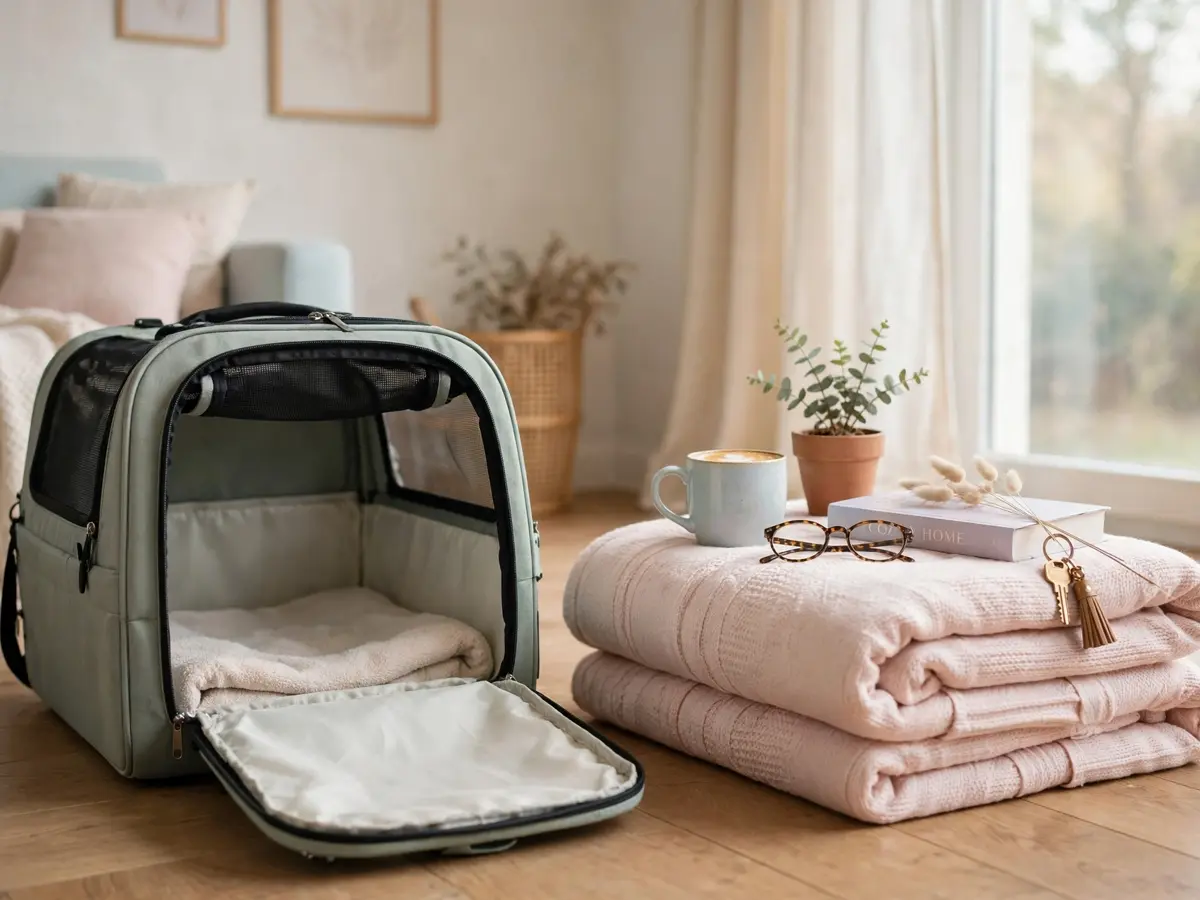
Why a closed carrier reads as security
A carrier provides safety for the cat and the owner during transport, and a closed carrier often gives a cat a sense of security.
Watch a cat in a room with an open box and a hideaway: it chooses the enclosed one, and it chooses the back corner of it. The walls are the point. A cat that has been taught the box is a bed will go deeper into it at the clinic rather than out of it, and the exam happens with the cat in its own chosen seat.
This is not a promise that the carrier settles an anxious cat. It is the reason the box should stay closed at the vet rather than opened the second the door does, and the reason the top comes off instead of pulling the cat out.
The walk-in, in stages
Once the carrier is furniture, teach the door. Every stage below ends with the cat walking away on its own terms, and none of them involves lifting a cat anywhere.
- Bedding only. Days of walking past, sniffing, and occasionally sleeping in it with the door off. Nothing else is asked.
- Food at the entrance. The meal sits by the threshold, then a step further in, over as many days as the cat wants. The box becomes where dinner happens.
- Door open, cat inside. Sit near it, read a book, do nothing. A cat that eats and sleeps behind an open door has stopped filing the box under strange.
- Door closed for a moment, you beside it. Shut it while the cat is calm and full, open it before the cat asks, and repeat across days.
- Door closed, you in the room, then out of sight. The last stage is the one that carries to the car: the cat stays settled with you gone for a short stretch.
- The carried lap. Closed box, lifted, walked to the door, set down, opened. Repeat without ever leaving the building, until the lift means nothing.
Two minutes a rep, once or twice a day, and the whole thing stops the moment the cat flattens or hisses. Going back a stage is not a setback; it is the only way forward from there.
Carrier stages and what each one buys
| Stage | What the cat learns | Sign to move on |
|---|---|---|
| Furniture with bedding | The box is part of the room | A nap or two inside it |
| Meals at the threshold | Good things happen in there | The cat eats at the back without backing out |
| Open door, you nearby | Company inside is normal | The cat stays while you sit beside it |
| Closed, you in the room | The door shutting is not an event | The cat lies down behind a shut door |
| Closed, you out of sight | Being shut in alone is survivable | A calm wait, no door scratching |
| Lifted and carried | The lift changes nothing | The cat settles again once set down |
No timeline is promised here. A cat that has had bad carrier experiences before needs more reps at each stage, not faster ones.
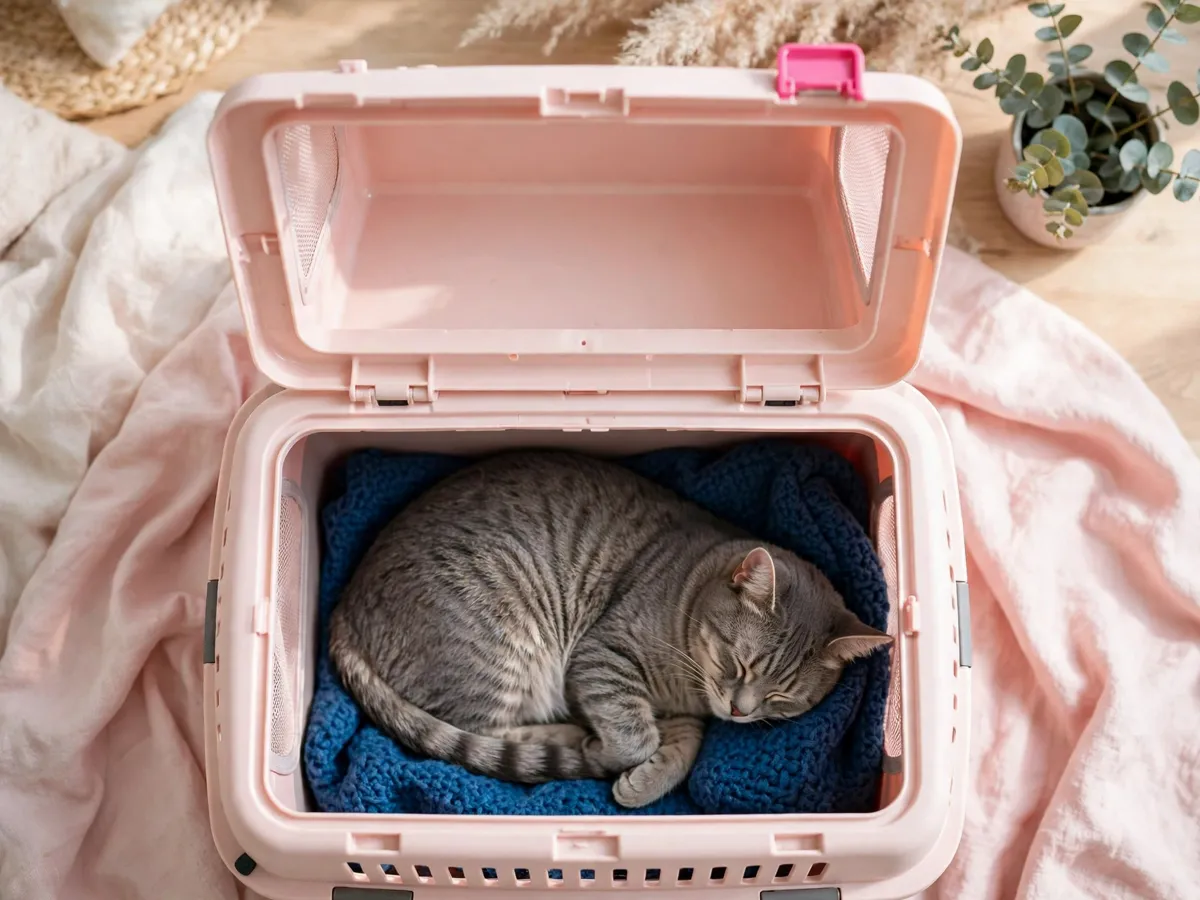
The removable top, and the exam it saves
A carrier with a removable top lets a fearful cat be examined while it stays in the bottom half.
This is the feature worth paying for, and it is the one most people never hear about before they own a carrier. The bottom half becomes the exam table: the cat stays in the part it chose, the vet reaches in from above, and nobody has to wrestle a cat onto a cold metal surface. Ask the clinic before the appointment whether they will work with the bottom half, and bring the box with the top off ready.
If your carrier is one piece, the same idea still half-works: leave the cat inside it on the table rather than lifting it out, and let the exam happen through the door. A towel over the box keeps the cat in the dark and in the quiet, which is the closest thing to a sedation a carrier can offer.
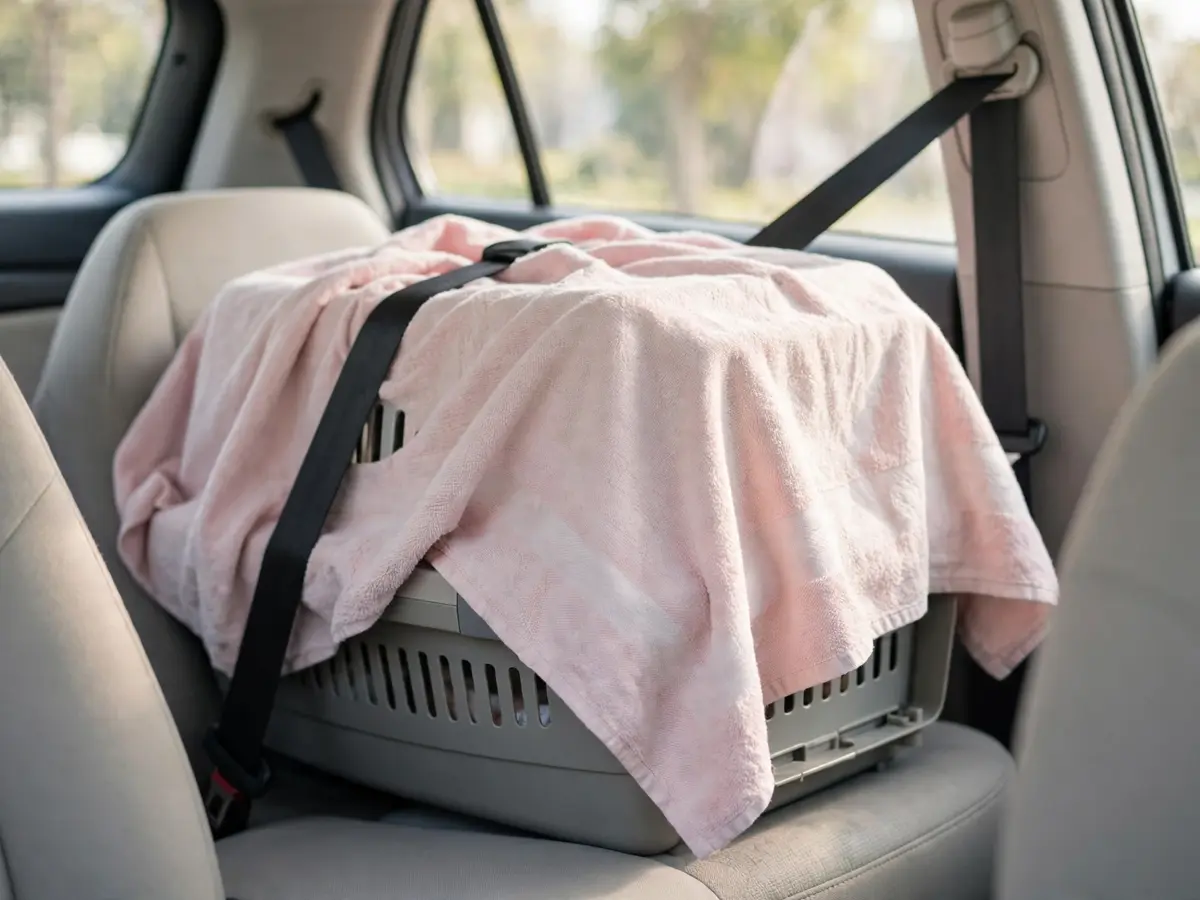
In the car: floor or seatbelt, never loose
During travel the carrier goes on the floor or under a seatbelt, and a towel over it blocks the view that arouses the cat.
- The footwell of the back seat is the steadiest spot: low, enclosed, and it cannot slide forward when you brake.
- A belt threaded through the carrier's handle or around its middle holds a top-loaded box on a seat. A box that rides loose becomes a projectile in one cornering manoeuvre.
- Towel over the top and sides, one corner left open for air, and the door checked before the engine starts.
- No cargo shelf, no open seat in the front, no boot, and no carrier on a lap while the car is moving.
- Cool the car first in summer and warm it first in winter, then bring the cat out. The trip is short on purpose.
The practice rhythm that ends vet-day drama
A carrier trained once and forgotten is a carrier that resets every year. Keep a short rep in the week: the box gets opened, the blanket gets fluffed, a meal gets eaten inside it, and the lid comes off and back on. That is the entire maintenance.
Before an appointment, run the stages backwards from the end: bedding, meal inside, door shut for a minute, the lift around the flat, and the car parked in the driveway with the cat inside the box on the floor. Ten minutes of that the night before saves the half hour of door-side scrambling in the morning.
For the rest of the apartment set-up, the cat-proofing checklist and the hidden litter box guide cover the corners the carrier shares with them, and the Cat-Friendly Home collection holds the whole room plan.
Cat carrier questions
How long before the carrier stops being scary?
It depends on the cat, so this page does not promise a timeline. A cat that already sleeps in the open carrier usually walks in on a trip without a fight; a cat that has been chased into it a dozen times needs many more quiet repetitions before the door means nothing.
My cat hides in the carrier at the vet. Is that a problem?
No, and it is the point. A closed carrier often gives a cat a sense of security, and a cat that chooses the back corner is a cat that has decided the box is the safe part of the room. Ask the clinic to work with the bottom half rather than dragging the cat out.
Hard-sided or soft-sided — which should I buy?
Either, as long as it opens from the top. A carrier with a removable top lets a fearful cat be examined while it stays in the bottom half, and that feature matters more than the material. Hard-sided stacks and wipes clean; soft-sided fits under a seat and weighs nothing.
Can I just pick the cat up and put it in?
No. The goal is a cat that walks into its carrier voluntarily, and a cat placed inside against its will has learned the opposite lesson in one second. Lift it out if it has already gone in and stayed, and start the next rep from a shorter distance.
Do I cover the carrier in the car?
A towel over it blocks the view that arouses the cat, which is exactly what you want on a long road. Leave one end uncovered so the air stays easy, and never drape it so the door flap can slip shut on its own.
The carrier only comes out for the vet. Is that the issue?
That is the whole issue. A carrier that lives in a closet appears twice a year, and every appearance ends in somewhere the cat dislikes. Keep it in the room with a blanket inside and it becomes furniture the cat sleeps on.
Save these on Pinterest
Pin the stage table for the week before the next appointment, and keep the car rules beside it. The Cat-Friendly Home collection holds the scratching post placement and multi-cat resource stations guides, and the supplies and gift guide covers the boxes worth buying once.
The carrier stays out as furniture, and the cat walks in on its own. For informational purposes, consult your vet.