 PawStyle Daily
Homemade Dog Treats & Meal Planning
Valentine Dog Treat Heart Bakes for February
A heart-shaped batch is the one day a year the mold earns its place on the counter. The shape is the Valentine part. Everything else is the same dog-safe bake as every other month: a plain dough, a pink silicone mold, and a jar of peanut butter with the label read before the first spoonful. No chocolate, no cocoa, no sugar-free sweeteners, and pieces kept small so the batch stays a treat and not a meal.
By PawStyle Daily · Updated 19 November 2026
Good to know: one bowl and a heart mold · no chocolate or cocoa · sugar-free label check on every jar · for informational purposes, consult your vet.
What a heart bake is, and what it is not
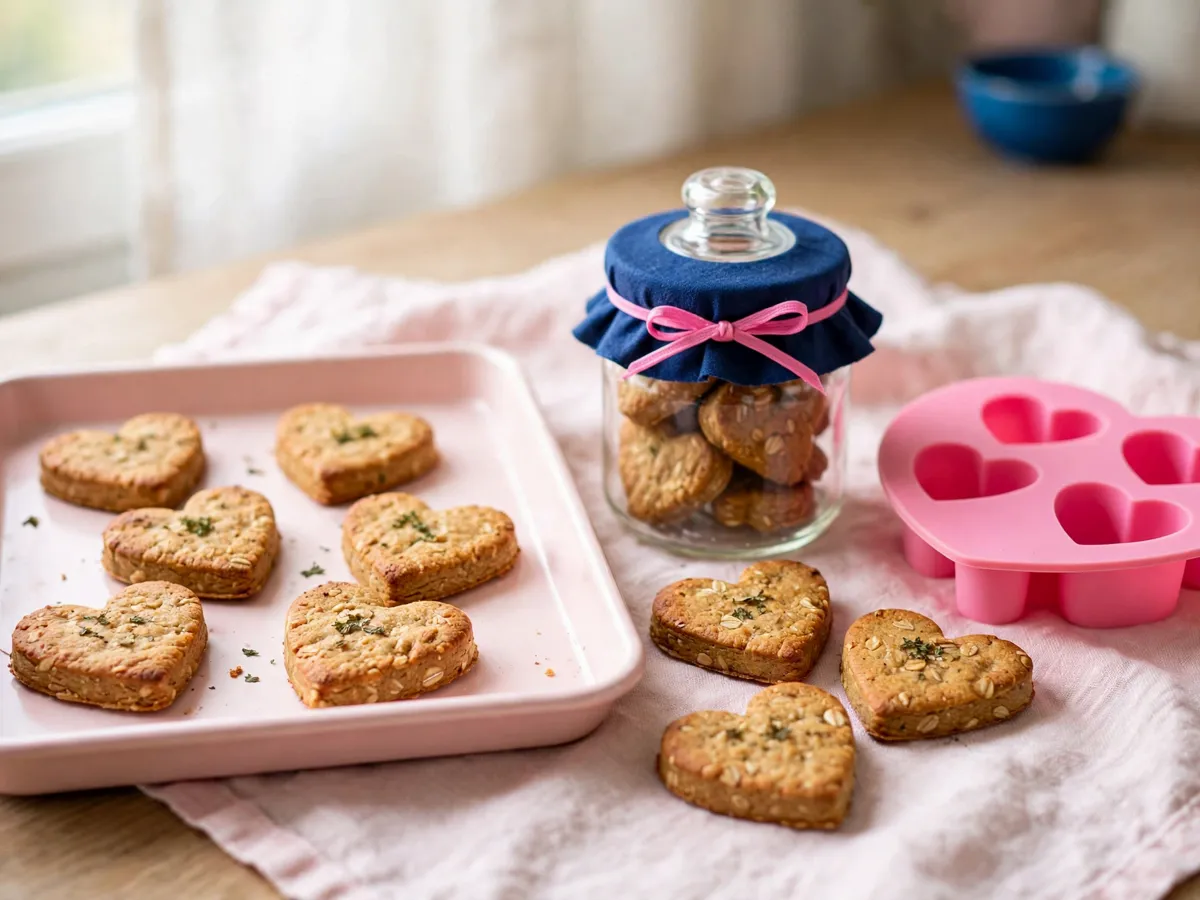
A heart bake is the same plain dog dough you would roll any other week, pressed into a silicone heart mold instead of a ball or a square. The mold is the only piece of Valentine gear the recipe needs. No pink food coloring, no frosting, no decorative drizzle that belongs on a people cookie. The hearts come out of the oven looking like hearts because the mold is shaped like hearts, and the dog does not care about the shape anyway. You care about the shape, and the dog cares about the smell.
If you already have a batch of no-bake peanut butter treats in the freezer, the heart mold works on the same dough. The no-bake version skips the oven; the heart bake goes in for a short while so the edges firm up and the hearts pop out clean.
The heart-bake batch
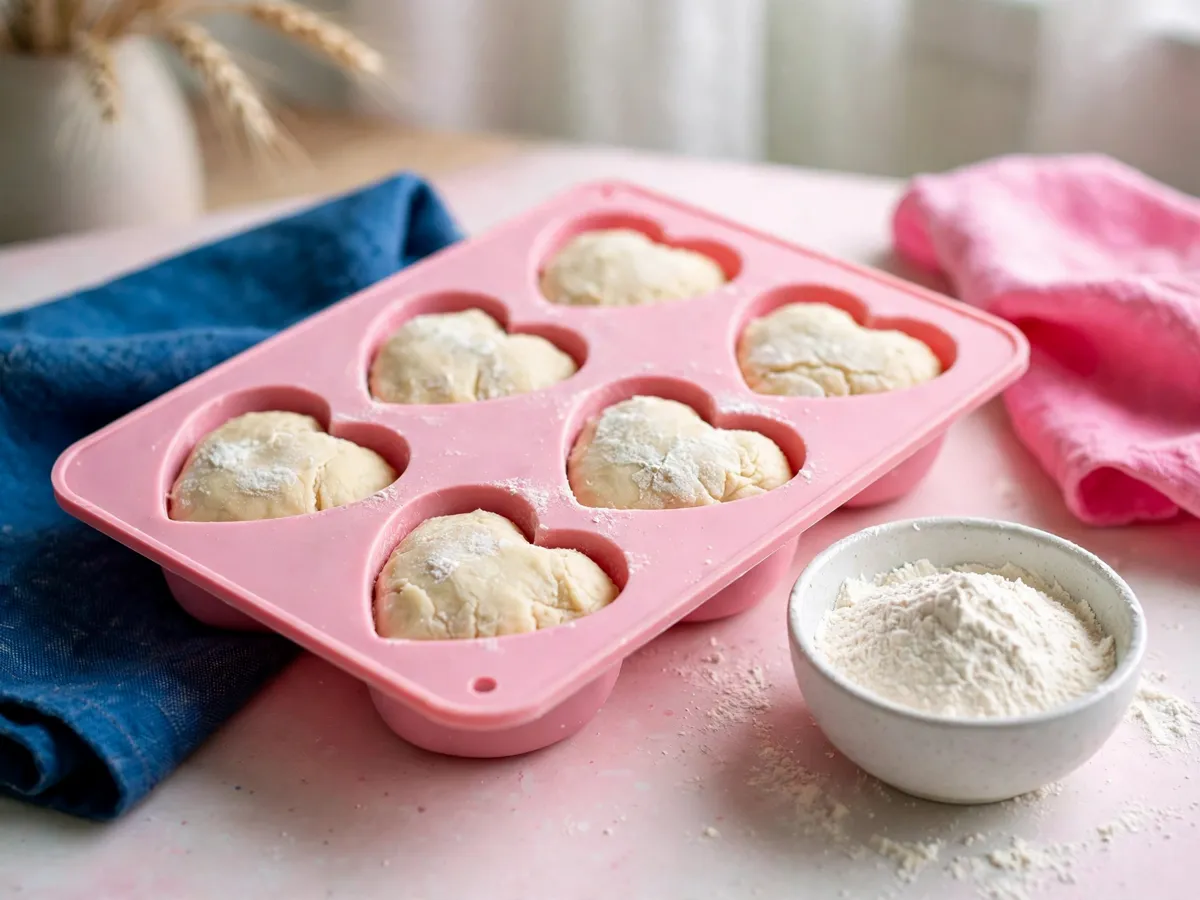
The dough is four ingredients and a mixing bowl. Rolled oats as the base, peanut butter with peanuts and salt on the label to bind it, plain pumpkin puree for the soft middle, and a splash of water if the mix is dry. Press the dough into the heart cavities, level the tops with the back of a spoon, and bake at a low temperature until the edges feel firm to a fingertip.
A pink silicone heart mold is the one tool that earns its shelf space for this batch. The cavities are shallow, so each heart is a bite, and the silicone pops the baked hearts out without a knife or a twist. A metal mold works too, but the hearts stick and the edges crumble, so grease the wells if that is the mold you have.
The batch makes enough hearts for a week of treats if the mold has twelve to fifteen cavities. Cool them on the tray, then move the firm ones to a jar and the soft ones to the fridge. The heart shape holds best when the dough is pressed in firm and the bake is gentle rather than hot.
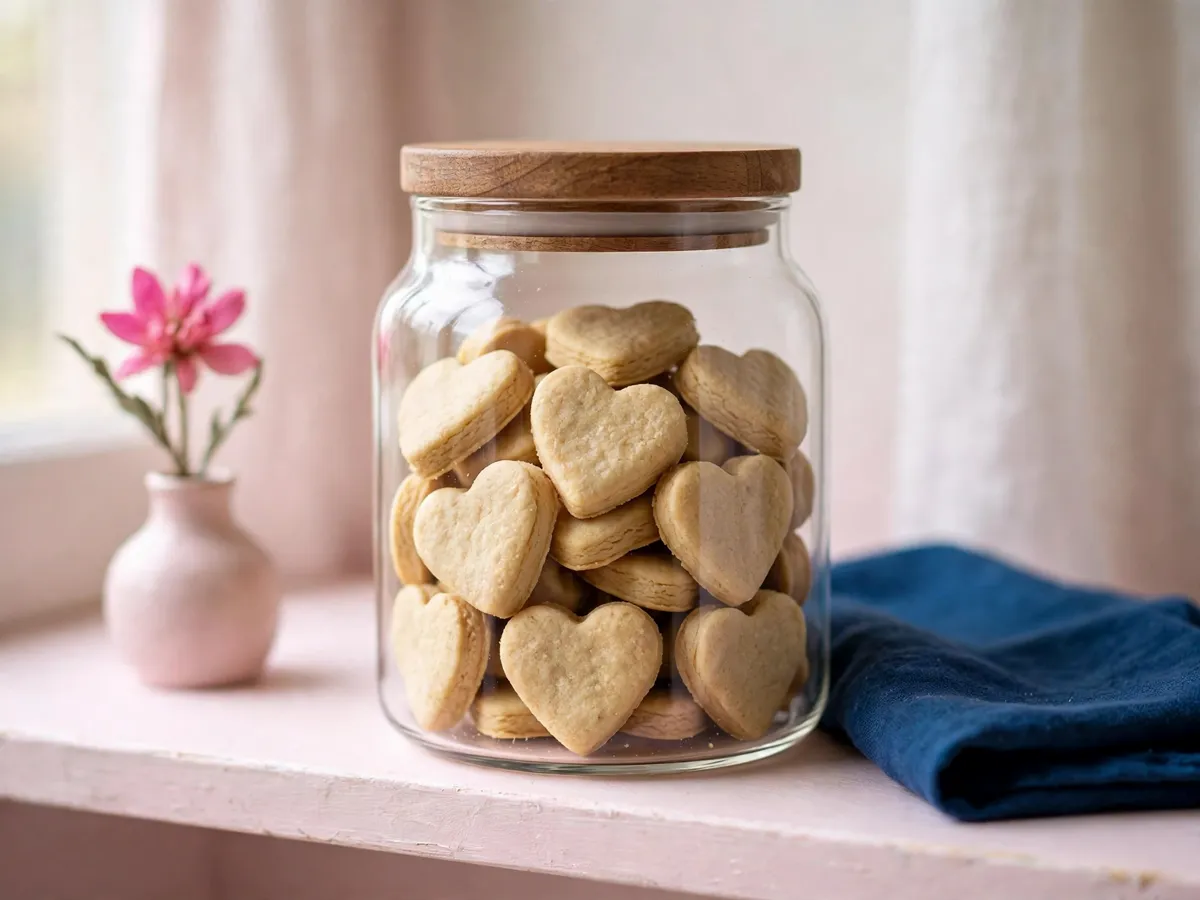
A clear glass jar with a wooden lid is where the firm hearts live once they cool. Wait for the tray to reach room temperature before the lid goes on, because warm treats steam inside a sealed jar and the soft ones go limp. One layer in the jar, the date on the lid, and the jar back on the shelf rather than the counter. Fill the jar from the batch, not the other way round.
The no-chocolate rule on Valentine Day
Chocolate is toxic to dogs, so no chocolate, cocoa or coffee ever goes into a treat.
That sentence does not change because the calendar says February. The heart box on the counter is for people. The heart mold on the baking tray is for the dog. The two never share an ingredient, and the people chocolate stays on its own shelf while the dog batch is in the oven. A chocolate drizzle on a people cookie looks like a decoration; the same drizzle on a dog treat is a phone call to the vet.
The same line covers cocoa powder and coffee, because all three carry the same compound. If a recipe on a people blog calls for cocoa dusting on a heart-shaped cookie, that recipe stays on the people blog. The dog version uses a dusting of oat flour or nothing at all, and the hearts look pastel and soft either way.
For the full list of foods that never go into a dog batch, the keep-out list carries every entry. Valentine week adds chocolate and sugar-free candy to the top of the list, but the list itself is the same all year.
The sweetener check on the jar
Xylitol is a sweetener that can drop a dog's blood sugar and hurt the liver, so it never goes into a homemade treat.
Read the ingredient panel on the peanut butter jar before the first spoonful goes into the bowl. Peanuts and salt is the whole list you want. Anything that reads like a sweetener goes back on the shelf, and the check runs every new jar because labels change between batches. The jar you bought last month is not the same jar you buy today until the panel says so.
The sugar-free aisle is where xylitol lives, and Valentine week is when sugar-free candy enters the house in boxes. A jar on the baking shelf and a box on the candy shelf are two different products, and the label on each one is the only source that matters. Read the panel on anything that carries the claim, every time, before it reaches the counter where the dough is mixed.
The label check is a habit, not a one-time event. The peanut butter label check page walks through the same read every jar, every time. The heart bake is no different: the mold is new for the week, the label rule is not.
Why the pieces stay small
Treats should stay at no more than five percent of a dog's daily calories, so keep the pieces small.
That line is the reason the heart mold matters. A shallow cavity turns out a small heart, and a small heart is a single treat inside the daily share. A deep cavity turns out a big heart, and a big heart is half the share in one piece. The mold you pick decides the portion before the dog does, and a mold with twelve small wells is the one that keeps the batch honest.
If the mold you have is deep, halve each heart with a knife after the bake. Two half-hearts are two treats, and the dog reads each one as a full reward. The shape loses half its height and keeps all its silhouette, so the Valentine look survives the cut.
The same portion idea drives the treat maker recipes page, where the mold cavities are sized for training dots. A heart mold and a dot mold are the same idea in different shapes: the mold sets the portion, and the portion stays inside the daily share.
The jar is where the batch ends up, and the jar stays a closed jar. A clear glass jar with a wooden lid keeps the hearts firm and keeps the dog out of them, because a jar at nose height on the counter is a jar a dog eventually learns to open. The shelf behind a cabinet door is the spot, and the jar comes down one heart at a time rather than standing open beside the tray. The same closed-jar habit lives on the no-bake peanut butter treats page, where the fridge tub and the freezer bag do the same job in colder storage.
Questions we get about Valentine dog treat heart bakes
Can I use a heart mold for Valentine dog treats?
A silicone heart mold turns the same plain dough into a Valentine shape. The mold is the only change; the recipe stays dog-safe with no chocolate and no sugar-free sweeteners.
Why no chocolate in Valentine treats?
Chocolate never goes into a dog treat. The same rule applies on Valentine's Day as every other day, and the heart shape does not change it.
How big should each heart treat be?
Keep each one bite-sized. The daily treat share stays small, and a smaller mold or a knife cut keeps the pieces in the right range.
The heart-bake starter kit
What we use for heart bakes
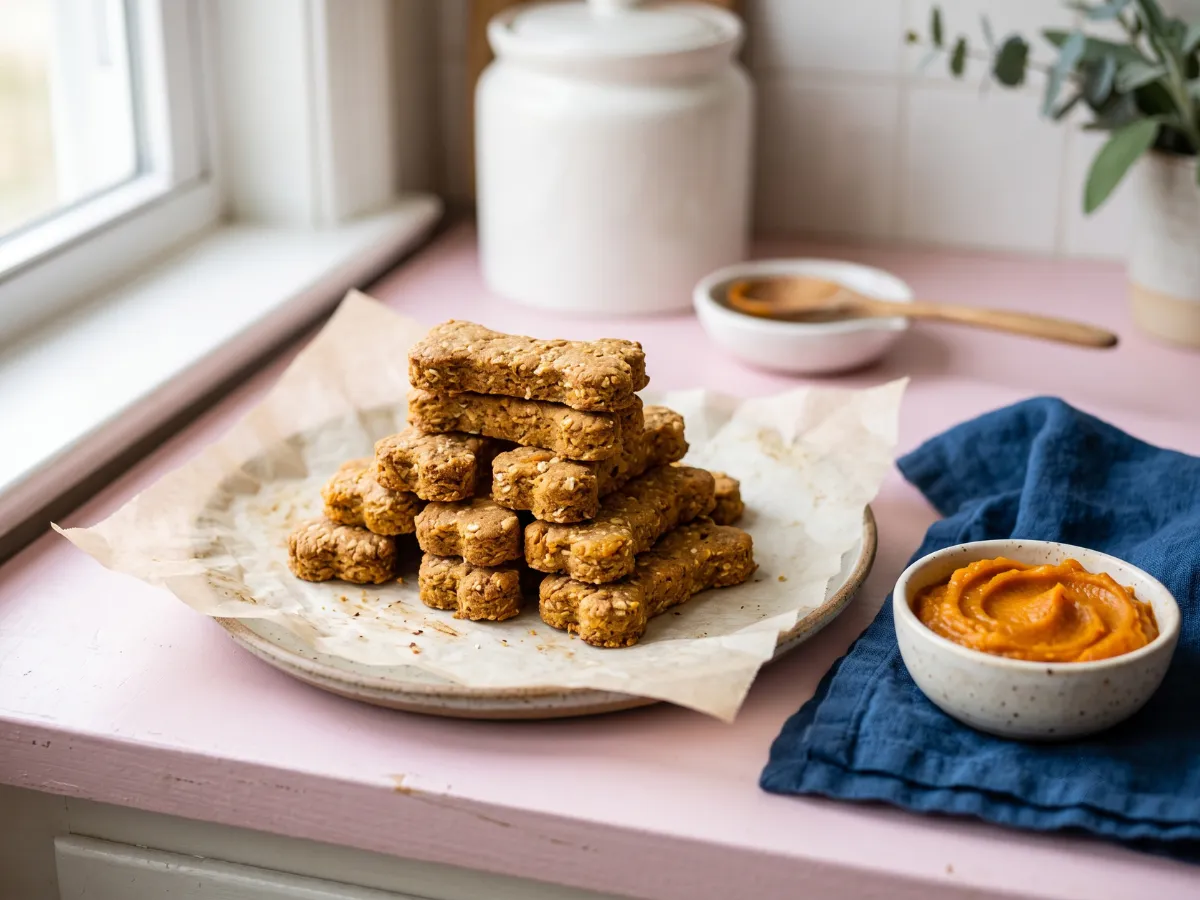
A pink silicone heart mold with shallow wells, peanut butter with peanuts and salt on the label, and plain pumpkin puree. The three pieces that turn a plain dough into a Valentine batch.
See what we use →As an Amazon Associate we earn from qualifying purchases.
Save these on Pinterest
Pin the heart-bake recipe for February and save the Dog Food collection for the no-bake and meal-prep pages that carry the same portion rule the rest of the year.
For informational purposes, consult your vet.